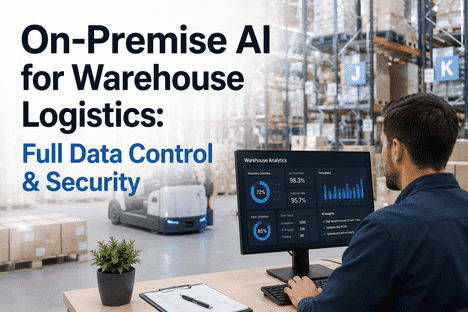
A single hour of WMS downtime in a high-velocity logistics warehouse can cost between $5,000 and $100,000 and the largest outages now routinely cross the $100,000 threshold as operations lose receiving, picking, despatch, and billing visibility simultaneously. Cloud-hosted analytics platforms add a second layer of risk: when AWS, Azure, or Cloudflare experience regional disruption, every warehouse depending on cloud-based AI inference loses its decision layer at the same moment, regardless of how healthy the local infrastructure is. Layer on top of that the regulatory pressure GDPR, regional data residency mandates, customer contracts requiring data sovereignty, and EU AI Act penalties reaching up to 7% of global turnover and the economics of running warehouse AI analytics in a third-party cloud start to break down for any operator handling sensitive shipment, customer, or partner data. On-premise AI flips the model: inference, data, and decisions all stay inside the four walls of the warehouse, behind the operator's own firewall, on hardware the operator owns. iFactory AI deploys as an on-premise, self-hosted analytics layer over the existing WMS, MES, PLC, and sensor stack delivering predictive maintenance, shift logbook intelligence, and real-time operational analytics without sending a single byte of operational data to an external cloud. Book a Demo to see live on-premise AI warehouse analytics running against your current data environment.
100%
Operational data retained inside the warehouse with on-premise AI deployment
$100K/hr
Documented WMS downtime cost exposure eliminated by offline-capable on-prem AI
<50ms
Local inference latency for floor-level decisions vs cloud round-trip times
4–6 wks
On-premise deployment timeline from infrastructure audit to live AI analytics
Why Warehouse Logistics Operators Are Moving AI Analytics On-Premise
Until recently, the prevailing architectural assumption for warehouse analytics was simple: send telemetry to the cloud, run AI models there, return decisions to the floor. That model worked when warehouses had stable connectivity, modest data volumes, and limited regulatory exposure. None of those three conditions hold anymore. WMS connectivity dependencies have grown so acute that nearly 90% of warehouse operators now treat their automation stack as critically dependent on continuous platform availability, with nearly half reporting idled assets during the most recent connectivity disruption window. Data volumes from PLCs, conveyor systems, vision sensors, AMRs, and IoT-enabled racks have scaled to the point where pushing every sample to a remote cloud is no longer economically rational. And data sovereignty requirements driven by customer contracts, regional law, and AI-specific regulation have made the destination of every inference payload a compliance question, not a technical one.
iFactory AI was architected from the start to run inside the warehouse, not outside it. The analytics engine, the machine learning models, the historical data store, and the operational decision logic all sit on hardware the warehouse operator owns and controls typically a single industrial server or a small edge cluster located in the IT room or the plant network segment. Operational data from the WMS, PLC layer, shift logbook entries, and sensor feeds is ingested locally, processed locally, and surfaced locally. Nothing has to leave the site for the system to function, and nothing about the operating model depends on a connection to an external provider.
Full Data Sovereignty and Residency Control
Every byte of warehouse operational data WMS records, shift logbook entries, PLC telemetry, picker performance, despatch logs stays inside the warehouse perimeter on infrastructure the operator owns. No data crosses jurisdictional boundaries, no third-party cloud processor sits in the data path, and no external provider can be subpoenaed for access. GDPR, regional residency laws, and customer data clauses are satisfied by architecture, not by paperwork.
Offline-Capable AI Inference
Predictive maintenance scoring, anomaly detection, shift performance analytics, and operational alerts continue running when internet connectivity is lost, when the corporate WAN degrades, or when a hyperscaler cloud experiences regional disruption. The warehouse keeps making AI-informed decisions whether or not the external network is reachable the analytics layer never goes offline because the cloud goes offline.
Sub-50ms Local Inference Latency
Inference runs on local CPU or GPU hardware connected to the warehouse network eliminating cloud round-trip time, ISP variability, and TLS handshake overhead. Real-time alerts, anomaly classifications, and automated work order triggers reach operations and maintenance teams in tens of milliseconds rather than the hundreds of milliseconds or seconds typical of cloud-hosted inference, supporting decisions tied to live conveyor, AMR, and labour activity.
Shift Logbook Intelligence on Local Hardware
iFactory's digital shift logbook captures every handover note, incident record, equipment state, and operator observation locally then applies AI to surface recurring failure modes, late-shift escalation patterns, and unresolved items carrying across shift boundaries. The entire logbook history stays inside the warehouse data store, queryable by site leadership without ever passing through an external SaaS instance.
Predictable, Capacity-Based Cost Profile
No per-query cloud metering, no compute-hour surprises, no egress fees on the operational data the warehouse is generating every second. On-premise iFactory AI runs on owned or leased hardware with predictable annual cost eliminating the consumption-based billing volatility that turns cloud analytics into a moving target on the IT budget and that discourages teams from running deeper analyses when they need them most.
Local Integration With WMS, MES, ERP and PLCs
iFactory connects on the local network to Manhattan Associates, Blue Yonder, SAP EWM, Infor WMS, SAP ECC/S4, IBM Maximo, SAP PM, and PLC infrastructure via OPC-UA, Modbus, MQTT, and REST no traffic routed through an external cloud broker. Integration runs on the warehouse VLAN, governed by the operator's own identity and access policies, with full audit logs retained inside the site.
Cloud-Hosted Warehouse AI vs On-Premise iFactory AI: Where the Differences Actually Land
Cloud-hosted warehouse analytics delivers elastic compute and zero hardware management real advantages for some operators. But the moment a warehouse handles regulated data, contracts with sovereignty clauses, runs automation that cannot tolerate connectivity loss, or operates in a region with strict residency law, the trade-offs flip. The table below maps the practical differences across the dimensions warehouse operators actually evaluate not marketing positioning, but the engineering and operational reality that determines whether analytics keeps running on the day the cloud doesn't.
| Operational Dimension |
Cloud-Hosted Warehouse AI Analytics |
iFactory AI On-Premise Deployment |
| Data Residency and Sovereignty |
Operational, shipment, and personnel data leaves the warehouse, transits the internet, and is processed in a third-party data centre often in a different jurisdiction. Residency guarantees rely on vendor contracts and provider region selection auditable on paper, not in the data path. |
All data WMS records, shift logs, sensor telemetry, PLC tags, personnel records remains inside the warehouse on operator-owned infrastructure. Residency is architecturally enforced. No external processor sits in the inference path. GDPR, AI Act, and sovereignty obligations satisfied by design. |
| Behaviour During Cloud or Internet Outage |
Analytics layer becomes inaccessible. Predictive maintenance scoring, anomaly alerts, dashboard refresh, and AI-driven decisions stop. WMS automation tied to AI insights either fails over to manual mode or idles replicating the dependency the industry is now actively trying to engineer out. |
Inference, dashboards, alerts, and CMMS work order generation continue running locally with no degradation. Warehouse keeps making AI-informed decisions through internet, WAN, or hyperscaler outages. Cloud connectivity becomes a convenience for remote dashboards, not a prerequisite for floor operations. |
| Inference Latency for Floor-Level Decisions |
Telemetry transmitted over the internet to a remote region, processed, and the result returned. Round-trip latency typically 150–600ms depending on region, ISP, and load adequate for reporting but constrained for time-sensitive alerts tied to live equipment or labour activity. |
Local inference on hardware connected to the same VLAN as the WMS and PLC stack. End-to-end latency typically under 50ms, with predictable variance supporting real-time alerts, anomaly classification, and automated triggers timed to live conveyor, AMR, and pick-line activity. |
| Cost Model and Predictability |
Consumption-based pricing compute, storage, queries, data transfer, and egress all metered. Deeper analytics queries discouraged by per-query cost. Monthly bills variable; large analytical workloads can spike spend without warning, eroding the original ROI projection. |
Capacity-based cost on owned or leased hardware. Predictable annual operating expense. Analysts can run as many queries, as much exploration, and as much model retraining as the hardware supports without metering encouraging deeper use of the analytics layer, not rationing it. |
| Security Posture and Attack Surface |
Operational data traverses public internet to a multi-tenant cloud platform. Security depends on the cloud provider's shared-responsibility model, vendor controls, and the operator's correct configuration. Recent supply-chain ransomware incidents have shown how shared infrastructure expands the blast radius. |
No operational data ever leaves the warehouse network. Attack surface limited to the warehouse perimeter, controlled by the operator's own firewalls, identity systems, and SOC. Air-gapped deployments supported for highest-security environments. Single-tenant isolation by definition. |
| Integration With Legacy On-Site Systems |
PLC, MES, and legacy WMS integration requires connectors that bridge OT and cloud often needing additional middleware, firewall holes, and persistent outbound connections. Each new integration extends the trust boundary and the audit scope. |
Local integration to PLC, WMS, MES, CMMS, and ERP on the same network segment. Native OPC-UA, Modbus, MQTT, REST. No outbound cloud tunnels required. Integration footprint stays inside the existing OT/IT trust boundary the operator already governs. |
When the Cloud Goes Down, Your Warehouse Shouldn't. On-Premise AI Keeps Operations Running.
iFactory AI deploys inside your warehouse network predictive maintenance, shift logbook intelligence, real-time anomaly detection, and CMMS automation all running on infrastructure you own. Zero external data egress, sub-50ms local inference, and full continuity through internet, WAN, and hyperscaler outages.
Book a Demo to see on-premise iFactory AI running against a warehouse environment matched to yours.
What iFactory AI Delivers When Deployed On-Premise in a Logistics Warehouse
iFactory AI is the same analytics platform whether deployed on-premise or in a private cloud the difference lies in where the engine, the data, and the models physically reside. For warehouse logistics operators choosing on-premise deployment, the platform delivers a unified analytics layer across maintenance, shift operations, and equipment performance, all running on hardware inside the warehouse. The Shift Logbook module captures every handover, incident, deviation, and corrective action in a structured digital record that replaces paper books, spreadsheets, and ad-hoc messaging threads and the same database feeds the AI layer that surfaces recurring themes, late-shift escalation patterns, and unresolved items hidden across shifts.
Predictive maintenance models ingest PLC tag history, vibration and current signatures from connected sensors, and CMMS work order outcomes to forecast component degradation across conveyors, sortation systems, AMR fleets, dock-door equipment, racking automation, and packing-line machinery. Anomaly detection runs continuously across the live telemetry stream, flagging deviations from established operating envelopes well before they cross a hard-coded alarm threshold. OEE analytics, downtime classification, and root-cause analysis run against the same local data store giving operations leadership a single, auditable view of asset performance without any of it depending on external cloud availability.
How iFactory AI Is Deployed On-Premise in a Warehouse Environment
An on-premise deployment is fundamentally a network, hardware, and data integration project not a SaaS sign-up. iFactory follows a structured four-to-six-week deployment process that delivers a working analytics layer inside the warehouse perimeter, fully integrated with the existing WMS, PLC, and CMMS stack, with no operational data leaving the site at any point during or after deployment.
Weeks 1–2
Infrastructure Audit, Hardware Sizing and Network Architecture
Site walk of the warehouse IT and OT environment. Inventory of WMS platform, PLC controllers, sensor coverage, CMMS, and ERP integration points. Hardware sizing based on data ingestion volume, model complexity, and concurrent user count typically a single industrial server or a small edge cluster sized to the site. Network architecture defined: VLAN placement, firewall rules, identity integration, backup strategy. Air-gapped or DMZ deployment options confirmed based on security posture. All sizing and architecture documents owned by the operator and retained on site.
Weeks 2–4
On-Site Installation, Data Ingestion and Local Model Calibration
iFactory analytics engine installed on operator-owned hardware inside the warehouse. Data ingestion configured against WMS, PLC layer (OPC-UA, Modbus, MQTT), CMMS, and shift logbook sources all on the local network. Historical data imported from on-site systems to calibrate predictive models against the actual operational baseline of the facility. First anomaly detection rules and predictive scores generated locally. Shift logbook module live and ready for handover capture. No outbound data transfer at any point in the calibration process.
Weeks 4–6
Full Analytics Activation, CMMS Automation and Operator Handover
Predictive maintenance, OEE, downtime classification, anomaly detection, and shift logbook AI live across the in-scope asset population. Automated CMMS work order generation active against IBM Maximo, SAP PM, or the operator's chosen platform all over the local network. Maintenance, operations, and shift leadership trained on dashboards, alert response workflows, and the offline-capable nature of the deployment. Full administrative handover: the operator owns the hardware, the data, the models, and the operational keys. Optional remote support tunnel available, off by default, opened only on operator initiation.
ON-PREMISE DEPLOYMENT OUTCOME: ANALYTICS THAT KEEP RUNNING WHEN THE CLOUD DOESN'T
Warehouse operators completing iFactory's 4–6 week on-premise deployment retain 100% of operational data inside the warehouse perimeter, eliminate the documented $5,000–$100,000-per-hour exposure to WMS-adjacent cloud disruption, and run AI inference at sub-50ms latency on hardware they own with full continuity through internet, WAN, and hyperscaler outage events.
100%
Operational data retained on-site with no external cloud processor in the inference path
<50ms
Local inference latency vs 150–600ms typical cloud round-trip for floor-level decisions
0 hrs
Analytics downtime during cloud or internet outage events post-deployment
On-Premise Warehouse AI: Use Cases from Logistics Deployments
The following outcomes are drawn from iFactory on-premise deployments at operating logistics warehouse and distribution facilities across regulated, automation-intensive, and connectivity-constrained environments. Each use case reflects the specific operational reason the operator chose on-premise over cloud-hosted analytics.
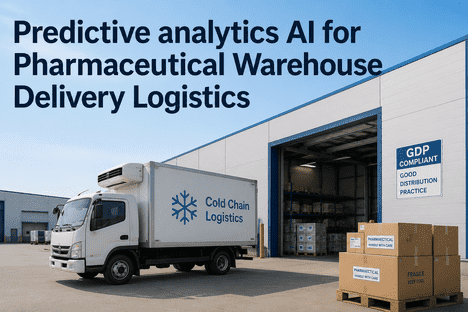
A European 3PL operating a temperature-controlled pharmaceutical distribution centre needed predictive maintenance, shift logbook intelligence, and operational analytics across its conveyor, cold-chain, and AMR equipment but the customer contract explicitly forbade processing shipment, lot, or temperature-excursion data in any third-party cloud, and the operator's own DPO had flagged cross-border data transfer as a non-starter under GDPR Article 32(1)(d). Cloud-hosted analytics platforms were ruled out at the procurement stage. iFactory was deployed entirely on-premise on a single industrial server in the operator's existing IT room, integrated locally to the WMS, PLC layer, and shift logbook database. All ingestion, model training, inference, and dashboard rendering ran on-site. The customer contract clause was satisfied by architecture rather than by additional contractual riders.
Book a Demo to see how this applies to your data sovereignty environment.
0 bytes
Shipment, lot, or excursion data transmitted outside the warehouse perimeter post-deployment
100%
Customer contract data-residency clause satisfied at the architecture layer
1 server
Hardware footprint sufficient to run full iFactory AI stack on the site
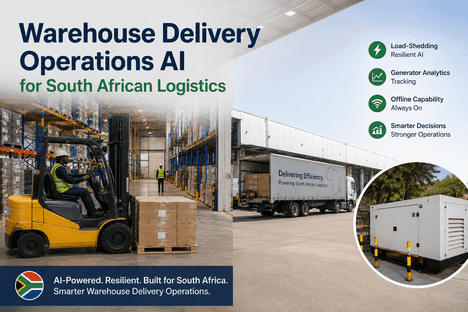
A high-velocity e-commerce fulfilment centre had experienced two operational disruption events within a single 18-month window tied to upstream hyperscaler cloud incidents one regional outage that affected the operator's previous cloud-based analytics provider, and one degraded-service event in which dashboard refresh and predictive alerts stopped while the WMS itself continued running. Operations leadership decided that any new analytics platform had to deliver complete continuity through external network and cloud disruption. iFactory was deployed on-premise on a small edge cluster in the warehouse IT room with local integration to the WMS, PLC layer, and CMMS. During the next hyperscaler regional incident which lasted approximately 5 hours and affected several adjacent platforms used by the operator iFactory's predictive maintenance scoring, shift logbook capture, anomaly alerts, and CMMS work order generation continued running with zero degradation. The facility processed its full despatch volume that day without any analytics-driven decision delay.
0 min
Analytics downtime recorded during a 5-hour hyperscaler regional outage event
100%
Despatch volume processed during the cloud outage with full AI analytics support
2 events
Prior cloud-tied analytics disruptions that drove the move to on-premise architecture
An FMCG distribution operator running high-throughput sortation and conveyor automation had previously trialled a cloud-hosted analytics platform and discovered that the 300 to 500ms round-trip latency on anomaly alerts was too long for several time-sensitive use cases particularly upstream jam detection on the sortation line, where the difference between a 200ms and a 600ms alert was the difference between a soft recovery and a hard stop affecting downstream pack stations. iFactory was deployed on-premise at the lead distribution centre with local inference running on a GPU-equipped industrial server inside the warehouse VLAN. End-to-end alert latency from PLC event to operator dashboard dropped to a consistent 30 to 45ms. Soft-recovery rate on upstream jam events improved markedly across the first quarter following deployment, with corresponding reduction in downstream pack-station stoppages tied to sortation cascades. The same on-premise architecture was subsequently replicated at three additional sites in the network.
30–45ms
Local on-prem inference latency vs 300–500ms cloud-hosted round-trip baseline
4 sites
On-premise iFactory deployments replicated across the distribution network
1 platform
Unified analytics layer across maintenance, shift logbook, and OEE fully on-site
Expert Perspective: Why On-Premise Is Re-Emerging as the Default for Mission-Critical Warehouse AI
Industry Perspective Warehouse Resilience and Data Governance
"The conversation about cloud versus on-premise in warehouse analytics has shifted in the last 18 months. It used to be a cost and convenience debate. Now it's a resilience, sovereignty, and latency debate and on those three dimensions the answer is increasingly on-prem, or at minimum hybrid with the inference layer at the edge. When AWS US-East-1 has a bad day, the warehouses dependent on cloud-hosted decision systems all have a bad day with it. When GDPR enforcement tightens and AI Act penalties scale to seven percent of global turnover, the operators that already kept their operational data inside the warehouse are simply not in the conversation. And when a sortation line needs a 50-millisecond alert rather than a 500-millisecond one, no amount of cloud optimisation closes that gap. The platforms winning this market are the ones that can run fully inside the warehouse, integrated locally, and never depend on an external network to make a decision."
Head of Operational Technology UK-headquartered Logistics and Distribution Group (provided via iFactory deployment reference)
The underlying market data supports the perspective. Warehouse downtime costs of $5,000 to $100,000 per hour, supply-chain ransomware incidents disrupting cloud-tied logistics platforms, EU AI Act penalties reaching 7% of global turnover, and over 140 countries now operating data localisation mandates have collectively repriced the convenience of cloud-only analytics. On-premise AI for warehouse logistics is no longer a legacy holdout it is the architecture that lets operators run modern AI without inheriting modern cloud-dependency risk. Book a Demo to speak with iFactory's on-premise deployment team about your warehouse environment.
Conclusion: On-Premise AI Is the Architecture Warehouse Logistics Has Been Asking For
Warehouse logistics operators do not have the option of opting out of AI analytics predictive maintenance, shift intelligence, anomaly detection, and OEE analytics are now table stakes for any operation serious about uptime and SLA performance. What they do have the option of is choosing where the AI runs, where the data lives, and what the operation depends on to keep making decisions when the external network breaks. On-premise deployment closes the door on cloud-outage exposure, GDPR and residency complications, unpredictable consumption-based pricing, and latency profiles that throttle floor-level decision speed.
iFactory AI delivers the full analytics platform predictive maintenance, digital shift logbook, OEE analytics, anomaly detection, CMMS automation, and operational dashboards deployed entirely inside the warehouse, integrated locally to the WMS, PLC, CMMS, and ERP stack, with zero operational data egress and sub-50ms local inference latency. Deployment runs four to six weeks from infrastructure audit to live analytics, with hardware, data, and models owned end-to-end by the operator. Book a Demo to receive an on-premise architecture proposal scoped to your specific warehouse environment, data sovereignty requirements, and operational continuity targets.
Frequently Asked Questions About On-Premise AI for Warehouse Logistics
Does iFactory AI run fully on-premise, or is it a hybrid that still needs the cloud?
iFactory AI can be deployed fully on-premise with no operational dependency on any external cloud. The analytics engine, the historical data store, the machine learning models, and the dashboards all run on hardware located inside the warehouse network. An optional remote support tunnel is available, off by default, and opened only on operator initiation it is not in the path of any inference, alert, or operational decision. Hybrid configurations are also supported for operators that want a corporate-level cloud view across multiple sites, but the on-site analytics layer continues to function independently of that connection.
What hardware is required to run iFactory AI on-premise?
For most single-site warehouse deployments, a single industrial server is sufficient typical specifications include 16–32 CPU cores, 128GB RAM, NVMe storage sized to data retention requirements, and an optional GPU for higher-throughput inference workloads. Larger sites or sites with extensive vision-based analytics may use a small edge cluster. Hardware sizing is confirmed during the week 1–2 infrastructure audit based on data ingestion volume, model complexity, concurrent user count, and retention policy. The operator owns the hardware; iFactory does not require any proprietary appliance.
How does iFactory AI handle data residency, GDPR, and customer contract clauses on data sovereignty?
In an on-premise deployment, no operational data leaves the warehouse perimeter at any point. All ingestion, processing, model training, inference, dashboard rendering, and audit logging happen inside the warehouse on operator-owned hardware. GDPR residency, customer contract clauses requiring data sovereignty, and regional data localisation mandates are satisfied architecturally there is no third-party processor in the data path, no cross-border transfer to declare, and no external cloud subpoena exposure on the operational data store. Identity and access control integrate with the operator's existing Active Directory, LDAP, or SSO infrastructure.
What happens to analytics during an internet, WAN, or hyperscaler cloud outage?
Nothing analytics continue running normally. Because every component of the iFactory platform runs on the warehouse network, predictive maintenance scoring, shift logbook capture, anomaly detection, CMMS work order generation, and operational dashboards are all unaffected by external connectivity loss. The warehouse continues making AI-informed decisions through internet outages, WAN degradation, ISP issues, and hyperscaler regional incidents. Once external connectivity is restored, any corporate-level rollups or remote dashboards reconnect automatically with no data loss.
Which warehouse systems does on-premise iFactory AI integrate with?
iFactory integrates locally with Manhattan Associates, Blue Yonder, SAP EWM, and Infor WMS, plus IBM Maximo, SAP PM, and ServiceMax CMMS, plus SAP ECC/S4 and Oracle ERP, plus PLC and automation infrastructure via OPC-UA, Modbus, MQTT, and REST. All integration runs over the warehouse VLAN no outbound cloud tunnels are required for any core platform function. Integration is scoped and confirmed during the infrastructure audit in weeks 1 to 2 of deployment.
Can iFactory AI be deployed in an air-gapped warehouse environment?
Yes. Air-gapped deployment is fully supported for operators with the highest security or regulatory requirements defence logistics, classified warehousing, or environments where outbound connectivity is prohibited by policy. In an air-gapped configuration, model updates, platform patches, and any vendor-side changes are delivered through controlled, operator-initiated update packages rather than live network connections. All analytics functionality remains fully operational with no degradation from running disconnected.
Full Data Control. Offline-Capable AI. Sub-50ms Local Inference. Deployed in 4–6 Weeks.
iFactory AI gives warehouse logistics operators a complete on-premise analytics layer predictive maintenance, digital shift logbook, OEE, anomaly detection, and CMMS automation running inside the warehouse on hardware the operator owns. Zero external data egress. Full continuity through cloud and internet outages. GDPR and residency satisfied by architecture.
Stop Letting Cloud Dependency Decide When Your Warehouse Analytics Run. Deploy On-Premise AI in 4–6 Weeks.
iFactory AI delivers full on-premise warehouse analytics predictive maintenance, shift logbook intelligence, OEE, anomaly detection, and automated CMMS work orders integrated locally with your WMS, PLC, CMMS, and ERP. No external cloud in the data path. Sub-50ms local inference. Owned by you, end to end.
100% operational data retained inside the warehouse perimeter
Zero analytics downtime during internet or hyperscaler outages
Sub-50ms local inference vs 150–600ms typical cloud round-trip
GDPR, AI Act, and data residency satisfied at the architecture layer