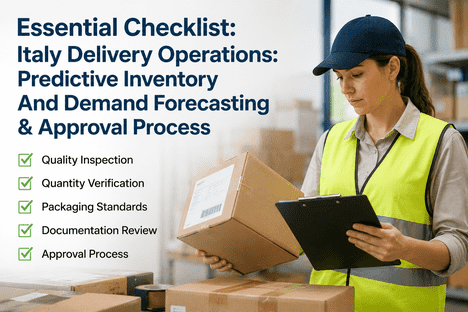
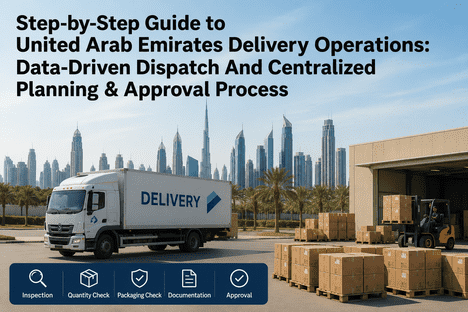
You are the dispatch manager at a high-volume Indian manufacturing plant. The day's shipment schedule shows 22 trucks loading across three docks — a mix of domestic retail, export, and e-commerce fulfilment orders. Each order has passed its production quality checks, the packing lists are printed, and the drivers are waiting at the gate. What you do not yet know is that one of those 22 shipments — an export order bound for a European retailer — has a quantity discrepancy of 84 units between the packed cartons and the invoice, the packaging specification on a second order does not match the customer's updated requirements, and the customs documentation for a third is missing the certificate of origin that will hold it at the port for 72 hours. For Indian manufacturers scaling their delivery operations to meet the demands of a rapidly growing economy, these are not isolated errors — they are the systemic consequences of demand forecasting, dispatch planning, and shipment inspection systems that were never designed to operate at the speed and accuracy required by modern supply chains. Reimagining India's delivery operations through AI-driven demand forecasting, intelligent planning, and automated quality inspection closes the gap between what your dispatch team can manage manually and what your customers, regulators, and bottom line demand.
The Structural Challenge in India's Manufacturing Delivery Operations
India's manufacturing sector is scaling at an unprecedented rate. The Production Linked Incentive (PLI) scheme, growing export demand, and the rapid expansion of e-commerce fulfilment have combined to create a delivery operations environment where the volume, variety, and velocity of outbound shipments are straining manual and semi-automated dispatch processes. The challenge is not that Indian manufacturers lack quality control during production — many have invested significantly in process quality — but that the final checkpoint before a shipment leaves the factory floor remains dependent on manual inspection, paper-based checklists, and the judgment of a dispatcher who is managing 22 trucks simultaneously across three loading docks.
The cost of errors at this final checkpoint is disproportionately high. A quantity discrepancy detected at the port means demurrage charges, delayed payment cycles, and a penalty claim from the buyer. A packaging specification mismatch means rework at the manufacturer's expense. A missing customs document means a shipment held at ICD or CFS for 48 to 72 hours, with detention charges that can exceed the margin on the order. And for domestic e-commerce fulfilment, a single shipment error generates a cascade of customer complaints, return logistics costs, and platform penalties that compound across thousands of daily orders. These are not production quality problems — they are delivery operations quality problems, and they require a different category of solution, deployed at the intersection of the warehouse and the dispatch dock.
AI-Driven Demand Forecasting: Predicting Dispatch Volume Before the Orders Arrive
The foundation of any intelligent delivery operation is the ability to forecast what will need to ship, when it will need to ship, and at what volume — not in weekly or monthly aggregates, but at the daily and shift level where dispatch capacity decisions are made. In a conventional Indian manufacturing operation, demand forecasting for delivery planning relies on historical shipping data, customer-provided forecasts that are often inaccurate by 30 to 40 percent, and the dispatch manager's experience of seasonal patterns. The forecasting horizon is typically weekly, and the forecast is updated when the gap between predicted and actual volume becomes visible — usually after the shipments have already fallen behind schedule.
iFactory's AI-driven demand forecasting module changes this by applying machine learning to the full set of variables that drive dispatch volume: customer purchase order history with seasonal and trend decomposition, production scheduling data from the MES, raw material availability from inventory management, logistics capacity data from carrier schedules, and external variables including festival dates, port congestion indices, and regulatory compliance deadlines. The forecast is generated at daily granularity with a 14-day rolling horizon and is updated automatically every time new data enters any of the source systems. The dispatch manager sees a live forecast that tells them, at the start of every shift, how many trucks they will need, which product categories will ship, and which documentation categories will be required for the day's scheduled orders.
The forecast accuracy improvement is measurable within the first month of deployment. Indian manufacturers using iFactory's demand forecasting consistently see forecast error — measured as MAPE (Mean Absolute Percentage Error) — drop from 28–35% to 8–12% at the daily granularity. This accuracy improvement translates directly to dispatch planning efficiency: fewer emergency truck bookings at premium rates, less overtime for the dispatch team, and lower demurrage risk from shipments that the carrier capacity plan was not ready to absorb.
| Forecasting Approach | Data Sources | Update Frequency | Granularity | Typical MAPE |
|---|---|---|---|---|
| Manual / Spreadsheet | Historical dispatch data, customer email forecasts, dispatcher judgment | Weekly | Weekly aggregate | 28–35% |
| Basic ERP-Based | Sales orders, production plan, basic seasonality | Weekly or bi-weekly | Weekly product family | 20–28% |
| iFactory AI Demand Forecasting | PO history, MES schedule, inventory, logistics capacity, festival calendar, port data, regulatory deadlines | Continuous — every new data event | Daily, shift-level, SKU-level | 8–12% |
Intelligent Dispatch Planning: From Reactive to Predictive Capacity Management
Demand forecasting answers the question of what will need to ship. Intelligent dispatch planning answers the question of how to allocate the available loading dock capacity, truck fleet, and dispatch team to meet that demand at the lowest cost and the highest service level. In a conventional operation, dispatch planning is a manual optimisation problem solved every morning by the dispatch manager: which orders are ready, which trucks are available, which loading docks are free, and which documentation is complete. The optimisation is executed under time pressure, with limited visibility into the downstream consequences of each allocation decision, and with no ability to evaluate alternative scenarios before committing resources.
iFactory's intelligent dispatch planning module replaces the manual morning meeting with a constraint-based optimisation engine that considers every variable affecting dispatch capacity in real time: order readiness status from the quality inspection and documentation verification modules, truck availability and type from the logistics carrier data, loading dock capacity from the warehouse management system, driver hours-of-service compliance, customer delivery time windows, and export documentation processing status at the CFS or port. The optimisation engine generates a dispatch plan that allocates orders to loading docks and trucks to maximise on-time delivery while minimising logistics cost — and presents the plan to the dispatch manager with alternative scenarios that show the trade-offs between cost, service level, and risk.
The planning cycle that previously consumed the first two hours of every shift is reduced to a decision-making process of minutes. The dispatch manager reviews the optimised plan, adjusts parameters based on real-time conditions that the engine could not predict — a truck that is delayed by highway construction, a loading dock that is occupied longer than scheduled — and releases the plan to the dispatch team. The system tracks execution against the plan in real time and alerts the manager when a deviation requires replanning, rather than requiring the manager to discover the deviation through a phone call from the loading dock supervisor.
Automated Quality Inspection for Zero-Defect Shipping
The most carefully planned dispatch operation will fail if the shipments leaving the factory do not meet the customer's quality, quantity, packaging, and documentation requirements. Indian manufacturers investing heavily in production quality often overlook the final quality checkpoint — the point at which finished goods transition from the warehouse to the carrier — because this checkpoint has historically been managed through manual inspection processes that are perceived as adequate for the volume they handle. At the scale required by modern Indian manufacturing, manual inspection at the dispatch dock cannot sustain the accuracy, consistency, or speed that zero-defect shipping demands.
iFactory's automated shipment quality inspection module integrates four verification layers that every shipment must pass before it can receive a clearance pass and proceed to the loading dock. Each layer is designed to detect the specific error categories that generate the highest cost and risk in Indian manufacturing delivery operations, and each layer produces a structured inspection record that is linked to the shipment for traceability, customer documentation, and regulatory compliance.
Every shipment is verified against the packing list and sales order using barcode scanning, weighbridge data, and volumetric measurement. The system compares the scanned carton count, measured weight, and calculated volume against the expected values from the order and flags any discrepancy exceeding the configured tolerance — before the truck leaves the loading dock. Quantity discrepancies, which account for the largest single category of customer claims in Indian manufacturing, are detected at the source and corrected before the shipment enters the logistics chain.
The system validates that every shipment's packaging matches the customer's specification for the product category and destination — including carton type, pallet configuration, strapping and wrapping requirements, labelling standards, and hazardous material packaging compliance where applicable. Packaging specifications are stored per customer and per destination, and the inspection module verifies compliance against the correct specification automatically, eliminating the reliance on dispatcher knowledge of each customer's unique packaging requirements.
Every export and domestic shipment requires a specific set of documentation: invoice, packing list, certificate of origin, GST e-way bill, bill of lading or LR, and — for regulated product categories — additional compliance certificates. iFactory's documentation validation module checks that every required document is present, correctly completed, and digitally signed before the shipment can receive a clearance pass. Missing or incorrect documentation — the leading cause of port detention in Indian export operations — is detected at the dispatch dock, not at the port gate.
Only shipments that pass all four inspection layers — quantity verification, packaging check, documentation validation, and any product-specific quality check — receive a digital clearance pass that authorises the shipment to proceed to the loading dock and the truck to leave the factory. The clearance pass is linked to the shipment record in iFactory, creating an auditable chain of evidence from the dispatch inspection to the customer's receiving dock. Without a clearance pass, the shipment cannot proceed — and the dispatcher cannot override the system without a quality manager's digital authorisation.
Expert Perspective: The Dispatch Manager's View
I have managed dispatch operations for one of India's largest FMCG manufacturers for 14 years. Before we deployed iFactory's AI-driven delivery operations platform, every morning started the same way: I would walk the loading docks at 6:30 AM, talk to each shift supervisor, check the previous day's pending orders on a whiteboard, and try to build a dispatch plan in my head while the first trucks were already arriving at the gate. The manual process had worked when we were shipping 40 trucks a day. When we crossed 80 trucks a day, the errors started compounding — wrong quantities on export orders, packaging that did not match customer specifications, documentation that was missing the certificate of origin or the e-way bill. Each error cost us money, time, and credibility with customers who had other suppliers competing for their business. The AI demand forecasting gave us the visibility to plan truck capacity 14 days ahead instead of scrambling every morning. The dispatch optimisation cut our planning time from two hours to 15 minutes. But the quality inspection module changed the game for me personally — because now every shipment that clears the gate has been verified, documented, and authorised. I sleep better knowing that we are not going to get a call from a customer saying the quantity was wrong or the documents were missing. For any dispatch manager in India who is scaling from 40 trucks a day to 80 or 120, the manual approach is not a process limitation — it is a business risk. The transition to AI-driven delivery operations is not about technology adoption. It is about survivability at scale.
— Dispatch Operations Manager, Tier 1 Indian FMCG Manufacturer — 14 Years Managing Dispatch OperationsIntegration with Production, Inventory, and Supply Chain Systems
A delivery operations platform is only as effective as its integration with the systems that surround it. If the demand forecast cannot incorporate production scheduling data from the MES, the forecast accuracy degrades. If the dispatch plan cannot see inventory availability from the WMS, orders will be planned for shipment before they are ready. If the quality inspection module cannot access the production quality record, the dispatch team will re-verify quality parameters that production has already confirmed. iFactory's delivery operations module is designed as an integrated layer that connects to the plant's existing systems rather than replacing them.
The platform integrates with leading Indian ERP systems (SAP Business One, Tally, Zoho, Microsoft Dynamics), MES platforms, warehouse management systems, weighbridge systems, and carrier management portals. The integration is bidirectional: the delivery operations module reads data from each source system to inform its forecasting, planning, and inspection decisions, and it writes data back to those systems — shipment status updates to the ERP, inspection records to the QMS, dispatch execution data to the analytics module — ensuring that the delivery operations data is available across the enterprise without manual data entry or system-specific reporting.
The Clearance Pass System: How It Works in Practice
The clearance pass is the operational mechanism that translates the four-layer quality inspection into a dispatch control that cannot be bypassed. Every shipment scheduled for dispatch generates a clearance pass record in iFactory as soon as the sales order is released to the warehouse. The clearance pass progresses through four statuses as each inspection layer is completed:
| Status | Inspection Layer | What Is Verified | Responsible Role | Time to Complete |
|---|---|---|---|---|
| Pending Inspection | Initial | Order released to warehouse, inventory allocated, documentation checklist generated | System (automatic) | Instant |
| Quantity Verified | 1 | Carton count matches packing list, weight matches expected range, volume within tolerance | Dispatch Inspector + System (barcode/weighbridge) | 2–5 min per shipment |
| Packaging Approved | 2 | Carton type, pallet config, strapping, labelling, and hazardous material packaging match customer specification | Dispatch Inspector (mobile verification) | 3–7 min per shipment |
| Documentation Complete | 3 | Invoice, packing list, COO, e-way bill, BL/LR, compliance certificates — all present, correct, and signed | System (document scan + OCR validation) | 1–2 min per shipment |
| Clearance Issued | All | All four layers passed. Shipment authorised for loading and dispatch. | System (automatic after all layers pass) | Instant |
The clearance pass system eliminates the single largest source of error in manual dispatch operations: the assumption that a shipment is ready because no one has flagged a problem. In iFactory's system, every shipment is assumed to be incomplete until each inspection layer confirms readiness. The burden of proof has shifted: instead of requiring the inspector to find errors, the system requires every layer to provide positive confirmation before the shipment can proceed. The result is a zero-defect shipping operation where errors are detected at the source, corrected before dispatch, and documented for traceability, without requiring additional headcount or extending the dispatch cycle time.
Conclusion
India's manufacturing sector is at an inflection point. The scale of production capacity added through the PLI scheme, the growth of export markets, and the expansion of domestic e-commerce fulfilment have created a delivery operations challenge that manual and semi-automated dispatch processes cannot sustain. The manufacturers that will win in this environment are those that recognise delivery operations not as a cost centre to be managed, but as a competitive advantage to be engineered — through AI-driven demand forecasting that predicts dispatch volume at daily granularity, intelligent planning that optimises every loading dock and truck allocation, and automated quality inspection that ensures every shipment is quantity-verified, packaging-compliant, and documentation-complete before it clears the gate.
iFactory AI provides the complete delivery operations intelligence platform for Indian manufacturers: AI demand forecasting with 14-day rolling horizon and daily granularity, constraint-based dispatch optimisation that reduces planning time from hours to minutes, automated four-layer quality inspection with digital clearance passes, and bidirectional integration with existing ERP, MES, and WMS systems. The platform deploys in 90 days, operates on existing infrastructure, and delivers measurable results from the first shipment cycle — lower detention and demurrage costs, fewer customer claims, higher dispatch throughput without additional headcount, and full traceability for every shipment from the loading dock to the customer's receiving dock. Book a Demo to see how iFactory AI's delivery operations platform can transform your dispatch operations from a bottleneck into a growth enabler.
Frequently Asked Questions
The demand forecasting model incorporates India-specific seasonal variables that standard forecasting systems do not handle well — including major festival dates (Diwali, Holi, Durga Puja, Ganesh Chaturthi, Eid, Christmas) that shift annually relative to the Western calendar, agricultural harvest cycles that affect demand for FMCG and agri-processing products, export windows tied to international trade fairs and seasonal buyer procurement cycles, and regulatory compliance deadlines such as BIS certification renewals and GST return cycles that affect shipment timing. The model learns the demand impact of each seasonal variable from historical data and applies the learned pattern to the forecast horizon, with continuous recalibration as new data confirms or corrects the seasonal adjustment. This is one of the primary reasons iFactory's forecast consistently outperforms generic forecasting tools in the Indian manufacturing context.
Yes. The documentation validation module is configured with the complete documentation requirement matrix for both domestic and export shipments from Indian manufacturing facilities. For domestic shipments, the system validates GST e-way bill generation and validity, invoice and packing list completeness, and any product-specific compliance certificates (BIS, FSSAI, AGMARK, etc.). For export shipments, the system validates the commercial invoice and packing list against the letter of credit or purchase order terms, certificate of origin (preferential and non-preferential), bill of lading or airway bill data, shipping bill acknowledgement, and destination-country-specific compliance documentation. The documentation requirement profile is assigned per customer and per destination and is loaded automatically when the shipment is created — eliminating the dispatcher's need to remember which documents are required for which customer and destination combination. Talk to an Expert to see the documentation validation matrix configured for your export and domestic customer profiles.
The optimisation engine operates on a probabilistic model of truck availability — it does not assume that a confirmed truck will arrive. The engine tracks carrier reliability metrics from historical performance data (on-time arrival rate, cancellation rate, average delay duration) and incorporates these metrics into the constraint-based optimisation as a risk factor. When a carrier with a historical on-time rate of 82% is assigned to a time-sensitive export shipment, the engine evaluates whether the delivery time window allows for the expected delay distribution and, if it does not, recommends a carrier with higher reliability even at a slightly higher cost. The engine also maintains a buffer pool of last-minute carrier capacity based on the forecast truck requirement, so that when a confirmed truck cancels — which is a structural feature of the Indian logistics market — the dispatch manager has a pre-vetted alternative without scrambling at the start of the shift.
Manufacturers deploying iFactory's delivery operations platform typically achieve full ROI within 6 to 9 months, with the payback coming from four primary sources. The largest contributor is reduction in detention and demurrage costs at ports, ICDs, and CFS — typically 40–60% reduction as documentation validation catches missing paperwork before the shipment leaves the factory. The second contributor is reduction in customer claims and penalties from quantity, packaging, and documentation errors — typically 50–70% reduction as the four-layer inspection catches errors at the dispatch dock. The third contributor is dispatch labour efficiency — the same dispatch team handles 30–50% more shipments per shift as planning time is reduced and inspection is automated. The fourth contributor is reduced premium freight costs from better demand forecasting and carrier capacity planning — typically 10–15% reduction in emergency truck bookings at premium rates. iFactory provides a free ROI assessment based on your shipment volume, error rates, and detention cost data within two weeks. Talk to an Expert to start the assessment.
Yes. iFactory's delivery operations module is designed for integration-first deployment and connects to the leading ERP systems used by Indian manufacturers — SAP Business One, SAP S/4HANA, Microsoft Dynamics 365, TallyPrime, Zoho Books, and Oracle NetSuite — through standard APIs and middleware connectors. Weighbridge integration is handled through serial or TCP/IP interfaces to the leading Indian weighbridge brands, with automated weight capture and comparison against expected shipment weight as part of the quantity verification layer. The integration scope includes bidirectional data flow: the delivery operations module reads sales orders, production schedules, and inventory data from the ERP, and writes shipment status, inspection records, and dispatch execution data back to the ERP. The integration is typically completed within the first 30 days of deployment and does not require custom development for standard ERP and weighbridge configurations. Book a Demo to discuss the integration scope for your specific ERP and weighbridge setup.