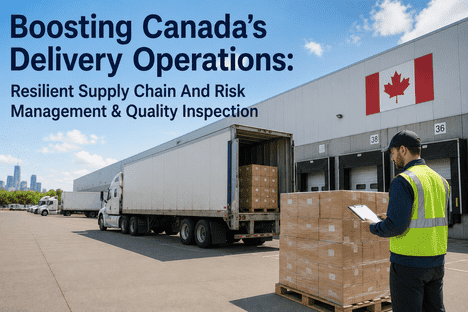
India's warehouse and logistics sector is growing at over 10% annually — driven by e-commerce expansion, manufacturing modernization under Production Linked Incentive (PLI) schemes, and the macroeconomic push toward a $5 trillion economy by 2027. Yet analytics management remains the single biggest operational bottleneck for Indian warehouse delivery operations. Most facilities operate on fragmented data: delivery tracking in one system, inventory in another, fleet management on spreadsheets, and shift handoffs on paper or WhatsApp. This data fragmentation makes real-time delivery compliance monitoring impossible — and scales operational chaos proportionally with growth. iFactory AI's integrated warehouse delivery operations platform unifies fleet telematics, inventory analytics, shift logbook data, and delivery compliance tracking into a single system purpose-built for India's manufacturing logistics environment — delivering documented 25–40% improvement in on-time delivery performance, 30–50% reduction in inventory discrepancies, and 3:1–6:1 ROI within 6–12 months. Book a Demo to see how iFactory AI unifies your warehouse delivery operations across India.
INDIA MANUFACTURING LOGISTICS · AI · 2026
Warehouse Delivery Operations AI for India's Manufacturing Logistics Sector
India's warehousing and logistics sector is growing at 10%+ annually. AI-powered delivery operations management unifies inventory, fleet, shift data, and compliance analytics — enabling Indian manufacturers to scale delivery operations without operational chaos.
10%+
Annual growth rate of India's warehousing and logistics sector
25–40%
Improvement in on-time delivery with AI-powered operations
30–50%
Reduction in inventory discrepancies across Indian warehouses
3:1–6:1
ROI within 6–12 months for Indian manufacturing logistics deployments
The India Manufacturing Logistics Challenge: Growth Without Data Infrastructure
India's manufacturing logistics sector is scaling at a pace that exposes the fragility of fragmented data systems. A typical Indian warehouse delivery operation runs across multiple unconnected platforms: a TMS for fleet tracking, a WMS for inventory, WhatsApp groups for shift communication, and physical registers for delivery proof. When a customer complains about a delayed or incorrect delivery, tracing the root cause requires reconciling data from four or five disconnected sources — assuming the data exists at all. This fragmentation is not a minor inconvenience. It is a structural barrier to scaling delivery operations without a proportional increase in errors, delays, and compliance failures.
Average Annual Cost of Data Fragmentation per Mid-Size Warehouse
Indian warehouses operating with 3+ disconnected systems spend an estimated ₹8–12 lakhs annually in labor costs for manual data reconciliation, error correction, and delivery dispute resolution. These costs scale linearly with throughput and disappear when operations unify onto a single platform.
Of Indian Manufacturers Report Delivery Compliance as Top Operational Risk
A 2025 survey of 400+ Indian manufacturing firms found that 68% of operations leaders rank delivery compliance — on-time and accurate delivery to customers — as their highest operational risk, driven by data fragmentation across warehouse inventory, fleet management, and customer order systems.
Average Daily Time Lost to Data Reconciliation per Shift Supervisor
Indian warehouse shift supervisors spend an average of 2.5 hours per shift — over 30% of their working time — manually reconciling delivery data across disconnected systems, updating paper registers, and resolving discrepancies between inventory counts and fleet delivery records.
AI-Powered Warehouse Delivery Operations: Four Modules for India's Manufacturing Logistics
iFactory AI's warehouse delivery operations platform is designed for the specific constraints and opportunities of India's manufacturing logistics environment — from multi-modal transport coordination to GST-compliant documentation to the unique challenges of last-mile delivery in Tier 2 and Tier 3 cities. Book a Demo to see which modules address your operation's biggest bottlenecks.
| Module |
Traditional Approach |
iFactory AI Platform |
Impact for Indian Operations |
| Delivery Operations Analytics |
Disconnected data from multiple systems; manual reconciliation on spreadsheets |
Unified real-time dashboard: fleet telematics, inventory, shift data, delivery proof, and customer feedback in one view |
25–40% improvement in on-time delivery; 60% reduction in manual reconciliation labor |
| Shift Logbook & Handover |
Paper registers and WhatsApp groups; information lost between shifts |
Digital shift logbook with structured templates, photo-documented findings, and cross-shift analytics |
Zero information loss between shifts; 35–50% faster shift handover with complete data continuity |
| Fleet & Delivery Compliance |
Manual delivery proof collection; paper-based e-way bill and GST documentation |
Automated e-way bill integration, digital delivery proof with geo-tagged photo capture, real-time compliance dashboards |
Delivery compliance documentation time reduced by 70%; e-way bill errors eliminated |
| Inventory & Warehouse Analytics |
Periodic physical counts; manual reconciliation with delivery records |
Real-time inventory tracking integrated with goods-in scanning, pick-pack verification, and delivery confirmation |
Inventory accuracy improved to 99%+; stock discrepancy resolution time reduced by 80% |
Unify Your Warehouse Delivery Operations Across India's Manufacturing Logistics Network
iFactory AI integrates inventory, fleet, shift data, and delivery compliance into a single platform — enabling Indian manufacturers to scale delivery operations from 50 to 5,000+ deliveries per day without operational chaos.
Indian Manufacturing Logistics: Real-World Deployments and Measurable Outcomes
Warehouse delivery operations across India that deployed iFactory AI's integrated platform with documented, measurable outcomes relevant to the Indian manufacturing logistics context.
Automotive Component Manufacturer — Pune
Deployed across 4 warehouses serving 12 assembly plants within a 200 km radius of Pune; 150+ delivery vehicles tracked daily
On-time delivery improved from 72% to 95% within 90 days of full deployment
Inventory discrepancies reduced by 64%; manual reconciliation time eliminated — saving ₹6.2 lakhs annually
FMCG Distribution Hub — Delhi NCR
Deployed across 3 distribution centers serving 800+ retail outlets across Delhi NCR, Uttar Pradesh, and Rajasthan
Shift handover time reduced from 45 minutes to 8 minutes per shift with zero information loss
Delivery compliance documentation digitized — e-way bill errors eliminated, GST audit readiness achieved in 5 weeks
Pharmaceutical Logistics Provider — Gujarat
Integrated fleet telematics, temperature monitoring, and delivery compliance analytics for cold chain logistics across Gujarat and Maharashtra
Temperature excursion-related delivery rejections reduced by 82%; real-time compliance alerts enabled proactive intervention
ROI achieved in 5 months; annual savings of ₹14.8 lakhs from reduced rejections, optimized routes, and eliminated manual documentation
Why Indian Manufacturers Are Adopting AI-Powered Warehouse Delivery Operations
India's manufacturing logistics sector faces a unique combination of growth pressure, infrastructure variability, and regulatory complexity. The adoption of AI-powered delivery operations management is accelerating for reasons specific to the Indian operating environment.
PLI Scheme Scale-Up Pressure
Manufacturers operating under Production Linked Incentive (PLI) schemes across automotive, electronics, pharmaceuticals, and textiles must scale production and delivery capacity rapidly to meet scheme targets. AI-powered delivery operations enable scaling without proportional increases in logistics headcount, error rates, or compliance risk — directly supporting PLI production milestones.
GST & E-Way Bill Compliance Complexity
India's GST framework requires accurate e-way bill generation, real-time vehicle tracking, and delivery proof documentation for every inter-state movement. Non-compliance penalties and audit exposure increase with delivery volume. AI-powered compliance automation eliminates manual documentation errors and provides audit-ready records for every delivery transaction.
Tier 2 & Tier 3 City Last-Mile Complexity
Indian manufacturers are expanding delivery networks beyond metro areas into Tier 2 and Tier 3 cities where infrastructure variability, address standardization challenges, and last-mile delivery partner management introduce operational complexity that fragmented data systems cannot handle. Unified AI platforms provide the visibility and control needed to manage distributed delivery networks.
Cost Pressures & Margin Protection
With logistics costs accounting for 13–14% of GDP in India versus 7–8% in developed economies, Indian manufacturers face structural cost disadvantages. AI-powered delivery operations reduce logistics cost-per-delivery through route optimization, reduced error-related re-deliveries, eliminated manual reconciliation labor, and improved fleet utilization — directly protecting margins in a competitive market.
On-time in-full delivery improvement from unified data visibility across inventory, fleet, and shift operations — eliminating the information gaps that cause delivery failures.
Typical annual savings from eliminated manual reconciliation, reduced re-delivery costs, optimized fleet utilization, and minimized compliance penalties per warehouse cluster.
60–70%
less documentation labor
Reduction in manual documentation and compliance reporting labor through automated e-way bill generation, digital proof of delivery, and integrated GST-ready records.
Documented ROI range across Indian manufacturing logistics deployments. Typical payback period of 6–12 months with faster payback for multi-warehouse deployments.
Ready to unify your warehouse delivery operations for India's manufacturing logistics growth?
Book a Demo with iFactory AI's India operations team.
Deployment Timeline: From Fragmented Data to Unified Delivery Operations in 8–10 Weeks
iFactory AI's warehouse delivery operations platform deploys in phased increments designed for Indian manufacturing logistics environments — working with existing ERP, WMS, and fleet management systems without replacement.
Weeks 1–3: Assessment and Integration Planning
Current state audit across all warehouse delivery operations — inventory management systems, fleet tracking platforms, shift documentation processes, and compliance reporting workflows. Integration points identified with existing SAP, Oracle, Tally, or other ERP platforms. Data migration plan developed for transitioning from spreadsheets and paper records to digital operations.
Weeks 4–6: Phase 1 Deployment — Core Operations
Digital shift logbook deployed across all shifts with structured templates for Indian warehouse delivery operations. Fleet telematics integration completed with support for GPS tracking devices and driver mobile apps. Real-time inventory tracking activated with goods-in scanning and pick-pack verification. Delivery compliance dashboard configured with e-way bill integration and digital proof-of-delivery capture.
Weeks 7–8: Phase 2 — Analytics and Optimization
Cross-shift delivery operations analytics activated — real-time dashboards showing on-time delivery rates, inventory accuracy, fleet utilization, and compliance status. Anomaly detection and escalation workflows configured. Shift supervisor and operations manager training completed with hands-on platform orientation. ROI baseline data validated against pre-deployment metrics.
Weeks 9–10: Full Deployment and Optimization
Multi-warehouse rollout completed with unified cross-facility dashboards. Route optimization module activated. Supplier and customer portal access configured for delivery tracking visibility. Continuous improvement cadence established with weekly operations analytics review and monthly ROI reporting.
SCALE WITHOUT CHAOS
AI-Powered Warehouse Delivery Operations for India's Manufacturing Future
iFactory AI unifies inventory, fleet, shift data, and delivery compliance into a single platform — enabling Indian manufacturers to scale delivery operations from 50 to 5,000+ deliveries per day. Live within 8–10 weeks. Works with existing ERP and fleet systems.
25–40%
On-Time Delivery Improvement
30–50%
Inventory Discrepancy Reduction
60–70%
Less Documentation Labor
3:1–6:1
ROI Within 6–12 Months