Warehouse delivery operations live or die by data flow. When a Warehouse Management System (WMS) operates in isolation from AI-driven equipment monitoring, demand signals, and execution intelligence, every breakdown a conveyor stoppage, a picking bottleneck, sortation jam propagates silently into missed delivery windows, SLA penalties, and lost customer trust. Industry research shows unplanned warehouse downtime costs operators an average of $260,000 per incident, while siloed WMS deployments leave 35–45% of operational data unused for delivery decision-making. AI-WMS integration closes that gap by fusing real-time equipment health, inventory state, labor availability, and outbound scheduling into a single execution layer — so a sorter slowdown immediately reshapes pick waves, dispatch sequences, and carrier hand-offs before a single shipment is late. Book a Demo to see how iFactory AI integrates with your WMS, MES, and ERP within 4 to 8 weeks.
35%
Inventory reduction reported by early WMS-AI integration adopters (McKinsey)
65%
Service-level improvement after WMS-AI integration across fulfillment KPIs
40%
Reduction in equipment downtime through AI-integrated WMS workflows
4-8 wks
Deployment timeline from initial audit to live WMS-AI delivery orchestration
Why WMS-AI Integration Is Now the Backbone of Delivery Operations
A standalone WMS captures inventory state, slot location, and order status — but cannot anticipate the conditions that disrupt outbound delivery. A drive motor signature trending toward failure on a sortation conveyor, a picker fatigue pattern indicating a slowdown three hours away, a demand spike rippling through inbound carrier ETAs — these are AI inputs, not WMS inputs. When the two systems share data in real time through API-driven integration, the WMS stops reacting to disruptions and starts preventing them. A predicted equipment fault triggers automatic rerouting of pick waves to unaffected zones; a sudden inbound delay reshapes outbound dispatch sequences before the dock supervisor knows about the change.
Traditional warehouse stacks treat WMS, CMMS, MES, ERP, and TMS as separate transactional systems exchanging batch updates every few hours. iFactory's integrated platform replaces that lag with continuous bidirectional data flow — pulling SCADA, IoT sensor, and PLC signals into an AI execution layer that writes prioritized action back into the WMS in seconds. The result is a delivery operation where equipment health, labor capacity, inventory accuracy, and carrier readiness move as one synchronized system rather than four disconnected ones.
Real-Time Equipment-to-Order Linkage
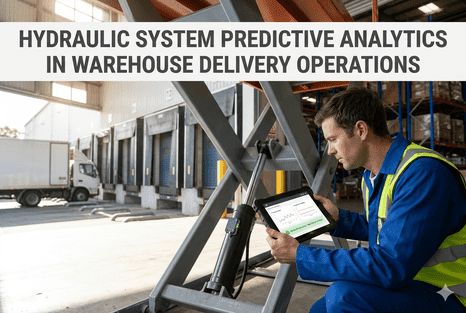
AI monitors conveyor motors, sorter divert systems, AS/RS cranes, and dock leveler health continuously — automatically rerouting orders away from at-risk equipment before the WMS allocates picks to a failing zone.
Predictive Delivery Risk Scoring
ML models fuse pick rate trends, dock door availability, carrier ETA confidence, and SKU velocity to score each outbound order's delivery risk in real time — flagging at-risk shipments hours before SLA exposure.
Bidirectional API Data Layer
REST and event-driven APIs connect your existing WMS (Manhattan, SAP EWM, Blue Yonder, Körber, Infor) to iFactory's AI execution engine — no rip-and-replace, no batch delays, no manual reconciliation between systems.
Dynamic Pick Wave and Labor Optimization
AI continuously recalculates optimal pick sequences, labor zone assignments, and replenishment priorities based on live order mix, equipment availability, and demand forecast — replacing static WMS waves with adaptive execution.
Digital Shift Logbook and Handover Continuity
iFactory's AI-powered shift logbook captures every event, equipment status, and outstanding delivery exception — eliminating the handover failures that cause 40% of operational incidents and ensuring no shipment falls through cross-shift gaps.
Unified MES, CMMS, ERP, and TMS Connectivity
iFactory connects WMS, MES, CMMS, ERP, and TMS into a single intelligence layer — synchronizing inventory, production, maintenance, and transportation data so delivery decisions reflect the complete operational picture, not fragmented snapshots.
What Standalone WMS Misses That AI-Integrated WMS Catches
Conventional WMS deployments excel at the transactional layer — recording where every SKU sits, who picked what, and which order is at which dock. What they cannot do is correlate that operational data with the upstream equipment, labor, and demand signals that determine whether a delivery actually leaves on time. The following comparison shows what operators are leaving on the table with siloed WMS architectures versus what AI integration delivers.
| Delivery Operations Parameter |
Standalone WMS |
iFactory AI-Integrated WMS |
| Equipment Failure Visibility |
WMS is unaware of equipment health. Pick wave allocation continues until conveyor or sorter actually fails, then orders cascade into manual rework and missed dispatch windows. |
Equipment health continuously monitored via IoT sensors; pick waves automatically rerouted away from at-risk zones 10–18 days before predicted failure, with no operator intervention required. |
| Demand and Pick Wave Adaptation |
Pick waves built on fixed rules every 1–4 hours. Sudden order spikes, carrier reschedules, or SKU mix changes are not reflected until the next wave cycle. |
AI dynamically rebuilds pick waves every few minutes based on live order arrivals, equipment availability, and labor capacity — eliminating wave-lag delivery delays. |
| Cross-System Data Latency |
Batch synchronization between WMS, ERP, TMS, and CMMS every 30 minutes to several hours. Decisions made on stale data; reconciliation conflicts common. |
API-driven event streaming with sub-second updates across WMS, MES, CMMS, ERP, and TMS. Every system reflects the same reality at every moment. |
| Shift Handover and Operational Continuity |
Handover relies on paper logs or unstructured notes; outstanding delivery exceptions, equipment issues, and open tasks frequently lost between shifts. |
AI-generated shift summaries auto-capture equipment state, pending exceptions, and delivery commitments — handover failures (which cause 40% of operational incidents) eliminated. |
| Delivery SLA Risk Detection |
SLA breach is identified after the fact, when a shipment misses dispatch cutoff or a carrier reports a delay. Recovery is reactive and expensive. |
AI risk scoring flags shipments 4–8 hours before SLA exposure with recommended interventions — labor reallocation, dock reassignment, or expedited routing. |
| Inventory Accuracy and Replenishment |
Cycle counts and replenishment triggers run on scheduled rules. Discrepancies discovered during picking cause downstream delivery delays. |
Computer vision and AI reconciliation maintain continuous inventory accuracy; replenishment triggered by predicted depletion before pickers reach an empty slot. |
Every Disconnected System in Your Warehouse Is a Delivery Risk Waiting to Surface.
iFactory AI gives warehouse operators a unified WMS-AI execution layer — real-time equipment-to-order linkage, predictive delivery risk scoring, dynamic pick wave optimization, and seamless integration with your existing WMS, MES, CMMS, ERP, and TMS in 4 to 8 weeks.
Book a Demo to see how integration eliminates siloed-system failures in your facility.
How iFactory AI Deploys WMS Integration Across Warehouse Delivery Operations
iFactory follows a structured deployment process designed to deliver measurable execution improvements within the first two weeks, with full WMS-AI integration live by week eight. Each stage has defined deliverables so warehouse operators see operational change — not a multi-quarter implementation with no visible output.
Weeks 1–2
Warehouse System Audit and API Mapping
Existing WMS, MES, CMMS, ERP, and TMS endpoints catalogued. Equipment inventory, sensor coverage, and data flow gaps documented. API connections established with the operator's WMS — including Manhattan, SAP EWM, Blue Yonder, Körber, Infor, or custom platforms. Digital shift logbook deployed for immediate handover continuity.
Weeks 3–4
IoT Sensor Activation and Equipment Health Modeling
IoT sensors and edge gateways activated on conveyors, sorters, AS/RS, dock equipment, and material handling assets. AI baselines normal operating signatures and begins surfacing equipment-health alerts directly into WMS pick-wave logic. First predictive maintenance work orders auto-generated and synchronized with CMMS.
Weeks 5–6
Dynamic Pick Wave and Delivery Orchestration
AI pick-wave optimization activated, replacing static rule-based waves with continuous re-sequencing. Outbound risk scoring goes live across all dispatch windows. TMS connectivity enables carrier ETA synchronization with dock door assignment and outbound staging logic.
Weeks 7–8
Full Deployment with Unified Execution Dashboard
Network-wide WMS-AI integration live. Real-time delivery operations dashboard active across receiving, putaway, picking, packing, and dispatch. AI-generated daily and shift reports automated. Multi-site rollout templates configured for additional distribution centers and fulfillment hubs.
MEASURABLE OUTCOMES FROM WEEK 3: EQUIPMENT-DRIVEN DELIVERY DISRUPTIONS BEGIN DECLINING IMMEDIATELY
Warehouse operators completing iFactory's 4 to 8 week deployment report equipment-related dispatch delays declining within the first 30 days and unplanned downtime reducing 25–40% within the first 90 days — recovering $150,000 to $400,000 annually per facility in avoided downtime, SLA penalties, and emergency repair premiums, with full delivery orchestration delivering 15–25% throughput gains by week 8.
25–40%
Reduction in unplanned equipment downtime within 90 days
15–25%
Throughput gain from dynamic pick wave optimization
50%
Faster work order execution via AI-powered auto-assignment
WMS-AI Integration: Use Cases from Live Warehouse Deployments
The following outcomes are drawn from iFactory deployments at operating distribution centers and fulfillment facilities across e-commerce, 3PL, retail distribution, and industrial parts operations. Each use case reflects 9 to 12 month post-deployment performance data.
A national e-commerce fulfillment operator running 14 distribution centers was experiencing 2 to 3 unplanned conveyor stoppages per facility per month — each averaging 90 minutes to 4 hours of throughput loss and direct exposure to next-day-delivery SLA penalties. The existing WMS had no visibility into equipment health, so pick waves continued allocating orders to zones served by failing conveyors right up until the moment of breakdown. iFactory deployed IoT vibration and motor current sensors across primary takeaway and sortation conveyors, integrating signal anomaly detection directly into the WMS pick-wave allocation logic. Within 60 days, predictive alerts were rerouting orders away from at-risk zones an average of 10 to 18 days before any conveyor stoppage, and emergency repair premiums dropped to near zero as parts and labor were scheduled into planned maintenance windows. Annual recovered value across the network exceeded $4.2M in avoided downtime, SLA penalty reduction, and labor productivity gains.
Book a Demo to see how this applies to your fulfillment network.
$4.2M
Annual recovered value across 14-facility fulfillment network
10–18 days
Lead time between AI failure prediction and conveyor stoppage
0
Emergency repair premiums after 90 days of predictive routing
A retail 3PL managing peak season volumes of 240,000 outbound units per day was hitting throughput ceilings well below installed capacity because its WMS-driven pick waves rebuilt only every 90 minutes. Order spikes arriving between wave cycles backed up at induction, while underutilized labor zones sat idle. iFactory integrated AI pick-wave optimization with the operator's existing Manhattan WMS, pulling live order arrivals, picker location data, equipment availability, and dock-door assignments into a continuous re-sequencing engine. Pick waves now refreshed every 4 minutes against real conditions. Peak season throughput rose 22% without additional labor, on-time outbound dispatch improved from 89% to 97.4%, and weekend overtime spend dropped 31% as the system flattened intra-day workload spikes.
Book a Demo to apply dynamic wave optimization to your peak operations.
22%
Peak throughput gain with no additional labor headcount
97.4%
On-time outbound dispatch rate vs 89% pre-deployment
31%
Weekend overtime spend reduction from leveled workload
An industrial parts distributor running three shifts across two distribution centers was repeatedly losing open delivery exceptions, equipment status notes, and outstanding pick problems at every shift change. Paper logbooks and informal verbal handovers meant 12–18% of exceptions had to be rediscovered each morning, delaying response by 4–6 hours. iFactory's AI-powered digital shift logbook deployed alongside the existing WMS, capturing every equipment event, exception, and open task with AI-generated shift summaries, photo evidence, and structured templates. Cross-shift exception loss dropped to near zero, average response time to delivery-blocking issues improved from 5.2 hours to 38 minutes, and the operator passed its next ISO 9001 audit with zero findings on operational record-keeping — historically a recurring weakness.
Book a Demo to see how shift logbook integration eliminates handover-driven delivery delays.
38 min
Response time to delivery exceptions vs 5.2 hours pre-deployment
0
ISO 9001 audit findings on operational record-keeping
98%
Reduction in exceptions lost between shifts
Expert Perspective: Why Integration Beats Replacement in WMS-AI Strategy
Industry Review — Warehouse Operations Engineering Perspective
"The most expensive mistake we see warehouse operators make is treating AI as a WMS replacement problem rather than a WMS integration problem. The existing WMS works — it tracks inventory, runs picks, manages slots. What it cannot do is correlate equipment health, labor signals, and demand volatility into a single execution decision. That correlation layer is what AI adds, and it adds it through APIs in weeks, not through rip-and-replace projects that take years. Operators who get this right keep their WMS investment intact while gaining the predictive capability that turns reactive warehouses into proactive ones."
Warehouse Operations Director — Multi-Site Distribution Network (provided via iFactory deployment reference)
This perspective aligns with what warehouse engineers report consistently across iFactory deployments: the highest-ROI improvements come not from new WMS platforms but from closing the integration gap between WMS, equipment, and execution intelligence. AI creates that closed loop by treating warehouse operations as a continuous control problem rather than a series of disconnected transactional systems. Book a Demo to speak with iFactory's warehouse integration specialists about your current stack.
Unified WMS-AI Execution. Real-Time Delivery Orchestration. Live in 4 to 8 Weeks.
iFactory gives warehouse operators API-driven integration with existing WMS, MES, CMMS, ERP, and TMS systems — adding equipment-aware pick wave optimization, predictive delivery risk scoring, and AI shift logbook continuity without replacing what already works. Results are measurable within 30 days of deployment.
Conclusion: WMS-AI Integration Is the New Standard for Delivery Operations
The case for WMS-AI integration has moved beyond proof-of-concept. With McKinsey reporting 35% inventory reduction, 65% service-level improvement, and 15% logistics cost reduction among early adopters, and 92% of industrial leaders identifying AI-driven operations as the primary driver of competitiveness, warehouse operators continuing to run WMS, equipment, and execution systems in isolation are accepting structural disadvantage that integration eliminates. Equipment failures, demand volatility, shift handover gaps, and cross-system data lag will no longer be tolerated by customers expecting predictable next-day and same-day delivery performance.
iFactory's platform delivers the specific capabilities warehouse delivery operations require: real-time equipment-to-order linkage through IoT and AI vision, predictive delivery risk scoring across every outbound shipment, dynamic pick wave optimization that replaces static waves with continuous re-sequencing, AI-powered shift logbook continuity, and API-driven integration with Manhattan, SAP EWM, Blue Yonder, Körber, Infor, and custom WMS platforms. The 4 to 8 week deployment program means measurable execution improvements begin within weeks — not the multi-quarter implementation timelines that have historically made integrated WMS programs difficult to justify. Book a Demo to receive a WMS integration assessment specific to your facility, existing systems, and delivery operations.
Frequently Asked Questions About WMS-AI Integration for Warehouse Delivery
Do we need to replace our existing WMS to add AI integration?
No. iFactory integrates with existing WMS platforms — including Manhattan, SAP EWM, Blue Yonder, Körber, Infor, and custom systems — through REST and event-driven APIs. The AI layer adds equipment monitoring, predictive analytics, and execution intelligence without replacing transactional WMS functionality.
How quickly does AI integration begin reducing equipment-driven delivery delays?
IoT sensor deployment and AI baseline learning typically complete within weeks 3–4 of deployment. Operators report equipment failure prediction accuracy reaching 90%+ within 60 days, with measurable downtime reduction visible in the first 90 days and 25–40% improvement sustained at 12 months.
What types of warehouse equipment can iFactory's AI layer monitor?
iFactory monitors conveyors, sorters, AS/RS cranes, AGVs and AMRs, dock levelers, forklift fleets, packaging lines, label applicators, and any PLC- or sensor-equipped material handling asset. Edge gateways and IoT sensors cover both modern and legacy equipment.
How does the AI-powered shift logbook integrate with WMS and CMMS?
The shift logbook auto-captures events from WMS exception logs, CMMS work orders, and equipment alerts, generating AI summaries with photo evidence and structured templates. Handover continuity is maintained across shifts, sites, and systems — eliminating the 40% of operational incidents traced to handover communication failures.
Does iFactory support multi-site warehouse and distribution center networks?
Yes. iFactory deploys across multi-site networks with centralized visibility and site-specific configuration. Multi-language support, regional compliance, role-based access, and cloud, on-premise, and hybrid deployment options are available for global warehouse operations.
Stop Letting Disconnected Systems Disrupt Your Deliveries. Deploy WMS-AI Integration in 4 to 8 Weeks.
iFactory gives warehouse operators real-time equipment-to-order linkage, predictive delivery risk scoring, dynamic pick wave optimization, and AI shift logbook continuity — integrated with your existing WMS, MES, CMMS, ERP, and TMS through API connectivity that preserves your current technology investment.
35% inventory reduction and 65% service-level improvement reported by early adopters
25–40% reduction in unplanned equipment downtime within 90 days
15–25% throughput gain from dynamic pick wave optimization
4 to 8 week deployment with measurable improvements from week 3