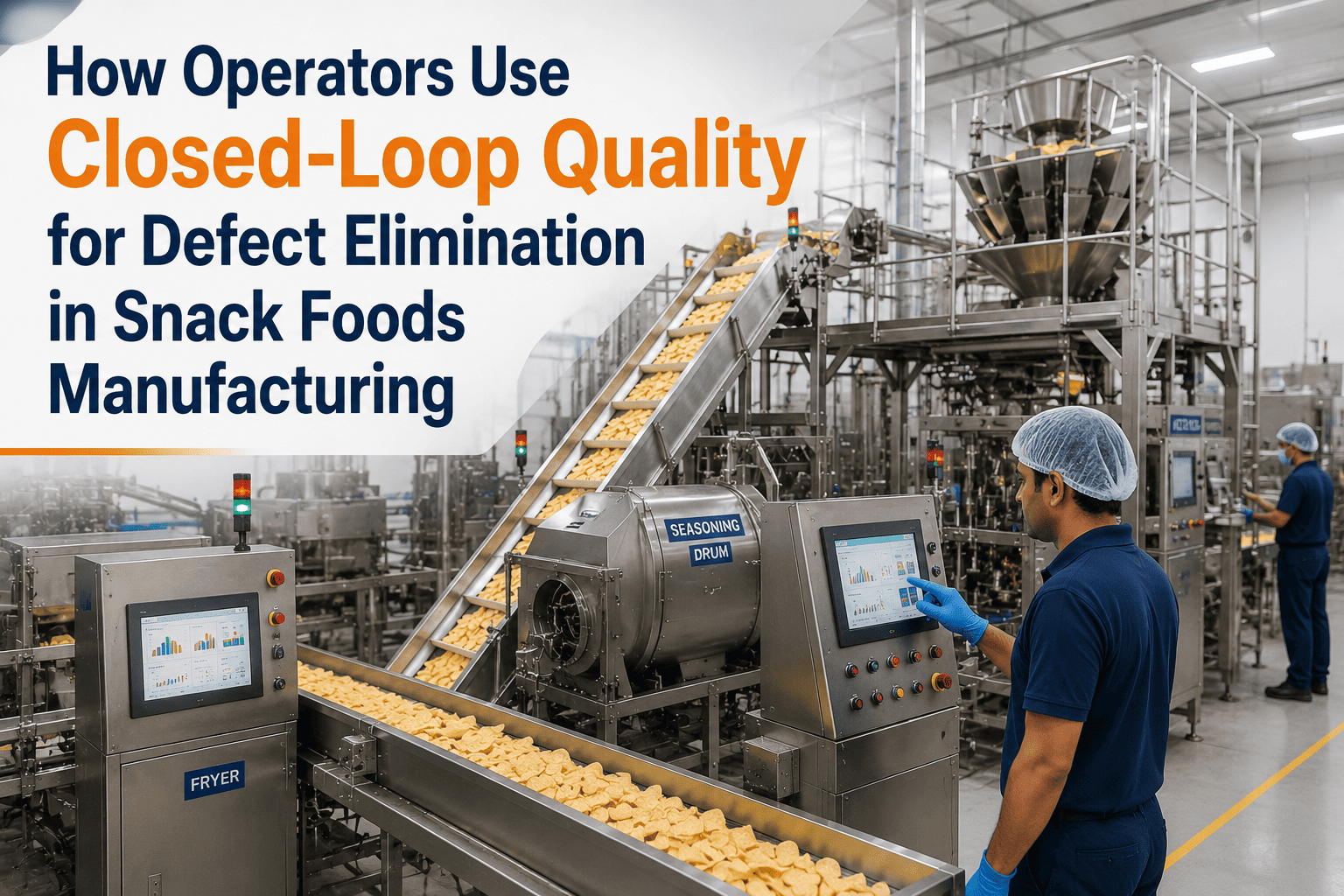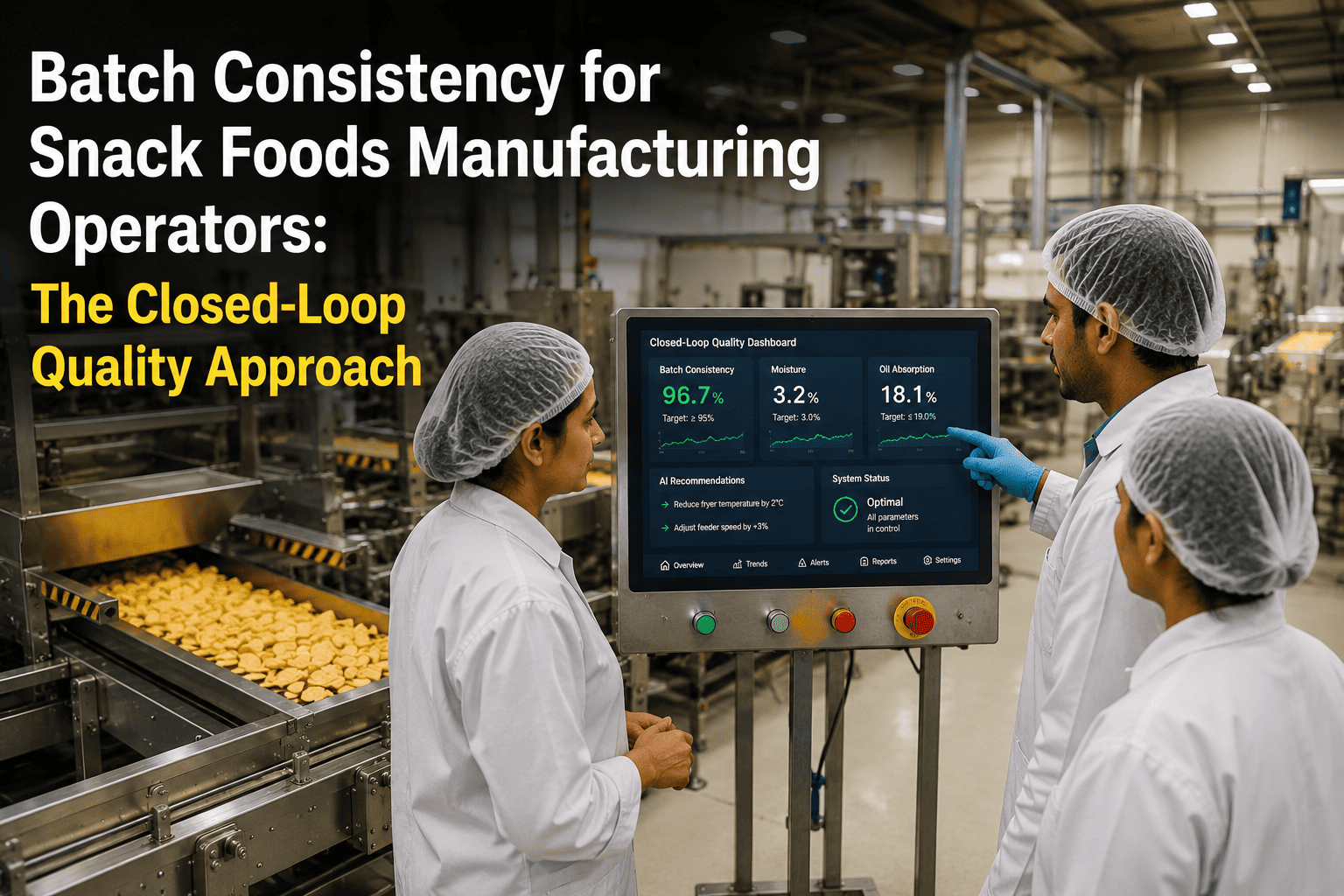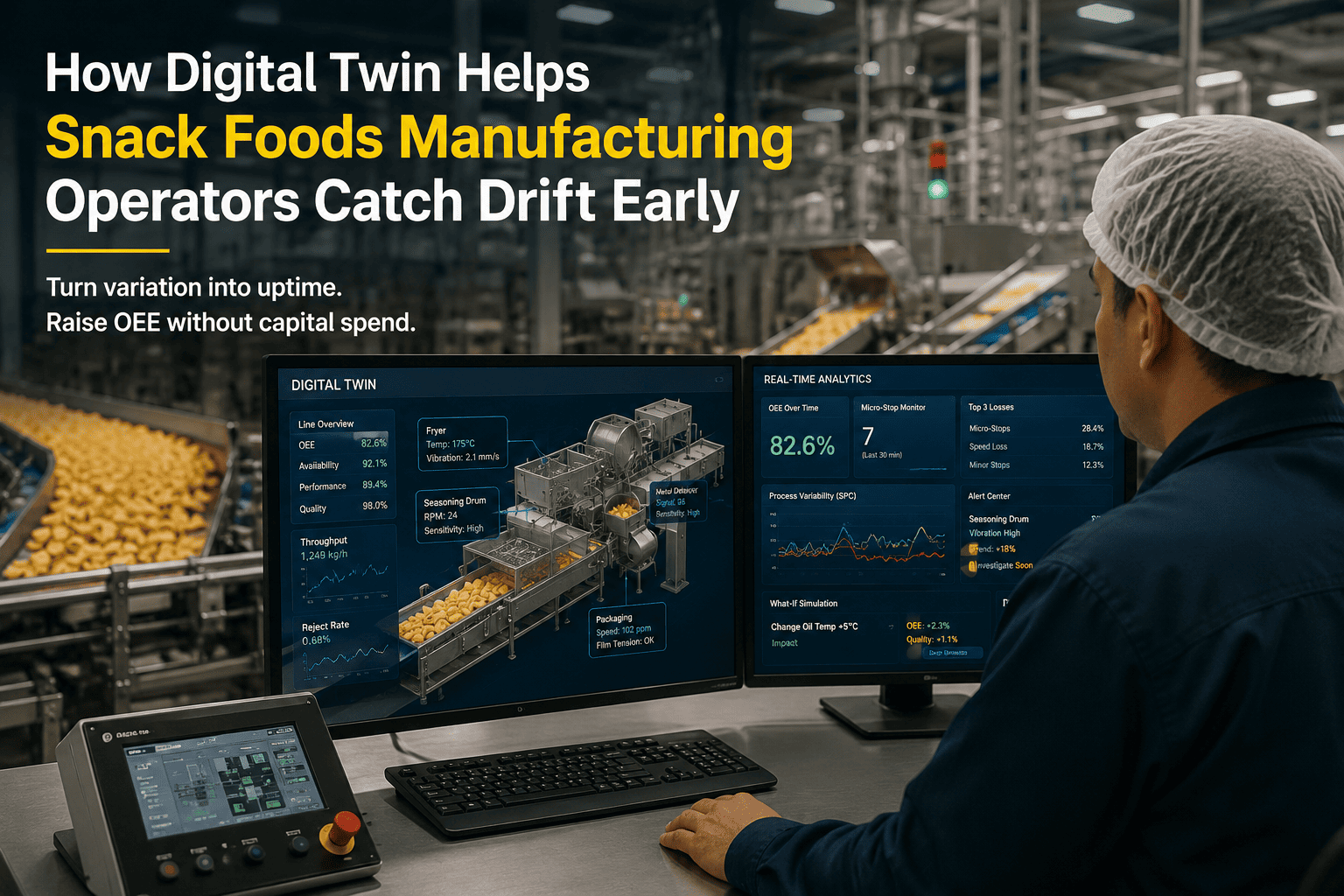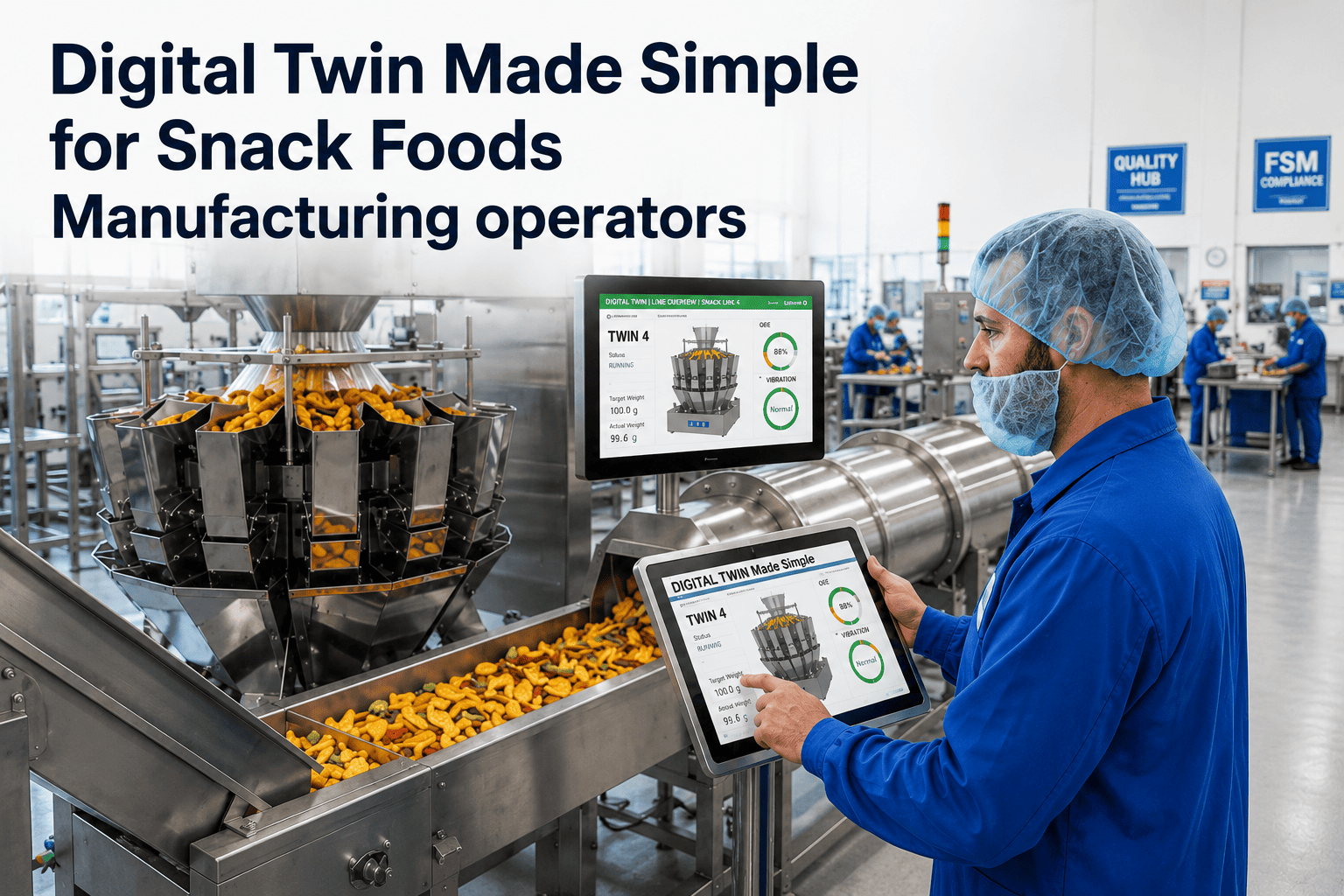
A third-shift line operator at a major snack-foods plant watches the color sorters reject an entire batch of tortilla chips — the fryer temperature drifted for 47 seconds, and nobody saw it until the bagger checkweigher flagged the weight variance. That single event costs $12,000 in rework and lost throughput. Across the plant, six different OEM control systems, three generations of PLCs, and a legacy MES that only records finished-good counts mean the operations team has no unified view of the thermal profile, moisture content, or seasoning adhesion happening in real time. Defects like scorching, under-cooking, and oil absorption variability are accepted as normal — but they aren't. They're engineering problems waiting for the right data architecture.
Eliminate Snack-Food Defects with a Real-Time Digital Twin — No Cloud, No Data Leakage
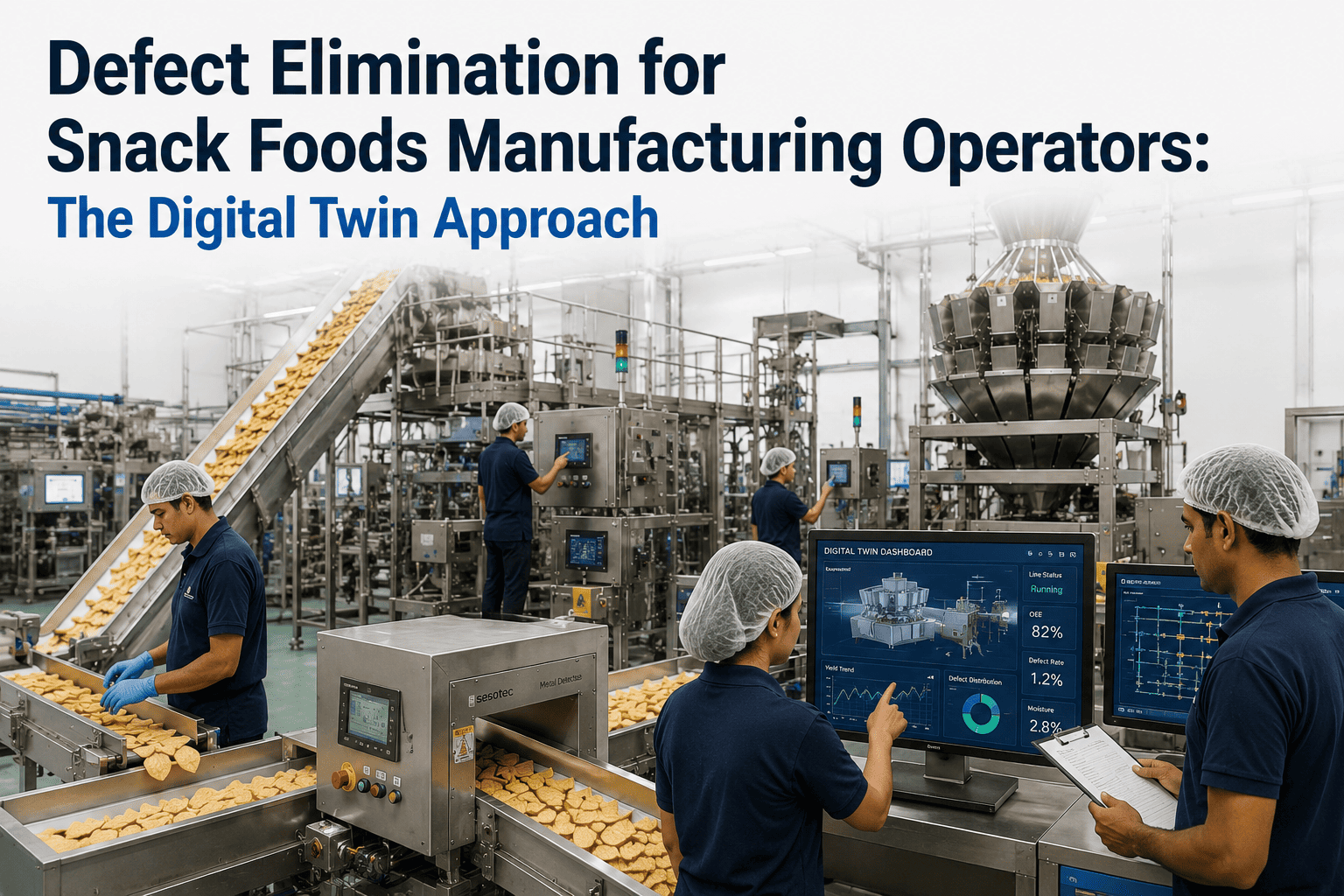
iFactory fuses every sensor, PLC, and vision system across your fryer, oven, seasoning drum, and packaging line into a single on-premise digital twin that predicts and prevents defects before they cost you throughput or brand reputation.
Snack-food manufacturing is a continuous battle against variability. A 0.5°C drift in fryer oil temperature changes the moisture gradient across a corn chip. A 3-second delay in the seasoning drum dwell time doubles the salt spread. Traditional MES systems log these events after the fact — they can't prevent them. iFactory's digital twin ingests every data source on your line at sub-second latency, builds a physics-aware model of your process, and surfaces actionable interventions before defect cascades reach the bagger. This isn't a dashboard overlay. It's a live, operational model of your line that learns and adapts to every shift.
Six Capabilities That Turn Raw Data into Defect-Free Production
Each capability is a purpose-built module running on the same on-premise appliance. They work together or standalone — deploy what fits your line today.
Fryer & Oven Temperature Profiling
Continuous real-time monitoring of every heating zone, oil flow, and exhaust temperature. iFactory detects drift patterns 8–12 minutes before they produce scorched batches — and recommends corrective setpoint changes to the PLC.
AI Vision Integration for Color & Texture
Ingests output from existing camera systems (Keyence, Cognex, Teledyne) and correlates color-space anomalies with upstream process variables. When a chip comes out too dark, iFactory traces it to the specific fryer oil turnover rate that caused it.
Moisture & Oil Absorption Modeling
Combines NIR sensor data, dwell time, and oil quality readings to predict finished-product moisture and fat content. Alerts operators when the oil degradation index crosses the threshold that drives absorbed-oil defects.
Checkweigher Correlation & Fill-Weight Optimization
Links every bagger's weight data back to the specific product stream from each fryer lane. When a checkweigher flags underfill, iFactory identifies whether the cause is moisture loss, a worn auger, or a seasoning adhesion issue — not just a bagger malfunction.
Seasoning Adhesion & Distribution Analytics
Monitors drum speed, spray nozzle pressure, and product flow rate to model seasoning pickup variance across the batch. iFactory flags when a 2% drop in nozzle pressure will cause a visible coating gap — before the QA lab runs a taste test.
Multi-Vendor PLC & SCADA Fusion
Connects to Allen-Bradley, Siemens, Mitsubishi, and Rockwell controllers without middleware. iFactory normalizes data from 20+ different protocols into a single time-series model — no rip-and-replace, no additional gateways.
From Data Sources to Defect Prevention in Four Steps
The iFactory appliance sits on your plant network, connects directly to your existing control infrastructure, and delivers a live digital twin within 6–12 weeks of handoff.
Connect Every Data Source
We plug into your PLCs, vision systems, checkweighers, NIR sensors, and SCADA historian — no new instrumentation required.
Build the Digital Twin
iFactory's AI learns the causal relationships between thermal, moisture, visual, and weight variables specific to your snack-food line — not a generic model.
Detect & Predict Defects
The twin surfaces real-time alerts when any variable combination drifts into defect territory — typically 8–15 minutes before product reaches the bagger.
Close the Loop
Operators receive actionable setpoint recommendations or, with approval, iFactory writes corrective values directly to the PLC for autonomous defect prevention.
Three Hidden Cost Centers That Drive Up Rework
Defects don't start at the bagger. They start at variables no one is watching — until iFactory makes them visible.
Unseen Thermal Drift
A 1°C fryer temperature drift that lasts 90 seconds creates 300–500 lbs of scorched product before any alarm fires. iFactory catches it in under 10 seconds.
Seasoning Over-Application
When nozzle pressure drops 5%, seasoning cost per bag spikes 12%. Most plants detect this via quarterly audits — iFactory surfaces it in real time.
Moisture-Driven Underfill
Product that loses 0.3% moisture between fryer and bagger triggers false underfill rejects on the checkweigher. iFactory correlates moisture loss with weight variance to eliminate false positives.
Measurable Results from Real Deployments
These metrics come from iFactory deployments at snack-food and baked-goods plants running 2–4 production lines each.
Your snack-food line already generates the data needed to eliminate defects — you just can't see it yet. Book a 30-min walkthrough and we'll show you a live twin running on a real production line.
Common Questions from Snack-Food Operations Leaders
Stop Accepting Defects as Normal
Your snack-food line has every data point needed to eliminate scorching, under-cooking, seasoning variance, and false rejects — you just need the right digital twin to connect them. iFactory delivers that twin on your plant network, in one quarter, with no cloud risk.