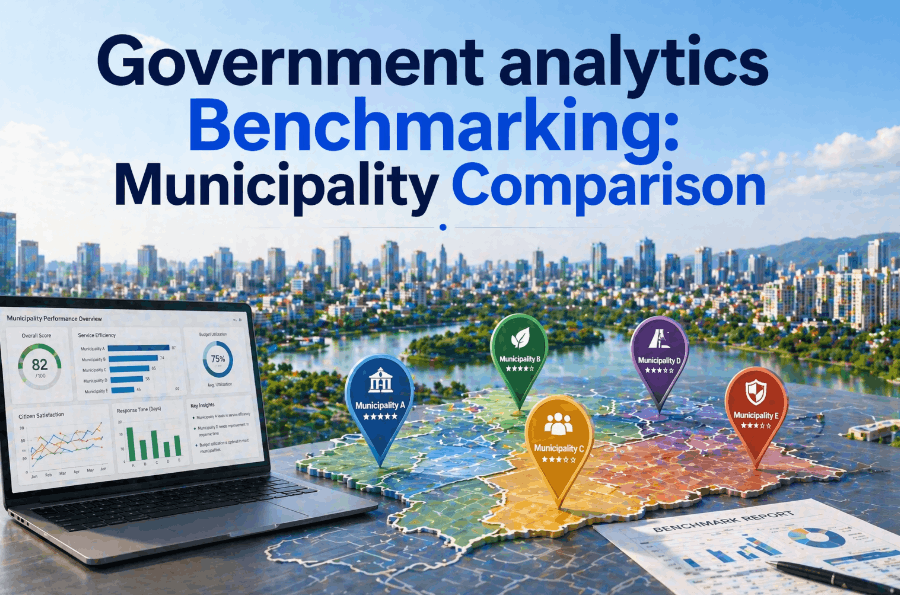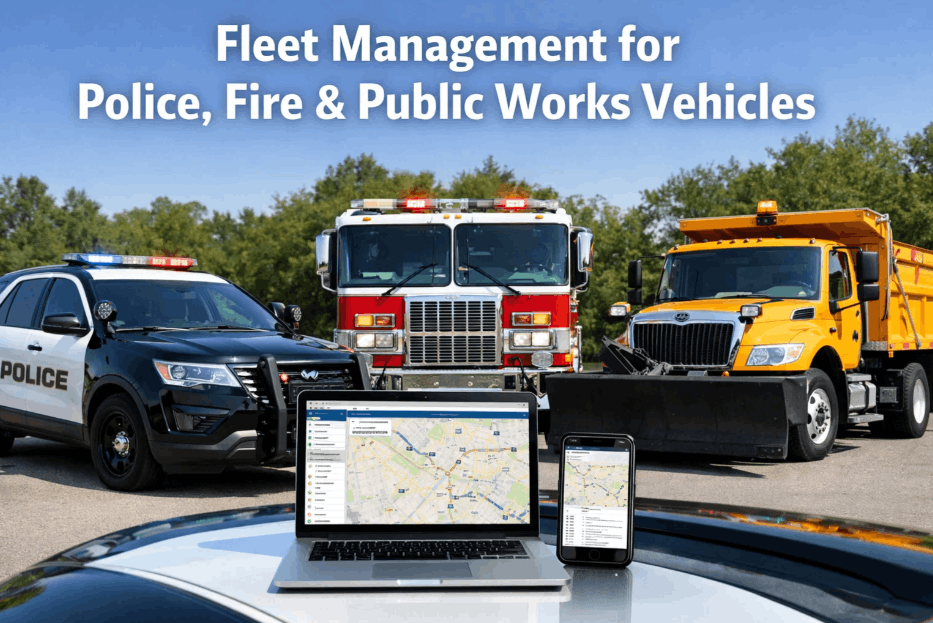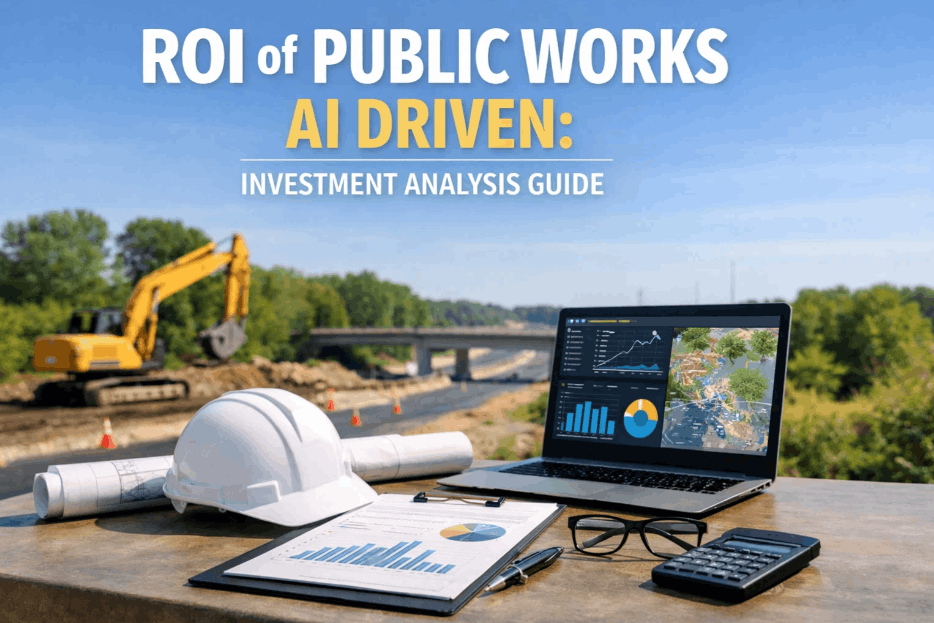
Public works departments across the country are under mounting pressure — aging infrastructure, shrinking budgets, growing citizen expectations, and increasingly complex regulatory compliance requirements. In 2026, the most forward-thinking municipal agencies are turning to AI-driven public works software to replace spreadsheets and paper-based workflows with intelligent, data-driven operations. This guide compares the best government AI-driven platforms available today — evaluating GIS integration, citizen request portals, predictive asset management, and compliance reporting capabilities — so your department can make a confident, informed technology investment. If you're ready to see what modern municipal analytics looks like in action, book a demo with iFactory and explore a platform built specifically for infrastructure operations.
See How AI-Driven Analytics Transforms Municipal Public Works Operations
From GIS-integrated asset monitoring to automated compliance reporting — iFactory delivers the municipal AI-driven platform your department needs to operate smarter, faster, and with fewer surprises.
Why Public Works Departments Need AI-Driven Software in 2026
The traditional approach to managing public infrastructure — reactive maintenance, manual inspections, disconnected work order systems — is no longer financially sustainable. American infrastructure loses an estimated $180 billion annually to inefficiencies that technology could prevent. Municipal agencies managing roads, water systems, stormwater infrastructure, fleet vehicles, parks, and public buildings are discovering that government AI-driven software is no longer a luxury reserved for large metro governments. It is now an operational necessity for departments of every size.
The core value proposition of public works AI-driven platforms comes down to three capabilities that manual processes fundamentally cannot deliver: predictive asset condition assessment, automated citizen service request routing, and real-time regulatory compliance documentation. The best platforms integrate all three into a unified municipal analytics dashboard — giving directors, supervisors, and field crews a shared operational picture that eliminates the coordination gaps responsible for missed maintenance windows, delayed response times, and compliance failures.
What to Look for in a Government AI-Driven Platform: Key Evaluation Criteria
Before comparing specific products, every public works director needs a clear evaluation framework. Municipal AI-driven software varies enormously in depth, integration capability, and total cost of ownership. The following criteria represent the features that most directly impact operational performance and long-term ROI — and should anchor any procurement evaluation for government analytics software.
Best Public Works AI-Driven Software: Platform Comparison for Municipal Operations
The following comparison evaluates leading public works software platforms across the criteria that matter most to municipal operations teams. Each platform has been assessed for functional depth, integration ecosystem, deployment complexity, and total cost of ownership — giving procurement teams a clear basis for side-by-side evaluation. Departments that want to see specific platforms demonstrated against their own infrastructure data can book a demo to arrange a customized evaluation session.
| Capability | iFactory AI | Cityworks | CentralSquare | Cartegraph |
|---|---|---|---|---|
| Predictive AI Analytics | 30–90 day failure prediction, ML ensemble models | Limited — rule-based alerts only | Basic condition scoring, no ML | Asset condition tracking, limited AI |
| GIS Integration | Native bidirectional GIS with real-time asset health overlay | Esri ArcGIS native integration | GIS map layers, manual sync | Esri integration, spatial analysis |
| Citizen Request Portal | AI-classified portal with 311 API, auto-routing | Citizen access module, manual routing | 311 integration, basic portal | Limited — partner-dependent |
| Compliance Reporting | Automated EPA, FHWA, ADA reports — 1-click generation | Custom report builder, manual assembly | Standard government templates | Pavement condition reporting, PASER |
| Mobile Field Tools | Offline-first, photo-capture, GPS sync | iOS/Android app, requires connectivity | Mobile access, limited offline | Field app with offline capability |
| Deployment Timeline | 12–16 weeks full deployment | 6–12 months typical | 4–8 months | 3–6 months |
| CMMS Integration | SAP, Maximo, eMaint, Infor — auto work orders | Native CMMS, limited third-party | ERP integrations available | Open API, Esri ecosystem |
GIS Integration in Municipal AI-Driven Software: Why Spatial Intelligence Matters
Geographic Information System (GIS) integration is the feature most commonly listed on government software vendor websites — and the one most frequently oversold. There is a critical difference between map visualization (displaying assets on a map) and true GIS-integrated municipal analytics (where spatial relationships actively inform maintenance prioritization, risk assessment, and capital planning decisions).
The best public works AI-driven platforms use GIS data as an active intelligence layer — correlating asset condition scores with watershed boundaries, traffic load corridors, soil subsidence risk zones, and utility conflict zones to generate spatially-aware maintenance recommendations. A road segment with a pavement condition index of 62 means something very different if it sits above a water main showing early corrosion signals versus one above recently replaced infrastructure. GIS-integrated AI surfaces these compounding risk factors automatically. Departments that want to see spatial risk intelligence in action can book a demo to explore live GIS dashboards built on real municipal infrastructure data.
Citizen Request Management: The Public-Facing Case for Government AI Software
Citizen satisfaction with local government services correlates directly with how quickly and transparently public works departments respond to reported issues — potholes, broken streetlights, flooded intersections, fallen tree limbs, and stormwater backups. Traditional 311 workflows route requests through call centers, then to supervisors, then to field crews via radio or paper — a chain that averages 4–7 days from report to resolution for non-emergency requests in departments without digital operations tools.
AI-driven citizen request portals collapse this workflow. When a resident submits a pothole report through a municipal portal, the AI instantly classifies the issue type, assigns a severity score based on location data and asset condition history, routes the work order to the appropriate crew with the right equipment and skill credentials, and sends the resident an automated acknowledgment with a real-time estimated resolution timeline. The crew closes the work order from a mobile device in the field — automatically triggering a completion notification to the resident. What took 4–7 days becomes a 24–48 hour workflow with zero supervisor coordination overhead.
Predictive Maintenance for Public Infrastructure: The AI-Driven Advantage
The financial case for predictive maintenance in public works is straightforward: emergency infrastructure repairs cost 3–5 times more than planned repairs for equivalent work scope. A water main failure that could have been predicted and replaced during a planned shutdown instead generates emergency excavation costs, traffic control expenses, water service disruption credits, and potential liability for property damage — all compounding a repair cost that might have been $40,000 into a $180,000 emergency response.
Compliance & Regulatory Reporting: The Hidden ROI of Municipal AI-Driven Software
Federal and state compliance requirements for public infrastructure are intensifying. EPA MS4 stormwater permits require annual reporting on catch basin inspection rates, illicit discharge detection activities, and construction site runoff management. FHWA pavement condition data must be submitted in specific formats for National Highway Performance Program compliance. ADA transition plans require documented progress on accessibility improvements to public facilities and sidewalk networks.
Manual compliance documentation — the standard approach in most public works departments — consumes an average of 800–1,200 staff hours annually in departments managing mid-size infrastructure inventories. Government AI-driven software with automated compliance reporting converts this burden into a single dashboard export. Every inspection recorded in the field, every work order completed, and every asset condition assessment automatically populates the compliance data repository — making annual reports a one-click operation rather than a weeks-long manual assembly exercise. Departments managing IIJA-funded projects can explore how automated compliance documentation works in practice by scheduling a book a demo session with iFactory's municipal operations team.
Choosing the Right Public Works AI-Driven Platform for Your Department
Selecting a government AI-driven software platform is a long-term infrastructure investment — one that will shape your department's maintenance workflows, compliance posture, and capital planning decisions for years ahead. Municipal operations teams that evaluate platforms against their own live infrastructure data make far more confident procurement decisions than those relying on vendor-prepared demos. To see how iFactory performs against your department's actual asset inventory, book a demo and our team will configure a session built around your environment.
Implementation Considerations: Deploying AI-Driven Software in Government Environments
Government IT environments present unique constraints — cybersecurity policies, data sovereignty requirements, and legacy system complexity — that extend deployment timelines beyond what private-sector projects typically require. Successful municipal AI-driven deployments share three characteristics: a clean asset inventory as the data foundation, a phased rollout prioritizing the highest-criticality asset classes first, and executive sponsorship that bridges IT and operations. Agencies ready to begin planning can book a demo to discuss a deployment roadmap specific to their department's existing infrastructure.
Frequently Asked Questions: Public Works AI-Driven Software
Public works AI-driven software uses machine learning and IoT sensor data to monitor municipal infrastructure — roads, water systems, fleet vehicles, and public facilities — in real time. It detects early degradation signals, predicts failures before they occur, and automatically generates work orders and compliance documentation without manual intervention.
Traditional CMMS platforms are passive record-keeping tools that store work orders and schedule time-based maintenance but cannot predict failures autonomously. Government AI-driven software adds a machine learning layer that continuously analyzes sensor data, identifies failure precursors, and triggers work orders in the CMMS before a technician ever spots the problem.
Leading platforms monitor pavement networks, water and stormwater systems, traffic signals, fleet equipment, public buildings, HVAC, parks facilities, and streetlight infrastructure. Deployment is typically phased to prioritize the highest-criticality asset classes based on failure consequence and monitoring readiness.
Yes — AI-driven platforms that maintain a timestamped audit trail of all inspections, maintenance actions, and asset condition assessments can generate IIJA-compliant reports automatically. This eliminates the manual documentation burden that typically consumes hundreds of staff hours per federal funding cycle.
Departments consistently see measurable ROI within 12 to 18 months — driven by a 55% reduction in unplanned downtime, 35 to 55% lower maintenance spend, and 70% fewer emergency parts orders. Mid-size agencies typically save $1.2 million to $2.4 million annually depending on asset volume and prior maintenance maturity.
Smaller departments with modern data environments typically reach full predictive operations in 12 to 16 weeks. Mid-size municipalities require 16 to 24 weeks, while large agencies with multiple legacy systems should plan for 6 to 12 months. Asset data quality is the single biggest factor determining deployment speed.
Ready to Compare iFactory Against Your Current Public Works Software?
iFactory deploys in 12–16 weeks, integrates with your existing CMMS and GIS infrastructure, and delivers measurable ROI within the first year — backed by a municipal operations team that understands government procurement realities.