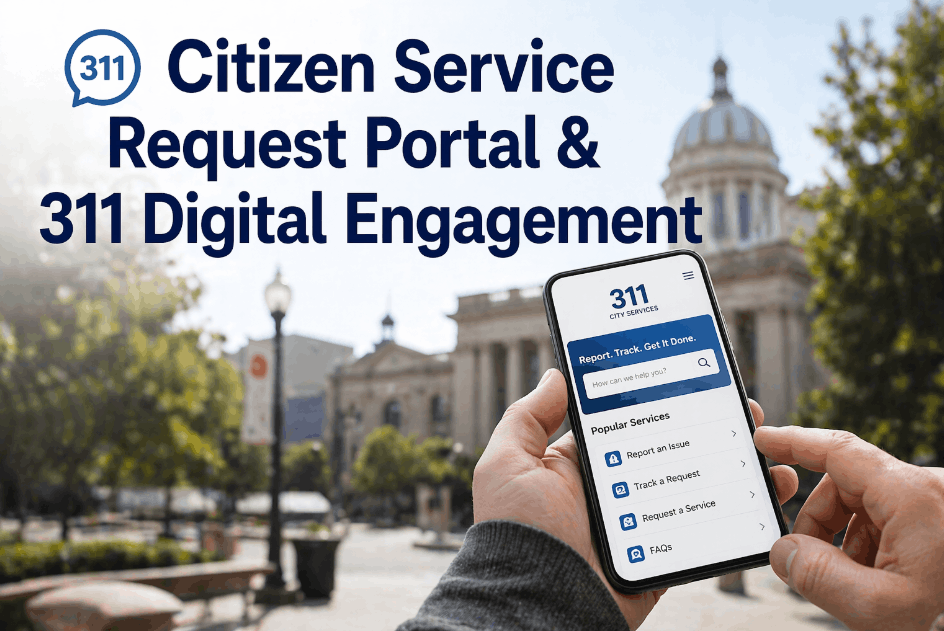
Citizen service request portals and 311 digital engagement systems have become foundational infrastructure for modern municipal governments in 2026. As residents increasingly demand real-time visibility, mobile-first access, and transparent communication from their local government, cities and counties that still rely on phone-only 311 systems or paper-based service request workflows are falling behind — both in operational efficiency and public trust. A poorly designed citizen portal doesn't just frustrate residents; it creates untracked service backlogs, unequal response times across neighborhoods, and an accountability gap that erodes confidence in public institutions. Whether you manage a single municipality or a regional government network, this guide covers citizen service request management, 311 CRM integration, automated routing, mobile app deployment, and how modern government digital engagement platforms are transforming how public agencies connect with the communities they serve. Book a demo to see how a purpose-built citizen request portal performs across live municipal environments.
Transform How Your Municipality Handles Every Citizen Request
iFactory's citizen service request platform gives municipal teams real-time online reporting, automated department routing, mobile-ready intake forms, and full status tracking — delivering the transparent, responsive government service that today's residents expect.
Why Citizen Service Request Portals Are Now a Municipal Priority
The expectation gap between how residents interact with private sector apps and how they experience government services has never been wider. Citizens who can track a food delivery to the minute, dispute a bank charge from their phone, or schedule a doctor's appointment online at midnight have understandably little patience for government services that require a phone call during business hours, offer no confirmation number, and provide no status update until the work is done — if it gets done at all. A modern citizen service request portal closes this expectation gap by bringing the same transparency, convenience, and responsiveness standards that residents experience commercially into the government service delivery environment.
Beyond resident satisfaction, municipalities that deploy structured citizen reporting systems gain an operational data infrastructure they previously lacked entirely. When every pothole report, code violation complaint, park maintenance request, and streetlight outage flows through a unified digital platform, public works teams get accurate workload visibility, department managers can identify service delivery bottlenecks, and city leadership can demonstrate measurable performance to council members and oversight bodies. Book a demo to see how a centralized 311 CRM platform transforms fragmented service intake into an organized, trackable workflow across every municipal department.
Core Features of a High-Performance 311 Citizen Portal
Not all government citizen service portals are built to the same standard. Many municipalities have deployed basic online contact forms that collect requests without routing them, tracking them, or providing residents with any meaningful follow-up. A high-performance 311 digital engagement system requires a specific set of capabilities working in concert — from initial intake through resolution and resident notification — to deliver the service quality that drives sustained adoption and reduces pressure on call center staff.
Multi-Channel Citizen Request Intake
Effective citizen reporting platforms accept service requests through web portals, native mobile apps, SMS, email intake, and integrated 311 phone transcription — ensuring that no resident is excluded from the system due to device or connectivity limitations. Each channel feeds into a unified request queue, eliminating the siloed data problem that plagues agencies managing multiple unconnected intake methods.
Automated Department and Priority Routing
Automated routing rules direct incoming citizen requests to the correct department, crew, or contractor based on service type, geographic zone, and priority classification — eliminating the manual triage bottleneck that delays response times in traditional 311 workflows. Location-based routing using GIS coordinates ensures that field crews receive requests for their assigned service areas without dispatcher intervention.
Real-Time Request Status and Resident Notifications
Citizen request status tracking gives residents visibility into where their submission stands at every stage — from intake confirmation through assessment, work assignment, and final resolution. Automated SMS and email notifications eliminate the need for residents to call back to check on progress, reducing inbound call volume while improving resident satisfaction scores.
Native Mobile Citizen Engagement Application
Purpose-built municipal mobile apps allow residents to photograph and geo-tag service issues directly from the scene — submitting a graffiti report, illegal dumping complaint, or damaged signage ticket in under 60 seconds. Photo attachments and GPS coordinates reduce the information-gathering burden on field staff and accelerate accurate request categorization at intake.
311 CRM Integration and Government Service Workflow Management
Standalone citizen portals that operate independently of a municipality's core CRM, work order management, and asset tracking systems create the same data silo problem they were designed to solve — just in a new location. Government service portals that deliver maximum operational value are those integrated at the API level with existing municipal infrastructure, ensuring that a citizen request submitted online automatically generates a work order in the CMMS, updates the relevant asset record, and triggers supervisor notification without requiring any manual data entry. Book a demo to explore how deep 311 CRM integration eliminates the manual handoff gaps that slow government response times and create accountability blind spots.
Unified Citizen Profile and Interaction History
CRM-integrated citizen portals maintain a full interaction history for every resident — tracking all past requests, communications, and service outcomes in a single profile. This context allows front-line staff to respond to follow-up inquiries with accurate information and identifies residents with repeat issues that may indicate underlying infrastructure problems requiring systematic attention.
Automatic Work Order Creation and Assignment
Direct integration between citizen request intake and work order management systems closes the gap between what residents report and what field crews act on. When a pothole complaint generates an automatic work order assigned to the correct paving crew with GPS coordinates, photo evidence, and priority classification already attached, response time drops and duplicate reporting is eliminated.
Geographic Service Request Visualization
GIS-integrated 311 platforms display all active service requests on a live map, giving supervisors instant spatial awareness of where demand is concentrated, which neighborhoods are experiencing elevated service issues, and where field crews are currently deployed. Heat mapping of request density by type and location supports capital investment planning and proactive maintenance scheduling.
Service Performance Analytics and SLA Monitoring
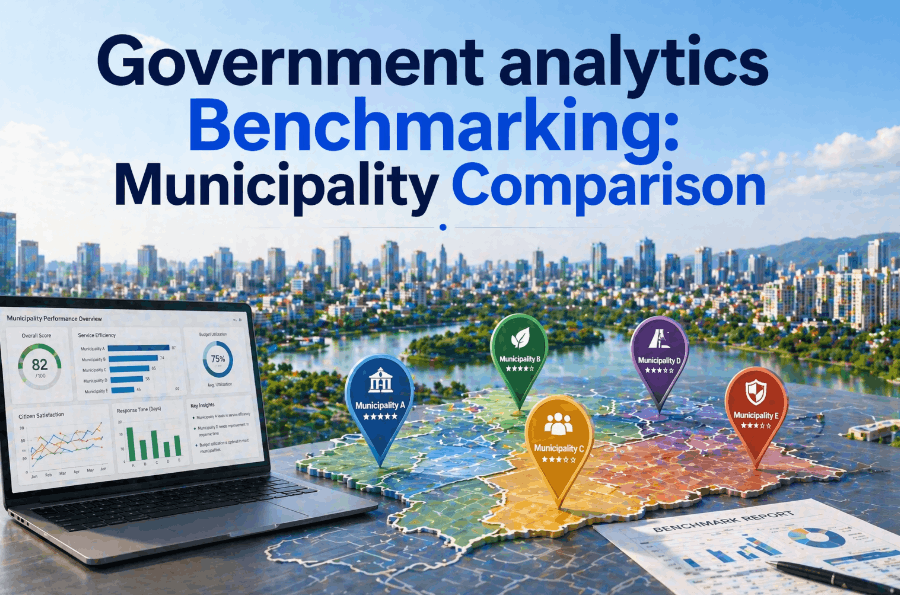
Built-in analytics dashboards track service level agreement compliance rates, average response and resolution times by department and service type, and request volume trends over time — giving city managers the data they need to justify staffing decisions, identify chronically underperforming service categories, and demonstrate accountability to elected officials and the public.
Common 311 Service Request Categories by Municipal Department
Understanding which service categories generate the highest request volumes — and which carry the greatest risk when handled slowly — allows municipalities to prioritize workflow configuration, staffing allocation, and SLA standards within their citizen portal deployment. The following breakdown covers the most common public works citizen portal request types and their typical performance benchmarks in well-managed municipal digital engagement programs. Book a demo to see how category-specific routing and SLA enforcement is configured within a live government service portal.
| Service Category | Department Owner | Typical Response SLA | Priority Level | Common Portal Submission Type |
|---|---|---|---|---|
| Pothole and Road Damage | Public Works / Streets | 5–10 Business Days | High | Photo + GPS via Mobile App |
| Streetlight Outage | Utilities / Public Works | 3–7 Business Days | High | Address Lookup + Web Form |
| Graffiti Removal | Parks / Code Enforcement | 5–15 Business Days | Medium | Photo Upload + Location Tag |
| Abandoned Vehicle | Police / Parking Enforcement | 72 Hours | High | License Plate + Photo + Address |
| Illegal Dumping | Sanitation / Code Enforcement | 3–5 Business Days | High | Photo + GPS Coordinates |
| Tree Trimming / Hazard | Parks / Urban Forestry | 10–21 Business Days | Variable (Urgent if Hazard) | Location + Description + Photo |
| Code Violation Complaint | Code Enforcement | 5–10 Business Days | Medium | Address + Category + Description |
| Missed Trash Pickup | Sanitation | Next Service Day | Medium | Address + Route Confirmation |
| Water / Sewer Issue | Utilities / Public Works | 24–48 Hours | Critical | Address + Photo + Emergency Flag |
Municipal Digital Engagement: Building Resident Trust Through Transparency
The most underappreciated value of a well-deployed citizen service request portal is not operational efficiency — it is the trust it builds between residents and their local government. When a resident submits a pothole report and receives an immediate confirmation, a status update three days later, and a resolution notification when the repair is completed, they experience government as responsive and accountable. When that same resident hears nothing for six weeks after mailing a complaint form, government feels indifferent and inaccessible. At scale, this difference in perceived responsiveness has a measurable impact on resident satisfaction, civic engagement rates, and public trust in local institutions.
Municipalities that invest in municipal citizen engagement infrastructure are not just improving service delivery workflows — they are making a strategic investment in the public's relationship with their government. Transparent service tracking, proactive communication, and accessible multi-channel intake collectively signal that the city takes resident concerns seriously and holds its departments accountable for follow-through. Book a demo to see how resident-facing transparency features are configured in a modern government citizen service platform and how they translate into measurable improvements in satisfaction survey results.
Multi-Language and Accessibility Compliance
Government service portals that serve diverse communities must support multi-language interfaces, screen reader compatibility, and WCAG 2.1 AA accessibility standards to ensure equitable access across all resident demographics. Platforms that restrict usability to English-fluent, desktop-only users disproportionately exclude the communities that most depend on government services — creating a digital equity gap that undermines the promise of accessible government.
Open Data Dashboards for Civic Accountability
Public-facing performance dashboards that display aggregate 311 request data — response times by neighborhood, service category resolution rates, year-over-year volume trends — demonstrate a municipality's commitment to transparency and create a self-reinforcing cycle of accountability that benefits both residents and the departments serving them.
Implementing a Citizen Request Portal: Deployment Best Practices
Successful government citizen service portal deployments share common implementation characteristics that distinguish high-adoption outcomes from platforms that go underutilized months after launch. The technical configuration of the portal itself is only one variable — equally critical are the internal workflow redesign, staff training, resident communication strategy, and SLA governance structures that determine whether the platform actually changes how service is delivered on the ground.
Audit Existing Service Request Workflows Before Configuration
Before configuring any portal, document how service requests currently move from intake through resolution across every department. Identify handoff points, approval bottlenecks, and data entry steps that can be eliminated through automation. Deploying a digital portal over broken analog workflows simply digitizes the dysfunction.
Define SLA Standards Before Going Live
Every service category in the portal should have a defined response SLA and resolution target established before the system launches. Publicly committing to response timelines — and building escalation alerts when they are approaching breach — creates the accountability structure that drives consistent service performance.
Train Field Staff on Mobile Work Order Management
Field crews who receive digitally routed work orders need adequate training on mobile work order apps to close the loop between citizen intake and completion records. If field staff cannot mark jobs complete from the field, the status tracking system that residents depend on breaks down — and the transparency promise of the portal fails at the last mile.
Launch a Resident Awareness Campaign Across Multiple Channels
Portal adoption does not happen organically — municipalities must actively communicate the availability of online service request channels through bill inserts, social media, neighborhood association outreach, library kiosk signage, and city website banners to drive initial adoption and overcome the inertia of residents who default to calling 311 because it is the only channel they know.
Government Citizen Portal: Frequently Asked Questions
What is a 311 citizen service request portal and how does it differ from a basic contact form?
A 311 citizen service request portal is a full-cycle government service platform that handles intake, categorization, automated routing, status tracking, SLA monitoring, and resolution notification — not just message collection. Unlike a contact form, which deposits submissions into an inbox without structure or accountability, a purpose-built citizen portal connects request intake directly to work order management, field crew assignment, and resident communication workflows, creating an end-to-end service delivery chain that basic contact forms cannot replicate.
How long does it take to deploy a municipal citizen service request system?
Implementation timelines vary based on integration complexity, the number of departments onboarded, and the scope of legacy system connections required. A focused deployment covering public works and sanitation with basic CRM integration typically goes live within 8–12 weeks. Full enterprise deployments connecting all departments, integrating with existing CMMS and GIS platforms, and launching resident-facing mobile apps generally require 4–6 months, including testing, staff training, and phased rollout.
Can a citizen portal reduce call center volume for 311 operations?
Yes, significantly. Municipalities that deploy well-promoted citizen request portals with real-time status tracking consistently report 30–50% reductions in inbound 311 call volume within the first year, because residents no longer need to call to check on request status. The reduction in repeat "where is my request" calls is the single largest driver of call center savings, freeing staff time for higher-complexity inquiries that genuinely require human interaction.
What integrations are essential for a government service portal to function effectively?
At minimum, an effective citizen portal requires integration with the municipal CMMS for automatic work order generation, GIS for location-based routing and mapping, and an email/SMS notification service for resident updates. High-value additional integrations include asset management systems for infrastructure-linked requests, finance platforms for fee-based permit services, and open data portals for public performance reporting. Standalone portals without these integrations generate data that sits unused and workflows that still require manual intervention.
How do municipalities measure the ROI of a citizen service request platform?
Government citizen portal ROI is measured across four dimensions: call center cost reduction from deflected inbound volume, labor savings from eliminated manual routing and data entry, service efficiency gains from faster average resolution times, and resident satisfaction improvements measured through post-service surveys. Municipalities with mature portal deployments typically document full cost recovery within 18–24 months, with sustained annual savings thereafter driven primarily by call center deflection and field crew productivity improvements.
Ready to Modernize Your Municipality's Citizen Service Delivery?
iFactory's citizen service request platform gives municipalities the online reporting, automated routing, real-time tracking, and 311 CRM integration needed to deliver transparent, accountable government services — across every department, every channel, and every resident interaction.