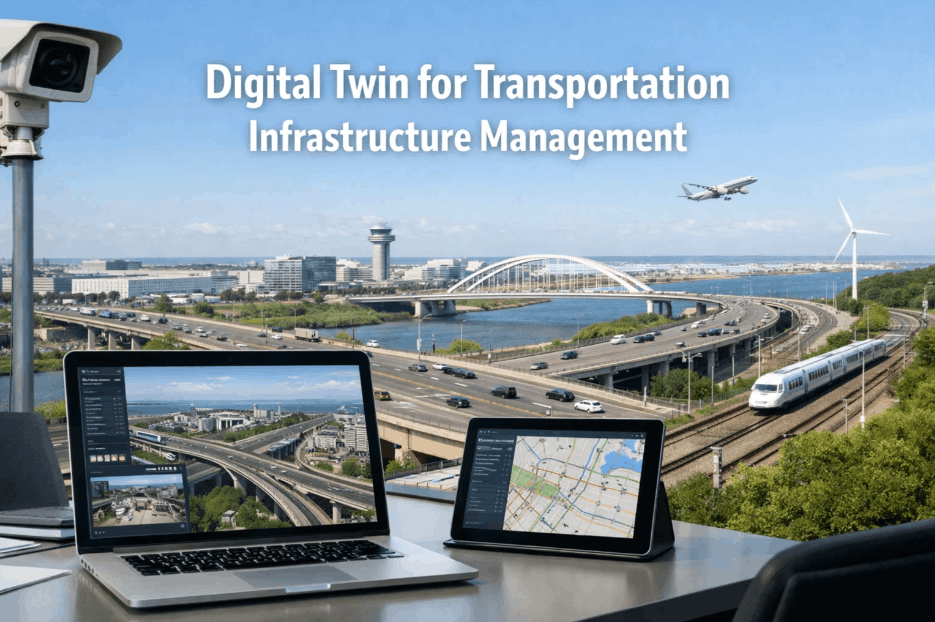
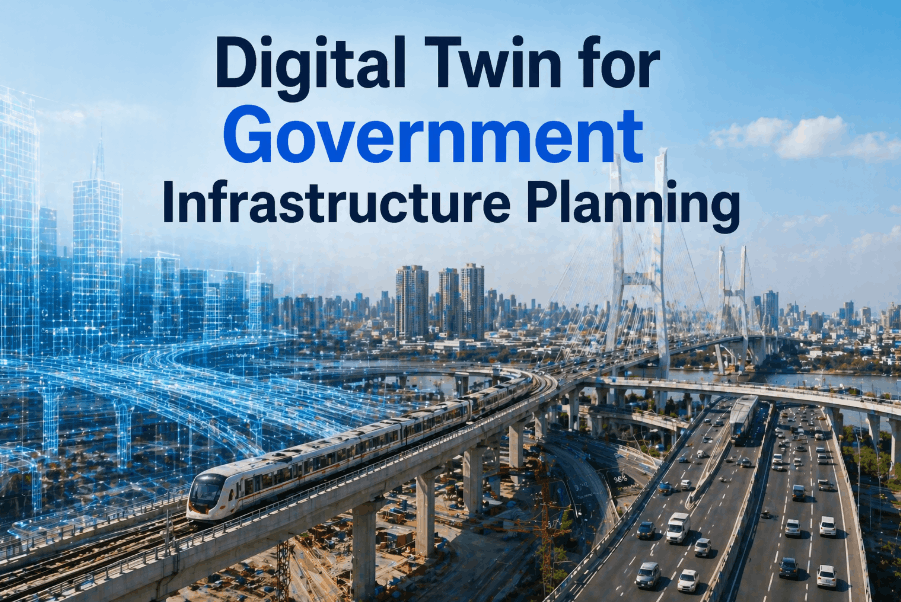
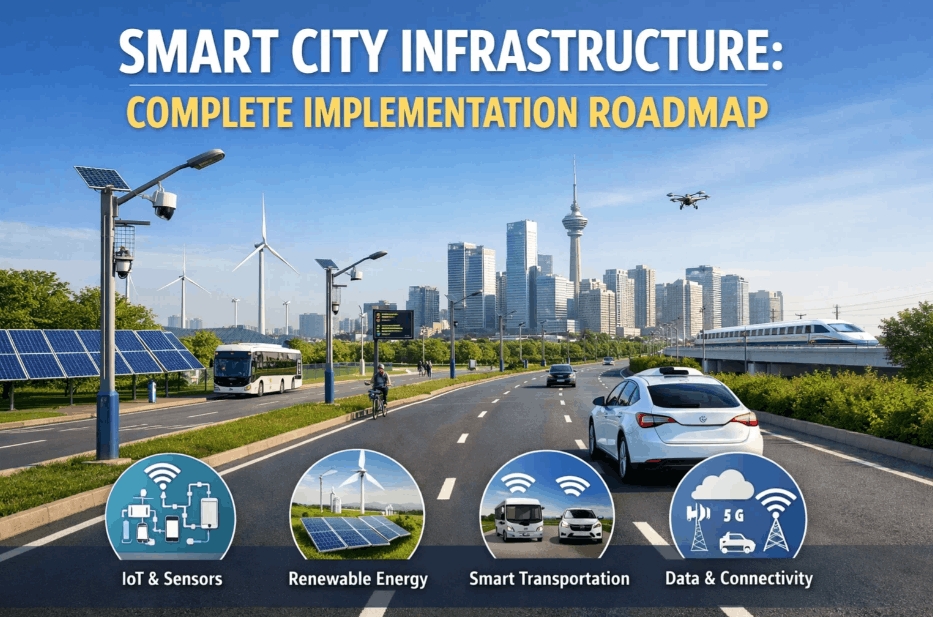
Digital twin technology is fundamentally reshaping how governments and transportation agencies design, manage, and maintain critical infrastructure. A digital twin for transportation infrastructure creates a live, data-synchronized virtual replica of physical assets — from road networks and highway corridors to bridges and traffic control systems — enabling agencies to simulate scenarios, predict failures, and optimize capital planning with unprecedented accuracy. As cities grapple with aging infrastructure and constrained budgets, transportation infrastructure digital twins offer a transformative path toward smarter, safer, and more cost-effective public assets.
READY TO TRANSFORM INFRASTRUCTURE
From Pavement to Bridges — One Digital Twin Platform.
iFactory's digital twin module captures real-time telemetry, generates predictive maintenance schedules, and keeps your infrastructure budget-ready at all times — across roads, highways, and transit systems.
35%
Reduction in inspection costs
48%
Fewer unplanned failures
100%
Predictive maintenance coverage
4-8 wks
Typical implementation timeline
What Is a Digital Twin for Transportation Infrastructure?
A transportation infrastructure digital twin is a high-fidelity virtual model that mirrors the physical state of roads, bridges, tunnels, and transit networks in real time. Unlike traditional GIS maps or static CAD drawings, a digital twin integrates live sensor data, IoT telemetry, historical maintenance records, and environmental inputs to create a continuously updated simulation environment. Transportation planners and asset managers can interact with the twin to run predictive scenarios, stress-test load conditions, and model the long-term impact of deferred maintenance decisions.
The concept gained rapid traction in government infrastructure circles after early adopters demonstrated that infrastructure simulation technology could cut inspection costs by up to 35% and reduce unplanned asset failures by nearly half. Whether applied to a single highway corridor or an entire metropolitan road network, the digital twin framework provides a unified operational picture that static asset registers simply cannot deliver.
35%
Reduction in physical inspection costs through remote digital twin monitoring
48%
Fewer unplanned infrastructure failures with predictive analytics models
3x
Faster capital planning cycles compared to traditional asset management methods
$2.5T
Global infrastructure digital twin market projected value by 2030
Core Applications
Key Use Cases: Road, Bridge, and Traffic Digital Twins
The power of digital twin government infrastructure programs lies in their versatility across asset types. Each category of transportation asset benefits from a tailored modeling approach while feeding into the same integrated platform.
Road Network Digital Twin
A road network digital twin maps every segment of a highway or urban street grid with embedded pavement condition indices, traffic load data, drainage characteristics, and utility corridor information. Agencies can simulate the impact of increased freight volumes, model pavement deterioration under different climate scenarios, and prioritize resurfacing interventions to maximize the service life of the network. Transportation departments using road digital twins report reducing their annual resurfacing backlog by 20–30% within the first two budget cycles. You can book a demo to explore how road network modeling works in practice.
Bridge Digital Twin and Structural Health Monitoring
A bridge digital twin integrates structural health monitoring sensors — strain gauges, accelerometers, corrosion probes — with finite element analysis models to continuously assess load-bearing capacity and fatigue risk. Instead of relying on five-year inspection cycles that may miss developing faults, agencies receive continuous condition scores and early warning alerts when sensor readings deviate from baseline thresholds. The result is a shift from reactive emergency repairs to proactive, condition-based maintenance that dramatically extends asset service life and reduces lifecycle costs.
Traffic Systems and Highway Digital Twin
A digital twin highway model overlays real-time traffic counts, incident data, weather feeds, and signal timing data onto the physical corridor model. Traffic engineers can simulate the effect of lane closures, interchange redesigns, or demand management policies before committing capital. Cities deploying traffic digital twins have achieved congestion reductions of 18–25% on targeted corridors without new physical construction — a compelling ROI for fiscally constrained agencies. If your team is evaluating transportation planning digital solutions, book a demo to see live traffic scenario modeling.
01
Real-Time Asset Condition Monitoring
Continuous ingestion of IoT sensor data from pavement sensors, bridge strain gauges, and traffic detectors keeps the digital model synchronized with actual physical conditions at all times.
02
Predictive Deterioration Modeling
Machine learning algorithms trained on historical inspection data forecast pavement and structural degradation curves, enabling agencies to intervene at the optimal point in the deterioration cycle.
03
Capital Planning Scenario Simulation
Budget allocation tools let planners model how different funding levels and intervention strategies affect network condition scores over 5, 10, and 20-year horizons, directly informing STIP and TIP submissions.
04
Incident Response and Resilience Planning
Emergency managers use the infrastructure digital model to simulate disaster scenarios — flood inundation, seismic events, extreme weather — and identify network vulnerabilities before events occur.
Implementation Architecture
Building a Transportation Infrastructure Digital Model: Technical Framework
Deploying a production-grade infrastructure digital model for transportation requires a layered technical architecture that balances data richness with operational performance. Understanding each layer helps agencies avoid common pitfalls that derail digital twin programs before they deliver value.
Data Acquisition Layer
IoT sensors, LiDAR surveys, satellite imagery, SCADA systems, and manual inspection records feed raw data into the platform. Standardized APIs and data connectors ensure compatibility with legacy asset management systems like IBM Maximo, SAP PM, and ESRI ArcGIS.
3D Geometric Modeling Engine
BIM-aligned geometry engines create parametric 3D representations of roads, bridges, and intersections. Models conform to IFC and CityGML standards, ensuring interoperability across planning, engineering, and operations teams.
Analytics and Simulation Core
Physics-based simulation modules handle structural load analysis, pavement performance modeling, and traffic microsimulation. AI-driven anomaly detection flags conditions requiring engineering review before they escalate to failures.
Visualization and Decision Dashboard
Role-specific dashboards surface condition scores, work order priorities, budget forecasts, and compliance status in formats tailored for engineers, planners, executives, and elected officials — all from a single platform.
Agencies that invest in an open, standards-based architecture from the outset avoid costly re-platforming exercises as their digital twin transportation programs scale. Integration with federal reporting systems — FHWA NBI, HPMS, and state DOT asset registers — is a non-negotiable requirement that should be validated during vendor selection. Agencies ready to evaluate platforms can book a demo to review iFactory's integration capabilities firsthand.
INFRASTRUCTURE OPTIMIZATION · PREDICTIVE ANALYTICS · ROI FOCUSED
Unlock the Full Value of Your Infrastructure Data.
iFactory's digital twin platform turns static asset registers into dynamic, actionable models that predict failures and optimize maintenance spending.
Capital Planning
How Digital Twins Optimize Transportation Capital Planning
Transportation planning digital workflows are being fundamentally transformed by the scenario modeling capabilities of infrastructure digital twins. Traditional capital planning relied on static condition surveys, politically weighted prioritization, and conservative engineering assumptions that often misallocated scarce maintenance dollars. A digital twin platform replaces intuition-based decisions with data-driven optimization.
Predictive Maintenance and Lifecycle Cost Optimization
By modeling deterioration curves for every asset in the network, agencies can calculate the cost of intervention at different points in the asset lifecycle. The data consistently shows that preventive maintenance applied at the right time costs 4–6 times less than reactive repair after failure. A road digital twin with integrated pavement management modeling allows agencies to build defensible, condition-based maintenance programs that regulators and elected officials can scrutinize with confidence.
Multi-Year Program Development and STIP Optimization
State transportation improvement programs require agencies to demonstrate how proposed investments will affect network performance over multi-year horizons. Digital twin scenario engines generate performance projections under different budget allocations, enabling planners to identify the funding level that maximizes overall network condition scores. Agencies using infrastructure simulation tools for STIP development report reducing program development time by 40% while improving the defensibility of their investment priorities before federal reviewers. To see the capital planning module live, book a demo with our team.
| Planning Function |
Traditional Approach |
Digital Twin Approach |
Improvement |
| Condition Assessment Cycle |
Annual/biennial field surveys |
Continuous IoT + periodic validation |
Real-time visibility |
| Maintenance Prioritization |
Manual scoring, committee review |
AI-ranked work order queue |
40% faster decisions |
| Capital Budget Modeling |
Static spreadsheet scenarios |
Dynamic multi-variable simulation |
3x scenario depth |
| Bridge Inspection Cost |
$8,000–$15,000 per structure |
$2,500–$5,000 with sensor monitoring |
Up to 65% reduction |
| Failure Prediction Accuracy |
60–65% (expert judgment) |
88–92% (ML-assisted) |
+30 percentage points |
| STIP Program Development |
6–9 months |
3–5 months |
40% time savings |
Implementation Roadmap
Phased Deployment Roadmap for Transportation Digital Twin Programs
A structured rollout prevents the technology-first failures that have stalled many early-stage digital twin government initiatives. The proven approach sequences foundation building, pilot validation, and scaled deployment in a way that generates tangible wins at each phase.
Phase 1
Asset Inventory and Data Readiness (Months 1–4)
Audit existing asset registers, condition databases, inspection reports, and GIS layers. Identify data gaps and establish data quality standards. Select two or three pilot asset classes — typically a bridge portfolio, a high-traffic highway corridor, or a signalized intersection network — where data maturity is highest and business impact is clearest.
Outcome: Validated asset data foundation and confirmed pilot scope with stakeholder buy-in
Phase 2
Pilot Digital Twin Deployment (Months 4–10)
Deploy IoT sensor networks on pilot assets. Build 3D geometric models and connect live data feeds. Configure predictive deterioration models and validate against historical condition records. Generate first capital planning scenarios and present results to leadership to secure continued investment.
Outcome: Functioning pilot delivering measurable maintenance cost reductions and validated prediction accuracy
Phase 3
Network-Wide Scaling (Months 10–20)
Extend the road network digital twin and bridge portfolio model to cover all agency assets. Integrate with federal reporting systems and internal financial management platforms. Train engineering and planning staff on scenario tools. Launch public-facing performance dashboards where policy supports transparency.
Outcome: Enterprise-grade infrastructure digital twin covering all asset classes with integrated capital planning workflows
Phase 4
Advanced Analytics and Continuous Optimization (Months 20–30)
Introduce advanced AI models for cross-asset dependency analysis, climate resilience scenario planning, and multi-modal transport optimization. Connect the twin to real-time incident management systems for dynamic response coordination. Embed digital twin outputs into standard budget and policy development processes.
Outcome: Self-improving digital twin ecosystem delivering sustained 25–40% reduction in infrastructure lifecycle costs
Security and Governance
Data Governance and Cybersecurity for Infrastructure Digital Twins
Transportation infrastructure digital twins aggregate sensitive operational data about critical public assets. Robust governance frameworks and cybersecurity architecture are essential to protect against both data integrity risks and adversarial threats targeting connected infrastructure. Agencies must address these requirements from the design stage, not as post-deployment additions.
1
Zero-Trust Access Control for Infrastructure Models
Implement role-based access controls ensuring engineering staff, planners, and external contractors access only the model elements relevant to their function. All access is logged, auditable, and governed by agency data classification policies.
2
Data Integrity Verification for Sensor Feeds
Cryptographic signing of IoT sensor data streams prevents model poisoning through spoofed or tampered readings. Anomaly detection algorithms flag sensor dropout, drift, and implausible readings that could compromise predictive model accuracy.
3
Compliance with NIST and CISA Critical Infrastructure Frameworks
Deployments in US transportation agencies should align with NIST SP 800-82 for industrial control systems and CISA's cross-sector cybersecurity performance goals, ensuring consistency with federal oversight expectations and audit requirements.
Frequently Asked Questions
Common Questions About Transportation Infrastructure Digital Twins
How does a digital twin differ from a traditional GIS asset management system?
Traditional GIS systems store static attribute data about infrastructure assets. A transportation infrastructure digital twin goes further by integrating real-time sensor data, running physics-based simulations, and generating predictive forecasts — creating a living model rather than a static database. The twin enables scenario testing and forward-looking planning that GIS alone cannot support.
What types of sensors are required for a bridge digital twin?
A comprehensive bridge digital twin typically uses strain gauges, displacement sensors, accelerometers for vibration-based damage detection, corrosion monitoring probes, load cells on critical bearing points, and environmental sensors measuring temperature, humidity, and chloride exposure. The sensor selection is calibrated to the structural type, traffic loading, and risk profile of each bridge.
Can digital twin technology integrate with legacy DOT asset management systems?
Yes. Modern infrastructure digital model platforms use standards-based APIs and middleware connectors to integrate with legacy systems including IBM Maximo, SAP Plant Maintenance, Bentley AssetWise, and state-specific DOT databases. Data migration is typically phased, with historical records imported and new data flowing through automated connectors.
What is the typical ROI timeline for a transportation digital twin program?
Pilot programs typically demonstrate measurable cost savings within 8–12 months through reduced inspection costs and better-targeted maintenance spending. Full program ROI — typically $3–5 of benefit per $1 invested — materializes over a 3–5 year horizon as predictive models mature and capital planning efficiency compounds across budget cycles.
How do small and mid-sized transportation agencies get started with digital twins?
Smaller agencies benefit most from starting with a single high-risk asset class — typically a bridge portfolio or a congested highway segment — where the business case is clearest. Cloud-based digital twin transportation platforms like iFactory remove the need for on-premise infrastructure investment, making the technology accessible at any agency scale.
Book a demo to explore entry-level deployment options.
READY TO DEPLOY YOUR INFRASTRUCTURE TWIN
Optimized Assets. Defensible Budgets. Smart Cities.
iFactory gives transportation agencies a single platform to model road networks, bridges, and traffic systems — with predictive analytics built for decision-makers.