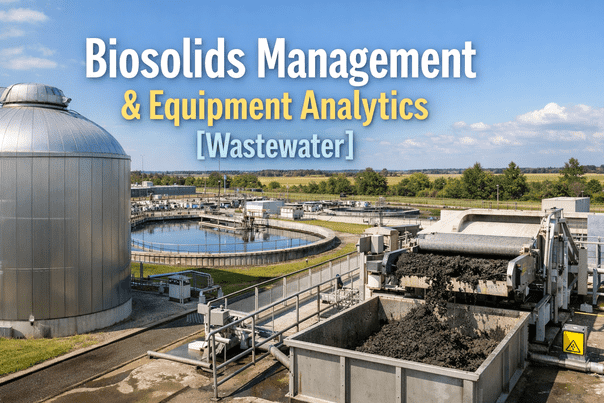
Wastewater treatment plants are the invisible backbone of public health—processing millions of gallons daily through complex biological, chemical, and mechanical processes that never stop. Yet across the United States, aging infrastructure, workforce shortages, and tightening EPA regulations are pushing these critical facilities to their limits. A single equipment failure in a treatment train can collapse biological processes within hours, trigger NPDES permit violations, and result in raw sewage discharges to local waterways. This guide breaks down the maintenance strategies, equipment priorities, and digital tools that keep treatment plants operating reliably—and shows how a CMMS platform turns reactive firefighting into proactive asset management that protects your permit and your community.
What Makes Wastewater Plant Maintenance Different from Other Industries
Wastewater facilities operate in conditions that accelerate equipment degradation far beyond what typical industrial plants experience. Hydrogen sulfide gas corrodes electrical panels, concrete structures, and metal components. Grit and rags destroy pump impellers and clog mechanical screens. Biological processes require precise oxygen levels, temperature ranges, and chemical dosing—any disruption triggers a cascade of treatment failures that regulators can detect in your next Discharge Monitoring Report.
65%
of NPDES permit violations are linked to equipment failures that preventive maintenance would have caught
15,000+
of America's 16,000 publicly owned treatment works require significant maintenance investment
40-60%
reduction in emergency repairs when plants switch from reactive to CMMS-driven preventive maintenance
12-24 hrs
time for ammonia exceedances to trigger regulatory action after a single aeration blower failure
How to Maintain Aeration Systems in Wastewater Treatment
Aeration is the single most energy-intensive and process-critical system in biological wastewater treatment. Fine-bubble diffusers, mechanical aerators, and blower assemblies deliver the dissolved oxygen that sustains nitrifying bacteria—the microorganisms responsible for converting ammonia into nitrate. When aeration performance degrades, the biological community crashes, and effluent quality deteriorates rapidly.
Blowers and Mechanical Aerators
Daily: Monitor discharge pressure, bearing temperature, vibration levels, oil level, and amp draw. Record dissolved oxygen readings at multiple basin locations.
Weekly: Inspect inlet filters, check belt tension on belt-driven units, trend bearing temperatures against baselines, and verify automatic DO control response.
Quarterly: Full vibration spectrum analysis, oil sampling and analysis, coupling alignment check, performance curve comparison against commissioning data.
Annual: Complete blower overhaul per manufacturer specifications, impeller inspection, motor insulation resistance testing, VFD parameter verification.
Diffuser Systems
Monthly: Monitor air flow distribution across zones. Uneven bubble patterns indicate membrane fouling, broken diffusers, or header pipe blockages.
Semi-Annual: Perform oxygen transfer efficiency (OTE) testing. A 10% decline from baseline indicates the diffuser grid needs cleaning or replacement.
As Needed: Acid or gas cleaning of diffuser membranes to remove biological fouling and calcium carbonate deposits that restrict airflow.
Wastewater Pump Maintenance: Preventing Costly Failures
Pumps are the workhorses of every treatment facility—moving raw influent, return activated sludge, waste sludge, and chemical feeds throughout the treatment process. Operating in highly abrasive, corrosive environments with variable solids loading, wastewater pumps fail more frequently than almost any other treatment plant equipment. Pump failures at lift stations are the primary cause of sanitary sewer overflows, which carry the most severe EPA enforcement penalties.
Pump Maintenance Schedule by Application
Clarifier and Biosolids Equipment Maintenance Schedule
Clarifiers and biosolids processing equipment represent some of the highest-value and longest-lead-time assets in any treatment plant. A clarifier drive assembly failure can take weeks to replace—during which settling performance collapses and effluent quality deteriorates. Biosolids equipment failures halt the entire solids handling train, creating storage emergencies and potential regulatory violations for biosolids management.
Clarifiers
Primary and Secondary Clarifier Maintenance
Drive mechanisms require weekly torque monitoring—a rising trend signals sludge buildup, mechanical binding, or bearing failure. Weir plates must remain level within manufacturer tolerances; uneven overflow causes short-circuiting that allows solids to escape. Scraper blades and squeegees wear against the basin floor and require annual measurement against minimum thickness specifications. Scum baffles and collection mechanisms need monthly inspection, particularly in warm weather when scum and grease accumulate rapidly. Sludge blanket depth should be measured daily in secondary clarifiers to optimize RAS and WAS pumping rates.
Digesters
Anaerobic Digester Maintenance
Digester heating systems—boilers, heat exchangers, and hot water circulation pumps—require monthly inspection to maintain the 95-98F temperature range essential for mesophilic digestion. Gas collection systems including gas holders, pressure relief valves, flame arrestors, and condensate traps demand weekly safety inspections. Mixing systems (gas injection, mechanical draft tubes, or external pumping) must maintain uniform digester contents to prevent stratification and dead zones. Cover integrity on floating covers and fixed covers with gas storage must be verified quarterly. Volatile acids-to-alkalinity ratios provide early warning of digester upset when monitored weekly.
Dewatering
Belt Press, Centrifuge, and Thickening Equipment
Belt filter presses require daily tracking adjustment, wash water pressure verification, and polymer dose optimization. Belt life depends on proper tracking—misalignment causes accelerated edge wear and belt damage. Centrifuges need vibration monitoring at every run, bearing temperature trending, and scroll torque recording to detect wear. Gravity belt thickeners and dissolved air flotation units require weekly polymer optimization and monthly mechanical inspection. All dewatering equipment generates cake solids data that should be trended to detect efficiency degradation before it affects biosolids handling capacity or hauling costs.
Schedule a demo to see how dewatering performance trending identifies efficiency drops before they impact your solids disposal budget.
NPDES Permit Compliance Through Preventive Maintenance
Every wastewater treatment facility discharging to surface waters must hold a National Pollutant Discharge Elimination System permit under the Clean Water Act. These permits specify effluent limits for parameters including BOD, TSS, ammonia, phosphorus, pH, and fecal coliform—plus monitoring frequencies, reporting deadlines, and operational requirements. What many plant managers overlook is that documented maintenance records serve as your primary defense during EPA inspections and enforcement proceedings.
Discharge Monitoring Report Documentation
DMRs are self-reported and submitted monthly or quarterly to EPA and state regulators. A CMMS creates the maintenance audit trail that proves your treatment equipment was properly serviced during each reporting period. When DMR results show an exceedance, regulators immediately examine maintenance records—gaps in documentation compound enforcement severity.
Sanitary Sewer Overflow Prevention
SSOs are EPA's highest enforcement priority in the wastewater sector. Documented preventive maintenance on lift station pumps, force mains, and collection system infrastructure demonstrates the "proper operation and maintenance" defense that can reduce penalties. CMMS records showing consistent PM completion rates above 90% have proven effective in enforcement negotiations.
Calibration and Sampling Equipment Records
Analytical instruments—pH meters, DO probes, turbidity analyzers, and flow meters—require documented calibration at prescribed intervals. Invalid monitoring data due to out-of-calibration equipment can result in the entire DMR period being rejected, triggering additional monitoring requirements and potential violations.
Biosolids Management Under EPA 503 Rule
Facilities that land-apply or dispose of biosolids must meet pathogen reduction requirements, vector attraction reduction standards, and metals concentration limits. Digester maintenance records, temperature logs, and detention time documentation all serve as compliance evidence.
Schedule a demo to see how automated biosolids compliance tracking centralizes every EPA 503 rule requirement in one digital platform.
Protect Your NPDES Permit with Digital Maintenance Records
iFactory gives your treatment plant the digital documentation that regulators expect—complete work order histories, automated PM scheduling, calibration tracking, and one-click compliance reports that satisfy inspectors instantly.
Daily, Weekly, and Monthly Maintenance Checklist for WWTP
A structured checklist approach ensures no critical task is missed—especially important in 24/7 facilities where shift changes create communication gaps and institutional knowledge varies between operators. The following checklist framework covers the essential inspection and maintenance tasks organized by frequency.
Every task above can run as an automated digital work order—no paper, no missed items. Get Support to deploy mobile operator rounds that capture readings, photos, and completion timestamps your regulators can verify during any inspection.
Why Treatment Plants Need a CMMS for Maintenance Tracking
The wastewater industry faces a workforce crisis: between 30-50% of skilled operators are approaching retirement, and treatment plants increasingly rely on newer staff who lack decades of institutional knowledge. A CMMS captures this knowledge digitally—standardizing procedures, preserving equipment histories, and ensuring every operator has access to the information they need to maintain complex treatment processes reliably.
Automated PM Scheduling
Generate preventive maintenance work orders automatically based on calendar intervals, equipment run-hours, or condition-based triggers from SCADA integration. No more missed PMs due to shift changes or vacation coverage gaps.
Complete Asset History
Every work order, part replacement, calibration record, and operator observation is stored against the specific asset. New operators can review the complete maintenance history of any piece of equipment instantly.
Mobile Work Orders
Field technicians complete work orders on tablets and smartphones at the point of work—attaching photos, recording measurements, scanning parts barcodes, and capturing labor hours without returning to the maintenance office.
Spare Parts Inventory
Track parts consumption against specific assets and work orders. Set minimum quantity alerts for critical spares so replacements arrive before stockouts force extended equipment downtime.
Compliance Reporting
Generate audit-ready reports showing PM completion rates, equipment uptime, corrective action history, and calibration records. One-click report generation replaces hours of binder searching when regulators arrive.
When 30% of your operators retire in the next five years, the maintenance knowledge in their heads is your biggest vulnerability. We moved to a CMMS specifically so that institutional knowledge stays with the plant, not the person. Every procedure, every quirk of every piece of equipment—it is all documented and accessible to whoever picks up the next shift.
— Wastewater Superintendent, Municipal Utility District
Keep Your Treatment Plant Running. Keep Your Community Safe.
Every blower bearing, pump seal, clarifier drive, and UV lamp is a link in the chain between raw sewage and clean water. iFactory gives your maintenance team the digital platform to manage every asset—automating PM schedules, tracking permit documentation, managing inventory, and preserving the operational knowledge that protects your facility for decades to come.
Frequently Asked Questions
What are the most critical maintenance tasks at a wastewater treatment plant?
The highest-priority tasks focus on equipment whose failure causes immediate permit violations or environmental releases: aeration blowers (biological treatment collapses within hours without oxygen), influent pumps (failure causes SSOs), disinfection systems (direct pathogen discharge), and clarifier drives (long replacement lead times). A criticality-based approach ensures limited maintenance resources address the greatest risks first.
Book a demo to see how criticality rankings drive automated PM scheduling.
How does preventive maintenance prevent NPDES permit violations?
Preventive maintenance keeps treatment equipment operating within design parameters—ensuring biological processes receive adequate oxygen, clarifiers separate solids effectively, and disinfection systems achieve required pathogen reduction. When equipment degrades, effluent quality deteriorates. EPA enforcement data shows that facilities with documented PM programs achieving 90%+ completion rates experience significantly fewer enforcement actions compared to facilities relying on reactive maintenance.
What is the best PM schedule for wastewater aeration blowers?
Aeration blowers require daily monitoring of discharge pressure, bearing temperature, vibration, and oil level. Weekly tasks include filter inspection and belt tension checks. Quarterly maintenance should include full vibration spectrum analysis and oil sampling. Annual overhauls per manufacturer specifications complete the cycle. Condition-based adjustments using vibration trending can identify bearing failures 60-90 days before catastrophic breakdown.
Get Support to explore automated blower maintenance scheduling.
How can a CMMS help with the wastewater workforce shortage?
A CMMS addresses workforce challenges in three ways: it standardizes maintenance procedures so less experienced operators can perform tasks correctly using step-by-step digital instructions; it preserves institutional knowledge from retiring operators in searchable equipment histories; and it automates scheduling and work order generation so smaller teams can maintain the same PM completion rates that larger crews achieved manually.
What ROI should we expect from implementing a CMMS at our treatment plant?
Treatment facilities typically see 40-60% reduction in emergency repairs within the first year, 25-40% extension in equipment useful life, and 15-20% reduction in spare parts costs through better inventory management. The avoided cost of a single NPDES violation—which can exceed $125,000 in fines, legal fees, and remediation—often justifies the entire CMMS investment.
Schedule a consultation to calculate ROI for your specific facility.