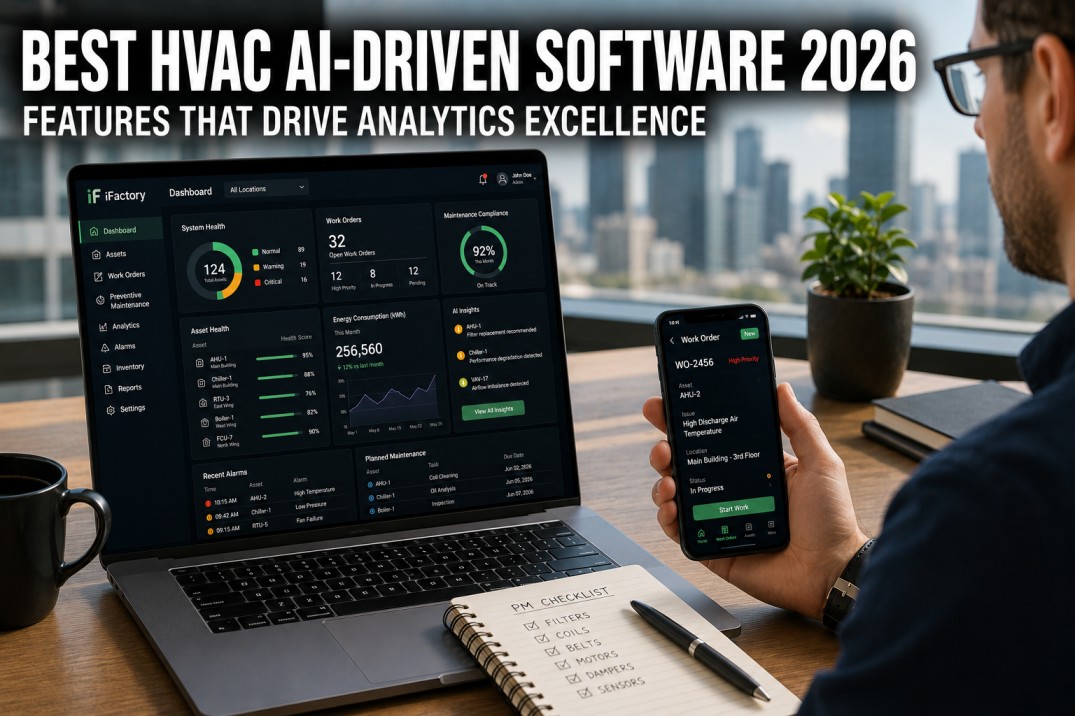
Choosing AI property management software is no longer a feature checklist exercise — it's a decision about which platform will run your operations for the next five years. iFactory AI Property Intelligence consolidates leasing, maintenance, accounting, and tenant communication into a single AI-native platform that reduces operating costs by 20–35%. Book a demo to see a side-by-side evaluation against your current stack.
The Right AI Property Software Pays for Itself in 90 Days
Compare the features, integrations, and ROI patterns that separate AI-native platforms from legacy systems with bolted-on automation.
The State of AI in Property Management Today
The category has matured fast. AI moved from a chatbot bolted onto leasing pages into a layer that runs accounting, maintenance triage, and portfolio analytics. The gap between properties using AI-native platforms and those still on legacy systems is showing up in operating margins, leasing velocity, and tenant retention.
The Six Criteria That Actually Matter
Most software comparisons get stuck on feature counts. These six dimensions determine whether the AI platform will deliver ROI in your portfolio — or sit unused after the implementation team leaves.
Integration Depth With Existing Systems
Two-way sync with your PMS, accounting, and ILS is the single biggest predictor of ROI. Surface integrations create duplicate data; deep integrations eliminate manual reconciliation entirely.
Weight: HighestSource-Document Traceability
When AI extracts a lease clause or flags a transaction, can it show you the exact source? Without traceability, accuracy claims are unverifiable and audit trails break.
Weight: HighAutonomous Task Execution
The difference between AI that "suggests" and AI that "executes." True automation handles maintenance routing, payment posting, and tenant responses without human checkpoints on every step.
Weight: HighAsset-Class Specialization
Commercial, multifamily, mixed-use, and industrial portfolios each need different AI models. A residential-tuned chatbot fails on commercial lease abstraction and vice versa.
Weight: Medium-HighPricing Transparency & TCO
List pricing rarely reflects total cost. Implementation fees, premium AI add-ons, and per-unit overage charges can double the sticker price. Demand an itemized 3-year TCO model.
Weight: MediumData Security & AI Governance
Where does your tenant and lease data go? Vendors using public LLM APIs expose sensitive data. Look for enterprise-grade controls, data residency options, and clear AI governance policies.
Weight: MediumAI Property Software Categories Compared
Four distinct categories of platforms compete for your budget. Each excels at different workloads — understanding the trade-offs prevents costly mismatches.
| Capability | All-in-One Suites | Point Solutions | Vertical AI Platforms | iFactory AI |
|---|---|---|---|---|
| Accounting Integration | Native | External | Add-on | Native |
| AI Lease Abstraction | Basic | Deep | Deep | Deep |
| Maintenance Triage | Yes | Specialized | Limited | Yes |
| Autonomous Task Execution | Partial | Suggestion-only | Yes | Yes |
| Multi-Asset Class Support | Yes | Single class | Vertical-specific | Yes |
| Open API & Two-Way Sync | Limited | Yes | Yes | Yes |
| Source-Document Traceability | No | Yes | Yes | Yes |
Where AI Property Software Pays Back First
Different AI workloads pay back on different timelines. Plotting these against your portfolio's biggest cost centers tells you where to deploy first — and where to be patient.
Accounting Exception Detection
AI flags miscoded entries, duplicate vendor payments, and budget overruns the moment they happen — eliminating month-end fire drills.
Tenant Communication & Lead Triage
Virtual leasing agents qualify prospects 24/7, schedule tours, and answer routine resident questions — cutting response times from hours to seconds.
Maintenance Routing & Predictive Service
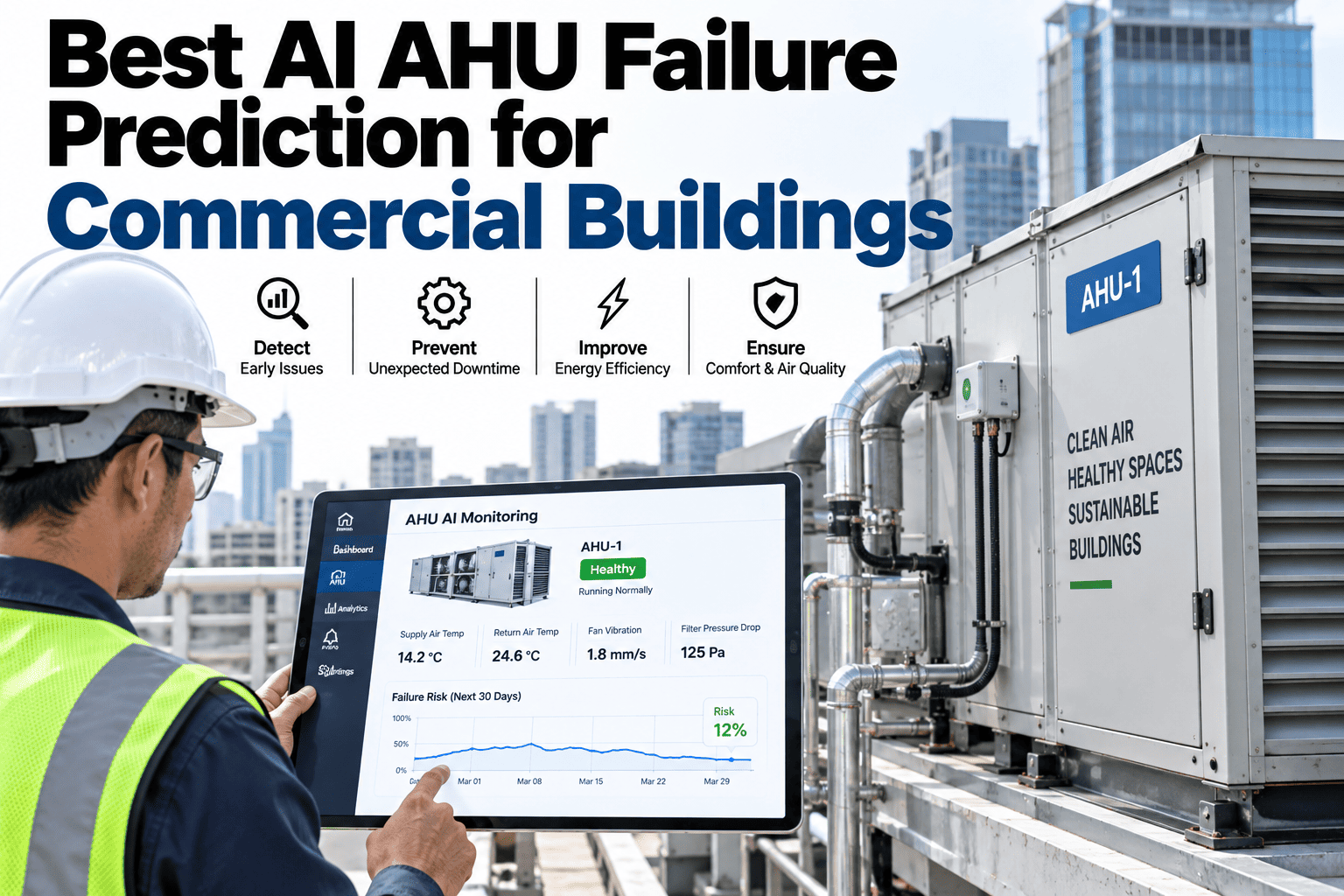
AI categorizes work orders by urgency and skill, dispatches the right tech, and predicts equipment failure before it triggers an emergency call.
Lease Abstraction & Portfolio Analytics
Critical dates, rent escalations, and clause-level data extracted from PDFs in minutes — replacing 4–8 hours of analyst time per commercial lease.
Dynamic Pricing & Revenue Optimization
Machine learning models adjust asking rents to local market signals, increasing realized revenue by 3–8% across multifamily and mixed-use portfolios.
See How iFactory Stacks Up Against Your Current Stack
Our team builds a side-by-side scorecard comparing iFactory against the two or three platforms you're evaluating — using your portfolio size, asset mix, and integration requirements as the inputs.
Which AI Platform Fits Your Portfolio?
Different operators have different priorities. Use this decision path to identify the platform category most likely to match your operational reality.
Multifamily Operator, 500–5,000 Units
Primary friction: Slow leasing response times, high vacancy days
Best fit: AI-native platform with conversational leasing AI, integrated CRM, and dynamic pricing built in. Prioritize tools that automate 60%+ of tenant inquiries end-to-end.
Commercial CRE, Mixed Portfolio
Primary friction: Lease abstraction backlog, fragmented data across properties
Best fit: Vertical AI platform with deep lease intelligence, clause-level extraction, and source traceability. Two-way sync with your existing PMS is non-negotiable.
Mid-Sized Manager, 50–500 Units
Primary friction: Manual accounting work, scattered tooling, growing fast
Best fit: All-in-one suite with native AI on accounting, maintenance, and tenant comms. Prioritize platforms that consolidate three or more tools you're paying for today.
Enterprise Portfolio, 5,000+ Units
Primary friction: Integration complexity, multi-entity reporting, AI governance
Best fit: Enterprise platform with documented AI governance, data residency options, and a track record on portfolios of comparable scale and asset diversity.
12 Questions to Ask Every AI Vendor Before Signing
A pointed Q&A reveals more in 30 minutes than a 90-minute demo. Run these by every shortlisted vendor — the answers separate marketing claims from operational reality.
Can you show me a specific source document for every AI-generated lease abstraction or flag?
What percentage of routine workflows does your AI execute autonomously vs. just suggest?
Which accounting and PMS systems do you integrate with via two-way sync, not just one-way push?
Where is our tenant and lease data stored, and is it ever sent to third-party LLM providers?
What's the total 3-year cost including implementation, training, and any premium AI add-ons?
How long does deployment take from contract to live workflows in our environment?
Which specific KPIs have other customers like us moved, and over what timeframe?
What happens to our data if we cancel — what export formats are available?
Does your AI handle our asset mix (commercial, multifamily, mixed-use) or just one class?
Who actually owns the AI models — you, a partner, or a public foundation model provider?
What's your SLA for accuracy on lease abstraction and exception detection?
Can we run a 30-day pilot on a defined subset before committing to a full portfolio rollout?
Frequently Asked Questions
Should I buy an all-in-one AI platform or stitch together specialized tools?
For portfolios under 500 units, an all-in-one platform usually wins on total cost and operational simplicity. Above 1,000 units, the equation shifts — best-of-breed point solutions integrated via two-way sync often deliver deeper capabilities, provided you have the internal capacity to manage integrations.
How do I calculate realistic ROI before committing to a platform?
Map current cost centers — analyst hours on lease abstraction, after-hours call handling, month-end accounting cycles, vacancy days — and quantify what 30–50% automation of each would save. Compare that against the platform's true 3-year TCO, not just first-year licensing. Most credible vendors will share customer benchmarks for portfolios like yours.
Will AI property management software replace our team?
AI replaces tasks, not roles. The teams seeing the biggest gains use AI to absorb repetitive work — lead qualification, transaction coding, work order routing — and redeploy people into tenant relationships, complex exceptions, and growth initiatives. Headcount typically stays flat while portfolio size expands.
How do I know if a vendor's AI is genuinely autonomous or just a chatbot wrapper?
Ask for a live walk-through of a complete workflow — from inbound lead to lease signed, or from work order to vendor dispatch — without human intervention. Genuine autonomous platforms execute the full chain; chatbot wrappers stall at the handoff between AI suggestion and system-of-record write-back.
What's the typical implementation timeline for AI property management software?
A focused pilot on one workflow (lease abstraction or exception detection) typically goes live in 4–6 weeks. Full portfolio rollouts run 3–6 months depending on integration complexity, data cleanup needs, and team training cadence. Insist on a phased plan with measurable milestones rather than a big-bang cutover.
Get a Side-by-Side Scorecard Built for Your Portfolio
Stop relying on generic vendor matrices. We'll score iFactory against your shortlist using your asset mix, unit count, integration stack, and operational priorities — and walk you through every dimension.