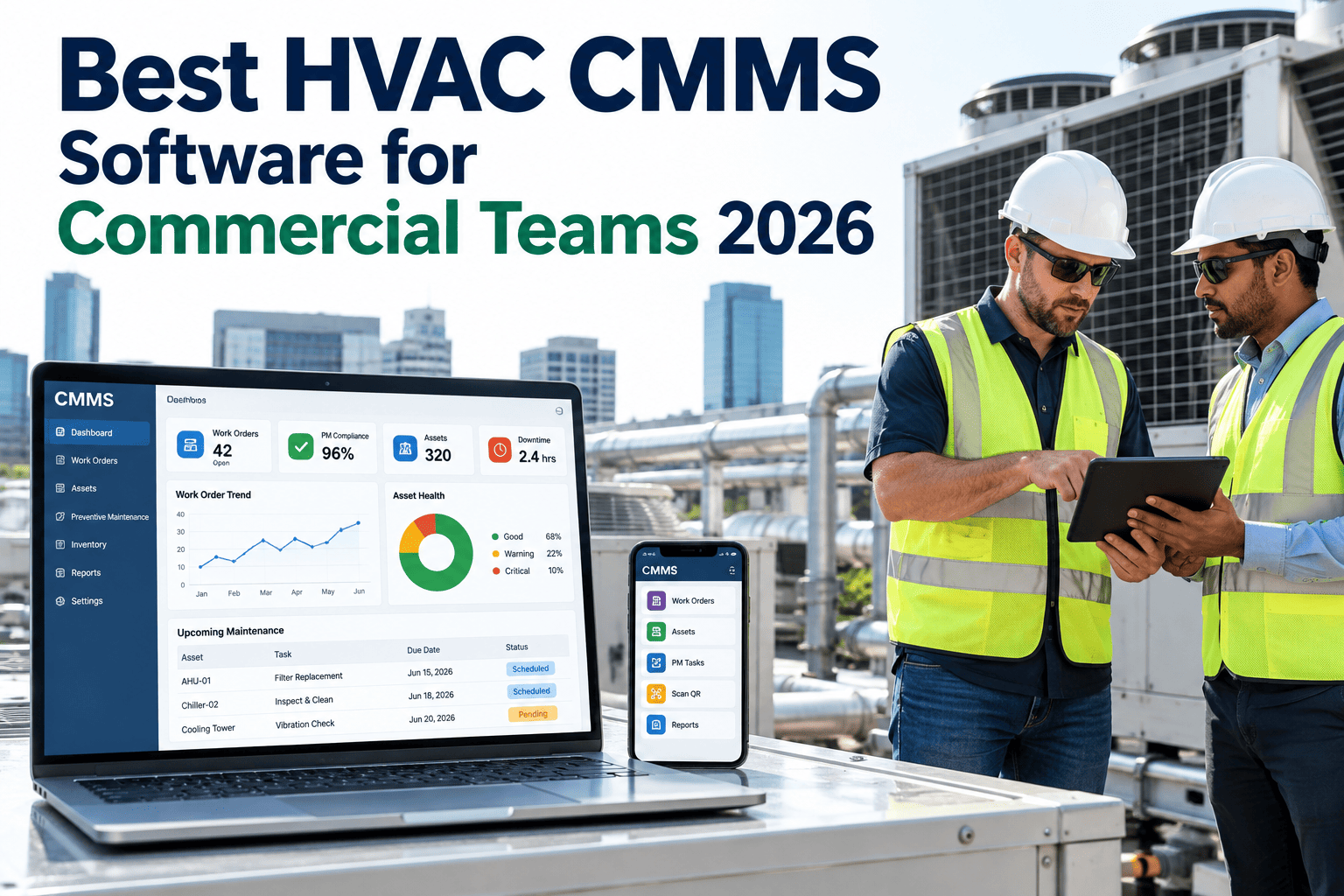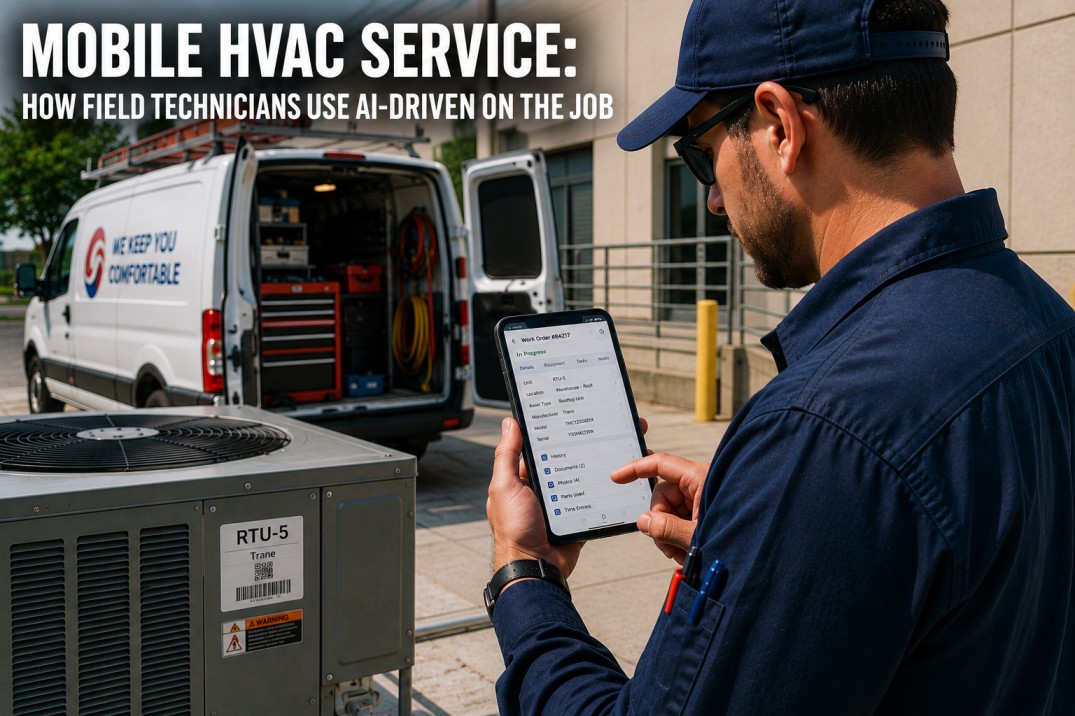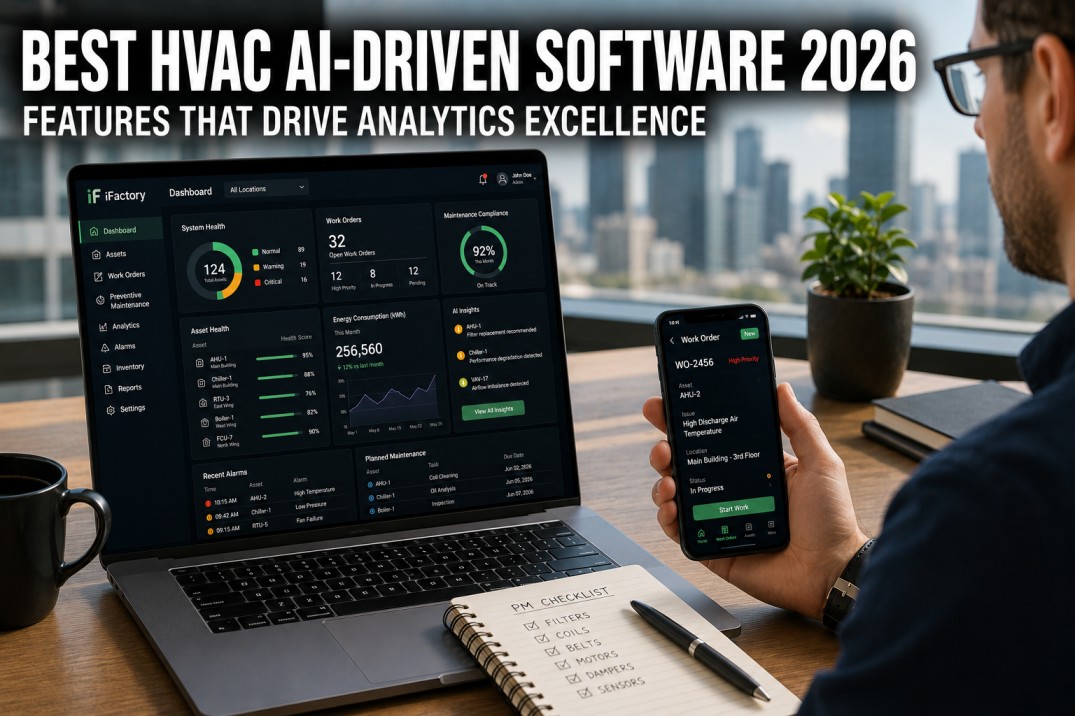
HVAC AI-driven predictive analytics software represents the convergence of IoT sensors, cloud computing, machine learning, and domain expertise into platforms that continuously monitor equipment health, detect subtle performance degradation, predict failures weeks in advance, and prescribe optimal maintenance actions. As commercial buildings face pressure to reduce energy consumption by 15% to 30%, extend aging equipment life, and operate with leaner facilities teams, AI-driven analytics have transitioned from competitive advantage to operational necessity across the commercial real estate, healthcare, education, and industrial sectors.
Compare Top HVAC AI Predictive Analytics Platforms
iFactory delivers enterprise AI-driven predictive analytics with 150+ fault conditions, 4-12 week prediction horizon, and fully automated work order integration. Book a demo to see how iFactory compares against every leading platform.
Core Capabilities: What AI-Driven HVAC Analytics Software Should Deliver
Leading platforms share fundamental capabilities that distinguish AI analytics from basic BMS alarming.
Continuous Monitoring & Data Ingestion
Collect data from BMS (BACnet, Modbus) and IoT sensors at 1-15 minute intervals. Support 1,000-100,000+ points. Handle data gaps, outliers, and normalization automatically.
Machine Learning-Based Anomaly Detection
Train on 4-8 weeks of data to learn normal operation per equipment. Detect anomalies: deviations from learned patterns. Autoencoder neural nets: 85-95% detection rate.
Automated Fault Detection & Diagnostics (FDD)
Apply expert rules + ML to identify 50-200+ fault conditions per equipment. Diagnose root cause. Prioritize by business impact (energy, comfort, risk).
Predictive Failure Forecasting
ML models predict remaining useful life (RUL) and recommended intervention date. Lead time: 2-6 weeks for common failure modes. Accuracy: +/- 1-2 weeks for well-trained models.
Platform Comparison: Leading HVAC Predictive Analytics Software
Evaluation criteria span data connectivity, model sophistication, ease of use, integration, and cost.
| Capability | Basic CAS | Mid-Market | Enterprise AI | iFactory |
|---|---|---|---|---|
| Data sources | BMS only | BMS + IoT | BMS + IoT + weather + utility | BMS + IoT + weather + occupancy |
| Detection method | Threshold rules | Rules + stat SPC | Rules + ML (autoencoder) | Rules + ML + hybrid ensemble |
| Fault coverage | 10-20 conditions | 20-60 conditions | 60-200+ conditions | 150-250+ conditions |
| Predictive horizon | None | None or basic | 2-6 weeks | 4-12 weeks |
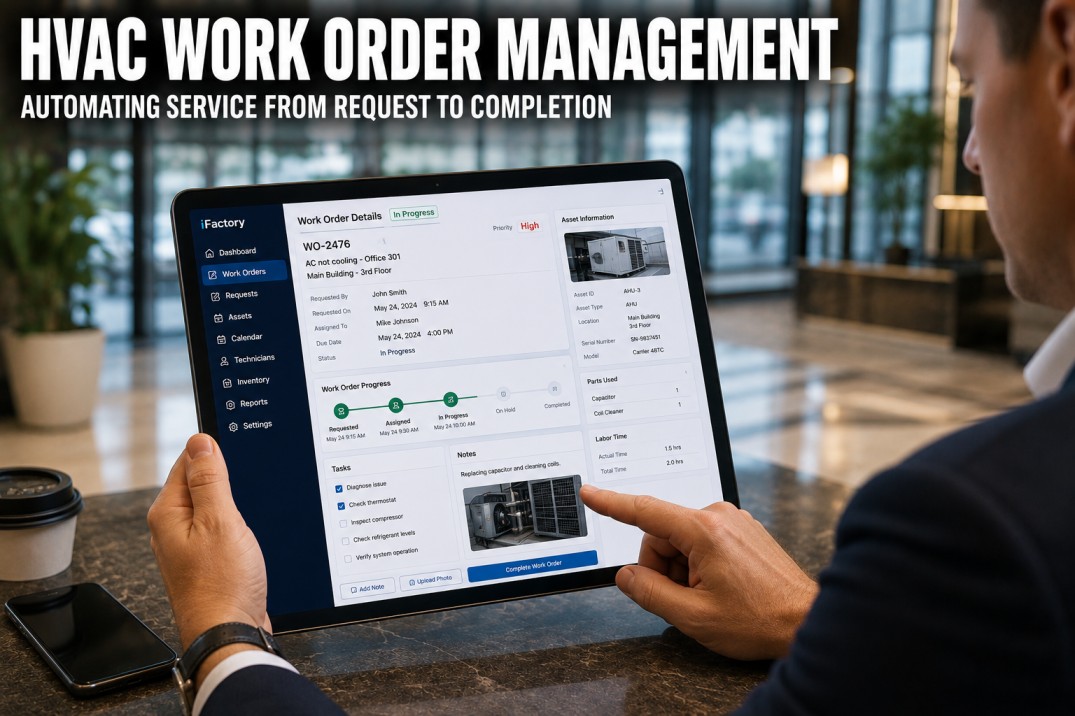
| Work order integration | Manual | Semi-automated | Automated | Fully automated |
| Price/sq ft/yr | $0.02-0.04 | $0.04-0.08 | $0.08-0.15 | $0.05-0.12 |
Find the Best HVAC AI Software for Your Building Portfolio
iFactory's platform combines rules, statistical, and ML ensemble methods for 95% detection rate across all fault types. Book a demo to see how multi-method AI delivers better detection than any single approach.
AI Methods Used in HVAC Predictive Analytics
Different ML techniques serve different detection and prediction purposes.
Supervised Learning
Train on labeled historical data (this fault = this pattern). Random Forest and XGBoost for classification. Requires: thousands of labeled fault events. Best for: known fault types with incident history. Accuracy: 85-95% with sufficient data.
Unsupervised Learning (Autoencoders)
Train on normal data only. Detects anything that does not match normal. Requires: 4-8 weeks of clean normal data per equipment. Best for: novel or rare faults. Detection rate: 85-95% with 15-30% false positive initially.
Reinforcement Learning
Learn optimal control actions through simulation. Reduce energy while maintaining comfort. Requires: digital twin or simulation environment. Best for: continuous optimization, setpoint management. Savings: 10-20% beyond rule-based.
Software Selection Guide: How to Evaluate & Choose an HVAC AI Platform
Systematic evaluation reduces selection risk and ensures platform fit across your portfolio.
Requirements & Infrastructure
Define must-have and nice-to-have capabilities for your buildings. Audit existing infrastructure: BMS type, sensor coverage, data accessibility, and IT security requirements. Verify data connectivity by confirming the platform supports your BMS protocol and IT environment before proceeding further.
Pilot & Evaluation
Run a side-by-side pilot on 3-5 equipment across 2 platforms for 8-12 weeks. Measure: faults detected, false positive rate, energy savings, and usability score. Evaluate vendor support including training quality, onboarding process, and ongoing account management. Check integration with CMMS, ERP, and reporting systems.
Contract & Rollout
Review contract terms carefully: pricing model (per sq ft vs per point), data ownership, and exit terms. Make 3-5 reference calls to existing customers in similar facility types and scale. Plan a phased rollout over 12-18 months based on pilot learnings.
ROI of AI-Driven HVAC Analytics: Benchmarks and Case Studies
Published results across building types provide realistic ROI expectations.
Energy Savings
Combined effect of FDD corrections (5-10%), schedule optimization (5-12%), setpoint reset (3-7%), DCV (5-10%). Typical: 15% year 1, 18% year 2.
Maintenance Savings
Emergency to planned: 60:40 to 25:75. Labor productivity +30%. Parts cost through planned replacement -20%. Extended equipment life: 3-7 years.
Platform Cost
Implementation: $5K-25K pilot, $25K-100K full deployment. Annual subscription: $5K-40K per 100K sq ft. Total year-1: $0.10-0.25/sq ft.
Payback Period
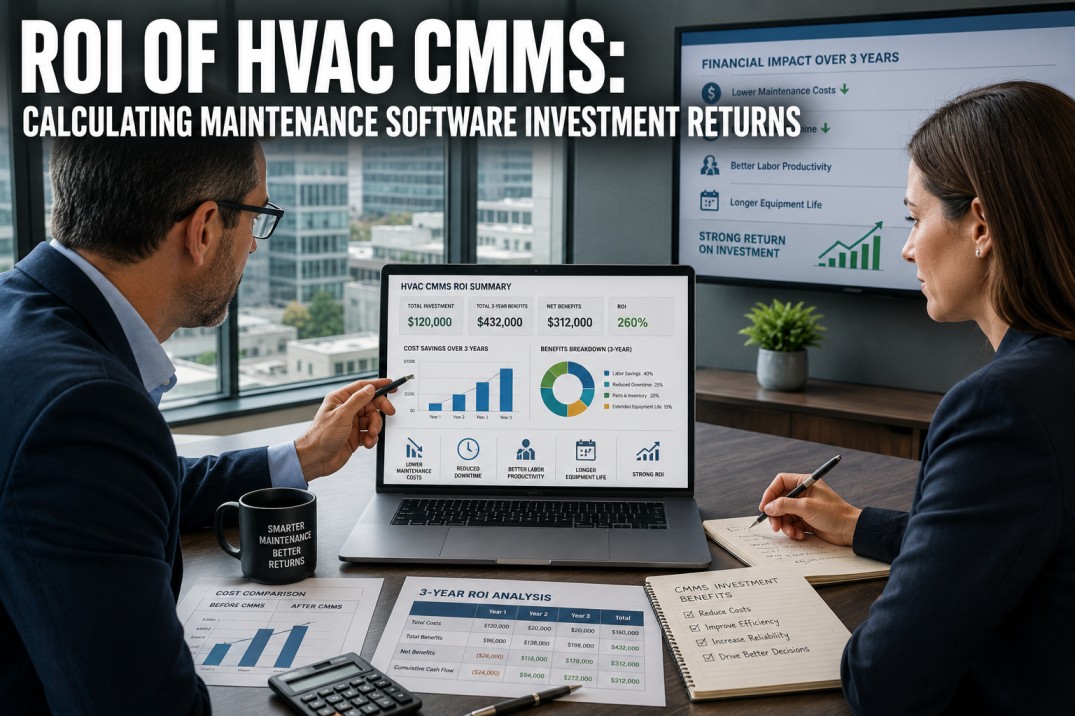
Year-1 ROI: 150-300%. Year-2+: 300-500%. 95% of deployments achieve payback within 18 months. 75% within 12 months.
Frequently Asked Questions
What is AI-driven predictive analytics for HVAC?
AI-driven predictive analytics combines IoT sensor data, BAS data, and external data sources with machine learning algorithms to continuously monitor HVAC equipment health. Unlike threshold-based BMS alarming, AI platforms learn each equipments normal operating patterns, detect subtle deviations that indicate developing faults, predict remaining useful life, and prescribe optimal maintenance timing. Typical lead time before failure: 4-12 weeks.
What features should I look for in HVAC predictive software?
Essential: multi-source data ingestion (BACnet, Modbus, IoT), ML-based anomaly detection (autoencoder or similar), automated FDD covering 100+ fault conditions per equipment, predictive failure forecasting (2-12 week horizon), work order integration, configurable dashboards, mobile access. Important: weather data integration, occupancy data, energy baseline and tracking, multi-site portfolio view, API access.
How does AI compare to traditional rule-based alarming?
Rule-based alarming detects 60-70% of faults using simple thresholds (temp >85F = alarm). AI detection rate: 85-95% including soft faults and novel failure modes. AI also: establishes personalized baselines per equipment (every unit is different), detects degradation trends before threshold exceedance, adapts to seasonal and load changes, reduces false alarms through context. Rule-based: $0.02-0.04/sq ft/yr. AI: $0.05-0.12/sq ft/yr.
What is the cost of HVAC predictive analytics software?
Pricing models: per-square-foot ($0.05-0.15/yr), per-asset ($10-50/mo per piece of equipment), per-building ($500-5,000/mo). Implementation: $10K-100K depending on scope. Total year-1 cost: $0.10-0.30/sq ft. Savings year-1: $0.15-0.60/sq ft. Payback: 8-18 months.
How do I evaluate HVAC predictive analytics vendors?
Run side-by-side pilot on identical equipment for 8-12 weeks. Measure: detection rate (how many faults found), false positive rate (alerts that were wrong), lead time before failure (weeks of early warning), ease of use (hours to proficiency for your team), integration effort, and actual energy savings. Use a weighted scorecard.
Choose the HVAC Predictive Analytics Platform That Delivers
iFactory's Predictive analytics Console includes ML-based FDD, predictive failure forecasting, and work order automation. Book a demo to see the platform that benchmarks #1 across capability, accuracy, and value.