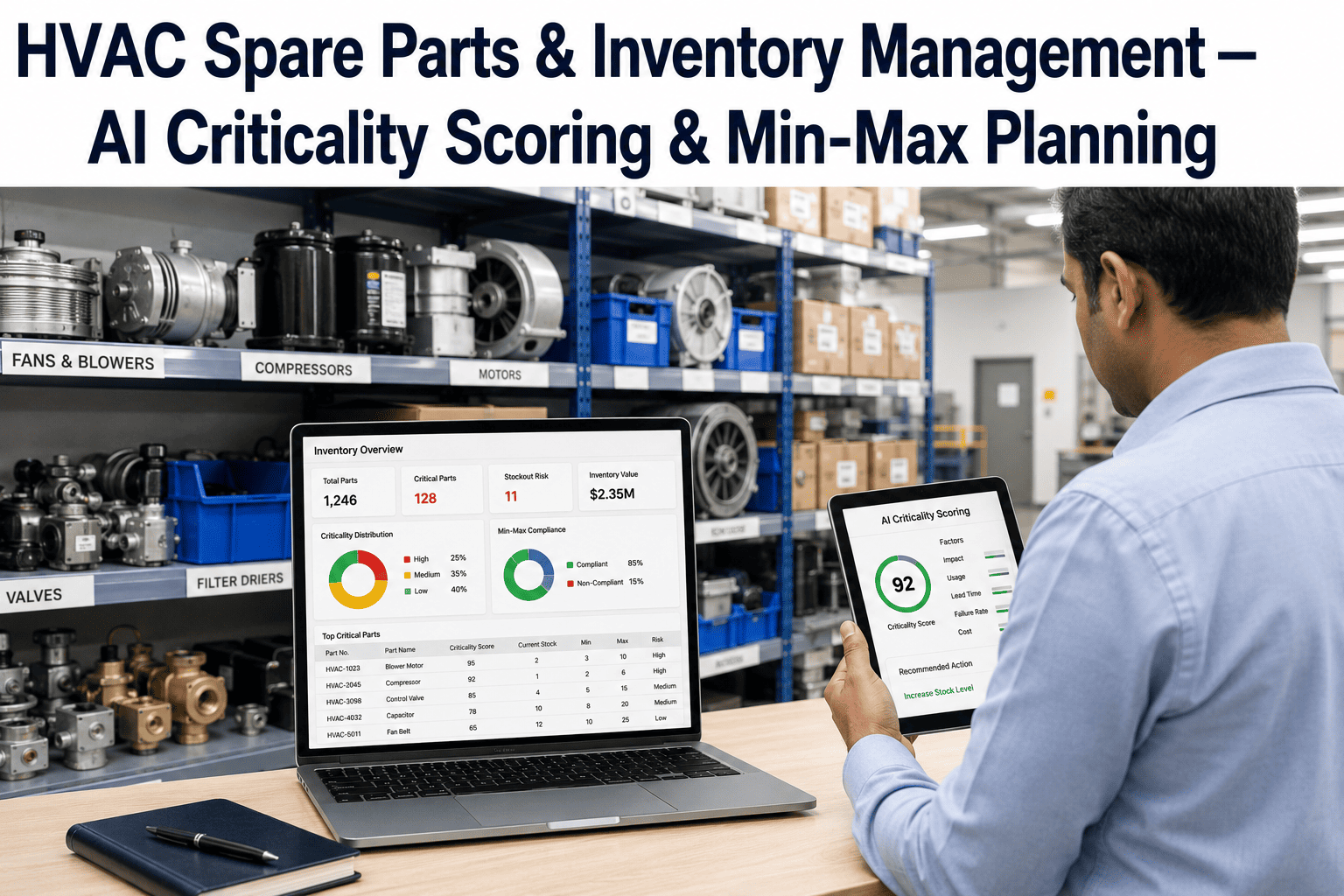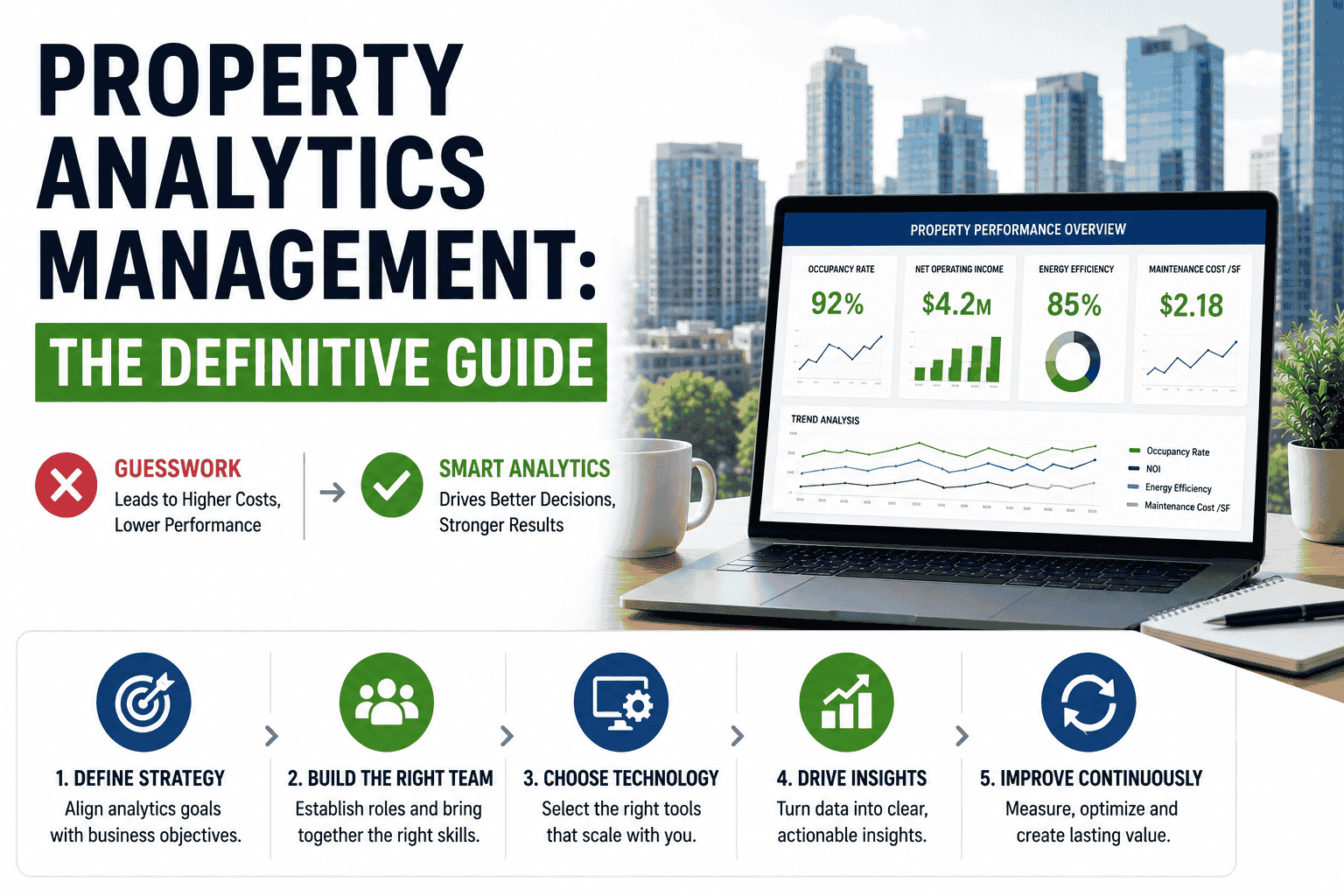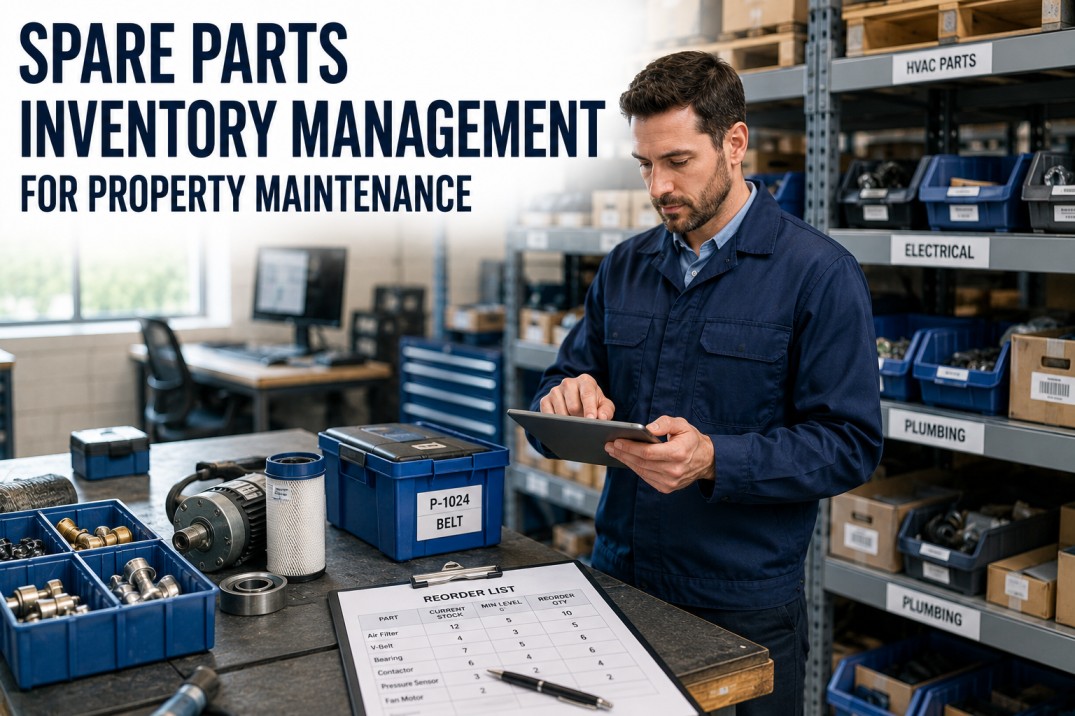
Effective spare parts inventory management is a cornerstone of operational excellence in commercial property analytics. Property managers overseeing large portfolios face the constant challenge of balancing parts availability against carrying costs while minimizing downtime and maintaining budget discipline. This comprehensive guide explores the five critical dimensions of spare parts inventory management: category-based organization and policy setting via Part Category Cards, systematic stock level monitoring through detailed Min-Max Level Tables, data-driven Parts Usage Analytics that track consumption patterns and fill rates, Vendor Scorecard Tables for procurement optimization, and financial performance tracking with Cost Metrics. Each section delivers actionable frameworks and technical specifications that enable property operations teams to implement sophisticated inventory control strategies from reorder automation and min-max optimization to vendor performance benchmarking and budget adherence analysis. By adopting these structured inventory management practices, commercial properties can reduce stockout incidents by over 58%, improve inventory turnover by six or more percentage points, and achieve budget adherence rates exceeding 94%—significantly outperforming industry averages for unscheduled properties and driving measurable operational savings across their entire portfolio.
Optimize Your Spare Parts Inventory Today
Transform your property operations with automated reorder management and real-time inventory analytics
Part Category Cards
Organize and track inventory across six critical part categories with configurable min-max policy thresholds, real-time stock values, and automated reorder rules for each class of supplies.
HVAC Parts
342 items · $47.2K total stock value
- Filters: Min 20 · Max 80
- Belts: Min 15 · Max 45
- Coils: Min 5 · Max 20
Electrical
218 items · $23.5K total stock value
- Breakers: Min 5 · Max 20
- Conduit: Min 100 ft · Max 500 ft
- Wiring: Min 200 ft · Max 1000 ft
Plumbing
156 items · $18.9K total stock value
- Seals: Min 8 · Max 30
- Valves: Min 6 · Max 24
- Pipes: Min 50 ft · Max 200 ft
Safety Systems
89 items · $12.4K total stock value
- Detectors: Min 15 · Max 50
- Extinguishers: Min 20 · Max 60
- Signs: Min 30 · Max 100
Structural Hardware
134 items · $9.8K total stock value
- Closers: Min 10 · Max 40
- Hinges: Min 25 · Max 80
- Locks: Min 15 · Max 50
General Supplies
203 items · $7.6K total stock value
- Fasteners: Min 500 · Max 2000
- Sealants: Min 20 · Max 80
- PPE: Min 40 · Max 150
Min-Max Level Table
Monitor real-time stock levels against configured thresholds with automated reorder triggers, ensuring critical parts are always available while minimizing carrying costs across all categories.
| Part Name | Category | Min Level | Max Level | Current Stock | Reorder Trigger | Lead Time (Days) | Status |
|---|---|---|---|---|---|---|---|
| Air Handler Filter MERV-13 | HVAC | 20 | 80 | 65 | 30 | 14 | Normal |
| Circuit Breaker 200A 3-Phase | Electrical | 5 | 20 | 8 | 12 | 21 | Low |
| Pump Seal Kit 2.5" | Plumbing | 8 | 30 | 4 | 10 | 28 | Critical |
| Smoke Detector Addressable | Safety | 15 | 50 | 38 | 20 | 10 | Normal |
| Door Closer Heavy-Duty | Hardware | 10 | 40 | 12 | 18 | 16 | Low |
| LED Driver 50W | Electrical | 25 | 100 | 78 | 40 | 12 | Normal |
| Valve Actuator 24V | HVAC | 6 | 24 | 7 | 12 | 35 | Low |
| Fire Extinguisher ABC 10lb | Safety | 20 | 60 | 22 | 30 | 5 | Critical |
Streamline Vendor Procurement
Centralize vendor management, automate purchase orders, and track performance with integrated scorecards across all categories
Parts Consumption Patterns
Track consumption trends, stockout incidents, fill rates, and excess inventory value to optimize reorder strategies and reduce carrying costs across the portfolio.
47.2
Monthly Consumption Rate
units/month across all categories
+12% vs last quarter3
Stockout Incidents
this year, down from 7 prior year
-58% vs prior year94.3%
Average Fill Rate
target 97%, +6.2pp improvement
+6.2pp improvement$12.4K
Excess Stock Value
identified for reduction
-34% from min-max optimizationVendor Scorecard
Evaluate vendor performance across pricing, lead times, quality ratings, and delivery reliability to optimize procurement decisions and strengthen supply chain partnerships.
| Vendor Name | Categories Supplied | Price Index (100=avg) | Avg Lead Time (Days) | Quality Rating (%) | On-Time Delivery (%) | Overall Score |
|---|---|---|---|---|---|---|
| Grainger | HVAC / Electrical / Plumbing | 98 | 3 | 97.2 | 96.8 | 97.3 |
| HD Supply | Electrical / Plumbing | 96 | 4 | 94.5 | 93.1 | 94.5 |
| W.W. Grainger | Safety / Hardware | 102 | 2 | 98.1 | 97.5 | 97.9 |
| Ferguson | Plumbing / HVAC | 95 | 5 | 96.8 | 94.2 | 95.2 |
| Fastenal | Hardware / General | 94 | 3 | 93.4 | 95.0 | 94.0 |
| Local Supplier A | All Categories | 100 | 1 | 91.8 | 98.2 | 94.7 |
Inventory Cost Metrics
Financial performance indicators tracking annual parts spend, stockout costs, inventory turnover rates, and budget adherence for data-driven cost management decisions.
$119.4K
Annual Parts Spend
Under budget by $8.2K (6.4%) from reorder optimization
$3,240
Avg Monthly Stockout Cost
Down from $7,710 prior year (58% reduction)
22.4%
Inventory Turnover Rate
Improved from 16.1% prior year via min-max tuning
94.7%
Budget Adherence Rate
vs 72% industry average for unscheduled properties
Frequently Asked Questions
Expert answers on spare parts inventory management strategies for commercial property operations and maintenance teams.
1. How does min-max inventory management work for property spare parts?
2. What spare parts should every commercial property stock in inventory?
3. How does reorder automation prevent stockouts and reduce costs?
4. What vendor management strategies optimize spare parts procurement?
5. How should property managers track and measure inventory performance?
Start Your Inventory Optimization Journey
Schedule a personalized demo and see how leading property teams reduce stockout costs by 58% and improve budget adherence to over 94%