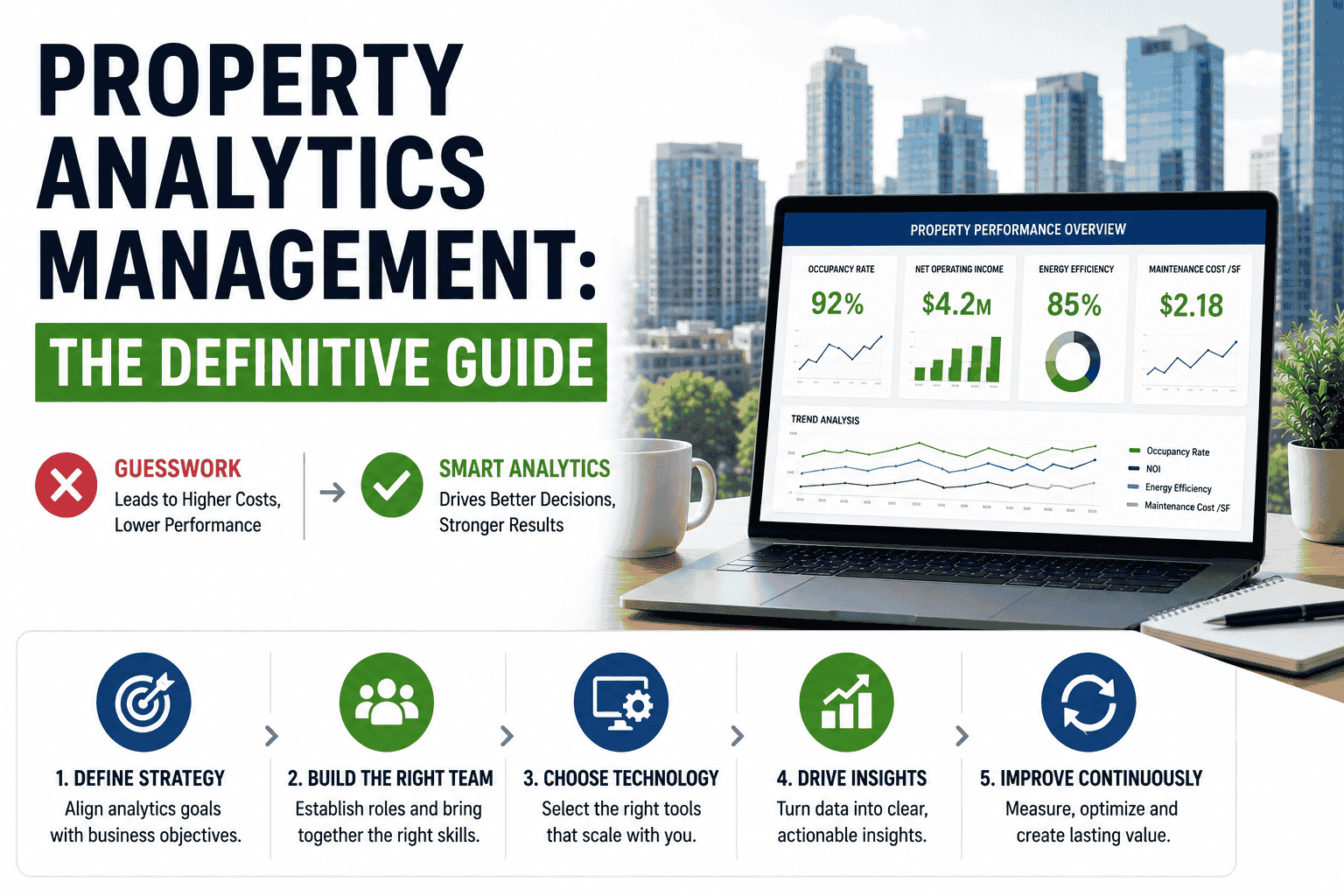
Property maintenance staffing and technician management is a complex operational discipline that directly impacts tenant satisfaction, building system reliability, operating costs, and property valuation through the quality, efficiency, and responsiveness of the maintenance workforce deployed across commercial properties. This comprehensive guide examines the five critical dimensions of building and managing a high-performance property maintenance team: the Staffing Level Calculator cards that define recommended technician-to-square-foot ratios across office, retail, multifamily, and mixed-use property types with workload assumptions and cost implications; the Technician Skill Matrix Table mapping twelve essential maintenance trades against required proficiency levels, certification requirements, and typical task categories for each skill discipline; the Training and Development Program cards profiling four program tiers including onboarding certification, trade-specific technical training, cross-training for workforce flexibility, and leadership development for supervisor roles with program duration and cost estimates; the Technician Productivity Scorecards quantifying work order completion rates, average resolution times, quality scores, and first-time fix rates with benchmark targets and improvement levers; and the In-House vs Outsourced Decision Framework comparing five operational dimensions including cost per work order, response time, quality control, workforce flexibility, and long-term asset knowledge across in-house staffing, full-service outsourcing, and hybrid staffing models. By systematically applying these five analytical frameworks, property management teams can determine optimal staffing levels that reduce labor costs by 12 to 18 percent, improve first-time fix rates from 72 to 92 percent, reduce average work order resolution time by 35 to 45 percent, and achieve tenant satisfaction scores above 4.5 out of 5.0 for maintenance responsiveness — transforming maintenance operations from a reactive cost center into a strategic driver of tenant retention and property value.
Build a High-Performance Maintenance Team With Data-Driven Staffing
iFactory's analytics platform provides staffing level calculators, skill matrix templates, training program management, productivity dashboards, and cost comparison modeling for property maintenance workforce optimization. Book a demo to see how data-driven staffing decisions reduce costs and improve maintenance quality.
Staffing Level Calculator — Technician Ratios by Property Type and Portfolio Scale
Determining optimal maintenance staffing levels requires balancing workload demand against budget constraints across different property types with distinct maintenance needs. The staffing calculator cards below provide recommended technician-to-square-foot ratios, workload assumptions, and annual labor cost estimates for four common commercial property categories.
Technician Skill Matrix — Proficiency Levels, Certifications, and Task Categories
Building a versatile maintenance workforce requires mapping skill requirements across multiple trades, defining proficiency expectations at each career level, and identifying certification requirements that ensure code compliance and quality standards. The skill matrix below profiles twelve essential maintenance trades with proficiency levels, certifications, and typical work categories.
| Trade | Entry Proficiency | Senior Proficiency | Required Certifications | Typical Task Categories |
|---|---|---|---|---|
| HVAC Technician | Level 2 (Basic service) | Level 4 (System design) | EPA 608, NATE certified | Chiller, RTU, VAV, controls |
| Electrician | Level 2 (Receptacles) | Level 4 (Switchgear) | Journeyman license, NFPA 70E | Distribution, lighting, motors, fire alarm |
| Plumber | Level 2 (Fixtures) | Level 3 (Risers) | Journeyman plumber license | Drainage, water supply, gas, backflow |
| General Maintenance | Level 1 (Basic repairs) | Level 3 (Multi-trade) | OSHA 10, CPR/AED | Painting, drywall, flooring, carpentry |
| Fire Protection Tech | Level 2 (Inspection) | Level 4 (System design) | NICET II, NFPA 25/72 | Sprinkler, alarm, suppression, testing |
| Elevator Mechanic | Level 1 (Helper) | Level 4 (Modernization) | CEI, ASME A17.1 QEI | Traction, hydraulic, controller, safety |
| Controls Technician | Level 2 (BAS setup) | Level 4 (Integration) | BACnet certified, HVAC controls | DDC, BMS, sensors, optimization |
| Roofing Technician | Level 1 (Repair) | Level 3 (Replacement) | OSHA fall protection, GAF cert | Membrane, TPO, leak, drainage |
| Locksmith / Hardware | Level 2 (Cylinders) | Level 3 (Access control) | ALOA certified | Door hardware, master key, electronic |
| Structural / Concrete | Level 1 (Patch) | Level 3 (Structural repair) | ACI certified, ICRI | Spall repair, crack injection, coating |
| Landscape / Grounds | Level 1 (Mowing) | Level 2 (Irrigation) | Pesticide applicator license | Irrigation, hardscape, snow, plant health |
| Pool / Water Feature | Level 1 (Cleaning) | Level 3 (Chemistry) | CPO certified | Circulation, filtration, chemical, heater |
Map Your Technician Skills and Identify Staffing Gaps
iFactory's platform provides skill matrix templates, certification tracking, proficiency assessment tools, and gap analysis reporting that help property managers build versatile, high-performing maintenance teams. Book a demo to see how structured workforce planning reduces overtime and improves maintenance quality.
Training and Development Programs — Onboarding, Certification, Cross-Training, and Leadership
Effective technician training programs build workforce capability through structured progression from entry-level onboarding through advanced trade certifications, cross-training for multi-trade flexibility, and leadership development for supervisory roles. The training program cards below profile four program tiers with duration, cost, and expected competency outcomes.
Technician Productivity Scorecards — Key Metrics, Benchmarks, and Improvement Levers
Measuring technician productivity requires tracking multiple performance dimensions that collectively determine maintenance quality, cost efficiency, and tenant satisfaction. The productivity scorecards below profile four essential metrics with benchmark targets, current typical performance, and specific improvement levers that drive measurable productivity gains.
In-House vs Outsourced vs Hybrid — Staffing Model Comparison and Decision Framework
Choosing between in-house staffing, full-service outsourcing, and hybrid staffing models requires evaluating cost, quality, control, flexibility, and long-term asset knowledge across each approach. The comparison cards below evaluate five operational dimensions across three staffing models with quantitative benchmarks and decision criteria for property managers.
Frequently Asked Questions About Property Maintenance Staffing and Technician Management
How many maintenance technicians does a commercial property need?
The number of maintenance technicians required for a commercial property depends on property type, size, tenant density, building age, equipment complexity, and service level targets. General staffing benchmarks by property type provide starting points that should be adjusted for building-specific factors: office buildings require one full-time equivalent FTE per 80,000 to 100,000 square feet with average annual work order volumes of 120 to 160 per 100,000 square feet; retail and mixed-use properties require one FTE per 50,000 to 70,000 square feet with 180 to 240 work orders annually per 100,000 square feet due to higher common area maintenance demands; multifamily properties require one FTE per 120 to 160 units with 200 to 300 work orders per 100 units annually driven by unit turnover maintenance; and industrial and warehouse properties require one FTE per 120,000 to 180,000 square feet with 80 to 120 work orders per 100,000 square feet reflecting lower tenant density but more specialized equipment knowledge. These benchmarks should be adjusted upward by 15 to 25 percent for buildings over 30 years old with aging systems, properties with high-amenity offerings such as fitness centers, pools, and concierge services, and portfolios targeting premium service levels with under four-hour response time guarantees. Conversely, buildings with modern infrastructure, automated building management systems, and lower tenant turnover may reduce staffing needs by 10 to 15 percent below the benchmark ratios. A structured workload analysis using the formula Total Annual Work Order Hours divided by Available Productive Hours per FTE at 1,600 to 1,700 hours per year accounting for training, meetings, travel, and administrative time provides a more precise staffing calculation than square-foot-only ratios.
What skills and certifications should property maintenance technicians have?
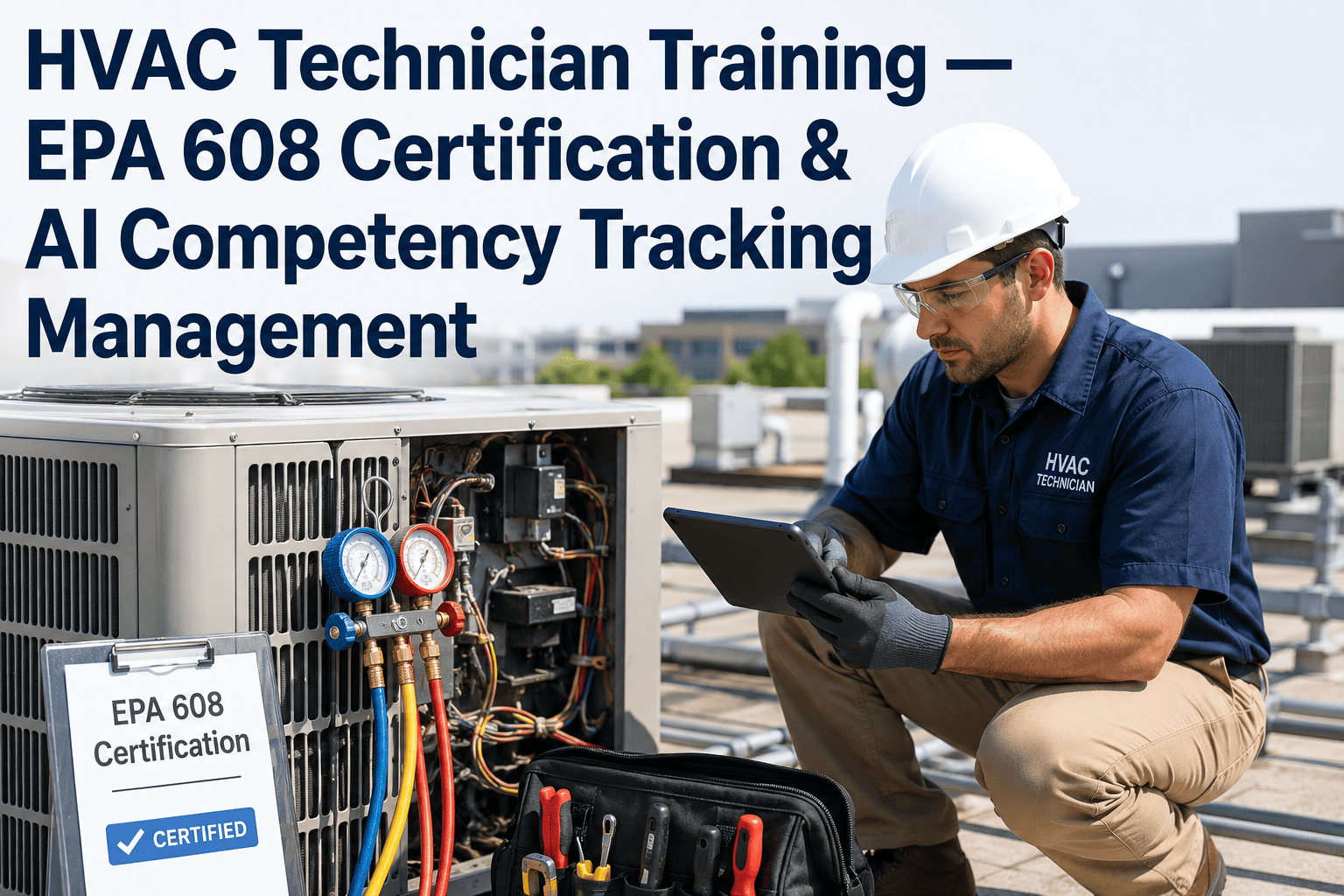
Property maintenance technicians require a combination of trade-specific technical skills, safety certifications, and soft skills that enable them to diagnose and resolve diverse building system issues effectively. Essential trade skills span multiple disciplines with proficiency expectations varying by role: HVAC technicians require EPA Section 608 certification for refrigerant handling and NATE certification for system service with skills in chiller maintenance, RTU troubleshooting, VAV box calibration, and building automation system navigation; electricians need a valid journeyman or master electrician license depending on jurisdiction, NFPA 70E arc flash safety training, and skills in distribution panel maintenance, lighting control systems, motor control centers, and fire alarm troubleshooting; plumbers require a journeyman plumber license with skills in drain cleaning, water heater service, backflow preventer testing, and gas line maintenance. All technicians should hold OSHA 10 or OSHA 30 construction safety certification, CPR and AED certification, and first aid training. Increasingly important digital skills include mobile work order application proficiency, tablet and smartphone diagnostics tool usage, email communication for tenant updates, and basic data entry for work order documentation including photo capture and parts tracking. Cross-training certification programs that enable technicians to handle basic tasks outside their primary trade such as HVAC technicians performing electrical receptacle replacements or plumbers handling general maintenance repairs increase workforce flexibility and reduce the need for specialist call-outs by 40 to 50 percent. Soft skills including customer service, professional communication, punctuality, and appearance are equally important because maintenance technicians are among the most frequent property staff that tenants interact with, directly impacting satisfaction scores and lease renewal decisions.
How should property managers measure maintenance technician productivity?
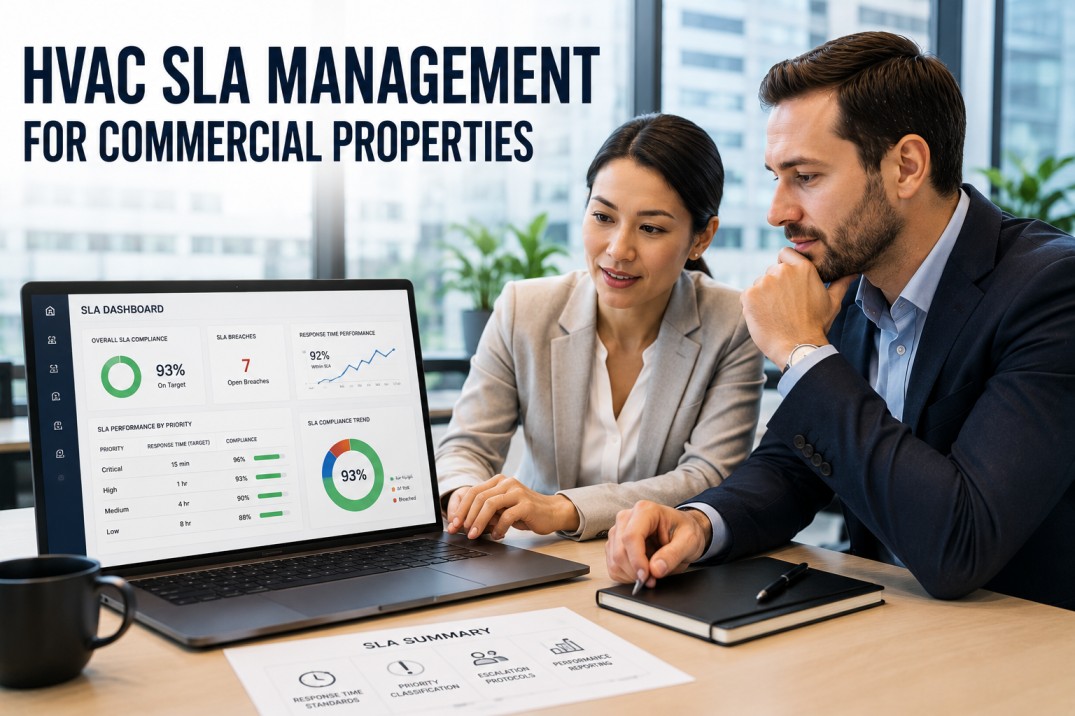
Property managers should measure maintenance technician productivity through a balanced scorecard of four primary metrics that together capture efficiency, quality, and customer impact. First-time fix rate measures the percentage of work orders resolved on the first visit without requiring a return trip or specialist escalation, with a target of 90 to 95 percent compared to the typical baseline of 72 to 78 percent, and improvement driven by skill-based dispatch matching the right technician to each work order type, mobile access to equipment history and service manuals, comprehensive truck stock of common parts, and clear diagnostic protocols for frequent work order categories. Average work order resolution time tracks the elapsed time from dispatch to completion, targeting 2.5 to 3.5 hours depending on work order complexity versus typical current performance of 4.8 to 5.5 hours, with improvements from priority-based scheduling that routes urgent requests to the nearest available technician, geographic routing optimization that groups work orders by building zone, mobile parts ordering that eliminates trips back to the supply room, and clear scope-of-work definitions on dispatch that reduce diagnostic time. Work orders completed per day measures throughput efficiency, targeting five to seven work orders per technician per day versus a typical baseline of 3.5 to 4.2, improved through work order batching by geographic proximity, dedicated preventive maintenance days separate from reactive work order days to reduce context switching, and mobile check-in and check-out that eliminates paper-based time tracking. Tenant satisfaction with maintenance surveys the percentage of tenants rating maintenance service as satisfactory or better, targeting 90 to 95 percent versus the typical 74 to 80 percent, driven by proactive communication including technician name and arrival window at dispatch, photo confirmation of completed work sent to the requesting tenant, post-completion follow-up surveys within 24 hours, and a guaranteed response time commitment that sets clear expectations.
Should property managers use in-house staff or outsourced maintenance contractors?
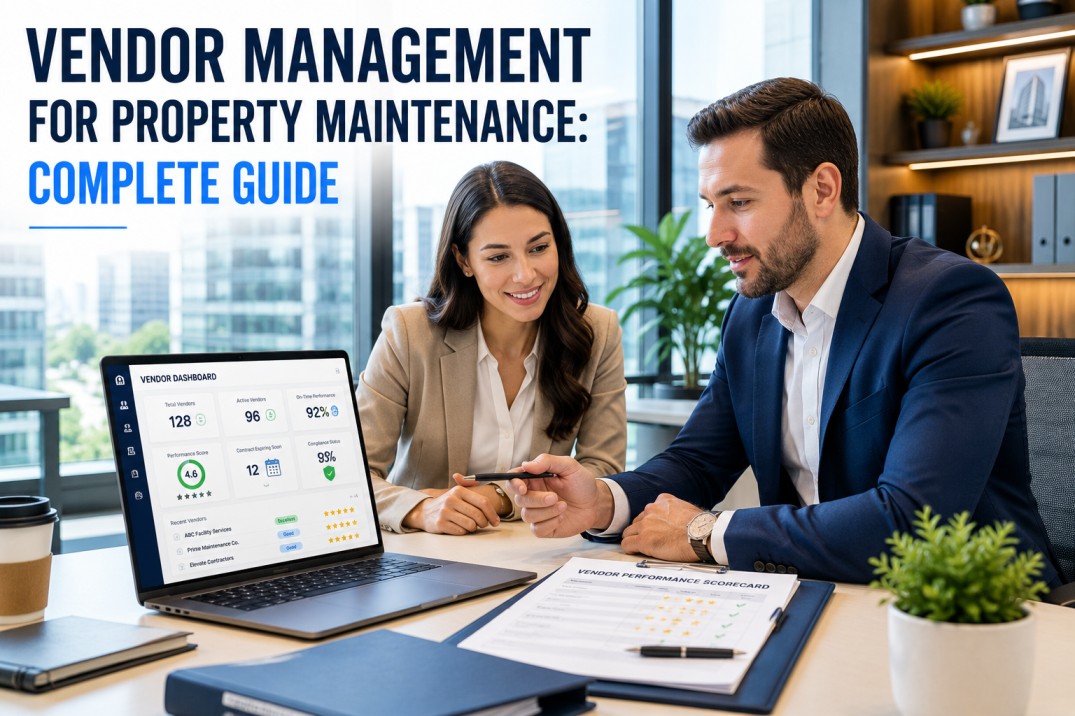
The decision between in-house staffing and outsourced maintenance contractors depends on property size, workload consistency, required skill mix, service level targets, and cost structure preferences, with most large portfolios ultimately adopting a hybrid model that combines the advantages of both approaches. In-house staffing provides superior building system knowledge because the same technicians work on the same equipment daily, developing deep familiarity with each building's quirks, system history, and optimal operating parameters that no external contractor can match. In-house teams also deliver faster response times, typically 15 to 30 minutes versus two to four hours for external contractors, and provide higher quality control because the property manager directly supervises work quality and tenant interaction standards. However, in-house staffing carries high fixed costs including salaries, benefits, training, tools, vehicles, and supervision overhead, typically $85 to $120 per fully loaded work order hour, and limited workforce flexibility to handle workload spikes or specialized tasks beyond the team's skill set. Outsourced maintenance offers variable cost structures where you pay only for work performed at $140 to $200 per work order, access to specialized trades without maintaining full-time staff for low-frequency skills such as elevator mechanics or fire protection technicians, and workforce flexibility to scale up or down with seasonal workload variations. However, outsourcing sacrifices asset knowledge, response time, and quality control consistency. The hybrid model splits the difference by maintaining a core in-house team of two to five general maintenance technicians per 200,000 to 500,000 square feet for routine and preventive work, then outsourcing specialized trades such as HVAC overhaul, elevator modernization, roof replacement, and fire suppression to pre-qualified contractors with annual contracts and guaranteed response times, achieving 15 to 25 percent lower total cost than either pure model while maintaining high service quality.
What training programs improve maintenance technician performance and retention?
Effective maintenance technician training programs follow a structured four-tier progression that builds capability from job-ready fundamentals through trade specialization, multi-trade versatility, and supervisory leadership, with each tier directly correlated with improved productivity metrics and technician retention. The first tier, onboarding and safety certification, spans 60 to 90 days at a cost of $3,200 to $4,800 per technician and covers property-specific systems orientation, OSHA 10 construction safety, work order mobile application training, building-specific equipment familiarization, safety protocols and emergency procedures, and customer service skills for tenant interaction, with the outcome being a job-ready technician who is safety-compliant and system-proficient. The second tier, trade certification programs, spans six to 24 months depending on certification type at $5,000 to $15,000 annually including EPA 608 and NATE for HVAC technicians, journeyman electrician programs typically requiring four-year apprenticeships, NICET certification for fire protection technicians, BACnet controls certification, and annual renewal training for NFPA 70E arc flash safety and other recurring certifications. The third tier, cross-training programs, spans three to six months per additional trade at $2,500 to $4,000 per trade and is specifically designed to build multi-trade capability such as HVAC technicians learning basic electrical skills, plumbers learning general maintenance, electricians learning BAS controls fundamentals, and all technicians cross-trained in emergency response protocols, delivering 40 to 50 percent reduction in specialist call-outs and significantly improved workforce scheduling flexibility. The fourth tier, leadership and supervisor development, spans six to 12 months at $6,000 to $10,000 per participant and covers work order management and dispatch optimization, budget planning and cost control, team scheduling and workload balancing, vendor management and contract oversight, performance coaching and feedback skills, and data-driven decision making, preparing senior technicians for supervisory roles that improve overall team productivity by 15 to 25 percent. Properties that invest at least 3 to 5 percent of total maintenance labor budget in training programs achieve 40 percent lower technician turnover, 25 percent higher first-time fix rates, and 30 percent fewer safety incidents compared to properties with informal or unstructured training approaches.
Optimize Your Maintenance Staffing With Data-Driven Workforce Analytics
iFactory's platform provides staffing level calculators, skill matrix templates, training program management, productivity dashboards, and cost comparison modeling for in-house vs outsourced decision making. Book a demo to see how data-driven workforce management reduces labor costs and improves maintenance quality across your portfolio.