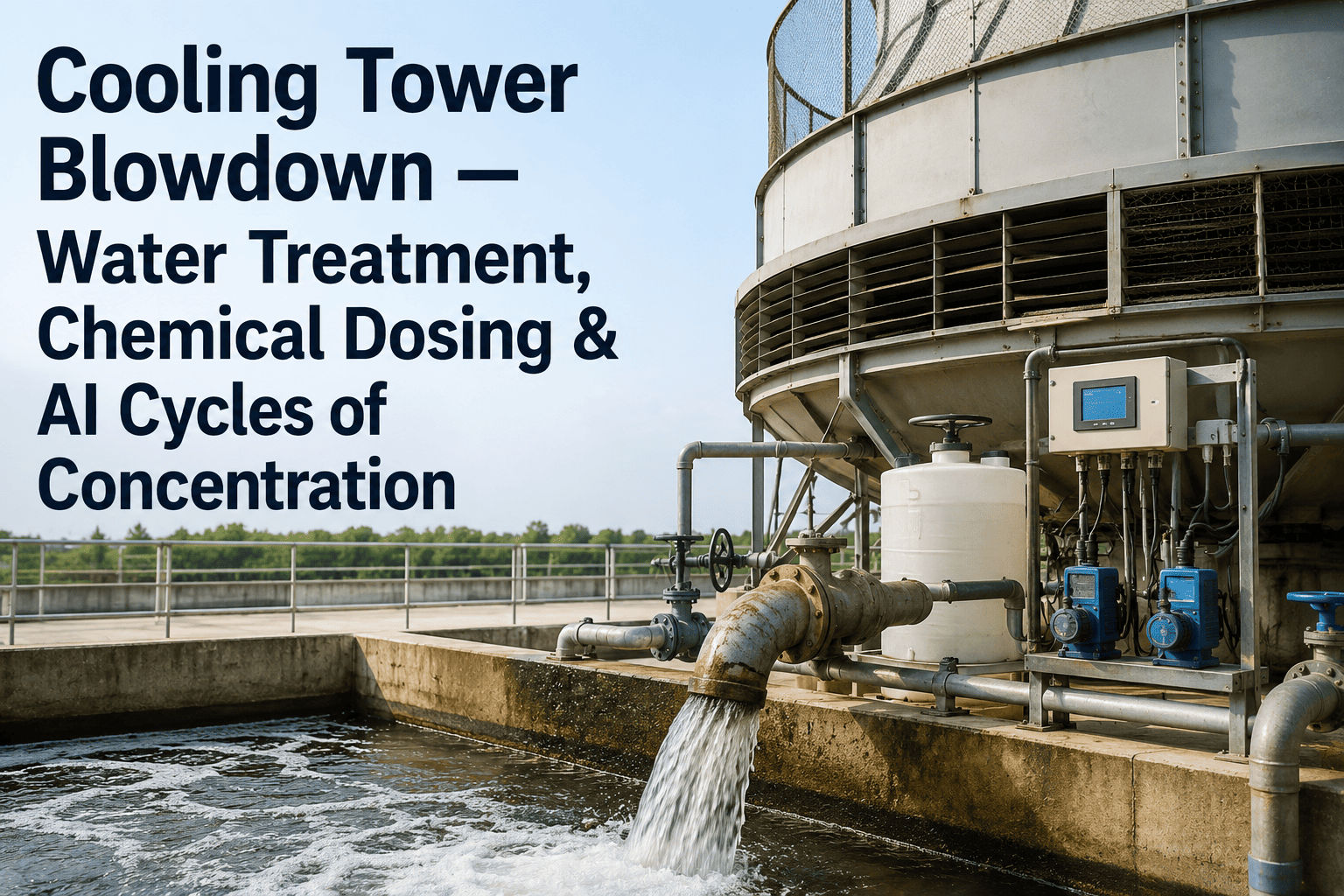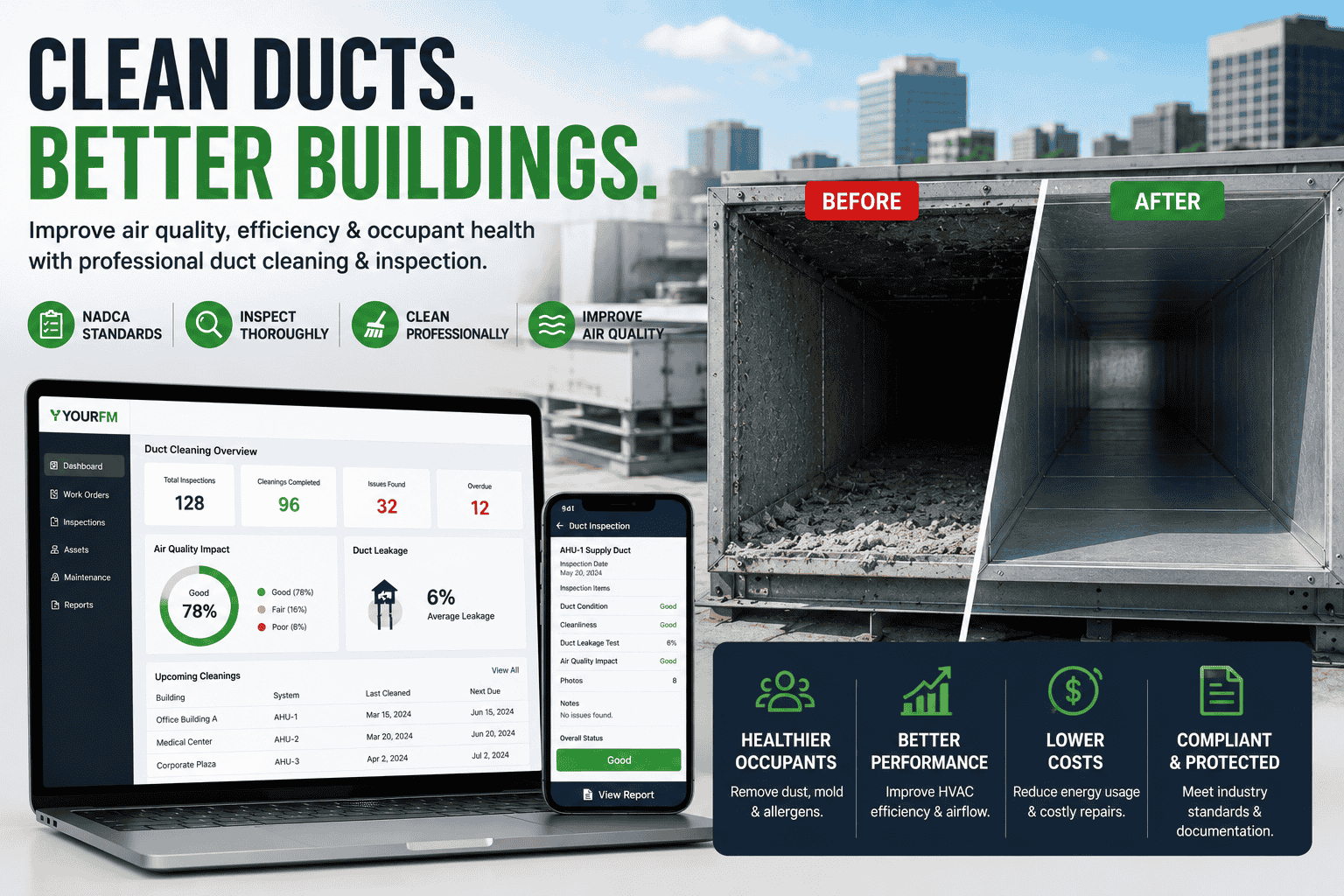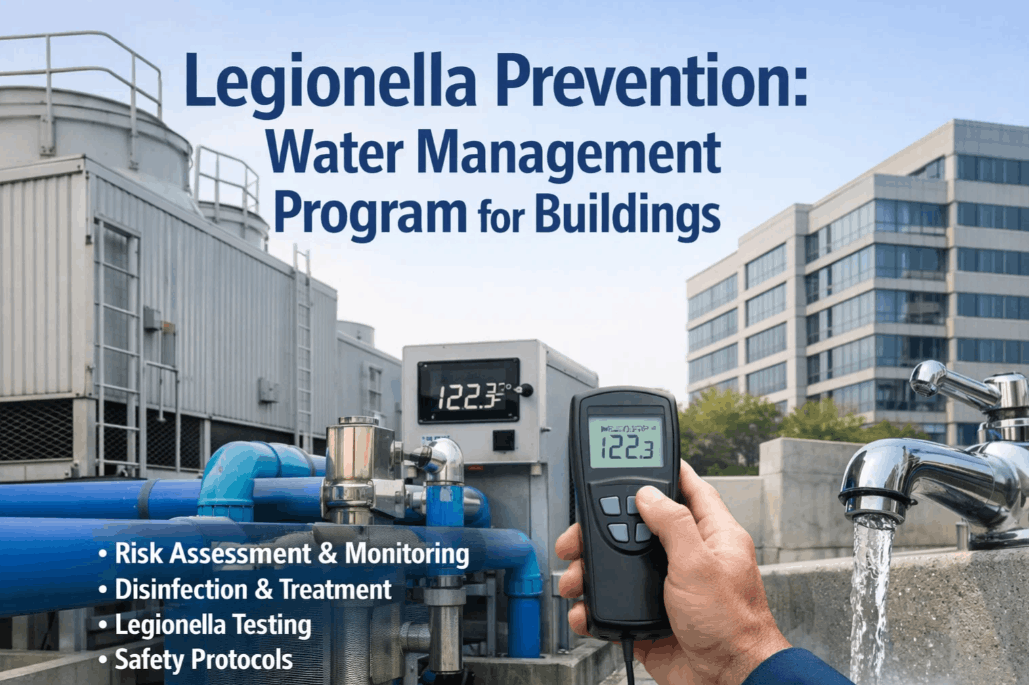
Cooling towers are the highest-stakes asset in a commercial building's mechanical room — not because they fail often, but because failure can mean a Legionella outbreak, an emergency shutdown, and regulatory penalties that follow the property for years. iFactory Cooling Tower Operations builds every inspection, water test, and cleaning cycle into recurring work orders with full ASHRAE 188 documentation. Book a demo to walk through a complete inspection program designed to keep your towers safe, efficient, and audit-ready.
The Complete Cooling Tower Inspection Playbook
A practical checklist covering all seven inspection zones, water chemistry parameters, and the inspection frequency rhythm that keeps cooling towers safe — and your facility out of the next outbreak headline.
Why Cooling Tower Maintenance Is Not Optional
Cooling towers create the exact conditions Legionella bacteria thrive in — warm, stagnant water with available nutrients. When maintenance lapses, the consequences extend far beyond equipment downtime. Recent outbreaks have caused fatalities, building shutdowns, and multi-million-dollar legal exposure.
A Complete Tower Inspection Mapped to Anatomy
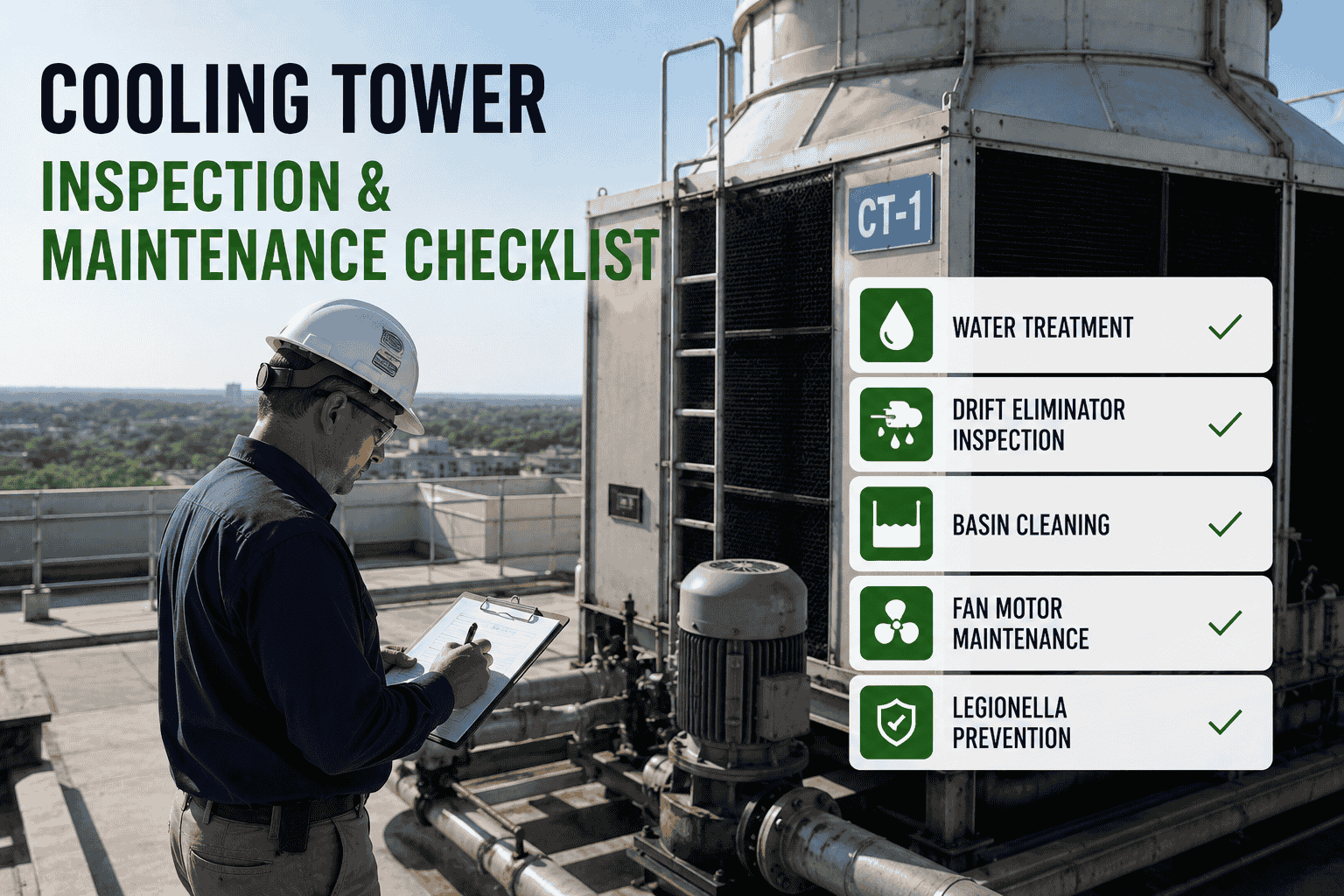
A structured inspection covers seven distinct zones, each with its own failure modes and risk factors. Skipping any single zone leaves a gap that bacteria, scale, or mechanical wear can exploit. This is the inspection sequence built into every modern cooling tower PM workflow.
Cold Water Basin
Inspect for sediment, slime, algae growth, debris accumulation, and biofilm formation. Organic buildup accelerates Legionella colonization within 24–48 hours in warm conditions.
Drift Eliminators
Verify integrity, alignment, and absence of scale fouling. Damaged or displaced eliminators are the primary engineering control preventing Legionella-laden droplets from entering ambient air.
Fill Media
Inspect PVC or ceramic fill for scale deposits, biological slime, physical collapse, or UV degradation. Fouled fill provides harborage sites for Legionella biofilm development.
Fan Motor & Drive
Check fan blade balance, motor bearings, vibration patterns, belt tension, and shaft alignment. Unbalanced fans accelerate bearing failure and increase energy consumption.
Circulation Pumps
Inspect mechanical seals for leakage, verify suction and discharge pressures, lubricate bearings to manufacturer specification, and confirm strainer cleanliness.
Chemical Feed System
Verify dosing pumps operating correctly, chemical drums adequately stocked, injection quills unblocked, and biocide residual within target range.
Structural & Casing
Inspect for corrosion, structural deformation, louver damage, access door seals, and overall casing integrity. Compromised structure increases drift and water loss.
The Numbers That Keep a Tower Safe
Water chemistry is the single most important variable in tower safety. Each parameter has a target range — values outside that range signal scale formation, corrosion risk, or biological growth conditions. These are the readings every technician should know by heart.
| Parameter | Target Range | What It Indicates | Test Frequency |
|---|---|---|---|
| pH | 6.5 – 9.0 | Corrosion / scale balance | Daily |
| Conductivity | 1,500 – 3,500 μS/cm | Dissolved solids concentration | Daily |
| Free Chlorine | 0.2 – 0.5 ppm | Biocide residual present | Daily |
| Total Hardness | < 500 ppm as CaCO₃ | Scaling potential | Weekly |
| Alkalinity | 100 – 300 ppm | pH buffering capacity | Weekly |
| HPC Plate Count | < 10,000 CFU/mL | General bacterial activity | Monthly |
| Legionella Culture | < 10 CFU/mL action | Legionella presence | Monthly–Quarterly |
See Your Cooling Tower PM Calendar Built Live in 30 Minutes
Our team takes your tower configuration, local regulatory jurisdiction, and current water treatment vendor — and builds the full ASHRAE 188 inspection calendar in iFactory while you watch. No spreadsheets afterward.
What Gets Checked, When
Each inspection task has a specific cadence — based on risk profile, regulatory requirement, and the rate at which conditions can change. This frequency matrix is the operational backbone of any compliant cooling tower program.
Where Most Cooling Tower Programs Break Down
Investigators looking at Legionella outbreaks consistently find the same five operational failures. None require expensive technology to prevent — just systematic execution. Closing these gaps is the highest-leverage work in any tower program.
Skipped Biocide Verification
Chemical feed pump fails silently. No daily verification means the tower runs without biological protection until visible algae triggers a reactive response.
Stagnant Dead Legs
Idle pipe runs accumulate biofilm. Weekly flush requirements skipped during busy periods. Stagnant water is the single most common precondition for Legionella amplification.
Missing Documentation
Inspections happen, but logs aren't completed or aren't retrievable. When the health department arrives, the program is counted as if it never existed.
Delayed Action Thresholds
HPC or Legionella tests come back elevated. No clear escalation protocol means days pass before corrective action — exactly when bacterial growth accelerates.
Drift Eliminator Damage Ignored
Visible damage to drift eliminators noted but not prioritized. The primary control against Legionella aerosol release operates compromised for weeks or months.
Frequently Asked Questions
How often must a cooling tower be fully cleaned and disinfected?
ASHRAE 188 and most local jurisdictions require complete cleaning and disinfection at minimum twice per year — typically at startup and shutdown of the cooling season. High-risk facilities or towers showing elevated microbiological readings may require quarterly or even monthly deep cleaning. Local AHJ requirements should always be checked, as some cities mandate more frequent cycles.
What are the most common signs of Legionella risk in a cooling tower?
Visible biofilm or slime in the basin, persistent algae growth, water clarity loss, elevated HPC readings, low or undetectable biocide residual, scaled fill media, and damaged drift eliminators. Any single indicator warrants immediate investigation; multiple indicators together signal a system at high amplification risk.
Who is qualified to run a cooling tower water management program?
ASHRAE 188 requires a designated program team — at minimum a facility manager with operational authority, a water treatment professional with chemistry and microbiology expertise, and maintenance staff who execute daily tasks. Certified Water Technologists (CWTs) typically lead the technical components of the program.
How is documentation actually verified during an inspection?
Inspectors review chemistry logs, biocide records, lab culture results, cleaning records, drift eliminator inspection notes, corrective action follow-through, and program team documentation. Records must show technician attribution, timestamps, and continuity. Gaps in any of these categories are typically counted as program failures regardless of actual operational status.
What's the fastest way to bring an existing program into ASHRAE 188 compliance?
Start with the seven required components: program team, system description, flow diagram, control measures, monitoring, corrective actions, and verification. Migrate paper records into a digital platform where every test, treatment, and inspection generates an attributed timestamped record. Most properties achieve compliance-ready documentation status within 30–45 days.
Turn Every Tower Into a Documented, Inspection-Ready Asset
Replace paper logs and scattered vendor reports with a unified cooling tower operations layer that runs every inspection, captures every test, and produces ASHRAE 188 documentation on demand.