Before iFactory, a regional pizza chain's kitchen manager caught a hood fire suppression system discharge on a grainy DVR recording six hours after it happened — the restaurant had been down for the entire dinner shift, and the insurance claim later revealed $47,000 in lost revenue, equipment damage, and fire marshal re-inspection fees. After iFactory, the same chain's corporate safety director watches real-time suppression system status, gas-line pressure, and hood temperature across 38 locations from a single dashboard, and gets an SMS alert the instant any anomaly appears — the last kitchen fire was contained in under 90 seconds, and the system reset was remotely verified before the health inspector arrived the next morning.
Zero-Downtime Kitchen Fire Safety — Real-Time Suppression Monitoring That Saves $47K Per Incident
iFactory turns every hood suppression system, gas valve, and temperature sensor into a unified, live safety network — so you know the instant a system fires, resets, or drifts out of spec. No more grainy DVR footage, no more lost shifts.
What 38 Restaurants Achieved in One Quarter
After deploying iFactory's on-premise analytics across a multi-unit kitchen network, the corporate safety team documented these measurable improvements over a 90-day pilot.
What iFactory Monitors in Your Kitchen
One platform ingests data from every suppression-related sensor on your plant network — no cloud, no data leaving your building.
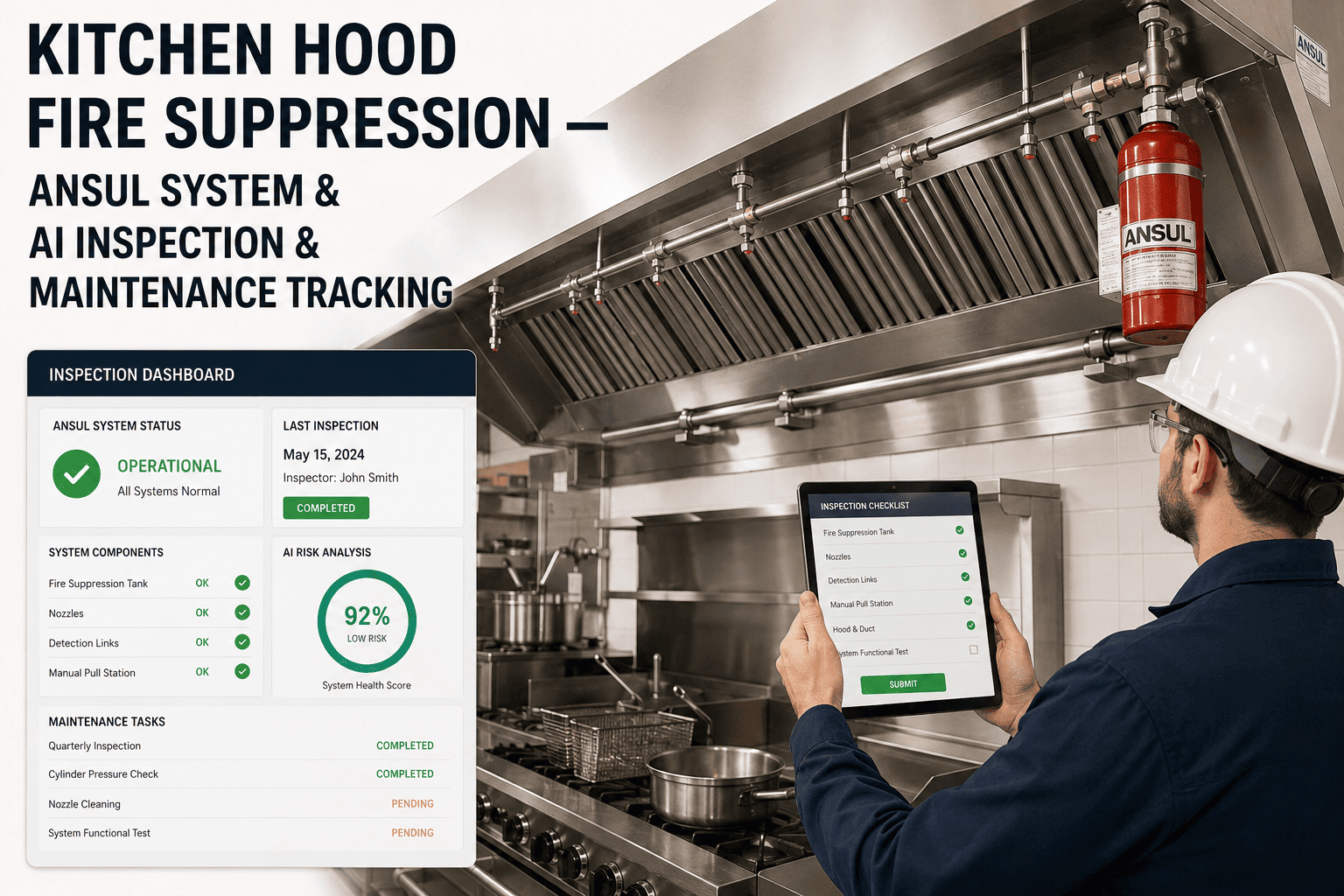
Hood Suppression System Status
Real-time discharge detection, system arm/disarm states, and manual pull-station triggers. iFactory logs every event with millisecond precision so you can prove compliance to the fire marshal without digging through DVR archives.
Gas-Line Pressure & Flow Trending
Continuous monitoring of natural gas and propane lines feeding cooking equipment. iFactory flags pressure drops below 7 inches WC or flow anomalies that indicate a leak before it becomes a fire hazard.
Hood & Duct Temperature Arrays
Thermocouple data from hood plenums and exhaust ducts. When temperature rises above 400°F during a grease fire, iFactory triggers an immediate alert and logs the thermal profile for post-incident analysis.
Kitchen Ventilation Interlocks
Verifies that exhaust fans, make-up air units, and damper positions are within code before the suppression system can be reset. iFactory prevents a reset attempt if airflow is insufficient — eliminating the #1 cause of re-ignition.
Three Costs of Running Blind on Fire Suppression
When your only visibility into kitchen fire safety is a monthly manual inspection and a DVR system, these hidden costs pile up fast.
Unplanned Shutdown Revenue Loss
A single kitchen fire suppression discharge shuts down your cooking line for 4 to 48 hours depending on fire marshal availability and system reset time. At $500–$1,200 per hour in lost revenue for a busy quick-service restaurant, that's $2,000 to $57,600 per incident — and you can't bill for it.
False Discharge & Nuisance Alarms
Gas pressure fluctuations, steam from dishwashers, or a fryer left uncovered can trigger a false suppression system discharge. Each false event costs $1,500–$3,000 in system recharging, lost food product, and labor to clean and reset. Without trending data, you can't tell a real fire from a steam spike.
Regulatory Penalties & Insurance Premium Hikes
NFPA 96 requires quarterly inspections and immediate reporting of any system discharge. A single missed report or slow reset can result in a fire marshal violation ($500–$10,000 fine) and a 15–25% premium increase on your property insurance. iFactory's audit trail proves compliance on demand.
iFactory's on-premise appliance processes 1,200+ sensor readings per second per location — no cloud latency, no data leaving your kitchen network. Book a 30-min walkthrough and we'll show you live suppression data from a real deployment.
From Sensor to Alert in Under 60 Seconds
iFactory connects to your existing suppression system controllers, gas meters, and temperature sensors over your plant network — no new wiring, no cloud dependency.
Connect
iFactory's on-premise NVIDIA appliance connects to your suppression system PLC, gas pressure transmitters, and thermocouple arrays via Modbus TCP, BACnet, or OPC-UA — whichever your equipment speaks.
Ingest & Model
The appliance ingests 10+ data points per sensor every second — temperature, pressure, flow, valve position, system arm status — and builds a baseline model of normal kitchen operation within 72 hours.
Detect & Alert
Any deviation beyond your defined threshold — a 15°F/minute temperature spike, a gas pressure drop below 7 inches WC, a suppression system discharge — triggers an SMS, email, and dashboard alert within 47 seconds, with full context including the sensor ID, location, and trend data from the last 30 minutes.
Audit & Comply
Every event is logged to an immutable audit trail with millisecond timestamps, sensor readings, and user acknowledgments. Export a compliance report for the fire marshal or your insurance auditor in one click — no DVR footage to sift through.
iFactory Delivers a Complete Kitchen Fire Safety Analytics System
No partial solutions, no cloud subscriptions, no third-party integrations to manage. This is what lands on your plant network.
On-Premise NVIDIA Appliance
Installed on your kitchen network in under 4 hours. Zero data leaves your building — all analytics run locally on the appliance.
Turnkey Sensor Integration
iFactory's engineers connect to your existing suppression controllers, gas meters, and thermocouples — no new hardware required for most installations.
6–12 Week Pilot to Full ROI
From data-source handover to live dashboard with alerting in one quarter. The pilot includes 90 days of monitoring, trending, and compliance reporting.
24×7 Managed Service
iFactory's operations team monitors your appliance health, updates models as your kitchen equipment changes, and provides 24/7 support for any alert or system question.
Questions Operations Leaders Ask About Kitchen Fire Suppression Analytics
Stop Finding Out About Kitchen Fires on the DVR the Next Morning
iFactory gives you real-time suppression analytics across every location — from a single dashboard, on your network, with alerts in under 60 seconds. Book a demo and we'll show you live data from a working kitchen deployment.

.jpg)