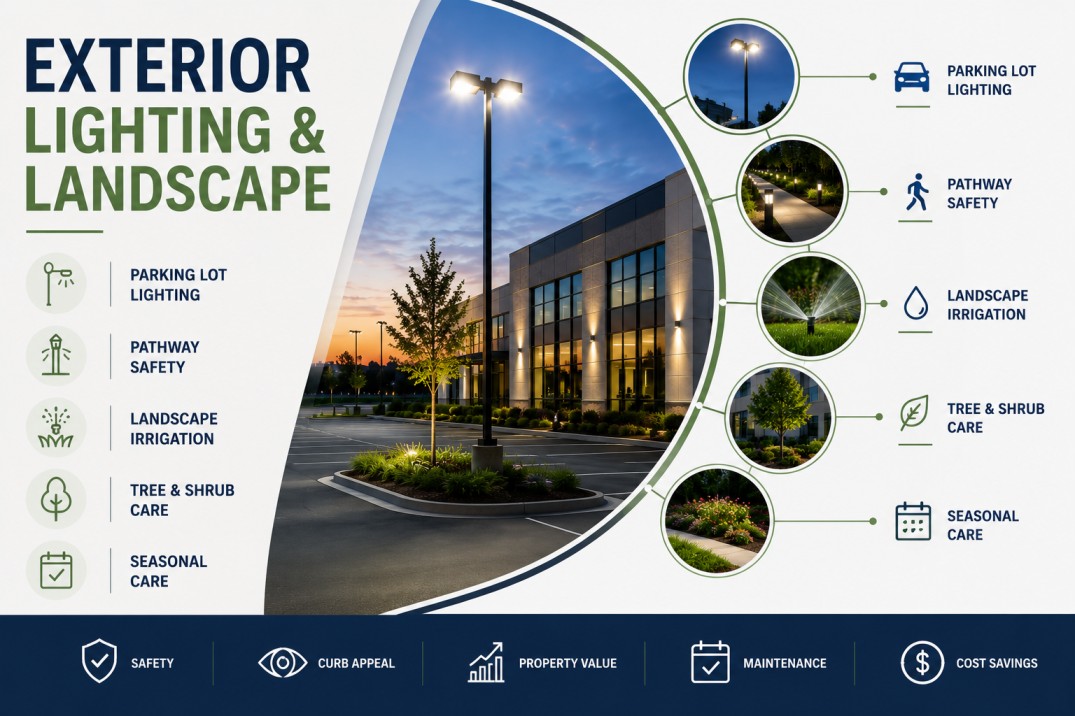
Commercial irrigation systems are the largest consumer of water in most landscaped properties — and the most inefficiently managed. The EPA estimates that 50% of outdoor water use is wasted through evaporation, runoff, and over-watering caused by poorly programmed controllers and neglected system components. Smart irrigation technology can reduce consumption by 20-40% with payback periods under 18 months. iFactory Landscape Intelligence integrates smart controller programming, zone-based scheduling, flow monitoring, and seasonal PM into one platform — giving property managers precise control over every irrigation zone across their portfolio. Book a demo to see how structured irrigation analytics turns outdoor water use into measurable conservation and operational savings.
Manage Every Irrigation Zone Across Your Commercial Portfolio
Stop managing irrigation through manual valve turns and weather guesswork. Combine smart controller programming, zone-based scheduling, flow monitoring, and seasonal PM into one platform built for commercial landscape teams.
Commercial Irrigation Is the Largest — and Most Wasted — Water Use in Landscaped Properties
Irrigation accounts for 30-60% of total water consumption in commercial properties with landscaped grounds. The waste is driven by three systemic factors: controllers programmed once and never updated for seasonal weather changes, broken or misaligned heads that water pavement instead of plantings, and scheduling that applies the same runtime to every zone regardless of sun exposure, soil type, or plant water needs. Smart irrigation analytics addresses all three simultaneously.
Modern Smart Irrigation Systems: Components, Sensors, and Control Layers
A smart irrigation system operates across three layers — the controller that schedules watering, the sensors that report environmental conditions, and the field components that deliver water to each zone. Understanding how these layers interact is essential for effective programming, troubleshooting, and seasonal maintenance.
Smart Controller
Central processor running zone schedules, weather-adaptive logic, and flow monitoring. Replaces conventional timer-based controllers with ET-based scheduling that adjusts runtime based on local weather station data.
Environmental Sensors
Rain sensors, soil moisture probes, flow meters, and weather stations that provide real-time data to the controller. Sensors override scheduled watering when conditions don't require it.
Valves & Sprinkler Heads
Zone valves controlled by the controller, and sprinkler heads that deliver water. Includes rotors, spray heads, drip emitters, and bubblers — each with specific pressure and coverage characteristics.
Smart Controller Programming Parameters: Getting Zone Settings Right
A smart irrigation controller is only as effective as its programming. Each zone requires correct configuration of eight parameters to deliver the right water at the right time. The table below shows typical settings for commercial landscape zones — actual values depend on local climate, soil type, and plant material.
| Parameter | Purpose | Turf Zones | Shrub/Bed Zones | Drip Zones |
|---|---|---|---|---|
| Runtime | Minutes per cycle per zone | 15-30 min | 20-40 min | 30-60 min |
| Soak cycles | Cycles per watering day | 2-3 cycles | 1-2 cycles | 1 cycle |
| Start time | Time of first cycle | 4:00-6:00 AM | 5:00-7:00 AM | 6:00-8:00 AM |
| Day interval | Days between watering | 2-3 days | 3-5 days | 3-7 days |
| Seasonal adjust | ET-based runtime scaling | 50-120% | 40-100% | 30-80% |
| Nozzle pressure | Operating PSI at head | 40-50 PSI | 35-45 PSI | 20-30 PSI |
| Precipitation rate | Inches per hour applied | 0.5-0.8 in/hr | 0.4-0.6 in/hr | 0.2-0.4 in/hr |
| Rain delay | Hours to hold after rain | 24-48 hr | 24-72 hr | 24-48 hr |
Irrigation Seasonal Maintenance: Four Seasons, Four Different Priorities
Irrigation systems require different maintenance focus each season. Spring brings startup and leak repair. Summer demands visual inspection and coverage adjustment. Fall prepares the system for winter. Winter protects equipment from freeze damage. Each season has its own PM playbook.
Bring Every Irrigation Zone Into One Smart Management Platform
Our team maps your irrigation zones, configures smart controller programming, and builds seasonal PM workflows in iFactory — so your landscape teams water smarter, not harder, across every property.
The Financial Case for Smart Irrigation: What the Numbers Show
Smart irrigation technology delivers returns across four distinct financial categories — direct water savings, avoided damage costs, reduced labor, and utility rebates. The combined ROI makes smart irrigation one of the highest-yield sustainability investments for commercial properties.
Water Cost Reduction
Direct reduction in irrigation water charges from ET-based scheduling, rain shutoff, and zone-specific runtime optimization.
Landscape Damage Avoided
Annual savings from reduced over-watering damage to plantings, turf disease, erosion, and pavement degradation from runoff.
Labor Efficiency
Reduced landscape crew hours spent on manual valve operation, zone troubleshooting, and emergency leak response.
Utility Rebates
One-time rebates for smart controller installation and soil moisture sensors. Many water utilities offer 20-50% of equipment cost.
Irrigation Winterization: The Complete Blow-Out Sequence
Winterization is the single most important preventive maintenance task for irrigation systems in freeze-prone climates. A failed winterization — or one performed too late — results in cracked pipes, burst valves, and frozen backflow preventers that cost thousands to repair in spring. The five-step blow-out sequence below represents industry best practice.
Shut Off Water Supply
Close the main shutoff valve and open the farthest zone valve to relieve system pressure. Disconnect and drain the backflow preventer.
Connect Air Compressor
Connect compressor to the system test port or quick-couple fitting. Set compressor regulator to 50-80 PSI maximum — never exceed manufacturer-rated pipe pressure.
Blow Zones Sequentially
Activate one zone at a time via the controller. Run air through until only mist exits the heads (30-60 seconds per zone). Never run a zone dry for more than 2 minutes — dry run damages head seals.
Drain Low Points & Valves
Open manual drain valves at all low points. Remove and store any removable components. Drain valve boxes and ensure no standing water remains in valve enclosures.
Set Controller to Rain Mode
Program controller to rain mode or off position. Replace backup battery. Document winterization completion with date, PSI used, and zones cleared for spring startup reference.
Frequently Asked Questions
How often should an irrigation controller be reprogrammed?
Smart controllers with evapotranspiration (ET) capability adjust automatically based on weather data, requiring no manual reprogramming. Conventional timer-based controllers should be adjusted at least four times per year — at the start of each season — to match changing water demand. Mid-summer adjustments may be needed during heat waves or extended rain periods. Controller programming is the single highest-impact task for reducing irrigation water waste.
What is the difference between a smart controller and a conventional timer?
A conventional timer-based controller runs the same schedule every time regardless of weather conditions — it waters whether it rained yesterday, whether it is raining now, or whether the soil is already saturated. A smart controller (also called an ET-based controller) connects to local weather data or on-site sensors and adjusts runtime based on actual evapotranspiration, rainfall, and soil moisture. Smart controllers typically save 20-40% of irrigation water compared to timers while maintaining or improving landscape health.
How do I know if my irrigation system has a leak?
The most reliable indicator is a flow meter reading that shows continuous low-flow consumption during off-hours — the signature of a leaking valve that never fully closes. Visible signs include soggy areas around valve boxes, uneven water pressure across zones, geysering at heads when other zones are running, and a water bill that shows unexpected increases during the irrigation season. Smart controllers with integrated flow monitoring can detect leaks automatically and alert the property manager within minutes of the anomaly.
What irrigation components require the most frequent maintenance?
Sprinkler heads require the most frequent attention — they are struck by mowers, vehicles, and foot traffic; clogged by debris; and misaligned by frost heave and settling. Zone valves are the second most common maintenance item — diaphragm wear, solenoid failure, and debris obstruction cause valves to stick open or fail to open. Backflow preventers require annual testing by code in most jurisdictions. Smart controllers themselves are highly reliable but may need firmware updates and rain sensor verification.
How does iFactory help manage commercial irrigation systems across a property portfolio?
Each irrigation system is registered with controller model, zone configuration, sensor inventory, and seasonal schedule. Smart controller data streams integrate for remote monitoring. Seasonal PM templates auto-generate as work orders — spring startup, summer visual checks, fall reduction, winterization. Technicians document zone conditions, head repairs, and flow readings on mobile devices at the site. Property managers see portfolio-wide irrigation schedules, water consumption trends, and upcoming seasonal tasks in one dashboard.
Turn Outdoor Water Management Into a Measurable, Manageable Operation
Stop managing irrigation through manual zone checks and seasonal guesswork. Combine smart controller programming, flow monitoring, seasonal PM automation, and water consumption analytics into one platform built for commercial landscape portfolios.

.jpg)