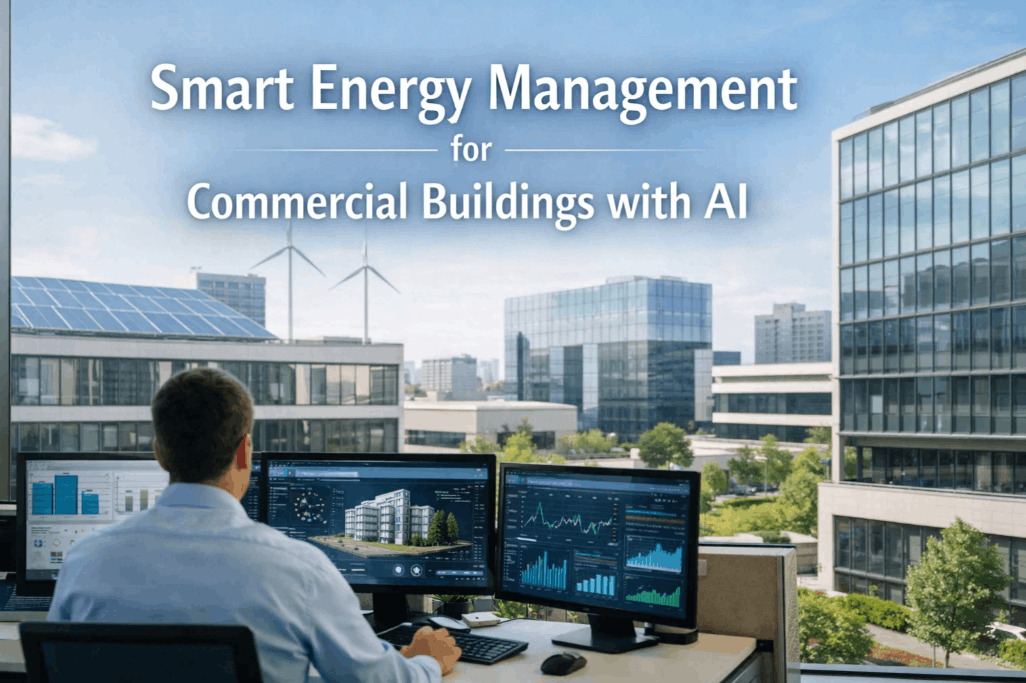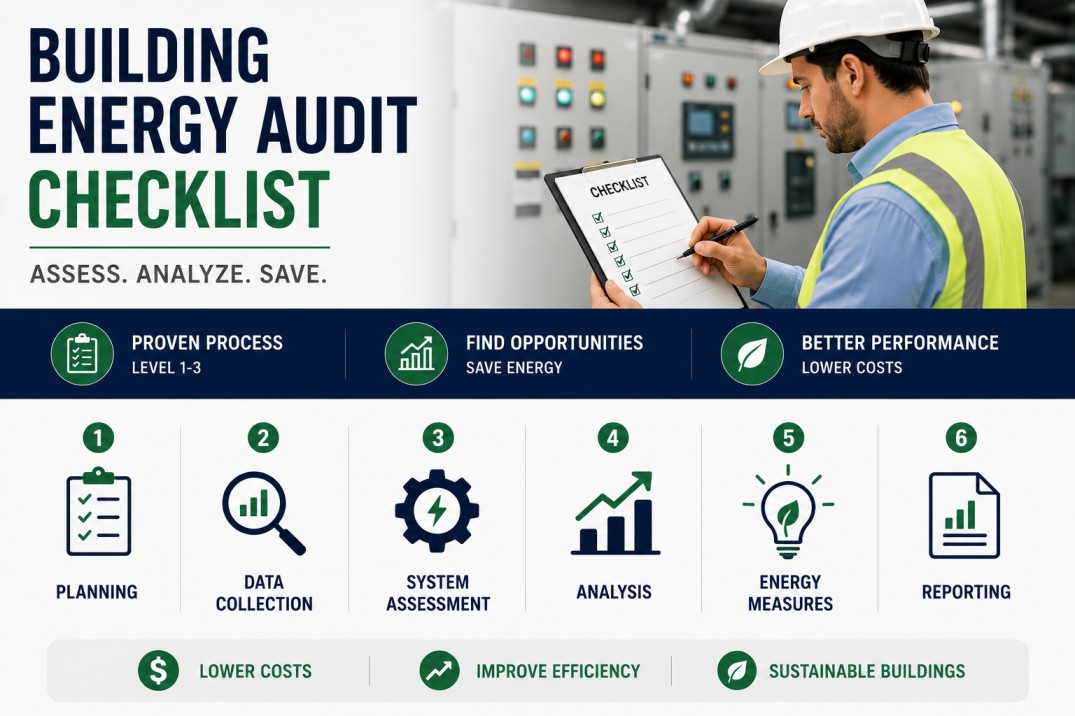
Commercial buildings waste 30% of the energy they consume on average, according to the U.S. Department of Energy — yet most property managers have never conducted a formal energy audit. A single ASHRAE Level 2 audit typically identifies ECMs worth $0.50-$2.00 per square foot in annual savings. iFactory Energy Intelligence digitizes the full audit workflow — from ASHRAE level scoping to ECM tracking to post-retrofit verification — across your entire portfolio. Book a demo to see how structured energy auditing uncovers savings hiding in your buildings.
The Complete Commercial Building Energy Audit Checklist
A practical walkthrough of ASHRAE Level 1, 2, and 3 energy audit procedures — with equipment assessment guides, ECM identification frameworks, and portfolio-wide planning for facility managers.
Why Most Buildings Leave 30% Energy Savings on the Table
Energy costs are the single largest controllable operating expense in most commercial buildings. Yet without a structured audit process, facility teams rely on intuition, reactive repairs, and utility bill monitoring — a combination that routinely misses the highest-ROI conservation measures hiding in plain sight.
- ▲No baseline for measuring improvement
- ▲ECMs implemented by hunches, not data
- ▲Capital spent on low-ROI measures
- ▲Utility bill analysis is the only metric
- ▼ASHRAE-aligned audit workflow
- ▼Data-driven ECM prioritization
- ▼Portfolio-wide savings visibility
- ▼Post-retrofit verification built in
Three Levels of Audit Depth, One Framework
ASHRAE Standard 211 defines three progressively deeper audit levels. The right level depends on building complexity, budget for ECMs, and the certainty required for capital approval. Each level builds on the previous one — you never skip steps.
Preliminary Energy-Use Analysis & Walk-Through
A one-day site visit that reviews utility bills, interviews building staff, and walks the major systems. Produces a rough savings estimate and identifies which ECMs warrant deeper analysis. Best for buildings with no prior audit history.
Energy Survey & Engineering Analysis
The standard for most commercial buildings. Includes equipment efficiency testing, end-use breakdown, and financial analysis of each ECM with simple payback and NPV. Produces a capital-grade investment roadmap. Typically yields 15-25 ECM candidates.
Detailed Survey & Capital-Intensive ECM Analysis
Adds sub-metering, hourly simulation modeling, and engineered cost estimates for capital-intensive ECMs like chiller replacement, facade upgrades, or HVAC retrofit. Used when financing or performance contracts require guaranteed savings.
Turn Every Building Audit Into a Portfolio-Wide Savings Plan
Our team configures ASHRAE-aligned audit templates, ECM tracking dashboards, and post-retrofit verification workflows in iFactory — so your auditors spend less time on clipboards and more time finding savings.
The Highest-ROI Energy Conservation Measures in Commercial Buildings
ASHRAE and DOE studies consistently rank the same ECM categories at the top of savings potential across commercial building types. Knowing where to look shapes both the audit scope and the implementation sequence.
Lighting Upgrades
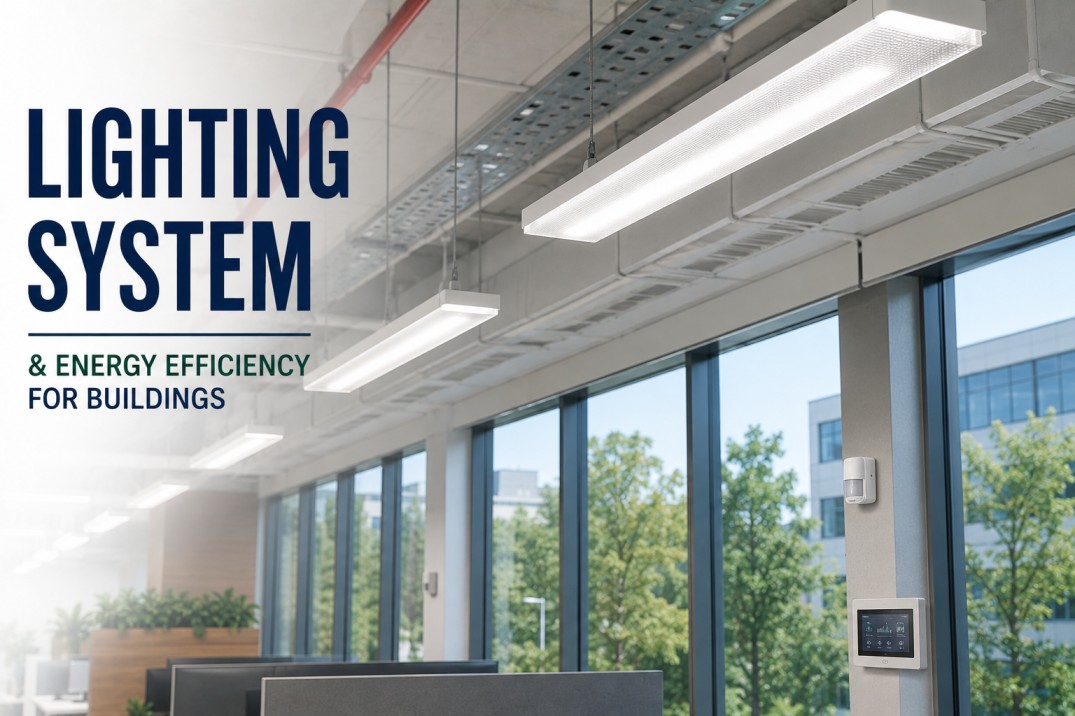
LED retrofit delivers 40-60% lighting energy reduction. Combined with occupancy sensing and daylight harvesting, it remains the highest-ROI ECM in most buildings. Payback typically 1-3 years.
HVAC Optimization
Economizer repair, duct sealing, VFD installation, and schedule optimization. HVAC accounts for 35-45% of commercial energy use. Tuning it typically captures 10-25% savings with short payback.
Building Envelope
Air sealing, insulation upgrades, window film, and reflective roofing. Reduces heating and cooling load at the source. Often overlooked because savings are indirect — but the impact compounds across every HVAC system.
Controls & BAS Optimization
Legacy building automation systems run on outdated schedules and setpoints. Recommissioning the BAS alone recovers 5-15% energy waste with near-zero capital cost. Scheduling, setback, and optimal start/stop are the levers.
Plug Load Management
Occupied plug loads account for 15-25% of office energy. Advanced power strips, occupancy-controlled receptacle circuits, and workstation shutdown policies are low-cost measures with measurable results.
Water & Process Energy
Domestic hot water, kitchen equipment, laundry, and process loads often use more energy than expected. Heat recovery, low-flow fixtures, and equipment scheduling deliver savings outside the HVAC and lighting silos.
The Decision Framework for Choosing Which ECMs to Fund
A Level 2 audit produces 15-25 ECM candidates. Not all are worth implementing. The framework below weighs payback, capital intensity, operational risk, and strategic fit — the factors experienced energy managers use to build a funded roadmap.
Frequently Asked Questions
What is the difference between ASHRAE Level 1, 2, and 3 energy audits?
Level 1 is a preliminary walk-through analysis using utility bills and a one-day site visit — suitable for screening and benchmarking. Level 2 adds detailed system testing, end-use breakdowns, and financial analysis for each ECM — the standard for most commercial buildings. Level 3 adds sub-metering, hourly simulation, and engineered cost estimates — used when performance contracts or financing require guaranteed savings projections.
How often should a commercial building undergo an energy audit?
ASHRAE recommends a Level 2 audit every 3-5 years for most commercial buildings. Annual benchmarking (EUI tracking via ENERGY STAR Portfolio Manager) should happen every year. Buildings undergoing major renovations, tenant improvements, or equipment replacement should trigger at least a Level 1 reassessment to capture interaction effects.
What is the typical cost of a commercial energy audit?
Level 1 audits typically range from $0.05-0.10 per square foot. Level 2 audits range from $0.10-0.25 per square foot. Level 3 audits can reach $0.30-0.60 per square foot depending on building complexity and sub-metering requirements. Most Level 2 audits identify ECMs worth 5-10 times the audit cost in first-year savings.
What equipment should be assessed during a Level 2 audit?
The complete HVAC plant (chillers, boilers, cooling towers, air handlers, VAV boxes, economizers), lighting systems (fixtures, ballasts, controls, occupancy sensors), building envelope (windows, insulation, roof, air barriers), domestic hot water systems, plug loads, and building automation system controls and schedules. Every end-use over 5% of total energy consumption should be measured or estimated.
How does iFactory help manage energy audits across a portfolio?
Each building is registered with square footage, EUI, audit history, and ECM implementation status. ASHRAE audit templates are configured as mobile workflows at each level. Auditors complete equipment surveys, upload photos, and log measurements on tablets in the field. Facility managers see portfolio-wide ECM tracking, savings projections, and post-retrofit verification metrics in one dashboard.
Find the Energy Savings Hiding in Every Building You Manage
Stop guessing which ECMs to fund and start building a data-driven energy roadmap. Combine ASHRAE-aligned audit workflows, ECM financial analysis, and portfolio-wide savings tracking in one platform built for commercial facility teams.