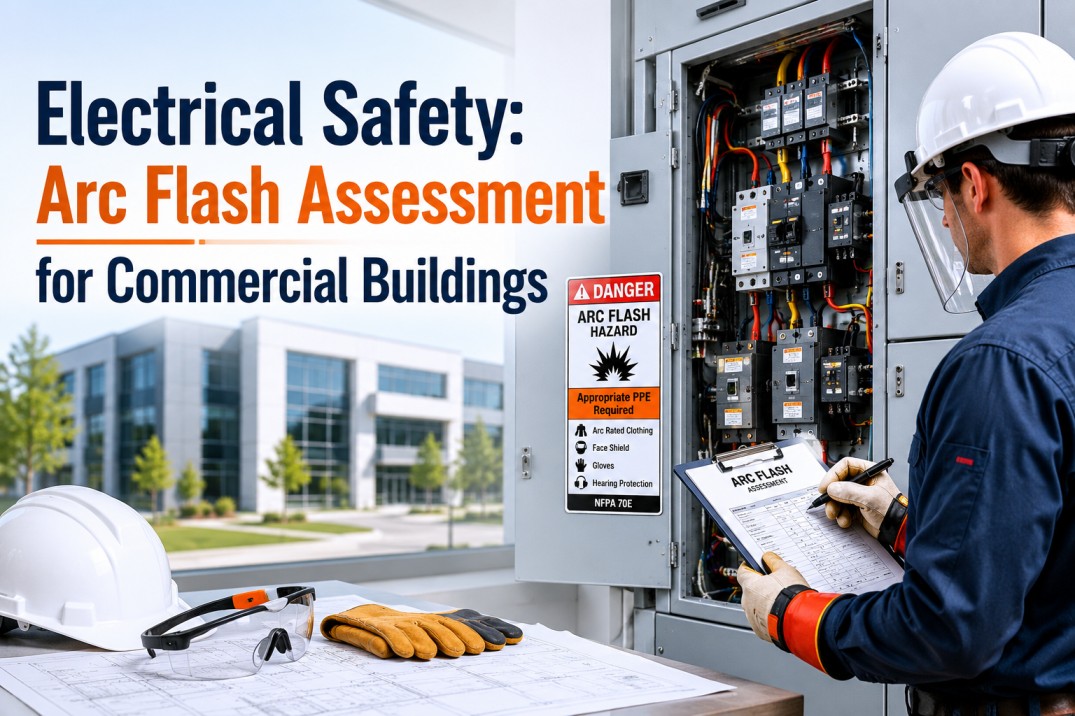
Arc flash incidents are among the most devastating electrical safety events in commercial buildings — a single arc flash releases temperatures four times the surface of the sun, causing catastrophic injuries, equipment destruction, and regulatory penalties that follow properties for years. NFPA 70E mandates arc flash assessments for all electrical distribution equipment that can be energized. Yet the majority of commercial buildings operate without current hazard labels, PPE requirements, or incident energy studies. iFactory Facility Intelligence integrates arc flash assessment workflows, label management, and PPE compliance tracking into your electrical safety program. Book a demo to see how structured arc flash compliance protects your people, property, and liability exposure.
Build a Compliant Arc Flash Program Across Every Building You Manage
Stop guessing which panels need labels or what PPE your technicians require. Combine arc flash study management, hazard label tracking, and PPE compliance into one platform built for commercial facility portfolios.
Arc Flash Incidents Are Rare — But When They Happen, The Cost Is Absolute
Arc flash events are not common — fewer than 1% of electrical panels experience one. But when they do, the consequences are measured in catastrophic injury, litigation, and facility shutdown. The NFPA estimates 5-10 arc flash incidents occur daily in US workplaces. Each event averages $15 million in direct and indirect costs. The common denominator in nearly every incident: the hazard was known, the label was missing, and the PPE was inadequate.
The Five-Step NFPA 70E Arc Flash Compliance Process
NFPA 70E and OSHA require employers to establish an arc flash safety program. The standard defines a structured process from initial hazard identification through ongoing program maintenance. These five steps form the compliance backbone that every facility manager needs to understand — and execute.
System Data Collection
Gather transformer ratings, cable sizes, breaker types, protective device settings, and single-line diagrams for all distribution equipment. The accuracy of every subsequent step depends on this foundation.
Engineering Analysis
Licensed electrical engineer runs incident energy calculations using IEEE 1584 methodology. Determines arc flash boundary, incident energy at each piece of equipment, and corresponding PPE level required.
Hazard Labeling
Apply NFPA 70E-compliant labels to all equipment. Each label must show nominal voltage, arc flash boundary, incident energy, PPE category, and shock hazard data. Labels must be durable and legible.
PPE & Training Program
Procure arc-rated PPE for each hazard category. Train all qualified persons on arc flash hazards, safe work practices, energized work permits, and proper use of PPE. Document every training session.
Program Review & Updates
NFPA 70E requires program review at least annually. Updates required when system changes occur — new transformers, breaker replacements, load additions — that affect incident energy levels.
Arc Flash PPE Categories & Equipment Requirements
NFPA 70E Table 130.7(C)(15)(a) and (b) define four PPE categories based on incident energy levels. Each category specifies minimum arc-rated clothing and equipment. Below the arc flash boundary, no unprotected personnel are permitted without proper PPE.
| Category | Incident Energy | Min Arc Rating | Required PPE (Minimum) |
|---|---|---|---|
| 1 | 4 cal/cm² | 4 cal/cm² | AR shirt + pants or coverall, safety glasses, hard hat, hearing protection, leather gloves |
| 2 | 8 cal/cm² | 8 cal/cm² | AR shirt + pants or coverall, AR flash suit hood, safety glasses, hard hat, hearing protection, leather gloves |
| 3 | 25 cal/cm² | 25 cal/cm² | AR flash suit jacket + pants, AR flash suit hood, AR gloves, safety glasses, hard hat, hearing protection |
| 4 | 40 cal/cm² | 40 cal/cm² | AR flash suit jacket + pants, AR flash suit hood with shield, AR gloves, safety glasses, hard hat, hearing protection |
Arc Flash Hazard Scale: Understanding Severity by Voltage Class
Not all electrical equipment presents the same arc flash hazard. Incident energy varies dramatically by voltage class, transformer size, fault current, and protective device clearing time. Understanding where the greatest hazards exist in your facility helps prioritize assessment and PPE investment.
Turn Arc Flash Compliance Into a Documented, Repeatable Process
Our team maps your distribution equipment, configures arc flash study schedules, and builds label and PPE tracking in iFactory — so your electrical teams know exactly what protective measures apply at every panel, every time.
Five Arc Flash Compliance Gaps That Put Facilities at Risk
Safety audits and incident investigations consistently identify the same compliance gaps across commercial facilities. None require expensive technology to close — just systematic attention to the details that NFPA 70E explicitly requires.
Missing or Obsolete Labels
Equipment installed before current labeling requirements, or labels faded, damaged, or painted over. Technicians working unlabeled panels have no way to identify hazard level or select appropriate PPE.
Outdated Engineering Study
System changes after the original arc flash study — new transformers, breaker replacements, feeder additions — invalidate incident energy calculations. Labels reflect outdated data that may understate actual hazard levels.
Inadequate PPE Inventory
Facility has arc-rated PPE for Cat 2 on hand but technicians regularly work on 480V equipment requiring Cat 3 or 4 protection. PPE shortages are the most common violation cited during OSHA arc flash inspections.
Missing Energized Work Permits
NFPA 70E requires a written energized electrical work permit for any work within the arc flash boundary. Facilities without a permit process cannot demonstrate that the hazard was assessed before work began.
No Annual Program Review
Arc flash program created at initial assessment but never reviewed or updated. Regulatory citations from OSHA and NFPA annually cite failure to review and update the electrical safety program as a primary violation.
What Every NFPA 70E Arc Flash Label Must Include
NFPA 70E Section 130.5(H) specifies exactly what information must appear on arc flash hazard labels. These eight data points are not optional — every label on every piece of electrical equipment must contain them to be compliant.
Frequently Asked Questions
What triggers the requirement for an arc flash study?
OSHA 1910 Subpart S and NFPA 70E both require an arc flash risk assessment for any electrical equipment that can be energized. This includes all panelboards, switchgear, motor control centers, transformers, disconnect switches, and busway. Any facility with electrical distribution equipment that employees may need to access, test, or maintain while energized must have a completed arc flash study with labels applied.
How often must an arc flash study be updated?
NFPA 70E requires review at least every five years. However, updates are required whenever a significant system change occurs — transformer replacement, breaker upgrades, feeder additions, load increases above 15% of previous study assumptions. Many facilities now adopt a three-year cycle to align with typical capital planning and system modification intervals.
Who is qualified to perform an arc flash study?
Arc flash studies must be performed by a licensed professional electrical engineer with demonstrated competence in power system analysis using IEEE 1584 calculation methodology. The engineer must have access to proper software tools (SKM PowerTools, ETAP, EasyPower, or equivalent) and a thorough understanding of protective device coordination and time-current curves.
What is the difference between arc flash boundary and limited approach boundary?
The arc flash boundary is the distance from an energized conductor at which incident energy drops to 1.2 cal/cm² — the threshold for a curable second-degree burn. The limited approach boundary is a shock protection boundary based on nominal voltage. An employee crossing the limited approach boundary must be a qualified person with appropriate shock PPE. An employee crossing the arc flash boundary must additionally wear arc-rated PPE.
How does iFactory help manage arc flash compliance across multiple buildings?
Each electrical asset is registered with voltage class, incident energy level, PPE category, and label status. Arc flash study schedules are configured as recurring work orders with engineer review milestones. Label condition inspections are tracked and flagged for replacement. Energized work permit workflows enforce NFPA 70E requirements before any employee enters the arc flash boundary. Facility managers see compliance status, study currency, and PPE inventory across their full portfolio in one dashboard.
Protect Your People and Facilities With Structured Arc Flash Compliance
Stop managing arc flash compliance through scattered PDFs and expired labels. Combine study scheduling, label tracking, PPE management, and energized work permit workflows into one platform built for commercial facility portfolios.