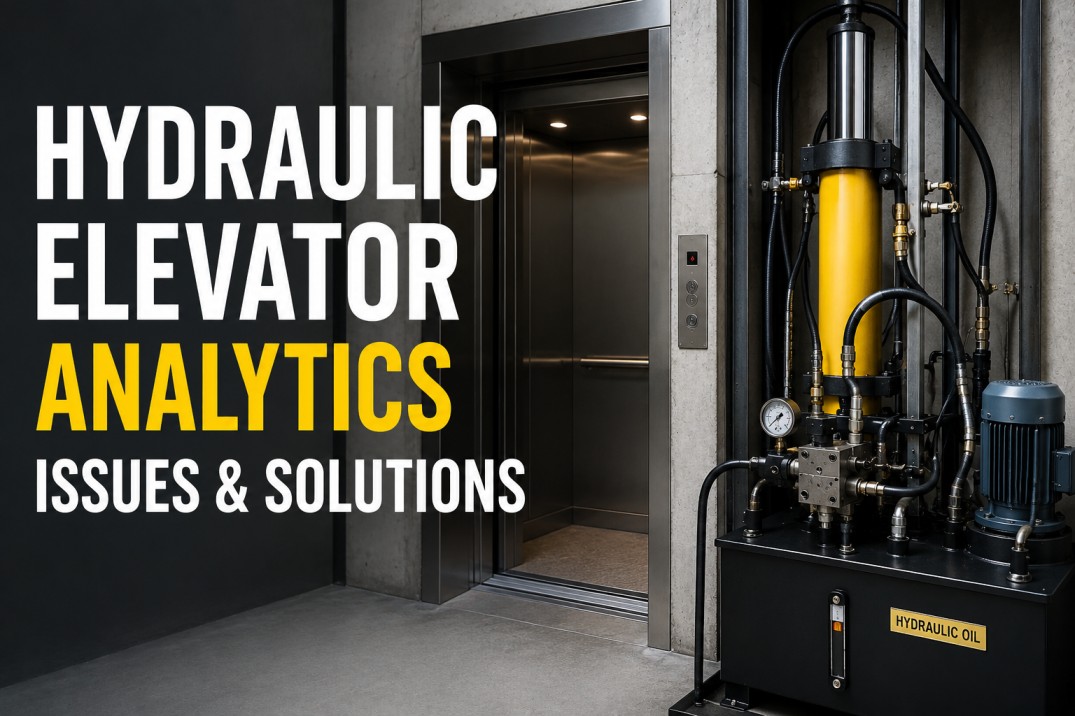
Hydraulic elevators are the workhorses of low-rise commercial buildings across the U.S. — reliable, cost-effective, and quietly essential. But when something goes wrong, the symptoms are rarely obvious, and the root causes even less so. This guide gives property managers, facility directors, and building engineers a clear diagnostic framework for the seven most critical hydraulic elevator issues: what causes them, how to spot them early, and exactly what your maintenance team should do.
Hydraulic Elevator
Issues & Solutions
A field-level diagnostic guide for U.S. property and facility teams — from oil contamination to cylinder failure and underground tank compliance.
How a Hydraulic Elevator Works
Before diagnosing problems, it helps to understand the system. A hydraulic elevator moves on a simple principle: pressurized oil pumped into a cylinder raises a piston — and with it, the cab. To descend, a valve releases oil back into the reservoir under the car's own weight. The entire system depends on clean fluid, sealed components, and precise valve control. When any one of those three breaks down, the symptoms follow quickly.
Underground or machine room tank holds hydraulic fluid
Pressurizes and moves oil on command
Regulates speed, direction, and leveling accuracy
Converts fluid pressure into vertical lift
Rises and lowers as fluid moves in and out
7 Common Hydraulic Elevator Issues — and How to Resolve Them
Each issue below includes the root cause, warning signs your team will notice first, and the recommended resolution path.
Oil Leaks — Seals, Fittings & Piston Packing
- Worn or degraded rod and piston seals (typical service life: 5–10 years)
- Loose hydraulic fittings or hoses from vibration
- Piston packing failure allowing oil to escape the cylinder
- Overpressure events from overloading or improper valve settings
- Tank overflow from improper filling or thermal expansion
- Oil puddles on machine room floor or in the pit
- Gradual loss of system pressure — cab slows or fails to reach floor
- Erratic car movement or longer-than-normal ride times
- Slippery surfaces creating a safety hazard for technicians
Document leak location and severity at every maintenance visit. Have a certified technician locate the source, assess severity, and replace seals or repack the piston. Implement monthly oil level checks and pressure testing as part of your MCP (Maintenance Control Program).
Contaminated Hydraulic Fluid
- Water ingress via condensation or poor tank sealing
- Metal particles from normal internal component wear
- Debris entering during maintenance or via worn seals
- Oxidized oil from excessive heat — turns darker and thicker over time
- Noisy, sluggish operation — pump working harder than normal
- Dark or discolored oil visible in reservoir inspection
- Accelerated wear on pumps, valves, and seals
- Reduced system efficiency and increased heat generation
Schedule a fluid analysis at each annual inspection. Replace hydraulic fluid when contamination or oxidation is confirmed. Upgrade to sealed, moisture-resistant tank configurations in older installations. Fluid changes are among the lowest-cost interventions — and among the highest-impact.
Control Valve Malfunction
- Improper valve settings creating excessive back-pressure
- Internal contamination from particulate-laden fluid
- Valve wear over years of high-cycle operation
- Solenoid failure in electronically controlled valve assemblies
- Jerky or erratic cab movement on ascent or descent
- Elevator fails to level accurately with floor — "low landing" or "high landing"
- Abrupt stops instead of smooth deceleration
- Longer run times — valve forcing pump to work harder
Valve issues require a certified elevator technician — improper adjustments can create unsafe conditions. The relief-valve setting must be tested to confirm it bypasses full pump output before pressure exceeds 150% of working pressure (per ASME A17.1). Valve cleaning or replacement resolves most cases before full failure.
Pump & Motor Overheating
- Excessive usage cycles in high-traffic buildings
- Improper valve settings forcing the pump to work harder than necessary
- Cooling system malfunction or inadequate machine room ventilation
- Contaminated fluid reducing lubrication efficiency
- Grinding or whining noise from the machine room
- Oil temperature gauge reading above normal range
- Increased leveling inaccuracy during peak usage periods
- Varnish deposits on pump internals found during maintenance
Install or inspect oil temperature gauges as part of monthly PM. Check machine room ventilation and ambient temperature. Review valve settings and duty cycle. Hot oil becomes thinner — directly affecting valve control, leveling accuracy, and pump efficiency. Address at the first sign of elevated temperature rather than waiting for failure.
Cylinder Corrosion & Jack Failure
- Heat, moisture, and aged fluid causing micro-cracks and pitting on metal surfaces
- Electrolytic corrosion on underground single-bottom cylinders
- Lack of secondary containment on older installations
- Water infiltration into the pit or underground cylinder environment
- Fluid escaping from cylinder each time system pressurizes
- Unexplained oil loss between maintenance visits
- Pit moisture or soil contamination near the jack assembly
- Elevator drifting down when parked — loss of static pressure
Underground cylinder replacement is a major project but non-deferrable once corrosion is confirmed. Modern replacements use double-bottom cylinders with secondary containment and PVC liner protection. Many jurisdictions now mandate retrofits under environmental compliance for older single-bottom units. Budget planning should account for this in elevators over 20 years old.
Slow or Unresponsive Car Movement
- Low hydraulic fluid level from unreported or slow leaks
- Malfunctioning pump unable to generate adequate pressure
- Partially blocked or restricted hydraulic line
- Worn pump internals reducing volumetric efficiency
- Cab takes noticeably longer to reach floors compared to baseline
- Sluggish startup — delayed response after call button is pressed
- Car stops short of full travel under load
- Oil level visually low in reservoir inspection window
Begin with an oil level and quality check — the most common and easiest-to-fix cause. If levels are normal, conduct a system pressure test to isolate whether the pump or a restriction is the cause. Log baseline travel times at each maintenance visit so subtle slowdowns are detectable before passengers notice.
Underground Tank & Environmental Compliance
- Aging single-bottom tanks without secondary containment
- Non-compliance with EPA 40 CFR Part 280 UST regulations
- Failure to document oil logs and MCP records (5-year retention required)
- Pit water intrusion masking or accelerating fluid contamination
- Missing or incomplete oil usage logs during inspection
- No secondary containment on underground cylinder or tank
- Soil or groundwater discoloration near the building foundation
- Inspection flags for outdated MCP documentation
Maintain a complete oil log as part of your MCP — required to be available for a minimum of five years under ASME A17.1/CSA B44 Section 8.6. EPA's 2015 UST revision added secondary containment requirements for new and replaced tanks and piping. Buildings with pre-2015 underground cylinders should consult with a licensed elevator contractor about retrofit timelines and environmental liability exposure.
iFactory centralizes your elevator maintenance logs, oil records, work orders, and inspection history — so your team is always ready, not reactive.
Hydraulic Elevator PM Schedule at a Glance
Most hydraulic elevator failures are preventable with consistent scheduled maintenance. Under ASME A17.1, your Maintenance Control Program must define intervals, assign responsibilities, and produce auditable records. Here is the standard frequency framework.
- Check hydraulic oil level and color
- Inspect machine room for leaks or oil pooling
- Test oil temperature gauge readings
- Verify door operation and leveling accuracy
- Log any observed issues in MCP record
- Test safety devices and emergency lowering system
- Inspect all seals, fittings, and hydraulic lines
- Verify pit sump pump operation and water intrusion status
- Check pump and motor vibration levels
- Review and compare travel time against baseline
- Full hydraulic fluid analysis and replacement if indicated
- Pressure test — relief valve at 150% working pressure
- Full-load performance and safety test (witnessed)
- Inspect underground cylinder/tank for containment integrity
- Update and file MCP documentation (5-year retention)
- Emergency phone compliance test per ASME A17.1
- Full load test with documented results
- Underground cylinder condition assessment
- Review hydraulic system modernization needs
- Evaluate replacement vs. continued maintenance cost-benefit
Repair vs. Modernize: Knowing the Threshold
Hydraulic elevator components over 20–25 years old typically reach a cost-benefit inflection point where modernization delivers lower total lifecycle cost than continued reactive maintenance. Use this framework to guide budget conversations with ownership and leadership.
- Equipment is under 15 years old
- Issues are isolated to a single component
- Repair cost is under 30% of replacement value
- No recurring callbacks on the same system
- MCP records are current and complete
- System is 20+ years old with multiple recurring issues
- Underground cylinder has no secondary containment
- Repair costs exceed 50% of replacement value
- Parts availability is declining for older components
- Multiple callbacks within a 12-month period
- Environmental compliance exposure from legacy tank
Quick Answers for Property Teams
iFactory gives your property and facility team a single platform to track hydraulic elevator health, schedule preventive maintenance, manage oil logs, and stay inspection-ready — across every building in your portfolio.
No commitment · Setup in under 30 minutes · Built for U.S. property teams