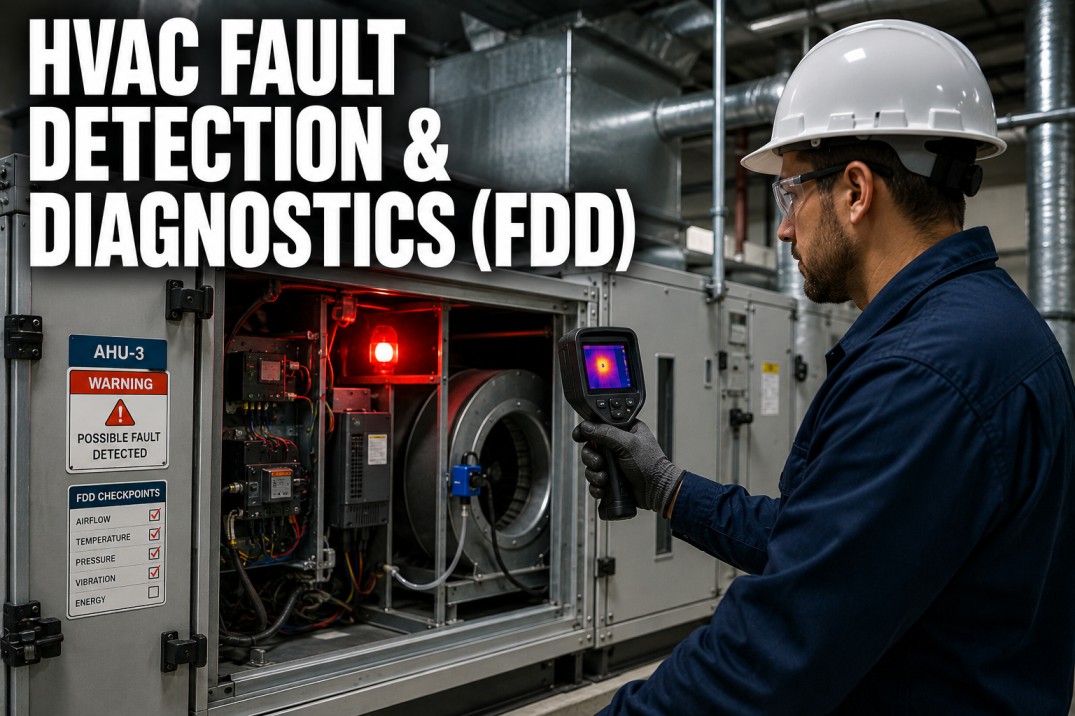
HVAC problems can disrupt operations, compromise comfort, and lead to costly emergency repairs when not diagnosed quickly and accurately. This troubleshooting guide covers the most common HVAC issues — insufficient cooling or heating, short cycling, unusual noises, high energy bills, refrigerant leaks, airflow problems, frozen coils, and drainage failures — with systematic root cause analysis and step-by-step diagnostic approaches for each symptom. Whether you are a facility manager responding to a tenant complaint or a maintenance technician performing routine checks, this guide helps you identify problems faster and determine the right corrective action.
Diagnose HVAC Problems Faster With AI-Powered Work Order Management
iFactory's Work Order Management module integrates troubleshooting diagnostics, fault code libraries, repair history tracking, and automated technician dispatch to reduce mean time to resolution by 40%. Book a demo to see how structured troubleshooting eliminates guesswork.
Symptom-Cause Matrix: Quick Reference for Common HVAC Problems
When an HVAC system malfunctions, the first step is matching observed symptoms with probable causes. The matrix below maps eight common symptoms against likely root causes, diagnostic priorities, and typical corrective actions.
| Symptom | Possible Causes | Likelihood | First Diagnostic Step | Typical Fix |
|---|---|---|---|---|
| Insufficient Cooling | Low refrigerant, dirty condenser coil, faulty compressor | High | Check temp split across evaporator (14-20°F) | Repair leak & recharge or clean coil |
| Insufficient Heating | Pilot/ignition failure, gas valve issue, heat exchanger crack | High | Verify thermostat calling for heat and gas supply on | Clean flame sensor or replace ignition |
| Short Cycling | Oversized equipment, dirty filter, low refrigerant, bad capacitor | Medium | Check run time vs off time (<3 min = short cycling) | Measure static pressure & verify charge |
| Strange Noises | Loose panels (rattle), worn belt (squeal), failing compressor (bang) | Medium | Locate noise origin and identify frequency/timing | Tighten, replace belt, or call specialist |
| High Energy Bills | Dirty coils, low refrigerant, economizer stuck open, duct leakage | Medium | Compare current kWh vs same month prior year | Clean coils, seal ducts, repair economizer |
| System Won't Start | Tripped breaker, bad capacitor, failed thermostat, safety lockout | High | Check power at unit disconnect and thermostat display | Reset breaker or replace capacitor |
| Frozen Evaporator Coil | Low refrigerant, low airflow, dirty filter, blower motor issue | High | Turn off cooling, run fan only to thaw, then inspect | Address root cause: clean filter or fix refrigerant |
| Water Leaks | Clogged condensate drain, broken condensate pump, frozen coil | High | Check drain pan and condensate line for blockage | Clear drain line with wet/dry vac or snake |
Diagnostic Decision Cards: Systematic Approach by Problem Category
Organizing HVAC troubleshooting by category helps technicians follow proven diagnostic workflows rather than guessing at root causes.
Refrigerant System Issues
Symptoms include insufficient cooling, frozen coils, high head pressure. Flow: measure superheat and subcooling, check for oil spots, verify charge. Refrigerant issues cause 18% of HVAC service calls.
Airflow & Distribution Problems
Symptoms include poor cooling/heating in specific zones, whistling ducts, hot/cold spots. Flow: measure TESP, inspect filter, check dampers, verify duct sizing. Airflow issues reduce efficiency 15-25%.
Electrical & Control Failures
Symptoms include system won't start, intermittent operation, blown fuses. Flow: verify voltage, check capacitor, test contactor, inspect wiring. Electrical faults cause 35% of HVAC failures.
Drainage & Condensate Issues
Symptoms include water stains, musty odors, standing water. Flow: check drain slope, blow out line, verify pump, inspect pan, test float switch. Blocked drains cause 12% of water damage claims.
HVAC Error Code Reference: Common Fault Codes & Diagnostic Guidance
Modern HVAC systems generate fault codes that provide valuable diagnostic clues when interpreted correctly.
| Code / Range | Indication | Likely Cause | Recommended Action | Severity |
|---|---|---|---|---|
| High Pressure Trip | System stopped, head >425 psi | Dirty condenser, fan failure, overcharge | Clean condenser, check fan, recover charge | Critical |
| Low Pressure Trip | System stopped, suction <20 psi | Low refrigerant, restricted filter | Check for leaks, measure superheat | Critical |
| Lockout (3+ failed starts) | Compressor will not restart | Safety circuit, bad capacitor, bad switch | Check safeties, test capacitor, reset board | Critical |
| Sensor Failure | Temp reading out of range | Bad thermistor, loose connection, shorted wire | Measure resistance vs temp chart, replace | Warning |
| Communication Loss | No data between units | Wiring fault, bad board, address conflict | Check comm wire continuity, verify address | Warning |
| Flame Sense Failure | Gas valve opens but no flame | Dirty sensor, bad ignitor, gas supply | Clean sensor with emery cloth, verify gas | Critical |
| Open Limit Switch | High limit tripped, burner off | Restricted airflow, dirty filter, overfire | Check filter, measure temp rise, verify fan | Warning |
| Condensate Overflow | Float switch open, system disabled | Clogged drain, broken pump, algae growth | Clear drain, test pump, treat with algaecide | Critical |
Turn Troubleshooting Data Into Preventive Intelligence
iFactory's platform captures every diagnostic finding, repair action, and failure code to build equipment health history that predicts future failures and optimizes maintenance scheduling. Book a demo to see how your troubleshooting data becomes your most valuable preventive asset.
Repair vs Replace: Decision Framework for Common Component Failures
The decision to repair or replace depends on equipment age, repair cost as percentage of replacement, and remaining life.
Compressor Failure
Repair $1,800-$3,500. Replace $6,000-$12,000. Recommend replace if >10 yrs or R-22. Decision threshold at >50% of new unit cost.
Heat Exchanger Crack
Repair NOT permitted per safety codes. CO leak risk mandates immediate replacement. New furnace $2,500-$5,500 installed. Upgrade to 96% AFUE.
Blower Motor Burnout
PSC motor $350-$750, ECM $600-$1,100. Recommend ECM upgrade for 30-50% fan energy savings. Replace air handler if motor >15 yrs.
Control Board Failure
OEM board $400-$900. Replace if discontinued/backordered >3 weeks. Universal controls $800-$1,400 add smart thermostat compatibility.
Emergency Priority Flow: Triage HVAC Issues by Urgency Level
A structured triage system reduces emergency call premiums by 35-50% while ensuring tenant comfort and safety.
Imminent — Respond Within 2 Hours
System down in occupied space, CO/gas leak, electrical burning smell, water near electrical gear. Safety hazard or complete climate loss. 8-12% of service calls.
Critical — Respond Within 8 Hours
Zone temp deviation >5°F, partial capacity loss, unusual noise, high humidity, tenant complaint. Performance loss but no immediate safety risk. 25-35% of calls.
Monitor — Schedule Within 2 Weeks
Minor refrigerant leak, dirty filter indicator, slight temp variation, aging equipment, intermittent noise. No comfort or safety impact. 55-65% of calls.
Frequently Asked Questions
What are the most common HVAC problems in commercial buildings?
The most frequent HVAC issues include refrigerant leaks (18% of calls), electrical component failures (35%), clogged condensate drains (12%), sensor calibration drift (8%), and airflow restrictions from dirty filters or blocked ducts (15%). Refrigerant leaks reduce cooling capacity by 15-25% while increasing energy consumption. Electrical failures including capacitor degradation, contactor pitting, and control board malfunction account for the largest share. Condensate drain issues are the leading cause of water damage claims. Proactive inspection programs that address these five categories reduce emergency service calls by 50-60%.
Why is my HVAC system short cycling and how do I fix it?
Short cycling occurs when an HVAC system runs less than three minutes per cycle, reducing efficiency by 15-25% and increasing compressor wear. The most common cause is a dirty air filter restricting airflow (30% of cases). Other causes include low refrigerant charge causing the low-pressure switch to trip, oversized equipment, a faulty thermostat in a drafty location, or a failed run capacitor. To diagnose, measure cycle length, check static pressure across the filter, verify the temperature split, and inspect thermostat location. Corrective action ranges from filter replacement and thermostat relocation to refrigerant circuit repair, with average repair cost of $200-$800.
How do I troubleshoot an HVAC system that is not cooling properly?
Start by verifying thermostat settings and that all zone dampers are open. Check the air filter — a dirty filter reduces cooling capacity by 15-25%. Measure temperature split across the evaporator: a properly charged system shows 14-20°F difference. Low split indicates low refrigerant, dirty coil, or metering device restriction. High split with low airflow suggests blower or duct issues. Check the condenser coil for debris, verify fan operation, and measure fan amp draw. If still underperforming, check for ice on the evaporator, verify the reversing valve on heat pumps, and use manifold gauges to compare pressures against the charging chart. This systematic approach reduces diagnostic time by 40-60%.
What causes frozen evaporator coils and how do I prevent them?
Frozen evaporator coils occur when coil surface temperature drops below 32°F and moisture freezes on the surface, blocking airflow within 30-60 minutes. The two primary causes are low refrigerant charge and low airflow, accounting for 85% of incidents. Low refrigerant causes evaporator pressure to drop below design conditions. Low airflow from dirty filters, blocked ducts, or failing blower motors reduces the heat load on the evaporator. Less common causes include faulty TXV or operating cooling below 60°F without low-ambient controls. To prevent, change filters monthly during peak season, maintain refrigerant charge through annual leak checks, and never operate cooling below 55°F without proper controls. If frozen, turn off cooling and run only the fan to thaw before attempting repairs.
When should I repair versus replace a failing HVAC component?
Repair is recommended when equipment is under 50% of expected lifespan (under 7-8 years), repair cost is under 30% of replacement, and the system uses current refrigerant. Replacement is recommended when equipment exceeds 75% of lifespan, repair exceeds 50% of replacement cost, the system uses R-22 refrigerant ($50-100/lb), or a replacement would reduce energy costs by over 30%. Specific thresholds: compressor replacement on unit over 10 years (replace entire condensing unit), heat exchanger crack at any age (must replace by code), blower motor on unit under 12 years (repair with ECM upgrade), control board under 10 years (repair if available), R-22 leak on system over 12 years (replace with R-32 equipment).
Stop Guessing, Start Diagnosing With Data-Driven HVAC Analytics
iFactory's Work Order Management module provides mobile fault code libraries, diagnostic workflows, repair decision calculators, and equipment history tracking. Book a demo to see how data-driven troubleshooting reduces emergency repairs and extends equipment life.