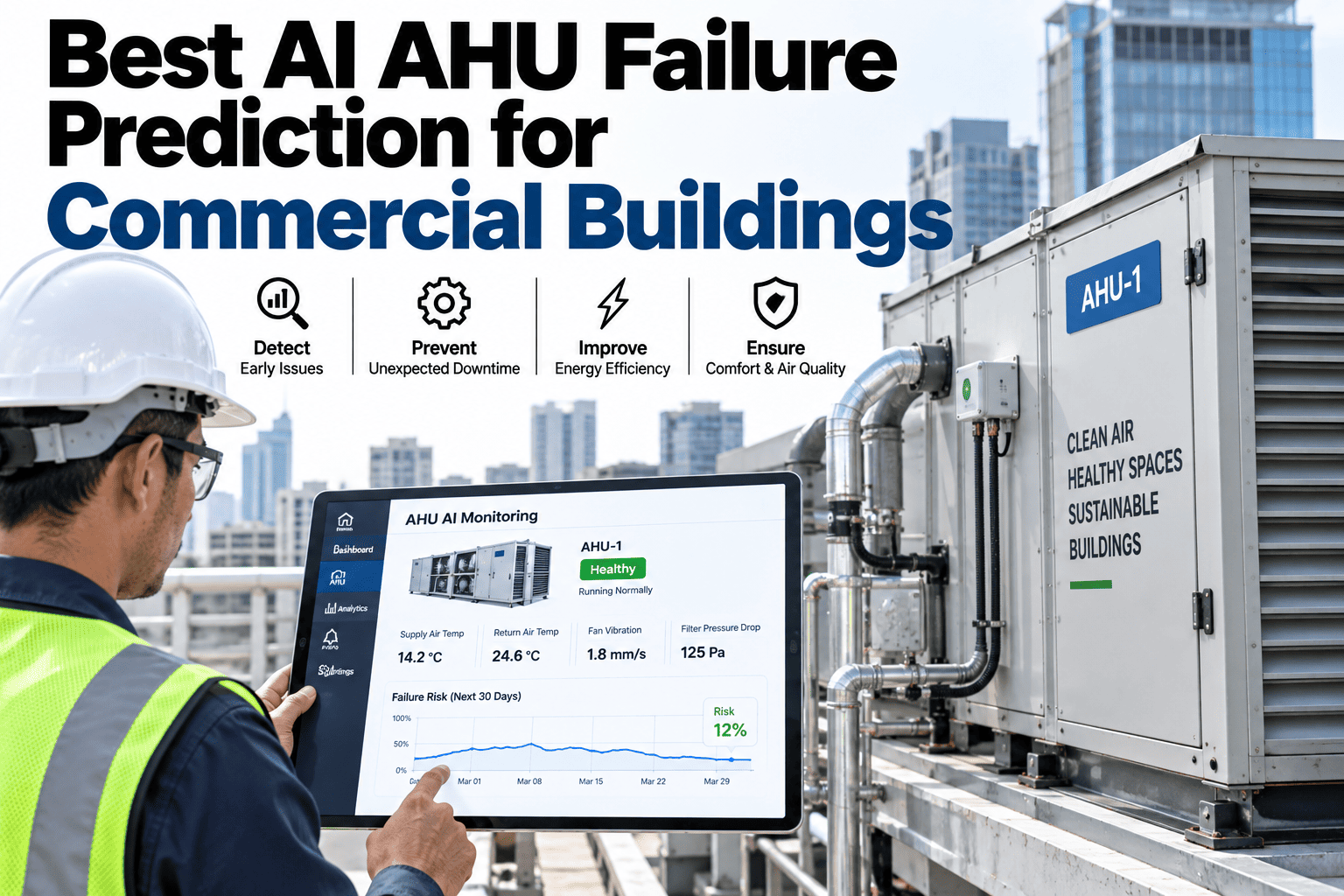
Commercial HVAC failures cost building owners $15,000–$75,000 per event in emergency repairs, tenant disruption, and energy waste — yet 85% of these failures follow predictable patterns that are detectable weeks before breakdown. The challenge is not a lack of warning signs but a lack of continuous monitoring to catch them. Compressor failures announce themselves through rising current draw and suction pressure changes. Refrigerant leaks show up as declining superheat and increasing discharge temperatures. Fan bearing wear produces vibration signatures months before seizure. iFactory's AI-powered HVAC diagnostics platform monitors all of these signatures continuously — converting the root cause analysis that used to happen after a failure into a predictive alert that prevents it.
Common HVAC Failures in Commercial Buildings & How to Fix Them
Identify, troubleshoot, and prevent the most common commercial HVAC failures — compressor issues, refrigerant leaks, thermostat faults, and airflow problems.
The 6 Most Costly Commercial HVAC Failures
Each failure mode has a distinct sensor signature that iFactory's AI detects weeks before breakdown. Understanding these patterns helps your team prioritise monitoring resources where the financial impact is highest. Get a failure risk assessment for your building.
Compressor Failure
Rising current draw, abnormal suction/discharge pressure, motor overheating.
Refrigerant Leak
Declining superheat, rising discharge temp, capacity loss, EPA compliance risk.
Fan/Belt Failure
Vibration spike, belt slip, motor overload. Airflow drops 40–60% before full failure.
Condenser/Coil Fouling
Rising head pressure, decreasing COP, compressor overwork. Energy waste of 15–30%.
Thermostat/Controls
Sensor drift, valve actuator degradation, control loop instability. Comfort complaints spike.
Economiser Malfunction
Damper stuck open/closed, mixed air temp wrong, energy waste up to 20% of cooling load.
Traditional vs AI-Powered HVAC Maintenance
How iFactory Detects HVAC Failures Before They Happen
AI Camera Vision
Thermal cameras on chiller plants and electrical panels detect hotspots, refrigerant leaks, and insulation breakdown — visible anomalies caught in real time.
AI Digital Twin
Virtual model of your HVAC system predicts remaining useful life per component from real-time sensor data — scheduling replacement at the optimal point.
PLC & BAS Integration
Direct feed from building PLC systems and BAS via BACnet, Modbus, OPC-UA. No manual data entry — every sensor reading flows into the AI model automatically.
SAP PM Work Orders
Every AI alert auto-generates a SAP PM work order with full diagnosis, parts list, and technician assignment — zero manual translation from alert to action.
HVAC Quick Diagnostic Checklist — 5 Steps to Root Cause
When a comfort complaint or alarm comes in, follow this 5-step diagnostic sequence to isolate the root cause before dispatching a technician. iFactory automates Steps 1–4 continuously — so your team starts at Step 5 with the diagnosis already in hand. See automated diagnostics in action.
Check Airflow & Temperature Differential
Measure supply/return air delta-T. Below 14°F indicates refrigerant issue; above 22°F suggests low airflow.
Verify Refrigerant Pressures
Compare suction and discharge to OEM spec. Low suction + low discharge = undercharge or restriction.
Inspect Motor Current Draw
Amps above nameplate RLA indicate mechanical binding or electrical fault. Below RLA suggests lost load.
Review Controls & Sensor Readings
Check BAS setpoints vs actual values. Sensor drift of 2°F+ causes staging errors and comfort complaints.
Confirm Root Cause & Schedule Repair
iFactory provides the diagnosis with parts list and recommended action — dispatch the right tech with the right parts.
What a Property Operations Director Said
In our first year with iFactory, emergency HVAC callouts dropped from 11 to 3 across a 14-building portfolio. The AI caught a refrigerant leak on our largest chiller 26 days before it would have caused a compressor burnout — saving us $47,000 and a weekend of tenant misery.
Frequently Asked Questions
What is the most common cause of commercial HVAC failure?
Compressor failure is the costliest, but refrigerant leaks and fan/belt failures are more frequent. iFactory monitors all three with dedicated AI models. Get your failure risk report.
How early can AI detect an HVAC failure?
Typically 2–8 weeks before breakdown, depending on failure type. Compressor faults show 4–8 weeks of warning; belt failures show 2–4 weeks.
Does iFactory work with rooftop units and split systems?
Yes — wireless IoT sensors retrofit onto RTUs and splits in hours. No BAS connection required for these standalone units.
How does AI differentiate between a real fault and normal variation?
ML models learn site-specific baselines over 30–90 days, reducing false positives by 60–80% compared to fixed-threshold BAS alerts.
Eliminate HVAC Emergencies with iFactory
AI diagnostics live on your HVAC in 30 days.