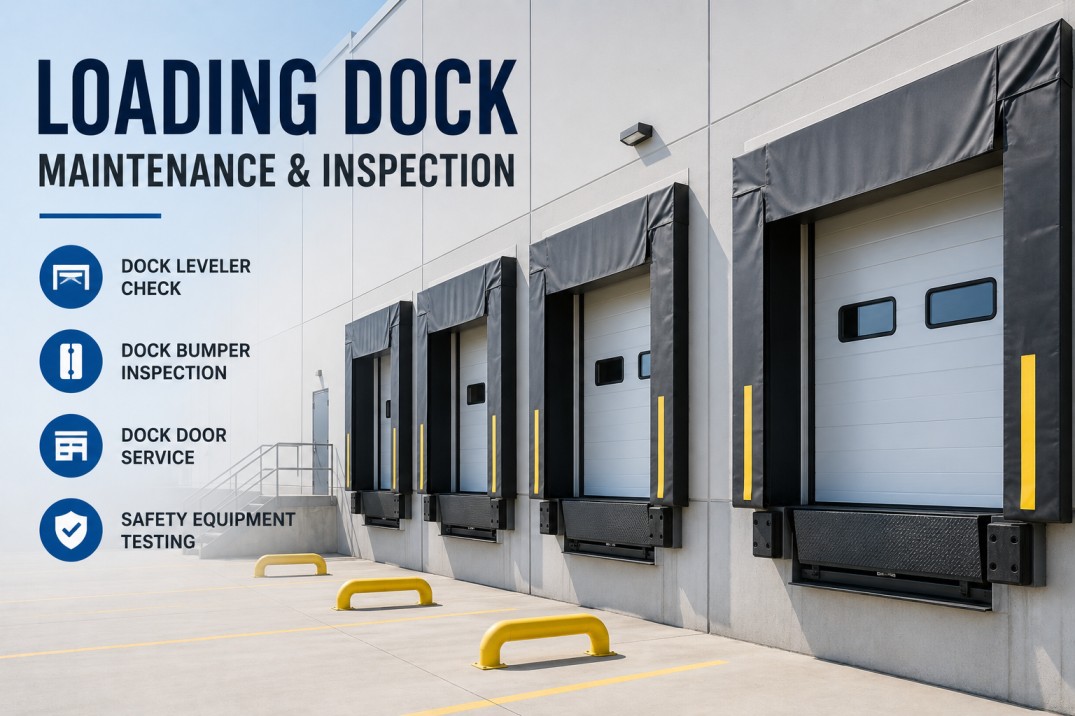
Loading docks are the highest-traffic functional zones in commercial and warehouse properties, yet they are frequently excluded from routine preventive maintenance programs. Dock levelers, section doors, bumpers, seals, and safety equipment endure repeated impact, heavy loads, and constant cycling — leading to accelerated wear that, when unaddressed, causes costly breakdowns, shipment delays, and OSHA-recordable injuries. A structured loading dock analytics and inspection program reduces equipment failure rates by up to 60%, extends service life by 3–5 years, and provides auditable documentation for insurance and compliance requirements. This guide covers the critical components, inspection cadences, and failure indicators every facility manager should track.
Loading Dock Analytics & Inspection for Commercial Properties
Eliminate unplanned dock downtime. iFactory's analytics platform tracks equipment age, service history, and inspection findings across every dock in your portfolio.
Critical Loading Dock Equipment & Common Failure Modes
Each component in a loading dock system has a distinct failure profile. Understanding failure indicators enables proactive replacement before equipment failure disrupts operations.
Dock Levelers
Hydraulic, mechanical, or air-powered levelers bridge the gap between dock and trailer. Common failures include hydraulic fluid leaks, worn lip hinges, broken return springs, and corrosion of the deck plate. Listen for excessive noise during cycling and inspect for uneven deck wear patterns.
Avg. Service Life: 12–18 yrsSection Doors & Operators
Roll-up or sectional overhead doors cycle thousands of times annually. Failure modes include broken torsion springs, worn cables, misaligned tracks, and operator motor burnout. Door position sensors and auto-reverse mechanisms must be tested monthly per OSHA 1910.179.
Avg. Service Life: 10–15 yrsDock Bumpers & Edge Protection
Bumpers absorb the impact of backing trailers. Worn or compressed bumpers transfer impact forces to the dock wall and leveler pit, causing structural damage. Measure bumper protrusion — replace when less than 25% of original thickness remains. Inspect for delamination and missing sections.
Replace Every 3–5 yrsDock Seals & Shelters
Foam seals and fabric shelters create a weather-tight connection between building and trailer. Tears, compressed foam, and broken guide frames allow conditioned air loss, pest entry, and water intrusion. Inspect before each heating and cooling season. Fabric shelters typically last 5–8 years.
Replace Every 5–8 yrsVehicle Restraints & Safety Systems
Trailer restraints, wheel chocks, dock lights, and warning lights form the safety system preventing premature departure and falls. Interlocks must prevent leveler operation unless the restraint is engaged. Test all safety circuits weekly. Document every test for OSHA recordkeeping.
Test Weekly — Replace Per MFRPit & Foundation Integrity
The dock pit structure and approach apron bear the full dynamic load of forklift traffic. Cracks, spalling, and settling create trip hazards and compromise leveler alignment. Inspect concrete for cracks wider than 1/8 inch, drainage ponding, and differential settlement at the building-wall interface.
Annual Structural AssessmentStandardize dock inspections across your portfolio with iFactory's digital checklists, automated service reminders, and equipment lifecycle tracking.
Inspection Frequency Matrix
A risk-based inspection schedule ensures high-failure components are inspected more frequently while maintaining overall dock system reliability. Use the following matrix to build your dock PM calendar.
| Component | Weekly | Monthly | Quarterly | Annual |
|---|---|---|---|---|
| Vehicle Restraints & Interlocks | ||||
| Dock Lights & Warning Signals | ||||
| Door Auto-Reverse & Sensors | ||||
| Leveler Hydraulic Fluid & Lines | ||||
| Leveler Mechanical Components | ||||
| Door Springs, Cables & Tracks | ||||
| Dock Bumpers (thickness check) | ||||
| Seals & Shelters (condition) | ||||
| Pit Concrete & Foundation | ||||
| Full System Load Test | ||||
| Electrical & Control Panel |
Cost of Deferred Dock Maintenance
Postponing dock maintenance creates a compounding cost curve. Emergency repairs cost 3–5 times more than scheduled PM, and equipment damage from secondary failures can exceed the original repair cost by an order of magnitude.
Emergency Repair
Average cost per unscheduled dock repair including after-hours labor, rush parts shipping, and forklift downtime. Emergency response typically takes 4–24 hours depending on technician availability.
3–5× Scheduled PM CostOperational Downtime
Estimated cost per hour of dock downtime in a distribution center, including idled labor, missed shipment windows, and customer penalties. A single 4-hour failure can exceed $20,000 in total impact.
Hidden Cost MultiplierPremature Replacement
Cost to replace a dock leveler or section door system that failed prematurely due to deferred PM. Regular lubrication, seal replacement, and component adjustments extend service life by 40–60%.
40–60% Life Extension w/ PMInjury & Liability
Average cost of a single OSHA-recordable dock injury including medical treatment, lost workdays, insurance premium increases, and regulatory fines. Preventable failures account for 70% of dock incidents.
70% Are PreventableDon't wait for a dock failure to disrupt your operations. iFactory's platform provides equipment analytics, PM scheduling, and digital inspection records for every dock in your portfolio.
Frequently Asked Questions
How often should loading dock equipment be inspected?
Safety-critical systems such as vehicle restraints, interlocks, and warning lights should be tested weekly. Mechanical components like levelers, doors, and bumpers benefit from monthly visual checks and quarterly detailed inspections. Annual full-system load testing by a qualified technician is recommended for OSHA and insurance compliance. High-volume facilities (100+ trucks per day) should consider quarterly professional inspections.
What are the most common OSHA violations at loading docks?
The most frequently cited OSHA violations at loading docks include: failure to provide trailer restraint systems (1910.25), missing or inadequate dock edge protection (1910.29), non-functional door auto-reverse mechanisms (1910.179), unguarded floor openings (1910.23), and lack of documented lockout/tagout procedures for dock equipment maintenance. Annual dock safety audits reduce citation risk by addressing these common gaps.
What is the difference between a dock seal and a dock shelter?
A dock seal is constructed of foam pads that compress against the rear of the trailer, creating a tight seal on the trailer's surface. A dock shelter is a framed structure with fabric curtains that envelop the trailer, accommodating a wider range of trailer sizes and providing better clearance for rear-door swing. Shelters are more durable for high-traffic facilities but provide a slightly less airtight seal. The choice depends on climate conditions, trailer traffic mix, and building configuration.
How do I know when a dock leveler needs replacement vs. repair?
Repair is appropriate for isolated component failures such as a hydraulic cylinder seal, lip hinge pin, or control board. Replacement is indicated when the deck plate shows significant corrosion or fatigue cracking, when the pit structure is damaged, or when repair costs exceed 50% of replacement cost. Levelers older than 18 years with recurring failures should typically be replaced to avoid cascading operational disruptions.
What documentation should be maintained for loading dock equipment?
Critical documentation includes: equipment serial numbers and installation dates, manufacturer manuals and warranty certificates, weekly safety system test logs, monthly and quarterly inspection checklists, annual load test reports, all repair and parts replacement records, and OSHA 300 logs for any dock-related incidents. Digital retention of these records in iFactory's platform ensures audit-ready compliance and simplifies insurance renewals and property transactions.
How can I prioritize dock repairs across multiple facilities?
Prioritize repairs by risk level: critical safety items (restraints, interlocks, door auto-reverse) first, followed by operational items causing downtime (leveler function, door operation), then energy-efficiency items (seals, shelters). iFactory's platform aggregates inspection findings across your portfolio into a single prioritized work queue, automatically scoring each defect by severity, safety impact, and operational criticality so your team focuses on the highest-risk items first.
Transform dock maintenance from reactive repairs to data-driven lifecycle management. Book an iFactory demo to see how portfolio-level dock analytics work.