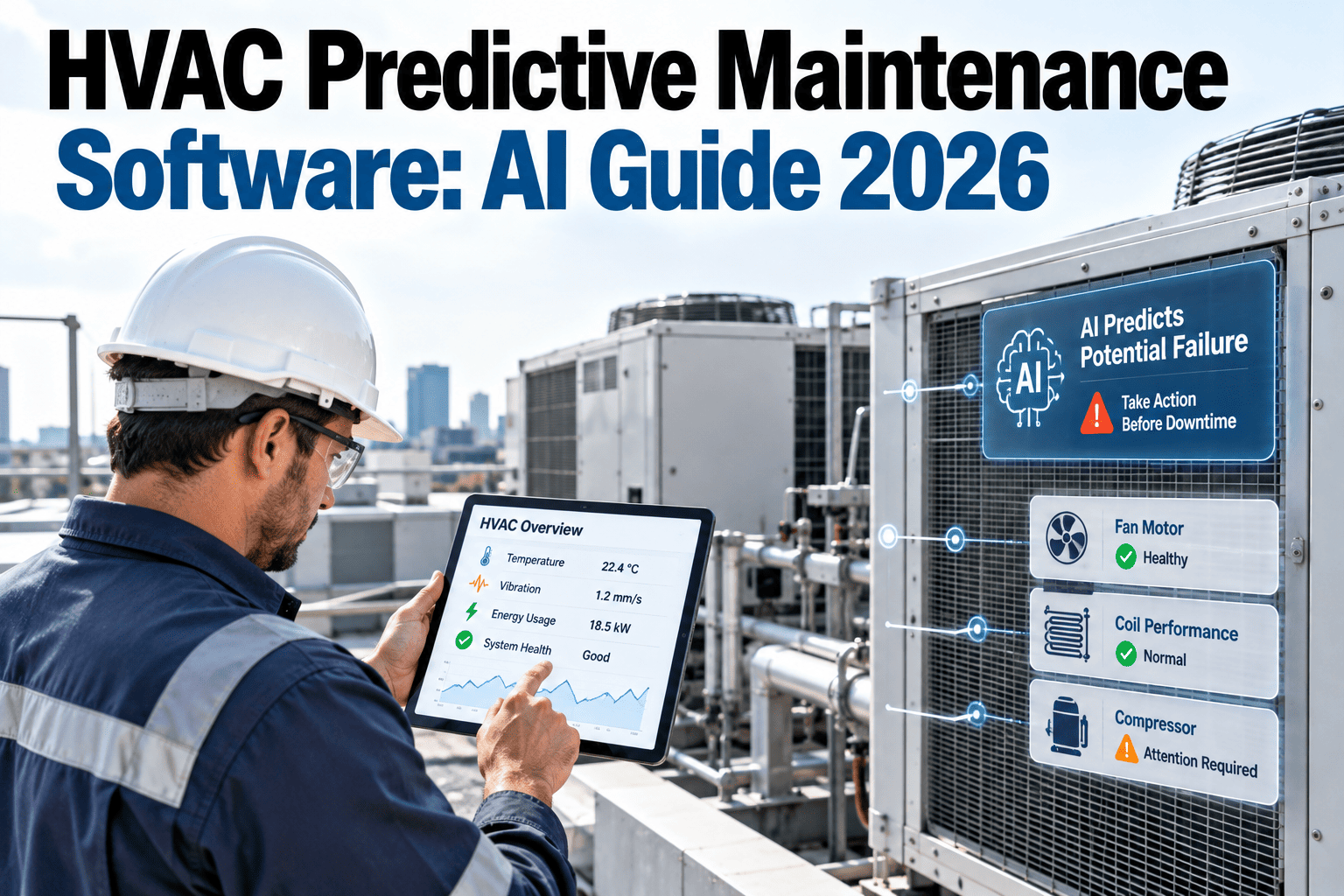
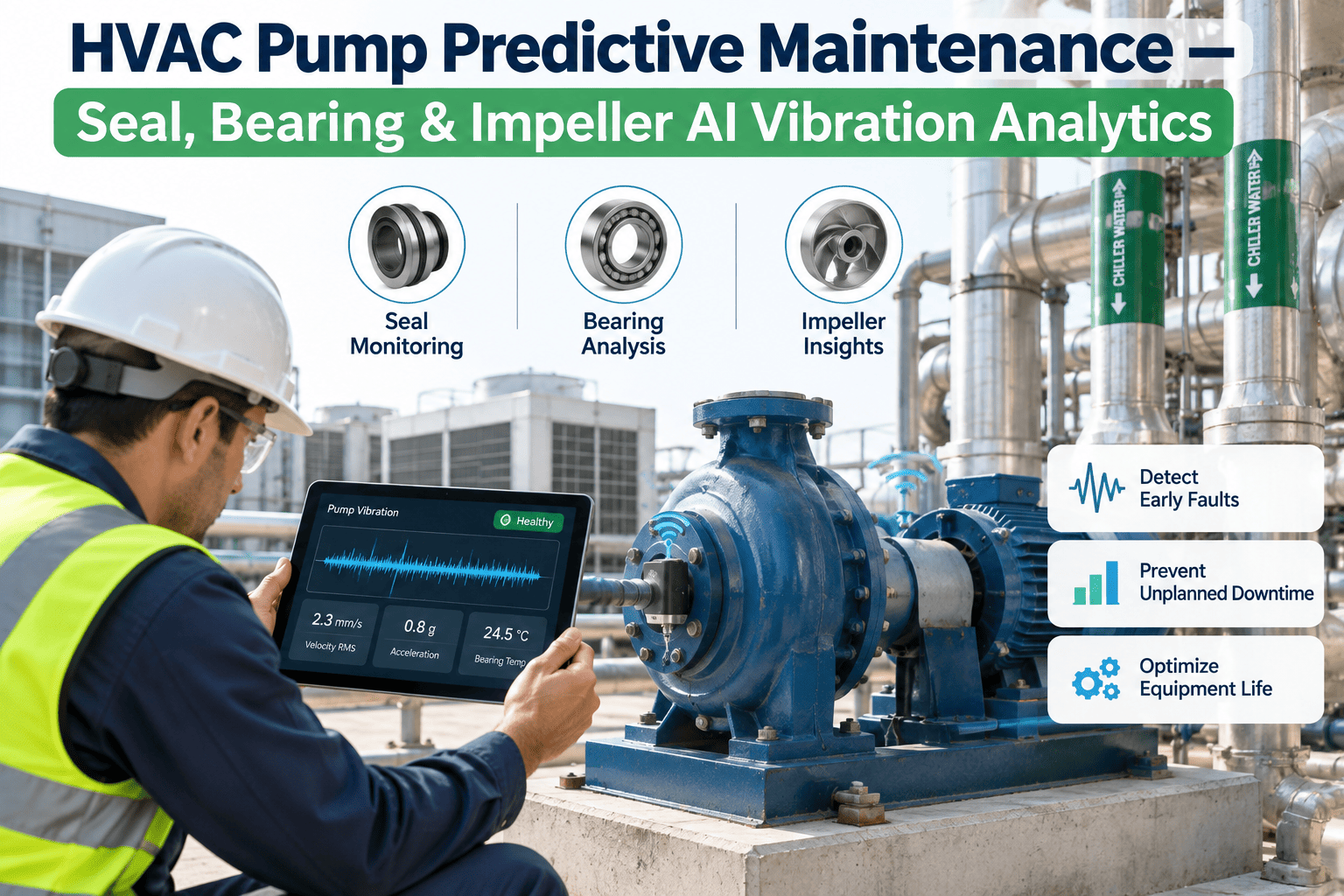
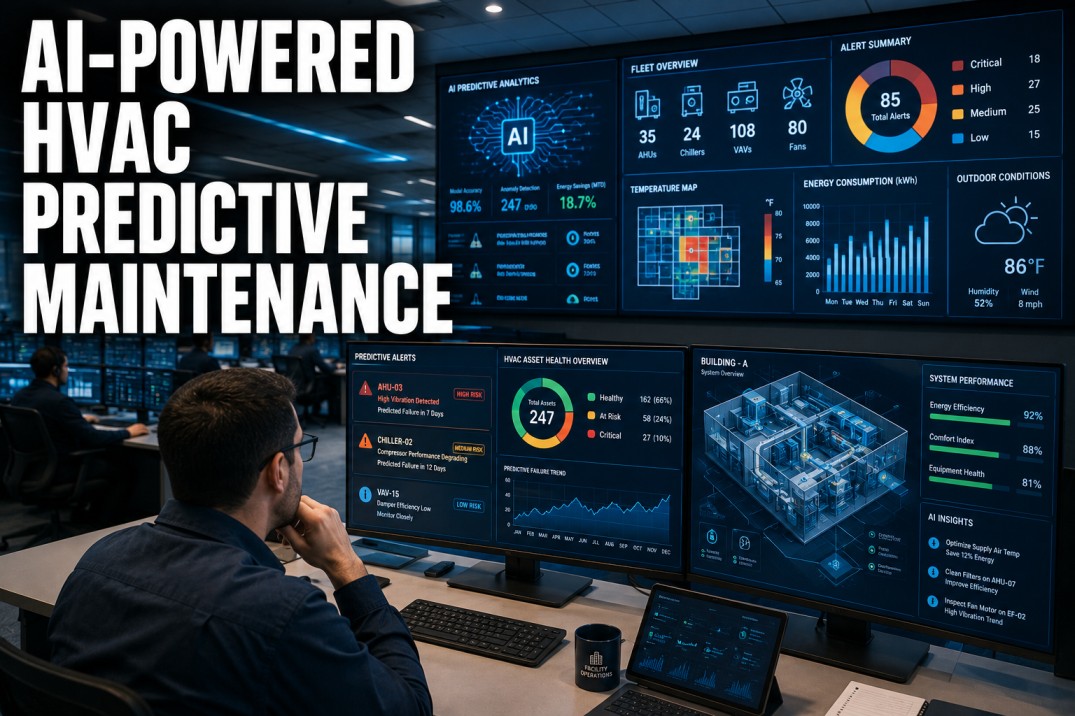
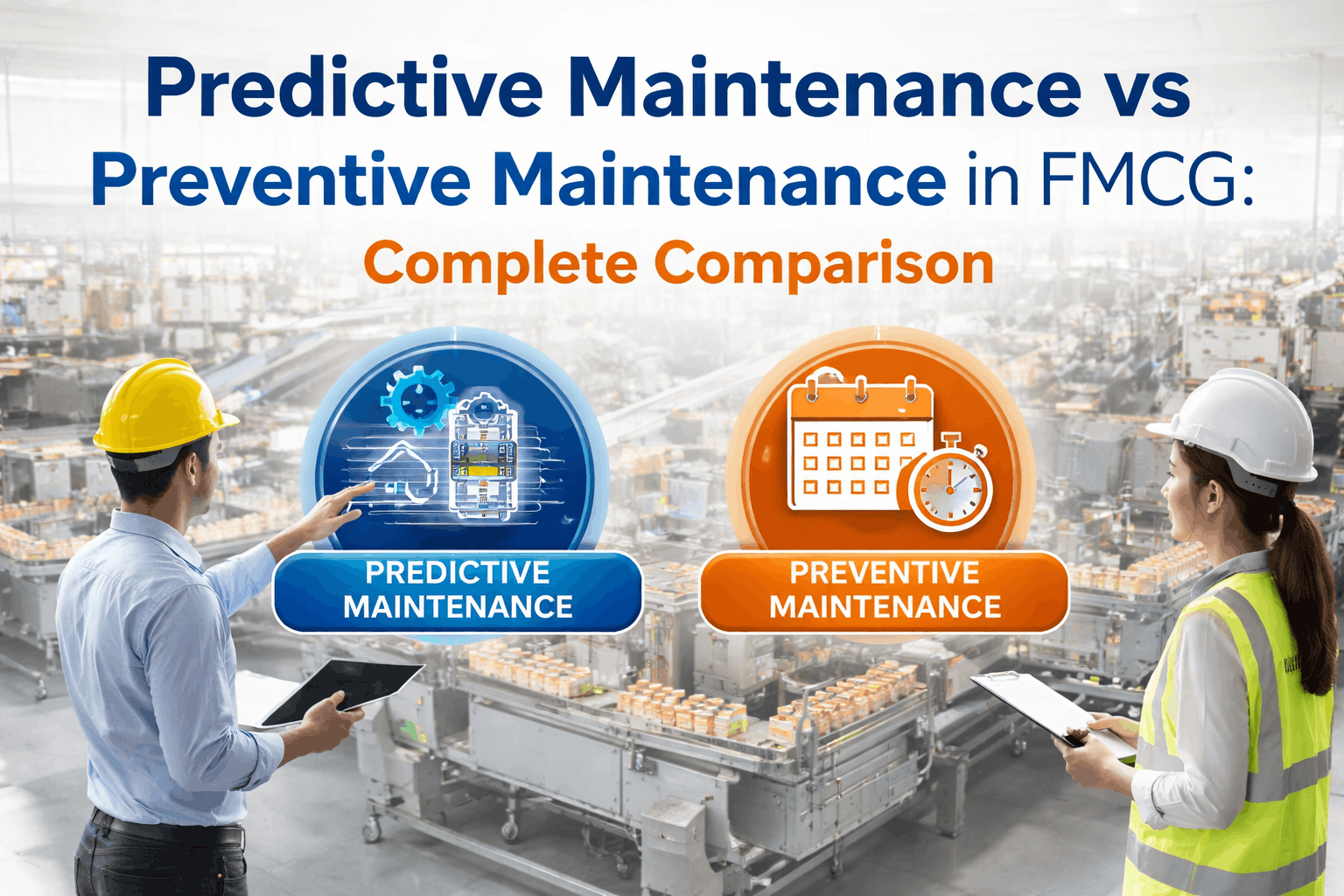
Organizations managing HVAC systems face a fundamental strategic choice: how to approach maintenance and analytics. Three distinct models exist — reactive, preventive, and predictive — each with different cost profiles, risk levels, and performance outcomes. Reactive maintenance fixes things when they break. Preventive maintenance follows fixed schedules regardless of condition. Predictive maintenance uses real-time data to intervene only when needed, just before failure. This guide compares all three approaches across cost, reliability, energy efficiency, equipment life, and implementation complexity to help you choose the right model for your facility.
Choose the Right HVAC analytics Strategy With Predictive Console
iFactory's Predictive analytics Console provides decision support tools to evaluate reactive, preventive, and predictive approaches for your specific equipment portfolio. Book a demo to see how data-driven strategy selection optimizes your maintenance investment.
Three HVAC analytics Models: Reactive, Preventive & Predictive
Each maintenance model reflects a different philosophy about risk, investment timing, and the role of data in decision-making.
| Dimension | Reactive | Preventive | Predictive |
|---|---|---|---|
| Trigger | Equipment fails | Calendar date / run hours | Performance deviation / sensor data |
| Cost per event | $2,000-15,000 | $200-800/ton/yr | $400-1,200/ton/yr (incl analytics) |
| Reliability Target | <90% uptime | 92-97% uptime | 97-99.5% uptime |
| Energy Efficiency | Declining 3-8%/yr | Stable within 5% | Improving 1-3%/yr |
| Equipment Life | 8-12 years | 14-18 years | 18-25 years |
| Planning Horizon | None | Fixed schedule | 3-6 week advance notice |
| Staff Utilization | 40-50% productive | 55-70% productive | 75-90% productive |
| Data Required | None | Run hours | Sensors + ML models |
| Implementation | No upfront investment | $3-6/ton/yr | $0.05-0.15/sq ft |
True Cost Analysis: Reactive vs Preventive vs Predictive Over 15 Years
The cheapest option in year one is almost never the cheapest option over equipment life. A 15-year total cost comparison reveals the real economics of each approach.
Reactive: $1.2M total
Reactive appears cheapest initially but costs escalate as equipment degrades. Average $0.35-0.60/sq ft/yr by year 10. Two full equipment replacements needed in 15 years for major components.
Preventive: $780K total
Preventive costs are stable and predictable. Average $0.15-0.25/sq ft/yr. One partial equipment replacement in 15 years. Energy costs 15-25% lower than reactive.
Predictive: $620K total
Predictive has highest year-1 cost due to sensor investment but stabilizes lower. Average $0.12-0.20/sq ft/yr after year 2. One partial replacement in 20 years.
Transition From Preventive to Predictive With Analytics
iFactory's platform makes predictive maintenance accessible by leveraging existing BMS data and adding targeted sensors where they deliver highest ROI. Book a demo to see how to start your predictive journey with minimal upfront investment.
Transitioning From Reactive to Predictive: A Step-by-Step Roadmap
Moving from reactive to predictive maintenance is a journey that passes through preventive maintenance as an intermediate stage. Each step delivers measurable value.
Stage 1: Stop Being Purely Reactive
Implement basic preventive maintenance for critical equipment: monthly filter changes, quarterly electrical checks, annual full PM. Budget $3-6/ton/yr. This alone reduces emergency repairs 35-50%. Target: reduce reactive ratio from 80% to 40%. Duration: 3-6 months.
Stage 2: Build Preventive Foundation
Establish complete PM program with checklists, quality verification, and KPI tracking. Optimize frequencies based on run hours and criticality. Budget $5-8/ton/yr. Emergency repairs drop another 20-30%. Target: reduce reactive ratio to <30%. Duration: 6-12 months.
Stage 3: Add Predictive Intelligence
Install sensors, deploy analytics platform, train models on equipment data. Transition PM tasks to condition-based triggers. Budget $0.05-0.15/sq ft. Emergency repairs below 10%. Target: 97%+ uptime, 3-5 year life extension. Duration: 12-18 months.
Decision Framework: Which Model Is Right for Your Facility?
The right model depends on facility type, equipment criticality, budget, and organizational readiness for data-driven maintenance.
Reactive Is Acceptable When...
Fewer than 5 pieces of HVAC equipment, equipment is >80% depreciated and scheduled for replacement within 2 years, downtime cost is under $500/day, or facility is in temporary use. Even in these cases, implement basic PM for safety-critical items: heat exchanger inspection and CO detection.
Preventive Is the Right Baseline When...
Facility has 5-50 HVAC units, downtime costs $500-5K/day, maintenance staff are available but not analytics-trained, or budget for sensor investment is not available in year one. Most commercial buildings should operate at minimum at this level.
Predictive Delivers Maximum Value When...
Facility has 50+ HVAC units across multiple buildings, downtime costs $5K+/day (hospitals, data centers, manufacturing), analytics-trained staff are available, or energy costs exceed $200K/yr. Buildings with BMS and existing sensor infrastructure see fastest ROI.
Performance Metrics Comparison: Measurable Outcomes
Quantified performance difference between maintenance models based on published industry data and case study analysis.
Emergency Repairs
Reactive: $18-22/ton/yr. Preventive: $8-12/ton/yr (55% reduction). Predictive: $4-7/ton/yr (70%+ reduction from reactive baseline).
Energy Consumption
Reactive: rising 3-8%/yr. Preventive: stable within 5%. Predictive: declining 1-3%/yr through continuous commissioning and fault correction.
Equipment Life
Reactive: 8-12 years. Preventive: 14-18 years (+50%). Predictive: 18-25 years (+100%). Each year of extension defers capital by 5-8% of replacement cost.
Total Cost of Ownership
Reactive baseline: 100%. Preventive: 65-75% of reactive TCO. Predictive: 50-60% of reactive TCO. Predictive saves $400K-$600K per 100K sq ft over 15 years vs reactive.
Frequently Asked Questions
What is the difference between reactive, preventive, and predictive HVAC maintenance?
Reactive maintenance (run-to-failure) means operating equipment until it breaks and then repairing it. Cost per event is high ($2K-$15K) and includes emergency premiums, expedited parts, and overtime labor. Preventive maintenance follows fixed schedules: monthly filter changes, quarterly inspections, annual checkups, regardless of equipment condition. Predictive maintenance uses real-time sensor data to trigger service only when measurable performance degradation indicates impending failure. All three have their place: reactive for low-criticality equipment nearing end of life, preventive as the baseline for most equipment, and predictive for critical equipment where downtime carries high operational or safety consequences.
Which HVAC maintenance model is most cost-effective?
Over a 15-year equipment lifecycle, predictive maintenance is the most cost-effective at 50-60% of reactive total cost of ownership. Preventive maintenance is 65-75% of reactive TCO. However, predictive requires higher year-1 investment ($0.05-0.15/sq ft for sensors and analytics platform) while reactive requires zero upfront investment. For most commercial buildings, the optimal approach is a hybrid: predictive analytics for critical equipment (chillers, servers, operating rooms), preventive maintenance for standard equipment (RTUs, air handlers, VAV boxes), and reactive for low-criticality equipment (exhaust fans, unit heaters near end of life). This hybrid model delivers 70-80% of predictive benefits at 50-60% of the sensor investment.
How do I calculate the ROI of switching from preventive to predictive maintenance?
Calculate avoided emergency repair savings: total emergency repair costs baseline multiplied by 40-60% expected reduction. Energy savings: current HVAC energy spend multiplied by 5-12% expected improvement from predictive fault correction. Labor savings: PM labor hours reduced 20-30% by converting fixed-interval tasks to condition-based triggers. Life extension: deferred capital cost divided by 3-5 additional years of equipment life. Subtract annual analytics platform cost ($0.05-0.15/sq ft) and incremental sensor cost. A typical 100K sq ft office with $150K annual HVAC costs sees $30K-$60K in combined annual savings against $12K-$20K in analytics costs, delivering 2-4x ROI with 8-16 month payback.
What equipment benefits most from predictive maintenance?
Equipment with the highest predictive maintenance ROI includes: chillers (repair cost $15K-$50K, 75% failure predictability with vibration + oil analysis), cooling towers (fan/motor failures predictable via vibration monitoring), compressors (50-70% of failures predictable via current draw + temperature trends), VFDs (capacitor degradation predictable via ripple voltage monitoring), air handlers (bearing failures predictable via vibration analysis), and boilers (combustion efficiency degradation indicates developing problems). Equipment with less than $2K replacement cost or with redundant backup generally does not justify predictive investment. Focus predictive resources on equipment where unplanned downtime exceeds $5K/day in operational impact.
Can I implement predictive maintenance without installing new sensors?
Partial predictive capability is possible using existing BMS data before adding dedicated predictive sensors. BMS temperature and pressure data can detect 30-40% of developing faults: rising condenser approach temperature indicates coil fouling, increasing supply air temp deviation indicates sensor drift or actuator issues, amp draw trending upward indicates mechanical degradation. This data-only approach uses analytics algorithms on existing points without additional sensor hardware. However, predictive accuracy improves significantly with dedicated vibration sensors (catches 90% of bearing failures), current sensors on each motor phase (catches 85% of electrical failures), and oil condition sensors (catches 75% of compressor failures). Start with existing data to prove value, then expand sensor coverage based on ROI.
Compare, Plan, and Execute the Right Maintenance Strategy
iFactory's Predictive analytics Console delivers TCO comparison tools, transition roadmaps, and ROI calculators to help you build the business case for maintenance modernization. Book a demo to see how strategic analytics transforms maintenance economics.