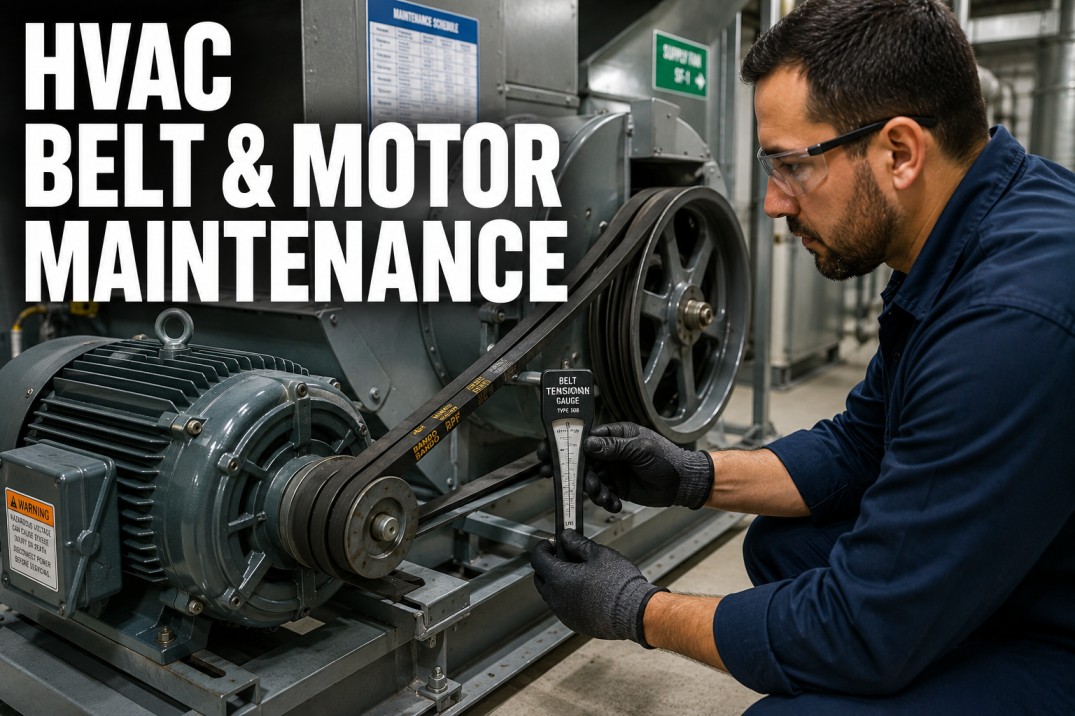
Seasonal HVAC maintenance is the practice of preparing heating and cooling systems for the demands of each upcoming season before peak load conditions arrive. A structured seasonal maintenance program prevents the most common seasonal failures — condenser coil fouling before summer, heat exchanger cracks before winter, frozen coils during shoulder seasons — while reducing peak-season emergency calls by 40% to 60% and capturing seasonal energy savings of 8% to 15%. This checklist provides complete task schedules for spring startup, summer peak optimization, fall heating preparation, and winter cold-weather readiness.
Never Miss a Seasonal HVAC Task With Preventive Analytics
iFactory's Preventive analytics module provides seasonal task checklists, automated scheduling, weather-based reminders, and completion tracking. Book a demo to see how structured seasonal maintenance reduces peak-season emergencies and extends equipment life.
Spring HVAC Startup: Preparing Cooling Systems for Summer Demand
Spring is the critical transition period when cooling systems must be verified ready for peak summer loads. Completing spring startup tasks before the first heat wave reduces summer emergency calls by 50% and ensures equipment operates at rated efficiency.
Spring Startup Checklist
- Inspect and clean condenser coils (remove winter debris, straighten fins)
- Check refrigerant charge (measure superheat/subcooling against charging chart)
- Test all compressors for proper amp draw and current balance
- Verify condenser fan operation, amp draw, and blade condition
- Inspect contactors and capacitors (replace if pitted or below 90% rated mfd)
- Check evaporator coil drain pan and condensate line (clear algae/debris)
- Test economizer operation (verify 0-100% modulation and changeover logic)
- Verify cooling setpoints and schedules in BMS/thermostat
- Test safeties: high-pressure, low-pressure, freeze stat, condensate overflow
- Run cooling system through full cycle, measure temperature split (target 14-20°F)
Summer Peak Season: Maintaining Performance Under Load
Summer is the highest stress period for cooling equipment. Proactive monitoring and mid-season adjustments prevent capacity loss and energy waste during the months when HVAC systems work hardest.
Summer Optimization Checklist
- Monitor condenser approach temperature monthly (clean if >15°F above ambient)
- Check refrigerant charge monthly during peak cooling weeks
- Measure supply air temperature and compare to design specifications
- Verify all zones are receiving adequate airflow (measure at diffusers)
- Inspect condensate drains weekly during high-humidity periods
- Monitor compressor amp draw and discharge temperature trends
- Check VFDs for proper speed modulation and verify no overrides
- Review energy consumption weekly against weather-normalized baseline
- Test economizer changeover every 30 days during cooling season
- Perform mid-season coil inspection and cleaning if approach temp rising
Fall Heating Preparation: Transitioning to Heating Season
Fall preparation ensures heating systems are safe, efficient, and reliable before winter heating demand begins. Combustion safety testing is the priority: a cracked heat exchanger discovered during fall startup can prevent a potentially fatal carbon monoxide event.
Fall Preparation Checklist
- Inspect heat exchanger for cracks, corrosion, and soot buildup
- Perform combustion analysis: measure O2, CO, CO2, stack temp, efficiency
- Clean flame sensor, burners, and pilot assembly
- Verify ignition system operation (spark or hot surface ignitor)
- Test gas valve operation and manifold pressure
- Inspect flue/vent for blockages, proper draft, and termination clearance
- Check all limit switches and rollout switches for proper operation
- Test carbon monoxide detectors and low-CO alarms
- Verify heating setpoints, schedules, and frost protection settings
- Run heating through full cycle: measure temp rise (target 40-70°F), check safeties
Track Seasonal Performance With Data-Driven Analytics
iFactory's platform captures seasonal maintenance data, tracks energy consumption trends, and compares performance across seasons to identify optimization opportunities. Book a demo to see how seasonal analytics transforms your HVAC maintenance program.
Winter Cold-Weather Readiness: Protecting Systems & Preventing Freeze Damage
Winter preparation focuses on freeze protection, which is the leading cause of cold-weather HVAC failures. A single frozen coil or burst hydronic pipe can cause $10,000-$50,000 in damage and weeks of system downtime.
Winter Readiness Checklist
- Verify freeze stat settings and operation on all air handlers and coils
- Check heat tape operation on exposed pipes and roof drains
- Inspect economizer dampers for proper closure and seal
- Verify boiler low-water cutoff and safety valve operation
- Test emergency heat/backup heat operation on heat pump systems
- Check insulation on all exposed piping and ductwork in unconditioned spaces
- Verify snow intake protection for outdoor air intakes
- Test generator and emergency power systems for heating equipment
- Review night setback schedules and frost protection programming
- Document cold-weather operating procedures and emergency contact list
Seasonal Maintenance Metrics: Impact on Performance & Reliability
Tracking the impact of seasonal maintenance across key performance indicators demonstrates program value and identifies areas for improvement. Buildings with comprehensive seasonal programs consistently outperform those with ad-hoc approaches.
Spring Startup Impact
Buildings completing full spring startup before May 1st experience half the emergency cooling calls of buildings without structured spring programs. Average startup cost: $800-2,000 per building.
Summer Monitoring
Monthly performance monitoring during peak season captures 8-15% additional energy savings by catching developing issues (rising approach temp, creeping energy) before they waste significant energy.
Fall Combustion Safety
Fall combustion testing identifies 3-5% of heat exchangers with cracks or safety issues annually. Estimated cost of undetected CO event: $50K-$500K in liability, property damage, and business interruption.
Winter Freeze Protection
Winter freeze preparation prevents the single most costly seasonal failure. A single frozen coil or burst pipe causes $10K-$50K damage and 2-6 weeks of system downtime.
Frequently Asked Questions
Why is seasonal HVAC maintenance important?
Seasonal HVAC maintenance is important because each season places different demands on HVAC systems, and equipment that performs well in moderate conditions can fail catastrophically under peak load. Spring startup prevents 50% of summer emergency calls by ensuring cooling systems are ready before the first heat wave. Fall combustion testing identifies cracked heat exchangers before heating season, preventing CO safety incidents. Winter freeze preparation prevents the most costly seasonal failure: a frozen coil or burst pipe causes $10,000-$50,000 in damage. Buildings with structured seasonal programs achieve 40-60% fewer peak-season emergencies and 8-15% lower annual energy costs compared to facilities that maintain the same schedule year-round without seasonal adjustments.
What is the most important seasonal HVAC task?
The single most important seasonal task is fall heat exchanger inspection and combustion analysis for gas-fired heating equipment. A cracked heat exchanger can leak carbon monoxide into occupied spaces, causing illness or death. Studies show 3-5% of heat exchangers over 10 years old have cracks or safety issues detected during fall startup that would otherwise go unnoticed until a CO event occurs. The second most important task is spring condenser coil cleaning and refrigerant charge verification: dirty condenser coils and low refrigerant are the leading causes of summer cooling failures, causing 40-50% of peak-season emergency calls. Both tasks have direct safety or reliability consequences that make them non-negotiable in any seasonal maintenance program.
How do I create a seasonal HVAC maintenance schedule?
A seasonal schedule should align with weather transitions in your climate zone. Spring startup: 4-6 weeks before typical cooling season (March-April for most of US). Perform condenser coil cleaning, refrigerant check, economizer test, and cooling performance verification. Summer optimization: June-August with monthly monitoring of approach temperature, refrigerant charge, and energy consumption. Fall preparation: 4-6 weeks before heating season (September-October). Perform combustion analysis, heat exchanger inspection, burner cleaning, and heating cycle test. Winter readiness: November-December. Focus on freeze protection, heating system monitoring, and emergency preparedness. Schedule each seasonal transition as a fixed annual event and use a written checklist to ensure no steps are missed.
What tools are needed for seasonal HVAC maintenance?
Spring/summer cooling tasks require: manifold gauge set, thermometer/thermocouple, ammeter/clamp meter, fin comb, coil cleaning chemicals, condensate line cleaning tools, and economizer test kit. Fall/winter heating tasks require: combustion analyzer (O2, CO, CO2, stack temp), manometer for gas pressure, carbon monoxide detector, heat exchanger inspection mirror/borescope, and flue gas temperature probe. Common tools for all seasons: multimeter, contactor/capacitor tester, infrared thermometer, refrigerant leak detector, and basic hand tools. Facilities with larger equipment may also need: vibration analyzer, megger tester for motor insulation, and phase rotation meter. Documenting measured values (temperature splits, pressures, amp draws, combustion readings) creates a baseline for trend analysis.
How can I track the effectiveness of my seasonal maintenance program?
Track five key metrics: seasonal emergency call volume (compare current season to same season prior year, target 40-60% reduction), seasonal energy consumption (kWh/degree day or therms/HDD, normalized for weather), equipment availability during peak season (target 99%+), findings rate (number of corrective items found per seasonal inspection, should decrease as program matures), and seasonal maintenance cost per ton (target trending stable or down as program optimizes). Use a CMMS or analytics platform to track these metrics and generate quarterly reports comparing actual vs. target performance. Review results within 30 days of each seasonal transition to identify program gaps and adjust procedures before the next season. Buildings with documented seasonal programs that review metrics quarterly achieve 20-30% lower total HVAC maintenance costs than those without structured seasonal approaches.
Plan, Execute, and Verify Seasonal HVAC Maintenance
iFactory's Preventive analytics module delivers comprehensive seasonal maintenance management including spring startup checklists, summer monitoring dashboards, fall preparation workflows, and winter readiness verification. Book a demo to see how data-driven seasonal maintenance protects your equipment.