Belt and motor failures are the leading cause of HVAC breakdowns, accounting for approximately 40% of all emergency service calls in commercial buildings. Unlike compressor or heat exchanger failures that develop gradually over years, belt and motor problems can develop and escalate within days or weeks, making them the single most cost-effective target for preventive analytics. This guide covers belt inspection schedules, tension measurement, motor lubrication, alignment verification, vibration monitoring, and replacement criteria everything needed to eliminate the #1 cause of HVAC downtime.
Eliminate Belt & Motor Failures With Preventive Analytics
iFactory's Preventive analytics module provides belt and motor inspection checklists, tension tracking, lubrication scheduling, and vibration monitoring. Book a demo to see how structured maintenance eliminates the #1 cause of HVAC breakdowns.
Belt & Motor Failure Statistics: Why They Fail and How Often
Understanding failure patterns helps target preventive resources where they deliver highest impact.
Belt Failure Rate
Belts account for the largest single category of HVAC component failures. Average belt life: 2-5 years. 60% of belt failures are preventable with proper maintenance.
Motor Bearing Failure
Bearing failure is the #1 cause of motor replacement. Average bearing life: 30K-60K hours with proper lubrication, 10K-20K hours without. Grease-related failures represent 80% of bearing failures.
Motor Electrical Failure
Winding shorts, insulation breakdown, and phase imbalance. Caused by voltage imbalance >2%, overloading, moisture, and overheating. Proper electrical monitoring prevents 50% of electrical motor failures.
Alignment Issues
Misaligned sheaves cause accelerated belt wear, vibration, and energy waste. 1/16 inch offset reduces belt life 50%. Proper alignment takes 10 minutes with a straightedge.
Belt & Motor Inspection Routine: Daily Checks Through Annual Overhauls
A structured inspection routine at the right frequency catches developing problems before they cause breakdowns.
Monthly Checks: Visual & Tension
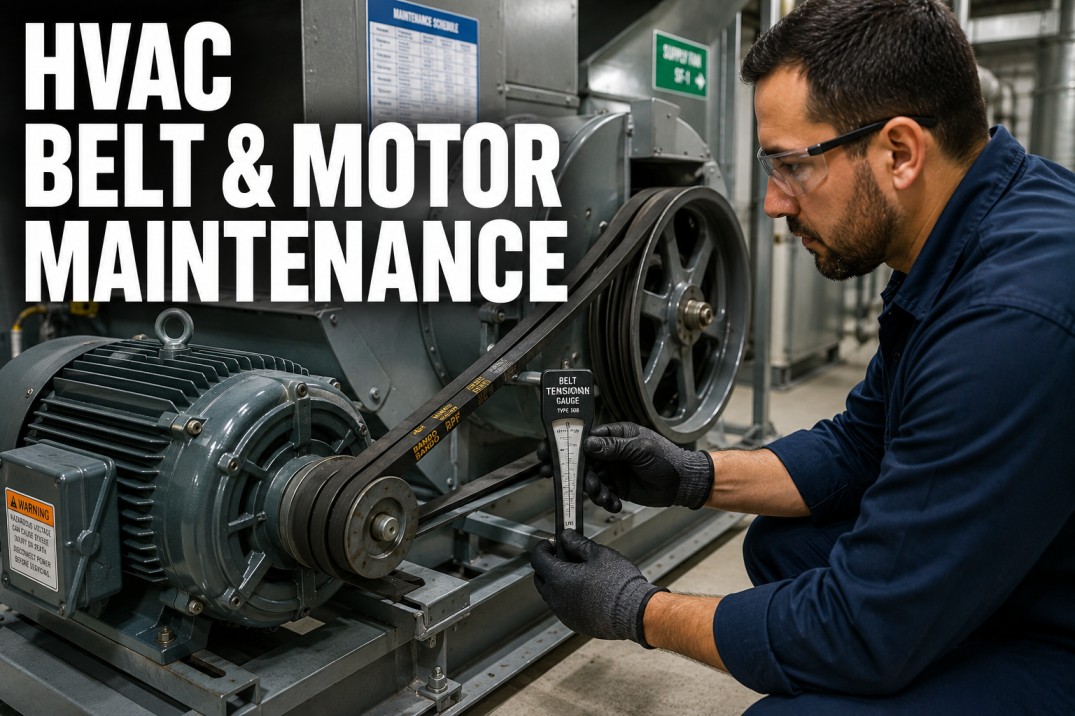
Visual belt inspection checks for cracking, glazing, fraying, and correct tension. Belt tension verified with a tension gauge using the deflection method per manufacturer spec. Bearing noise checked manually with a screwdriver or stethoscope against the bearing housing. These three checks take 10 minutes per drive and catch 70% of developing faults.
Quarterly Checks: Electrical & Alignment
Motor amp draw measured on all three phases must be balanced within 10%. Sheave alignment verified with a straightedge; correction needed if offset exceeds 1/32 inch. Motor mounting bolts and base plate inspected for looseness. Quarterly checks add 15 minutes per drive and catch electrical and alignment issues before they accelerate wear.
Semi-Annual & Annual: Deep Maintenance
Semi-annual: motor bearings greased per manufacturer spec (avoid over-greasing), vibration velocity measured as baseline (target under 0.1 in/sec), winding insulation resistance tested with megger (minimum 1 megohm). Annual: belts replaced preventively regardless of condition, pulley and sheave condition verified, full motor load test comparing FLA amps to nameplate rating.
Detect Bearing & Belt Faults 4-8 Weeks Before Failure
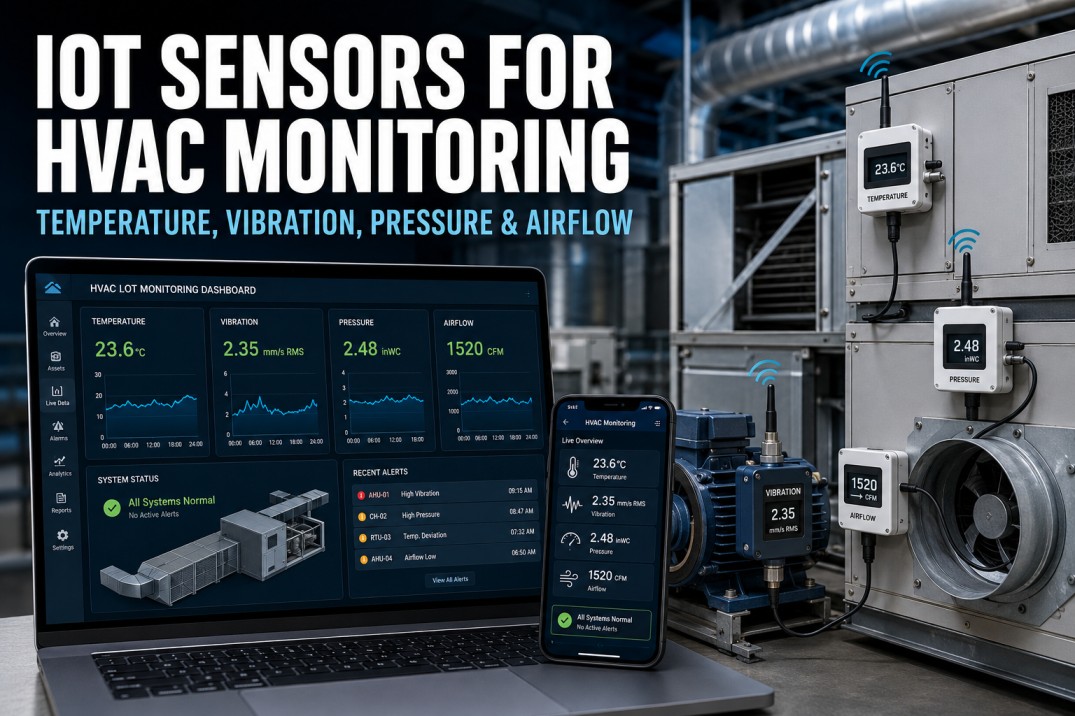
iFactory's platform integrates with vibration sensors to detect developing faults before they cause breakdowns. Book a demo to see how automated vibration monitoring enables planned replacements.
Belt Tension Methods: Measuring, Adjusting & Verifying Correct Tension
Proper belt tension is the single most important factor in belt life.
| Method | How It Works | Accuracy | Best For | Tool Needed |
|---|---|---|---|---|
| Force-Deflection | Measure force to deflect belt 1/64 inch per inch of span | High | All V-belts | Belt tension gauge |
| Sonic Tension Meter | Measure vibration frequency of plucked belt | Very high | Matched belt sets | Sonic tension meter |
| Visual (thumb pressure) | Push on belt midpoint estimate deflection | Low | Quick field check | None (experience) |
| Amp Draw Method | Measure motor amps at full load vs nameplate | Medium | Fixed-speed drives | Clamp meter |
Motor Bearing Lubrication: Grease Types, Quantities & Schedules
Improper lubrication causes 80% of bearing failures.
Grease Selection
Use manufacturer-recommended grease. Most HVAC motors: NLGI #2 polyurea or lithium complex. Never mix grease types. Incompatible greases cause 50% of lubrication-related failures.
Grease Quantity
Fill bearing cavity 1/3 to 1/2 full. Over-greasing causes overheating 15-25F above normal. Measure by number of strokes from grease gun.
Relubrication Interval
Standard: 6-12 months for HVAC fan motors. 24/7 motors need 3-6 month intervals. High-temp areas (>120F) need 1-3 month intervals.
Grease Relief
Always remove relief plug before greasing. Purge old grease until fresh appears, run 15-20 min with plug out. Failure to relieve causes seal blowout.
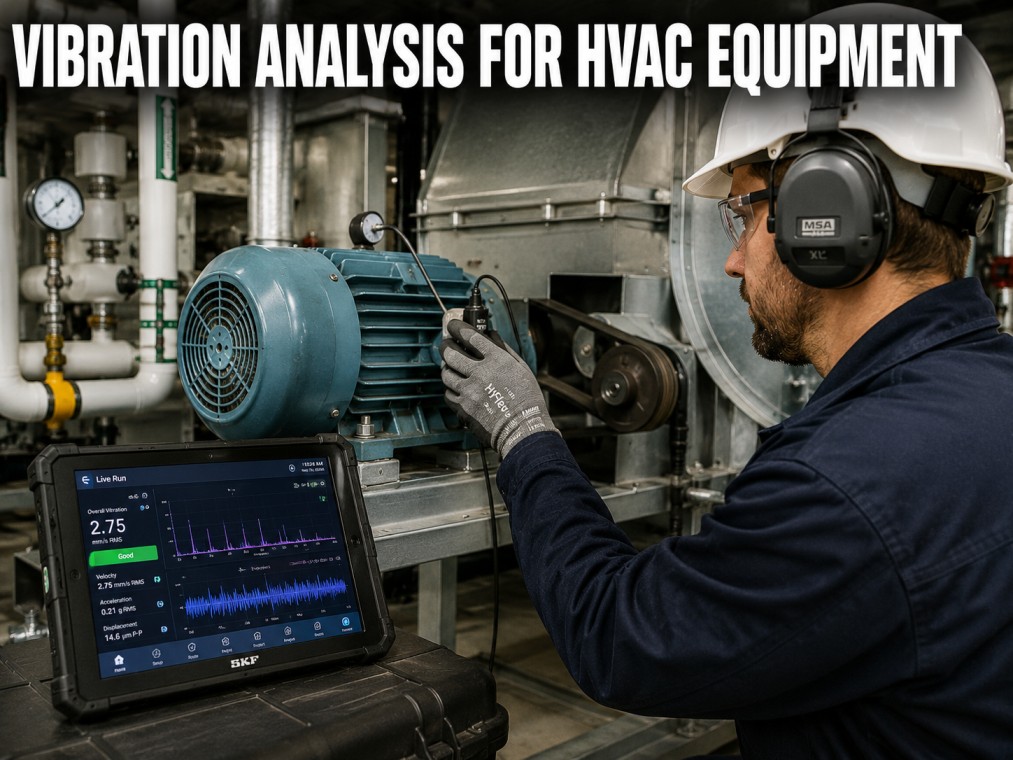
Vibration Analysis Program: Detecting Bearing & Alignment Faults
Vibration analysis detects developing faults 4-8 weeks before failure.
Bearing Wear Detection
Accelerometers detect bearing raceway defects at 2-8 kHz. Spike energy metrics rise 4-8 weeks before failure. Trend monthly. Replace bearing when gSE exceeds 0.5.
Imbalance & Misalignment
Velocity measurement at 1x and 2x running speed. Imbalance shows high 1x RPM; misalignment shows high 2x RPM. Threshold: 0.2 in/sec velocity overall.
Belt Resonance & Wear
Faults appear at belt frequency. Worn belts show harmonics. Loose belts show chaotic vibration pattern. Verify with sonic tension meter.
Frequently Asked Questions
Why do HVAC belts fail and how can I prevent it?
Belts fail from four primary causes: improper tension (60% of failures), misalignment (25%), worn sheaves (10%), and environmental contamination (5%). Improper tension is dominant: too loose causes slipping, glazing, and heat buildup; too tight accelerates bearing wear. Prevention requires monthly tension checks with a belt tension gauge, quarterly alignment verification, and annual preventive belt replacement regardless of visible condition.
How do I know if an HVAC motor is failing?
Five signs indicate impending motor failure: unusual noise (grinding or rumbling from bearings), elevated temperature (housing too hot to keep hand on for 5 seconds), increased amp draw (trending upward more than 5% above baseline), vibration increase (over 0.2 in/sec velocity), and insulation resistance drop (below 1 megohm). Any single indicator warrants investigation; two or more confirm impending failure.
What is the correct belt tension for HVAC applications?
Correct V-belt tension: force to deflect belt 1/64 inch per inch of span equals manufacturer spec. For most commercial HVAC: 5-8 lbs for A/4L section, 10-15 lbs for B/5L, 20-30 lbs for C-section. Use belt tension gauge. Never overtension: reduces bearing life 50% and can bend shafts.
How often should HVAC motor bearings be lubricated?
Standard intervals: HVAC fan motors 6-12 months, 24/7 motors 3-6 months, high-temperature 1-3 months. Sealed bearings never lubricate. Use NLGI #2 polyurea grease. Add 1-2 strokes per bearing for small frame, 3-5 strokes for large. Always remove relief plug first.
What is the ROI of a belt and motor preventive analytics program?
A structured belt and motor PM program delivers 4-8x ROI. Cost: $100-300 per drive annually. Benefits: belt failure reduction 80% (saving $200-600 per avoided emergency), motor life extension 2-4 years (saving $500-2K per delayed replacement), energy savings 3-5% (saving $50-200 per drive), and avoided downtime ($500-5K per incident).
Complete Belt & Motor Management With Preventive Analytics
iFactory's Preventive analytics delivers end-to-end belt and motor management including inspection tracking, tension optimization, lubrication scheduling, and vibration analysis. Book a demo to see how data-driven belt and motor care eliminates the most common HVAC failures.