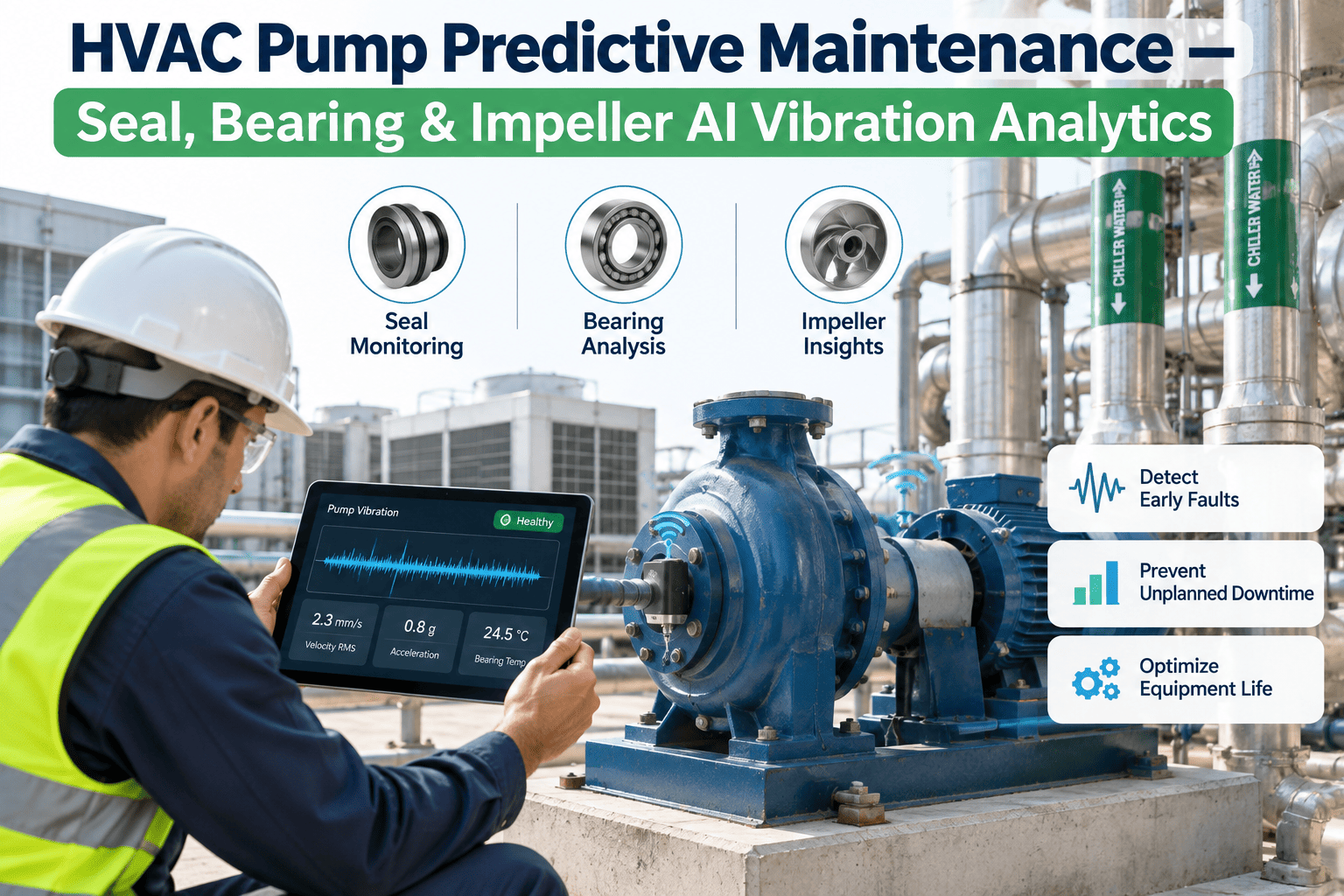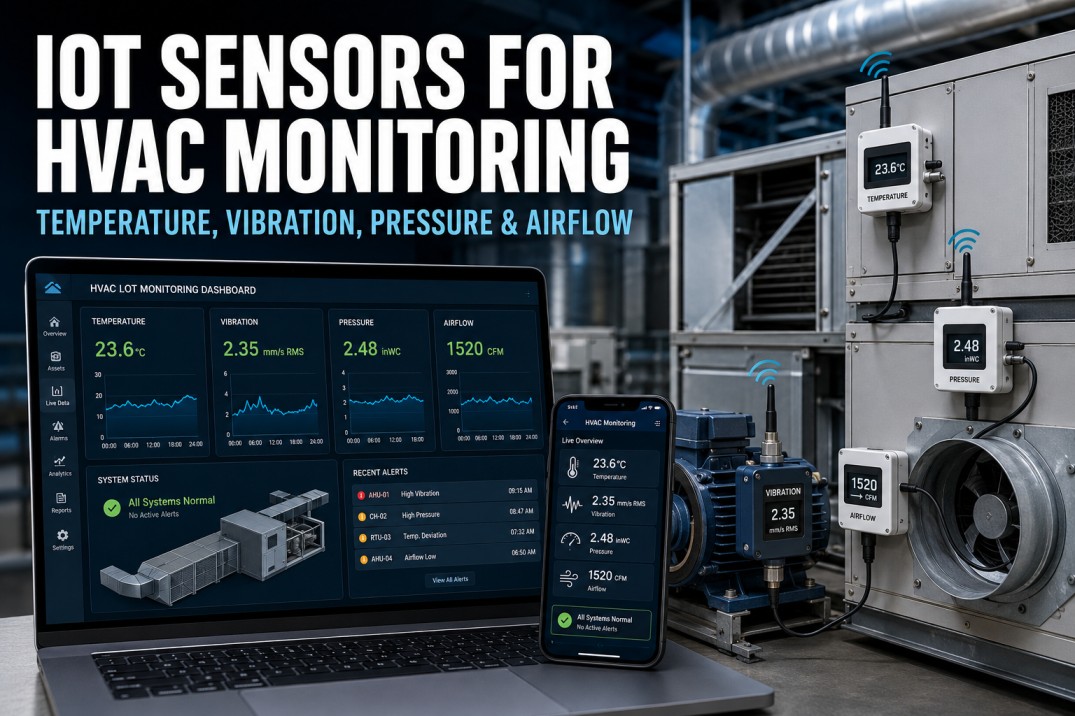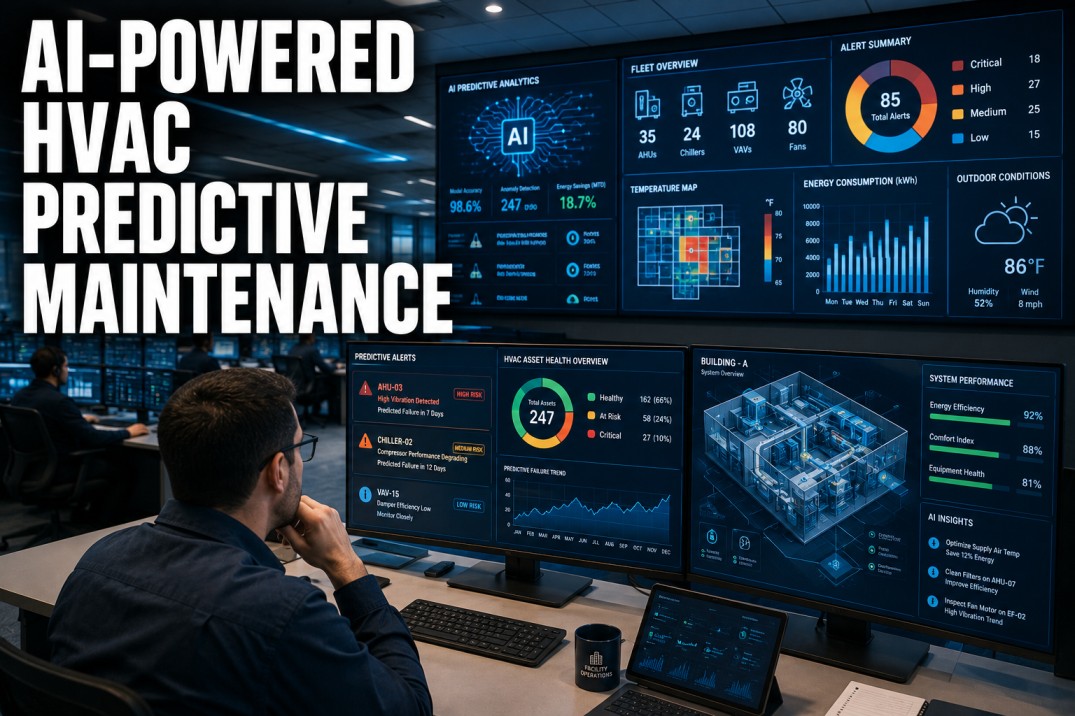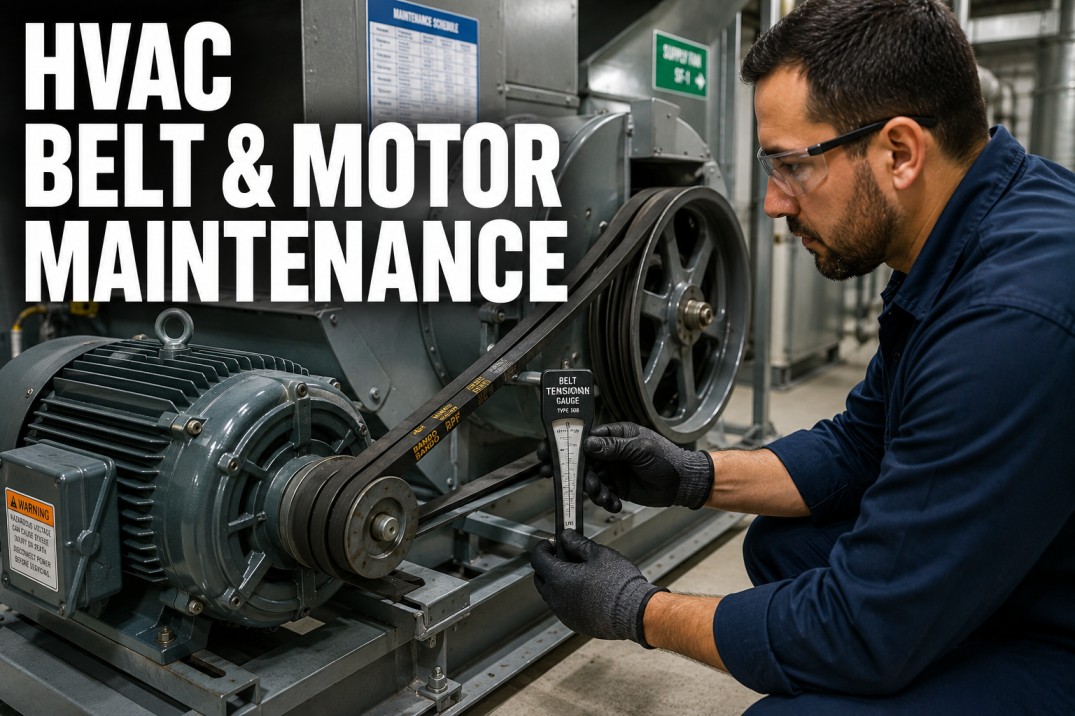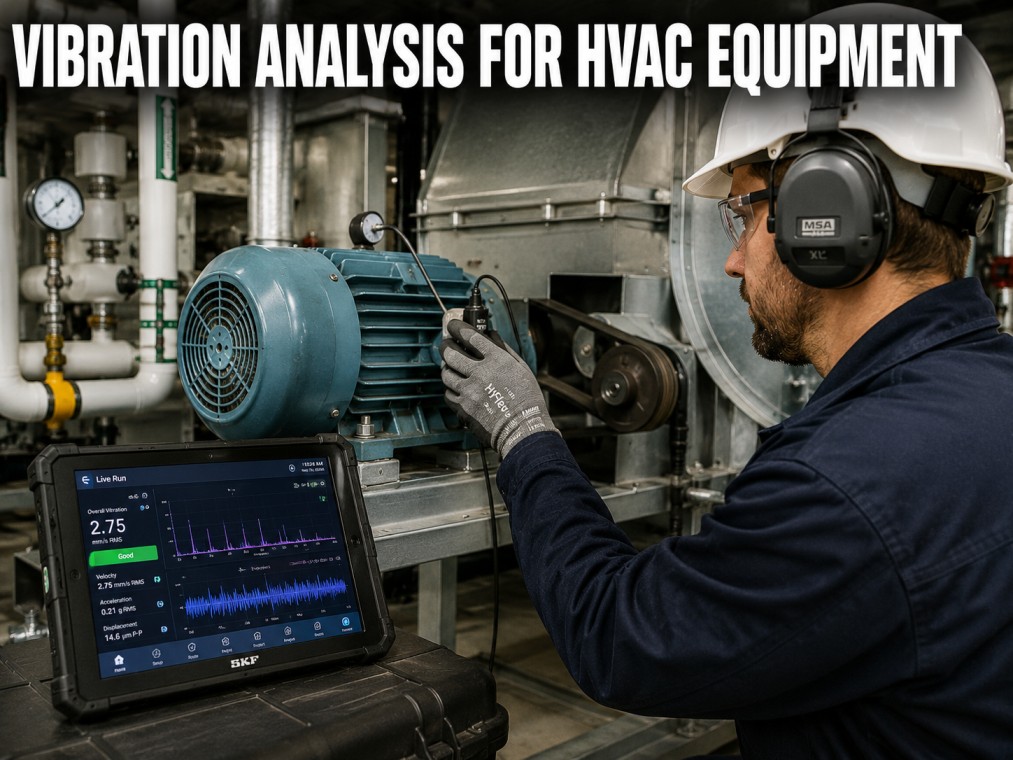
Vibration analysis is the most effective predictive maintenance technique for rotating HVAC equipment, detecting bearing wear, imbalance, misalignment, looseness, and resonance weeks or months before these conditions cause catastrophic failure. By continuously monitoring vibration velocity, acceleration, and envelope spectra on fans, compressors, pumps, and other rotating machinery, facility teams can schedule precisely targeted repairs during planned downtime rather than reacting to unexpected breakdowns that disrupt operations.
Predict Bearing and Rotor Failures With Vibration Analytics
iFactory's Predictive analytics Console includes continuous vibration monitoring with automated fault detection and trend analysis. Book a demo to see how vibration analysis eliminates unexpected rotating equipment failures.
Vibration Analysis Principles: What Vibration Signatures Reveal
Vibration signatures contain specific frequency patterns that identify each mechanical fault type.
Imbalance (1x RPM)
Dominant vibration at running speed. Causes: uneven mass distribution, worn blades, accumulated debris. Symptom: high vibration at operating speed, low elsewhere. Correct: balance rotor, clean blades.
Misalignment (2x RPM)
High axial vibration at 2x running speed. Causes: shaft misalignment, soft foot, pipe strain. Symptom: high axial and radial at 2x. Correct: realign couplings, shim base.
Bearing Wear (10-60x RPM)
High-frequency envelope spectra spikes. Early stage: 10-20x RPM, late: 40-60x + sidebands. Causes: fatigue, contamination, lubrication loss. Symptom: rising HF vibration over weeks to months.
Mechanical Looseness (Harmonics)
Multiple harmonics plus 0.5x subharmonics. Causes: loose bolts, worn bearings, cracked base, broken mounts. Symptom: unstable readings, changes with torque.
HVAC Fault Frequencies: Identifying Problems by Frequency Signature
Each fault type produces vibration at specific frequency ranges relative to running speed.
| Fault | Frequency | Measurement | Severity Progression | Detection Window |
|---|---|---|---|---|
| Imbalance | 1x RPM | Velocity (in/sec) | Gradual: +20%/month | 3-6 months before critical |
| Misalignment | 1x, 2x, 3x RPM | Velocity (in/sec) | Stable or gradual | 6-12 months before critical |
| Bearing Wear | 10-60x RPM envelope | Acceleration (g) | Exponential: +50%/month in final stage | 4-8 weeks before failure |
| Looseness | 0.5x, 1x, 2x, 3x... harmonics | Velocity (in/sec) | Erratic, load-dependent | 2-6 months before failure |
| Resonance | Natural frequency | Velocity (in/sec) | Constant, structure-dependent | Does not progress structure issue |
| Gear Damage | Gear mesh freq + sidebands | Acceleration (g) | Exponential | 2-4 weeks before failure |
Go Beyond Temperature: Catch Mechanical Faults Weeks Earlier
iFactory's platform combines vibration, temperature, and current data for multi-dimensional equipment health monitoring. Book a demo to see how fused sensor analytics catches faults no single parameter can detect.
Vibration Sensor Deployment: Placement, Configuration & Standards
Proper sensor placement determines detection effectiveness more than sensor quality.
Placement Locations
Bearings: one vertical on drive end, one horizontal on driven end. Axial on thrust bearings. Mount: flat clean surface, stud-mounted for accuracy, magnetic for portability. Avoid: sheet metal panels, thin covers, unsupported spans.
Measurement Parameters
Velocity (in/sec RMS): standard for HVAC rotating, 10-1000 Hz. Acceleration (g peak): bearings and gears, 1-10 KHz. Envelope (gE): bearing fault detection, 500-10 KHz. Temperature correlation: measure with vibration for context.
Alert Thresholds
New/good: <0.1 in/sec velocity. Monitor: 0.1-0.2 in/sec. Alarm: 0.2-0.3 in/sec. Critical: >0.3 in/sec. Bearing acceleration: alarm at >0.05g, critical at >0.15g. Rate of change: 20%/week warrants investigation.
Vibration Analysis Program Setup: From Baseline to Continuous Monitoring
A structured program ensures consistent, actionable vibration data across all rotating equipment.
Inventory & Prioritization
Begin by inventorying all rotating HVAC equipment: fans, compressors, pumps, motors, cooling towers, and chillers. Prioritize by criticality based on function and redundancy. Install sensor mounts by drilling and tapping mounting pads on each bearing during planned downtime. Establish baselines by collecting 3 sets of readings over 2 weeks to capture normal operating variation.
Configuration & Thresholds
Configure per-equipment alert thresholds using ISO 10816-3 severity limits for velocity. Set monitoring frequency: critical equipment needs daily or weekly continuous monitoring, standard monthly, less critical quarterly. Create response procedures defining specific actions for each alarm level and fault type.
Training & Integration
Train the team on reading vibration spectra, recognizing fault patterns, and using the software. Integrate with CMMS to automatically generate work orders from vibration alerts. Review monthly to analyze trends, verify corrective actions, and adjust thresholds as needed.
Vibration Analysis ROI: Cost, Savings & Payback
ROI is heavily weighted toward avoided catastrophic failures.
Catastrophic Failures Eliminated
Typical facility has 1-3 bearing failures per year. Catastrophic failure cost: $15K-80K per fan/compressor. Vibration detects bearing wear 4-8 weeks before failure.
Maintenance Cost Reduction
Replacing bearing: $200-500 part + 2-4 hours labor. Replacing motor/fan: $2K-15K part + 8-24 hours + crane. Emergency to planned maintenance shifts from 60:40 to 20:80.
Sensors & Software Cost
Continuous sensor: $200-500 installed. Cloud software: $5-15/point/mo. Wireless sensor (battery): $150-300 with 2-5 year life. Annual program: $2K-10K per 100K sq ft for continuous monitoring.
Payback
One avoided catastrophic failure ($25K avg) covers annual program for 100K sq ft. Energy savings from aligned equipment: 2-5% additional. Extended bearing life: 2-4x normal.
Frequently Asked Questions
What is vibration analysis for HVAC equipment?
Vibration analysis measures and interprets vibration patterns on rotating equipment to detect mechanical faults. Sensors attached to bearings capture vibration velocity (in/sec), acceleration (g), and envelope spectra, each revealing specific fault types. Analysis identifies imbalance, misalignment, bearing wear, looseness, and resonance. Trend analysis tracks progression: bearing vibration typically increases exponentially 4-8 weeks before failure.
What HVAC equipment should have vibration monitoring?
All rotating equipment: fans (supply, return, exhaust, cooling tower), compressors (scroll, screw, centrifugal), pumps (chilled water, condenser, boiler), motors (all >5 HP), cooling tower fans, and chiller compressors. Priority: equipment without redundancy, critical process loads, equipment with >$20K replacement cost, equipment in difficult access locations.
How is vibration analysis different from temperature monitoring?
Vibration detects mechanical faults 4-12 weeks before temperature. Bearing wear: vibration increases exponentially 4-8 weeks before failure; temperature rises only 24-72 hours before failure. Temperature catches effects of faults (friction heat). Vibration catches the fault itself (bearing degradation). Vibration is primary detection; temperature is secondary confirmation.
What are the ISO standards for HVAC vibration limits?
ISO 10816-3: general rotating machinery. Class 1: <15 kW motors (good <0.07, alarm >0.15, critical >0.25 in/sec). Class 2: 15-300 kW (good <0.11, alarm >0.22, critical >0.35). Class 3: >300 kW on rigid mounts (good <0.11, alarm >0.22, critical >0.35). Class 4: >300 kW on soft mounts (good <0.18, alarm >0.35, critical >0.55).
How do I start a vibration analysis program?
Start with weekly portable data collection on 10-20 critical assets. Purchase analyzer ($3K-8K) or contractor service ($100-200/session for 10 points). Collect 3-6 months of baseline data. Train to identify bearing wear patterns. Upgrade to continuous sensors ($200-500/point) on critical equipment after proving program value.
Continuous Vibration Monitoring for All Rotating Equipment
iFactory's Predictive analytics Console delivers end-to-end vibration analysis from sensor deployment through spectrum analysis and automated work order generation. Book a demo to see how vibration analytics transforms HVAC maintenance.