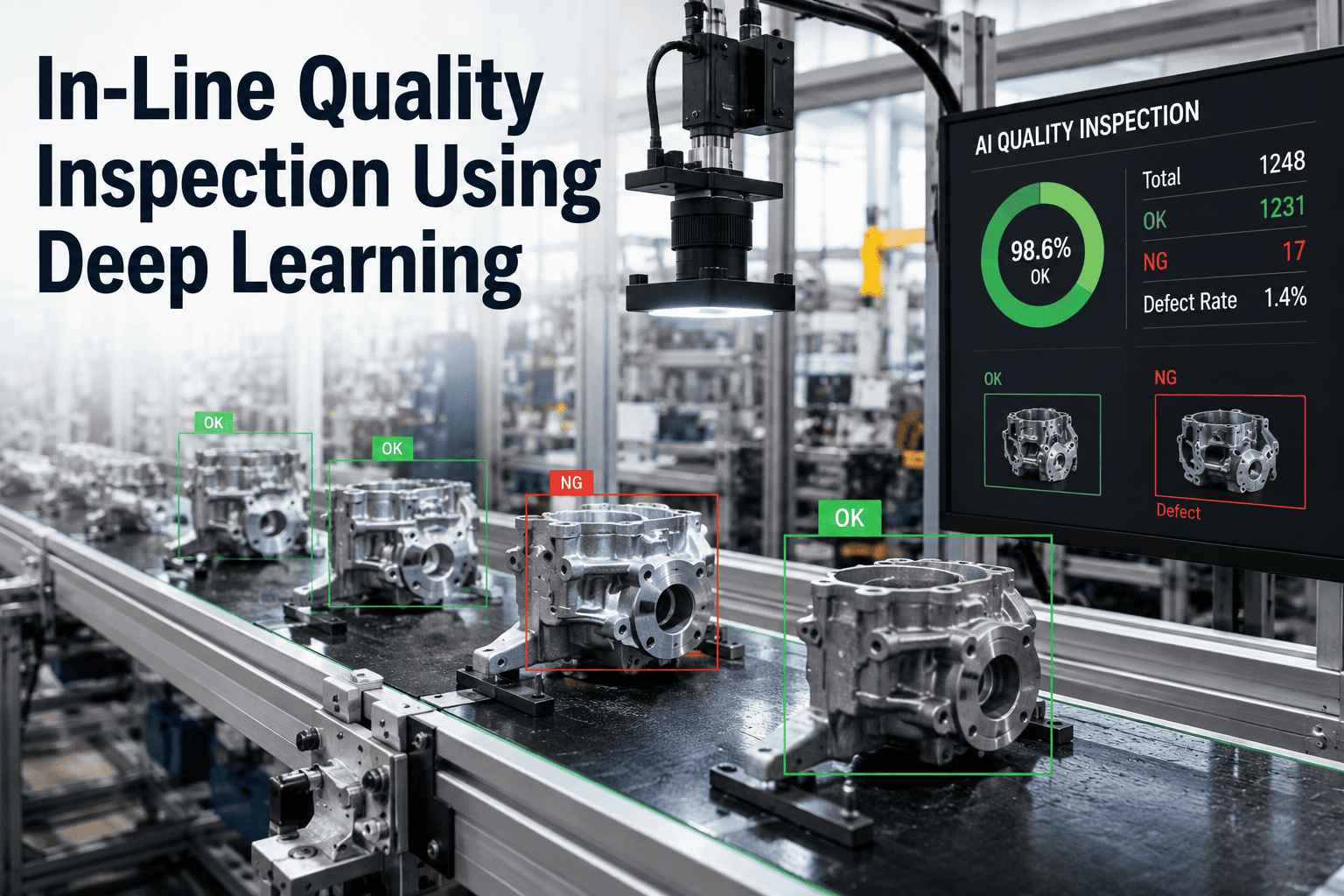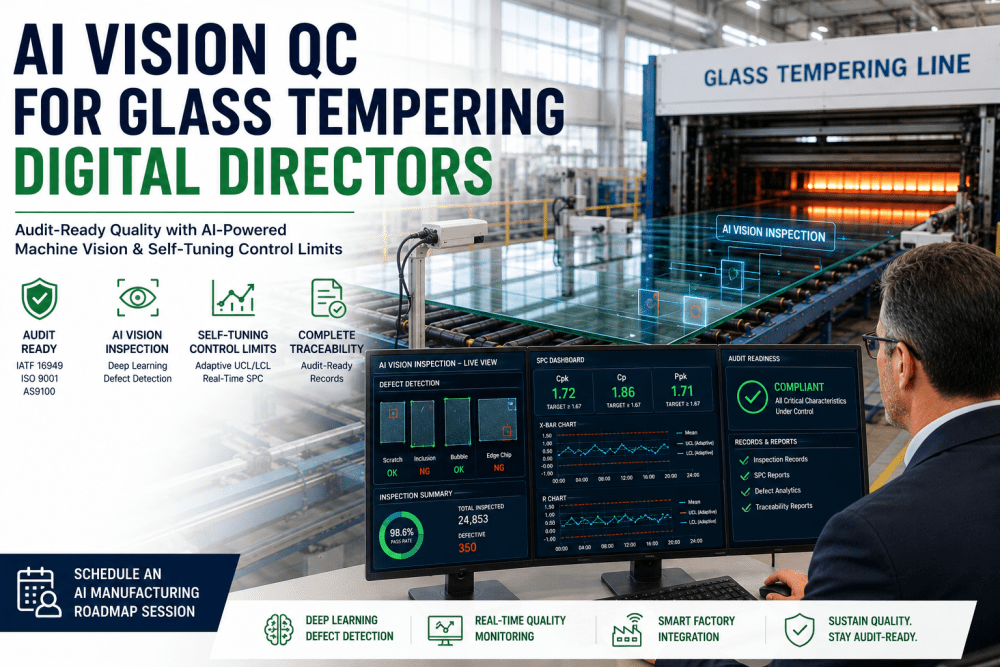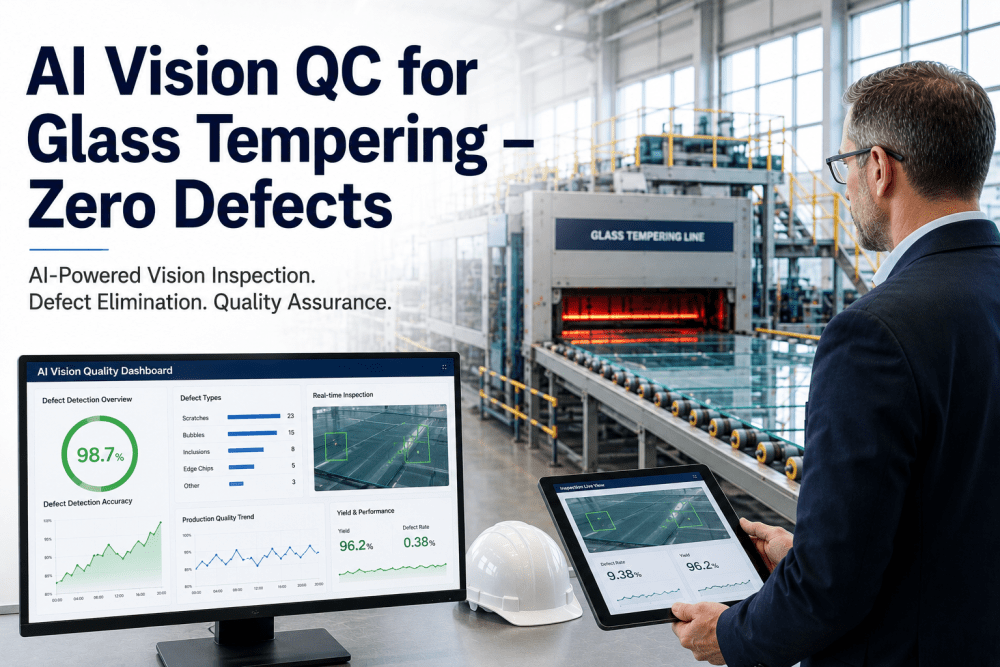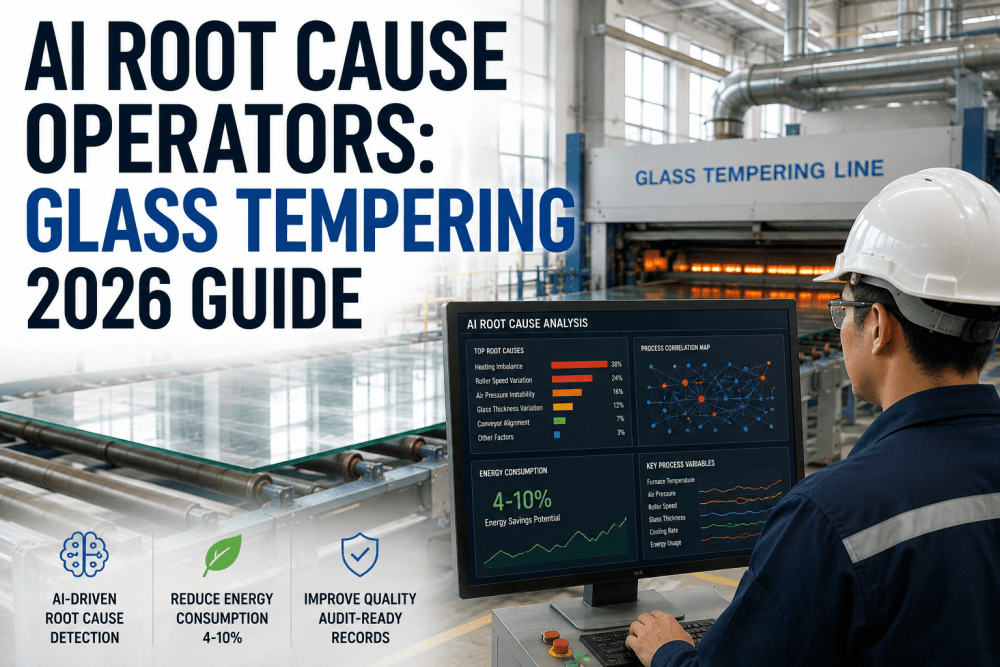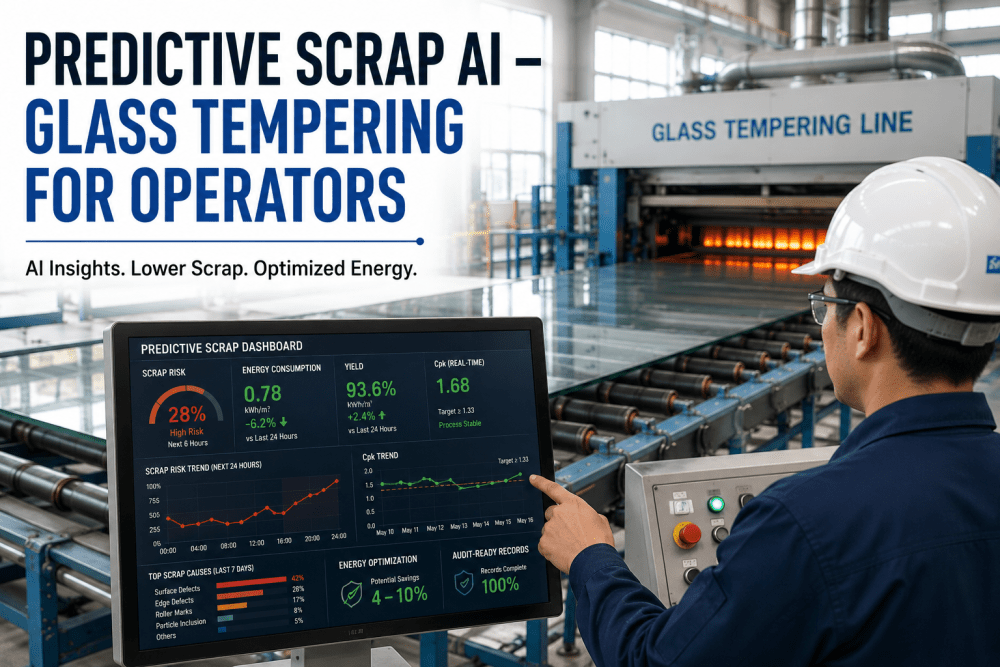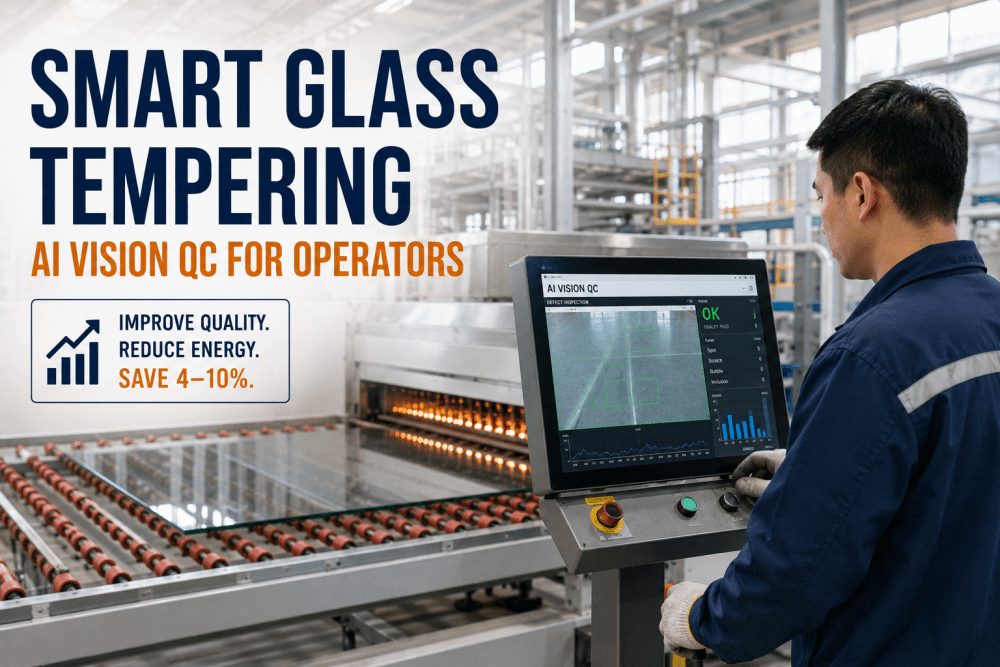
A mid-size architectural glass tempering facility producing 48,000 sq ft of tempered glass per shift deployed iFactory's AI vision quality platform across two tempering furnaces — connecting deep learning-based surface inspection with real-time SPC and furnace PLC controls — to give operators a unified view of defect trends, energy consumption, and process drift. Over a 10-week deployment, the AI vision system inspected 100% of production at line speed, detecting nickel sulfide inclusions, roller-wave distortion, edge chips, and surface scratches at 98.5% accuracy while reducing the furnace's specific energy consumption by 6.8 kWh per ton through AI-recommended temperature and dwell adjustments. First-pass yield improved from 89% to 96.3%, and false reject rate dropped by 40%. Plant operators evaluating AI vision quality for glass tempering Book a Demo to review how the platform brings real-time defect detection and energy optimization to the tempering line operator's console.
4–10% Energy Reduction — 98.5% Defect Detection — Real-Time SPC on the Line
iFactory's AI vision quality platform brings deep learning-based surface and defect inspection directly to the tempering line, enabling operators to reduce specific energy consumption, improve first-pass yield, and close the loop from defect detection to furnace parameter adjustment — without replacing existing inspection infrastructure.
Why Traditional Glass Inspection Falls Short on Energy and Quality
Glass tempering operators face a persistent trade-off: run the furnace hot and slow for maximum quality, or push throughput and accept higher reject rates. Traditional machine vision systems using fixed threshold-based inspection miss subtle defects — nickel sulfide inclusions below 50 microns, early-stage roller wave, or edge damage from worn tongs — while flagging acceptable cosmetic variations as rejects. Meanwhile, furnace energy consumption drifts as burner efficiency, ambient temperature, and glass throughput change across shifts. Without real-time defect data linked to energy KPIs, operators cannot identify the optimal operating point that minimizes both rejects and energy per ton. iFactory's AI vision quality platform closes this gap by giving operators a unified dashboard that correlates every defect classification with the furnace parameters that produced it. Book a Demo to review how the platform maps defect types to specific process variables in your tempering line.
Invisible Process Drift
Burner efficiency, ambient conditions, and throughput variations shift the furnace's optimal temperature profile across shifts. Operators lack real-time defect data to detect drift before it produces a reject batch — costing 4–8% in unnecessary energy spend.
Manual Inspection Bottlenecks
Offline visual inspection samples less than 2% of production and takes 15–20 minutes per batch. By the time a defect is confirmed, the furnace has already produced 30–40 additional sheets with the same process deviation.
Siloed Quality Data
Inspection results live on one system, furnace PLC data on another, and SPC charts on a third. Operators waste shift time toggling between screens instead of correlating defect patterns with process variables in a single view.
Three-Module AI Vision Architecture for the Tempering Line
The platform deploys three integrated modules that operate in sequence: AI Vision Inspection for real-time surface and subsurface defect detection, SPC Engine for statistical process control and trend analysis, and Energy Optimizer that correlates defect data with furnace parameters to recommend process adjustments. Together they form a closed-loop quality management system that operators manage from a single console.
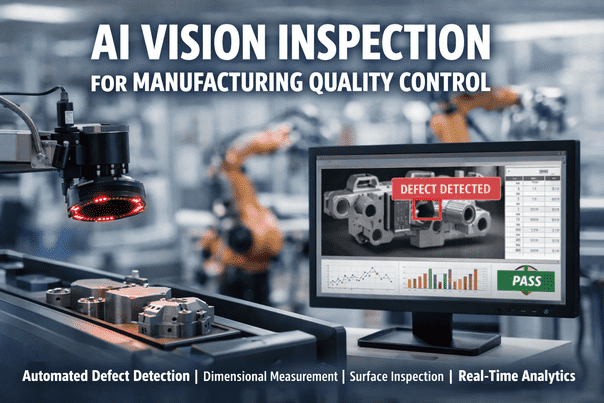
Deep Learning Defect Detection — A multi-camera array captures transmitted and reflected light images at full line speed. The AI model — trained on 280,000+ tempered glass samples — classifies defects into 12 categories including nickel sulfide inclusions, roller wave, edge chips, surface scratches, and distortion. Each detection is timestamped and mapped to the glass sheet's unique ID, enabling traceability from furnace entry to finished pallet. The model achieves 98.5% detection accuracy with a false positive rate below 2.3%, processing each sheet in under 100 ms and allowing 100% inline inspection without slowing the tempering line.
Real-Time SPC Integration — Every defect classification feeds directly into the SPC engine, which updates X-bar and R charts, Cpk calculations, and p-charts for each defect category in real time. Control limit violations trigger color-coded alerts on the operator console and can be routed to PLC outputs for automated furnace adjustment. The SPC engine maintains a historical database indexed by shift, product SKU, and furnace zone, enabling operators to identify recurring defect patterns and correlate them with specific process conditions — burner temperature, quench pressure, or roller condition — without leaving the console.
AI-Driven Energy Optimization — The energy optimizer module reads furnace PLC tags — zone temperatures, dwell time, quench air pressure, and throughput rate — and correlates them with the AI vision defect stream. A regression model identifies the minimum energy operating point that stays within acceptable defect rate boundaries for each product type. When the model detects energy drift without quality degradation, it recommends temperature or dwell adjustments to the operator. During the deployment, these recommendations reduced specific energy consumption by 6.8 kWh per ton while maintaining defect rates below the established control limits.
What Operators Gain from AI Vision Quality on the Tempering Line
Energy Optimization
AI-recommended temperature and dwell adjustments reduce specific energy consumption by 4–10% without compromising quality. Operators see real-time kWh per ton alongside defect rate on a single dashboard, enabling data-driven decisions that lower the plant's energy cost per square foot.
First-Pass Yield Improvement
Real-time defect feedback closes the loop between inspection and furnace control. Operators detect process drift within minutes instead of hours, reducing reject batches and improving first-pass yield from typical 88–91% ranges to 95%+ within weeks of deployment.
Operator Empowerment
A single console replaces the traditional multi-screen workflow. Operators see live defect classifications, SPC charts, furnace parameters, and energy consumption on one interface with color-coded alerts that guide corrective action — reducing decision latency from 20+ minutes to under 60 seconds.
Compliance Readiness
Every inspection event, SPC alert, and furnace parameter change is logged with timestamps and operator context. The platform generates ASTM C1048 and EN 12150 compliance reports on demand, reducing audit preparation time from days to minutes.
Traditional Machine Vision vs. AI Vision Quality for Glass Tempering
The table below compares how traditional threshold-based machine vision systems and deep learning AI vision platforms perform across the criteria that matter most to tempering line operators.
| Capability | Traditional Machine Vision | AI Vision Quality Platform |
|---|---|---|
| Defect Detection Method | Fixed pixel threshold and edge-detection rules | Deep learning CNN trained on 280K+ labeled samples |
| Nickel Sulfide Inclusion Detection | < 40% — misses sub-100 micron inclusions | 92% at 50 micron threshold |
| False Reject Rate | 12–18% — flags cosmetic variations as defects | < 2.3% — distinguishes cosmetic from structural |
| Energy Data Correlation | Not available — separate system | Built-in — correlates defect rate with kWh per ton in real time |
| SPC Integration | Manual data entry or separate software | Automatic — every defect updates X-bar, R, p-charts in real time |
| Operator Console | 3–4 separate screens across different systems | Single dashboard with defect, SPC, energy, and PLC data |
| Inspection Coverage | Spot-check — < 5% of production | 100% inline at full line speed |
| Defect-to-Adjustment Latency | 20–40 minutes — offline sample and analysis | < 60 seconds — real-time display and PLC alert |
I have spent 19 years in glass manufacturing — starting as a tempering line operator in northern Ohio, then moving through quality supervision, and for the last 8 years managing process engineering for a Tier-1 architectural glass producer. When our plant leadership proposed deploying AI vision on the tempering line, my concern was whether the system could handle the real-world variability of a production floor — thermal gradients, glass thickness changes, and the dust and vibration of a 24/7 operation. What I did not expect was how quickly the platform changed how our operators think about quality. Within two weeks, our lead operator was using the AI defect overlay to spot a developing roller-wave pattern that correlated with a gradual furnace temperature drift of 4 °C — a deviation our thermocouple array had not flagged because each individual zone was within tolerance. She corrected it before it produced a single reject sheet. Over the next month, the energy optimizer suggested a 7 °C reduction in the heating zone setpoint during low-throughput periods that cut our natural gas consumption by 8.3% without affecting the defect rate. For operators considering AI vision on their line, the key takeaway is that this platform does not replace your expertise — it gives you a tool to see what was invisible before, and it closes the loop from detection to correction in seconds instead of shifts.
10-Week Deployment: From Camera Calibration to Closed-Loop Optimization
The deployment follows a structured four-phase methodology designed for brownfield glass tempering facilities. Each phase includes documented validation checkpoints and operator training sessions.
Line Assessment & Camera Calibration
Map the tempering line layout, install multi-camera inspection array, calibrate lighting and optics for each glass thickness range. Validate image capture at full line speed. Duration: 2 weeks.
Model Training & Defect Library
Collect production samples across defect types, train the AI model on your glass grades. Establish baseline defect rate, false positive threshold, and SPC control limits. Duration: 3 weeks.
SPC & Energy Integration
Connect the AI vision engine to furnace PLC tags, configure SPC dashboards and alert rules, deploy the operator console on the line. Validate end-to-end defect-to-alert latency. Duration: 3 weeks.
Closed-Loop Go-Live
Enable AI-recommended furnace adjustments on a single shift, monitor defect rate and energy consumption, calibrate the energy optimizer model. Expand to full 24/7 operation after 14-day acceptance. Duration: 2 weeks.
AI Vision Quality Delivers Measurable Energy and Yield Improvements for Glass Tempering Operators
This 10-week deployment demonstrated that a deep learning AI vision quality platform can reduce specific energy consumption by 4–10%, improve first-pass yield from 89% to 96.3%, and cut false reject rates by 40% — all while giving tempering line operators a unified console that replaces four separate systems. The platform integrates with existing furnace PLCs, requires no line speed reduction for 100% inline inspection, and generates the SPC and compliance documentation that quality audits demand. Operators evaluating AI vision quality for glass tempering operations Book a Demo to review the complete deployment dataset, including energy reduction benchmarks, defect detection accuracy by glass type, and projected ROI for your facility's specific line configuration and product mix.
Assess Your Tempering Line's AI Vision Readiness — Free Assessment
iFactory's AI vision quality platform brings deep learning defect detection, real-time SPC, and energy optimization to glass tempering operations — giving operators a single console to reduce energy consumption, improve first-pass yield, and close the loop from defect detection to furnace adjustment. Schedule a personalized review of this deployment's complete benchmark data, including defect detection accuracy by glass type, energy reduction projections, and ROI model tailored to your line configuration.
AI Vision Quality for Glass Tempering — Frequently Asked Questions
Yes. The AI vision inspection module processes each glass sheet in under 100 ms using a multi-camera array with transmitted and reflected light imaging. The deep learning model detects nickel sulfide inclusions at 50 micron threshold with 92% accuracy, distinguishing them from dust, bubbles, and other benign artifacts. The system operates at full tempering line speed without requiring any reduction in throughput, and the defect detection latency from image capture to operator console display is under 200 ms.
The platform reads furnace PLC tags — zone temperatures, dwell time, quench pressure, throughput rate — through native OPC UA and Modbus TCP connectors that require no PLC-side code changes. The read-only connection respects the existing safety architecture, and all data flows from the PLC to the AI platform without writing to control logic. For plants using Allen-Bradley, Siemens, or Mitsubishi PLCs, the discovery connector automatically maps available tags and their data types during commissioning, reducing integration time to approximately two days.
By default, the energy optimizer operates in recommendation mode — displaying suggested temperature and dwell adjustments on the operator console with the expected impact on both energy consumption and defect rate. Operators review the recommendation and apply it with a single confirmation. The platform can be configured for closed-loop operation where approved recommendations are applied automatically within defined safety limits, but most facilities begin in recommendation mode to build operator confidence in the AI model's suggestions.
The platform is designed for shop-floor operators with no data science or machine learning background. The console presents defect classifications, SPC charts, and energy data in a visual format with color-coded alerts and plain-language recommendations. Training consists of two 4-hour sessions during the deployment's calibration phase, covering console navigation, alert response procedures, and how to interpret AI recommendations. Most operators are independently managing all console functions by the end of the first week after go-live.
The AI model is trained across multiple glass thicknesses, coating types, and product formats. When a product changeover occurs — detected via PLC signal or operator input — the platform automatically loads the corresponding defect detection profile, SPC control limits, and energy optimization parameters for that product. The camera lighting and focus adjust dynamically based on glass thickness. During the deployment, the platform handled changeovers between 3 mm, 5 mm, 6 mm, and 10 mm architectural glass grades with no operator intervention required for the vision system. Book a Demo to review the platform configured for your specific product mix.