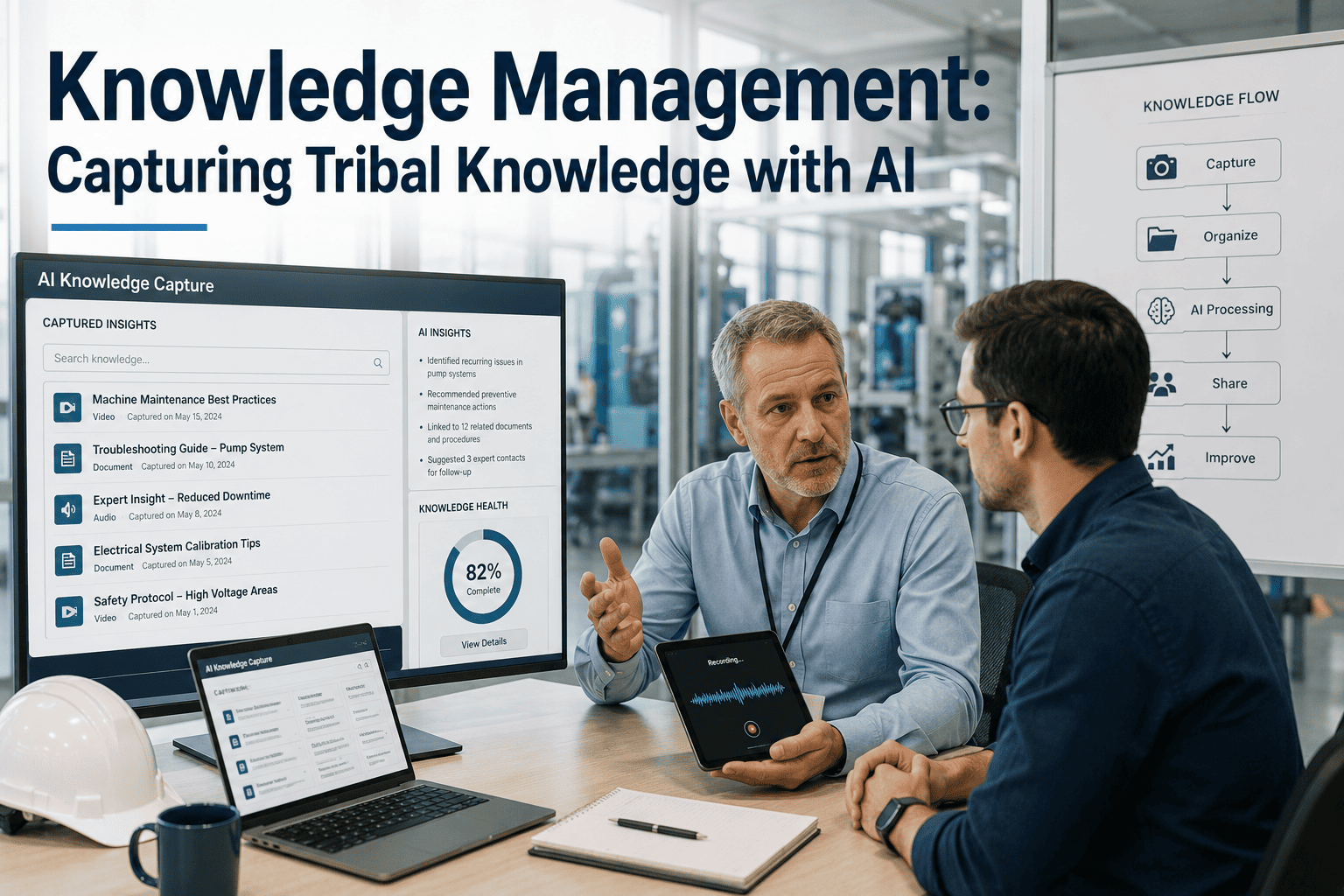
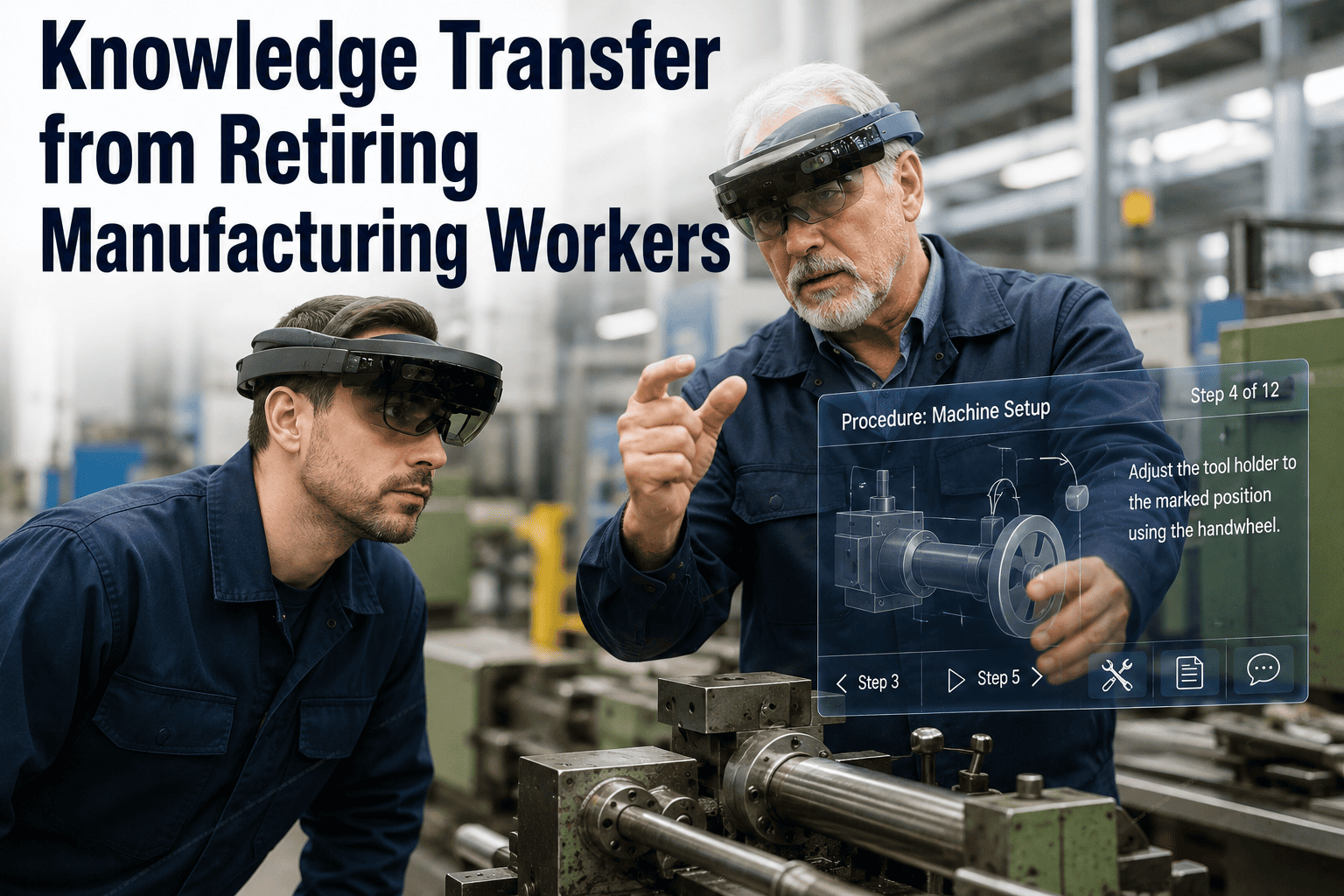
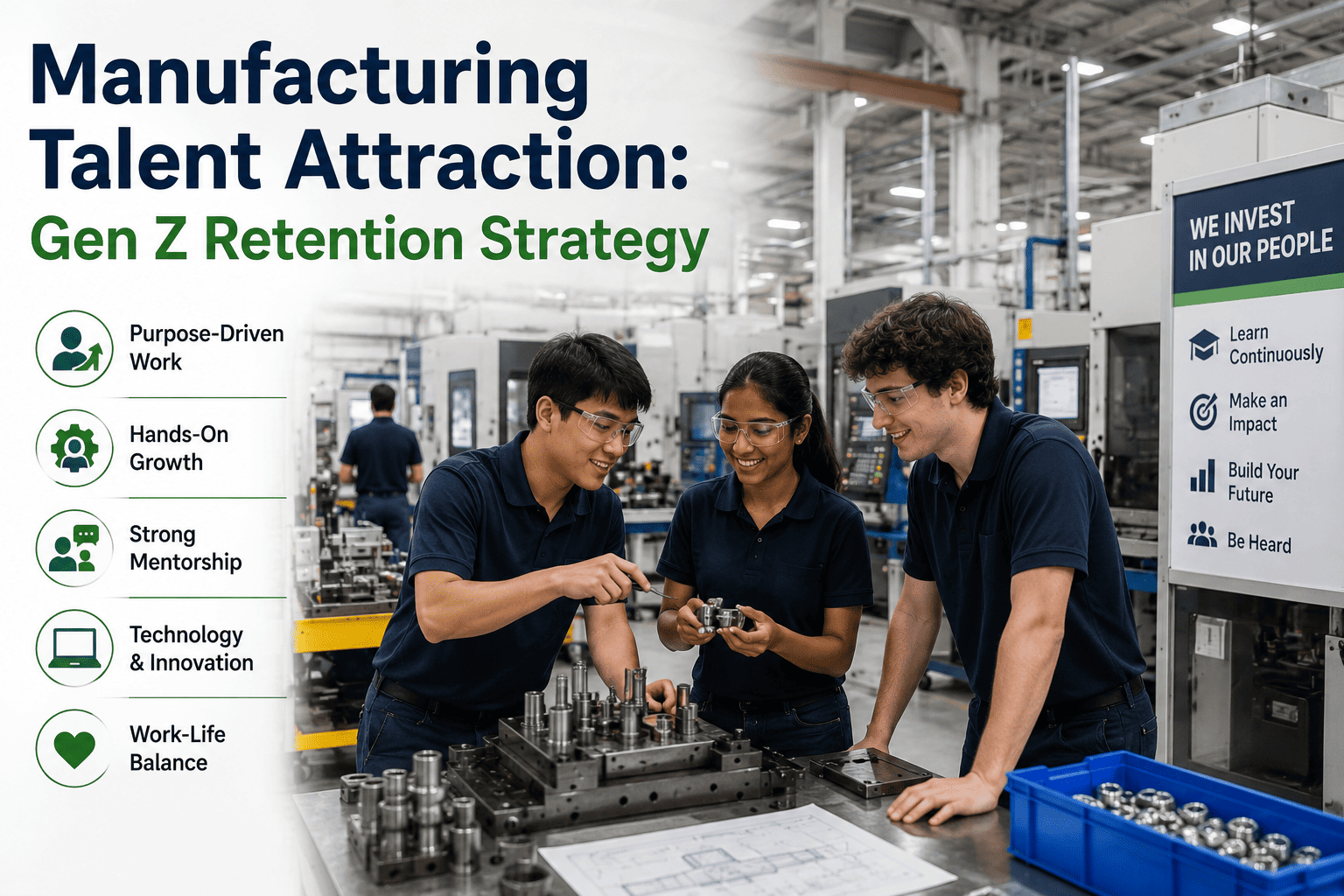
When a senior operator retires after thirty years on the floor, they rarely hand over a manual — they walk out with a mental map of every quirk and early warning sign the plant has ever thrown at them. That map was never written down, because writing it down was never part of the job. Manufacturing teams call this tribal knowledge, and it disappears the moment the person carrying it clocks out for the last time, while new hires get far less hands-on time to absorb what used to pass naturally from shift to shift. AI-based knowledge capture closes that gap before it opens, and you can book a demo to see it work against your own plant's workflows.
WORKFORCE & EHS · KNOWLEDGE CONTINUITY · AI CAPTURE
The Person Who Knows Why the Line Really Stops Is Retiring — Capture What's In Their Head Before They Walk Out
iFactory's AI knowledge platform listens to the decisions and troubleshooting calls your best operators make every shift, then turns them into a searchable knowledge base the next generation can actually use.
25%
Of Skilled Trades Eligible to Retire Within a Decade
1 in 3
Work Orders Resolved By a Single Go-To Person
0 Days
Notice Given Before a Key Employee Leaves
THE RETIREMENT CLIFF
Why Every Plant Manager Should Be Watching the Next Five Years of Retirements Closely
The knowledge risk on your floor rarely shows up as one dramatic event. It shows up as small delays and repeated problems that only get solved quickly when one particular person is on shift. The rows below show how that risk builds quietly into a real liability.
01
A Quarter of the Skilled Workforce Is Nearing Retirement
A large share of the most experienced technicians, operators, and process engineers are within striking distance of retirement, often with no formal successor identified.
02
One-Third of Fixes Depend on a Single Go-To Person
When a nonstandard fault appears, most plants funnel the problem to the same handful of veteran troubleshooters, because nobody else has seen the pattern often enough to recognize it.
03
Shifts Lose Real Time Waiting on the Right Answer
Line stoppages and quality holds routinely stretch longer than necessary while a technician waits on a call back from the one veteran who has seen this exact fault before.
04
Departures Rarely Come With Advance Warning
Resignations and sudden retirements often leave little runway for a structured handover, so whatever knowledge wasn't already captured simply leaves with the person.
TWO KINDS OF KNOWLEDGE
Explicit Knowledge Lives in Manuals — Tacit Knowledge Lives in People
Every plant already has a library of SOPs, drawings, and manuals, and none of that is at risk of disappearing. The real exposure sits in the tacit knowledge that never made it onto paper because it felt too obvious or too hard to put into words.
WHAT'S ALREADY WRITTEN DOWN
Standard operating procedures for routine startup and shutdown sequences
Equipment manuals, P&IDs, and OEM maintenance schedules
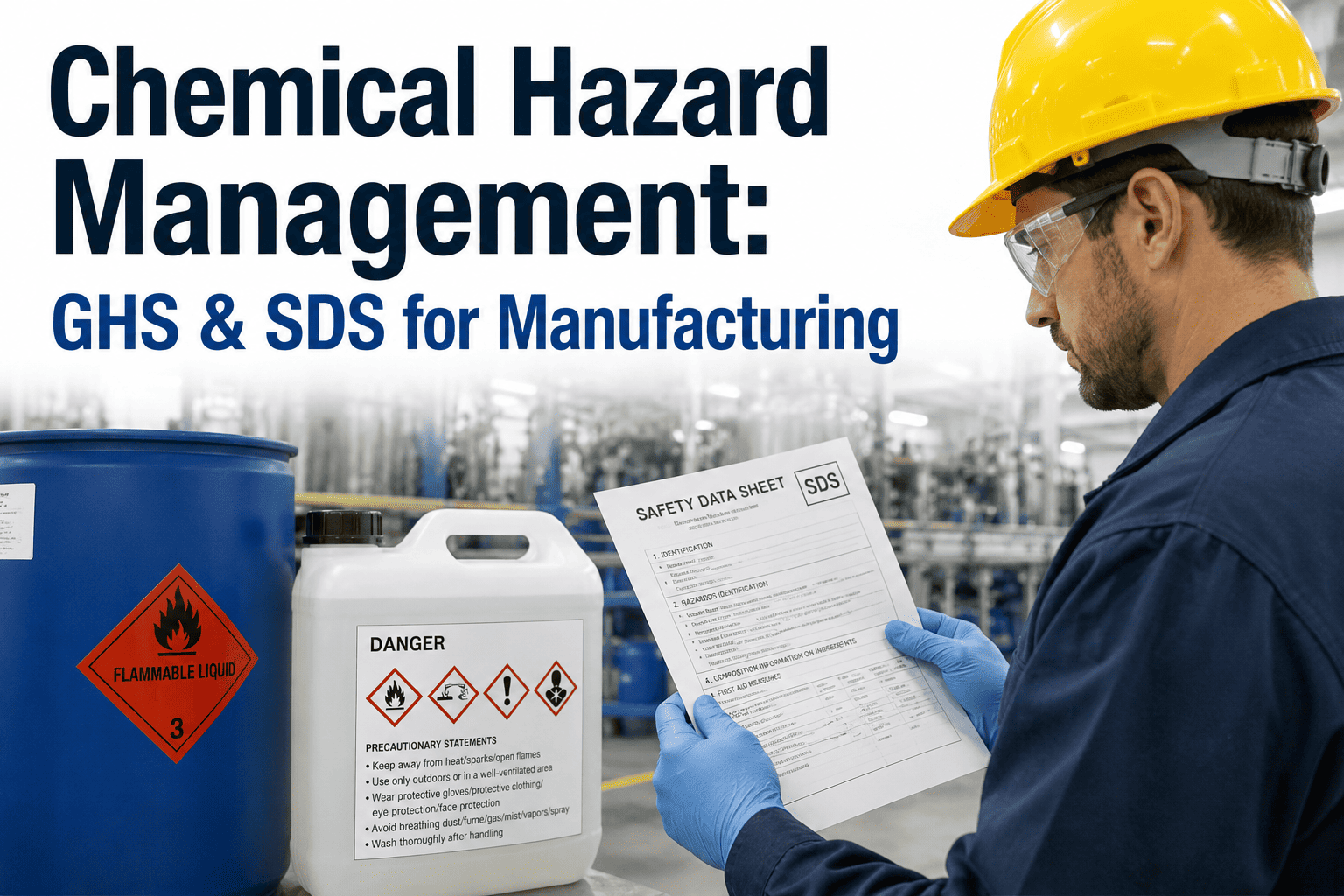
Formal safety permits, lockout-tagout steps, and compliance checklists
Quality specifications and approved recipe or setpoint ranges
WHAT ONLY LIVES IN THEIR HEAD
The specific sound or vibration that means a bearing has days, not weeks, left
Which valve to nudge first when two alarms fire at the same time
Seasonal adjustments learned only after a few winters of trial and error
The unofficial workaround for a design flaw the OEM never fixed
WHERE IT'S HIDING
Five Everyday Workflows Where Tribal Knowledge Quietly Piles Up Unrecorded
Tribal knowledge is not locked away somewhere hard to reach. It is scattered across the ordinary tools your team already uses, buried in free-text fields nobody reviews after the shift ends.
Shift Handover Notes
The context an outgoing operator gives verbally, explaining why a setpoint was nudged or a unit was left running slightly off-spec overnight.
Maintenance Work Order Comments
Free-text fields where a technician briefly notes what fixed the fault, phrased in shorthand only the writer fully understands.
Control Room Radio and Chat
Real-time troubleshooting conversations that resolve a problem in minutes but are never written down afterward.
Near-Miss and Incident Reports
Safety observations that describe a hazard and a fix but rarely get connected to similar near-misses recorded elsewhere.
Informal Mentoring Walks
The unscheduled walk-throughs where a veteran points out a quirky valve to a newer hire, with no record left behind.
Every Retirement Announcement Should Trigger a Knowledge Capture Plan, Not a Scramble
iFactory's AI platform starts listening to your plant's existing workflows today, so the knowledge your veterans carry is already structured and searchable before their last day on the floor.
HOW IT WORKS
Five Stages That Turn Scattered Know-How Into a Living Plant Knowledge Base
iFactory does not ask veterans to sit down and write a manual, the exact task most knowledge programs fail on. Instead, it captures knowledge as a byproduct of work already happening across the plant.
1
Listen Across Existing Workflows
The platform ingests work order comments, shift logs, and troubleshooting chat directly from systems your team already uses, without adding a new tool to learn.
2
Structure the Raw Language
Natural language processing extracts the decision, symptom, and fix from informal text, converting shorthand notes into a consistent format tied to the asset.
3
Connect Related Events Automatically
A knowledge graph links similar faults, fixes, and near-misses across assets, shifts, and sister plants, surfacing patterns no single person would notice alone.
4
Surface Answers Where Work Happens
When a technician opens a work order or an alarm fires, the platform surfaces the closest matching past fix, right inside the tools the crew already uses.
5
Reinforce and Retire Outdated Knowledge
Every suggested fix is rated by the technician who used it, so accurate knowledge gets reinforced while outdated workarounds get flagged and phased out.
BEFORE AND AFTER
What Changes on the Floor Once Tacit Knowledge Becomes Searchable
The table below lays out the same recurring plant situations under two conditions: knowledge still living only in a veteran's memory, and knowledge already captured and structured by iFactory.
| Plant Situation |
Knowledge Only In Memory |
Knowledge Captured by AI |
| New Operator Faces an Unfamiliar Fault |
Waits for a call back from the one veteran who has seen it |
Finds the matching past fix in the work order interface immediately |
| Veteran Announces Retirement |
Rushed handover documents written in the final weeks, if at all |
Years of decisions already captured and searchable before the exit date |
| Seasonal Startup Procedure |
Relearned by trial and error each year by whoever is on shift |
Prior seasonal adjustments surfaced automatically ahead of startup |
| Recurring Near-Miss Pattern |
Each incident treated as isolated, pattern never connected |
Knowledge graph links related near-misses across shifts and sites |
| Cross-Site Knowledge Sharing |
Best practices stay trapped at the plant where they were learned |
Fixes and workarounds propagate automatically to sister facilities |
REAL PLANT SCENARIOS
Four Situations Where Captured Knowledge Prevents a Repeat
These are the moments plant managers describe most often when asked where tribal knowledge loss actually costs time, quality, or safety margin.
The Bearing Failure Nobody Else Could Hear Coming
A veteran technician could identify a failing bearing days early just from its sound, a skill never written into any procedure or understood by anyone else on the crew.
Captured notes tied to vibration and sound descriptions now flag the same early pattern for any technician, regardless of who is on shift.
The Startup Sequence That Only Worked in Winter
A cold-weather startup adjustment existed only in one operator's memory, and every winter without that person on shift meant relearning it by trial and error.
The seasonal adjustment now surfaces automatically ahead of every cold-weather startup, pulled from years of past shift notes rather than memory.
The Near-Miss Pattern Spread Across Three Shifts
Three separate near-miss reports describing the same hazard were filed months apart by different crews and never connected to one another.
The knowledge graph links related near-miss language automatically, so the pattern surfaces early instead of going unnoticed until a real incident.
The Recipe Tweak That Fixed a Quality Complaint
A minor setpoint adjustment that resolved a recurring quality complaint was known only to the shift that found it, and other shifts kept reintroducing the defect.
The fix is now attached to the relevant product record, so every shift sees the same guidance the moment the issue reappears.
GETTING ADOPTION RIGHT
Four Concerns Plant Managers Raise Before AI Knowledge Rollout
Introducing a knowledge platform touches how people work and are perceived by peers, so it deserves the same careful rollout as any safety change.
Veterans Feel Reluctant to Share What They Know
Experienced operators sometimes worry that documenting their know-how makes them replaceable, or that their expertise won't be credited once it's captured.
iFactory captures knowledge passively from existing workflows rather than requiring write-ups, and attributes each captured fix to the person who provided it.
Capture Adds Extra Steps to an Already Busy Shift
Any tool that asks technicians to log detailed notes during a live troubleshooting event competes directly with getting the line back up fast.
The platform extracts knowledge from notes technicians are already entering as part of normal work order and shift log processes, adding no new step.
Telling Current Knowledge From Outdated Habits
Not every workaround a veteran relies on is still valid, and surfacing unsafe shortcuts alongside good ones would undermine trust in the system.
Every surfaced fix carries a confidence rating built from how often it was rated useful by technicians who applied it, so outdated guidance fades naturally.
Keeping the Knowledge Base Current Over Time
A knowledge base that is accurate on day one but never updated slowly becomes as unreliable as no knowledge base at all.
Because capture runs continuously against live plant data rather than a one-time project, the knowledge base keeps refreshing itself with every shift.
FREQUENTLY ASKED QUESTIONS
Questions Plant Managers Ask About Capturing Tribal Knowledge With AI
Do our operators need to change how they log work orders or shift notes for this to work?
No, and that is a deliberate design choice. The platform reads the free-text fields and logs your team already fills out as part of routine work order closure and shift handover. There is no new form to fill in and no separate documentation task added to anyone's day. Operators keep working as they do now, while structuring happens in the background.
Contact support to see which systems can feed the platform directly.
How does the platform know which past fix actually applies to a new problem?
The system builds a knowledge graph that links faults, symptoms, and fixes by asset type and the language used to describe the failure, rather than relying on exact keyword matches. When a similar symptom appears again, it ranks past resolutions by how closely they match and how often technicians confirmed them as the fix. This ranking gets sharper as more shifts confirm or correct the match.
Book a demo to see matching run against your own equipment history.
What happens to knowledge that was captured but turns out to be wrong or outdated?
Every fix surfaced to a technician includes a simple way to confirm it worked or flag that it didn't apply, and that feedback adjusts how often the item is suggested going forward. Knowledge that repeatedly gets rejected drops in visibility rather than being deleted, keeping a full audit trail for review. This means the system self-corrects continuously instead of relying on one person to clean it up.
Contact support to review how confidence scoring works for your plant.
Can this capture safety-related know-how, or is it only for maintenance troubleshooting?
Safety observations, near-miss reports, and informal hazard callouts are treated the same way as maintenance notes, since they follow the same pattern of detail buried in free text. The platform links related near-miss language across shifts and sites, so a pattern building toward a real incident becomes visible earlier rather than looking like unrelated one-off events. This makes capture as relevant to EHS teams as to maintenance.
Book a demo to walk through a safety-focused example.
How quickly can a plant start seeing useful captured knowledge after rollout?
Because the platform draws on historical work order and shift log data as well as new entries going forward, most plants see a meaningful base of structured knowledge within a few weeks of connecting their systems. The knowledge base then keeps expanding as new shifts and reports flow in, so value grows steadily rather than depending on one upfront effort.
Book a demo to get a realistic timeline for your plant.
The Knowledge Walking Out Your Door Next Year Is Still Capturable Today
iFactory's AI platform listens to the workflows your plant already runs, structures the tacit knowledge inside them, and keeps it accessible long after the person who created it has moved on.