Sustainable manufacturing analytics programs have moved from corporate sustainability checkboxes to core operational infrastructure — driven by tightening ESG compliance requirements, investor disclosure mandates, and the measurable cost advantage that flows from rigorous environmental performance tracking. Manufacturers facing CSRD reporting in Europe, SEC climate disclosure rules in the United States, and growing customer pressure for Scope 1, 2, and 3 emissions transparency now require continuous, auditable data on energy consumption, carbon emissions, water usage, and waste generation across every production line. Plants that deploy a structured sustainable manufacturing analytics program typically cut energy intensity by 12–25%, reduce scope 1 emissions by 15–30%, and shorten ESG report preparation from weeks of manual spreadsheet work to automated quarterly disclosures. Manufacturers that book a demo with iFactory consistently discover that 30–40% of their ESG data was previously estimated rather than measured — and that automated capture reveals both compliance gaps and immediate cost reduction opportunities.
Turn ESG Compliance Into Measurable Cost Reduction
iFactory's Energy & Sustainability Tracking platform captures emissions, energy, water, and waste data automatically — turning ESG reporting into a real-time operational discipline.
Why ESG Compliance Has Become an Operational Imperative
The regulatory landscape around manufacturing sustainability has shifted from voluntary disclosure to mandatory, audited reporting in less than five years. Manufacturers selling into European markets now face CSRD (Corporate Sustainability Reporting Directive) requirements with double materiality assessments. U.S. public companies are working through SEC climate disclosure rules requiring quantified Scope 1 and Scope 2 emissions data. Major OEMs in automotive, electronics, and consumer goods now require Scope 3 emissions data from their tier-one suppliers — pushing the compliance burden upstream into mid-sized manufacturers who historically had no formal ESG infrastructure. The plants that respond fastest are those with sustainable manufacturing analytics already in place; the rest face costly retrofits to instrumentation and data architecture under regulatory deadline pressure.
Regulatory Pressure
CSRD, SEC climate disclosure, and California SB 253/261 are converting voluntary ESG reporting into legally enforceable disclosure with auditor sign-off requirements.
Investor Demand
Institutional investors now screen capital allocation through ESG ratings, with quantitative sustainability performance directly affecting cost of capital and access to green financing.
Customer Requirements
Major OEMs increasingly require Scope 3 emissions data from suppliers, with verified sustainability performance becoming a precondition for inclusion in supplier scorecards.
Cost of Energy
Energy is now the largest controllable operating cost in most manufacturing plants. Sustainability analytics that reduce consumption deliver immediate, measurable operating margin improvement.
The Four Data Pillars of Sustainable Manufacturing Analytics
A credible sustainable manufacturing analytics program rests on four data pillars that together cover the environmental dimensions of every major ESG framework — including GRI, SASB, TCFD, and the ISSB standards now consolidating global disclosure. Each pillar requires continuous, machine-level measurement rather than facility-level estimation; aggregate utility bills cannot support the granularity that auditors and customers now demand. Operations leaders who book a demo with iFactory see how the four pillars connect into a single, auditable data layer.
Energy
Sub-metered electricity, gas, steam, and compressed air consumption captured per asset, per shift, per product run.
Emissions
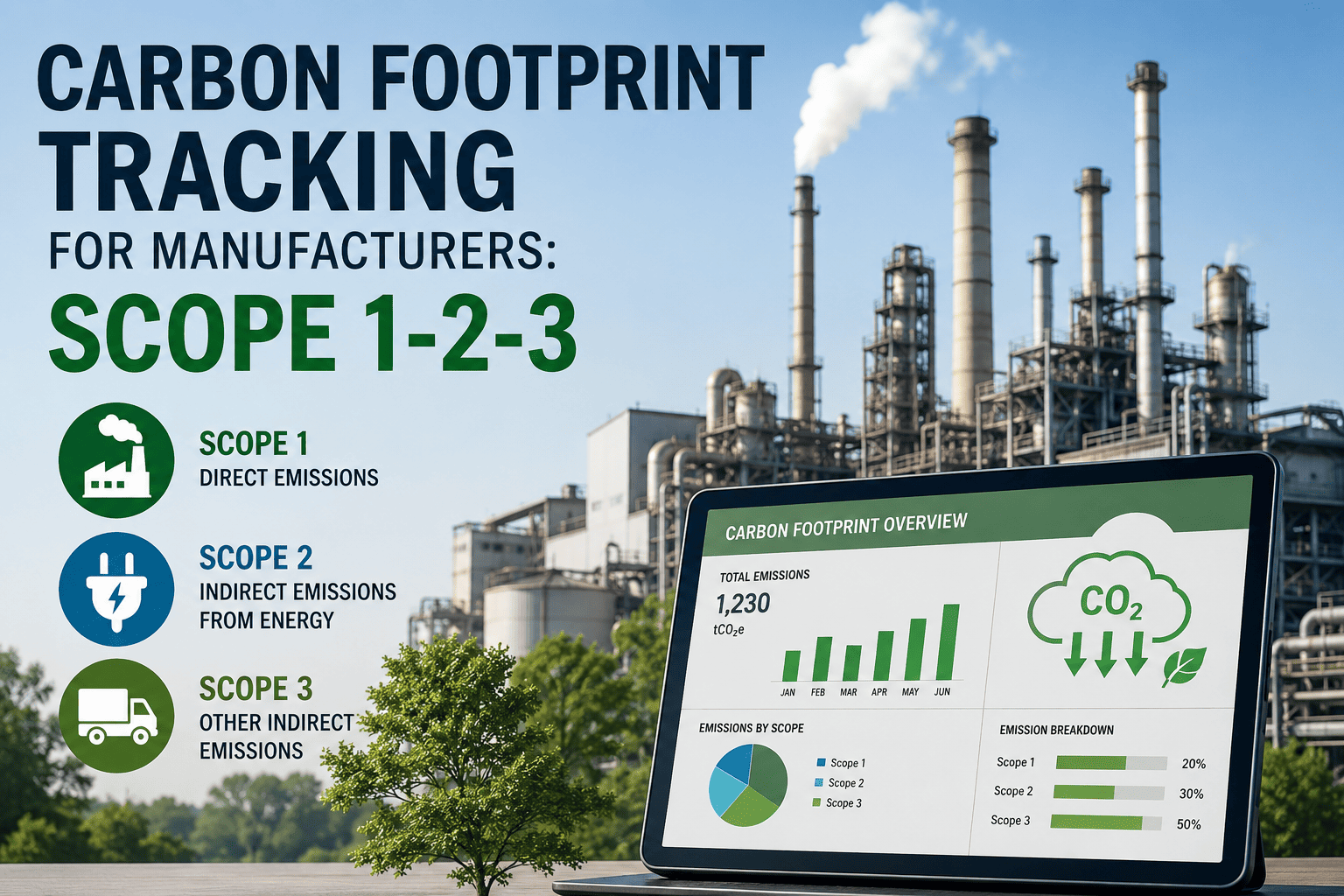
Scope 1 direct emissions, Scope 2 electricity-derived emissions, and Scope 3 supplier and logistics emissions computed from operational data.
Water
Process water, cooling water, and effluent volumes tracked per production line, with quality parameters monitored at discharge points.
Waste
Process scrap, packaging waste, and hazardous waste streams categorized, weighed, and tracked from generation through final disposition.
Six High-Impact Analytics Capabilities for ESG-Driven Manufacturing
A sustainable manufacturing analytics program delivers ESG compliance and operating margin improvement simultaneously when it implements the right capabilities in the right sequence. The six capabilities below — proven across manufacturers building toward CSRD and SEC-compliant disclosure — form the operational backbone of a defensible, audit-ready sustainability program.
Asset-Level Energy Sub-Metering
Install sub-meters on major energy consumers — compressors, chillers, ovens, motors above 50kW — and stream consumption into a central analytics layer. Asset-level data is the foundation of every other sustainability capability and exposes 10–20% of energy spend as immediately addressable waste.
Automated Carbon Accounting
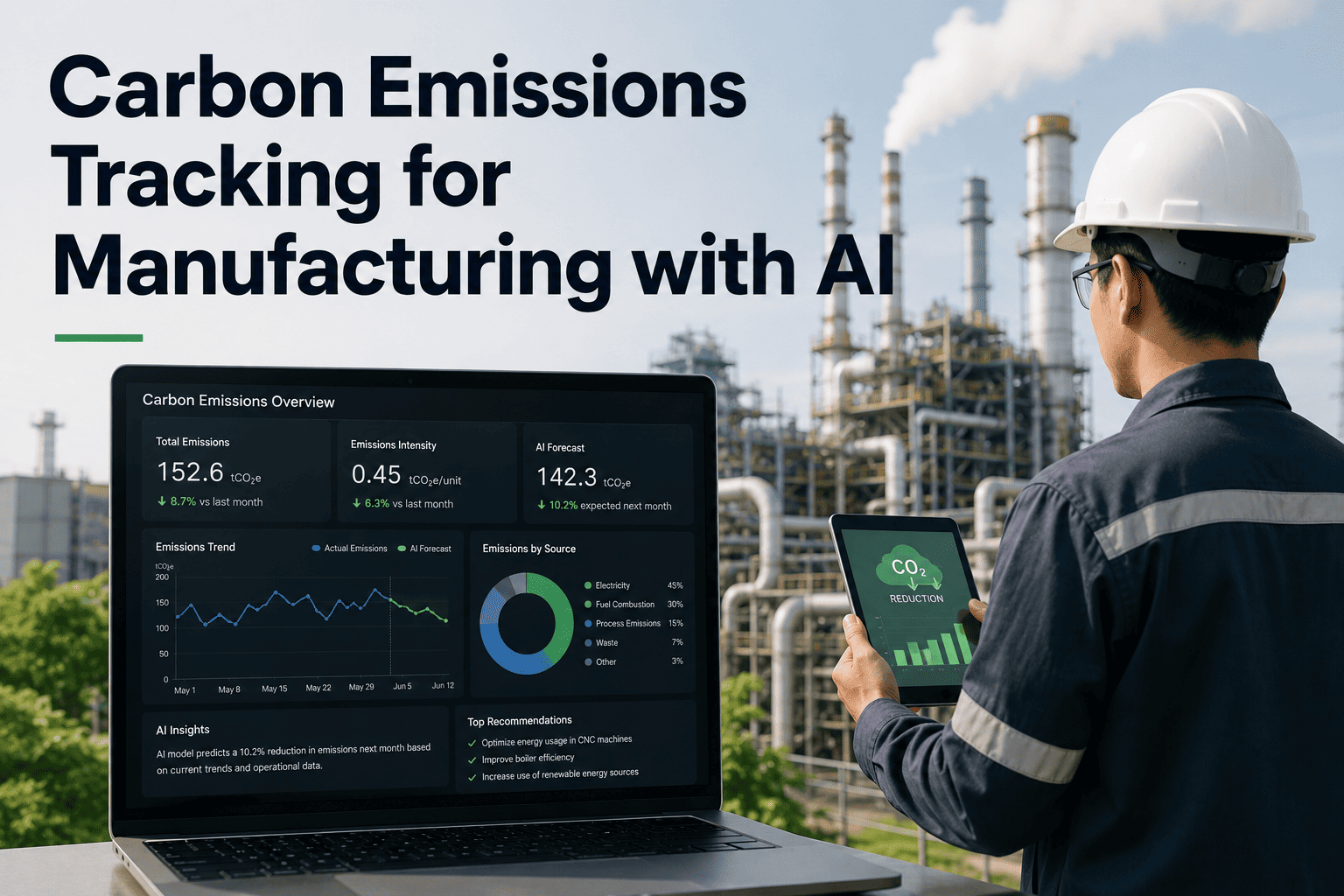
Convert operational data into Scope 1, 2, and 3 emissions automatically using GHG Protocol-aligned emission factors. Eliminates the spreadsheet-based reconciliation that consumes weeks per reporting cycle and exposes the team to audit findings.
Production-Normalized Intensity Metrics
Track energy, emissions, water, and waste per unit of production rather than absolute volumes. Intensity metrics expose the true efficiency picture and align cleanly with ESG framework reporting requirements for energy intensity and emissions intensity.
Compressed Air & Steam Loss Analytics
Compressed air and steam are the highest-cost energy carriers and typically the most wasted, with 20–35% lost to leaks and inefficient end-use. Continuous monitoring with automated leak detection routinely returns multi-hundred-thousand-dollar annual savings.
Waste Stream Categorization & Tracking
Categorize every waste stream by type, hazard class, and disposition path. Drives circular economy progress, supports zero-waste-to-landfill commitments, and produces the granular waste data required under most ESG frameworks.
Automated ESG Reporting Workflows
Convert operational data into framework-aligned disclosures — CSRD, GRI, SASB, CDP — through pre-built reporting templates with built-in audit trails. Reduces reporting effort from weeks to hours and eliminates the version-control chaos of manual reporting cycles.
Mapping Analytics Capabilities to ESG Framework Requirements
Different ESG frameworks emphasize different disclosures, but they share a common requirement for quantified, auditable operational data. The table below maps the most common manufacturing ESG disclosures to the analytics capabilities that produce defensible numbers. Teams that book a demo with iFactory walk through the live framework mapping during their first session.
| ESG Disclosure | Frameworks Required | Analytics Capability | Data Source |
|---|---|---|---|
| Scope 1 Emissions | CSRD, SEC, GHG Protocol, CDP | Automated carbon accounting | Fuel meters, process sensors |
| Scope 2 Emissions | CSRD, SEC, GHG Protocol, CDP | Energy sub-metering + grid factors | Electricity sub-meters |
| Scope 3 Emissions | CSRD, GHG Protocol, CDP | Supply chain emissions modeling | Procurement and logistics data |
| Energy Intensity | GRI 302, SASB, CSRD | Production-normalized metrics | Sub-meters + production counts |
| Water Withdrawal | GRI 303, CDP Water, CSRD | Water flow monitoring | Flow meters at intake points |
| Waste by Disposition | GRI 306, CSRD | Waste stream tracking | Weigh stations + disposal records |
| Air Quality Emissions | CSRD, local regulators | Continuous emissions monitoring | CEMS and stack sensors |
From Operational Sensors to ESG Disclosure — Automated End-to-End
iFactory connects plant-floor sensors directly to ESG reporting workflows, producing CSRD, SEC, and GRI-aligned disclosures with full audit trails.
A 12-Month Roadmap to ESG-Compliant Sustainable Manufacturing
A successful sustainable manufacturing analytics program sequences instrumentation, data integration, and reporting automation in a deliberate order — building the foundation before chasing advanced analytics or framework certifications. The roadmap below reflects the trajectory taken by manufacturers that have achieved verified emissions reductions of 15–30% within twelve months while simultaneously moving from manual to automated ESG disclosure. Manufacturers that book a demo with iFactory receive a customized roadmap calibrated to their current baseline.
Baseline & Instrumentation
Deploy energy sub-metering on top consumers, install water and waste tracking, and establish the data integration layer. Lock in a defensible baseline against which all future progress is measured.
Quick-Win Reduction
Address compressed air leaks, idle-state energy, steam losses, and obvious waste reduction targets. Typical 8–15% reduction in energy intensity from this phase alone, without capital investment.
Carbon Accounting Layer
Automate Scope 1 and Scope 2 emissions calculations from operational data. Begin Scope 3 modeling for major spend categories — purchased goods, logistics, business travel.
Disclosure & Assurance
Generate first automated ESG disclosure aligned to applicable frameworks. Conduct internal audit dry-run to verify data lineage and prepare for external assurance engagement.
Expert Review: What Manufacturing ESG Leaders Get Right
After working with manufacturers across food and beverage, automotive, chemicals, and consumer goods sectors on their ESG analytics deployments, a consistent pattern separates the programs that deliver measurable results from those that produce reports without operational impact. The five principles below capture what world-class manufacturing ESG leaders do differently — and provide a useful self-assessment for any manufacturer building or refining their sustainability program.
Measure, Don't Estimate
Leading programs replace facility-level estimates with asset-level measurement on every material energy stream. Estimation introduces audit risk and obscures the variance that improvement programs exploit.
Tie Sustainability to Operating Cost
The most durable ESG programs frame every sustainability initiative in terms of operating cost reduction. This alignment converts ESG from a compliance overhead into a profit center and secures plant manager buy-in.
Build the Data Architecture First
Plants that chase dashboards before solving data integration end up with siloed sustainability data that cannot support audit. The data layer is unglamorous but foundational to every downstream capability.
Embed in Daily Operations
Sustainability metrics surface in daily shift huddles alongside safety, quality, and throughput — not in monthly executive reviews. Daily visibility is what converts measurement into behavior change.
Plan for Assurance From Day One
CSRD and SEC disclosure requirements include external assurance. The audit trail, data lineage, and methodology documentation must be designed in from the start — retrofitting them under deadline pressure is expensive and risky.
Conclusion: Sustainability Analytics as Competitive Infrastructure
Sustainable manufacturing analytics is no longer a parallel reporting workflow bolted onto plant operations — it is becoming foundational operational infrastructure on equal footing with ERP, MES, and quality management systems. Manufacturers who treat ESG compliance as a measurement-and-disclosure exercise will meet the minimum bar but miss the operating margin opportunity. Manufacturers who treat sustainability analytics as a daily operational discipline — measuring at asset level, driving reduction through normal continuous improvement workflows, and producing audit-ready disclosures as a byproduct — convert ESG pressure into structural competitive advantage. The data layer required for credible CSRD and SEC compliance is the same data layer that exposes 10–20% of energy spend as recoverable waste, surfaces compressed air and steam losses, and supports the circular economy commitments that customers increasingly require. The plants that build this infrastructure now will spend the next decade compounding gains; the plants that delay will face accelerating regulatory cost, capital cost, and customer-driven pressure with no operational lever to absorb it.
Sustainable Manufacturing Analytics & ESG Compliance: Frequently Asked Questions
What is sustainable manufacturing analytics and how does it support ESG compliance?
Sustainable manufacturing analytics is the continuous, sensor-based measurement of energy, emissions, water, and waste at asset level, combined with software that normalizes the data to ESG framework requirements. It supports ESG compliance by producing the audit-ready, quantified disclosures required under CSRD, SEC climate rules, GRI, and SASB — replacing manual estimation with automated, defensible measurement.
Which ESG frameworks should U.S. manufacturers prioritize for compliance?
Public U.S. manufacturers should prioritize SEC climate disclosure rules and California SB 253/261 for Scope 1 and 2 emissions reporting. Manufacturers selling into European markets should also align with CSRD requirements. GHG Protocol, GRI, and CDP frameworks remain widely used for voluntary disclosure and supplier reporting to major OEM customers.
How quickly can we expect measurable emissions reductions from an analytics program?
Manufacturers typically achieve 8–15% energy intensity reduction within the first six months — primarily through addressing compressed air leaks, idle-state consumption, and steam losses exposed by sub-metering. Cumulative reductions of 15–30% in Scope 1 and 2 emissions are achievable within twelve months without major capital investment, accelerating in years two and three as equipment upgrades and process redesigns enter service.
Do we need to replace our existing energy meters and SCADA to deploy ESG analytics?
No. iFactory's Energy & Sustainability Tracking integrates with existing meters, PLCs, SCADA, and historian systems through standard industrial protocols. Where coverage gaps exist on major consumers, targeted sub-meter additions complete the data picture without requiring wholesale infrastructure replacement.
How does ESG analytics handle Scope 3 emissions, which involve suppliers outside our control?
Scope 3 emissions are modeled by combining procurement data — purchased materials, transport modes, business travel — with emission factor libraries from sources such as DEFRA, EPA, and supplier-specific disclosures where available. Primary data from suppliers progressively replaces modeled estimates as supplier engagement matures, improving accuracy and reducing assurance risk over time.
Ready to Convert ESG Compliance Pressure Into Operating Margin?
iFactory's sustainable manufacturing analytics platform turns plant-floor data into audit-ready ESG disclosures and measurable emissions reductions — across every line, every site.