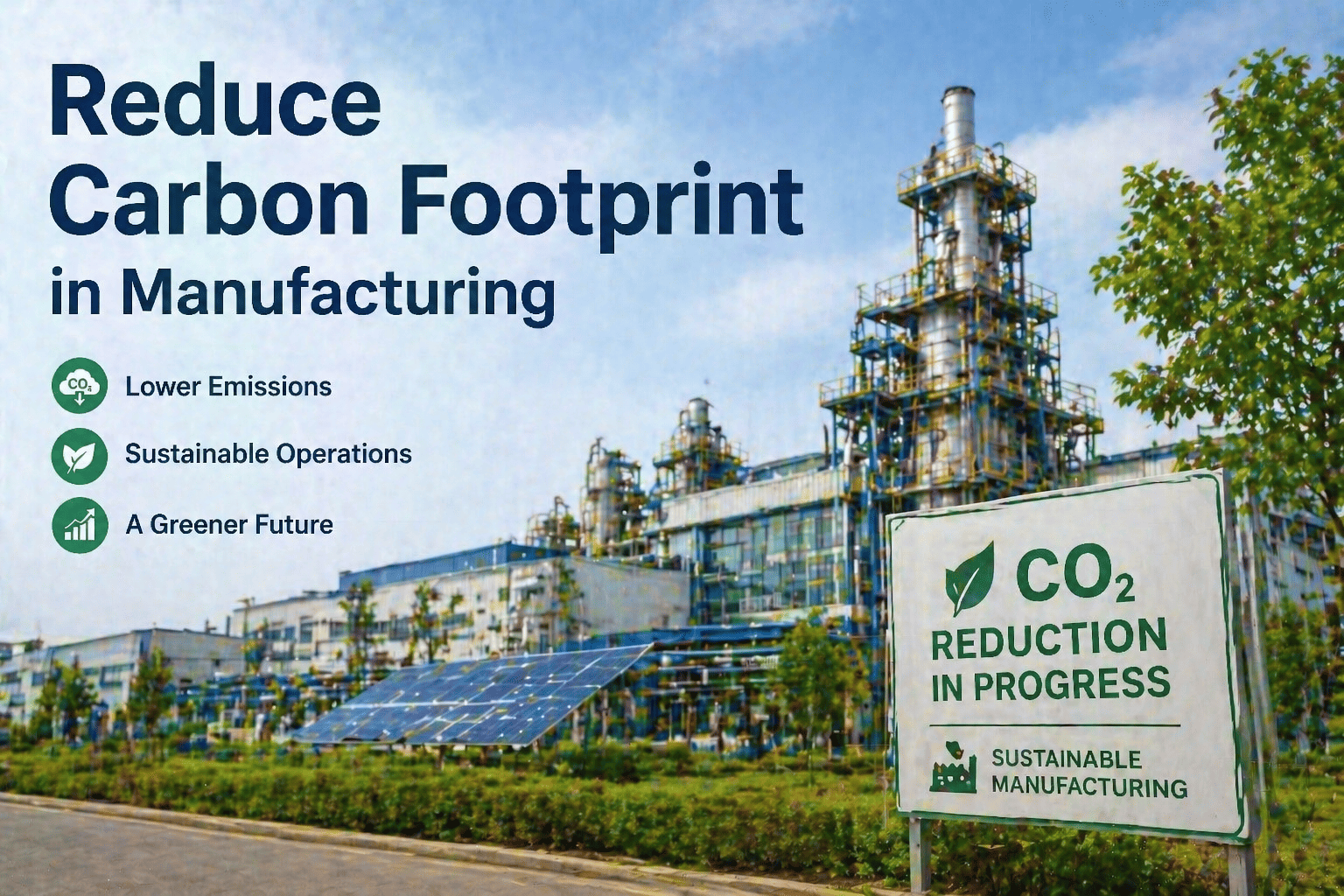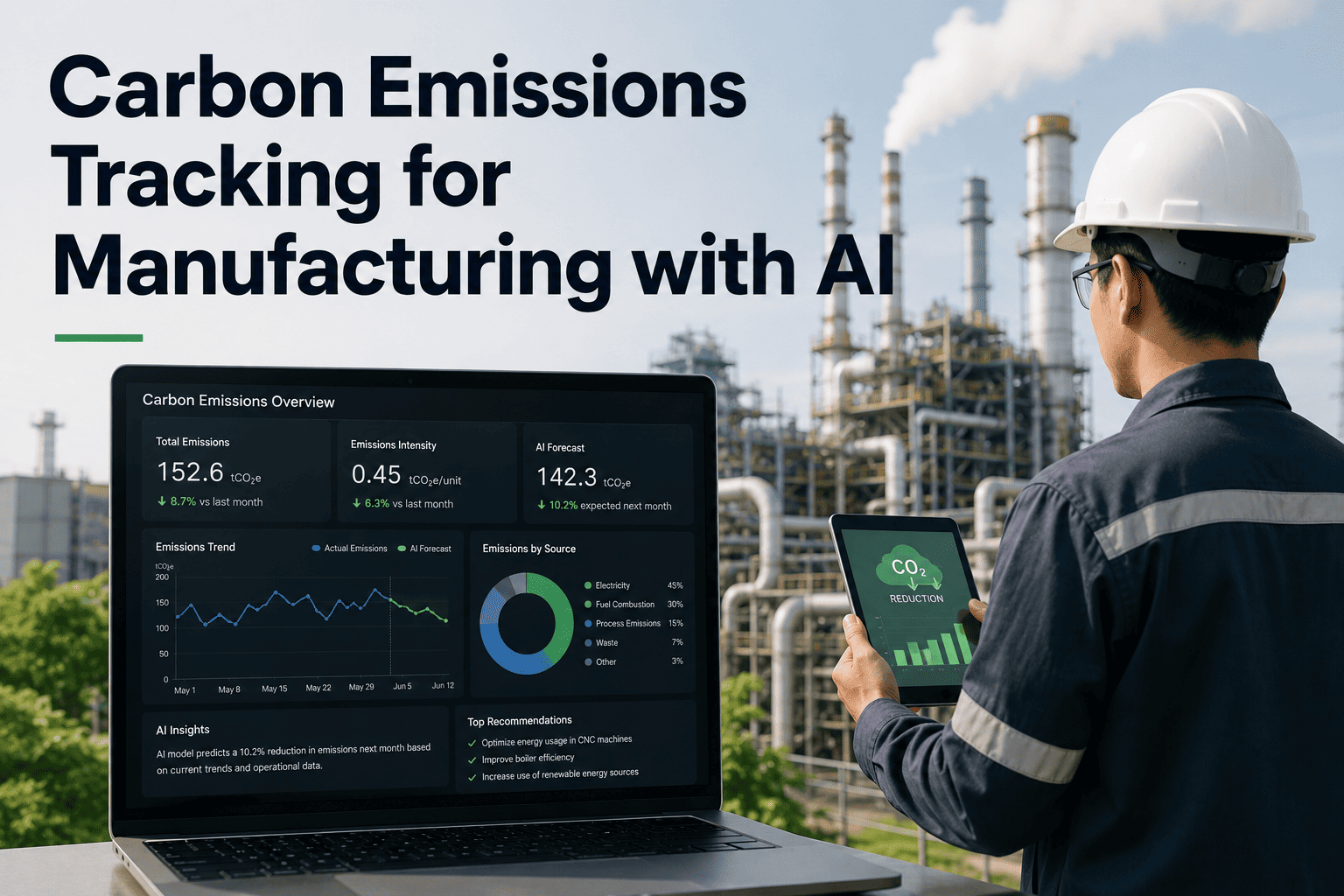
Most sustainability teams can tell you what their plant emitted last quarter, but almost none can tell you what it is emitting right now, because the number on the disclosure is usually built from a utility bill that arrived thirty days late and an emission factor pulled from a spreadsheet nobody has updated since the last audit. That gap used to be a documentation problem. Under CSRD, California's SB 253, and CBAM, it is now a financial and legal exposure with named deadlines and per-entity penalties attached. iFactory's AI carbon tracking platform replaces that estimated, backward-looking number with a live ledger built from real plant data, and you can book a demo to see your own Scope 1 and 2 inventory calculated from actual meters instead of averages.
Your Carbon Disclosure Is Only as Accurate as the Spreadsheet Behind It — AI Replaces the Spreadsheet With a Live Ledger
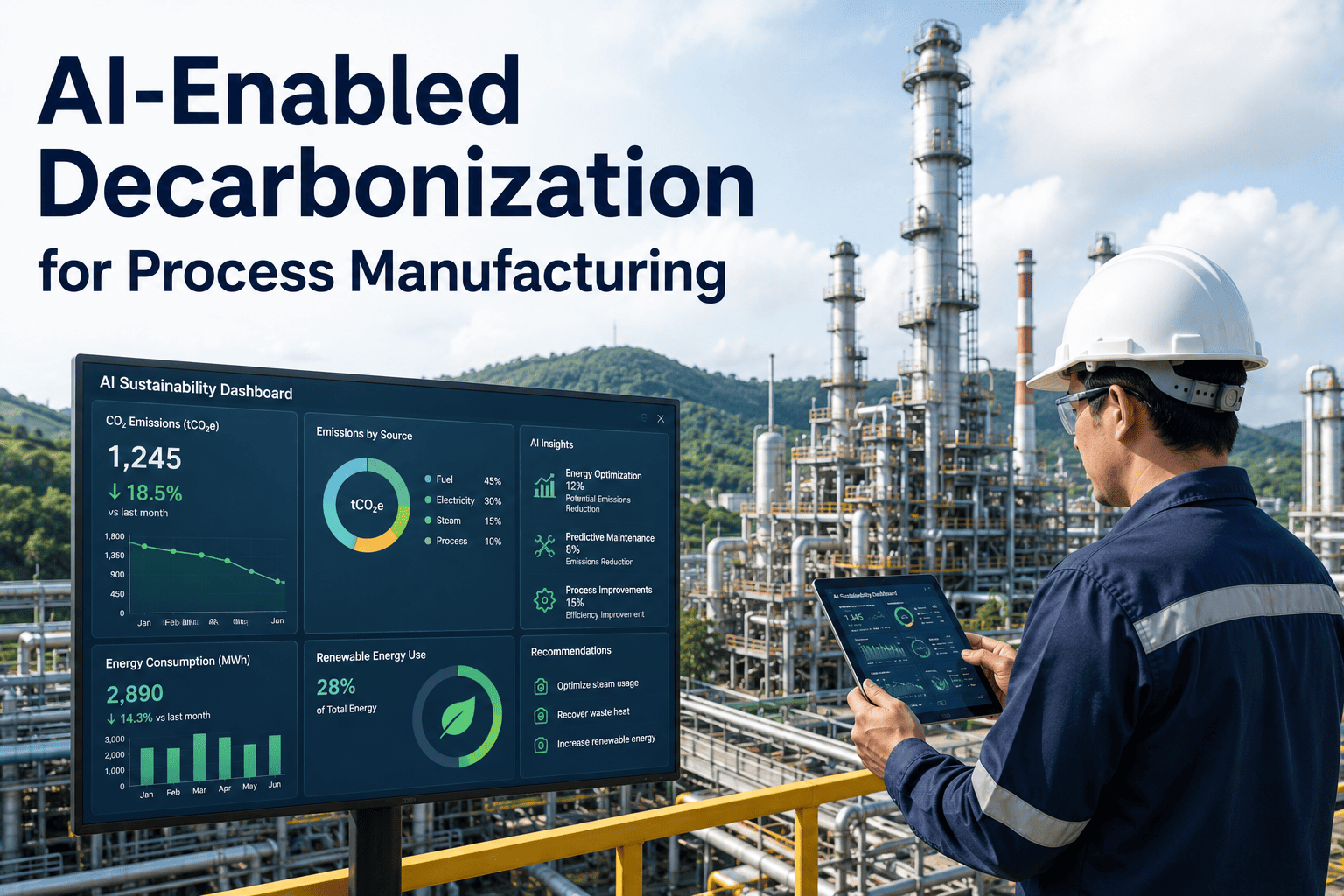
iFactory connects plant sensors, sub-meters, utility data, and ERP records into a single carbon ledger that calculates Scope 1 and Scope 2 emissions continuously and traces every number back to its source meter and emission factor.
Four Disclosure Regimes That Turned Carbon Accounting Into a Compliance Deadline
Carbon reporting stopped being a voluntary sustainability initiative the moment regulators attached enforcement dates and financial penalties to it. The four cards below summarize the disclosure regimes now shaping manufacturing carbon reporting timelines heading into 2027.
Why the Number on Your Disclosure Rarely Matches What Your Plant Actually Emitted
Most manufacturing sites still build their carbon inventory from monthly utility invoices and industry-average emission factors rather than the metered reality of their own equipment. The figures below quantify how far that estimation gap has drifted from what regulators now expect.
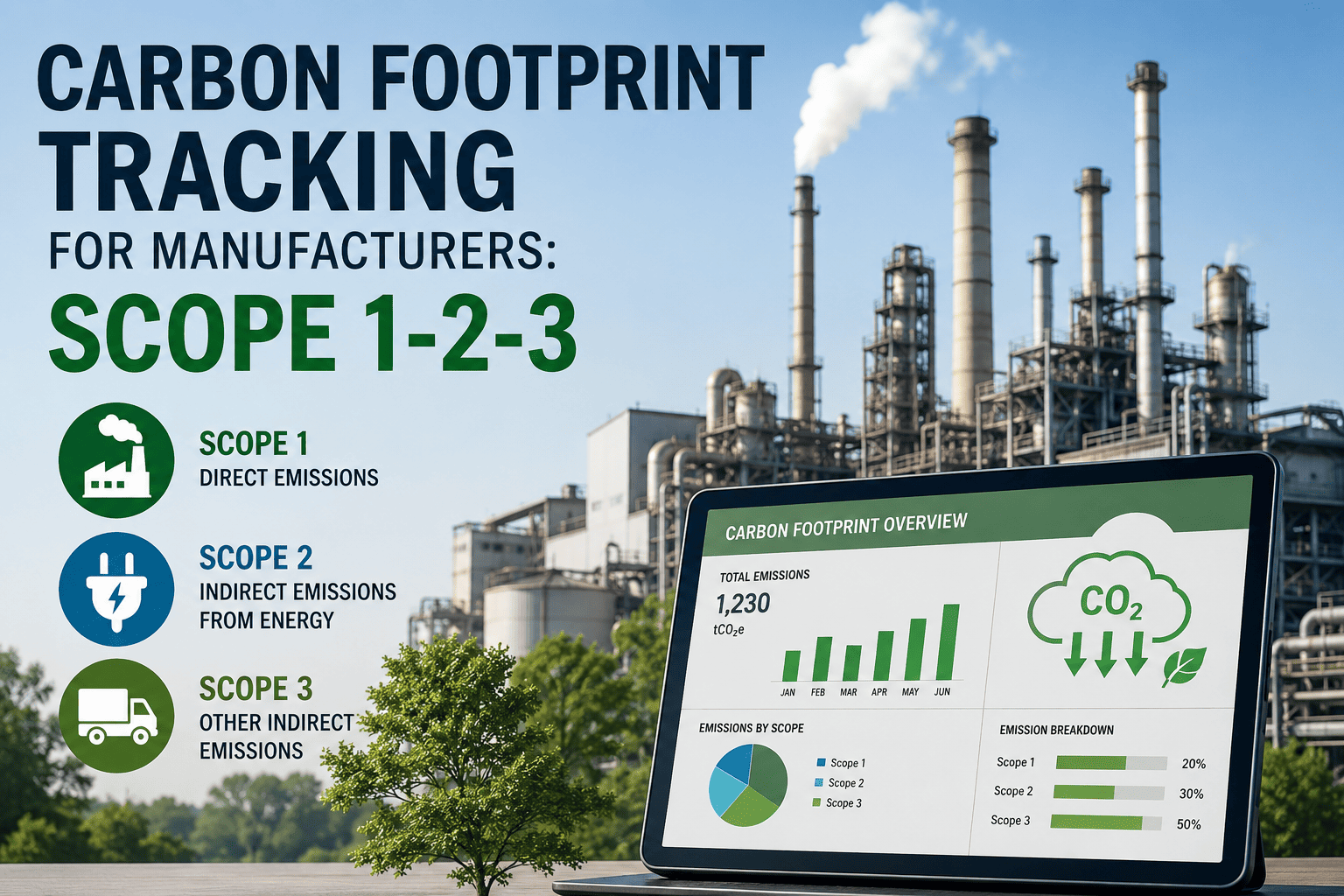
Scope 1, Scope 2, and Scope 3 — What Each Category Actually Covers on Your Plant Floor
The GHG Protocol divides emissions into three scopes based on where in the value chain they originate, and each scope requires a different data strategy to track accurately. Understanding this distinction is the first step toward building a disclosure your finance and legal teams can stand behind.
Direct Emissions From Owned Sources
Onsite fuel combustion in boilers, furnaces, and process heaters, plus emissions from company-owned fleet vehicles and any fugitive refrigerant losses from onsite equipment. These are the emissions most directly under your plant's operational control.
Indirect Emissions From Purchased Energy
Emissions associated with the electricity, steam, heating, and cooling your facility purchases from the grid or a utility provider. This category is calculated using either the grid's average emission factor or contract-specific supplier data.
All Other Value Chain Emissions
Fifteen categories spanning purchased goods and services, upstream transportation, business travel, waste disposal, and the use of sold products — typically the largest and hardest-to-measure share of a manufacturer's total footprint.
From Meter Reading to Audit-Ready Disclosure — The AI Carbon Ledger Pipeline
iFactory's carbon ledger connects the data your plant already generates into a single traceable pipeline, so every number on a disclosure can be walked back to the meter reading and emission factor that produced it.
Connect Data Sources
PLC, sub-meter, utility API, and ERP fuel purchase records are pulled into a single time-series data layer.
Map Emission Factors
Every activity data point is matched to the correct grid, fuel, or supplier-specific emission factor rather than a generic industry average.
Calculate Continuously
Scope 1 and 2 emissions are calculated in near real time as new activity data arrives, instead of once per reporting cycle.
Validate Data Quality
The AI flags missing readings, meter drift, and outlier values before they propagate into a disclosure figure.
Export Audit-Ready Reports
Disclosure-ready outputs are generated in formats aligned to CSRD, SB 253, CDP, and IFRS S2 requirements.
An Estimated Emissions Number Will Not Survive an Assurance Review
iFactory's AI carbon ledger replaces spreadsheet-based estimates with a traceable, audit-ready inventory built from your own plant data. Book a demo and see your own facility's Scope 1 and 2 emissions calculated live.
Spreadsheet Carbon Accounting vs an AI Carbon Ledger — A Direct Comparison
Sustainability leads evaluating a move away from spreadsheet-based tracking need to see exactly what changes operationally, not just what improves on paper. The table below compares both approaches across the factors that most affect assurance readiness.
| Capability | Spreadsheet Tracking | iFactory AI Carbon Ledger |
|---|---|---|
| Primary Data Source | Monthly utility invoices | Real-time meters, sub-meters, and ERP records |
| Update Frequency | Quarterly or annual | Continuous, near real time |
| Emission Factor Accuracy | Generic industry averages | Grid, fuel, and supplier-specific factors |
| Audit Trail | Manually reconstructed after the fact | Every figure traceable to source record automatically |
| Scope 3 Supply Chain Data | Rough spend-based estimates | Supplier-level activity data where available |
| Disclosure Preparation Time | Several weeks per reporting cycle | Days, with continuously maintained records |
Results From Manufacturers Who Moved From Spreadsheets to an AI Carbon Ledger
The figures below reflect outcomes reported by manufacturing sustainability teams within the first two reporting cycles after deploying an AI-driven carbon tracking platform in place of spreadsheet-based accounting.
Common Questions From Sustainability Leads About AI Carbon Emissions Tracking
The Data to Build a Defensible Carbon Disclosure Already Exists in Your Plant — It Just Needs a Traceable Home
Every meter, sub-meter, and fuel purchase record in your facility is already generating the activity data a proper emissions inventory requires. The problem has never been a lack of data; it has been the reliance on monthly bills and generic emission factors to approximate a number that regulators and assurance providers now expect to be measured, traceable, and current.
iFactory's AI carbon ledger connects that existing data into a single, continuously updated inventory that maps every kWh, every cubic meter of fuel, and every fleet mile to a verified emission factor, producing disclosures ready for CSRD, SB 253, CBAM, and CDP without weeks of manual reconstruction. Book a demo to see iFactory's AI building a live carbon ledger from your own plant's data.
The Next Disclosure Deadline Will Not Wait for a Spreadsheet Reconciliation
iFactory's AI carbon ledger gives your team a continuously updated, audit-ready emissions inventory built from real plant data instead of estimated factors. Book a demo and see your own facility's carbon footprint calculated live.