Process manufacturing, chemicals, cement, refining, metals, and similar industries, accounts for roughly half of global industrial emissions, and most plant managers already know their biggest levers: energy efficiency, fuel switching, and process optimization. What's less obvious is where AI actually moves the needle versus where it simply repackages existing energy management dashboards. This breakdown separates the two, and if you want a plant-specific read on where the gains would land, a short call is the fastest way to get one.
Where AI Actually Moves the Needle on Decarbonization
Not every emissions reduction claim involving AI holds up under scrutiny. Here's an honest look at what delivers measurable gains in process manufacturing, and what doesn't.
The Three Levers AI Actually Pulls
Process Optimization
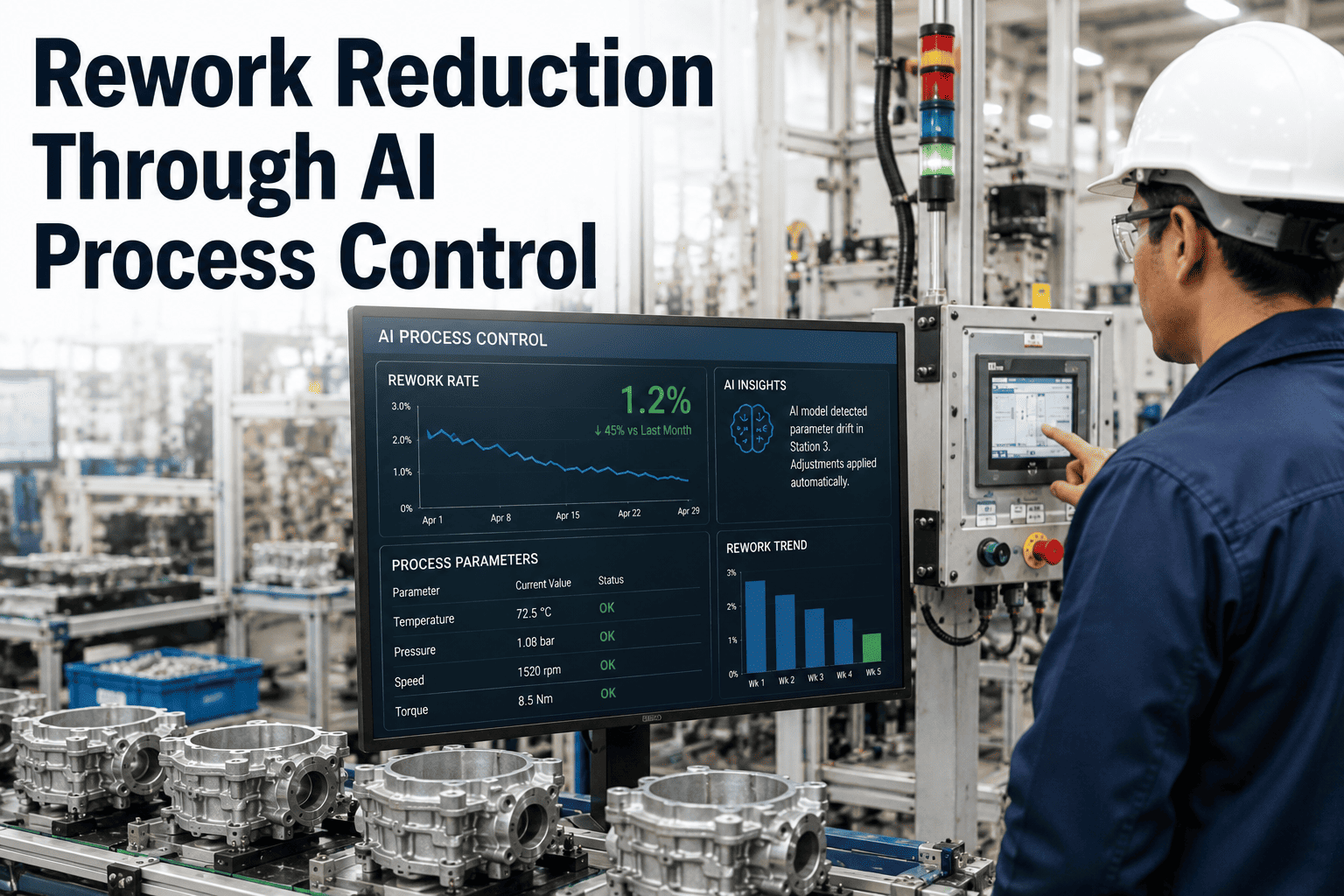
AI models identify the combination of setpoints, temperatures, pressures, and flow rates that minimizes energy use while holding product quality steady, adjustments too complex for a human operator to calculate in real time across dozens of variables.
Predictive Maintenance
Equipment running outside its optimal condition, a fouled heat exchanger, a misaligned pump, wastes energy long before it fails outright. Predictive models catch that drift early, keeping equipment running at peak efficiency rather than degraded efficiency.
Demand and Load Forecasting
AI-driven forecasting helps plants shift energy-intensive operations toward lower-carbon grid periods and avoid the inefficiency of running equipment at partial load during predictable demand troughs.
Where AI Cannot Do the Heavy Lifting
It's worth being direct about this: AI optimizes within the physical and chemical constraints of your existing process. It cannot rewrite thermodynamics. A kiln that fundamentally needs a certain amount of heat to calcine limestone will still need that heat, no matter how well-tuned the control loop is. The largest decarbonization gains in cement, steel, and heavy chemicals still come from capital investments, alternative fuels, electrification, carbon capture, process redesign, that AI supports but does not replace.
This distinction matters for how plant managers set expectations internally. Presenting AI as a complete decarbonization strategy sets up disappointment when targets tied to net-zero commitments require reductions well beyond what process optimization alone can deliver. Presenting it accurately, as a fast, lower-cost first step that also strengthens the data case for capital projects, tends to build more durable support from both operations teams and finance.
What AI Delivers
Meaningful, lower-cost efficiency gains within your current equipment and process footprint, typically five to fifteen percent on energy intensity, achievable within months rather than years.
What AI Doesn't Deliver
Step-change reductions that require new equipment, alternative fuel infrastructure, or fundamentally different process chemistry, those still require capital projects with AI as a supporting tool.
Get a Realistic Read on Your Plant's Potential
A short assessment can separate the efficiency gains available through AI optimization from the ones that require a capital project, so your roadmap reflects both.
How This Plays Out by Sector
| Sector | Primary Emission Source | AI's Main Contribution |
|---|---|---|
| Cement | Kiln fuel combustion, calcination | Kiln temperature and fuel-mix optimization |
| Chemicals | Steam generation, reactor heating | Reactor and utility system efficiency tuning |
| Refining | Furnace and boiler fuel use | Predictive maintenance and process control |
| Metals | Furnace and smelting energy use | Load scheduling and equipment health monitoring |
| Pulp and Paper | Steam and drying energy demand | Dryer section optimization and energy forecasting |
A Practical Starting Roadmap
Baseline Your Energy Intensity
Before optimizing anything, establish a clear per-unit energy baseline across major process areas so improvements can actually be measured rather than assumed.
Identify High-Variability Process Areas
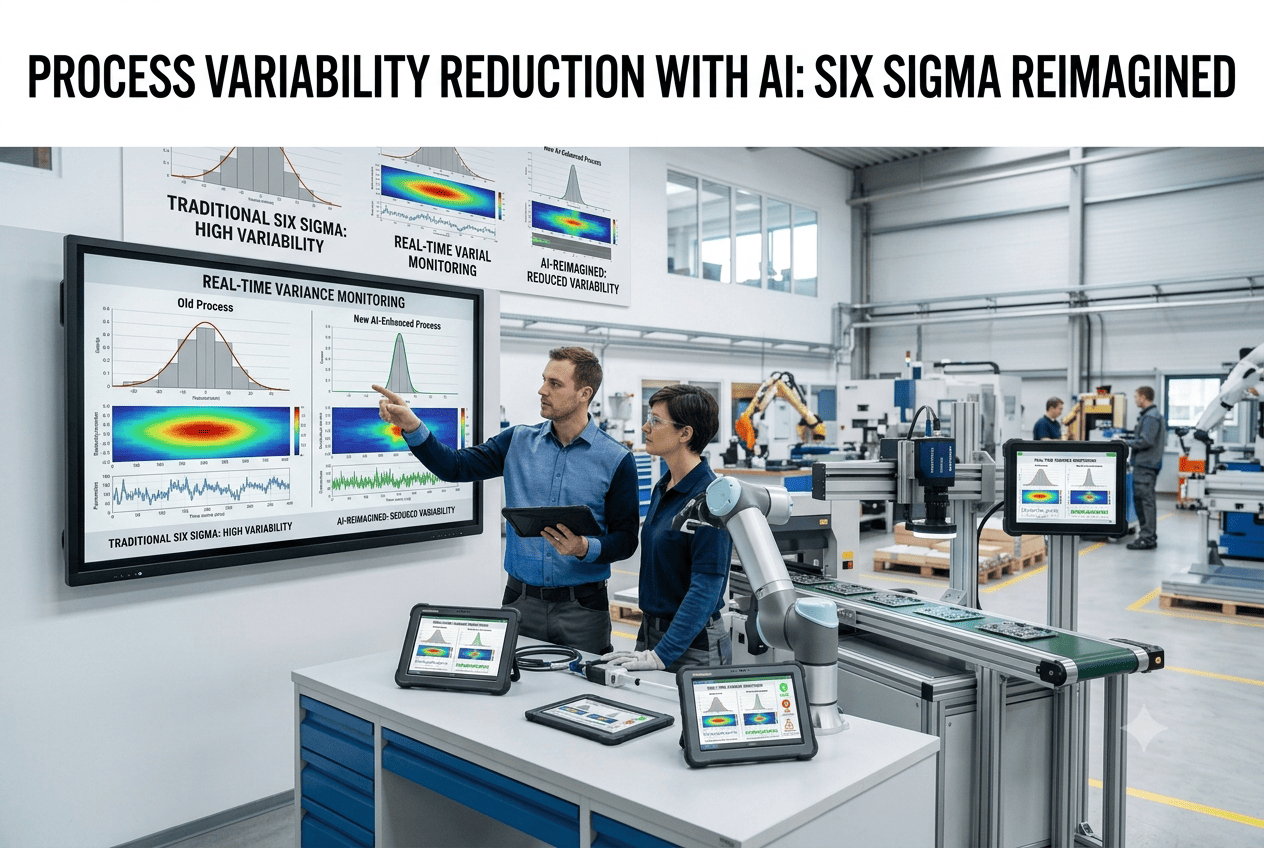
Energy use that swings widely between shifts or operators usually signals an area where AI-driven consistency delivers the fastest measurable gains.
Pilot Predictive Maintenance First
Equipment health monitoring tends to deliver faster, lower-risk wins than full process optimization, making it a practical starting point before broader rollout.
Layer in Process Optimization
Once maintenance data and baselines are solid, optimization models can begin adjusting setpoints in real time with a much clearer picture of normal versus abnormal conditions.
Fold AI Gains Into the Capital Plan
Use the efficiency data AI generates to build a stronger, more specific business case for the larger capital investments that deliver the next tier of emissions reduction.
Metrics That Actually Prove Progress
Emissions claims are easy to make and hard to verify without the right measurement discipline in place. These are the metrics that hold up under scrutiny, whether from an internal sustainability team or an external auditor.
Energy Intensity per Unit
Energy consumed per ton or unit of product, tracked continuously rather than as a monthly average, so the impact of specific process changes is traceable to specific time windows.
Equipment Efficiency Drift
How far key equipment operates from its optimal efficiency curve over time, a leading indicator that catches energy waste before it shows up in a utility bill.
Avoided Downtime Emissions
Emissions associated with startup and shutdown cycles avoided through predictive maintenance, since unplanned outages and restarts are disproportionately energy-intensive.
Load Shift Effectiveness
How much energy-intensive operation successfully shifted toward lower-carbon grid periods, measured against the forecast the AI system generated.
Common Misconceptions Worth Addressing
"AI will make our decarbonization targets achievable without capital spending."
AI reduces how much capital spending is required and strengthens the business case for the spending that remains, but for capital-intensive processes like cement or steel, physical process changes are usually still necessary to hit aggressive targets.
"This only matters for large enterprise plants."
Mid-size plants often see proportionally larger efficiency gains from AI optimization precisely because their control systems were previously tuned manually and infrequently, leaving more slack for an AI model to capture.
"Once deployed, the system runs itself indefinitely."
Process conditions, feedstock, and equipment wear all shift over time, so AI models benefit from periodic recalibration to keep recommendations aligned with current plant conditions rather than conditions from a year ago.
The Data Foundation This Depends On
None of these gains materialize without decent instrumentation. Plants with sparse or unreliable sensor coverage on energy-intensive equipment need to close that gap before an AI optimization layer has enough signal to work with. This doesn't necessarily mean a full instrumentation overhaul; often it means targeting the handful of high-consumption assets, major compressors, kilns, reactors, boilers, where better data would have the largest payoff, and expanding coverage from there as the value becomes clear.
Plants that already run a modern historian or SCADA system with reasonably complete energy tagging are typically ready to start an AI pilot within weeks. Plants still relying on manual log sheets or infrequent spot checks usually need a short data infrastructure phase first, which is worth factoring into any timeline discussion before setting expectations with leadership or sustainability reporting teams.
A Realistic Scenario
Consider a mid-size specialty chemical plant with several steam-intensive reactor lines, where energy intensity varied noticeably between shifts depending on which operator was running the process and how tightly they held setpoints. After deploying an AI-based process optimization layer that continuously adjusted temperature and flow parameters within approved operating ranges, the plant reduced steam consumption per unit of product by roughly nine percent within the first two quarters, without any change to the underlying reactor hardware.
Separately, predictive maintenance on the plant's largest compressors caught a developing seal issue that was quietly increasing energy draw for weeks before it would have triggered a conventional maintenance alert. Fixing it early avoided both an unplanned outage and a stretch of inefficient, energy-wasting operation. Neither improvement required new capital equipment, both showed up directly in the plant's monthly energy intensity reporting, and together they gave the plant manager concrete data to support the case for a larger waste heat recovery project the following year.
Frequently Asked Questions
How much emissions reduction can we realistically expect from AI alone?
Most plants see meaningful but incremental gains, typically in the five to fifteen percent range on energy intensity for process areas where AI optimization applies, plus additional savings from avoided inefficient operation through predictive maintenance. Larger reductions generally require capital investment in equipment or fuel switching, with AI serving as a supporting layer rather than the primary driver of those bigger step changes.
Does this require replacing our existing process control system?
No, AI optimization layers typically sit on top of your existing DCS or PLC infrastructure, reading process data and recommending or implementing setpoint adjustments within limits your engineers define. Most plants keep their existing control system as the safety and execution layer while the AI model handles the optimization logic. You can review integration specifics through support.
How long before we see measurable energy savings?
Predictive maintenance gains tend to appear within the first few months as early equipment issues get caught and corrected. Process optimization gains typically take a full quarter or two to show clearly, since the model needs enough operating data across varied conditions to make confident recommendations. Baseline measurement in the first few weeks is critical for proving the improvement later.
Can AI help with our sustainability reporting requirements?
Yes, the same data infrastructure that supports AI-driven optimization also generates granular, timestamped energy and emissions data that's useful for sustainability disclosures and regulatory reporting. Rather than relying on periodic manual calculations, plants get continuous, auditable data that makes reporting cycles faster and more defensible. Discussing your specific reporting needs on a scoping call can clarify what's achievable.
Is this approach different for cement versus chemicals versus metals?
The underlying AI techniques are similar, but where they get applied differs by sector based on where the biggest energy draw sits. Cement plants see the most value around kiln temperature and fuel-mix optimization, while chemical plants often see more from reactor and steam system tuning. A sector-specific assessment is the most reliable way to know where your particular plant's biggest opportunity sits.
Build a Decarbonization Roadmap Grounded in Real Data
See where AI can deliver measurable emissions reduction in your process today, and where it strengthens the case for tomorrow's capital investments.