Manufacturing Digital Twin Technology: Use Cases & Benefits
By oxmaint on March 9, 2026
Digital twin technology is transforming manufacturing from the ground up. By building dynamic virtual replicas of physical assets, production lines, and entire factories, manufacturers gain the ability to simulate operations, predict equipment failures, and optimize processes—all in real time without disrupting a single machine. With the global digital twin market projected to grow from $21 billion in 2025 to nearly $150 billion by 2030 at a staggering 48% annual growth rate, manufacturers that fail to adopt this technology risk falling behind competitors who are already cutting development times by half and slashing operational costs by 30%. This guide breaks down exactly what digital twins do in manufacturing, where they deliver the highest ROI, and how to implement them successfully. Schedule a free 30-minute consultation with our digital twin specialists to identify the highest-impact opportunities for your plant floor.
$150BProjected Market by 2030
50%Faster Product Development
30%Lower Operational Costs
92%Companies Report Positive ROI
What Is a Digital Twin in Manufacturing?
A digital twin in manufacturing is a real-time virtual replica of a physical asset, production process, or entire factory. Unlike static 3D models or traditional CAD drawings, a digital twin is continuously synchronized with its physical counterpart through IoT sensor data, creating a living model that mirrors real-world behavior at every moment. This bidirectional connection means changes in the physical world instantly reflect in the virtual model—and optimization recommendations from the digital twin can be applied back to the physical system.
Physical World
Sensors & Equipment
IoT sensors on machines capture temperature, vibration, pressure, throughput, and energy data at sub-second intervals. Smart cameras and vision systems add quality inspection data to the stream.
Plant Systems
SCADA, MES, ERP, and CMMS platforms contribute production schedules, work orders, quality metrics, and maintenance histories into the unified data layer.
Real-Time
Data Flow
Digital World
Virtual Model
Physics-based simulation engines create high-fidelity replicas that behave exactly like their physical counterparts—responding to changing inputs and environmental conditions dynamically.
AI Analytics Engine
Machine learning models analyze patterns across historical and live data to detect anomalies, forecast failures, and recommend optimal operating parameters automatically.
The result is a closed-loop intelligence system: sensors feed data to the virtual model, AI identifies optimization opportunities, and recommendations flow back to the physical equipment. This is what separates a true digital twin from a simple simulation—it learns, adapts, and improves continuously. Get Support for iFactory to start connecting your physical assets to AI-powered virtual models that learn and optimize continuously.
How Real-Time Plant Analytics Drive Smarter Decisions
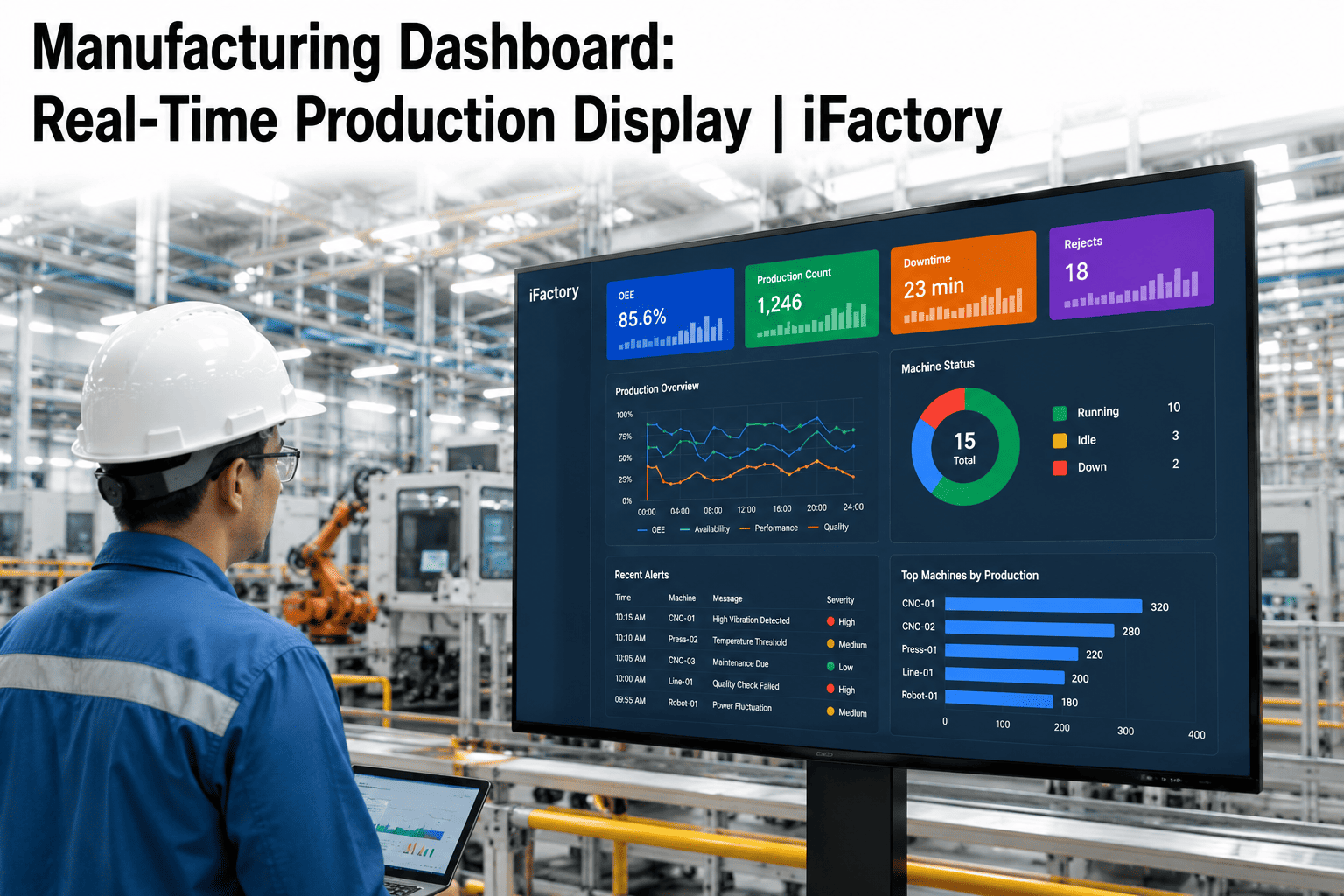
Real-time plant analytics powered by digital twins eliminate the blind spots that traditional manufacturing management leaves exposed. Instead of relying on end-of-shift reports, weekly reviews, or monthly KPI dashboards, plant managers gain continuous visibility into every process, machine, and production metric as it happens. This shift from retrospective reporting to predictive intelligence fundamentally changes how decisions are made on the factory floor.
Continuous Condition Monitoring
Digital twins track vibration signatures, thermal patterns, and performance degradation across every asset simultaneously. When a CNC spindle bearing begins showing early wear patterns, the system flags it weeks before failure—while traditional methods would only catch it during a scheduled inspection or after a breakdown has already halted production.
Production Performance Correlation
AI models correlate equipment performance with output quality, energy consumption, and throughput. If a welding robot's cycle time drifts by 200 milliseconds, the digital twin identifies the downstream impact on quality scores and production targets—then recommends parameter adjustments to bring performance back to optimal levels.
Bottleneck Detection & Resolution
Real-time process modeling reveals hidden constraints that limit throughput. Digital twins simulate the impact of schedule changes, staffing adjustments, and equipment reallocation before implementation—eliminating the trial-and-error approach that wastes time and materials in traditional manufacturing environments.
Stop relying on end-of-shift reports to catch production issues. Schedule a 30-minute demo to see how iFactory delivers live condition monitoring, anomaly alerts, and predictive analytics for your specific equipment and production lines.
Core Use Cases: From Process Modeling to Failure Prediction
Digital twin technology addresses challenges across the entire manufacturing lifecycle. Each use case delivers measurable improvements—and more importantly, the value compounds as AI models learn your specific operational patterns over time. Here are the applications where manufacturers consistently report the highest return on investment.
01Predictive Maintenance & Failure Prevention
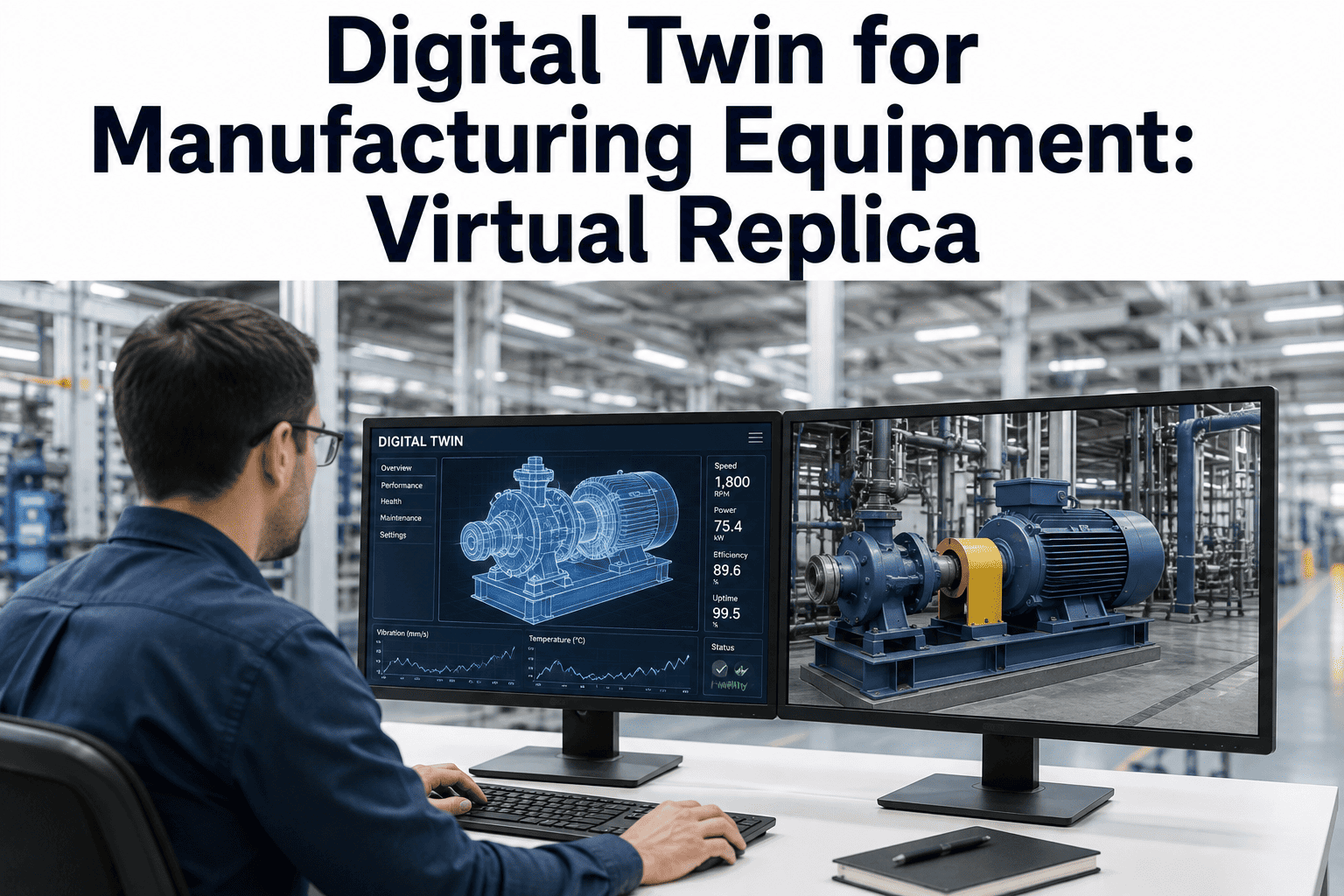
Virtual replicas of motors, bearings, gearboxes, and hydraulic systems continuously analyze vibration, thermal, and acoustic data to predict component failures 3-6 weeks before they occur. Research shows this approach reduces unplanned downtime by up to 50% and cuts maintenance costs by 25-55%. Rather than following fixed maintenance schedules that result in either premature part replacement or unexpected breakdowns, digital twin-driven maintenance ensures interventions happen at exactly the right moment.
02Production Simulation & Line Optimization
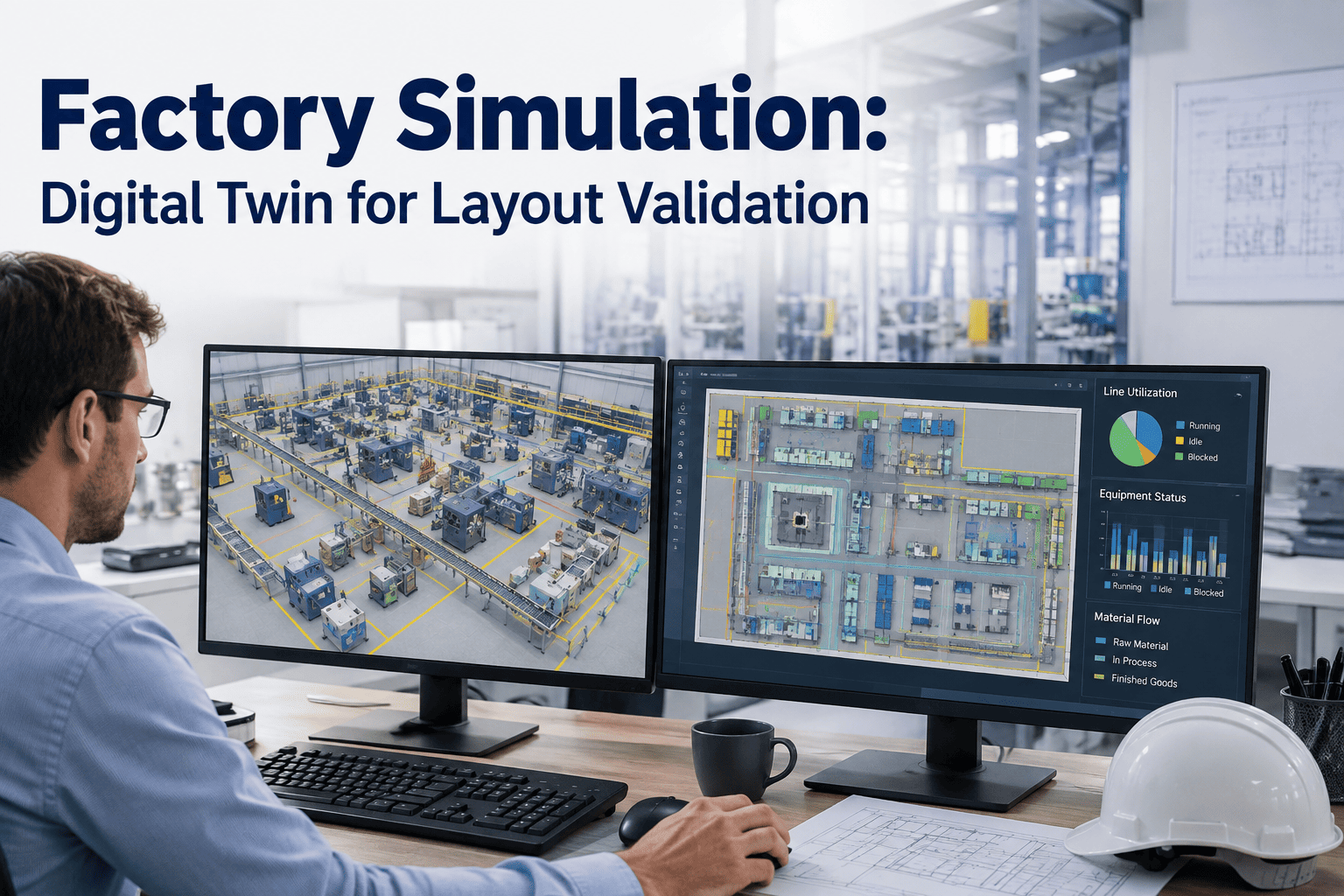
Before making any physical changes, manufacturers can simulate new production layouts, cycle time adjustments, material flow patterns, and staffing configurations in a virtual environment. This eliminates the costly trial-and-error approach and accelerates production ramp-ups. One global automotive manufacturer reported a 30% increase in its ability to adjust manufacturing volume by testing configurations virtually before implementation.
03Quality Control & Defect Root Cause Analysis
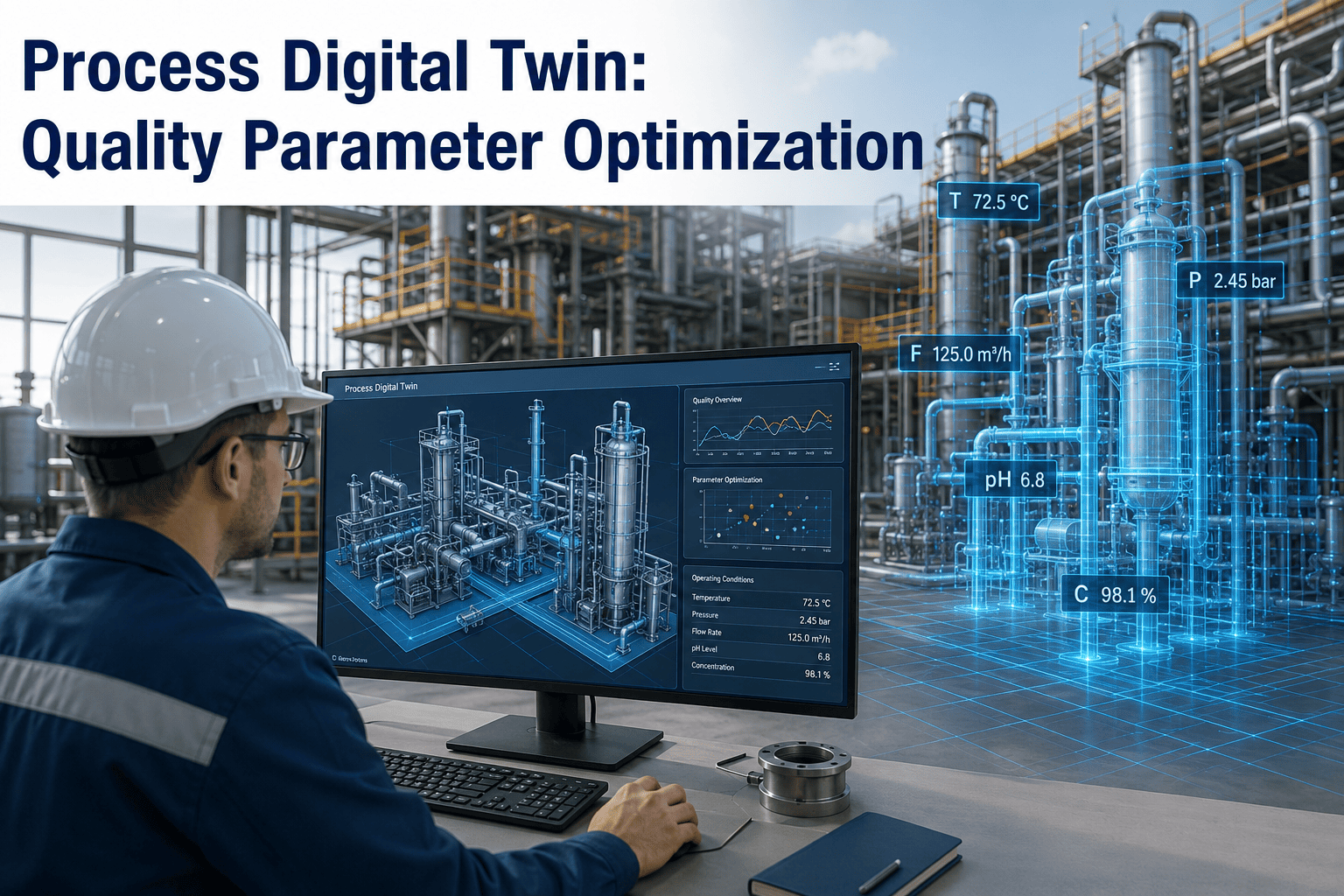
Digital twins correlate process parameters with quality outcomes to pinpoint exactly which variables cause defects. In metalworking operations, digital twins monitoring welding parameters reduced process failures by 75% by identifying root causes through thermographic and sensor data analysis. The system simulates and validates corrective actions before they are applied to the production line.
04Virtual Prototyping & Product Development
Testing product designs under simulated stress, temperature, vibration, and fatigue conditions eliminates the need for multiple physical prototypes. Senior R&D leaders report that digital twins can reduce total development time by up to 50%, compressing product launch timelines significantly while improving design quality through more comprehensive virtual testing scenarios.
05Energy Management & Sustainability Tracking
Monitor energy consumption at the machine, line, and plant level in real time. AI models identify waste patterns, optimize HVAC and compressed air systems, and correlate energy usage with production output. Organizations using digital twins for sustainability report 10-20% energy savings and automated emissions tracking that feeds directly into ESG reporting requirements.
06Supply Chain Visibility & Demand Planning
Digital twins extend beyond the factory floor to model entire supply chains, simulating disruptions, demand fluctuations, and logistics constraints. Manufacturers using supply chain digital twins report up to 20% improvement in customer promise fulfillment, 10% reduction in labor costs, and significantly better demand forecasting accuracy across planning horizons.
Before and After: Manufacturing Without vs. With Digital Twins
Understanding the capability gap between conventional manufacturing management and digital twin-powered operations reveals why nearly 65% of manufacturing technology decision-makers plan to adopt this technology in the near future. The differences are not incremental—they represent a fundamentally different approach to running a factory.
Capability Comparison
Capability
Without Digital Twins
With Digital Twins
Equipment Monitoring
Periodic inspections on fixed schedules
Continuous AI-driven condition monitoring
Failure Response
Reactive—after breakdowns occur
Predictive—weeks before failure happens
Process Changes
Trial-and-error on live production
Simulated and validated virtually first
Product Design Testing
Multiple physical prototypes required
Virtual prototyping cuts cycles by 50%
Quality Analysis
Post-production inspection only
Real-time parameter correlation and prediction
Energy Optimization
Monthly utility bill reviews
Machine-level real-time consumption analytics
Data Integration
Siloed systems, manual reconciliation
Unified intelligence layer across all operations
Move from Reactive Manufacturing to Predictive Intelligence
iFactory connects digital twin capabilities across your entire production environment—bringing real-time sensor data, process simulation, and AI-driven optimization together in one unified platform that learns and improves continuously.
The business case for digital twin technology in manufacturing is no longer theoretical. Large-scale studies, industry reports, and documented enterprise deployments provide concrete evidence of financial returns and operational improvements across manufacturing sectors worldwide.
20-30%
Operational Cost Reduction
Companies using digital twins report consistent operational cost savings driven by optimized resource allocation, reduced waste, and more efficient production scheduling across facilities.
50%
Reduction in Unplanned Downtime
Predictive maintenance powered by digital twins slashes unexpected work stoppages by detecting degradation patterns weeks before failures, enabling proactive interventions during planned windows.
45%
Fewer Production Defects
Real-time quality parameter monitoring and AI-driven root cause analysis dramatically reduce defect rates by catching process drift and anomalies before they impact output quality.
10-20%
OEE Improvement
Overall Equipment Effectiveness increases as digital twins optimize equipment availability, performance efficiency, and quality rates simultaneously through continuous process intelligence.
According to a NIST report, full adoption of digital twin technology across U.S. manufacturing could unlock $37.9 billion in annual value. Over 92% of companies that have invested in digital twins report ROI above 10%, with half achieving returns of 20% or more—typically within 12 to 36 months of deployment.
Find out how much your plant could save with digital twins. Get Support for iFactory and our engineers will model your specific downtime costs, maintenance spend, and efficiency gaps to estimate your projected ROI within the first 12 months.
Step-by-Step: Building Your First Manufacturing Digital Twin
Successful digital twin implementations follow a structured approach that delivers quick wins while building toward comprehensive factory-wide intelligence. Starting with high-value critical assets proves ROI rapidly and creates organizational momentum for broader deployment.
Phase 1 — Weeks 1-4
Asset Prioritization & Infrastructure Audit
Identify the 3-5 critical assets where unplanned downtime creates the highest financial impact. Audit existing sensor infrastructure, network connectivity, and data system readiness. Define baseline KPIs for downtime frequency, maintenance costs, quality rates, and energy consumption that will measure digital twin success.
Phase 2 — Weeks 5-10
Sensor Deployment & Virtual Model Creation
Install additional IoT sensors on priority equipment where gaps exist. Build the initial digital twin models by integrating CAD data, equipment specifications, and operational parameters. Connect real-time data feeds from SCADA, MES, and existing monitoring systems into the virtual modeling platform.
Phase 3 — Weeks 11-16
AI Training & Predictive Model Calibration
Feed historical maintenance records, failure logs, and quality data into machine learning models. Calibrate anomaly detection algorithms against real operational conditions. Validate prediction accuracy by comparing AI recommendations with known historical events before activating real-time alerting.
Phase 4 — Week 17+
Scaling, Optimization & Autonomous Operations
Expand digital twin coverage to additional production lines and support systems. Enable closed-loop optimization where AI recommendations automatically adjust equipment parameters. Build toward a factory-wide digital twin ecosystem where every asset contributes to and benefits from collective operational intelligence.
Get a deployment plan built for your factory—not a generic template. Schedule a demo and our team will map your critical assets, existing infrastructure, and priority KPIs into a phased digital twin roadmap with clear milestones and expected ROI at each stage.
While digital twin technology applies across manufacturing, certain industries see outsized returns due to their equipment complexity, regulatory requirements, and the financial impact of downtime. Manufacturing holds the largest share of the global digital twin market at over 30%, followed by automotive, aerospace, and energy sectors.
Automotive
Assembly line simulation, robotic cell optimization, crash test modeling, and EV battery thermal management. Manufacturers achieve 30% faster design cycles and significant reduction in physical prototype costs through comprehensive virtual testing.
Aerospace & Defense
Turbine engine lifecycle tracking, composite structure fatigue analysis, and compliance automation. The aerospace digital twin segment is among the fastest-growing, with companies detecting 99.9% of component anomalies through digital twin monitoring.
Pharmaceuticals
Batch process simulation, cleanroom environment modeling, and regulatory validation acceleration. Digital twins ensure batch-to-batch consistency while dramatically reducing the time required for process validation and compliance documentation.
Electronics Manufacturing
SMT line optimization, thermal management modeling, and test coverage simulation. One electronics plant leveraging comprehensive digital twins reported a 20% productivity boost and 30% improvement in volume adjustment capability.
Energy & Utilities
Turbine performance monitoring, grid load balancing, and renewable asset optimization. Energy companies using digital twins have reduced unplanned stoppages by 20%, with some rigs saving millions monthly in avoided downtime costs.
Food & Beverage
Oven and dryer process optimization, CIP system efficiency, and cold chain monitoring. Digital twins ensure product consistency across production runs while identifying energy waste in heating, cooling, and drying operations.
Digital twins have moved from experimental technology to business necessity. The companies implementing these systems today are establishing operational superiority that compounds over time—while those who hesitate risk permanent competitive disadvantage in an increasingly data-driven manufacturing landscape.
— Industry 4.0 Manufacturing Technology Analyst
Start Building Your Factory's Digital Twin Today
Your static models and periodic inspections cannot predict a gearbox failure three weeks out or simulate the impact of a new production schedule in minutes. iFactory brings digital twin technology to your factory floor—connecting real-time sensor data with AI-powered analytics that monitor every asset, predict maintenance needs, and optimize production parameters continuously. Stop managing your factory with yesterday's data.
What is the difference between a digital twin and a simulation?
A simulation is typically a one-time or periodic model that tests a specific scenario using predefined inputs. A digital twin, on the other hand, is a continuously updated virtual replica that stays synchronized with its physical counterpart through real-time IoT sensor data. This persistent connection allows a digital twin to learn from actual operating conditions, adapt its models over time, and provide ongoing predictive insights—not just snapshot analysis. Schedule a demo to see a live digital twin responding to real-time sensor data — and understand why static simulations can never match this level of insight.
How much does it cost to implement a manufacturing digital twin?
Implementation costs vary significantly based on scope, existing infrastructure, and complexity. Cloud-based platforms and more affordable IoT sensor networks have made digital twins accessible to mid-market manufacturers, not just large enterprises. Most organizations start with a focused pilot on 3-5 critical assets—which demonstrates ROI quickly—before scaling. Industry data shows 92% of companies report positive ROI, with many seeing returns within 6-12 months of initial deployment.
Do we need to replace our existing equipment to use digital twins?
No. Digital twins work with existing equipment by adding retrofit IoT sensors that capture operational data without modifying the machines themselves. Modern platforms support standard industrial communication protocols including OPC-UA, MQTT, Modbus, and REST APIs, ensuring compatibility with both new and legacy equipment. Even older machines can be brought into the digital twin ecosystem with appropriate sensor instrumentation. Get Support for a free infrastructure readiness assessment to find out exactly which sensors and connections your existing equipment needs to support a digital twin.
How long does it take to see measurable results?
Most manufacturers identify significant optimization opportunities within the first 30-60 days of pilot deployment. Quick wins from anomaly detection and basic predictive maintenance typically appear within 3-6 months, while comprehensive AI-driven optimization matures over 12-18 months as models accumulate more operational data. The key is starting with high-impact assets where even small improvements in uptime or efficiency translate into substantial financial returns.
Can digital twins integrate with our existing MES, ERP, and CMMS systems?
Yes. Modern digital twin platforms are designed for interoperability with existing plant systems. They aggregate data from MES (production scheduling and execution), ERP (financial and resource planning), CMMS (maintenance management), SCADA (process control), and QMS (quality management) into a unified intelligence layer. This means your current technology investments are enhanced—not replaced—by digital twin capabilities. Book a demo and bring your current system list — our engineers will map exactly how iFactory integrates with your MES, ERP, and CMMS stack during the session.