Traceability in Manufacturing: Batch & Serial Tracking
By John Polus on April 9, 2026
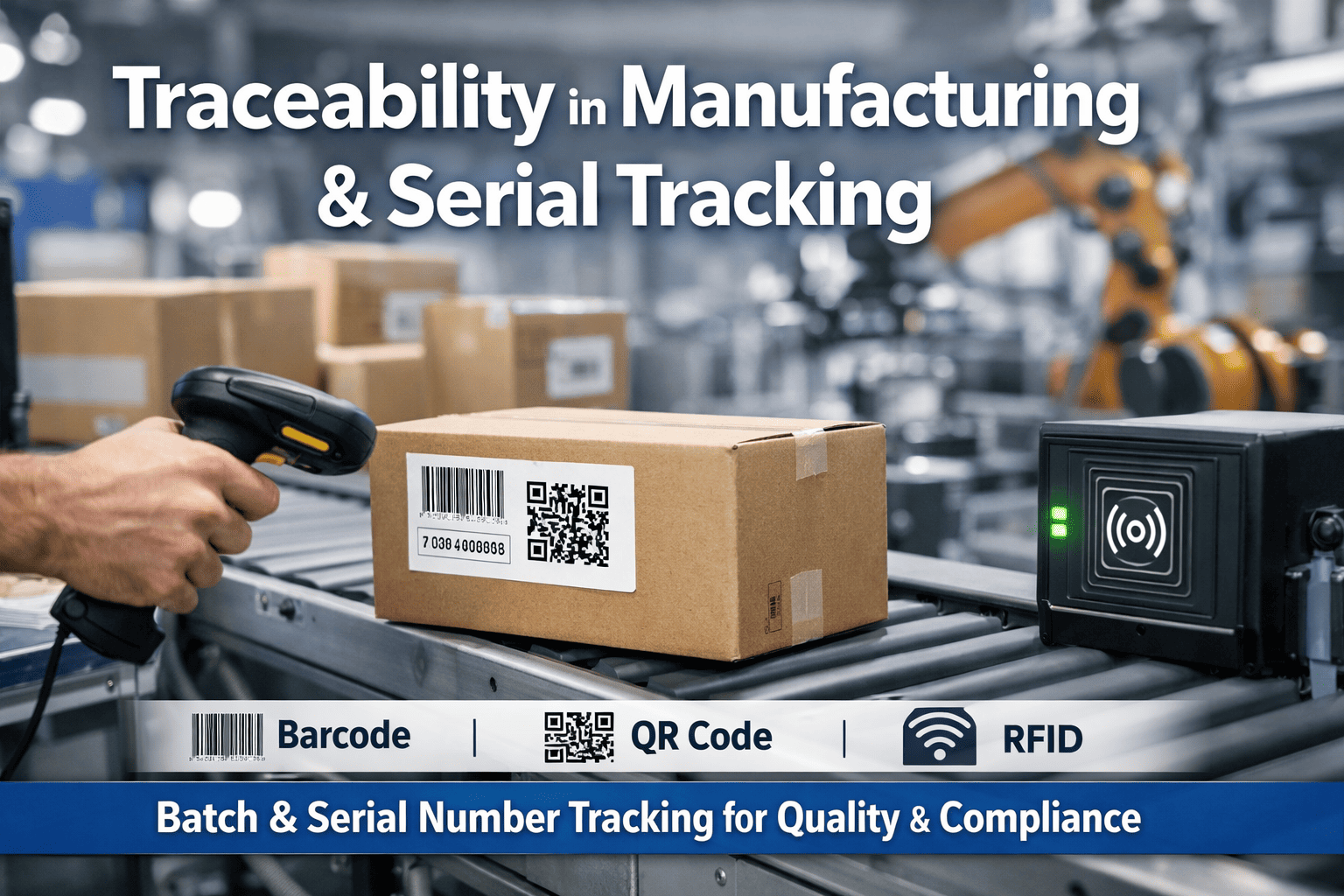
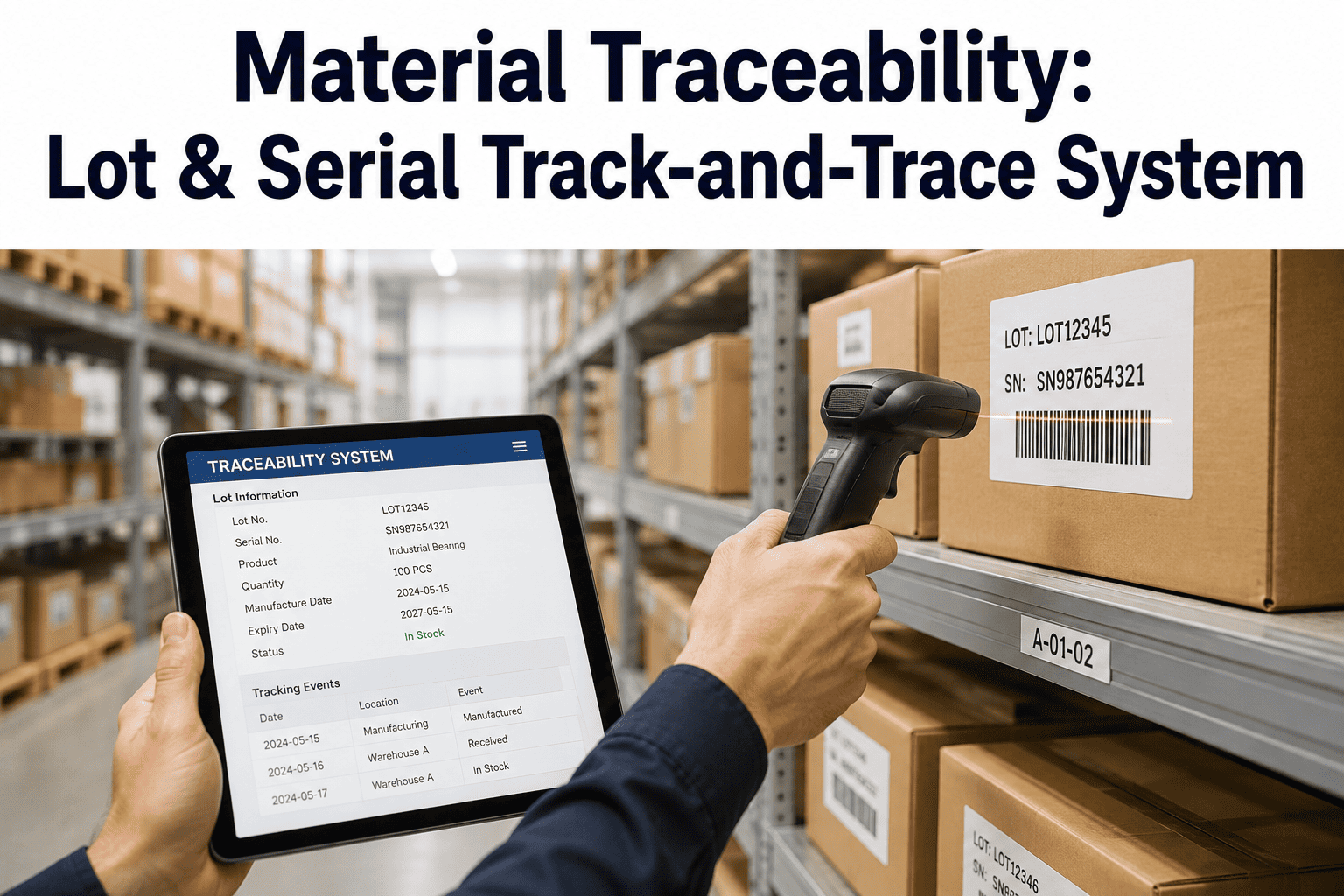
Manufacturing operations facing quality audits, recall threats, or supply chain compliance requirements discover that spreadsheet-based lot tracking fails at the exact moment verification becomes critical: when a single defective component requires identifying every affected finished product across a 90-day production window, manual records consume 40 to 60 hours of engineering time and still miss 15 to 25 percent of impacted units. iFactory's AI-powered traceability platform captures barcode, QR code, and RFID data at every production stage automatically generating parent-child genealogy maps that trace any component to finished goods in under 8 seconds, identify recall scope with 99.8% accuracy, and produce audit-ready compliance documentation for FDA 21 CFR Part 11, ISO 9001, IATF 16949, and regional quality standards without manual data reconstruction. Book a demo to see real-time traceability genealogy mapping.
Quick Answer
iFactory automatically captures barcode, QR code, and RFID scans at receiving, work-in-process, assembly, testing, and shipping stages to build complete product genealogy trees showing which raw material lots, components, subassemblies, and finished goods are connected through parent-child relationships. The platform generates instant recall impact analysis identifying every affected unit when a supplier issues a quality alert, produces compliance documentation mapped to FDA, ISO, IATF, and regional standards, and integrates with SAP, Oracle, Epicor, Plex, and other ERP systems without replacing existing infrastructure. Average results: 8-second genealogy queries vs 40-hour manual searches, 99.8% recall accuracy, 85% reduction in traceability documentation time.
Complete Traceability Workflow Across Manufacturing Operations
The six tracking stages below represent every point where iFactory captures scan data to build the unbreakable digital thread connecting raw materials to finished products. Each scan creates parent-child relationships that enable bidirectional traceability for quality investigations and recall management.
Stage 1
Raw Material Receiving and Lot Registration
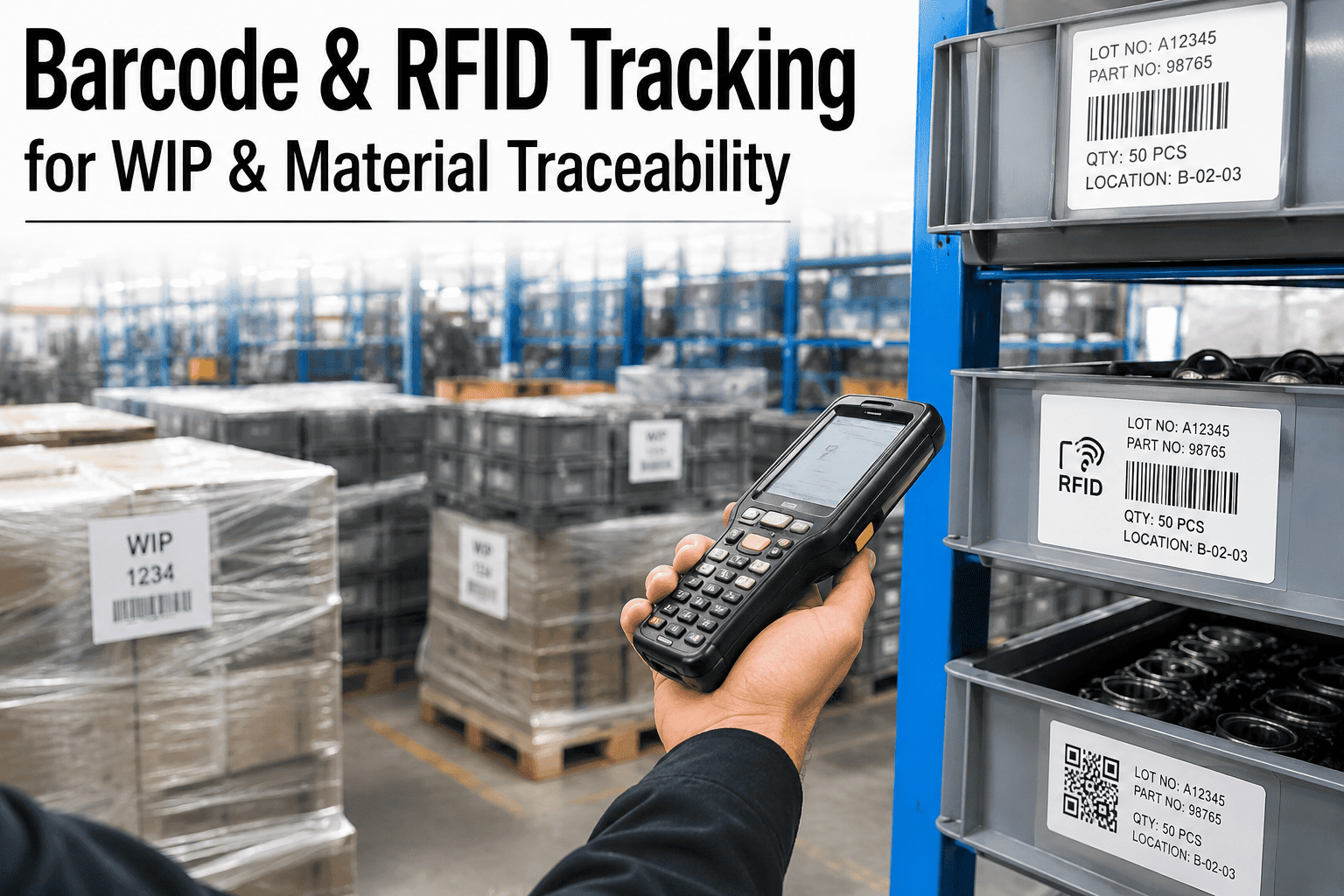
Incoming material barcode scans link supplier lot numbers to internal batch IDs automatically. System validates certificates of analysis against purchase order specifications and flags non-conforming materials before warehouse putaway. Integration with ERP creates material master records with supplier traceability data, country of origin, and regulatory compliance attributes required for downstream genealogy queries.
Data Captured: Supplier lot, PO number, COA, receipt date, inspection status
Stage 2
Work-in-Process Component Tracking
Production floor scanners capture component consumption at assembly stations linking raw material batches to work order numbers. RFID readers track components through multi-stage manufacturing processes without line-of-sight scan requirements. System enforces first-in-first-out material usage rules and prevents expired lot consumption through real-time validation against shelf life parameters.
Data Captured: Work order, station ID, operator, timestamp, component serial numbers
Stage 3
Subassembly Build and Parent-Child Linking
Multi-level bill of material tracking creates parent-child relationships as components assemble into subassemblies. Vision systems verify correct part numbers at assembly stations preventing build errors that create false genealogy records. Platform tracks rework and repair operations maintaining complete history of component replacements that affect traceability lineage.
Data Captured: Assembly configuration, component genealogy, rework history, quality holds
Stage 4
Final Assembly and Serial Number Assignment
Finished goods receive unique serial numbers or batch codes linking to complete component genealogy. System auto-generates product data matrices or QR codes encoding traceability information for field scanning. Integration with label printers ensures every unit ships with compliant marking meeting customer and regulatory requirements for product identification.
Data Captured: Final serial number, build date, shift, complete BOM as-built configuration
Stage 5
Quality Testing and Inspection Documentation
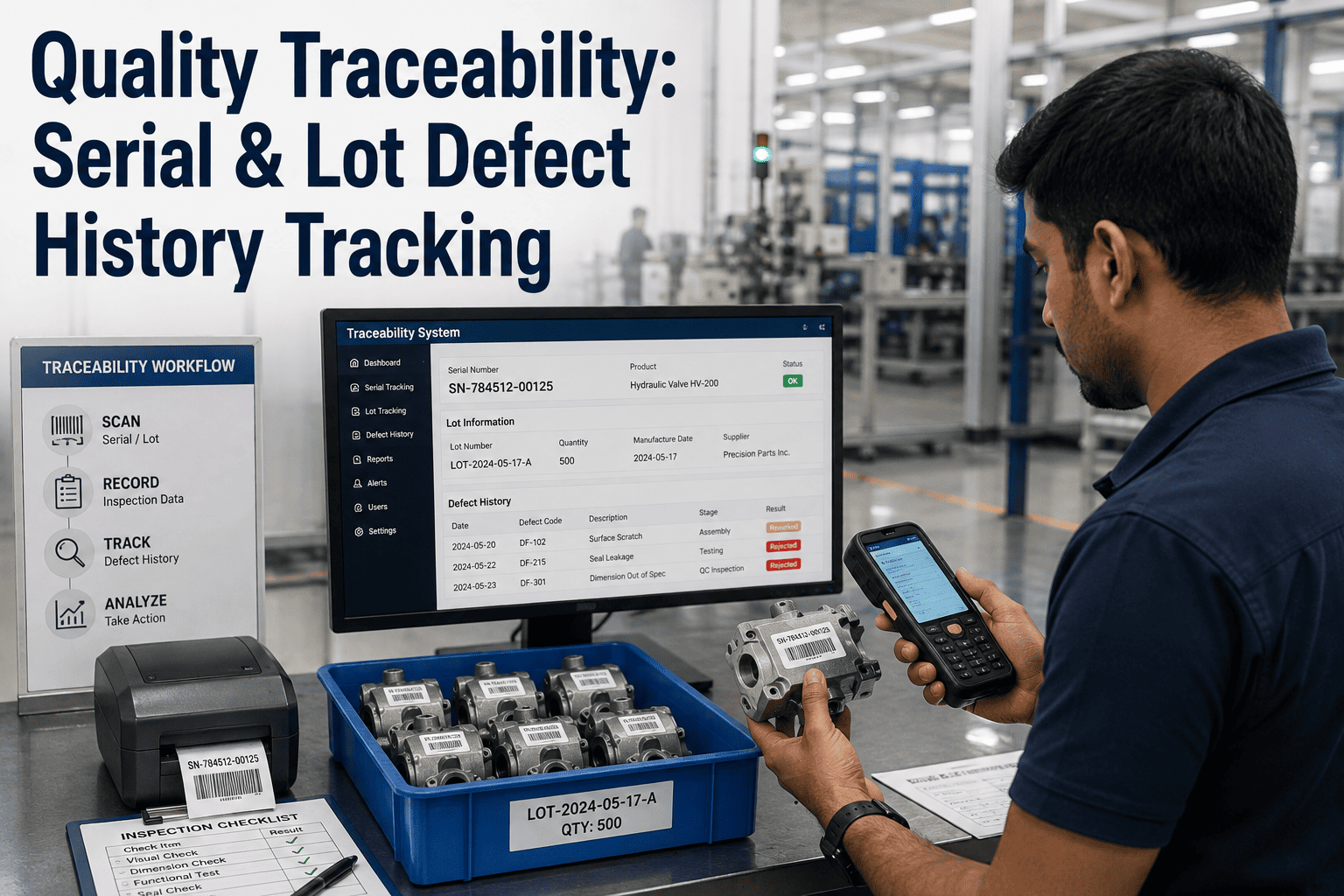
Test equipment integration captures measurement data and pass-fail results linked to serial numbers automatically. Out-of-specification results trigger automated quarantine preventing shipment of non-conforming units. Certificate of conformance generation pulls traceability data, test results, and material certifications creating customer-required quality documentation without manual compilation.
Data Captured: Test results, inspection criteria, calibration status, quality approvals
Stage 6
Shipping and Customer Delivery Tracking
Outbound shipment scans link serial numbers to customer purchase orders, shipping containers, and delivery tracking numbers. System maintains shipped product database enabling post-delivery genealogy queries for warranty claims and field failure investigations. Compliance documentation auto-generates for customers requiring lot traceability matrices, material declarations, or regulatory certificates at delivery.
Build Unbreakable Digital Threads From Raw Material to Customer Delivery in Every Production Run.
iFactory captures barcode, QR code, and RFID data automatically at every production stage creating parent-child genealogy maps that trace components to finished goods in seconds, not days of manual spreadsheet searches.
Tracking Technology Comparison for Manufacturing Traceability
iFactory supports barcode, QR code, and RFID tracking technologies with different strengths for specific manufacturing environments and product types. The platform adapts to mixed-technology deployments where some operations use barcodes while others require RFID for automated tracking without line-of-sight scanning.
1D Barcode Scanning
Linear barcodes encode lot numbers, serial numbers, and part numbers in compact formats suitable for small components and high-speed production lines. Handheld and fixed-mount scanners capture data with 99.9% first-read accuracy at speeds up to 60 scans per second. Ideal for discrete manufacturing, automotive parts tracking, and operations requiring low-cost labeling solutions with proven reliability.
Cost: $200 to $800 per scanner, $0.01 to $0.05 per label
2D QR Code and Data Matrix
Two-dimensional codes store 100x more data than linear barcodes encoding complete genealogy information, URLs, and compliance data in single scans. Damage-resistant error correction maintains readability when labels experience partial obscuration or surface wear. Mobile device scanning enables field traceability queries by technicians and customers without dedicated hardware.
Best For:
Medical devices, aerospace components, industrial equipment requiring field traceability, products with limited label space
Cost: $300 to $1,200 per scanner, $0.02 to $0.08 per label
RFID Tag Tracking
Radio frequency identification enables automated batch scanning of multiple items simultaneously without line-of-sight requirements or manual handling. Read ranges from 3 feet to 30 feet depending on tag type and reader power. Passive tags require no battery enabling permanent component tracking through harsh manufacturing environments including high temperature, chemicals, and metallic interference.
Best For:
Automotive WIP tracking, tool and fixture management, bulk material handling, high-mix production requiring automated identification
Cost: $500 to $3,000 per reader, $0.10 to $2.00 per tag
AI-Powered Traceability Features iFactory Deploys on Production Lines
Every capability below represents production-grade traceability functionality iFactory delivers across manufacturing operations from automotive assembly to medical device production, eliminating the manual spreadsheet tracking and data reconstruction workflows that fail during quality investigations and regulatory audits. Talk to an expert about traceability deployment for your product lines.
01
Instant Genealogy Mapping and Recall Analysis
AI generates bidirectional traceability trees in under 8 seconds showing complete component lineage from raw materials to finished goods. Forward tracing identifies every product containing a specific supplier lot. Backward tracing reveals all components used in a finished serial number. Recall impact analysis calculates affected unit quantities, customer locations, and inventory positions automatically when suppliers issue quality alerts or field failures require root cause investigation.
02
Automated Compliance Documentation Generation
Platform auto-generates certificates of conformance, material traceability matrices, and regulatory submission packages pulling data from genealogy records, test results, and supplier certifications. FDA 21 CFR Part 11 electronic signature workflows capture approval chains for regulated industries. ISO 9001 and IATF 16949 audit trails document complete traceability history with timestamped operator actions meeting third-party certification requirements.
03
Real-Time Material Expiration and FIFO Enforcement
System tracks material shelf life from receiving date blocking consumption of expired lots at production stations. First-in-first-out logic prioritizes oldest inventory for consumption preventing obsolescence waste. Automated alerts notify material handlers when lots approach expiration enabling proactive disposition decisions. Integration with ERP synchronizes inventory balances ensuring physical counts match traceability records for financial reconciliation.
04
Vision-Verified Assembly Error Prevention
Computer vision confirms correct component installation at assembly stations before genealogy records finalize preventing false parent-child relationships from operator errors. Part number verification compares scanned components against bill of material requirements blocking incorrect part usage. Rework tracking maintains complete history when components require replacement documenting every configuration change affecting product genealogy.
05
Multi-Level BOM Explosion and Implosion Queries
System navigates complex multi-tier assemblies showing which raw materials contribute to specific subassemblies and finished configurations. Explosion queries reveal all components consumed in a parent assembly. Implosion queries identify every higher-level assembly containing a specific component lot. Where-used analysis answers critical quality questions during investigations without manual BOM reconstruction from production records.
06
Field Failure Investigation and Warranty Analytics
Customer return processing links field failures to production genealogy enabling root cause analysis across similar configurations. Statistical correlation identifies common components appearing in multiple failure modes. Warranty cost tracking aggregates claims by supplier lot, production date, and assembly shift revealing quality patterns invisible in individual incident reports. Predictive analytics forecast failure rates based on genealogy attributes informing design improvements.
Platform Capability Comparison for Manufacturing Traceability Systems
Traditional ERP systems provide basic lot tracking through manual transaction entry. iFactory delivers automated genealogy capture, AI-powered recall analysis, and compliance documentation generation that eliminate the data reconstruction workflows consuming 40 to 60 engineering hours during quality investigations. Book a comparison demo for your traceability requirements.
Scroll to see full table
Capability
iFactory
SAP ERP
Oracle ERP Cloud
Epicor ERP
Plex Manufacturing Cloud
Dassault DELMIA
Automated Data Capture and Genealogy
Automated barcode and RFID capture at all production stages
Real-time genealogy building
Manual transaction entry required
Manual lot tracking transactions
Shop floor module add-on
Native shop floor integration
MES integration required
Instant genealogy tree generation under 8 seconds
AI-powered graph database queries
Manual report building 4+ hours
Custom queries 2+ hours
Report generation 1-3 hours
30-60 minute queries
Complex query building required
Bidirectional forward and backward tracing
Complete parent-child relationships
Available with configuration
Lot genealogy module
Traceability add-on
Built-in genealogy
Limited to MES scope
Recall Management and Investigation
AI-powered recall scope identification
8-second impact analysis 99.8% accuracy
Manual investigation required
Manual lot analysis
Manual recall processing
Recall module available
Not available
Customer notification list auto-generation
Shipment history linked to genealogy
Custom report development
Custom query required
Report generation
Integrated with shipping
Not available
Compliance and Documentation
FDA 21 CFR Part 11 electronic signature workflows
Built-in compliance workflows
Validation required
Third-party add-on
Configuration required
Validated for FDA use
Not available
Automated certificate of conformance generation
Pull genealogy, test data, certifications
Custom document templates
Report customization
Manual compilation
Quality module integration
Not available
Multi-region compliance mapping ISO IATF regional standards
US, UAE, UK, Canada, EU pre-configured
Global template library
Multi-country support
Regional templates available
Automotive industry focus
Aerospace and automotive
Deployment and Integration
Time to operational traceability
30-60 days production deployment
6-18 months implementation
9-24 months
6-15 months
3-6 months
12-24 months
Integration with existing ERP without replacement
SAP, Oracle, Epicor, Plex connectors
Replace or major upgrade required
Full ERP migration
Epicor-only ecosystem
Plex cloud migration
API integration available
Based on publicly available product documentation and implementation case studies as of Q1 2026. Verify current capabilities with each vendor before procurement decisions.
iFactory generates compliance documentation automatically mapped to regional quality standards, regulatory requirements, and industry-specific traceability mandates across US FDA regulations, UAE industrial standards, UK MHRA requirements, Canadian Health Canada rules, and European Union device directives without custom configuration for each jurisdiction.
Scroll to see full table
Region
Primary Traceability Standards
Industry Requirements
Data Retention
iFactory Compliance
United States
FDA 21 CFR Part 11 electronic records, UDI for medical devices, FSMA food traceability, automotive IATF 16949
Medical: device history record with complete genealogy. Food: one-up-one-down traceability. Automotive: lot tracking to VIN level
Medical devices: product lifetime plus 2 years. Food: 2 years from manufacture. Automotive: 15 years from production
FDA Part 11 validated workflows, UDI barcode generation, FSMA traceability lot tracking, IATF genealogy records with encrypted storage and automated retention management
UAE
UAE Federal Authority quality standards, ESMA conformity marking, Dubai Municipality food safety, free zone specific requirements
General manufacturing: 3 years minimum. Food products: 2 years from expiry. Medical devices: 5 years from last distribution
ESMA-compliant lot tracking, Halal certification document linking, MOHAP registration genealogy, Arabic and English documentation, UAE data residency options
United Kingdom
UK MDR medical device regulations post-Brexit, MHRA batch traceability, UKCA marking requirements, automotive ISO TS 16949
Medical: technical documentation with full traceability. Food: EU retained law FSR traceability. Automotive: component to vehicle traceability
Medical devices: 10 years minimum or device lifetime. Food: 5 years from manufacture. Automotive: 15 years from production
UK MDR technical file generation, MHRA batch record compliance, UKCA documentation, ISO TS genealogy with UK-specific retention policies and audit-ready exports
Canada
Health Canada Medical Device Regulations SOR/98-282, Safe Food for Canadians Regulations, CSA standards for industrial products
Medical: device identification and history record. Food: traceability from farm to retail. Industrial: material certification tracking
Medical devices: lifetime of device in field. Food products: 2 years minimum. Industrial equipment: 7 years from manufacture
Health Canada MDR genealogy records, SFCR one-up-one-down tracking, CSA material certification linking, bilingual French-English documentation, Canadian data sovereignty compliance
Europe
EU MDR 2017/745 and IVDR 2017/746 medical device regulations, ISO 9001 quality management, automotive IATF 16949, REACH substance tracking
Medical: unique device identification and complete genealogy. Automotive: serialization to vehicle level. Industrial: REACH substance declaration and conflict minerals traceability
Medical devices: 10 years minimum or expected lifetime. Automotive: 15 years from production. REACH: 10 years from last supply
EU MDR UDI-DI database integration, IVDR traceability records, REACH substance genealogy tracking, conflict minerals supplier documentation, GDPR-compliant EU data residency with multilingual support
Implementation Roadmap for Manufacturing Traceability Deployment
iFactory follows a phased approach starting with pilot production lines to validate genealogy accuracy before expanding to full facility coverage, maintaining parallel manual tracking during transition to ensure zero compliance gaps during regulatory inspections or quality investigations.
Phase 1: Weeks 1 to 4
Pilot Line Selection and Baseline Data Capture
Identify pilot production line representing typical bill of material complexity and regulatory requirements. Deploy barcode scanners or RFID readers at receiving, assembly, testing, and shipping stations. Configure integration with ERP system for material master data synchronization. Establish baseline metrics including manual traceability documentation time, genealogy query accuracy, and compliance audit preparation hours for ROI validation.
Phase 2: Weeks 5 to 8
Automated Genealogy Validation and Parallel Operation
Run automated traceability capture in parallel with existing manual lot tracking processes. Validate genealogy accuracy by comparing AI-generated traceability trees against manual records for sample production runs. Configure compliance documentation templates for FDA, ISO, IATF, or industry-specific requirements. Train quality engineers on genealogy query tools and recall impact analysis workflows before disabling manual tracking.
Phase 3: Weeks 9 to 12
Full Facility Expansion and Compliance Integration
Expand scanner deployment to all production lines, receiving docks, and shipping areas. Integrate with quality management systems for test result linking to serial numbers. Configure automated certificate of conformance generation pulling genealogy data, inspection results, and supplier certifications. Enable field failure investigation workflows connecting customer returns to production genealogy for root cause analysis and warranty tracking.
Proven Deployment Model
Manufacturers Achieve Complete Genealogy Accuracy Within 60 Days of Pilot Deployment.
The phased approach validates traceability capture on pilot lines before expanding to full facilities, maintaining parallel manual tracking during transition to ensure zero compliance gaps during regulatory audits or quality investigations.
Measured Outcomes Across Manufacturing Traceability Deployments
8 Sec
Genealogy Query Time vs 40+ Hours Manual Searches
99.8%
Recall Scope Identification Accuracy
85%
Reduction in Compliance Documentation Time
100%
Parent-Child Relationship Capture Rate
Zero
Audit Findings From Incomplete Traceability Records
60 Min
Certificate of Conformance Generation vs 6+ Hours
Industry-Specific Traceability Use Cases
iFactory adapts traceability workflows to industry-specific requirements from automotive serialization to medical device UDI compliance while maintaining the core genealogy capture and recall management capabilities that apply across all regulated manufacturing sectors.
Automotive Component to Vehicle Traceability
IATF 16949 requires complete component traceability to vehicle identification number for safety-critical parts including airbags, braking systems, and powertrain components. iFactory captures tier-2 supplier lots through tier-1 assembly to OEM final vehicle build creating unbreakable genealogy chains. Warranty claim analysis links field failures to specific production batches enabling targeted investigation without blanket recalls. Electronic Kanban integration ensures FIFO material consumption preventing obsolete lot usage.
Medical Device UDI and Device History Records
FDA 21 CFR Part 820 mandates device history records documenting complete manufacturing genealogy with electronic signature approval chains. iFactory auto-generates UDI barcodes encoding device identifiers and production identifiers meeting GUDID database submission requirements. Post-market surveillance tracking links field complaints to device genealogy enabling medical device reporting within regulatory timeframes. Certificate of conformance generation pulls traceability data, biocompatibility certifications, and sterilization validation documentation.
Electronics Assembly Component Provenance
Counterfeit component prevention requires documented supply chain custody from authorized distributors through board assembly to finished products. iFactory captures supplier certificates of authenticity linking to component lot numbers consumed in specific serial number ranges. Moisture sensitivity level tracking enforces floor life limits preventing reliability failures from expired components. RoHS and conflict minerals declarations auto-generate from supplier certifications linked to product genealogy.
Food and Beverage Lot Tracking
FSMA traceability rule requires one-up-one-down tracking for high-risk foods documenting ingredient lots, processing equipment, and distribution channels. iFactory captures supplier lot numbers at receiving linking to production batch codes and customer shipments. Allergen cross-contamination tracking maintains equipment cleaning records between product changeovers. Temperature and time monitoring integration validates critical control points for HACCP compliance documentation.
Aerospace Critical Component Serialization
AS9100 and FAA regulations mandate serialized part tracking with material certifications for flight-critical components. iFactory links raw material heat lot numbers to machined part serial numbers maintaining chain of custody through heat treatment, surface finishing, and final inspection. Non-conformance tracking documents every deviation and corrective action affecting part genealogy. Certificate of conformance generation includes material test reports, dimensional inspection data, and regulatory approval references.
Pharmaceutical Active Ingredient Tracking
Drug Supply Chain Security Act requires serialization at saleable unit level with lot and expiration date tracking. iFactory captures API supplier lot numbers through formulation, filling, and packaging operations creating complete genealogy to consumer-level serial numbers. Aggregation tracking documents which serialized units pack into cases and pallets for distribution verification. Temperature excursion monitoring validates cold chain compliance linked to product genealogy for stability and efficacy assurance.
From the Quality Director
We manufacture medical devices under FDA 510k clearance requiring device history records with complete component genealogy. Before iFactory, quality engineers spent 40 to 60 hours reconstructing traceability records from paper travelers and Excel spreadsheets whenever we received supplier quality alerts. The AI genealogy system generates complete traceability trees in under 8 seconds with 99.8% accuracy. When a supplier issued a recall on a critical component, we identified every affected device serial number, determined customer locations, and initiated field actions within 2 hours instead of 3 days. The platform paid for itself in the first prevented regulatory warning letter.
Director of Quality Assurance
Medical Device Manufacturer, Class II Devices, FDA 510k Operations
Value Delivered to Manufacturing Quality and Compliance Teams
Eliminate Compliance Risk From Incomplete Traceability Records
Manual lot tracking creates gaps in genealogy records when operators forget transaction entry, production travelers go missing, or Excel spreadsheets contain data entry errors. Automated capture ensures 100% parent-child relationship documentation preventing regulatory audit findings, customer complaints about missing certificates, and recall scope uncertainty that exposes organizations to liability. Every unit ships with verifiable traceability eliminating the compliance risk manual systems create.
Reduce Recall Scope and Customer Impact Through Precise Genealogy
Manual traceability forces conservative recall scoping because uncertainty about component usage drives over-inclusive product ranges to ensure complete coverage. AI genealogy identifies exact affected unit populations reducing recall quantities by 40 to 60% through precision targeting. Smaller recall scope means lower field action costs, reduced customer disruption, less inventory obsolescence, and diminished brand reputation impact from quality incidents.
Accelerate Quality Investigations With Instant Root Cause Data
Field failures require determining which components, suppliers, production dates, or process parameters contributed to defects enabling corrective action. Genealogy queries answer these questions in seconds instead of days of manual investigation. Statistical correlation identifies common factors across multiple failure modes revealing systemic issues invisible in individual incident analysis. Faster root cause determination means quicker containment, reduced failure recurrence, and improved customer satisfaction.
Transform Compliance Documentation From Manual Burden to Automated Byproduct
Quality engineers spend 20 to 30% of their time compiling certificates of conformance, material traceability matrices, and regulatory submission packages from scattered data sources. Automated document generation pulls genealogy records, test results, and supplier certifications into compliant formats eliminating manual compilation. Engineering time redirects from administrative documentation to value-added quality improvement activities while customers receive required paperwork faster.
Frequently Asked Questions
QCan iFactory integrate with our existing SAP or Oracle ERP system without requiring full replacement?
Yes, iFactory connects to SAP, Oracle, Epicor, Plex, and other ERP platforms via standard APIs synchronizing material master data, work orders, and inventory transactions while maintaining genealogy records in the traceability database. Book a demo to discuss your ERP integration requirements and implementation timeline.
QHow long does it take to generate a complete genealogy tree for a finished product with multi-level bill of materials?
iFactory generates complete bidirectional traceability trees showing all raw materials, components, and subassemblies in under 8 seconds regardless of BOM complexity or production volume. Manual reconstruction of the same genealogy data from spreadsheets typically requires 40 to 60 hours. Talk to an expert about genealogy query performance for your product configurations.
QWhat happens to traceability records if we need to conduct a recall 5 years after production?
iFactory maintains complete genealogy records with automated retention policies matching FDA, ISO, IATF, and regional regulatory requirements ranging from 2 years for food products to 15 years for automotive components. Archived data remains queryable with identical performance to active records. Book a demo to discuss data retention requirements for your industry and compliance standards.
QCan the system handle mixed barcode, QR code, and RFID tracking technologies on the same production line?
Yes, iFactory supports simultaneous barcode, QR code, and RFID scanning at different production stages enabling technology selection based on application requirements. Some customers use barcodes for small components, RFID for WIP tracking, and QR codes for finished goods labeling on the same product.
Manufacturing Traceability Built on AI Genealogy, Not Manual Spreadsheets.
iFactory captures barcode, QR code, and RFID data automatically at every production stage building complete parent-child genealogy trees that trace any component to finished goods in 8 seconds, identify recall scope with 99.8% accuracy, and generate compliance documentation for FDA, ISO, IATF, and regional standards without manual data reconstruction.