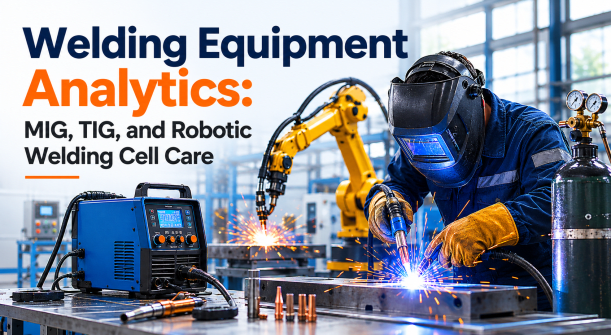
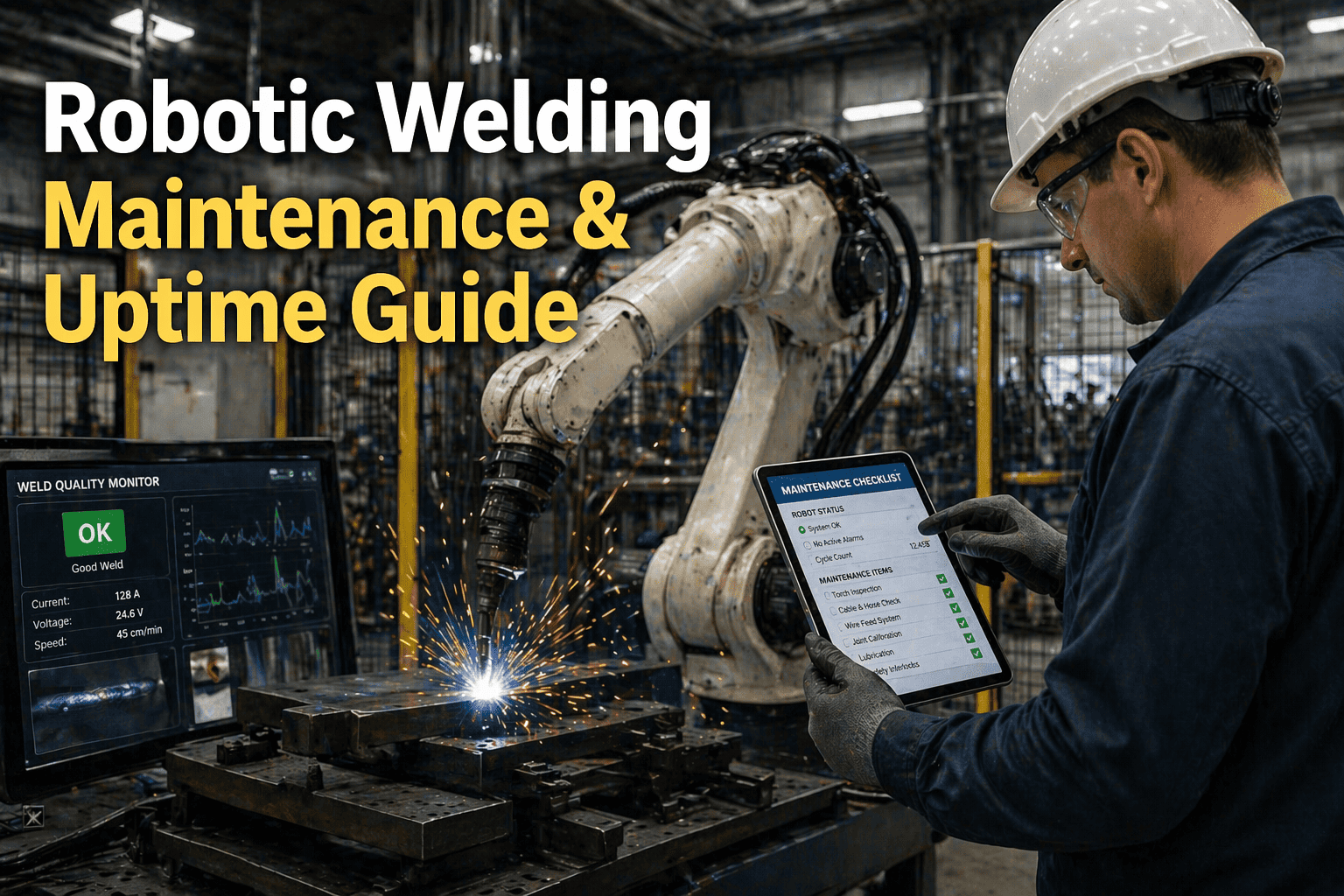
Mike, the weld cell lead at a midwestern automotive Tier 1, watches the production dashboard tick down. His three robotic MIG welders are running, but the wire feed on Cell 2 is stuttering. He knows that stutter pushes porosity into every joint. The line needs 240 units per shift. A single bad weld means rework — or scrap. Last month, a cracked bracket from an undetected wire-feed issue cost the plant $34,000 in warranty claims. Mike has no way to see the wire feed trend. He has no data on torch angle drift or contact tip wear. He has a clipboard checklist that gets filled out once a shift, and a maintenance team that fixes things after they break. This is the status quo in thousands of factories: welding equipment runs blind until it fails.
Stop Guessing on Weld Quality — iFactory Gives You Real-Time Equipment Analytics That Cut Downtime by 40%
iFactory ingests data from every MIG, TIG, stick, and robotic welder on your floor, builds predictive maintenance schedules, and surfaces the exact consumable and process adjustments needed to keep weld quality above spec — without a cloud dependency or a data scientist.
Welding Equipment Management: Then vs. Now
Most plants run welding operations on reactive maintenance and paper checklists. iFactory replaces that with continuous, analytics-driven oversight. Here is what changes.
Without iFactory
- Wire feed drift goes undetected until a weld fails destructive test — costing $12,000+ in rework per incident.
- Contact tips and nozzles replaced on a fixed calendar schedule, not actual wear — leading to 15% premature waste.
- Robotic welder downtime averages 45 minutes per event while maintenance manually troubleshoots voltage and amperage logs.
- Weld quality data lives in offline Excel sheets — no correlation between equipment health and defect rates.
- Preventive maintenance is a clipboard walk-through; missed inspections cause cascading failures in downstream assembly.
With iFactory
- Real-time wire feed speed and tension analytics flag drift 2 hours before it causes porosity — zero unplanned rework.
- Contact tip wear models trigger consumable replacement at the optimal point, cutting waste by 30%.
- Robotic welder diagnostics auto-classify root cause (torch angle, gas flow, liner condition) and reduce MTTR from 45 to 12 minutes.
- Every weld parameter — voltage, amperage, travel speed, gas flow — is correlated to pass/fail rates in a single dashboard.
- Predictive maintenance schedules are generated from live equipment data, executed automatically, and audited in 30 seconds.
What Unmonitored Welding Equipment Costs You Every Month
Reactive welding maintenance is not just expensive — it is predictable. Here are the hidden line items that bleed margin from every weld cell.
Undetected Wire Feed Drift
Wire feed speed varies by 5% or more due to liner wear, drive roll tension loss, or spool binding. Each 1% drift increases porosity risk by 3%. Average monthly rework cost from feed instability: $8,400.
Premature Consumable Replacement
Contact tips, nozzles, and diffusers replaced on a fixed 8-hour schedule regardless of actual wear. This wastes $2,200 per cell per month in unused consumable life.
Robotic Welder Unplanned Downtime
Average robotic MIG welder failure takes 45 minutes to diagnose and 90 minutes to repair. At a line rate of 240 units per shift, each event costs $4,800 in lost production.
Warranty Claims from Weld Defects
Porosity, lack of fusion, and cracking that escape final inspection lead to field failures. Average warranty cost per defect: $2,100. Plants with 5+ defects per month face six-figure annual exposure.
Manual Data Collection Labor
Operators spend 20 minutes per shift recording weld parameters on paper. Maintenance spends 2 hours daily transcribing logs. Total annual labor cost for data that never gets analyzed: $18,600 per plant.
From Raw Welder Data to Actionable Maintenance in Four Steps
iFactory connects directly to your existing welding equipment — no new sensors, no cloud uploads, no data science team required.
Connect
We plug into your welder controllers, wire feeders, gas flow meters, and robot arms via existing PLC and OPC-UA interfaces — no additional hardware needed.
Ingest
iFactory captures voltage, amperage, wire feed speed, gas flow, travel speed, and torch angle at 100ms intervals — all stored on the on-premise NVIDIA appliance.
Analyze
Our AI models learn normal operating ranges for each welder and detect drift patterns — wire feed tension loss, contact tip wear, gas nozzle blockage — before they cause defects.
Schedule
iFactory generates predictive maintenance tasks — replace tip, clean nozzle, adjust drive roll tension — and pushes them to your CMMS or directly to the operator tablet.
Welding Equipment Analytics That Cover Every Machine Type
Whether you run manual MIG stations, robotic weld cells, or a mix of TIG and stick processes, iFactory adapts to your equipment fleet.
Robotic Welding Analytics
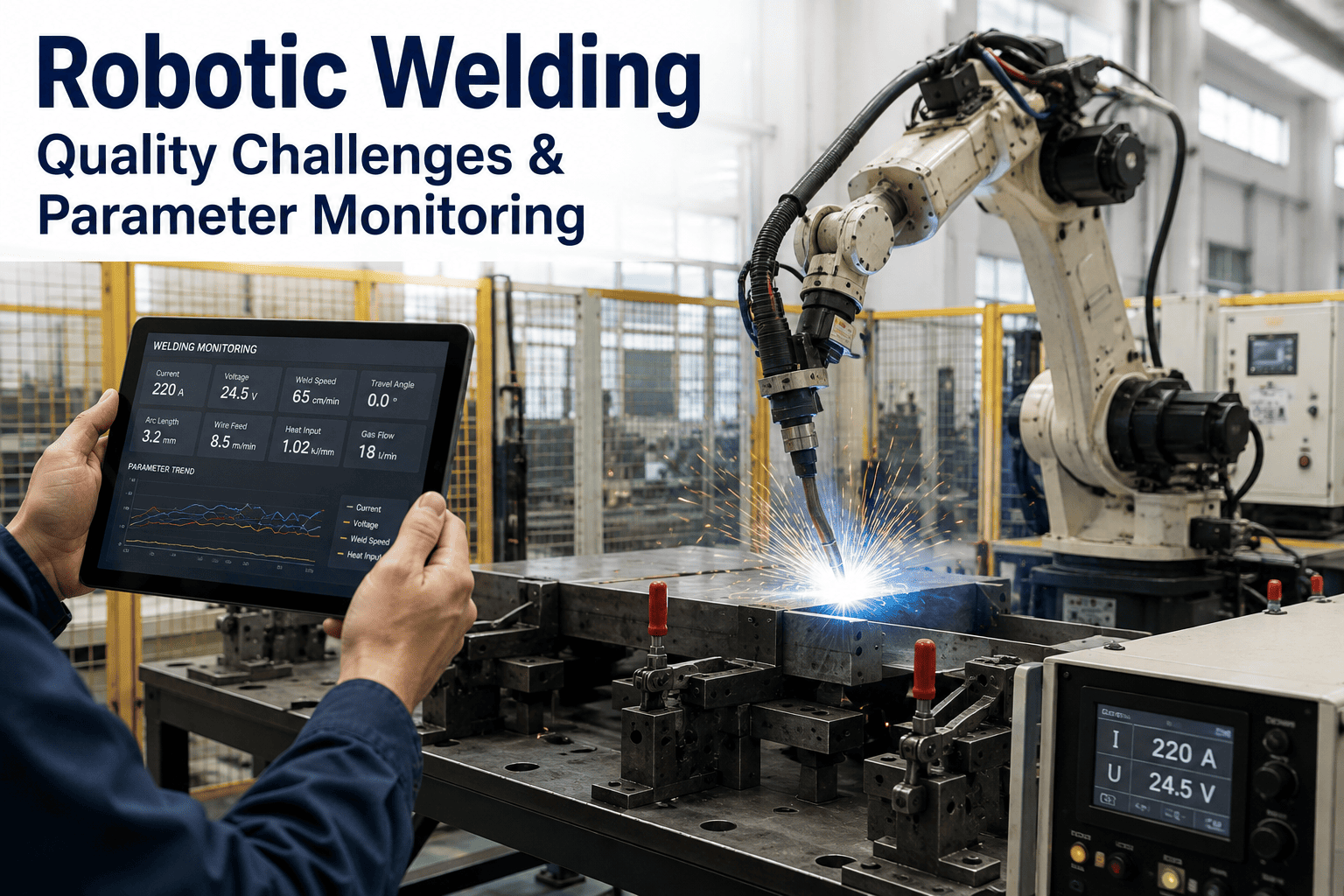
Monitor all six axes of robot motion, weld torch position, and process parameters in real time. iFactory detects abnormal torque spikes, wire feed hesitation, and gas flow fluctuations that lead to weld discontinuities. The system correlates each robotic weld to its pass/fail result, enabling root-cause analysis in under a minute.
MIG & TIG Welder Diagnostics
Track wire feed speed, voltage, amperage, and shielding gas flow for every MIG and TIG welder on the floor. iFactory builds a baseline for each machine and flags deviations that indicate liner wear, drive roll slippage, or contact tip degradation. Maintenance receives a prioritized repair list sorted by defect risk.
Consumable Lifecycle Management
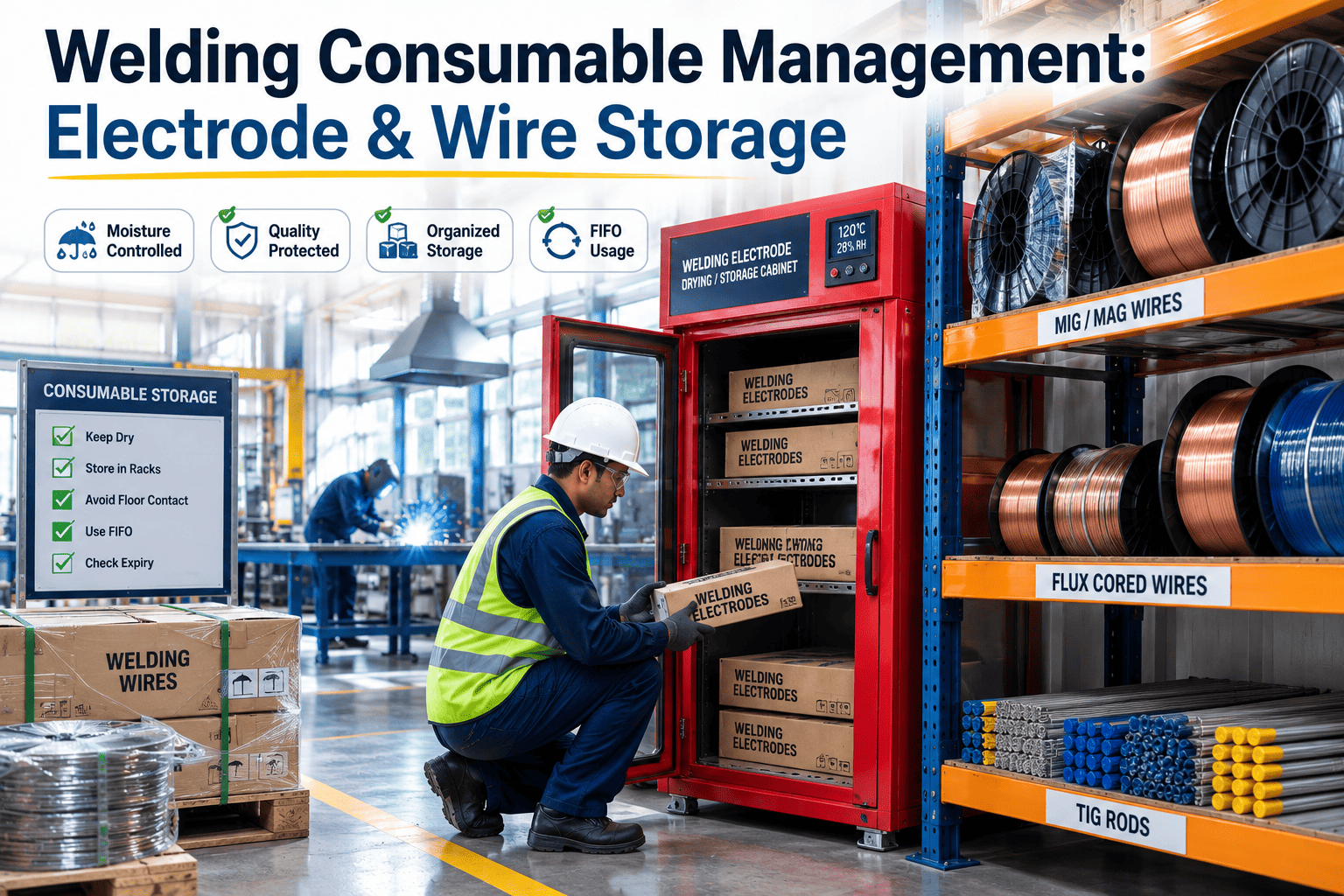
Replace contact tips, nozzles, diffusers, and liners based on actual wear metrics — not a fixed shift schedule. iFactory tracks cumulative arc-on time, current load, and wire feed tension to predict remaining useful life. Plants using this feature report 30% fewer consumable purchases and 15% fewer weld defects.
Preventive Maintenance Scheduling Engine
iFactory automatically generates a daily and weekly maintenance calendar from equipment condition data. Tasks are assigned by skill level, prioritized by defect risk, and tracked to completion. The system closes the loop: if maintenance is missed, the welder is flagged for pre-shift inspection before it can run.
You do not need new sensors, a cloud migration, or a data science team to get welding equipment analytics that work. Book a 30-min walkthrough and we will show you live on your own welder data.
Everything You Need to Run Welding Maintenance on Data, Not Guesses
iFactory is delivered as a complete, turnkey system. No integration projects, no consulting retainer, no hidden cloud costs.
On-Premise NVIDIA Appliance
Zero cloud dependency. All weld data stays on your plant network. No data egress fees, no latency, no security review.
End-to-End Integration
We connect to your welders, wire feeders, gas systems, and robots. You hand over data-source access; we deliver a working pilot.
6–12 Week Pilot to ROI
First weld cell live in 6 weeks. Full plant rollout in 12. ROI measured in reduced rework, fewer consumables, and less downtime.
24x7 Managed Service
iFactory monitors your welding equipment analytics around the clock. If a model detects a critical drift, we alert your team — or take corrective action on your behalf.
No Data Science Staff Required
AI models are pre-trained on millions of weld cycles. They adapt to your equipment in the first week. Your team uses the dashboard, not Python.
Plugs Into Your Existing Systems
iFactory feeds maintenance tasks into your CMMS, MES, or ERP. No rip-and-replace. No disruption to operator workflows.
Common Questions About Welding Equipment Analytics
Stop Managing Welding Equipment by Clipboard. Start with Data.
iFactory gives you real-time analytics on every weld, every consumable, and every machine on your floor. Get the pilot running in 6 weeks — no cloud, no data science team, no risk. Book a 30-minute walkthrough and we will show you live on your welder data.