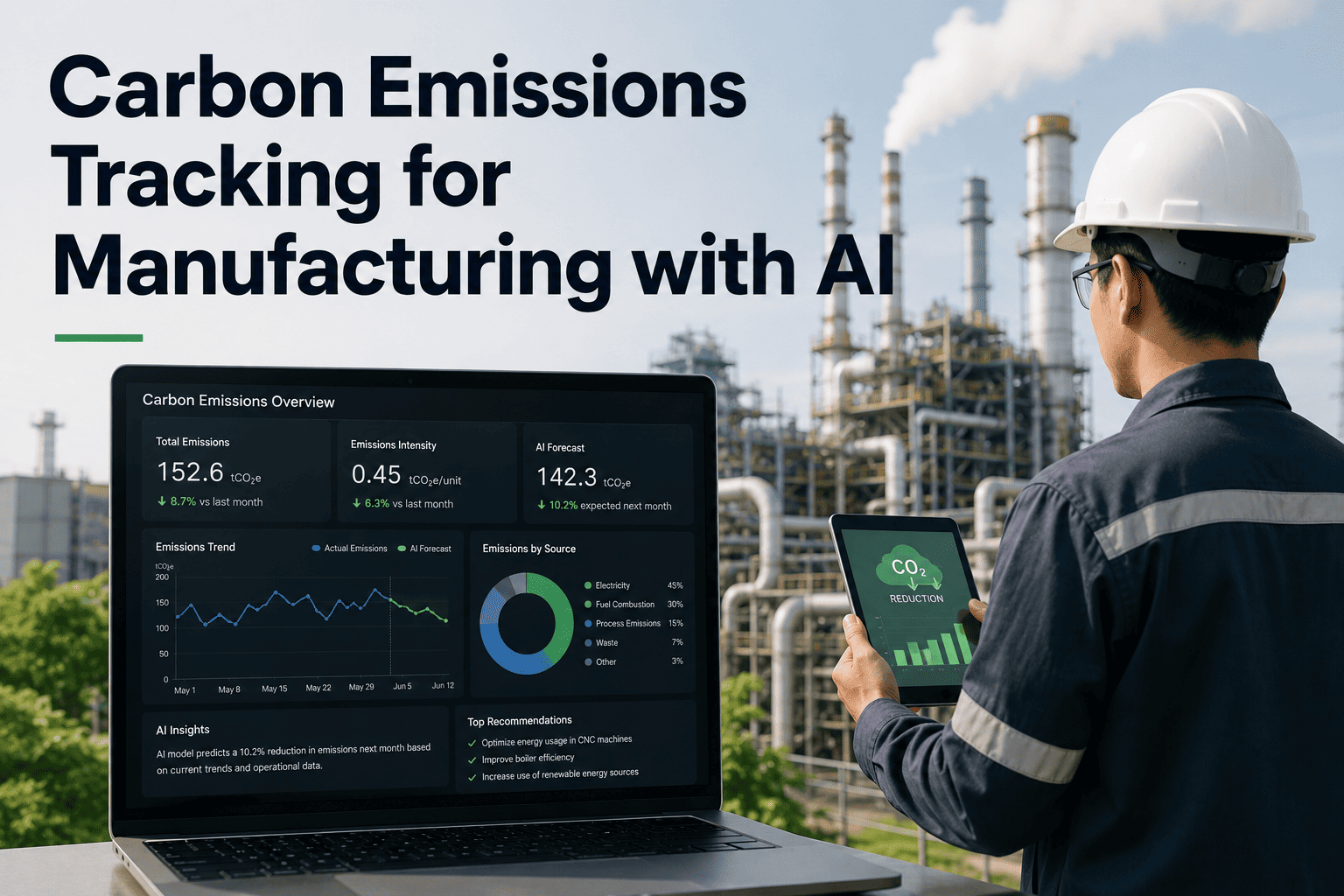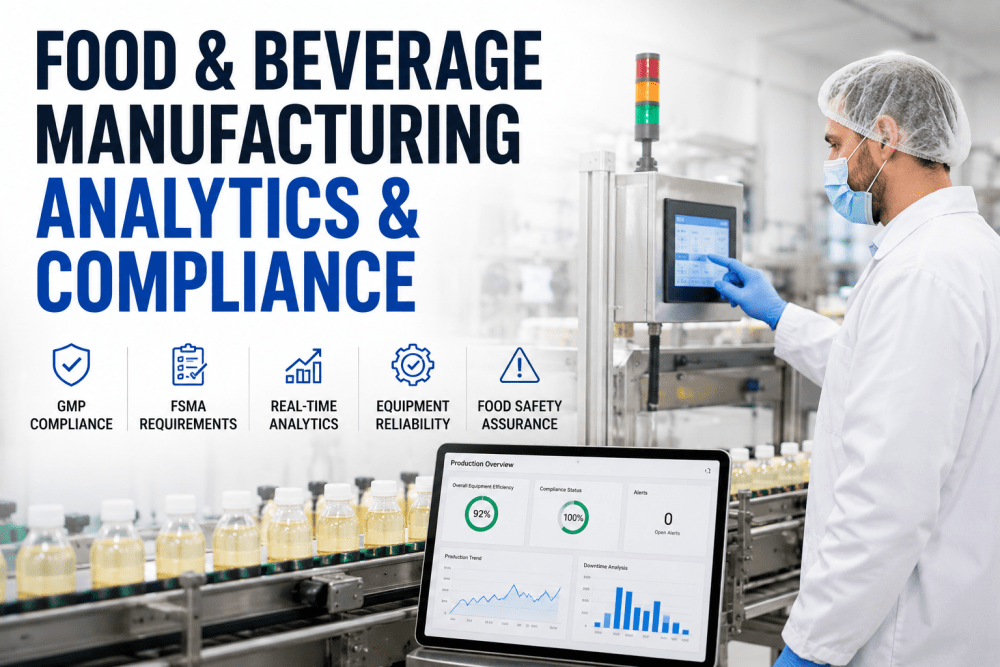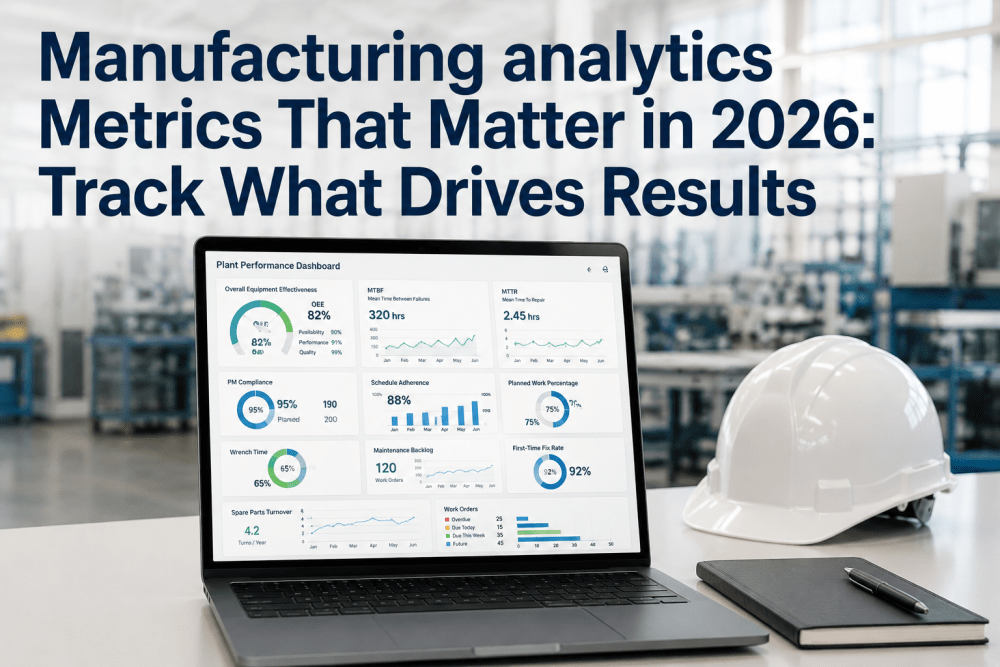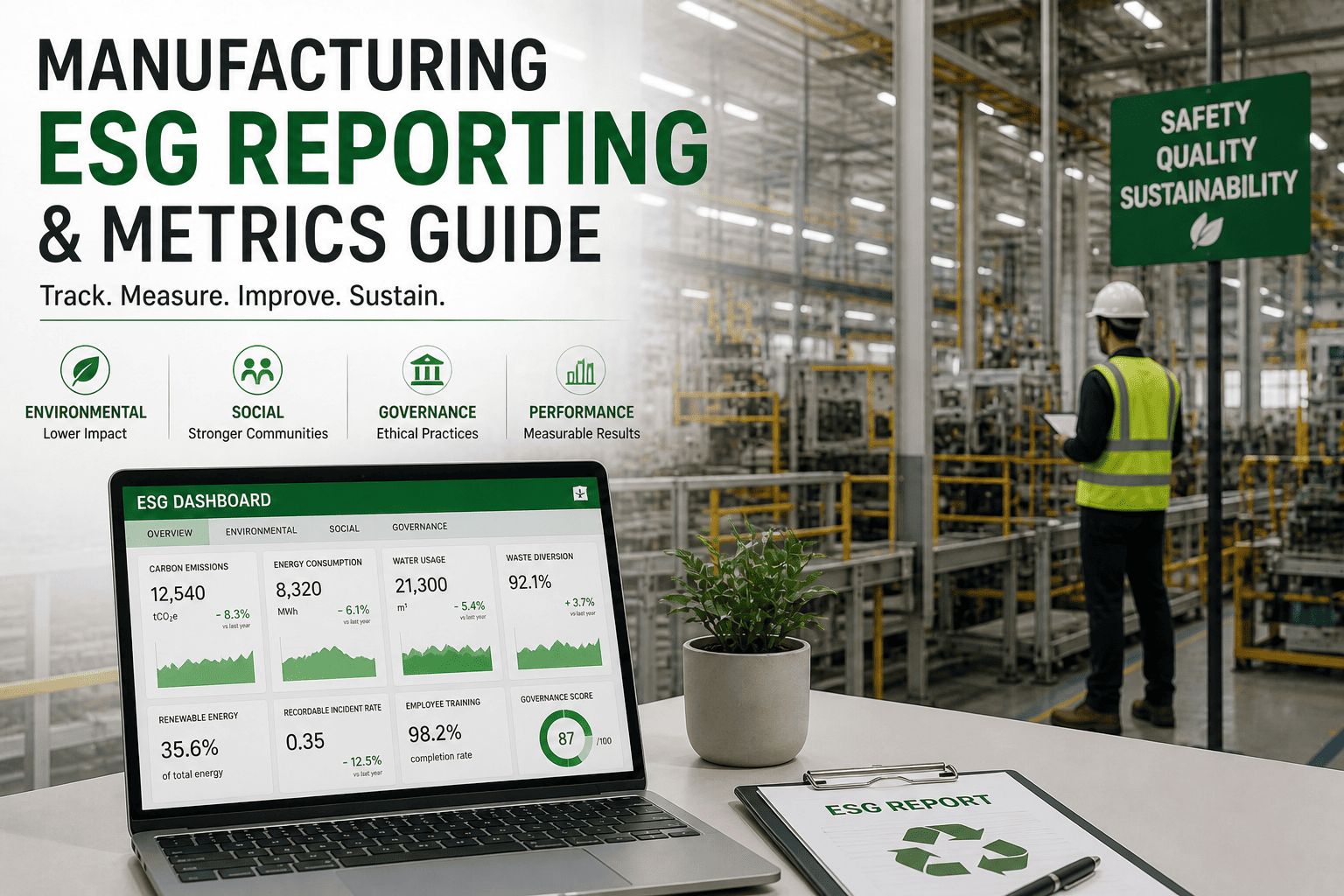
A global automotive supplier operating 18 manufacturing plants across North America, Europe, and Asia discovered during its annual ESG audit that sustainability data was fragmented across disconnected systems: energy consumption tracked in facility management spreadsheets, water usage recorded in environmental compliance logs, waste data scattered across landfill contracts and recycling vendor reports, emissions calculated manually by three different people using inconsistent methodologies. The company's ESG report claimed 12% energy reduction year-over-year, but when auditors cross-referenced against utility invoices, the actual reduction was 3.2% a discrepancy that triggered restatement risk and investor scrutiny. Manufacturing plants generate massive volumes of sustainability data every second energy meters, water flow sensors, waste scales, emissions monitors, production counters but most plants lack a unified system to collect, validate, correlate, and report this data in real time. The result: manual reporting processes that consume 200 to 400 hours per year per plant, inconsistent methodologies that create audit risk, and blind spots in actual sustainability performance that prevent targeted improvement. A unified ESG reporting platform that ingests real-time facility data, calculates sustainability metrics automatically, enforces consistent methodologies across all plants, and generates auditor-ready reports could eliminate manual effort, eliminate restatement risk, and unlock $2M to $8M in sustainability improvement value through visibility into hidden waste, energy, and water inefficiencies. Schedule a demo to model ESG reporting automation and sustainability ROI for your manufacturing portfolio.
The Manufacturing ESG Reporting Crisis: Data Fragmentation and Hidden Risk
Manufacturing plants are uniquely positioned to generate comprehensive ESG data — every facility has energy meters, water flow sensors, waste tracking systems, emissions monitors, production counters, and quality measurements. Yet most manufacturing companies struggle to convert this operational data into credible ESG reporting because the systems that generate data were designed for operational management, not ESG disclosure. Energy data lives in the HVAC controls and utility billing systems. Water data is scattered across municipal meters and process water recycling logs. Waste data is locked in contracts with landfill operators and recycling vendors. Emissions are calculated using spreadsheets referencing regional emission factors that may be outdated or inconsistent. Nobody has a single source of truth for sustainability performance across a multi-plant portfolio. The result: ESG reports are assembled 8 to 12 weeks after year-end by collating manual submissions from each plant facility manager, each using different calculation methodologies, different data sources, and different confidence in data accuracy. Audit risk escalates when auditors discover that claimed improvements are not verifiable against underlying data. Investor pressure increases as sophisticated institutional shareholders demand real-time sustainability metrics, not backward-looking annual reports. Competitive risk emerges as companies with unified ESG data systems make faster sustainability improvements and claim verifiable, auditor-ready metrics in investor presentations.
ESG data for a typical 18-plant manufacturing portfolio is scattered across 25+ systems: facility management platforms, utility billing systems, environmental compliance databases, waste vendor portals, HR systems (for employee safety metrics), ERP systems (for supply chain emissions), production systems (for production-normalized metrics). Assembling annual ESG report requires facility managers at each plant to manually extract data, validate against local records, and submit to corporate ESG team. Corporate then consolidates, applies regional emissions factors, and prepares report. Time investment: 250-400 hours per year per 18-plant portfolio. Error rate: 8-15% of submitted data requires correction during audit. Cost of restatement if errors found post-publication: $500K to $2M in re-audit fees, legal review, and investor communication.
Different plants use different calculation methodologies for the same KPI. Plant A calculates energy intensity as kWh per unit produced. Plant B uses kWh per square foot of facility. Plant C normalizes by headcount. Without a unified methodology, portfolio-level metrics cannot be confidently aggregated. Scope 2 emissions factors vary by region — using 2021 emission factors for some plants and 2023 factors for others creates inconsistency. Water intensity is sometimes reported as gallons per unit and sometimes as gallons per dollar of revenue. Waste diversion rates are calculated differently: some plants count only landfill diversion, others include incineration as "diverted." Auditors flag methodology inconsistencies as material weaknesses, requiring restatement and hindering ESG certifications.
ESG reports typically report annual aggregate metrics (total energy, total water, total waste across all plants). Individual plant-level performance is hidden — a plant consuming 40% more energy than similar facilities elsewhere in the portfolio goes undetected because annual reporting obscures plant-level outliers. Opportunities for targeted improvement are invisible without real-time plant-level dashboards. A facility wasting $400K annually in excess compressed air consumption is not identified until auditors dig into utility data months after year-end. A plant discharging water at 15% above regulatory limits is discovered only during environmental audit, not through proactive management dashboards.
Third-party auditors reviewing ESG reports request source data to validate claimed metrics. Companies without unified data systems struggle to produce auditor-ready documentation — data is scattered across vendor portals, utility websites, and spreadsheets. Audit timelines extend from 4 weeks to 12+ weeks due to data retrieval and validation delays. Sustainability certifications (Science-Based Targets, Carbon Trust, EcoVadis) require standardized methodologies and auditable data trails. Companies without unified systems cannot easily achieve or maintain certifications, losing competitive positioning with customers demanding verified sustainability suppliers.
The 12 Critical Manufacturing ESG Metrics Every Plant Must Track
Manufacturing ESG reporting frameworks (GRI, SASB, TCFD, SEC Climate Disclosure Rules) require a consistent set of sustainability metrics. Understanding what to measure, how to measure it, and how each metric connects to plant-level operational performance is essential to building an effective ESG data system.
What To Measure: All electrical consumption (purchased from grid) plus thermal energy (natural gas, steam from external source). How: Integrate with utility billing systems and on-site energy meters. Read meters hourly for real-time dashboards; daily aggregate for reporting. Plant-Level Insight: Energy per unit produced reveals equipment efficiency. A facility consuming 850 kWh per unit when peers consume 650 kWh signals opportunities for equipment upgrade or process optimization worth $200K-$600K annually. ESG Reporting Use: Foundation for Scope 1 & 2 emissions calculation.
What To Measure: CO2e emissions from natural gas, diesel, propane, direct process emissions. How: Multiply fuel consumption by regional emission factors (EPA, IEA). Update factors annually per current guidance. Calculation Risk: Using outdated emission factors (2021 vs 2024) creates reporting inconsistency. Unified system enforces current factors across all plants. ESG Reporting Use: Primary ESG metric; target for Science-Based Targets and net-zero commitments.
What To Measure: CO2e from purchased electricity. How: Multiply kWh purchased by regional grid emission factor (varies by region/grid operator). US average: 0.38 kg CO2e/kWh; California: 0.15 kg CO2e/kWh; Europe: 0.25 kg CO2e/kWh. Improvement Opportunity: Switching to renewable energy (solar, wind) drops Scope 2 factor to 0.05-0.08 kg CO2e/kWh, enabling 60%+ emissions reduction without changing consumption. ESG Reporting Use: Second-largest emissions category for most manufacturing.
What To Measure: Total energy divided by units produced. Industry varies: automotive stamping (850-1,200 kWh/unit), food processing (2,500-4,000 kWh/unit), pharmaceutical (1,500-3,500 kWh/unit). How: Real-time calculation: hourly energy ÷ hourly production volume. Plant-Level Insight: 10% reduction in energy intensity (from 1,000 to 900 kWh/unit) = $180K-$400K annual savings depending on electricity cost. ESG Reporting Use: Normalized metric showing efficiency progress independent of production volume.
What To Measure: Fresh water from municipal supply plus recycled/reclaimed water. How: Integrate with water meters (municipal input) and sub-meters on recycled water loops. Water Recycling Opportunity: Most plants can recycle 20-40% of water through cooling tower optimization and process water reuse. Reduction from 1M to 700K gallons/day = $140K-$280K annual cost savings. ESG Reporting Use: Water stress metric; critical for facilities in water-scarce regions.
What To Measure: Total water consumption ÷ units produced. Benchmarks: Beverage (2-3 gal/unit), automotive (0.5-1.5 gal/unit), semiconductor (5-15 gal/unit). How: Real-time calculation for identification of water-inefficient processes. Plant-Level Insight: A 15% water intensity reduction across 18 plants = $280K-$560K annual savings. ESG Reporting Use: Water efficiency metric; increasingly required in water-stressed geographies.
What To Measure: Volume and quality (pH, TSS, metals concentration) of water discharged to municipal treatment or surface water. How: Integrate with wastewater treatment monitoring systems. Monitor compliance with NPDES permit limits. Regulatory Risk: Exceeding permit limits triggers fines ($25K-$250K per violation) and potential facility closure. Real-time monitoring prevents violations. ESG Reporting Use: Water quality metric required by aquatic ecosystem impact frameworks.
What To Measure: All waste streams: manufacturing scrap, packaging waste, food waste, hazardous waste. How: Integrate with waste vendor scales (landfill, recycling, incineration). Track weight and cost per waste stream. Plant-Level Insight: A plant generating 1,200 tons/year of manufacturing scrap vs peers at 900 tons/year signals process inefficiency worth investigating. Reducing scrap by 15% = $150K-$400K cost reduction plus ESG improvement. ESG Reporting Use: Foundation for waste diversion and circular economy metrics.
What To Measure: Percentage of waste diverted from landfill through recycling, composting, energy recovery. Formula: (Recycled + Composted + Energy Recovered) ÷ Total Waste × 100. How: Consolidate waste vendor reports (landfill weight, recycling weight, incineration with recovery weight). Industry Benchmarks: Manufacturing typically 40-60% diversion; world-class plants 75-90%. ESG Reporting Use: Key circular economy metric; customers increasingly require 80%+ diversion suppliers.
What To Measure: All classified hazardous waste: spent solvents, electroplating sludge, contaminated materials. How: Integrate with hazardous waste contractor tracking (waste manifests, disposal certificates). Regulatory Context: EPA and state hazmat regulations mandate tracking and reporting. Non-compliance fines: $25K-$200K per violation. ESG Reporting Use: Risk metric; hazardous waste reduction demonstrates environmental stewardship.
What To Measure: Total Scope 1 + Scope 2 emissions ÷ units produced. How: Real-time calculation as production and emissions data arrive. Why It Matters: Production volume fluctuates month-to-month; carbon intensity normalizes to show efficiency progress independent of volume. A plant achieving 2.5 kg CO2e/unit vs peers at 3.2 kg CO2e/unit signals 20% better performance. ESG Reporting Use: Science-Based Target intensity metric; required by SBTi framework.
What To Measure: Total waste ÷ units produced. How: Real-time calculation. Plant Optimization: A plant at 4.2 kg waste/unit vs 2.8 kg waste/unit represents 33% waste reduction opportunity = $180K-$520K annual scrap cost reduction. ESG Reporting Use: Operational efficiency metric; tied to continuous improvement programs like lean manufacturing.
Real-Time ESG Reporting Platform Architecture
Manufacturing ESG data is most valuable when it flows continuously from plant sensors through validation, calculation, and reporting workflows — not monthly or annual batches. A real-time ESG reporting platform ingests operational data, applies standardized calculation methodologies, enforces consistency across all plants, and generates auditor-ready reports automatically.
Data Sources: Utility meters (electricity, gas, water), facility management systems (HVAC, lighting), production systems (units produced, cycle times), waste tracking (scales, vendor portals), environmental monitors (air emissions, water quality), HR systems (headcount for intensity normalization). Integration Approach: API connections for modern systems; file imports for legacy systems. Data Frequency: Energy and production: hourly. Water and waste: daily. Validation: Automated anomaly detection flags data outside expected ranges (e.g., 3x normal electricity consumption) for investigation.
What It Does: Calculates all 12+ ESG metrics using standardized formulas, current regional emission factors, and consistent normalization. Examples: Energy intensity = kWh (hourly sum) ÷ units produced (hourly count). Carbon intensity = (kWh × grid emission factor + fuel × fuel emission factor) ÷ units produced. Water intensity = gallons consumed ÷ units produced. Currency: Emission factors updated annually (EPA, IEA, regional grid operators). Metric definitions updated quarterly to reflect GRI/SASB guidance changes. Result: Every plant uses identical methodology; portfolio-level metrics are aggregation of standardized plant-level results.
What It Shows: Energy intensity, water intensity, waste intensity, carbon intensity for every plant, updated hourly. Peer comparison: each plant's performance against facility average and top quartile. Trend analysis: 30-day, 90-day, and year-to-date trending per metric. Alert Rules: Plant consuming 20% above its own baseline triggers alert. Plant consuming 30% above portfolio average triggers investigation request. Actionability: Facility managers identify that Plant C's water intensity spiked 15% month-over-month; investigation reveals cooling tower malfunction (easy $140K fix). Plant E discovers energy intensity 22% above peers; LED retrofit and HVAC controls optimization delivers $260K annual savings.
What It Does: Generates annual ESG report in GRI, SASB, TCFD formats with all calculation documentation, methodologies, and source data. Audit Features: Complete audit trail showing data source, validation rules applied, calculation formula, and human review approvals. All data timestamped and cryptographically signed. Certifications: Report includes data completeness %, confidence levels for each metric, and verification checklist for third-party auditors. Restatement Prevention: Built-in version control ensures if data corrections are made, restatement impact is calculated and documented rather than discovered later.
What It Does: Real-time dashboard showing progress toward ESG targets (e.g., Science-Based Target of 30% carbon reduction by 2030). Features: Current performance vs target trajectory. Projection: if current improvement rate continues, will company hit target? What acceleration is needed? Which plants are on track vs falling behind? Quarterly Updates: Investor presentations automatically refresh with latest quarterly ESG metrics rather than relying on annual reports. Stakeholder Communications: Enables monthly or quarterly ESG updates to stakeholders, certifying improvement with real data rather than forward-looking statements.
Transform Manufacturing ESG Reporting Into a Strategic Asset
Real-time ESG reporting eliminates manual data collection, enforces methodological consistency, unlocks sustainability improvement opportunities, and eliminates audit risk. Model ESG platform ROI and reporting automation value specific to your manufacturing portfolio.
Manufacturing ESG Reporting: 8-Week Implementation Timeline
Audit existing ESG data sources across all plants: identify which metrics are currently tracked, data sources, calculation methodologies, gaps. Document utility billing systems, waste vendor portals, environmental monitoring systems, production systems. Assess data quality: what % of expected data is actually available and accurate? Identify regulatory requirements: which ESG frameworks (GRI, SASB, TCFD, SEC rules, customer-specific requirements) apply to company.
Define standardized ESG metrics and calculation methodologies for the company. Identify authoritative sources for emission factors (EPA, IEA, regional grids). Set data collection frequency (hourly for energy/production, daily for water/waste). Define normalization approach (per unit produced is standard for manufacturing; optionally add per FTE or per square foot). Create calculation templates for all 12+ ESG metrics. Document methodology in stakeholder-facing policy document.
Integrate ESG reporting platform with existing systems: utility APIs, waste vendor portals, production systems, environmental monitoring equipment. Test data flows from each plant. Implement automated data validation: anomaly detection, completeness checks, outlier flagging. Run historical data retrospectively to populate baseline metrics for prior 24 months. Identify and correct data quality issues (e.g., missing months, calculation errors) during this period. Result: clean historical data ready for reporting.
Deploy plant-level dashboards and portfolio-level dashboards. Train facility managers, ESG team, and executive leadership on metric interpretation, alert response, and dashboard navigation. Validate dashboard calculations against manual calculations for sample months to confirm accuracy. Generate first automated ESG report using full 24-month historical data. Conduct third-party audit of report (optional but recommended). Launch real-time metric tracking and monthly ESG updates to internal stakeholders.
ESG Reporting Financial Impact and Operational Value
Frequently Asked Questions: Manufacturing ESG Reporting
Why Manufacturing Companies Choose Real-Time ESG Reporting
Complete audit trail, source-documented calculations, auditor-ready reports. Eliminate restatement risk and pass third-party verification first time.
Standardized metrics and calculation rules across all plants. Portfolio-level metrics are trustworthy aggregations, not reconciliations of inconsistent local approaches.
Plant-level dashboards identify energy, water, and waste inefficiencies that facility managers can fix for $150K-$600K per improvement. ESG reporting becomes operational strategy, not compliance checkbox.
Real-time ESG metrics enable faster Science-Based Target achievement. First-mover ESG credibility attracts investors and customers demanding verified sustainability suppliers.
Start Real-Time ESG Reporting for Your Manufacturing Portfolio
Manufacturing ESG reporting transformed from annual compliance exercise into strategic operational asset when data flows continuously from plant sensors through standardized calculations to investor dashboards. Real-time ESG reporting eliminates manual effort, ensures audit readiness, and unlocks $600K-$1.8M annual value through operational sustainability improvements. Schedule a demo to see how the platform automates ESG data collection, validates calculations, and generates certified reports across your entire manufacturing footprint.