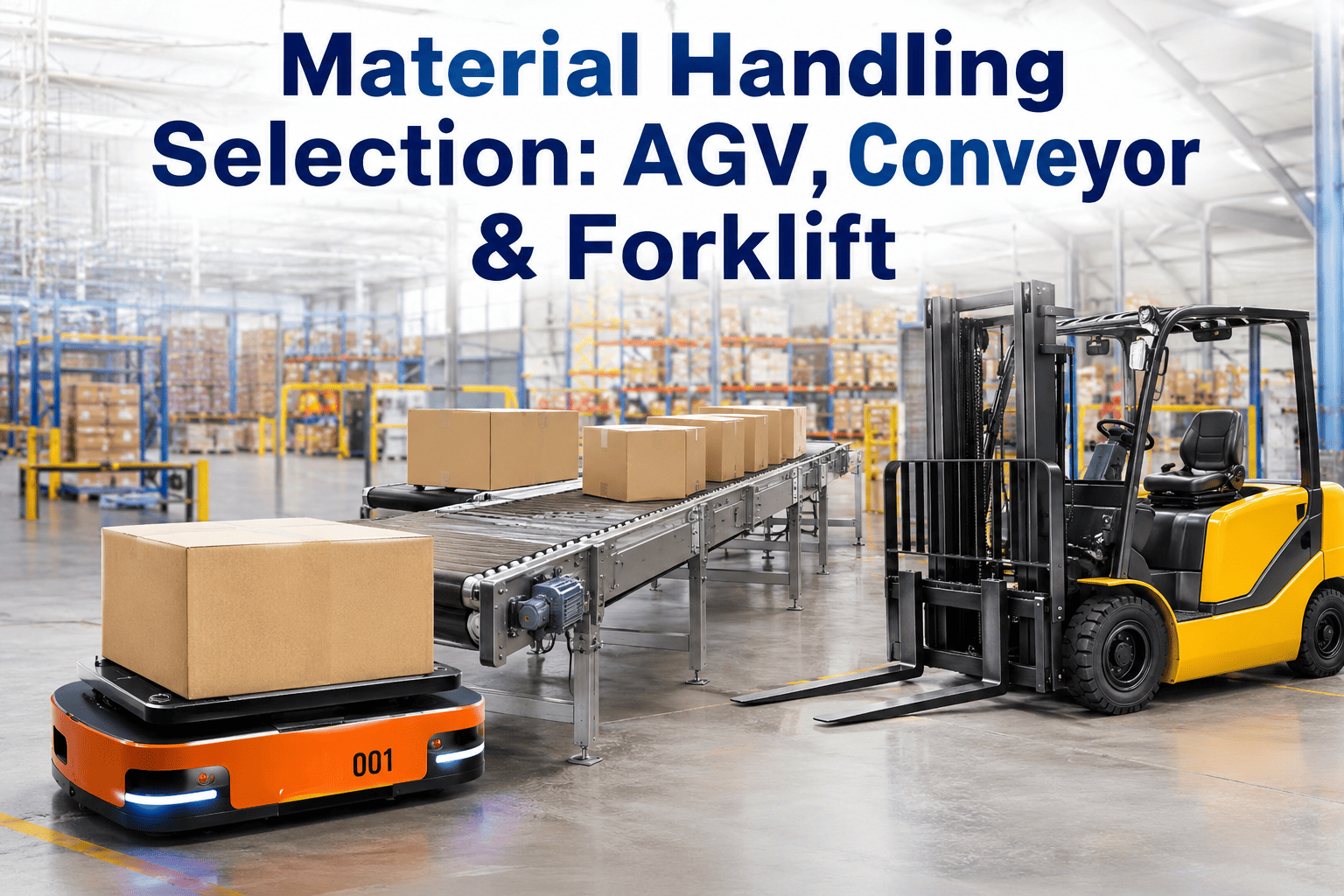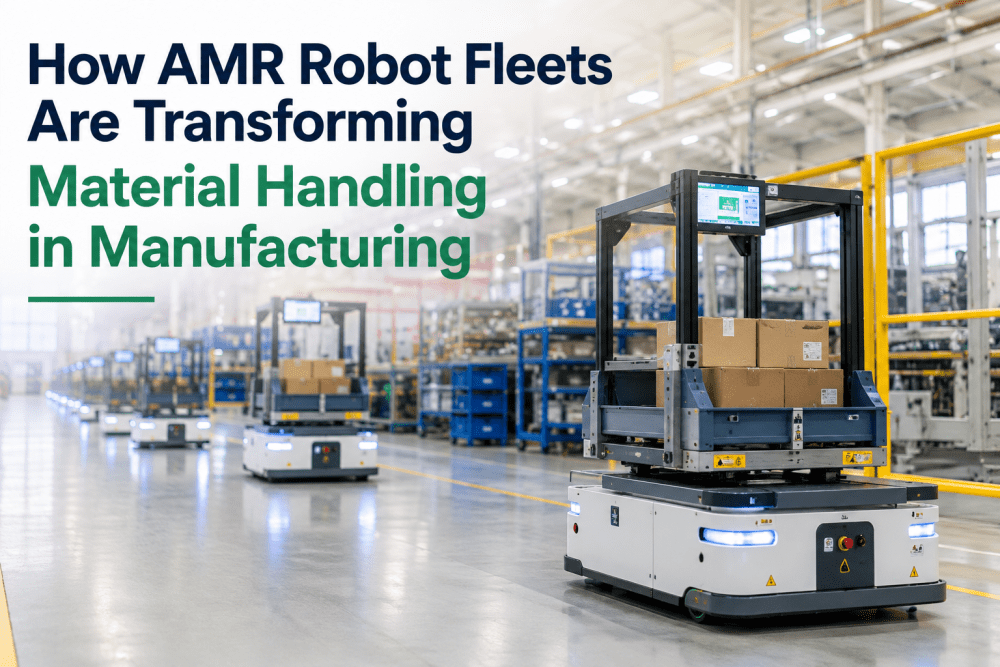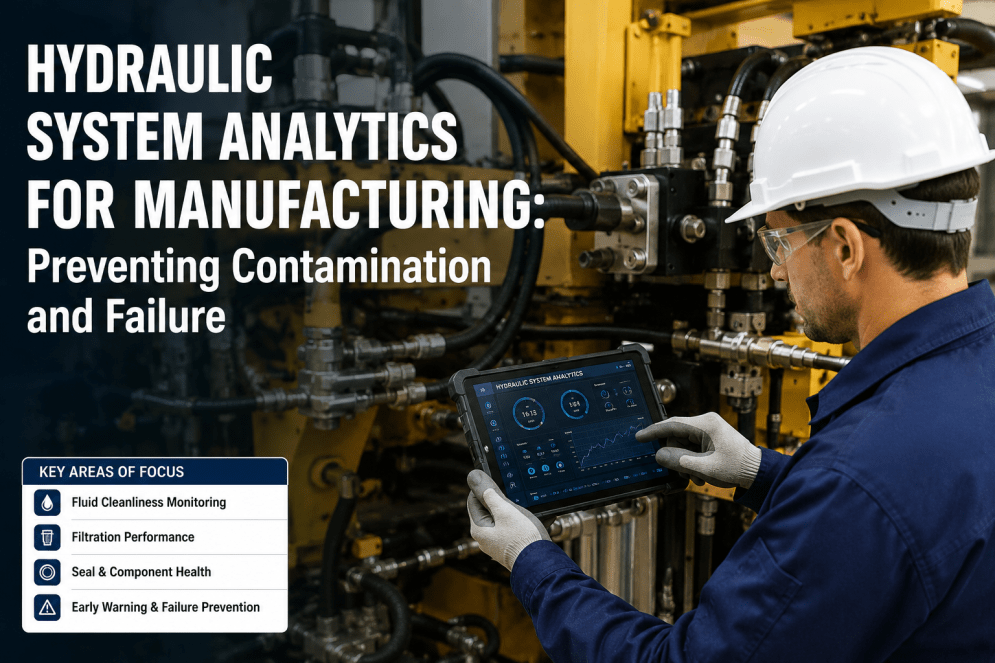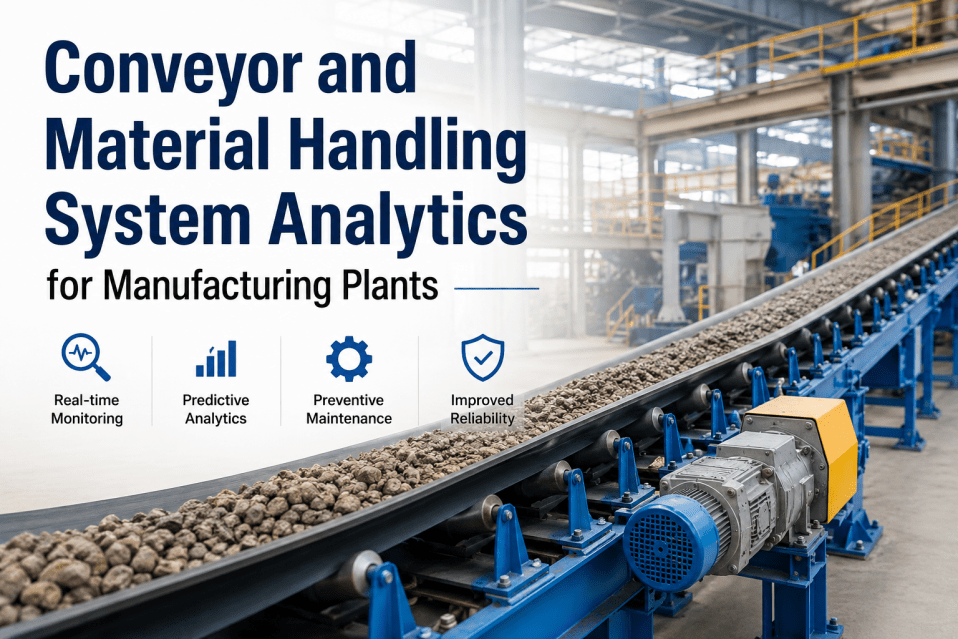
Conveyor systems are the backbone of manufacturing operations, moving materials through production lines with relentless consistency. A typical automotive plant runs 40-60 conveyor systems continuously, some moving chassis at speeds up to 4 meters per minute with precision measured in millimeters. Yet most plants manage conveyor maintenance reactively—a squealing bearing triggers a technician visit, a misaligned belt causes slippage, a motor overheats and shuts down unexpectedly. By then, production has already stopped. The cost of unplanned conveyor downtime is immediate and measurable: a halted assembly line loses $150,000-$400,000 per hour depending on vehicle complexity and production stage. Conveyor failures represent 18-25% of total production line downtime across manufacturing facilities. Manual inspection cannot catch degradation signatures before failure occurs. Disconnected maintenance data prevents root cause analysis. Most technicians lack visibility into conveyor health until a breakdown forces emergency response. iFactory is The Complete AI Platform for Manufacturing Operations, delivering the only end-to-end conveyor monitoring and predictive maintenance solution purpose-built for manufacturing plants. One Platform for Smart Manufacturing with AI-Powered Maintenance, OEE, and Operations. Want to predict conveyor failures before they halt production and reduce conveyor-related downtime by 35-50%? Book a demo today or explore implementation with our team.
Predict Conveyor Failures 2-4 Weeks Before They Stop Production
Real-time monitoring, anomaly detection, and predictive maintenance for every conveyor system in your facility.
Understanding Conveyor System Failure Modes
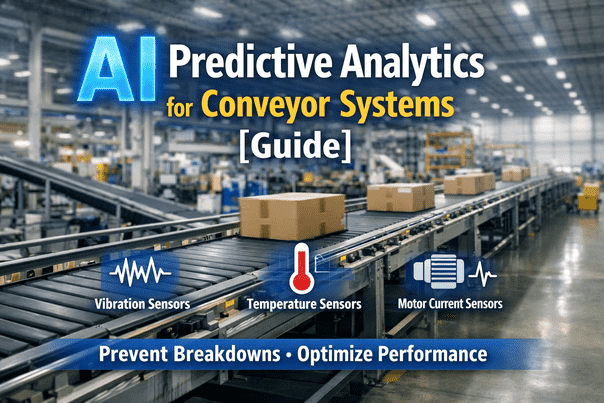
Conveyor systems fail through predictable degradation patterns. A belt doesn't suddenly tear—it accumulates microscopic damage through misalignment and friction. A motor doesn't instantly seize—bearing temperatures rise gradually over weeks. A drive pulley doesn't spontaneously jam—wear patterns develop measurably. Yet most maintenance programs inspect conveyor systems monthly or quarterly, missing the degradation signatures between inspections. Digital intelligence changes this equation. Real-time monitoring captures continuous measurements—vibration, temperature, belt tension, motor current draw—creating a complete health profile. AI algorithms trained on thousands of conveyor failure events detect subtle pattern changes that precede catastrophic failure by 2-4 weeks.
How iFactory Solves Conveyor Maintenance Gaps
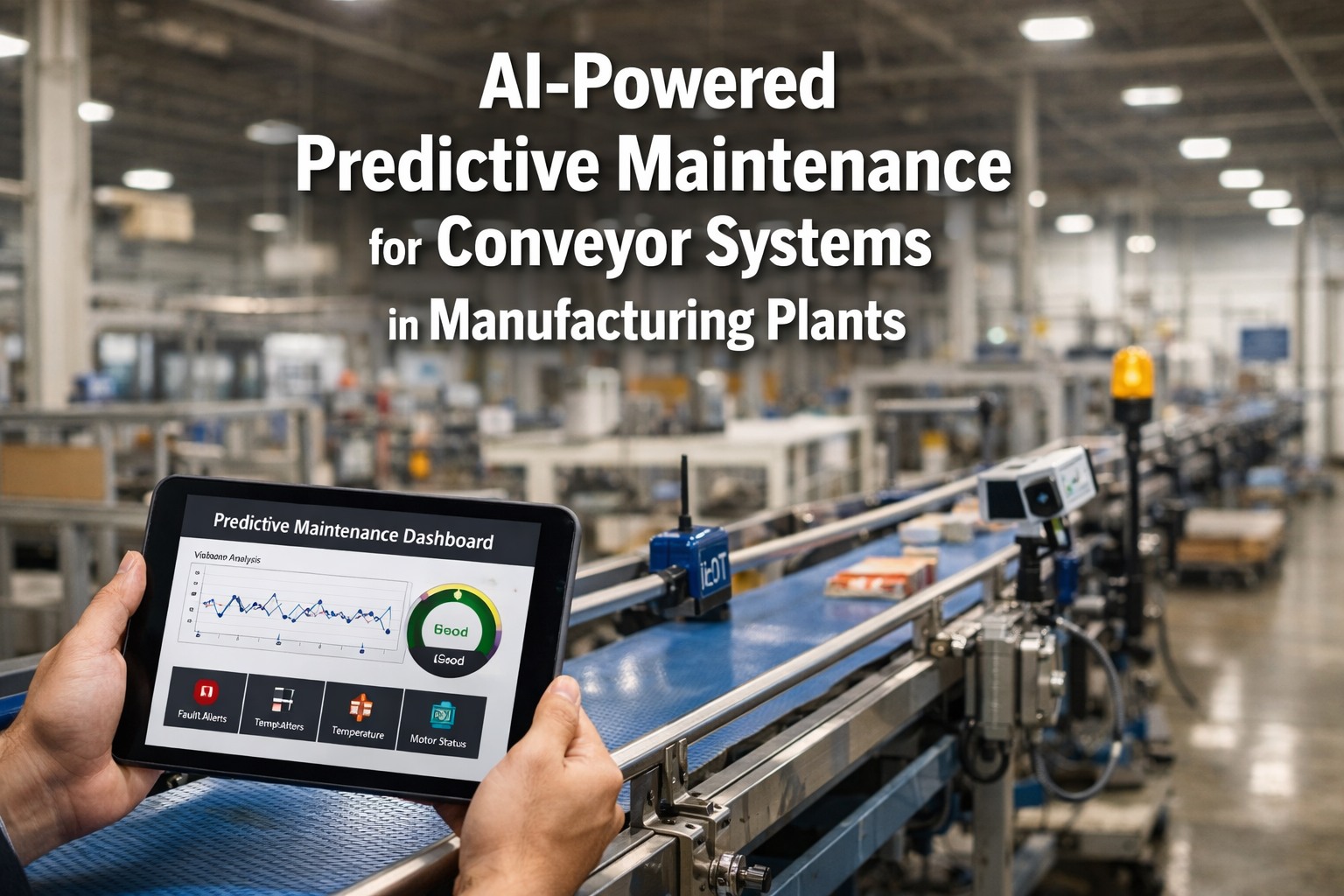
iFactory conveyor monitoring platform connects to existing equipment through vibration sensors, temperature monitors, and SCADA integration, capturing continuous health data. AI algorithms analyze patterns in real time, predicting failures before they occur and triggering automated work orders for preventive intervention.
Bearing Condition Monitoring
Vibration sensors detect bearing wear patterns and lubrication degradation 3-4 weeks before catastrophic failure. Temperature trending shows heat buildup. Predict Failures Before They Stop Production through continuous frequency analysis capturing early-stage bearing damage signatures.
Belt Alignment and Tension
Real-time belt tension sensors and alignment cameras detect misalignment before slippage causes production loss. Tension trending predicts belt stretch and wear. AI That Turns Downtime Into Planned Maintenance by flagging misalignment issues 1-2 weeks before belt failure.
Motor Health Analytics
Electric current analysis detects rotor bar degradation, winding insulation breakdown, and thermal stress 2-3 weeks early. Vibration signatures identify mechanical imbalance and misalignment. Prevents motor failure through early detection of multiple failure modes simultaneously.
Drive System Integrity
Gearbox wear detection through vibration trending. Coupling alignment monitoring. Drive pulley surface degradation analysis. Detects degradation across entire drive train, not just individual components, preventing secondary failures after primary intervention.
Automated Work Order Generation
When predictive thresholds are breached, work orders generate automatically with specific failure mode, recommended action, and required parts. Technicians receive prioritized, data-driven work assignments. Integration with CMMS systems ensures maintenance scheduling without delays.
Historical Troubleshooting Data
Every repair creates a data record linking failure symptoms to root cause. When similar patterns emerge on different conveyors, historical data enables faster diagnosis. Technicians solve problems faster because they've seen similar failures before. Institutional knowledge accumulates instead of being lost.
OEE Optimization
Real-Time Visibility Into Every Production Line. Conveyor performance directly impacts line OEE. Monitor conveyor contribution to overall equipment effectiveness. Identify which conveyors drive the most downtime. Prioritize maintenance efforts for maximum OEE improvement.
Why iFactory Is Different: Built for Manufacturing Plants
Built for Manufacturing Plants, Not Generic CMMS. Connects to Your Existing SCADA/PLC Systems. iFactory conveyor monitoring is not an afterthought in a generic maintenance system. It is purpose-engineered for conveyor systems with deep understanding of mechanical failure physics and manufacturing operations.
Faster Deployment
Wireless sensors on existing conveyors—no equipment replacement. Integration with SCADA in 2-4 weeks. First predictions within 6 weeks. No implementation project, no engineering delays.
Manufacturing-Grade Intelligence
AI models trained on 200,000+ conveyor operating hours from automotive, food, pharma, and logistics facilities. Understands failure signatures across industry variations. 91% detection accuracy, 4% false positive rate.
Complete Plant Coverage
Monitor all conveyor systems—main assembly, sub-assembly, packaging, material handling—on one platform. One dashboard. All conveyor KPIs visible. Unifies maintenance visibility across entire facility.
Conveyor Monitoring Implementation Roadmap
iFactory follows a proven 8-week implementation path that delivers real-time conveyor monitoring and predictive maintenance in 4-6 weeks, with optimization continuing through week 8.
By Week 4, baseline is established and anomaly detection begins. By Week 6, first failures are detected early. By Week 8, entire facility runs with predictive conveyor maintenance. ROI in 6 weeks. Full payback within 18 months.
Real Results: Conveyor Failure Prevention Success Cases
Automotive Assembly Plant: Main Line Reliability
Result: 42% reduction in unplanned conveyor stops, $1.8M annual savings, 16-month payback. Large automotive facility with 32 main conveyor systems running assembly line at 60 units per hour. Unplanned conveyor stops were averaging 3-4 per week. Major bearing failure on accumulating conveyor cost $340,000 in emergency repair and 18-hour line stoppage. Implemented iFactory monitoring across all main conveyors. Within first 6 weeks, system detected bearing wear pattern on drive conveyor that technicians flagged for maintenance. Bearing replacement was scheduled during planned downtime—no emergency, no crisis. Subsequent pattern analysis revealed that bearing failures clustered around 8,400 operating hours, allowing predictive replacement schedule 2 weeks before failure probability exceeded 15%. Year one: 18 conveyor issues detected early, 16 prevented failures, 2 identified design improvements to reduce future failure risk. Conveyor-related downtime dropped from 3-4 stops per week to 0.8 per week.
Food and Beverage Facility: Material Handling Optimization
Result: 38% reduction in conveyor downtime, $1.2M cost prevention, 12-month payback. Food processing facility with complex material handling conveyor network—24 conveyors moving product through wash, sorting, and packaging. Belt slippage and misalignment were causing frequent line stoppages and quality issues. Monitoring system was deployed across all conveyors. Within 3 weeks, tension analysis identified three misaligned conveyors running 15-20% outside specification. Corrected alignment before operational failures could manifest. Belt tension trending enabled predictive belt replacement—replacing belts at optimal wear point rather than waiting for failure. Result: Line stops due to conveyor issues dropped 38%. Preventive belt replacements cost $8,000 each but prevented $75,000 emergency repair costs when belts failed mid-production.
Logistics and Distribution Center: Uptime Maximization
Result: 45% conveyor availability improvement, $960K cost prevention, 14-month payback. Distribution center with 18 high-speed sortation conveyors operating 20 hours per day, 6 days per week. Motor failures and bearing seizures were unpredictable and frequent. Monitoring was installed with specific focus on motor current signature analysis and bearing vibration. System identified early signs of bearing lubrication breakdown on three critical conveyors. Proactive regreasing prevented bearing seizure. Motor winding insulation degradation on two units was caught at early stage—motors were replaced during maintenance window instead of during peak sorting hours. Year one result: 8 potential conveyor failures prevented. Emergency service calls dropped from 8-12 per month to 2-3 per month. Overtime labor costs for emergency repairs dropped 65%. Facility uptime improved from 91% to 96%.
Comparison: iFactory Conveyor Monitoring vs. Industry Approaches
| Capability | iFactory Monitoring | Manual Inspection | Basic Alarm System | Reactive Maintenance |
|---|---|---|---|---|
| Early Detection Window | 2-4 weeks before failure | At inspection point only | Threshold breach only | After failure occurs |
| Detection Accuracy | 91% (pattern-based) | 68% (visual only) | 75% (threshold-triggered) | 0% (no prevention) |
| False Positive Rate | 4% (tunable) | 10-15% (subjective) | 12-18% (oversensitive) | 0% (no alerts) |
| Cost per Failure Prevented | $12,000 (planned maintenance) | $45,000 (emergency repair) | $65,000 (downtime + repair) | $220,000 (full impact) |
| Maintenance Scheduling | Data-driven, optimized | Calendar-based calendar | Reactive triggered | Emergency-driven |
Conveyor Monitoring Across Manufacturing Regions
| Region | Primary Conveyor Challenges | iFactory Solution Focus |
|---|---|---|
| US (Automotive) | High-speed assembly lines, rapid throughput, zero-tolerance downtime requirements | Bearing reliability, motor efficiency, predictive replacement planning |
| Europe (Mixed Manufacturing) | Compliance requirements, energy efficiency pressure, aging equipment | Energy consumption tracking, compliance documentation, lifecycle optimization |
| UK (Logistics) | 24/7 sortation operations, extreme wear rates, limited maintenance windows | Uptime maximization, scheduled maintenance integration, emergency prevention |
| UAE (Food Processing) | High ambient temperature, dust/contamination ingress, hygiene compliance | Temperature-adjusted intervals, sanitation verification, compliance tracking |
| India (Manufacturing Growth) | Rapid capacity scaling, technician skill gaps, cost optimization pressure | Training support through data, cost-effective maintenance, rapid problem diagnosis |
What Manufacturing Leaders Are Saying
"We were experiencing conveyor failures every 10-14 days—bearing seizures, belt breaks, motor faults—with no warning. Technicians would discover problems when production stopped. iFactory monitoring gave us 2-3 weeks advance notice for most failures. We replaced bearings during planned maintenance windows instead of emergency repairs. Unplanned downtime dropped 42%. The system paid for itself in less than a year. Now we can't imagine running conveyors without it."
Plant Manager, Automotive Assembly Facility
Frequently Asked Questions
Eliminate Unplanned Conveyor Downtime with Predictive Monitoring
Talk to an iFactory specialist about implementing conveyor monitoring across your facility. Detect failures 2-4 weeks early. Prevent production stops. Reduce maintenance costs 35-50%.
The Complete AI Platform for Manufacturing Operations
iFactory conveyor monitoring is part of our complete manufacturing operations platform. Eliminate Manual Logs with AI Digital Shift Logbooks. Real-Time Visibility Into Every Production Line. Connects to Your Existing SCADA/PLC Systems. Conveyor systems are monitored continuously, integrated with OEE tracking, and coordinated with maintenance scheduling. Every component of manufacturing operations works together on one unified platform.
Predictive Maintenance Excellence
AI predicts failures 2-4 weeks early across all conveyor types. Work orders generate automatically. Maintenance is scheduled during optimal windows, not triggered by emergencies.
OEE Optimization
Conveyor performance directly impacts overall equipment effectiveness. Monitor conveyor contribution to OEE. Identify which conveyors drive the most downtime. Prioritize maintenance for maximum impact.
Root Cause Documentation
Every repair records failure symptoms, root cause, and resolution. Institutional knowledge accumulates. Technicians solve similar problems faster because historical data enables diagnosis.
Compliance Automation
All maintenance records are automatically documented and audit-ready. Regulatory compliance happens as part of normal operations, not as separate administrative burden.
Predict and Prevent Conveyor Failures Before They Cost Thousands
Stop discovering conveyor problems after production stops. Start predicting failures weeks in advance with AI-powered monitoring. iFactory detects 91% of conveyor failure modes 2-4 weeks before they manifest.