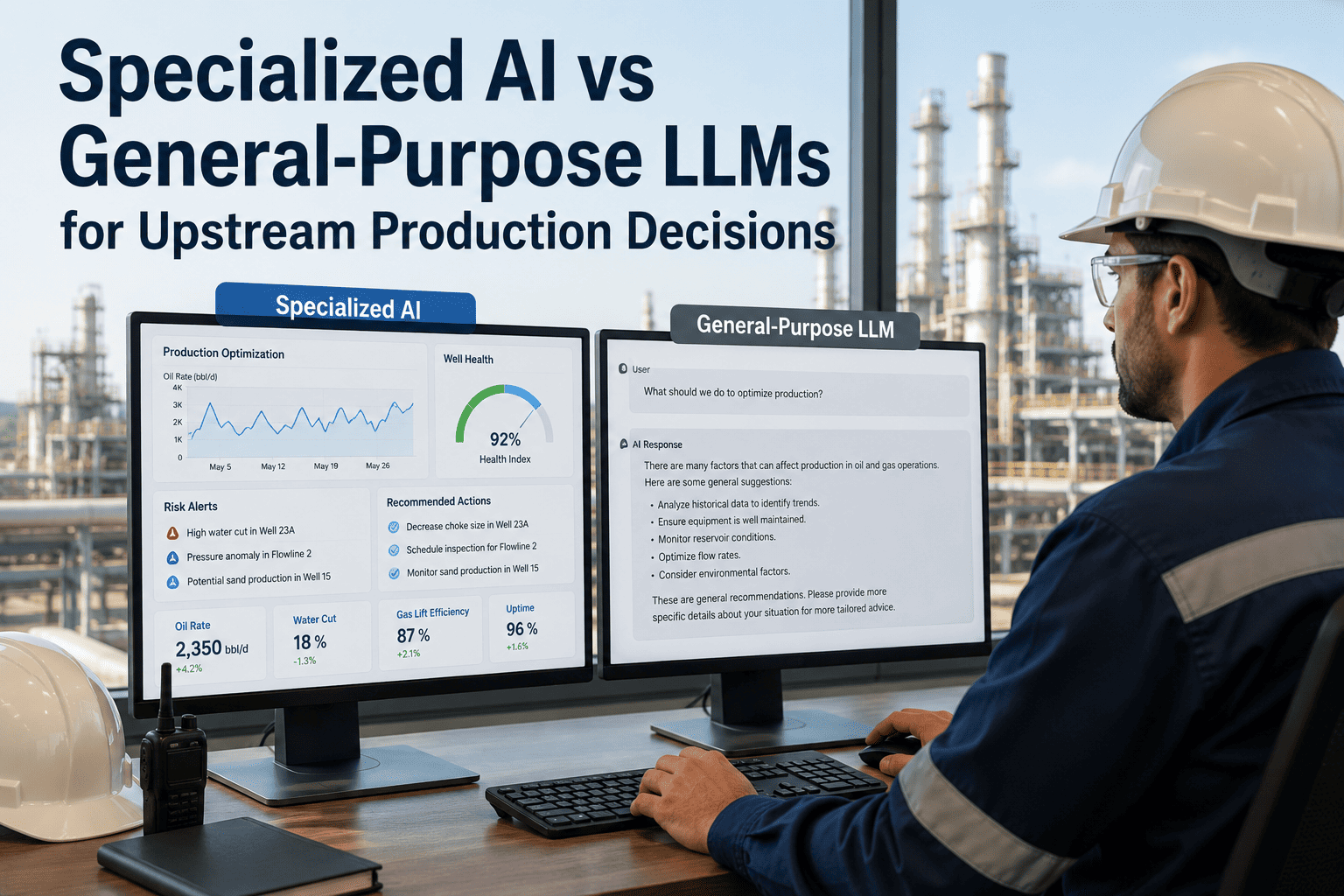
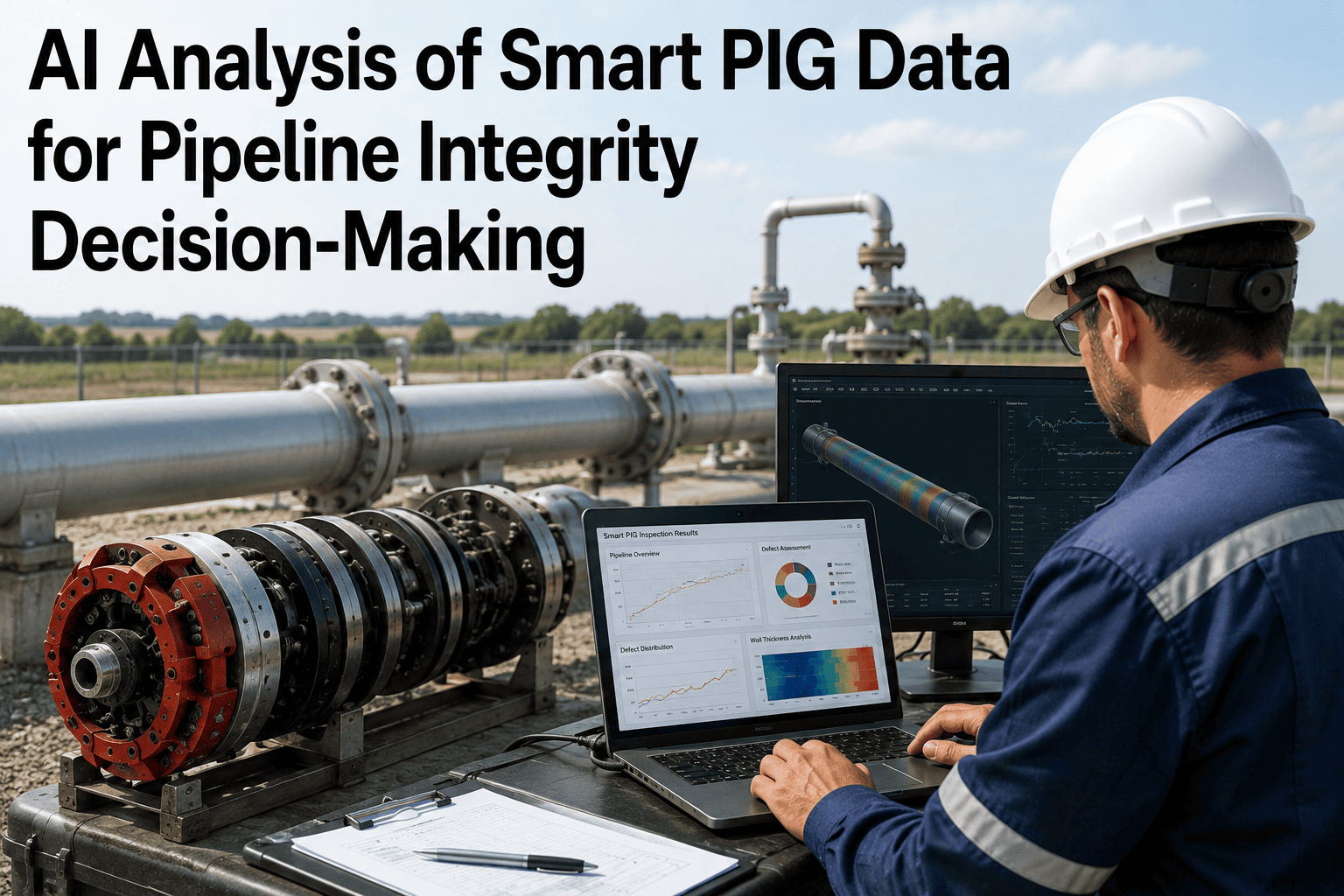
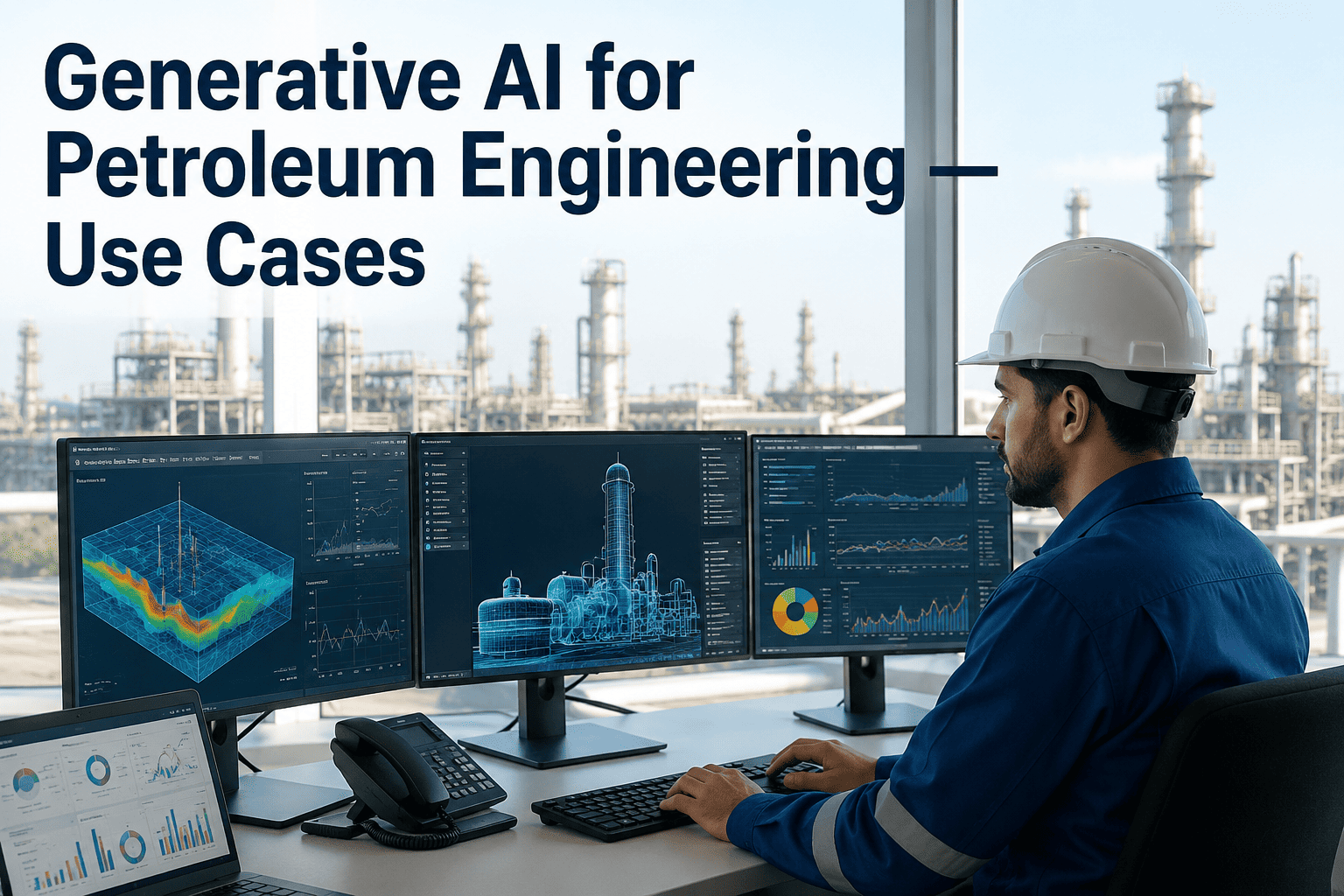
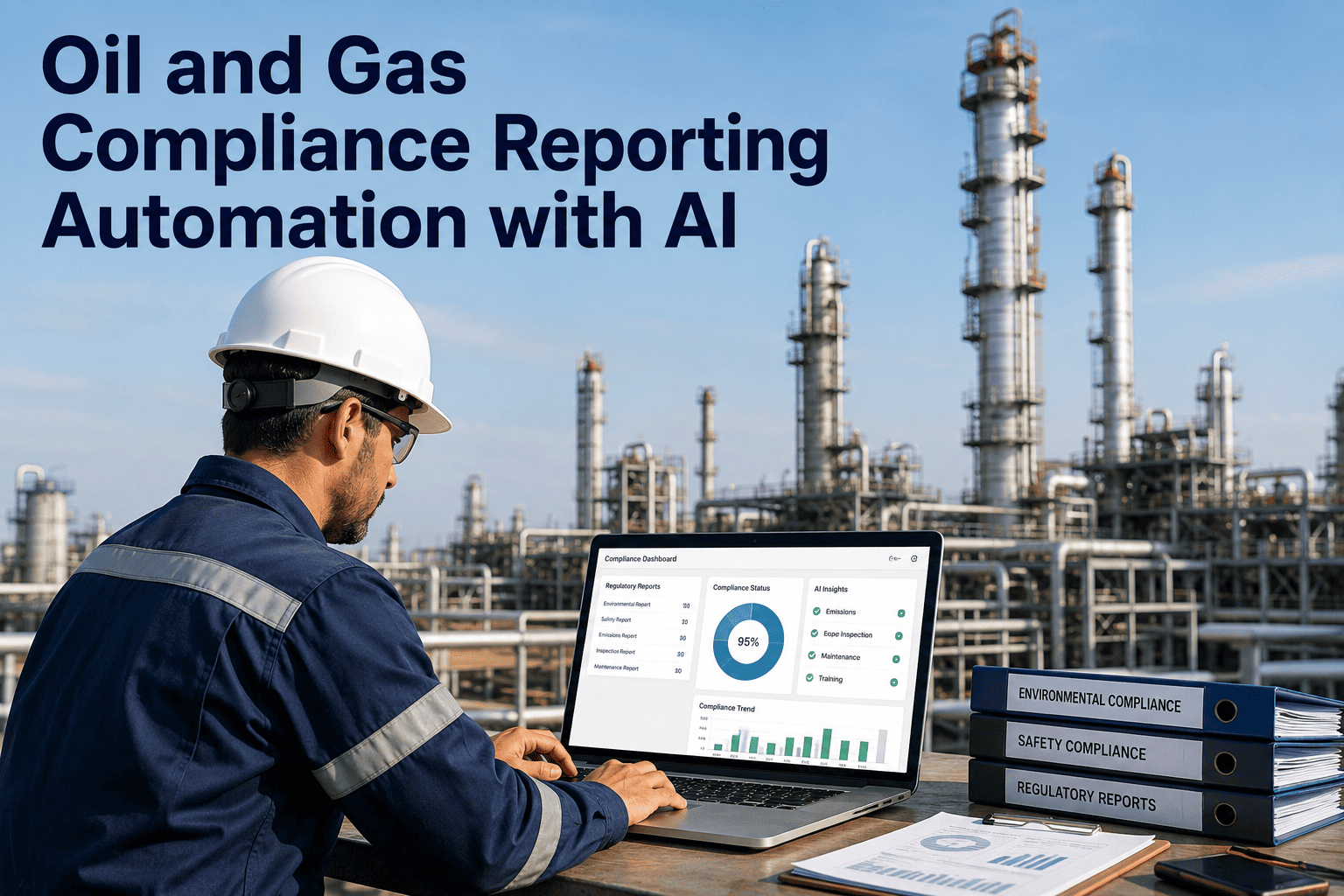
-are-used-in-oil-&-gas-decision-making.png)
Large Language Models are quietly reshaping how energy companies handle one of their most persistent challenges: turning massive volumes of unstructured data into decisions that move fast enough to matter. In oil and gas operations, engineers and analysts deal daily with well logs, seismic reports, regulatory filings, maintenance records, maintenance histories, and real-time sensor streams — most of it locked in PDFs, emails, or legacy databases that no conventional search tool can parse at the speed the field demands. LLMs change that equation entirely. By understanding natural language at scale, these models allow operators, geologists, and executives to query complex operational knowledge the same way they would ask a senior colleague — and get a structured, sourced answer in seconds. For energy companies evaluating how to integrate this capability into operations, Book a Demo with iFactory AI to see how generative AI connects to your existing industrial systems.
Why LLMs Are a Natural Fit for Oil & Gas Decision Workflows
The oil and gas industry generates more structured and unstructured data per operational hour than almost any other industrial sector. A single deepwater platform may produce gigabytes of sensor data per day alongside hundreds of pages of inspection reports, compliance documents, and equipment logs. The bottleneck has never been data volume — it has been the human capacity to synthesize that data into a timely decision. Large Language Models address this directly. Unlike conventional analytics tools that require clean, structured inputs, LLMs are trained to read, interpret, and reason across messy, mixed-format content. They can ingest a blend of regulatory filings, historical production records, and engineering reports, then surface a coherent summary or recommendation in plain language.
The practical implication for decision-makers is significant. A reservoir engineer who previously spent two days compiling production history across multiple fields can now ask an LLM-powered copilot to surface the relevant data, flag anomalies, and draft a preliminary analysis in under an hour. The engineer's expertise is still essential — but it is now applied to judgment and verification rather than retrieval and formatting. This is the core value proposition that is driving LLM adoption across upstream, midstream, and downstream oil and gas operations in 2025.
Document Intelligence
LLMs parse well logs, drilling reports, and regulatory filings — extracting structured insight from documents that previously required hours of manual review by experienced engineers.
Core CapabilityReal-Time Query Answering
Field operators and engineers can query operational knowledge in natural language — getting sourced answers from maintenance records, SOPs, and sensor data without opening multiple systems.
Operational ValuePredictive Reporting
LLMs generate structured production summaries, anomaly reports, and compliance drafts automatically — reducing the reporting burden on senior staff while improving output consistency.
Efficiency DriverRisk Signal Detection
By cross-referencing historical incident reports with current operational parameters, LLMs flag risk patterns that siloed data systems would never surface across a single shift analysis.
Safety ValueWhere LLMs Are Actively Deployed Across the Oil & Gas Value Chain
LLM adoption in oil and gas is not theoretical — it is operational across a widening range of decision contexts. The use cases below represent the highest-impact deployments that energy companies are executing in 2025, each addressing a specific gap where conventional analytics or human review created latency, inconsistency, or knowledge loss.
Reservoir & Drilling Decision Support
LLMs are deployed to synthesize seismic interpretation notes, well performance histories, and geological surveys into unified reservoir summaries. Drilling engineers can query across dozens of offset well reports to identify optimal completion strategies for new wells — a process that previously consumed multiple analyst-weeks per decision cycle. Integrated with iFactory AI's digital twin layer, LLM-driven drilling decision support becomes even more powerful by connecting static document intelligence to real-time wellbore telemetry.
Pipeline Integrity & Compliance Documentation
Pipeline operators manage thousands of pages of integrity management plans, inspection records, and regulatory correspondence per corridor. LLMs allow compliance teams to query the entire documentation stack in natural language — identifying gaps, surfacing relevant regulatory citations, and generating first-draft compliance reports that inspectors can review and approve rather than compose from scratch. The time savings per compliance cycle routinely exceed 60% for pipeline operators running structured LLM workflows. For companies ready to operationalize this, Book a Demo with iFactory to explore pipeline compliance automation.
Refinery Operations & Maintenance Knowledge Management
Refinery maintenance teams carry institutional knowledge in people, not systems — a risk that becomes acute during workforce transitions. LLMs trained on refinery-specific maintenance records, equipment manuals, and incident histories serve as a persistent knowledge layer that any technician can query during a troubleshooting event. A new technician facing an unfamiliar equipment fault can query the LLM-powered system and receive a structured troubleshooting sequence drawn from real maintenance histories, reducing mean-time-to-repair significantly across complex refinery assets.
Portfolio-Level Reporting & Strategic Analysis
At the executive level, LLMs are being used to synthesize production performance across multi-field portfolios into concise narrative summaries that executives and board members can act on. Rather than waiting for analyst teams to manually compile and format cross-asset reports, LLM-powered reporting pipelines generate structured performance briefs on demand — with the ability to drill into any section through natural language follow-up queries.
Conventional Analytics vs. LLM-Powered Decision Intelligence: A Direct Comparison
The distinction between conventional analytics platforms and LLM-augmented decision systems is not a matter of degree — it is a matter of kind. The comparison below captures the operational differences that oil and gas reliability and operations leaders experience when LLM intelligence is layered into their decision workflows.
| Decision Workflow | Conventional Analytics | LLM-Augmented Intelligence | Business Impact |
|---|---|---|---|
| Document retrieval & review | Manual search across siloed systems | Natural language query across all sources | 80–90% time reduction |
| Regulatory compliance drafting | Analyst writes from scratch | LLM generates first draft from existing records | 60%+ efficiency gain |
| Maintenance troubleshooting | Technician searches manuals manually | AI-guided step-by-step from real maintenance history | Reduced MTTR, fewer escalations |
| Production reporting | Weekly analyst-compiled summaries | On-demand narrative reports with drill-down | Real-time executive visibility |
| Risk identification | Pre-defined rule thresholds only | Cross-document pattern recognition | Earlier warning, fewer incidents |
| Knowledge retention | Dependent on individual staff | Institutionalized in LLM knowledge base | Resilient to workforce turnover |
How Oil & Gas Companies Deploy LLMs Without Disrupting Operations
The deployment question for most oil and gas operators is not whether to adopt LLM decision support — it is how to do it in a way that integrates with existing SCADA, historian, and ERP systems without creating a parallel data silo. The most effective deployments follow a three-phase structure that preserves operational continuity while progressively expanding the LLM's access to operational knowledge.
Knowledge Ingestion & Index Build
All relevant operational documents — maintenance records, SOPs, inspection histories, regulatory filings, well reports — are ingested, indexed, and made retrievable by the LLM layer. Data governance and access controls are established at this stage, ensuring the model only surfaces content to users who have appropriate clearance. This phase typically completes in two to four weeks for a mid-size upstream or midstream operation.
Timeline: 2–4 Weeks · FoundationCopilot Deployment & Workflow Integration
The LLM copilot interface is deployed to target user groups — engineers, maintenance technicians, compliance teams, operations managers — with role-specific prompt templates that guide effective query behavior. Integration connectors are established with historian and SCADA systems to allow real-time context to flow into LLM responses alongside static document content. iFactory AI's integration layer handles this connectivity across major industrial data platforms.
Timeline: 4–8 Weeks · ActivationContinuous Learning & Decision Feedback
As the system accumulates query histories and outcome data, the analytics layer surfaces which question categories generate the most value, which data sources are most frequently referenced, and where knowledge gaps remain. This drives a continuous improvement cycle that expands the LLM's operational coverage over time — converting it from a document search tool into a genuine institutional intelligence platform for the entire operation.
Timeline: 8–16 Weeks & Beyond · MaturityWhat Oil & Gas Companies Are Measuring After LLM Deployment
Measuring the value of LLM deployment in oil and gas requires looking beyond simple productivity metrics to the decision-quality outcomes that matter most to operations and executive leadership. The statistics below reflect what early adopters in the upstream and midstream sectors are reporting from structured LLM programs deployed through platforms like iFactory AI.
Reduction in time engineers spend retrieving and synthesizing information from well reports, inspection records, and regulatory filings after LLM deployment.
Faster regulatory and compliance documentation cycles when LLMs generate structured first drafts from existing operational records for analyst review and approval.
Improvement in knowledge accessibility after LLM systems institutionalize expertise from experienced engineers into queryable, structured knowledge assets.
Reduction in the time from data availability to actionable decision when LLM-powered copilots replace manual analysis and reporting cycles across operations teams.
What Industry Leaders Say About LLM Decision Support in Energy Operations
In discussions with operations directors, chief digital officers, and reliability engineers across upstream, midstream, and downstream energy sectors, three consistent themes define the practical experience of LLM deployment in oil and gas decision environments. These perspectives reflect what separates successful LLM programs from costly proof-of-concept experiments that never reach production value.
"The bottleneck was never the data — it was access to it."
Operations directors consistently identify knowledge accessibility, not knowledge volume, as the core problem LLMs solve. The expertise to interpret well performance data has always existed inside the organization — what LLMs do is make that expertise queryable by everyone who needs it, not just the senior engineer who happens to be available. This democratization of operational intelligence is the primary reason LLM programs deliver measurable ROI within the first deployment quarter.
Best Practice: Knowledge Democratization"Start with documents. The data integration comes second."
Chief digital officers who have run multiple LLM deployments in energy environments are consistent in their sequencing advice: begin with the unstructured document corpus — SOPs, inspection reports, regulatory filings — before attempting to integrate live sensor and historian feeds. The document layer delivers immediate, measurable productivity improvements and builds organizational confidence in the LLM system before the more complex real-time integration work begins.
Best Practice: Phased Data Integration"LLMs don't replace engineers. They give them more time to engineer."
Reliability engineers are the clearest advocates for LLM copilots because they experience the most direct productivity gain. When an LLM handles the data retrieval, synthesis, and first-draft reporting that previously consumed 40–60% of an engineer's working week, the engineer can focus exclusively on the interpretation, judgment, and design work that actually requires an experienced professional. The result is better decisions made faster — not fewer engineers.
Best Practice: Human-in-the-Loop DesignLLM Decision Intelligence Is Now a Competitive Differentiator in Oil & Gas
The oil and gas companies that will outperform their peers in the next five years are not necessarily those with the largest reserves or the most advanced drilling technology — they are the ones that make better decisions faster. Large Language Models, integrated into operational workflows through platforms purpose-built for industrial environments, represent the most significant step-change in decision support capability the industry has seen in a decade. The gap between operators who have structured LLM programs and those still relying on manual document retrieval and analyst-compiled reports will widen considerably as deployment costs fall and model capabilities improve through 2025 and beyond.
The transition from conventional analytics to LLM-powered decision intelligence does not require a complete technology overhaul. It requires connecting the right LLM layer — one that integrates with existing SCADA, historian, and document management systems — to the operational workflows where knowledge bottlenecks currently limit decision speed and quality. iFactory AI delivers exactly that integration layer, engineered for the data environments and compliance requirements that U.S. and global oil and gas operators actually work within. If your organization is ready to move from reactive information retrieval to proactive decision intelligence, Book a Demo with iFactory's energy solutions team today.
LLM Oil & Gas Decision-Making — FAQs for Operations & Digital Leaders
What does an LLM actually do in an oil and gas decision workflow?
An LLM reads, interprets, and synthesizes unstructured operational content — well reports, maintenance records, regulatory filings — and answers natural language queries with sourced, structured responses that accelerate engineer and analyst decision cycles.
Is LLM deployment in oil and gas safe from a data security perspective?
Yes, when deployed through enterprise-grade platforms like iFactory AI that enforce role-based access controls, private model hosting, and data residency policies that meet energy sector compliance requirements.
How long does it take to deploy an LLM decision support system in an oil and gas operation?
Most mid-size operations reach initial production capability — document intelligence and copilot query functions — within four to eight weeks, with full operational integration including historian and SCADA connectivity completed by week sixteen.
Can LLMs be used for regulatory compliance in oil and gas?
Yes — LLMs are particularly effective at drafting first-pass compliance documentation by synthesizing existing inspection records and operational data against regulatory requirements, reducing compliance cycle times by 50–60% in structured programs.
Does iFactory AI's LLM platform integrate with existing oil and gas systems like OSIsoft PI or SAP?
Yes — iFactory AI's integration layer connects with major industrial historian platforms, ERP systems, and document management tools, ensuring the LLM intelligence layer works within your existing technology stack rather than replacing it.