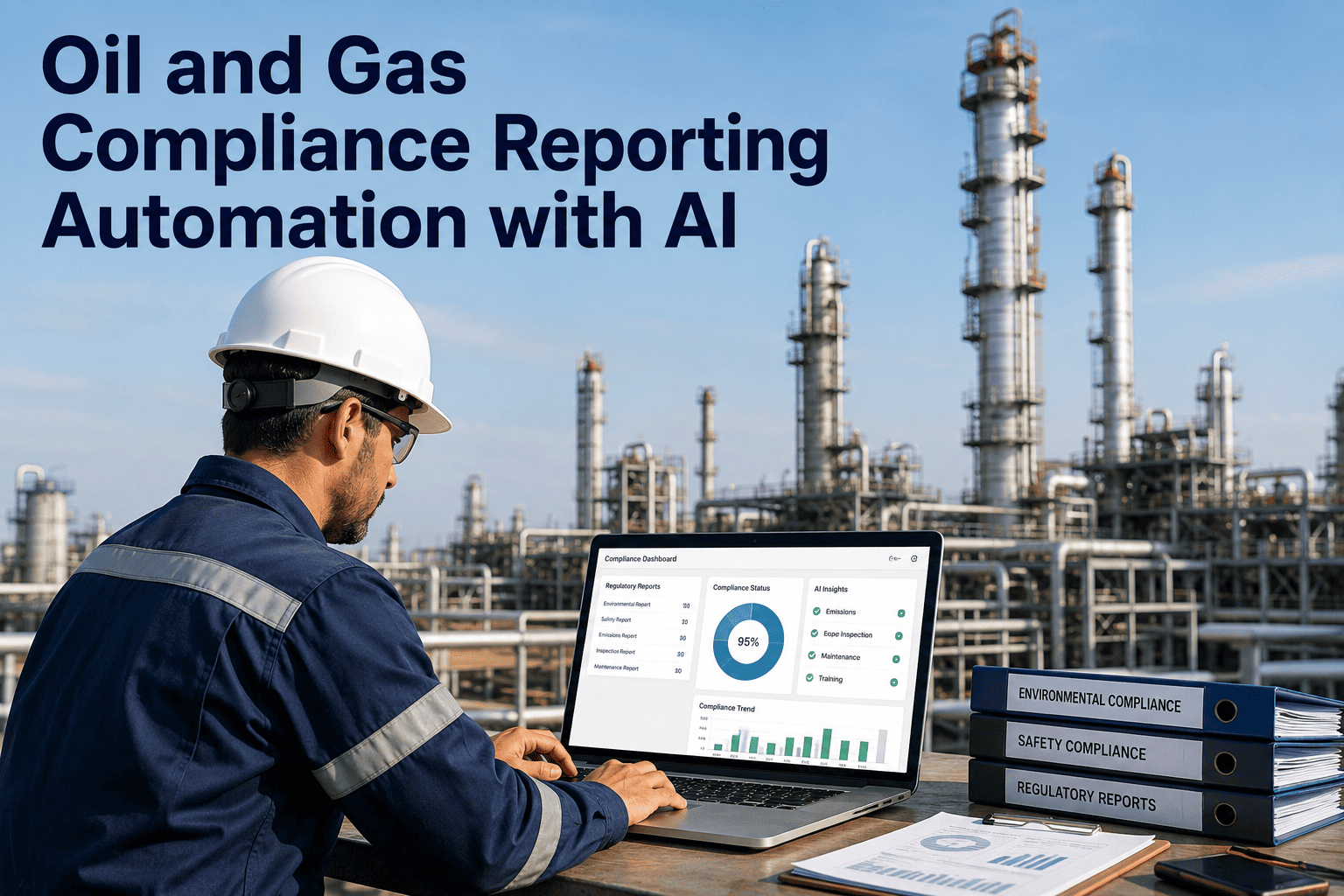
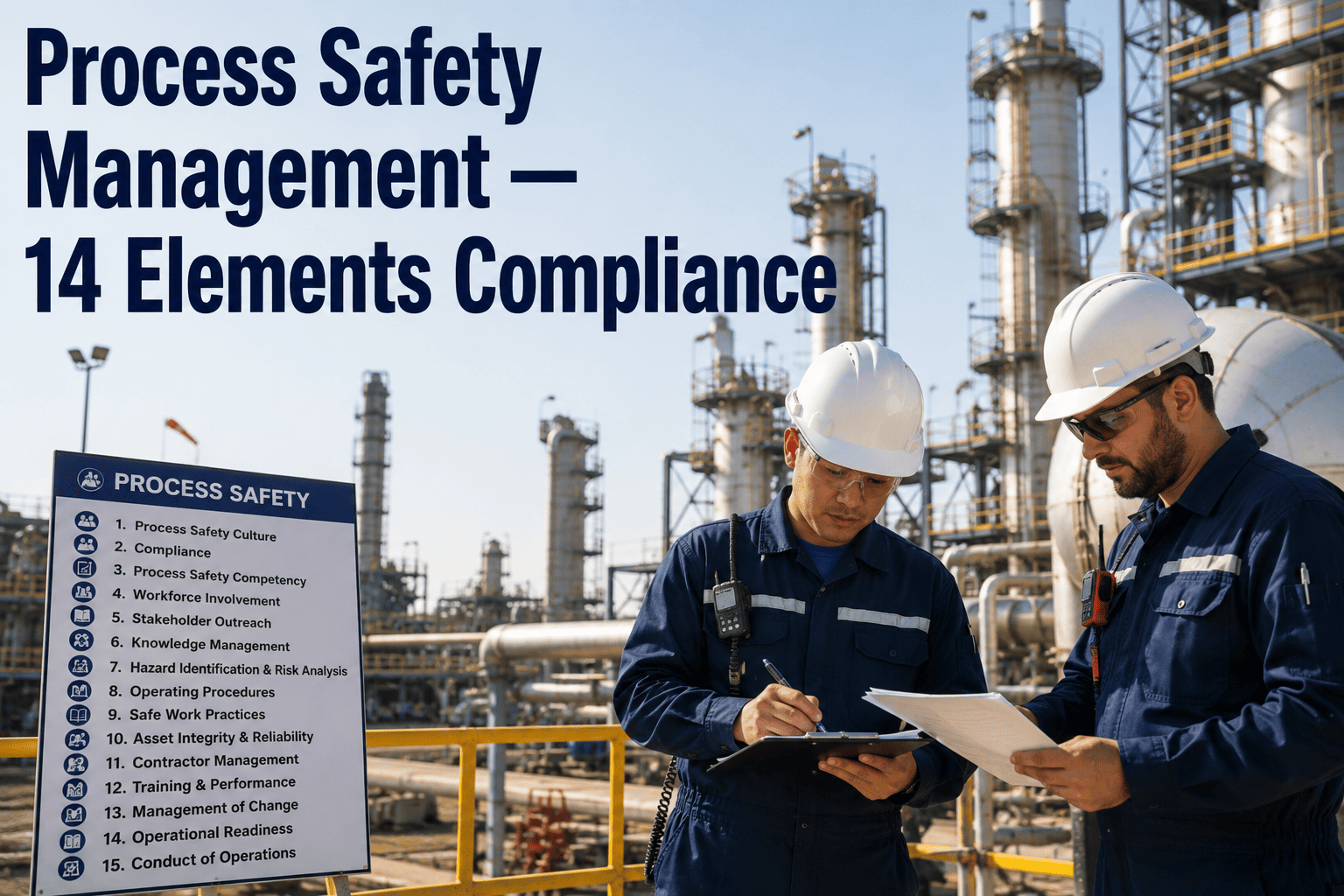
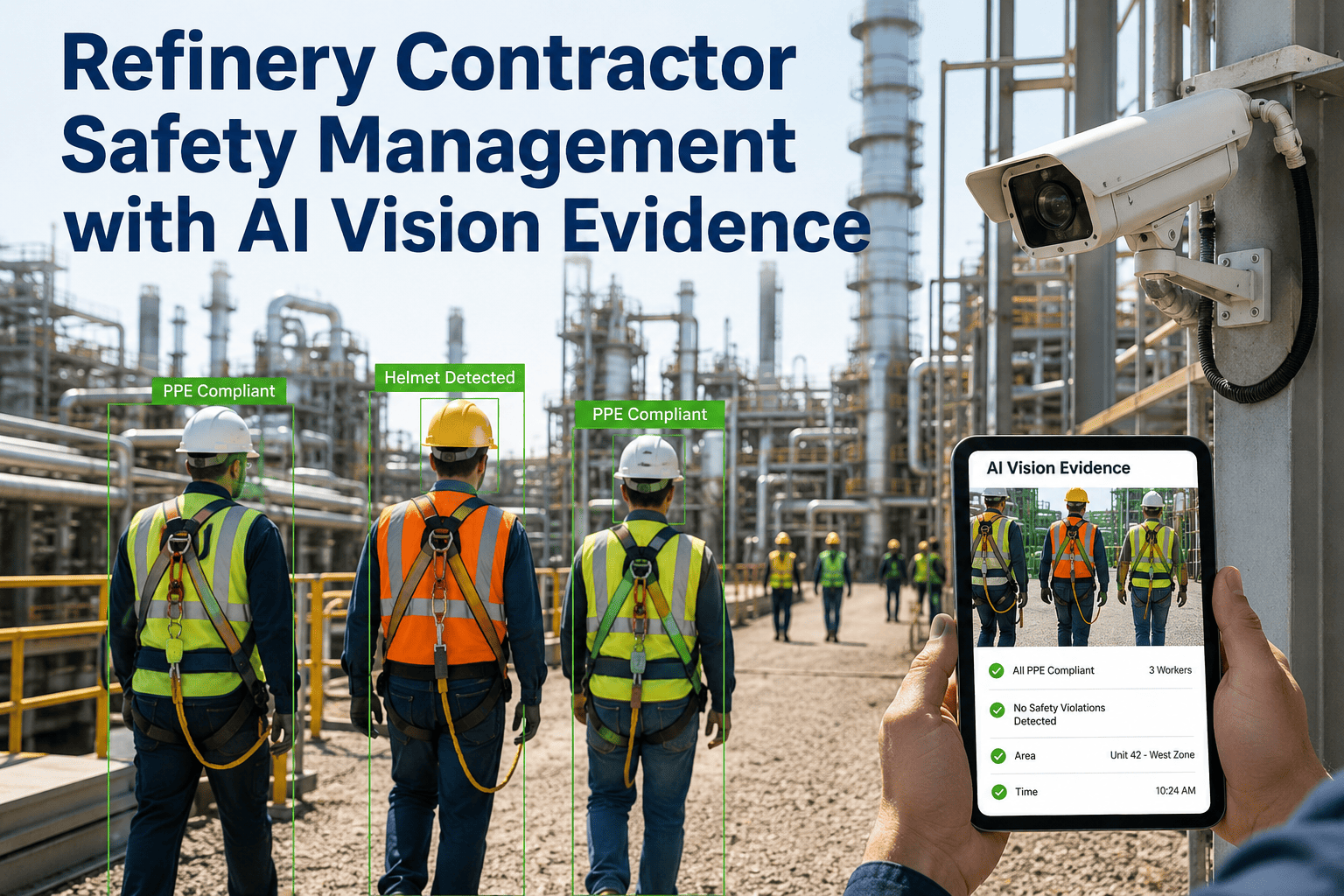
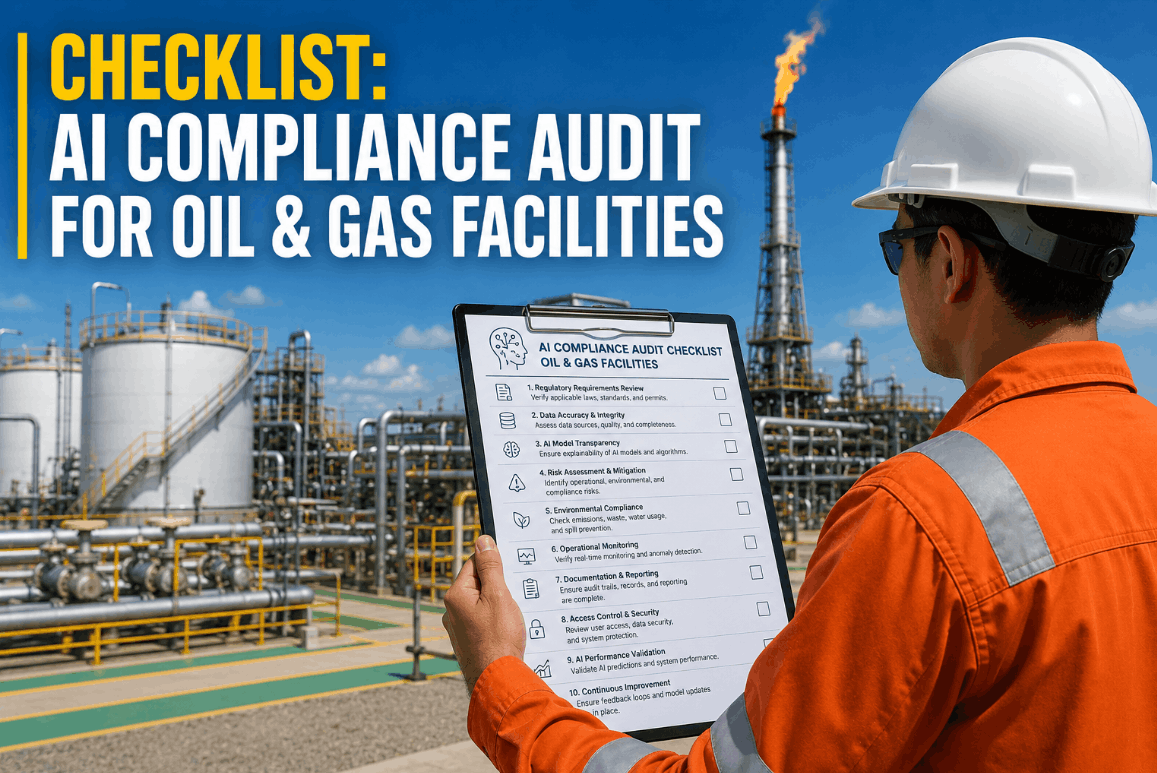
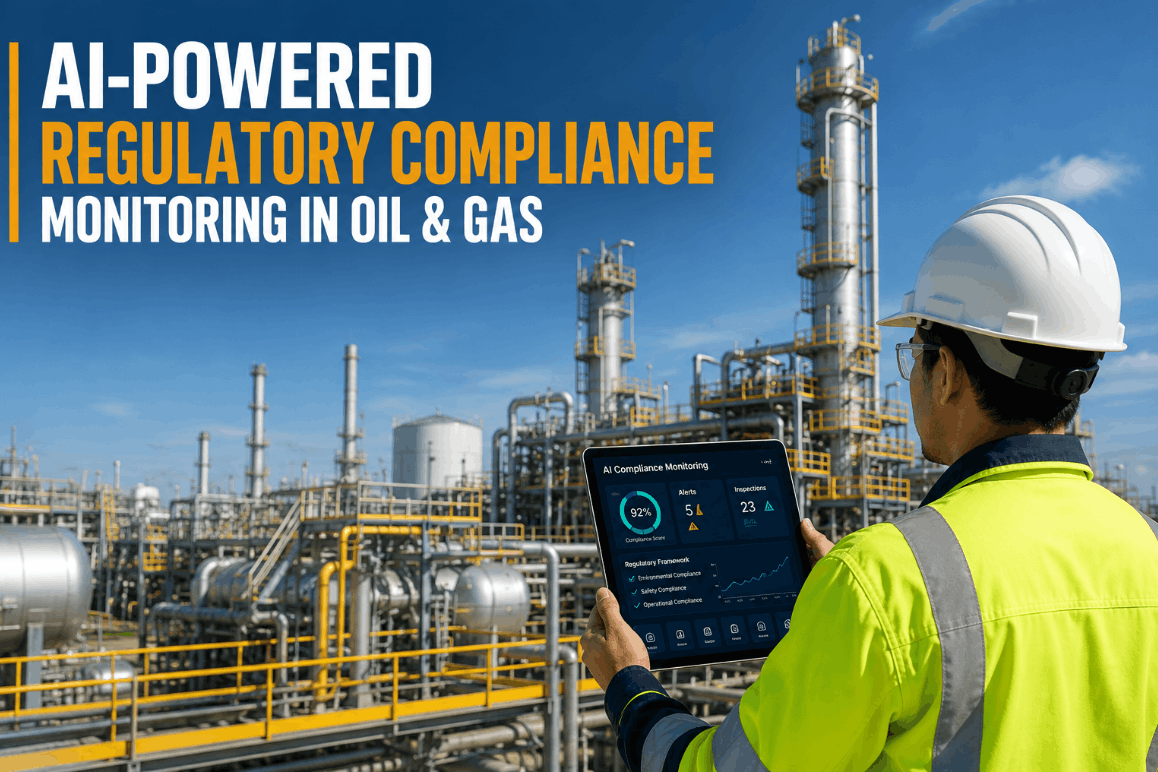
Oil and gas compliance reporting demands that operations, safety, maintenance, and emissions data be assembled into structured evidence chains satisfying OSHA PSM, EPA RMP, Clean Air Act, and state regulatory requirements. Most compliance teams compile this evidence manually — pulling records from CMMS, historian archives, inspection databases, and paper files in a reactive scramble that begins when an audit notice arrives. The result is incomplete evidence chains, missed documentation gaps, and audit findings that could have been prevented with systematic evidence aggregation. iFactory's AI-powered compliance automation continuously aggregates and structures evidence from your existing systems, generating audit-ready reports on demand. Book a demo to see how automated evidence chains replace your manual audit preparation.
67%
Of oil and gas audit findings trace back to missing or incomplete evidence chains — not actual non-compliance
4-8 Wks
Average time compliance teams spend manually compiling evidence for a single regulatory audit
12+
Separate data systems that typical refinery compliance teams must cross-reference for a single audit
$340K
Average cost per OSHA PSM citation that could have been defended with complete mechanical integrity documentation
Stop Assembling Audit Evidence Manually — AI Builds Evidence Chains From Your Existing Systems Continuously
iFactory's Compliance Automation platform connects to your CMMS, historian, inspection databases, and safety systems to auto-generate structured evidence chains that satisfy OSHA, EPA, and state regulatory requirements — ready for audit submission in minutes instead of weeks.
The Compliance Evidence Gap: Where Manual Reporting Fails
The core problem in oil and gas compliance reporting is not that the evidence does not exist — it does, scattered across a dozen operational systems. The problem is that no manual process can systematically aggregate, correlate, and validate that evidence against regulatory requirements fast enough to prevent gaps from appearing in audit submissions. These four evidence gaps account for the majority of findings in oil and gas regulatory audits.
Broken Evidence Chains Between Observation and Closure
Safety observations, inspection findings, and maintenance work orders exist in separate systems with no automated linkages. When auditors request proof that a flagged hazard was addressed, compliance teams must manually trace the path from observation to corrective action to verified closure — and the linkages are frequently incomplete or undocumented in manual systems.
4-8 Wks
Preparation Delay
Reactive Evidence Assembly After Audit Notification
Compliance teams begin assembling evidence only after receiving an audit notice — typically 30 to 60 days before the audit date. In that window, they must pull records from CMMS, inspection databases, training systems, and process historian archives, then manually cross-reference each record against regulatory requirements. Evidence gaps discovered this late cannot always be filled before the auditor arrives.
Missing MOC Documentation for Equipment Modifications
Management of Change documentation requires linking the change request, process hazard analysis update, training records for affected operators, updated P&IDs, and mechanical integrity re-assessment. In manual systems, these documents reside in different departments and are rarely assembled into a complete MOC package until an auditor specifically requests it — at which point missing elements are common.
Stale or Missing Emissions Data Reconciliation Records
Clean Air Act Title V and state permit compliance require reconciling continuous emissions monitoring data with facility operating records, maintenance logs for pollution control equipment, and excess emission event reports. Manual reconciliation across these data sources consistently produces gaps where monitoring data cannot be correlated with equipment condition or operating context.
Oil and Gas Regulatory Frameworks Requiring Structured Evidence
Every regulatory framework in oil and gas operations demands a specific type of evidence chain — linking the regulatory requirement to the operational data, the inspection or monitoring record, the corrective action, and the verified closure. Understanding what each framework requires is the prerequisite for automating the evidence assembly process.
01
OSHA PSM 29 CFR 1910.119
Mechanical integrity documentation, PHA revalidation records, MOC packages, training certification, incident investigation reports, and compliance audits — each requiring traceable evidence chains from requirement to verified implementation.
02
EPA RMP 40 CFR Part 68
Hazard assessment documentation, prevention program evidence including safety information and integrity verification, emergency response program records, and five-year accident history with root cause analysis and corrective action verification.
03
Clean Air Act Title V
Continuous emissions monitoring data, deviation reports, excess emission event documentation, pollution control equipment maintenance records, and semi-annual compliance certifications with supporting operating data.
04
API 580/581 RBI Program
Risk-based inspection assessments linking equipment susceptibility to damage mechanisms, inspection plan documentation, inspection execution records, fitness-for-service evaluations, and reassessment triggers with condition data.
05
State Environmental Permits
State-specific discharge monitoring, waste management tracking, air quality compliance evidence, noise monitoring records, and groundwater monitoring data — each with state-mandated reporting formats and submission schedules.
06
Spill Prevention (SPCC)
Spill Prevention, Control, and Countermeasure plan documentation including containment integrity inspection records, drainage system testing, tank integrity assessments, and spill event response records with corrective action verification.
Manual Evidence Assembly vs AI-Driven Compliance Automation
The operational difference between manual and AI-driven compliance reporting is not about speed alone — it is about the completeness and defensibility of the evidence chain. Manual processes produce evidence packages that satisfy surface-level audit checks but fail when auditors trace individual findings back through the requirement-to-closure chain. AI automation builds that chain continuously so it is always complete when the audit arrives.
| Compliance Activity |
Manual Assembly Process |
AI-Automated with iFactory |
| Mechanical Integrity Evidence |
Pull work orders from CMMS, cross-reference with inspection reports, manually verify equipment coverage against the registered equipment list — typically identifies 15 to 25 percent coverage gaps during audit prep |
AI continuously maps CMMS work orders and inspection records to the registered equipment list, flags coverage gaps in real time, and generates a complete MI evidence package on demand with gap analysis included |
| PHA Revalidation Support |
Compile previous PHA reports, incident history, MOC records, and equipment condition changes — assembled manually over 2 to 4 weeks with frequent missing document discoveries |
AI aggregates all PHA-relevant records from CMMS, MOC logs, incident database, and inspection findings into a structured revalidation support package with automated gap identification against API 750 requirements |
| MOC Package Assembly |
Locate change request forms, PHA updates, P&ID revisions, training records, and pre-startup safety review documentation across multiple departments — typically 30 to 40 percent of packages have missing elements |
AI links all MOC-related documents by change number, validates package completeness against the facility MOC procedure checklist, and generates completion status reports with specific missing element identification |
| Emissions Data Reconciliation |
Download CEM data, cross-reference with DCS operating logs, manually identify excess emission events, compile deviation reports — reconciliation typically takes 3 to 5 days per reporting period |
AI auto-reconciles CEM data with historian operating parameters, identifies excess emission events with process context, and generates deviation reports with pre-populated cause and duration data from historian analysis |
| Audit Readiness Assessment |
No systematic readiness checking — gaps discovered only during manual evidence assembly after audit notification, leaving insufficient time for corrective action before the audit date |
AI runs continuous readiness scoring against each applicable regulatory framework, generating gap reports with specific missing evidence items and recommended remediation actions months before any scheduled audit |
| Corrective Action Verification |
Manual comparison of audit finding corrective actions against CMMS work order completion — no systematic verification that actions were actually effective, only that they were marked complete |
AI links corrective actions to work orders, verifies completion evidence including post-repair inspection data, and flags actions marked complete without supporting closure documentation |
The AI Evidence Chain: From Data Source to Audit-Ready Report
iFactory's compliance automation builds evidence through a four-stage pipeline that runs continuously — not as a batch process triggered by audit notices. Each stage adds structure and traceability to raw operational data, converting scattered records into evidence chains that satisfy regulatory documentation requirements at every link point.
Ingest and Map
The platform connects to SAP PM, IBM Maximo, OSIsoft PI Historian, inspection data management systems, safety observation databases, and document management repositories. Each data source is mapped to the regulatory requirements it supports — CMMS work orders map to mechanical integrity evidence, historian data maps to emissions reconciliation, MOC logs map to prevention program documentation. This mapping creates the foundation for automated evidence chain construction.
Correlate and Validate
ML models continuously scan ingested data for evidence chain completeness — verifying that every registered equipment item has current inspection records, every MOC has all required documentation elements, every safety observation has a linked corrective action with verified closure, and every emissions deviation has a cause explanation supported by process data. Validation runs against the specific checklist requirements of each applicable regulatory framework.
Score and Prioritize
Each evidence chain receives a completeness score based on the number of required linkages present versus the total required by the applicable regulation. Chains below the audit-ready threshold are flagged with specific missing elements and ranked by regulatory criticality — PSM mechanical integrity gaps score higher than supplementary documentation gaps. This scoring gives compliance teams a prioritized remediation list instead of an unstructured gap dump.
Generate and Submit
When an audit request arrives, the platform generates structured evidence packages organized by regulatory requirement — each package containing the complete chain from regulatory citation through operational evidence, corrective action, and verified closure. Reports are formatted to match the documentation structure that auditors expect, with hyperlinked evidence references that allow auditors to drill from any finding directly to the supporting record without manual cross-referencing by the compliance team.
Report Types Automated by the AI Compliance Platform
iFactory's compliance automation generates audit-ready reports across the six primary report categories that oil and gas operations must produce for regulatory submissions. Each report type is built from the same underlying evidence chain infrastructure, ensuring consistency between reports and eliminating the contradictory data that frequently appears when different teams compile different reports from the same source systems.
Mechanical Integrity Evidence Report
Complete MI documentation for every equipment item on the PSM-covered process list — inspection records, work order history, fitness-for-service assessments, and equipment coverage analysis with gap identification for items lacking current inspection evidence.
PHA Revalidation Support Package
Structured compilation of previous PHA findings, incident history since last revalidation, MOC records affecting PHA scope, equipment condition changes, and operating parameter deviations — organized by process node for efficient PHA team review.
MOC Documentation Completeness Report
Validation of every open and recently closed MOC against the facility procedure checklist — flagging missing PHA updates, absent training records, incomplete P&ID revisions, and pre-startup safety review gaps with specific remediation requirements.
Emissions Compliance Reconciliation
Auto-reconciled CEM data with DCS operating parameters, excess emission event identification with process-context cause analysis, deviation report generation with pre-populated data fields, and pollution control equipment maintenance status summary.
Incident Investigation Compliance Report
Structured evidence linking each reportable incident to the investigation report, root cause findings, corrective action assignments, CMMS work order completion, effectiveness verification, and regulatory notification records with timestamp chain verification.
Training and Qualification Compliance
Current training status for every PSM-covered position, certification expiration tracking, MOC-related training completion verification, and gap analysis identifying personnel whose training records do not satisfy the requirements for their assigned process areas.
Measured Impact of AI Compliance Automation at Refinery Sites
87%
Reduction in Audit Prep Time
From 6 weeks of manual compilation to under 5 days for complete evidence package generation across all applicable frameworks
94%
Evidence Chain Completeness
Percentage of required evidence linkages present at audit submission — up from 58% in prior manual process with post-audit gap remediation
76%
Fewer Audit Findings
Reduction in documentation-related findings across OSHA PSM and EPA RMP audits in the first year of AI compliance deployment
$510K
Annual Cost Avoidance
Conservative estimate combining avoided citation penalties, reduced compliance labor hours, and eliminated third-party audit preparation consulting fees
iFactory integrates directly with SAP PM, IBM Maximo, Infor EAM, OSIsoft PI, AspenTech IP21, and major inspection data management platforms without requiring data migration or reformatting. The platform maps your existing asset taxonomy to regulatory requirements in the first two weeks of deployment and begins generating readiness scores by week three. Compliance teams see the first complete evidence gap analysis within 30 days of initial connection.
What Compliance Managers Report After AI Automation Deployment
Our last OSHA PSM audit before implementing AI compliance automation produced 14 findings — 11 of which were documentation-related, not actual compliance failures. We had done the work. The inspections had been performed, the corrective actions had been completed, the training had been delivered. But when the auditor asked for the evidence chain connecting a specific inspection finding to its corrective action to the verified closure, we could not produce it within the audit window because the inspection record was in one database, the work order was in another, and the closure verification was a signed paper form in a filing cabinet. After deploying iFactory, our next PSM audit produced 3 findings total — and zero were documentation-related. The platform had been building those evidence chains continuously for six months before the audit arrived. The auditor specifically commented on the quality of the evidence packaging, which had never happened in my 14 years in refinery compliance.
Compliance Manager
Gulf Coast Refinery — PSM and RMP Compliance, 14 Years in Oil and Gas Regulatory Compliance
The emissions reconciliation process was the single most labor-intensive compliance activity we had. Every quarter, two of my analysts would spend three to four days downloading CEM data, matching it against DCS logs, identifying excess emission events, and manually writing deviation reports. It was tedious, error-prone, and the reports were always submitted at the deadline with no buffer for quality review. When iFactory automated the reconciliation, the first quarter report that the AI generated was reviewed by my senior analyst in four hours instead of four days. She found that the AI had identified two excess emission events that our manual process had missed the previous quarter because the CEM data spike occurred during a shift transition and the manual reviewer had not scrolled far enough in the time-series data. The AI caught it because it correlated the CEM spike with the DCS record showing a compressor trip at exactly the same timestamp. That correlation would have taken a human analyst an hour to find — the AI found it in seconds.
Environmental Compliance Supervisor
Midwest Refinery — Air Quality and Title V Compliance, 11 Years in Environmental Permitting
Frequently Asked Questions
Your Next Audit Evidence Is Already in Your Systems — AI Assembles It Into Defensible Compliance Reports
iFactory's Compliance Automation platform connects to your CMMS, historian, and inspection systems to build continuous evidence chains for OSHA PSM, EPA RMP, Clean Air Act, and state regulatory requirements — generating audit-ready reports in days instead of weeks with 94 percent evidence chain completeness.
PSM Evidence Chains
Emissions Reconciliation
MOC Package Validation
Audit Readiness Scoring
Version-Controlled Reports