Checklist: AI Compliance Audit for Oil & Gas Facilities
By Henry Green on May 30, 2026
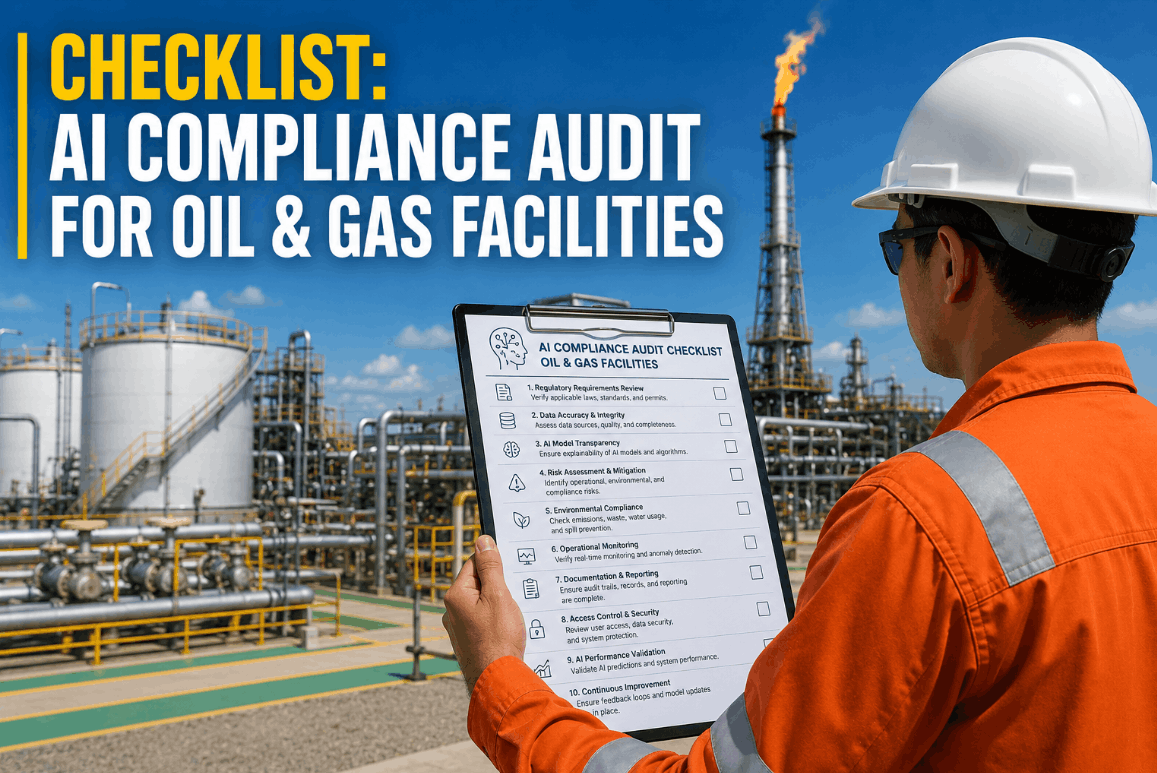
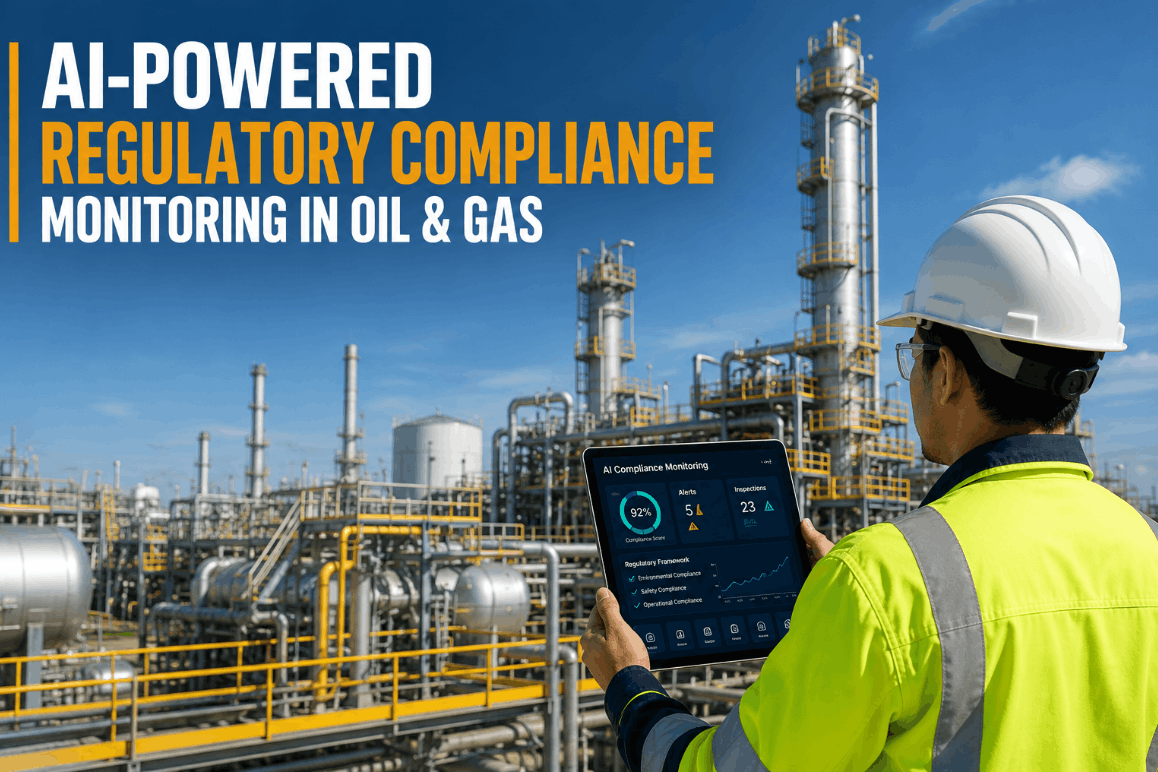
Running an AI system inside an oil and gas facility without a structured compliance audit is one of the fastest ways to accumulate regulatory exposure across OSHA, EPA, and API frameworks. As AI tools take on roles in emissions monitoring, permit-to-work automation, safety management, and predictive inspection — the obligation to document, validate, and audit those systems becomes as real as the obligation to audit the physical assets they monitor. This checklist walks upstream, midstream, and downstream operators through every critical dimension of an AI compliance audit, from data governance and algorithmic transparency to HSE reporting integrity and regulatory documentation readiness. Facilities preparing for an AI compliance assessment who Book a Demo with iFactory receive a facility-specific compliance gap analysis mapped directly to this checklist before any engagement begins.
AI COMPLIANCE AUDITOIL & GAS REGULATORYHSE AUTOMATION
Audit Your AI Systems for Regulatory Compliance — Before the Inspector Does
iFactory's AI compliance platform delivers real-time HSE monitoring, OSHA-aligned audit trails, and regulatory documentation automation built for oil and gas facilities that cannot afford compliance gaps.
Why AI Compliance Audits Are Now Mandatory in Oil & Gas
AI Systems Create New Regulatory Accountability Obligations
When an AI system makes or influences a safety-critical decision — flagging an emissions threshold, generating a permit-to-work authorization, or recommending an inspection deferral — that decision is subject to the same documentation and audit requirements as a human engineer's sign-off. Facilities that deploy AI without compliance audit protocols discover this gap during OSHA PSM audits, not before. Book a Demo to see how iFactory structures compliance documentation for AI-driven decisions at your facility.
Algorithmic Errors Compound Into Environmental and Safety Violations
An AI model that underreports emissions, misclassifies a high-consequence equipment state, or generates false-negative safety alerts does not produce a single isolated error — it produces systematic, recurring violations that accumulate across reporting cycles. The compliance exposure from unchecked AI model drift in environmental or safety monitoring is orders of magnitude greater than the exposure from a single human calculation error, because the frequency and scale of AI-generated outputs are far higher.
73%of oil & gas facilities report AI-related compliance gaps within first year of deployment
$2.4M+Average cost of an OSHA PSM violation finding at a process facility
API 580/581RBI frameworks requiring documented AI model validation for inspection interval changes
30–60 DaysTypical audit remediation window before regulatory citations are issued
1. AI System Inventory & Scope Documentation
2. Data Governance & Input Integrity Validation
3. Emissions Monitoring AI Compliance
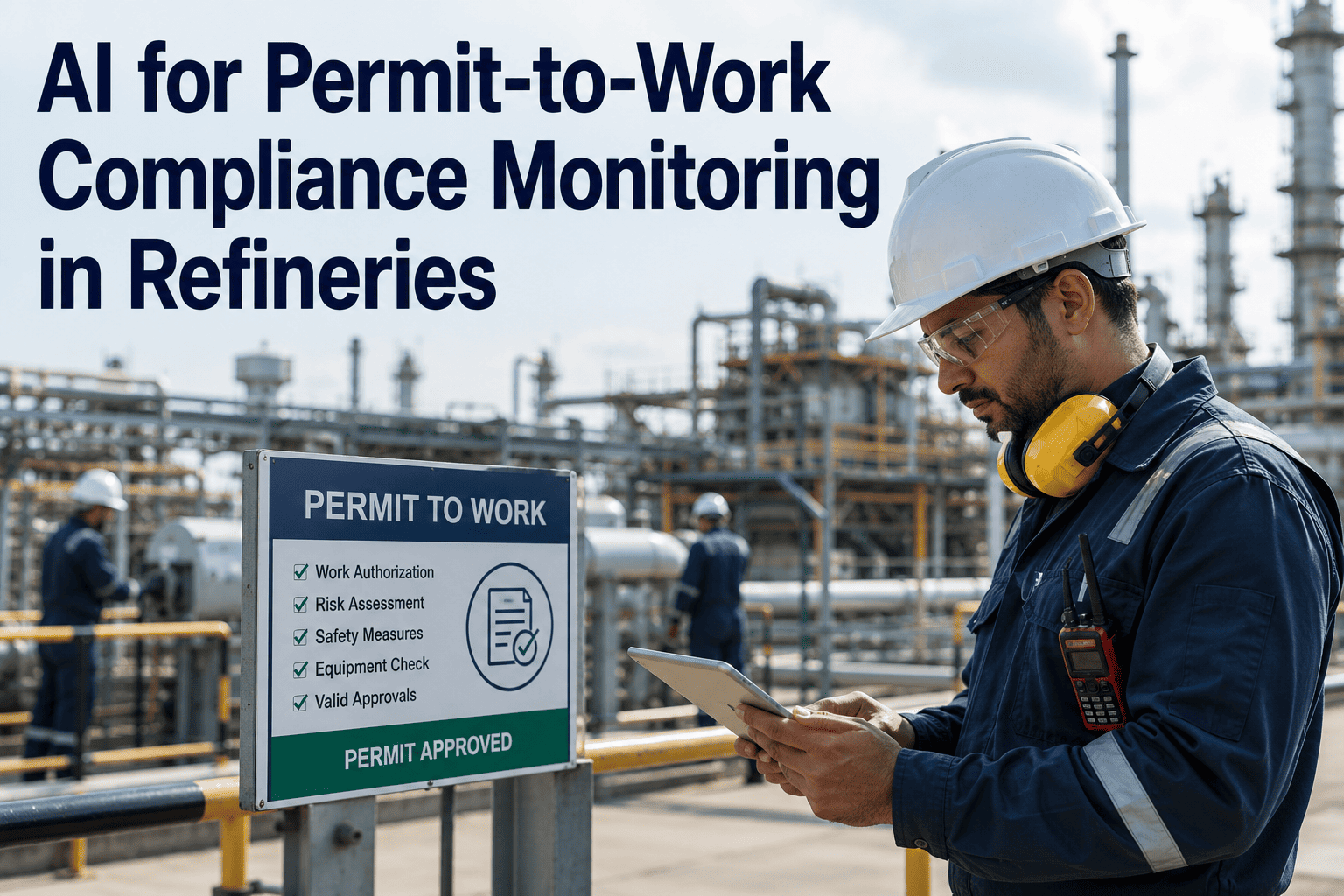
4. Permit-to-Work & Safety Management AI Audit
5. Algorithmic Transparency & Model Governance
6. HSE Reporting Integrity & Audit Trail
AI Compliance Audit Execution Sequence
A structured audit sequence prevents scope gaps and ensures each phase builds on validated findings from the previous one. The following workflow reflects the order in which compliance exposures are most efficiently surfaced and remediated.
01
Pre-Audit AI System Inventory
Catalog all AI tools, vendor platforms, and embedded algorithms operating at the facility with ownership and regulatory scope assignments.
02
Data Governance & Sensor Calibration Review
Validate input data integrity, calibration currency, and data lineage traceability for all compliance-critical AI models.
03
Regulatory Framework Gap Analysis
Map AI system outputs against OSHA, EPA, and API documentation requirements to identify compliance gaps requiring immediate remediation.
04
Audit Trail & Documentation Remediation
Close identified documentation gaps, implement immutable audit trail systems, and obtain required vendor compliance certifications.
05
Ongoing Compliance Monitoring Configuration
Establish continuous compliance monitoring, periodic re-audit schedules, and MOC triggers for future AI model changes.
AI Compliance Audit: Common Findings by Regulatory Framework
Regulatory Framework
AI System Type
Most Common Audit Finding
Risk Level
OSHA 1910.119 PSM
Predictive inspection / RBI AI
No documented MOC process for AI model updates affecting inspection intervals
High
EPA 40 CFR Part 68 RMP
Consequence modeling AI
AI-generated dispersion outputs used without documented validation against EPA-approved models
High
EPA 40 CFR Part 75 CEMS
Emissions monitoring AI
Substitute data methodology not EPA-approved; proprietary AI interpolation used during downtime
High
API 580/581 RBI
Risk ranking AI
Damage mechanism library not facility-calibrated; generic defaults producing non-conservative intervals
Medium
OSHA 1910.119 PTW
Permit-to-work AI
No documented human-in-the-loop authorization record for AI-assisted high-risk permits
High
EPA LDAR / Method 21
Leak detection AI
AI leak detection outputs not validated against Method 21 accuracy requirements before use in reporting
Medium
READY TO AUDITAI COMPLIANCE FOR OIL & GAS
Ready to Close Your AI Compliance Gaps Before the Next Regulatory Review?
iFactory's compliance engineering team maps this checklist to your facility's AI inventory, regulatory obligations, and existing documentation systems — delivering a gap analysis and remediation roadmap before any platform commitment.
Expert Perspective: What Auditors Are Looking for in AI-Enabled Facilities
What we see consistently in AI compliance audits at process facilities is that the technology itself is rarely the problem — it is the documentation that surrounds it. The AI system detected the anomaly. The AI system flagged the emissions threshold. The AI system recommended the inspection deferral. But there is no signed record of who reviewed that output, on what basis, and what action was taken. That is the gap that creates regulatory exposure. OSHA and EPA are not opposed to AI-assisted decision-making; they require that accountability for those decisions remains documented, attributed, and auditable to a human professional. Facilities that build their compliance documentation architecture around AI outputs from day one avoid the retrofitting problem entirely.
Process Safety Compliance Perspective — Downstream Refining, U.S. Gulf Coast
5 YearsOSHA PSM Minimum AI Record Retention
100%Human-in-the-Loop Required for Safety-Critical AI Decisions
ZeroAcceptable Audit Trail Gaps in PSM Compliance Systems
Conclusion: Build AI Compliance Into the System, Not the Spreadsheet
An AI compliance audit in oil and gas is not a one-time exercise — it is the operating discipline that keeps AI-enabled facilities defensible across OSHA, EPA, and API regulatory frameworks as AI systems evolve, models are updated, and regulatory expectations increase. The six checklist phases outlined here address every compliance dimension that regulators are currently scrutinizing: system inventory, data integrity, emissions reporting, safety management accountability, model governance, and audit trail completeness. Facilities that integrate these requirements into their AI deployment architecture from the beginning — rather than retrofitting compliance documentation after an audit finding — consistently avoid the remediation costs, regulatory penalties, and operational disruptions that follow from undocumented AI-assisted decisions. Reliability and compliance teams ready to validate their AI compliance posture are encouraged to Book a Demo with iFactory and receive a facility-specific compliance gap assessment mapped to their regulatory obligations.
AI Compliance Audit for Oil & Gas — Frequently Asked Questions
1. What regulations apply to AI systems used in oil and gas compliance monitoring?
AI systems in oil and gas compliance monitoring are primarily governed by OSHA 1910.119 PSM, EPA 40 CFR Part 68 RMP, EPA 40 CFR Part 75 CEMS requirements, and API 580/581 for inspection-related AI, with additional state permit requirements varying by jurisdiction.
2. Does OSHA require documentation when AI systems assist with permit-to-work decisions?
Yes — OSHA PSM requires documented authorization records for all high-risk work permits, and AI-assisted PTW systems must retain a clear human-in-the-loop authorization record with the basis for each permit approval.
3. Can AI-generated emissions reports be submitted directly to the EPA?
AI-generated emissions reports are acceptable to the EPA only when outputs are validated against approved methodologies, generated using EPA-recognized substitute data procedures during downtime, and supported by calibration and data lineage documentation.
4. How frequently should oil and gas facilities conduct an AI compliance audit?
Facilities should conduct a full AI compliance audit annually, with targeted reviews triggered by any significant AI model update, change in operating conditions, new regulatory requirement, or process safety incident involving AI-assisted decisions.
5. Does iFactory's platform generate audit-ready compliance documentation automatically?
Yes — iFactory maintains immutable, timestamped audit trails for all AI model outputs, configuration changes, and inspection records, generating compliance documentation packages aligned to OSHA PSM, EPA RMP, and API 580/581 requirements.
GET STARTEDASSESS YOUR COMPLIANCE TODAY
Start Your AI Compliance Audit With a Facility-Specific Gap Assessment
iFactory's compliance engineering team maps every checklist phase to your facility's AI systems, regulatory obligations, and documentation environment — delivering an audit-ready roadmap before any platform commitment.