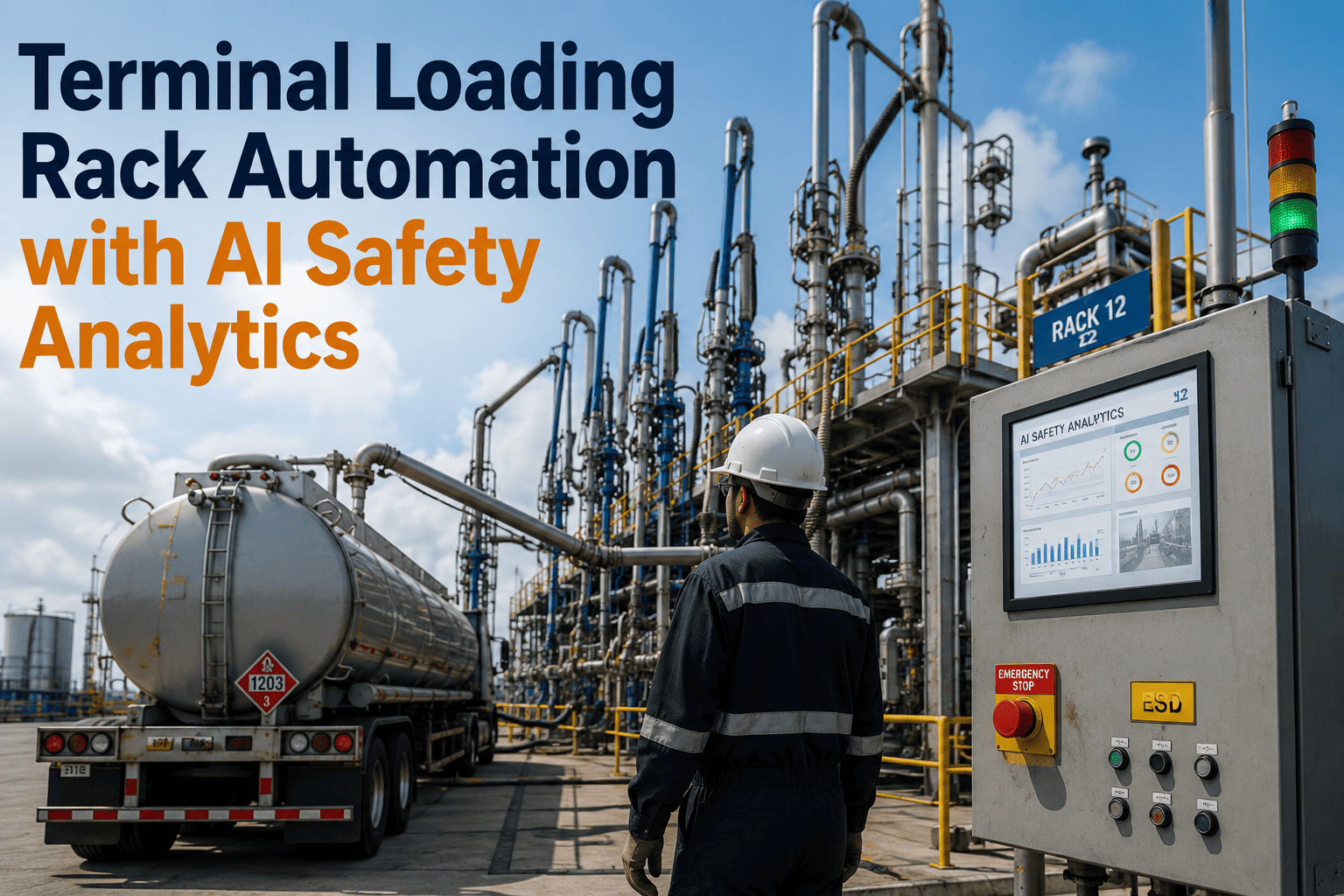
Terminal Loading Rack Automation with AI Safety Analytics

By Johnson on July 4, 2026

terminal-loading-rack-automation-ai-safety-analytics

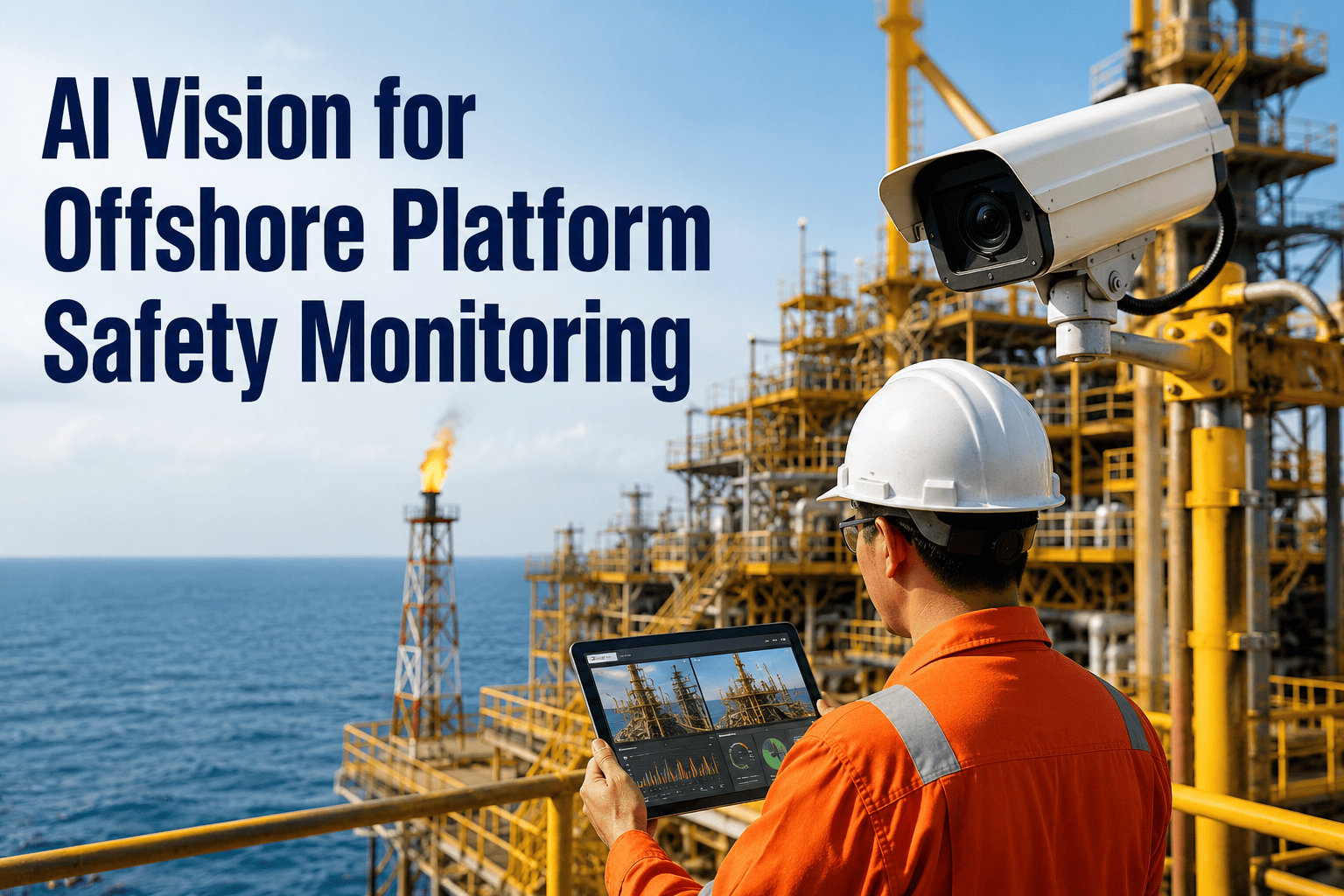
Terminal loading racks are among the highest-risk operational areas in oil and gas distribution, handling thousands of truck loading and unloading events per month where hazardous liquids are transferred through couplings, hoses, and meters under pressure. A single moment of driver error, equipment malfunction, or communication failure can result in a spill ranging from a few gallons to hundreds of barrels with consequences including environmental release, facility shutdown, regulatory fines, and personnel injury. Most terminals rely on human observation from a control room window, basic interlock systems, and driver checklists to manage these risks, which provides incomplete coverage across multiple simultaneous loading activities. AI-powered vision analytics from iFactory continuously monitors every loading bay for the specific behaviors and conditions that precede incidents.

Vehicle Staging Arm Connection Product Transfer Departure Clearance

Terminal Loading Rack Automation with AI Safety Analytics

iFactory deploys AI vision monitoring across every zone of your loading rack — from vehicle arrival through departure — detecting unauthorized vehicle movement, coupling misalignment, spill indicators, and personnel safety violations in real time before they escalate into reportable events.

2,000–5,000 Truck loading events per month at a mid-size terminal
$75K–$1M+ Cost per loading rack spill including cleanup, downtime, and regulatory
65% Of loading rack spills caused by human error — not equipment failure
4–8 Sec Time between coupling disconnect and detectable spill without AI vision

The Incident Cascade: How Near Misses at Loading Racks Escalate to Serious Events

Every reportable loading rack spill is preceded by a series of smaller deviations and near-miss events that, if detected and intercepted early, would have prevented the final outcome. The cascade follows a predictable pattern: a procedural deviation creates an unsafe condition, the unsafe condition persists because no monitoring system detects it, and a triggering event converts the unsafe condition into an active spill or safety incident. AI vision analytics breaks this cascade by inserting detection capability at the earliest stage — identifying the procedural deviation before the unsafe condition fully develops.

150–300
Per Year
Procedural Deviations
Driver exits cab during loading, wrong compartment selected, grounding cable not verified, cell phone use in restricted zone, bypassing pre-loading checklist steps
40–80
Per Year
Unsafe Conditions Created
Uncoupled arm with product flowing, vehicle shifted off level spot, hatch not properly sealed, drain valve left open, overfill alarm silenced without verification
12–25
Per Year
Minor Spills and Near Misses
Product drips from misaligned coupling, small overflow from metering error, splash during disconnect, minor hose leak detected by operator after transfer complete
3–8
Per Year
Reportable Spills
Spills exceeding regulatory reporting threshold requiring notification, containment deployment, and documented response with potential fine exposure and permit review
0.2–0.8
Per Year
Serious Events
Large-volume release, fire or ignition event, personnel injury requiring hospitalization, or environmental contamination requiring extended remediation and regulatory enforcement action

Loading Rack Zone Monitoring: What AI Vision Detects in Each Area

A loading rack is not a single monitoring point — it is a sequence of physical zones where different risk categories dominate. Vehicle staging zones face congestion and movement risks. Connection zones face coupling integrity and grounding verification risks. Transfer zones face overfill, leak, and hose failure risks. Departure zones face premature disconnect and clearance verification risks. iFactory deploys zone-specific detection models calibrated to the unique hazard profile of each area.

ZONE A
Vehicle Staging and Queuing
Risk Profile: Movement and Congestion
Unauthorized vehicle movement while other trucks are loading in adjacent bays
Vehicles staging in restricted areas blocking emergency access routes
Wrong vehicle type or compartment configuration entering loading bay
Pedestrians in vehicle path during staging and bay approach
ZONE B
Bay Approach and Arm Connection
Risk Profile: Coupling and Grounding Integrity
Grounding cable not connected or disconnected before arm engagement
Loading arm misalignment or incomplete coupling engagement
Driver not in designated safe area during automated connection sequence
Wrong product arm selected for the compartment being loaded
ZONE C
Product Transfer and Metering
Risk Profile: Spill and Overfill
Liquid accumulation or drip patterns at coupling, hose, or meter connections
Driver re-entering cab or exiting safe area during active product transfer
Hose movement, kinking, or dislodgement during pressurized transfer
Unauthorized personnel approaching active loading bay during transfer
ZONE D
Disconnect and Departure
Risk Profile: Premature Disconnect and Clearance
Arm disconnect initiated before transfer complete confirmation received
Vehicle departure before arm fully retracted and secured in stowed position
Hose or coupling not properly drained before disconnect creating drip spill
Grounding cable left connected to vehicle as it begins departure motion

Loading Rack Safety Monitoring: Control Room Observation vs AI Vision Analytics

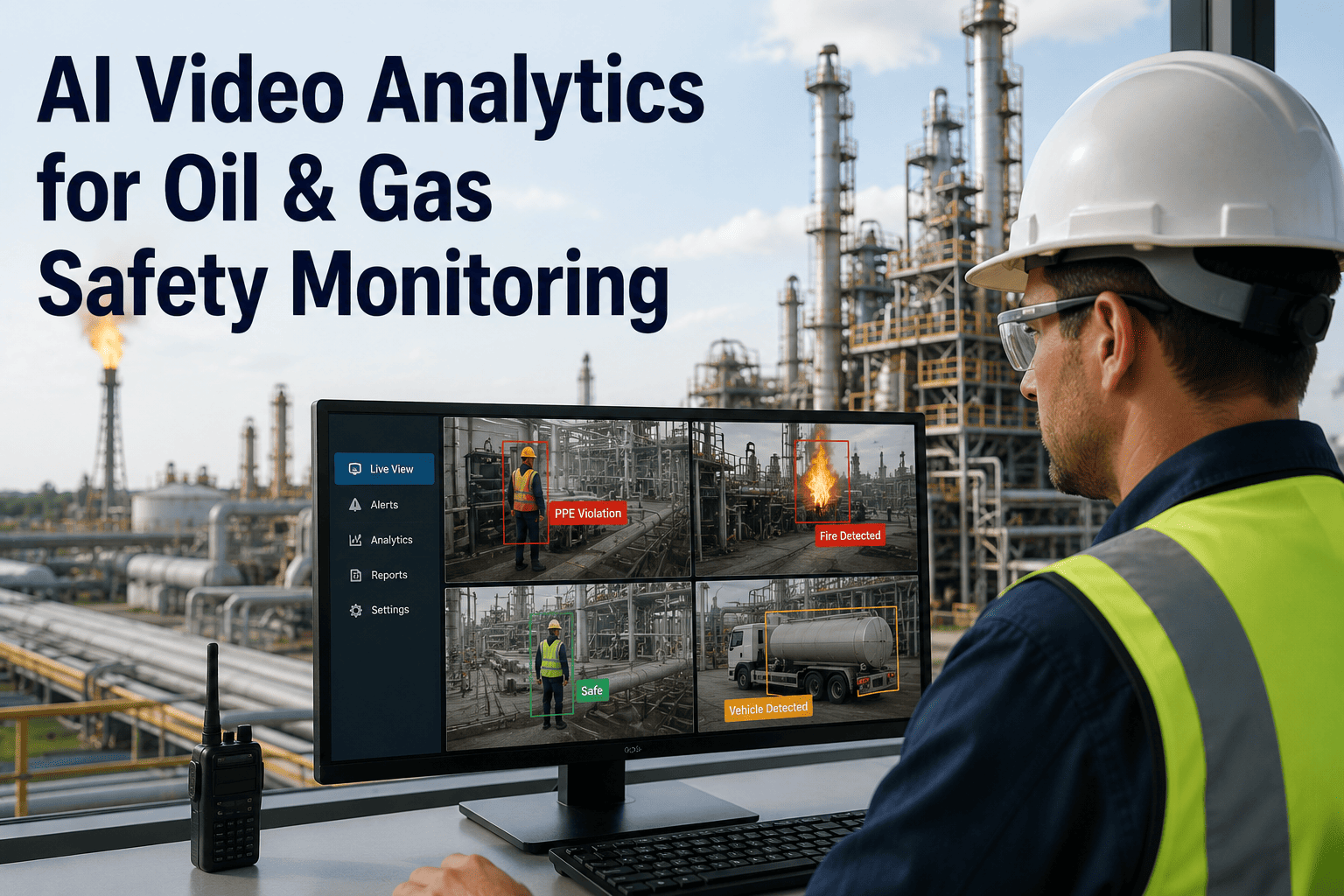
The standard approach to loading rack safety relies on a control room operator visually monitoring multiple bays through a window or CCTV displays while simultaneously managing loading authorizations, communication with drivers, and documentation. This creates unavoidable attention gaps that AI vision eliminates by maintaining continuous dedicated monitoring on every bay simultaneously with detection models that never lose focus, never get distracted, and never miss a frame.

Scroll to compare monitoring approaches
Monitoring Capability Control Room Observation iFactory AI Vision Analytics
Simultaneous Bay Coverage Operator can actively watch 2–3 bays at any moment — remaining bays unmonitored during peak loading periods with 6–12 simultaneous operations Every bay monitored continuously and simultaneously regardless of total bay count — no attention allocation or prioritization required
Grounding Cable Verification Operator visually confirms if line of sight is clear — grounding status assumed correct unless operator happens to notice disconnect Grounding cable connection state verified by computer vision on every loading cycle — alert generated if cable disconnected before arm engagement or after transfer start
Spill Detection Speed Spill detected when operator notices liquid on the ground or driver reports it — typically 30 seconds to 2 minutes after release begins Spill detected within 1–3 seconds of visible liquid appearance through pixel-level change detection on the loading bay surface
Unauthorized Vehicle Movement Detected only if operator happens to be watching the specific bay when movement occurs — easy to miss during concurrent activities Vehicle motion detected in real time within any monitored zone — alert generated if movement occurs during loading or before arm retraction complete
Driver Behavior Compliance Intermittent observation — operator cannot continuously track whether driver remains in designated safe area during entire transfer duration Continuous personnel tracking within each bay — alert if driver exits safe area, enters cab, or uses personal devices during active transfer
Event Documentation and Audit Incidents documented from operator recollection and post-event review — video footage available but requires manual search and retrieval Every detection event automatically tagged with video clip, timestamp, bay identification, and detection classification — immediately retrievable for incident review and regulatory audit
See AI Vision Monitoring Live on a Loading Rack Environment

iFactory's AI vision platform connects to your existing camera infrastructure to deliver real-time safety analytics across every loading bay — detecting vehicle movement violations, spill indicators, grounding failures, and personnel safety breaches without installing new cameras. Deployed in five weeks with detection models calibrated to your terminal layout.

Operational Visibility Transformation: Loading Rack Before and After AI Deployment

The operational difference between a terminal without AI vision and one with iFactory deployed is not incremental — it is a structural change in what the operations team knows about their loading rack at any given moment. The following comparison captures the day-to-day experience difference that terminal managers report after AI vision deployment.

Before AI Vision
Control room operator manages 8 loading bays through a window with frequent attention gaps during peak periods when all bays are active simultaneously
Grounding cable compliance verified only during initial checklist — no continuous monitoring during the loading cycle to detect mid-transfer disconnect
Spills discovered by driver visual check or operator observation — average 30-second to 2-minute detection delay allows product spread beyond immediate bay area
Vehicle movement violations detected only when another driver or operator notices and reports — most near-miss movement events go unrecorded entirely
Incident investigation requires manual CCTV review across multiple camera angles with no automated event tagging — hours of footage search for a 30-second event
Safety performance measured by reported incidents only — no visibility into the 150–300 procedural deviations per year that precede and predict reportable events
After iFactory AI Vision
Every bay monitored continuously by dedicated AI detection models — operator receives alerts only when action is required, eliminating attention allocation tradeoffs entirely
Grounding cable state tracked visually throughout the entire loading cycle — automatic alert if cable disconnected before arm disengaged or after transfer initiated
Liquid presence on bay surface detected within 1–3 seconds of appearance — automatic alert with video clip allows immediate operator response before product spreads
Every vehicle movement event in every zone detected and classified — unauthorized movements generate immediate alert and are automatically logged with video evidence
Every detection event automatically tagged with video clip, bay ID, timestamp, and classification — incident investigation starts with the event clip, not the footage search
Full visibility into procedural deviation frequency and patterns — safety programs can address root cause behaviors before they produce reportable incidents

Expert Perspective: What Terminal Managers Discover After AI Vision Deployment

The most surprising thing we learned after deploying AI vision on our loading racks was not about the serious incidents — it was about the sheer volume of procedural deviations that we had no visibility into previously. In the first month, iFactory flagged over 200 grounding cable violations where drivers disconnected the cable before the arm was fully disengaged and drained. We had been operating for years believing our grounding compliance rate was above 95% based on checklist sign-offs. The actual compliance rate, measured by continuous visual verification, was closer to 70%. Every one of those 200 violations was a potential spark source during a disconnect scenario with residual product in the arm. That single data point — knowing our actual compliance rate instead of our assumed compliance rate — changed how we approach driver training, contractor management, and loading procedures entirely. We went from measuring safety by the absence of reported incidents to measuring it by the presence of verified compliance, and the difference in our operational risk profile is substantial even though our reported spill count was already relatively low.
— Terminal Operations Manager, Gulf Coast Distribution Terminal · 16 Years Terminal Operations Experience · Managed Loading Rack Operations Across Six Petroleum Distribution Facilities

Frequently Asked Questions

Q: Does iFactory require new cameras to be installed on the loading rack?
iFactory connects to your existing CCTV camera infrastructure through standard network video protocols — no new camera installation is required for deployment. The platform uses your current camera positions and feeds, applying AI detection models to the existing video streams. During the deployment assessment, iFactory evaluates camera coverage to identify any blind spots in the loading bay areas and recommends repositioning existing cameras if needed, but the vast majority of terminals have sufficient camera coverage already in place for AI vision to function effectively. Book a Demo to discuss your specific camera infrastructure.
Q: How does AI vision detect spills faster than a control room operator looking at the same camera feed?
An AI vision model analyzes every pixel of every frame from every camera simultaneously without interruption, attention lapses, or priority conflicts. When a liquid spill begins, the visual change on the ground surface — even a few ounces of product — represents a detectable pixel-level change that the model identifies within 1–3 seconds. A human operator watching the same camera feed must notice the change against a complex visual background of vehicles, equipment, and lighting variations, which typically takes 30 seconds to 2 minutes depending on the spill size, operator attention state, and number of bays being monitored concurrently.
Q: Can iFactory detect whether a grounding cable is physically connected to the vehicle?
iFactory's computer vision models are trained to recognize the physical presence and connection state of grounding cables at each loading bay — identifying whether the cable is connected to the vehicle receptacle, hanging disconnected, or not present in the field of view. The system verifies grounding state at the start of each loading cycle and continuously monitors throughout the transfer to detect mid-cycle disconnection. When a grounding violation is detected, the alert includes the video clip showing the specific cable state that triggered the detection. Contact our team to discuss grounding detection capabilities for your terminal configuration.
Q: How does iFactory handle false alerts in outdoor terminal environments with weather and lighting variations?
iFactory's detection models are trained on terminal-specific video data that includes the full range of weather conditions, lighting changes, and seasonal variations your facility experiences — including rain, fog, direct sunlight, nighttime operations, and shadow patterns from vehicles and equipment. The models learn to distinguish between actual safety events and environmental visual noise through exposure to thousands of hours of your terminal's normal operating conditions during the calibration period. False alert rates typically decrease below 2% within the first two weeks of live operation as the models adapt to your specific environment.
Q: How does the detection event log support regulatory compliance and incident investigation?
Every detection event generated by iFactory is automatically logged with a precise timestamp, loading bay identification, detection classification, confidence score, and a linked video clip showing the 30 seconds before and after the detected event. This log creates a continuous auditable record of all safety-relevant activities across the loading rack that is immediately searchable by date, bay, event type, or severity level. For incident investigation, the relevant video clip is available in seconds rather than the hours required for manual CCTV footage review, and the complete detection history provides context for demonstrating due diligence in safety monitoring to regulatory agencies. Book a Demo to see the event log and video retrieval interface.
Loading Rack Safety Analytics That Detects Violations in Real Time Across Every Bay

iFactory's AI vision platform monitors vehicle movement, grounding compliance, coupling integrity, spill indicators, and personnel safety across every zone of your loading rack — providing the continuous surveillance that control room observation cannot deliver, with automatic event documentation that transforms incident investigation and regulatory compliance.
Share This Story, Choose Your Platform!