A pinhole leak on a flange rarely announces itself. It hisses at a frequency no one on the floor can hear, drifts invisibly because the gas has no color, and sits between two quarterly inspection dates where nobody happens to be standing nearby with a handheld imager. By the time a scheduled survey finally catches it, the leak has often been running for weeks, quietly costing product, risking a permit violation, and sitting one spark away from becoming an incident report. AI vision changes the timeline from "next survey" to "right now" — book a demo to see it running on your own camera feeds.
Safety & Leak Detection · AI Vision
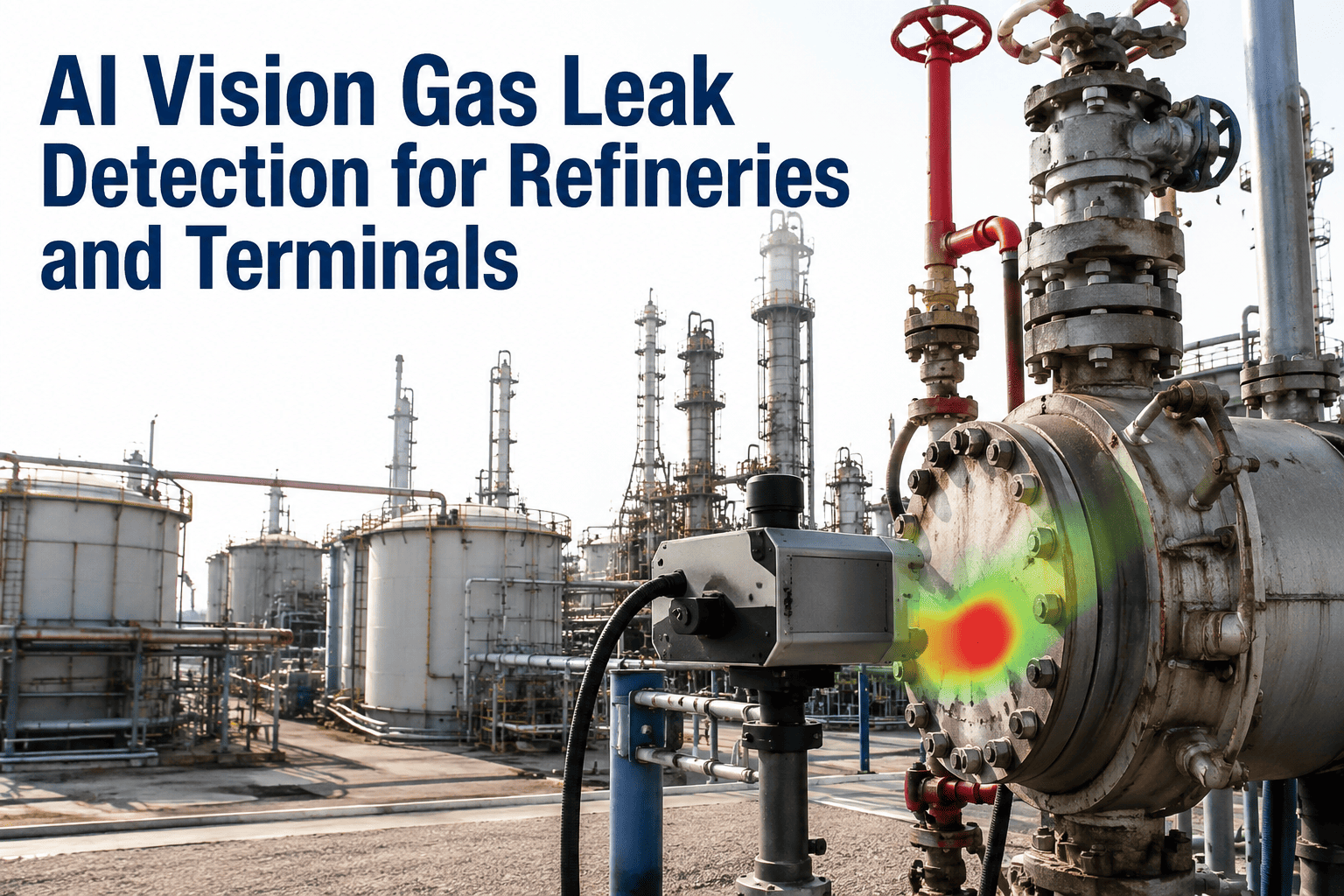
AI Vision Gas Leak Detection for Refineries and Terminals
Point existing thermal and optical gas imaging cameras at your flanges, valves, and tanks, and let AI watch every frame, every hour, for the plume a quarterly survey would miss.
24/7
Continuous monitoring instead of scheduled survey windows
99%
Peak detection accuracy achieved by CNN-based gas vision models
60-80m
Practical camera range for catching small releases early
The Gap Between Surveys Is Where Leaks Live
Most refineries and terminals still lean on handheld optical gas imaging surveys carried out quarterly or annually by a technician walking the site with a camera. That approach works well for the moment the technician is standing there — and says nothing about the other 89 days of the quarter.
1
Survey Day
A technician scans hundreds of flanges, valves, and connections by hand. Anything leaking at that exact moment gets logged and scheduled for repair.
2
The Silent Weeks
A gasket starts weeping the day after the survey. Product loss and emissions accumulate quietly, invisible to anyone until the next scheduled walk-through.
3
Next Survey
Months later, the leak is finally caught — bigger, costlier, and with a much longer paper trail of undetected emissions behind it.
What the Camera Actually Sees
Optical gas imaging cameras render invisible gases as visible plumes using infrared. AI vision then does what a tired technician cannot do at 3 a.m. on a Sunday: watch every one of those plumes, all the time, and tell the difference between a real leak and a puff of harmless steam.
Methane Plumes
Classified by density, drift pattern, and spectral signature, then matched against the equipment it's coming from — valve, flange, or seal.
VOC Releases
Volatile organic compound emissions are flagged with a severity tier so safety teams can prioritize the worst releases first.
H2S Escapes
Hydrogen sulfide events are treated as high-priority alerts given the acute health risk, routed instantly to the response team on shift.
Steam Interference
The model is trained to separate a genuine gas plume from steam or dust, cutting the false alarms that make teams stop trusting a system.
Small Leaks, Caught From a Real Distance
Point sensors have to sit close to a source and can miss releases below their detection floor. Camera-based AI vision covers wide areas from a distance and picks up leaks that traditional fixed gas detectors are built to ignore.
Handheld OGI Survey
Point-in-time, technician-dependent
AI Vision Camera
60-80m range, always watching
AI-driven vision systems are designed to catch releases many times smaller than a typical fixed point sensor's detection limit, at ranges wide enough to cover a whole tank farm from a handful of mounting points.
A camera that only records footage isn't a safety system. The value comes from AI that watches every frame and tells your team the moment a plume appears, not months later during the next scheduled review.
Three Ways to Put Eyes on Every Flange
Fixed Mount
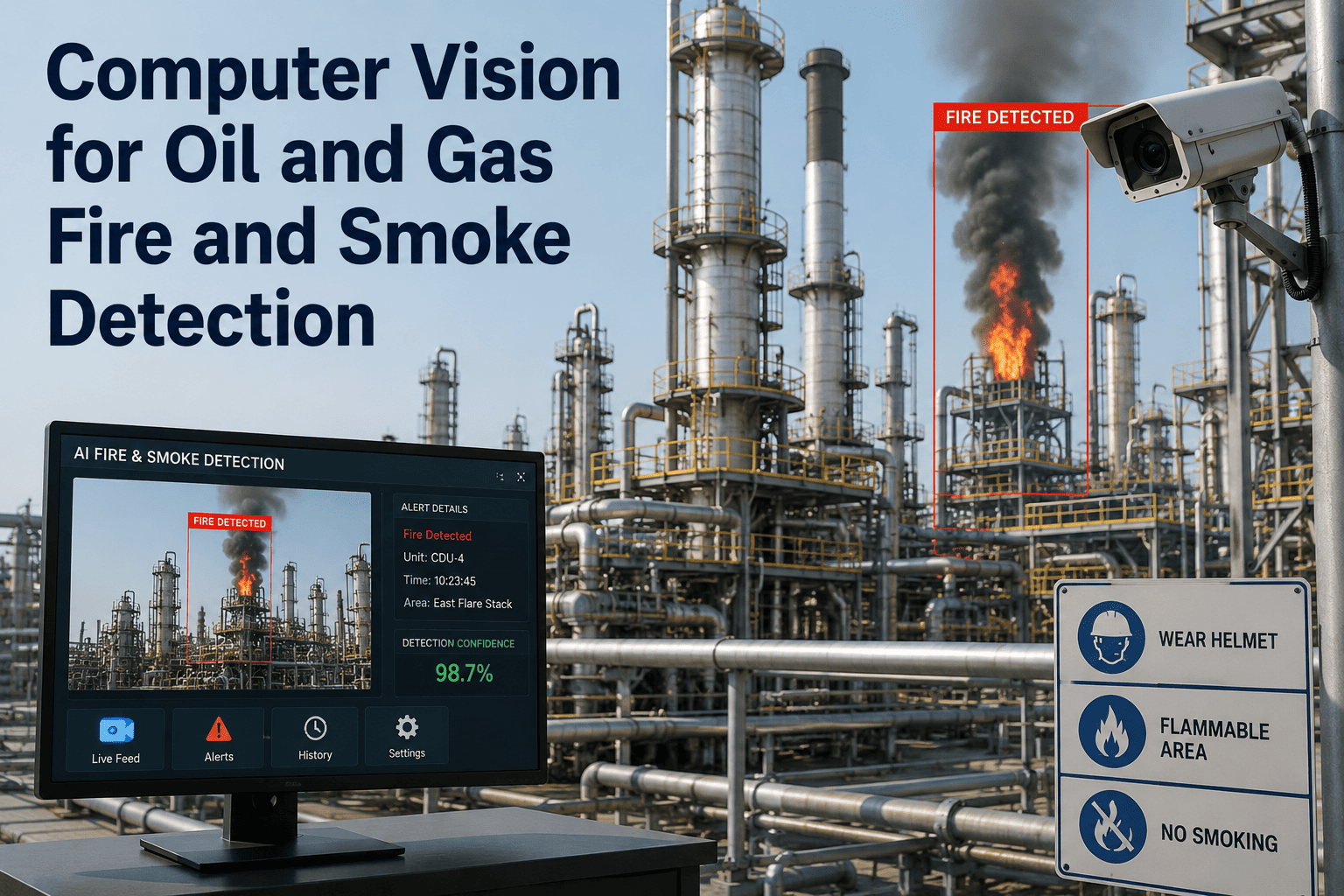
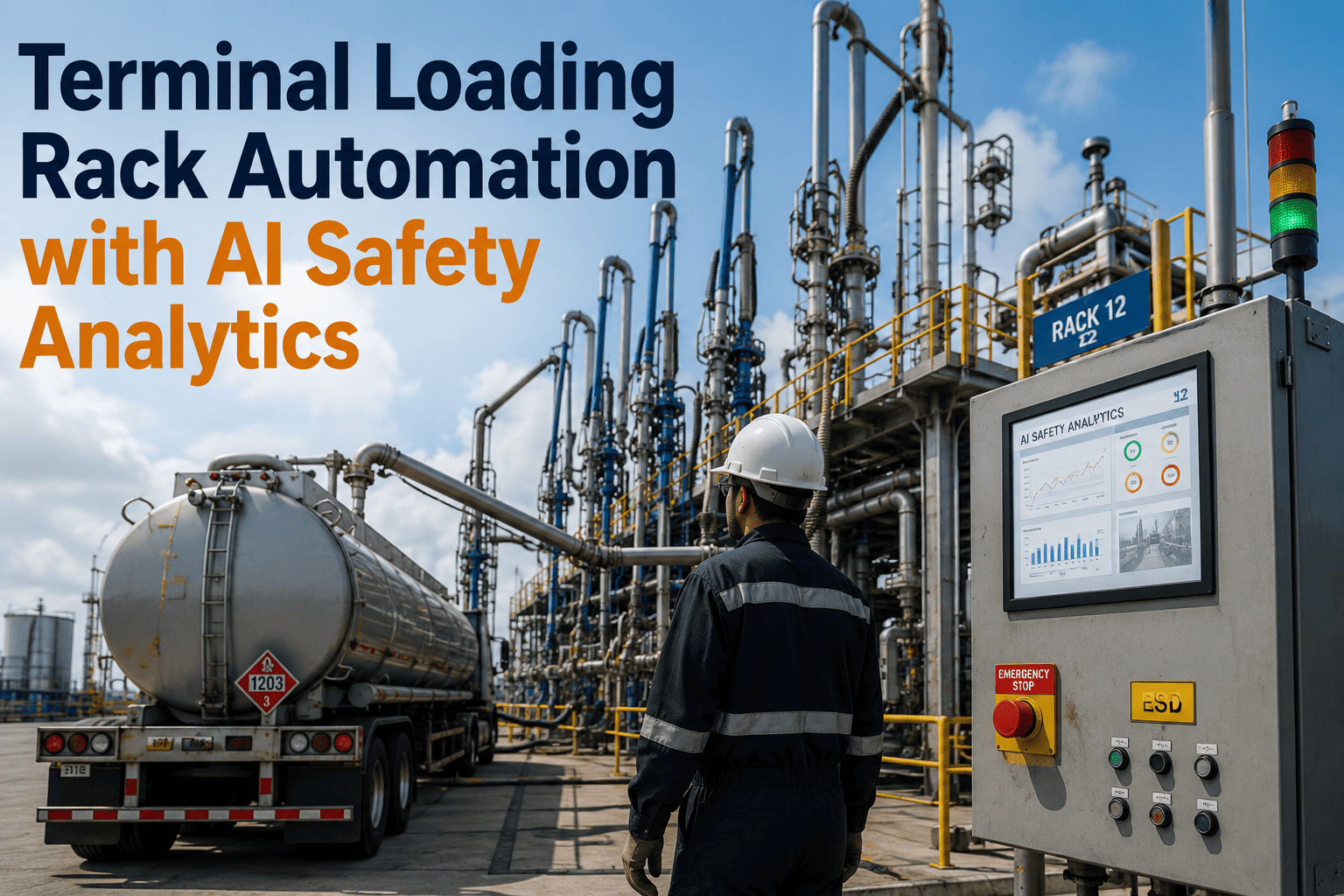
Permanent cameras on tank farms, loading racks, and high-risk process units provide uninterrupted coverage of the areas that leak most often.
PTZ Patrol
Pan-tilt-zoom cameras rotate through a programmed route, extending a small number of units across a much wider footprint of equipment.
Drone Sweep
Drone-mounted imaging reaches flare stacks, elevated piping, and hard-to-access structures without putting a technician on a ladder.
Expert Insight
The mistake most sites make is treating a camera feed like a security tape — something you only review after an incident already happened. Optical gas imaging has existed for years, but it only became a real safety layer once AI started watching the footage in real time instead of a person watching it once a quarter. The plants that get the most value stop asking "did we survey this month" and start asking "is the AI still watching right now."
Marcus Idowu — HSE Systems Consultant, former turnaround safety lead, 14+ years in refinery and terminal risk management
Manual OGI Survey vs. AI Vision Monitoring
| Capability |
Manual OGI Survey |
AI Vision Monitoring |
Why It Matters |
| Coverage window |
Quarterly or annual snapshot |
Continuous, 24 hours a day |
Leaks are caught within hours instead of within months |
| Detection sensitivity |
Limited by technician attention and time on site |
Trained to flag releases far below typical point-sensor thresholds |
Smaller leaks get repaired before they escalate |
| False alarm handling |
Technician judgment call in the field |
Model distinguishes gas plumes from steam and dust automatically |
Fewer nuisance alerts, more trust in the system |
| Documentation |
Manual logs compiled after the survey |
Automatic timestamped record with severity tier and location |
Audit-ready compliance history with no extra paperwork |
| Access to hazardous areas |
Requires a person physically present on site |
Fixed, PTZ, and drone cameras cover elevated or confined areas remotely |
Removes people from unnecessary exposure to risk |
Frequently Asked Questions
Do we need to replace our existing thermal cameras to use this?
In most cases, no. AI vision is built to run on top of the optical gas imaging and thermal camera infrastructure many refineries and terminals already have installed, analyzing the video feed rather than requiring new hardware everywhere. Sites with gaps in current camera coverage can add fixed, PTZ, or drone-based units to fill in blind spots.
Book a demo to see how it connects to your current camera network.
How does the system tell a real gas leak apart from steam or dust?
The detection model is trained specifically to separate genuine gas plumes from common look-alikes such as steam, dust, and heat shimmer, using plume density, movement pattern, and spectral signature rather than a simple motion trigger. This is the difference between a system that gets trusted on the floor and one that gets muted after a week of false alarms.
Contact support to review how the model was trained for your specific equipment.
What size of leak can the cameras actually catch?
Camera-based AI vision is designed to pick up small releases at a real working distance, catching leaks well below the size that many fixed point sensors are built to detect, without needing to sit right next to the source. That means slow weeping leaks at flanges and seals get flagged long before they grow into a major release.
Book a demo to see live sensitivity on equipment similar to yours.
Does this help with regulatory compliance reporting?
Yes. Every detection is logged automatically with a timestamp, location, and severity tier, building a continuous audit trail that stands in for or supplements manual survey logs during inspections and regulatory reviews. Fugitive emissions from valves and flanges — a common compliance focus area — are exactly the kind of event this system is built to catch.
Contact support for help mapping this to your current compliance program.
Can drones and fixed cameras be combined on the same site?
Yes, and most large sites end up doing exactly that. Fixed and PTZ cameras handle constant coverage of known high-risk areas like tank farms and loading racks, while drone sweeps reach flare stacks, elevated pipe racks, and other spots that are difficult or hazardous for a person to access directly. All of it feeds into the same AI detection layer.
Book a demo to design a coverage plan for your site layout.
Stop Waiting for the Next Scheduled Survey
Turn the cameras you already have into a leak detection layer that never clocks out, never misses a flange, and never waits for a quarterly walk-through.