Refinery turnaround periods bring thousands of contractors on site within compressed timelines, creating the highest-risk window for safety incidents in oil and gas operations. Contractor injury rates run two to four times higher than direct employees due to unfamiliarity with site-specific hazards and gaps in real-time monitoring of compliance. Manual walk-throughs and paper checklists simply cannot scale when hundreds of work activities happen simultaneously across a sprawling facility. AI vision systems now deliver continuous automated detection of PPE violations, restricted area breaches, and unsafe acts with timestamped visual evidence that strengthens both prevention and post-incident review. Book a demo to see how this works on your refinery site.
Contractor Safety Meets AI Vision Evidence
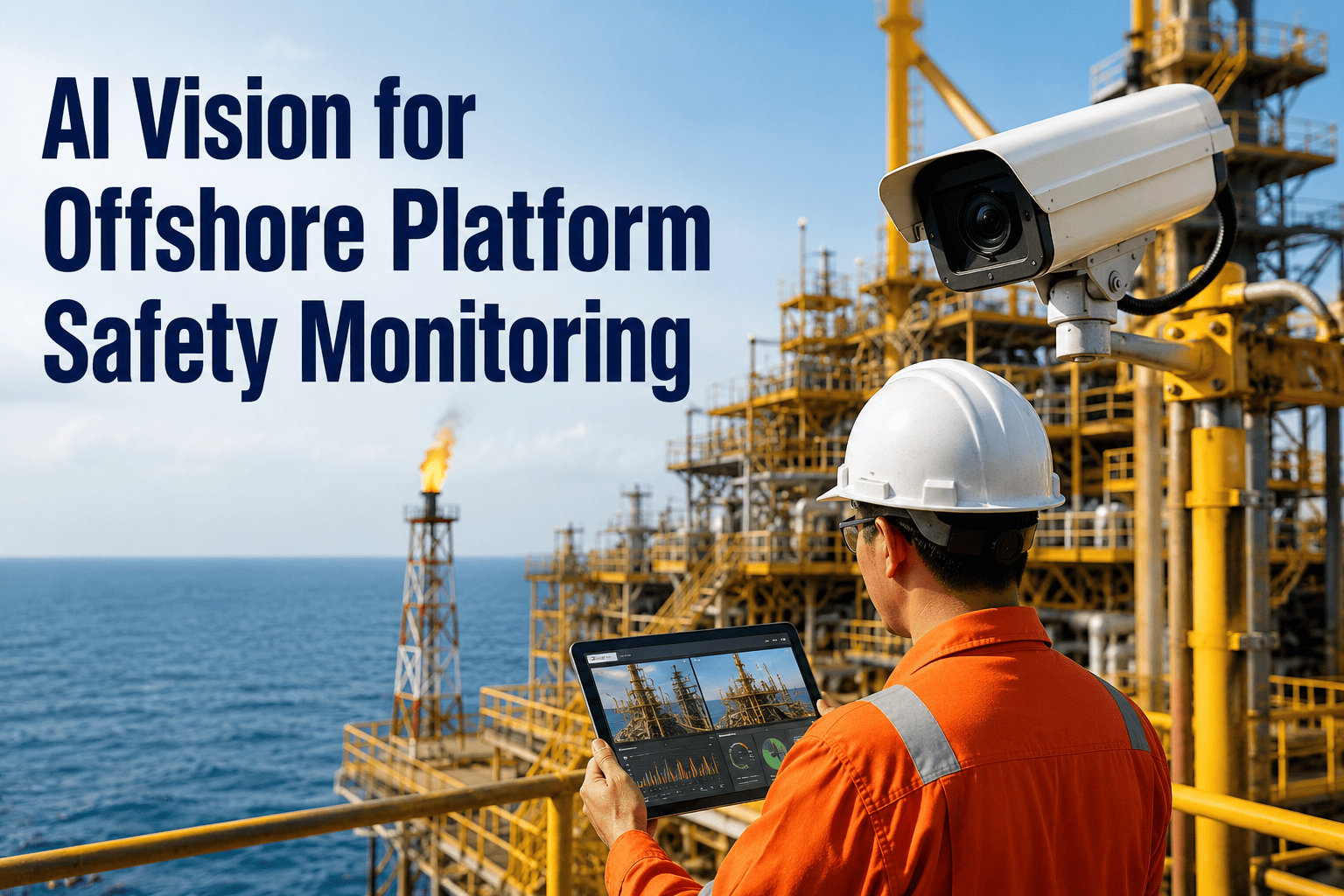
Monitor PPE compliance, restricted zones, and worksite hazards across your refinery with AI-powered camera intelligence that captures every violation with timestamped visual proof.
Why Contractor Safety Is the Weakest Link in Refinery Operations
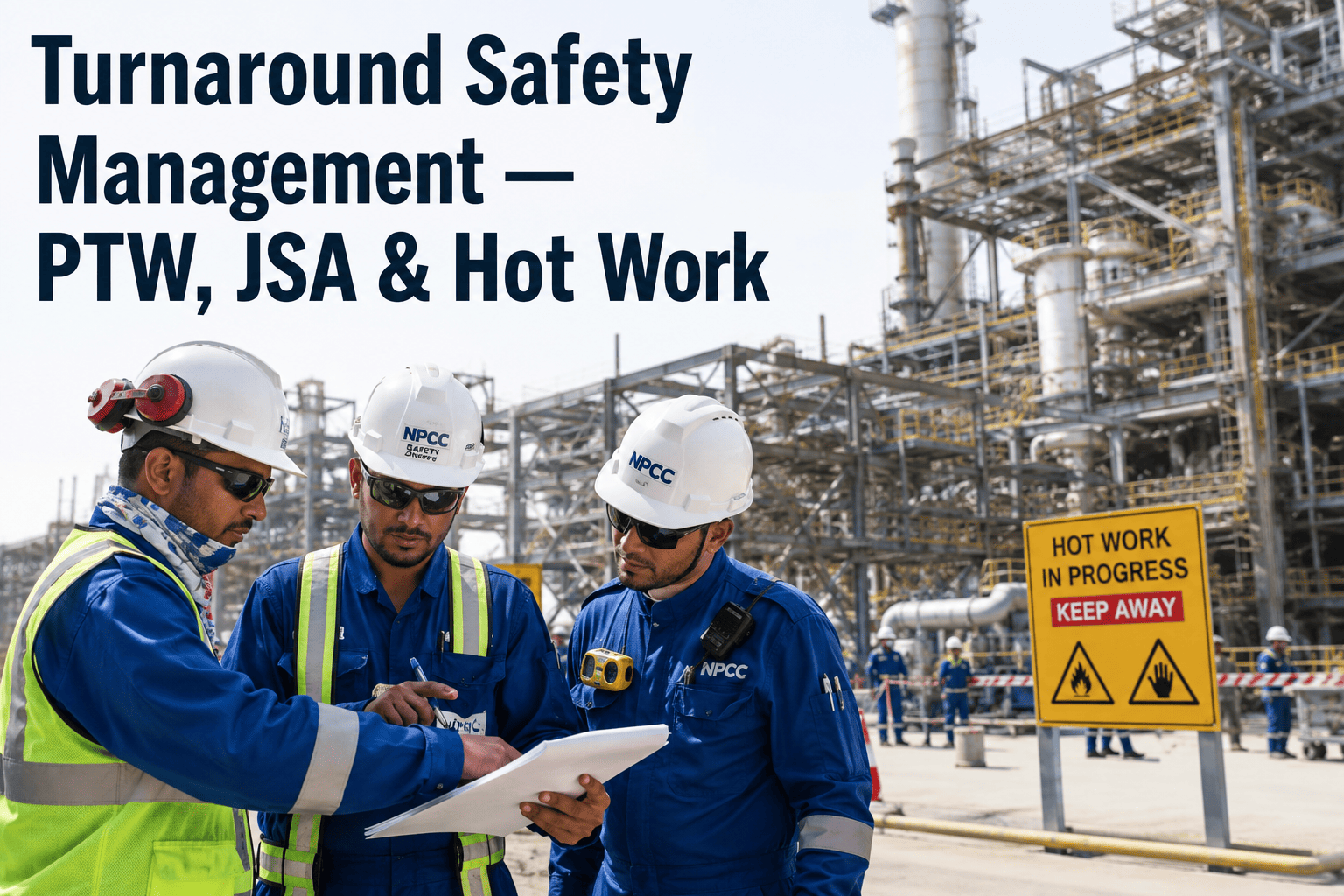
Contractor workers represent 60 to 80 percent of the total workforce during turnaround events, yet they account for a disproportionate share of recordable incidents, near-misses, and safety violations.
Six Critical Safety Violations AI Vision Catches That Humans Miss
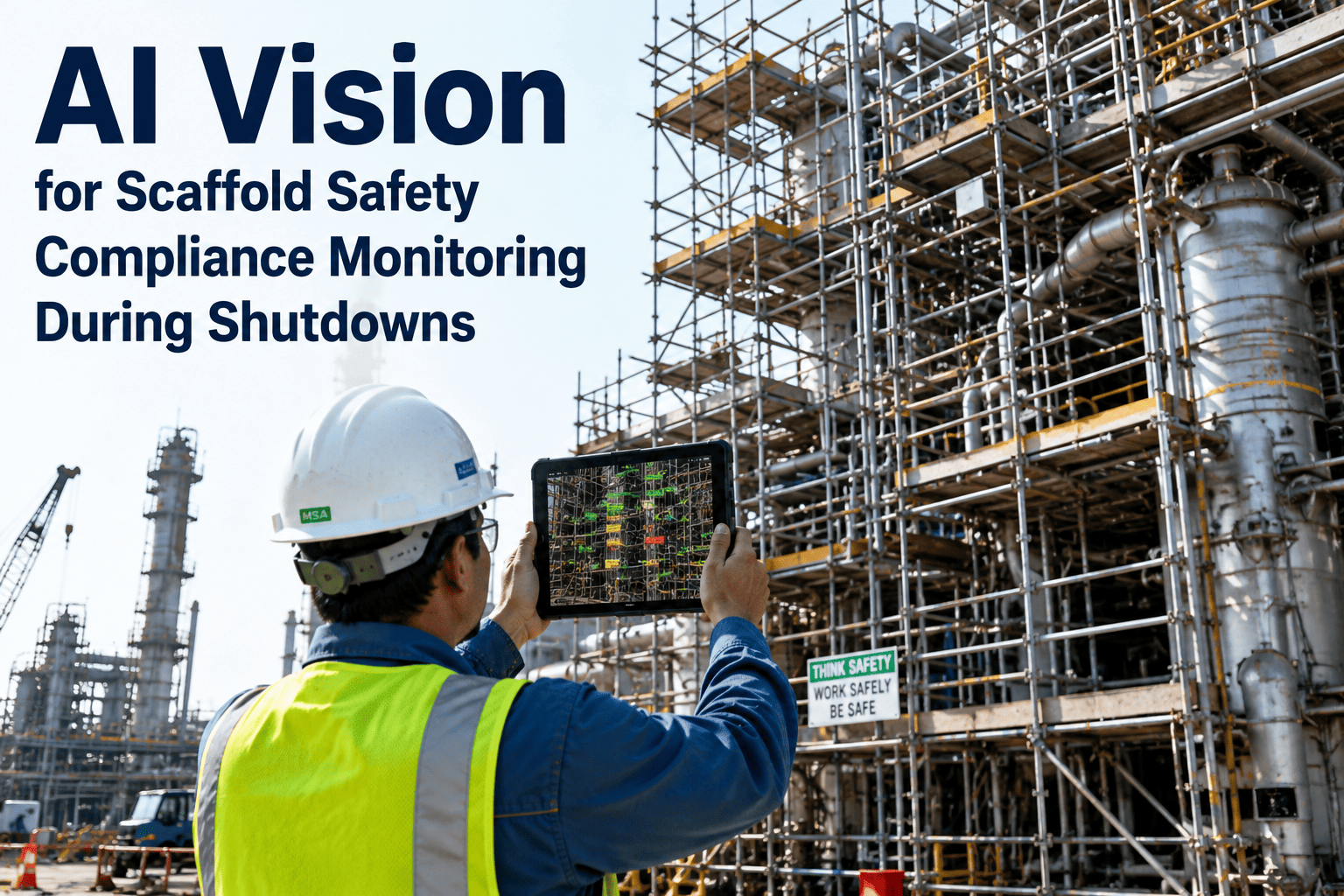
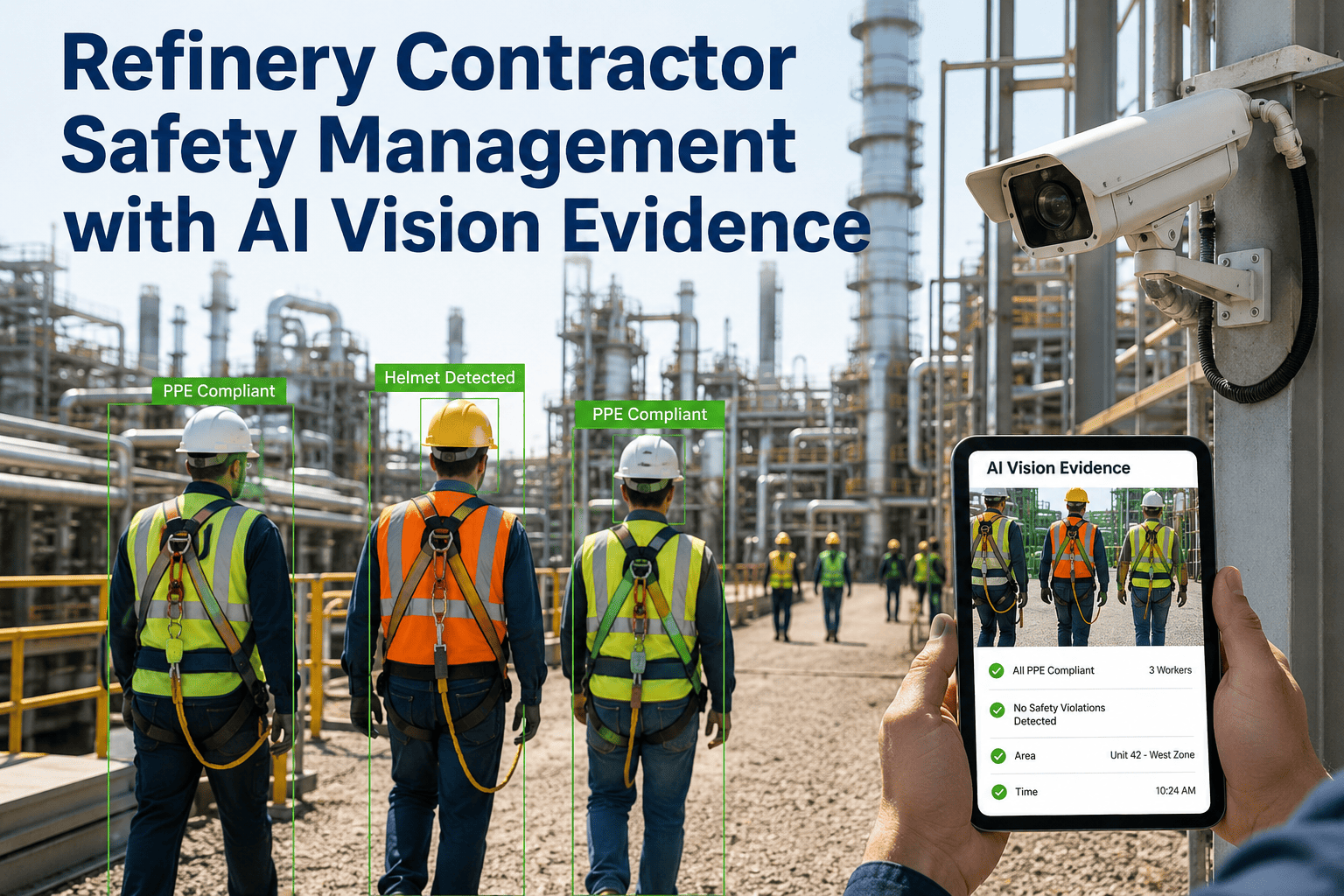
Computer vision models trained on refinery environments continuously analyze camera feeds to identify compliance gaps in real time, generating alerts and evidence clips for each detection event.
AI PPE Detection Breakdown by Equipment Type
Each PPE item presents a distinct detection challenge based on size, visibility, and environmental conditions. AI models are tuned for refinery-specific conditions including low light, steam, and reflective surfaces.
Restricted Area Violation Detection Workflow
AI vision enforces digital geofences around hazardous zones, triggering a structured alert and evidence workflow the moment an unauthorized person crosses a defined boundary.
From Camera Detection to Audit-Ready Evidence Package
Every AI-detected violation generates a structured evidence chain that satisfies internal investigation requirements, OSHA inquiry standards, and contractor performance review processes.
Manual Safety Supervision vs AI Vision Monitoring
Side-by-side comparison of traditional contractor safety oversight methods against AI vision-powered monitoring across key operational parameters.
| Parameter | Manual Supervision | AI Vision Monitoring |
|---|---|---|
| Coverage Area | One supervisor covers 2-3 work areas per shift | All camera-covered zones monitored simultaneously 24/7 |
| Detection Speed | Minutes to hours depending on patrol frequency | Under 3 seconds from violation to alert delivery |
| Evidence Quality | Written notes, occasional photos, memory-dependent | Timestamped video clips, annotated snapshots, metadata logs |
| Consistency | Varies by supervisor experience, fatigue, and workload | Same detection threshold applied uniformly across all zones |
| PPE Check Scope | Spot checks on visible workers during walk-through | Every worker in camera view checked for all PPE items continuously |
| Zone Enforcement | Physical barriers, signage, and periodic manual checks | Digital geofences with automatic violation flagging and alerts |
| Scalability | Requires proportional headcount increase for more areas | Cameras added at marginal cost using same monitoring platform |
| Audit Readiness | Weeks to compile evidence packages retrospectively | Evidence packages auto-generated and searchable instantly |
Replace Guesswork with Visual Proof on Every Shift
iFactory AI Vision module integrates with your existing refinery cameras to deliver real-time PPE detection, zone enforcement, and audit-ready evidence without replacing your current infrastructure.
Measured Safety Improvements from AI Vision Deployment
Refineries that have deployed AI vision for contractor safety during turnaround events report measurable improvements across detection rates, response times, and evidence availability.
Frequently Asked Questions
How does AI vision detect PPE non-compliance for contractors in real time?
AI vision systems use deep learning object detection models trained on thousands of annotated images of workers wearing and not wearing specific PPE items in refinery environments. Each camera feed is processed frame by frame, with the model identifying individual workers and classifying the presence or absence of hard hats, safety glasses, high-vis vests, gloves, and other required equipment. When a missing PPE item is detected, the system generates an alert containing the worker location, camera snapshot with the violation highlighted, and a short video clip. The detection runs continuously without requiring manual triggering, meaning every worker passing through a camera zone is checked on every frame. iFactory AI Vision module is pre-trained on refinery-specific PPE datasets and can be further fine-tuned to match your site requirements. Book a demo to see live PPE detection in action.
What types of restricted area violations can AI cameras identify at refineries?
AI vision cameras identify a wide range of restricted area violations by combining person detection with digital geofence boundaries drawn on camera views. Common refinery applications include detecting unauthorized entry into hot work zones where welding or cutting is in progress, confined space perimeters where only permit-holding workers should be present, overhead crane operating radii where falling object risk is high, and process unit boundaries during active hydrocarbon handling. The system differentiates between authorized and unauthorized personnel by cross-referencing detected individuals with active permit databases, meaning a worker with a valid confined space permit entering that zone would not trigger a violation alert. Geofences can be configured as permanent restrictions or as temporary zones that activate only during specific work activities. Contact support to discuss your specific zone monitoring requirements.
How is AI vision evidence used during incident investigation and regulatory audits?
AI vision evidence serves three critical functions in incident investigation and regulatory audit contexts. First, it provides an objective visual record of conditions leading up to an incident with continuous footage and metadata logging, so investigators can review the exact sequence of events, worker positions, PPE status, and environmental conditions without relying on witness recollection. Second, the auto-generated evidence packages include timestamped video clips, annotated snapshots, violation history for involved workers, and chain-of-custody documentation that meets the evidentiary standards required by OSHA during incident investigations. Third, for proactive audit preparation, the system maintains searchable violation logs organized by contractor company, work area, violation type, and time period, allowing safety teams to demonstrate compliance efforts without manual report compilation. Book a demo to explore the evidence management workflow.
What is required to deploy AI vision cameras across a refinery turnaround?
Deploying AI vision for refinery turnaround safety requires three components: camera infrastructure, edge or cloud computing for AI processing, and the iFactory AI Vision software platform. Most refineries already have CCTV camera systems installed, and iFactory can integrate with existing IP cameras without requiring new hardware purchases since the AI processing software connects directly to your camera streams. For areas without existing camera coverage, temporary cameras can be installed on scaffolding, lighting towers, or tripods for the turnaround duration. AI processing can run on edge devices installed on-site for low-latency detection or in the cloud for simpler deployment. The setup process involves a site survey to map camera coverage against high-risk work areas, configuration of detection rules and geofences specific to the turnaround scope, and a calibration period of 2 to 3 days where AI models are tuned for your site lighting conditions. Reach out to support for a deployment planning consultation.
How does AI vision safety monitoring integrate with existing contractor management systems?
AI vision safety monitoring integrates with contractor management systems at multiple touchpoints to create a unified safety oversight workflow. The most common integration is with permit-to-work systems where a hot work or confined space permit issuance automatically updates the corresponding geofence to authorize the permitted workers by name or badge number for the permit duration. Integration with contractor badge or access control systems enables the AI to associate detected individuals with their employer company, trade, and certification status, enriching violation alerts with contractor-specific context. Shift handover data can be fed into the system to update which supervisors should receive alerts for which areas. Violation data and evidence packages can be pushed back into your incident management or contractor performance scoring systems, creating a closed loop where AI-detected violations automatically populate contractor safety scorecards. Book a demo to discuss integration with your existing systems.
Stop Relying on Patrols and Let AI Eyes Watch Every Corner of Your Refinery
iFactory AI Vision module turns your existing cameras into a 24/7 safety monitoring system that catches what humans miss and documents everything for audit-ready proof.