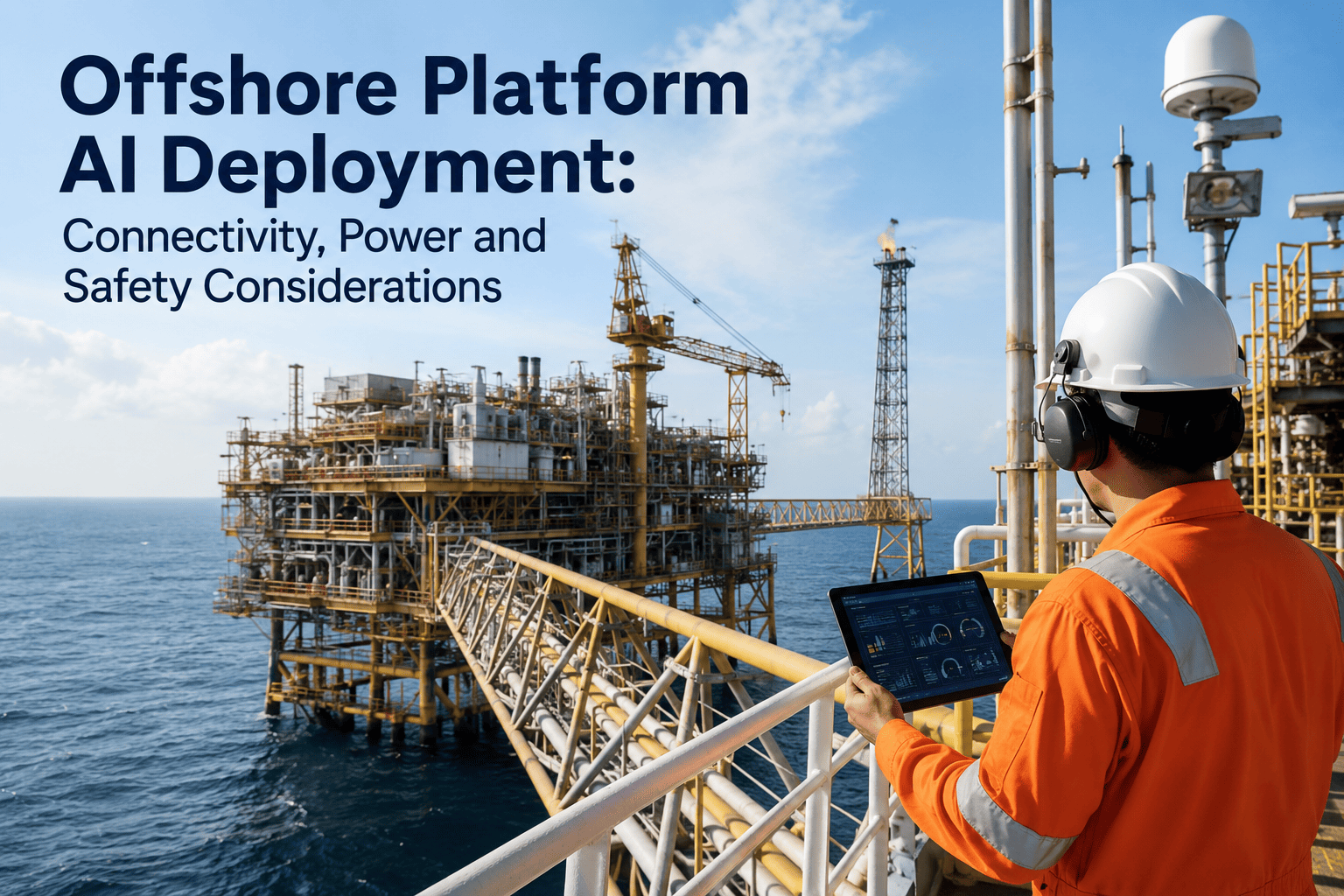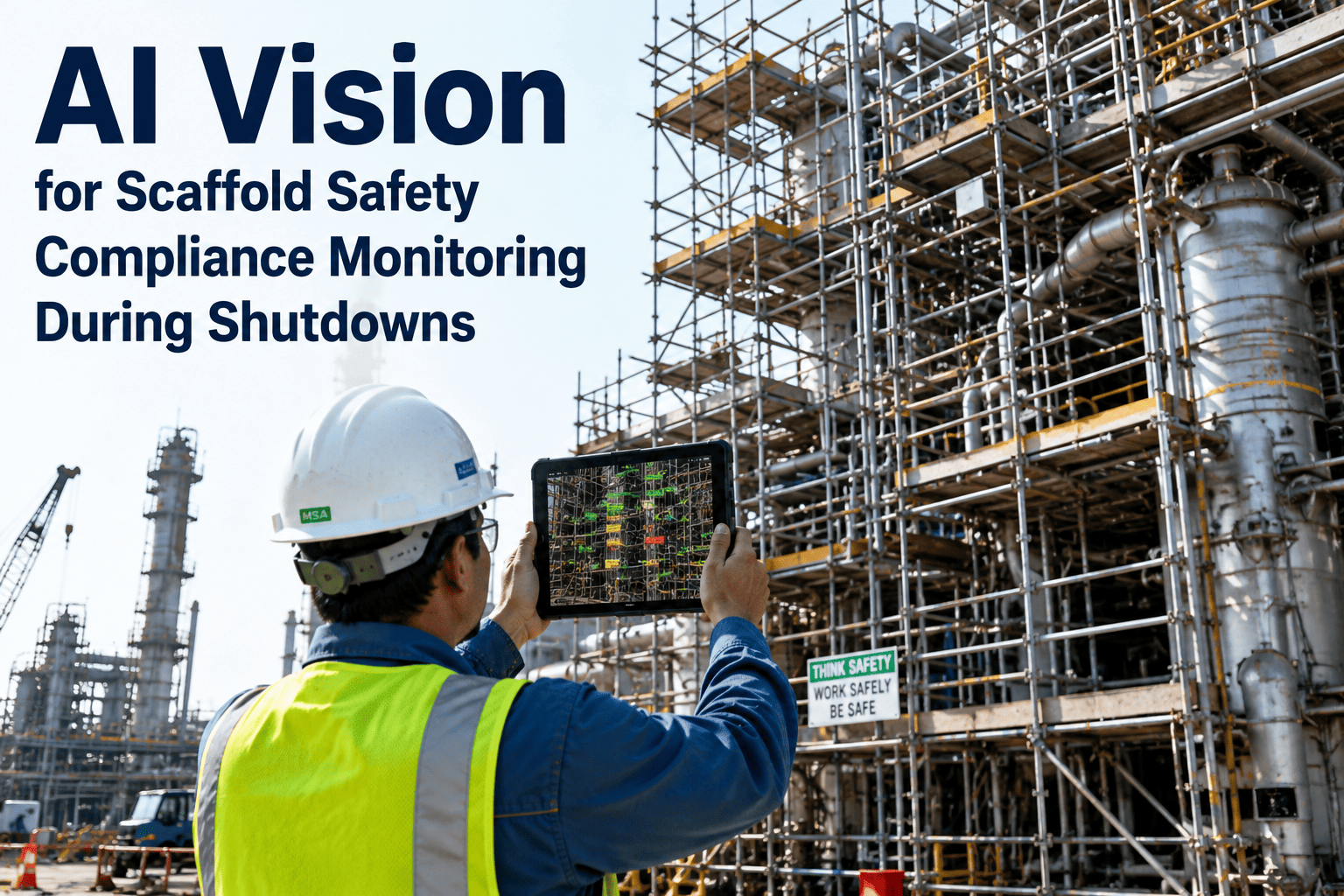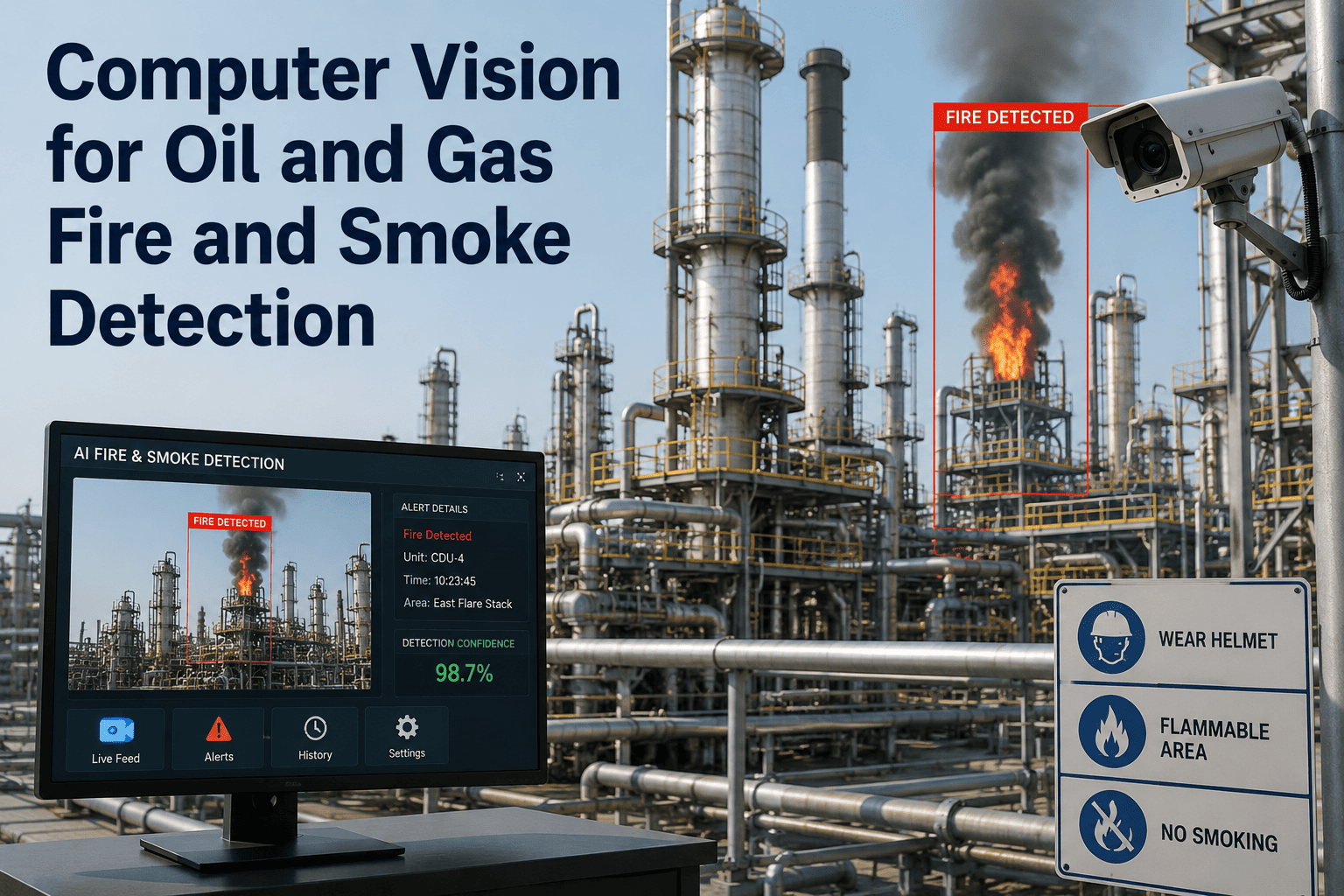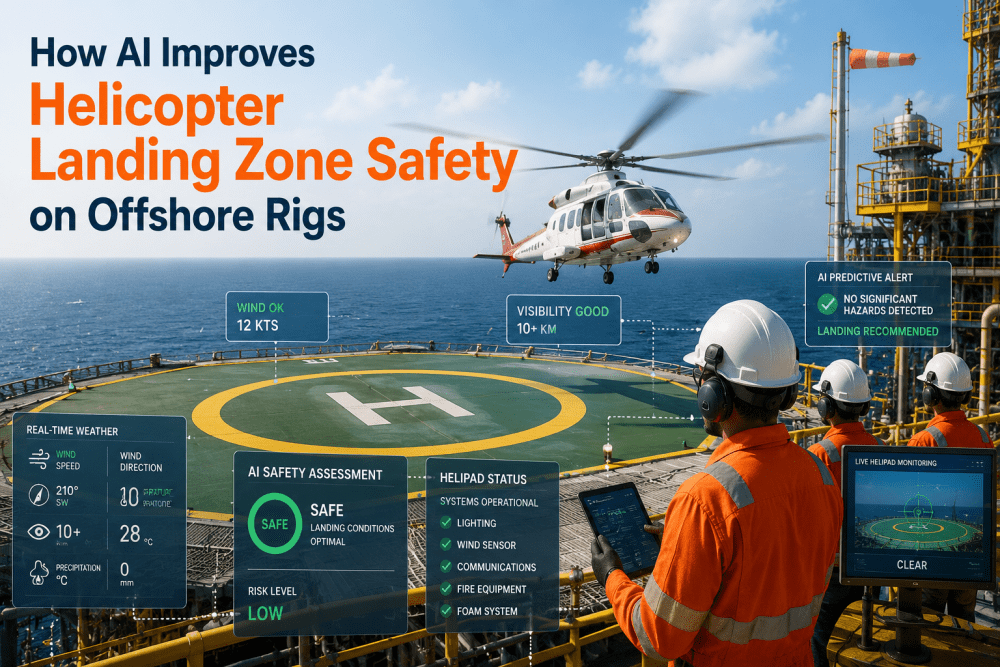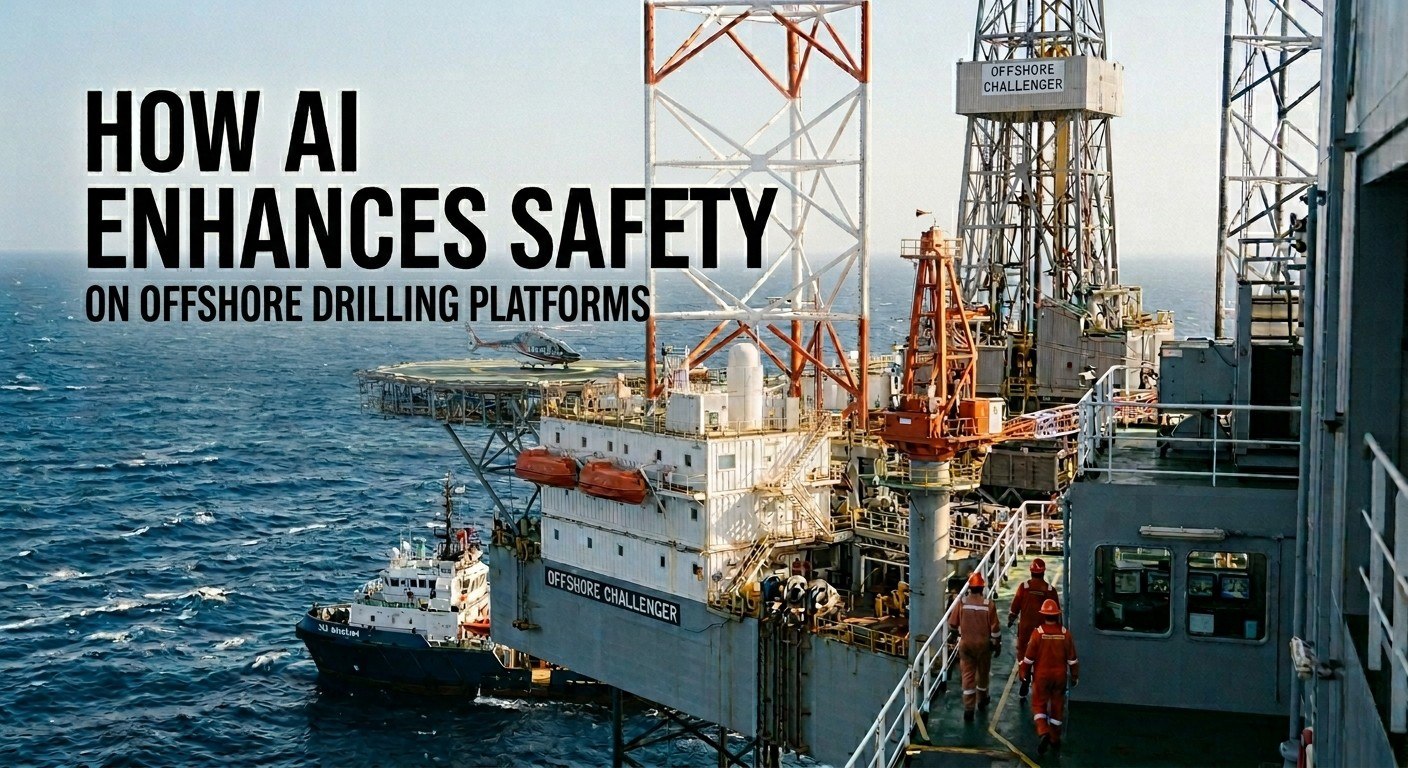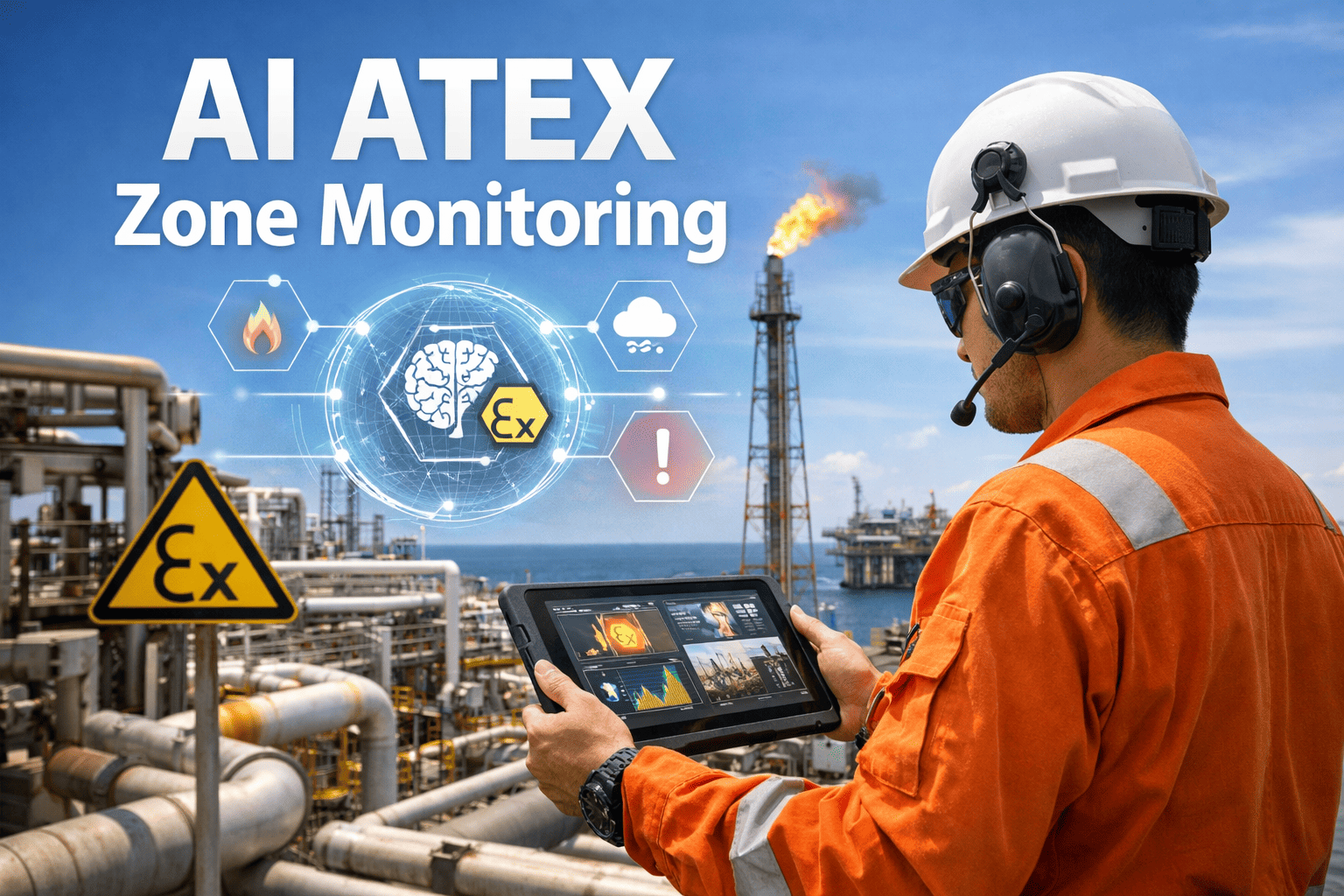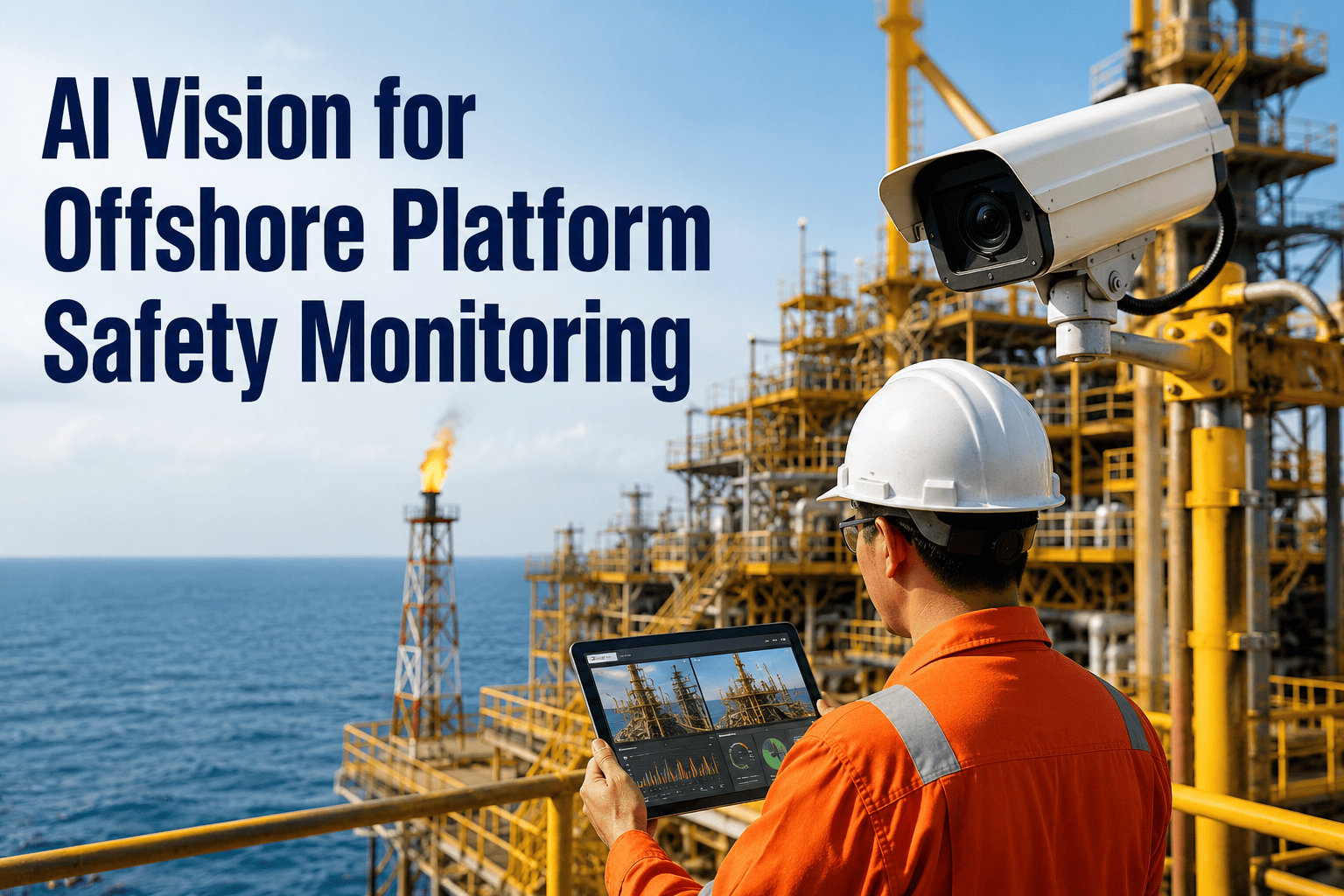
An offshore installation manager reviewing last week's incident log already knows where the real risk sits: not in the process systems everyone monitors closely, but in the ordinary moments nobody is watching. A rigger crosses the crane's slew zone mid-lift, a technician steps onto the process deck without hearing protection, a fire door gets wedged open "just for a minute" during a hot shift. None of that shows up on a P&ID or a gas detector, and by the time it shows up in an incident report, someone has already been hurt. Standard platform CCTV records all of it and reviews none of it in real time, which is exactly the gap edge AI vision is built to close, and you can book a demo to see it flag a live PPE gap on your own platform's camera feed.
Your Cameras Already See Everything On Deck — They Just Aren't Watching Yet
iFactory's edge AI vision turns your existing offshore camera network into a live safety observer, checking PPE, restricted zones, crane areas, escape routes, and unsafe acts on every deck, every shift, without waiting for someone to pull the footage after the fact.
The Same Blind Spots Turn Up Across Nearly Every Offshore Incident Report
Federal offshore safety data shows the pattern clearly: occupational injuries across US federal waters have held in the low hundreds every year for over a decade, and fire incident rates have climbed rather than fallen, with regulators tracing much of that increase to hot work and galley or electrical fires that a bystander could have caught in the moment. None of these incidents start as disasters. They start as a missed PPE check, a crane zone someone wandered into, or a muster route that was blocked without anyone noticing.
One Camera Network, Six Zones, Six Different Things To Watch For
A platform isn't one hazard profile, it's several stacked on top of each other. The helideck cares about different risks than the process deck, and the muster points care about something else entirely. Treating every camera the same way, with a single blanket safety rule applied platform-wide, is why so many early camera-based safety attempts either missed real hazards or buried the safety team in irrelevant alerts. iFactory's vision models are configured per zone instead, so each camera enforces the rules that actually apply to what happens beneath it, from a flight deck clearance check to a slew radius on the crane.
What Actually Changes When Footage Turns Into Findings
Most platforms already have cameras covering these zones. The gap has never been coverage, it's been the fact that footage only gets reviewed after something has already gone wrong. A camera pointed at a crane zone for eighteen months of a platform's operating life has technically "seen" every near miss that happened beneath it, but none of that footage did anything to prevent an incident because nobody was watching it live when it mattered. The table below breaks down what that gap actually costs a safety team, task by task.
| Monitoring Task | Traditional CCTV | iFactory AI Vision |
|---|---|---|
| PPE verification | Reviewed manually, if at all, after an incident occurs | Checked continuously against zone-specific PPE rules in real time |
| Restricted zone breaches | Depends on a supervisor physically walking past | Automatic alert the moment a person crosses a defined boundary |
| Crane & lifting zones | Banksman visual only, no recorded proximity data | Continuous slew radius and load path tracking with instant alerting |
| Escape route clearance | Checked during scheduled drills or inspections | Monitored continuously between drills, not just during them |
| Incident review time | Hours of footage scrubbed manually after the fact | Flagged events time-stamped and searchable immediately |
Every Missed PPE Gap Is a Recordable Incident Waiting To Happen
iFactory watches every zone continuously so your safety team finds out about a gap in seconds, not after the shift ends.
Five Detection Models Built Around How Offshore Work Actually Happens
Each model runs on the same underlying camera feed, but the rules behind it are specific to the hazard it's watching for. A PPE check on the process deck looks nothing like a load-path check on the crane, and treating them as one generic "safety camera" feature is exactly why earlier attempts at video analytics offshore tended to generate more noise than useful alerts.
PPE Detection
Hard hats, coveralls, gloves, harnesses, and hearing protection checked against the specific rule set for the zone the camera covers, not a single blanket rule for the whole platform.
Restricted Zone & Overboard Risk
Boundary crossings into hot work perimeters, confined space entries, and edge-of-deck overboard risk zones flagged the instant someone steps past the line.
Crane & Lifting Zone Monitoring
Personnel proximity to an active slew radius and load path tracked continuously through the lift, from rig-up to load-down.
Escape Route & Muster Point Clearance
Egress paths and muster areas checked for obstructions around the clock, so a blocked stairwell is caught long before a drill or emergency reveals it.
Unsafe Act Recognition
Behavior patterns such as working alone in a two-person zone, bypassing a barricade, or skipping a mandatory checkpoint, surfaced as near-miss data your safety team can act on before it becomes an injury.
What Changes for a Platform Safety Team After Going Live
The shift safety teams describe most often isn't a single dramatic save, it's the accumulation of small catches that never turned into incidents in the first place. A harness flagged before a technician climbed, a slew zone cleared before a lift started, a blocked stairwell fixed before the next drill. None of those make it into an incident report, which is exactly the point.
Questions Offshore Safety Teams Ask Before Deploying AI Vision
Turn Every Camera Already On Your Platform Into an Active Safety Observer
iFactory's AI vision checks PPE, zones, cranes, and escape routes continuously, so your team hears about a risk in seconds, not after the shift ends.