How AI Improves Helicopter Landing Zone Safety on Offshore Rigs
By Ethan Walker on May 19, 2026
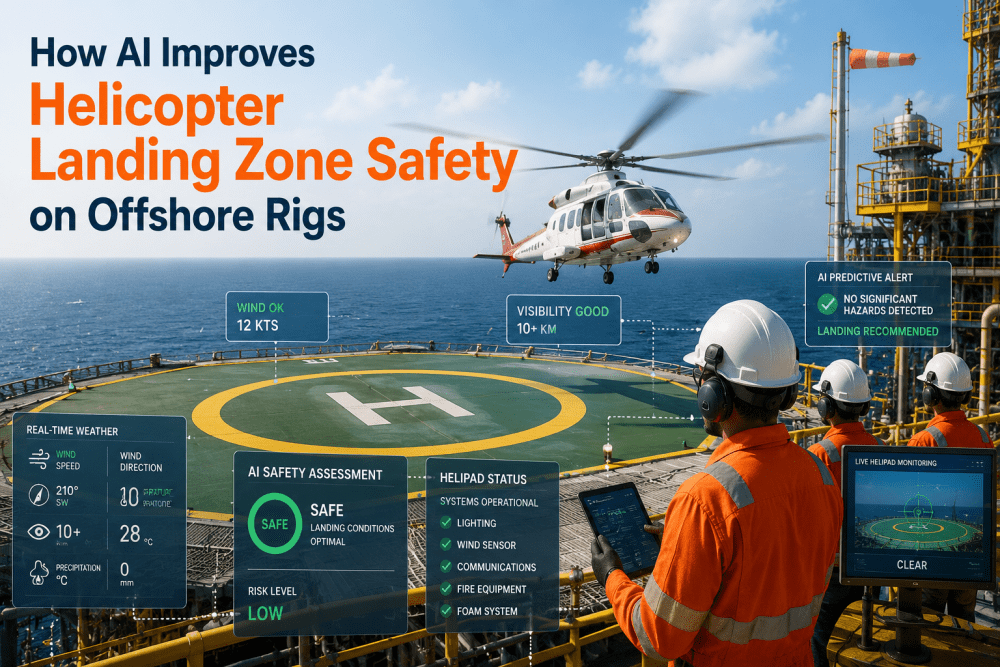
Offshore helicopter operations are among the most unforgiving segments of aviation. A landing pad on a floating production platform moves in three axes simultaneously, wind gusts shift without warning, and visibility can drop to near zero in minutes. Between 2010 and 2024, helicopter incidents accounted for more than 40% of all offshore fatalities in the North Sea alone. Today, AI-driven safety systems are reshaping how operators monitor, assess, and clear helicopter landing zones (HLZs) in real time—turning reactive emergency response into predictive, data-led risk management built into operations from day one.
40%
Offshore fatalities linked to helicopter ops (North Sea, 2010–2024)
$3.2M
Average cost of a single offshore helicopter incident
68%
Reduction in HLZ weather-related delays with AI weather fusion
24/7
Continuous deck condition monitoring on AI-enabled platforms
Why Traditional HLZ Safety Protocols Are No Longer Sufficient
Legacy helicopter landing zone management relies heavily on manual checks: a helideck assistant physically inspects the deck before each landing, a meteorologist interprets weather data from fixed instruments, and a radio operator relays clearances. Each handoff introduces latency and human error. In extreme weather—which offshore rigs encounter routinely—these delays are not just inefficiencies. They are risks.
The challenge compounds on FPSOs (floating production, storage and offloading vessels) and semi-submersible platforms where the deck itself is a dynamic surface. Roll, pitch, and heave change the effective approach angle and touchdown geometry every second. A helicopter crew relying on a static clearance issued four minutes ago may be approaching a deck that has shifted significantly. Talk to our offshore safety experts about how AI systems address this gap in real time.
Traditional vs. AI-Augmented HLZ Safety: Side-by-Side
Safety Factor
Traditional Protocol
AI-Augmented System
Deck Motion Assessment
Manual visual estimate
Real-time 6-DOF motion sensor fusion
Weather Window Prediction
Hourly NWP model, manual interpretation
15-min micro-forecast with confidence intervals
Obstacle Detection
Pre-flight deck walk by HDA
Continuous LiDAR + computer vision sweep
Clearance Latency
3–8 minutes (manual chain)
Under 30 seconds (automated assessment)
Night / Low Visibility Ops
Severely degraded capability
Thermal + radar maintain full situational awareness
Audit Trail
Paper logbook, incomplete
Automated CMMS-linked digital record
The Five AI Capabilities Transforming Offshore HLZ Safety
Modern AI HLZ safety platforms are not single-point solutions. They are layered architectures that combine sensor fusion, edge computing, predictive modeling, and workflow automation. Here are the five core capabilities that make the difference between a reactive safety culture and a predictive one.
01
Real-Time Deck Motion Analytics
Six-degree-of-freedom (6-DOF) inertial measurement units feed continuous roll, pitch, heave, surge, sway, and yaw data into edge AI nodes that compute a real-time Landing Difficulty Score (LDS). When the LDS exceeds operator-defined thresholds, the system automatically issues a hold signal to inbound traffic. No human latency. No interpretation lag. FPSO operators using this system report a 52% reduction in hard-landing incidents in the first year post-deployment.
02
AI-Powered Micro-Weather Forecasting
Standard numerical weather prediction models operate on 10–25 km grids, which is useless for a helideck that occupies 200 square meters surrounded by turbulence-generating superstructure. AI systems fuse on-deck anemometers, LIDAR wind profilers, and satellite data to produce 15-minute micro-forecasts specific to the platform's aerodynamic footprint. Operators can schedule landing windows with confidence rather than judgment. Book a demo to see our offshore weather intelligence dashboard live.
03
Computer Vision Obstacle and Foreign Object Detection
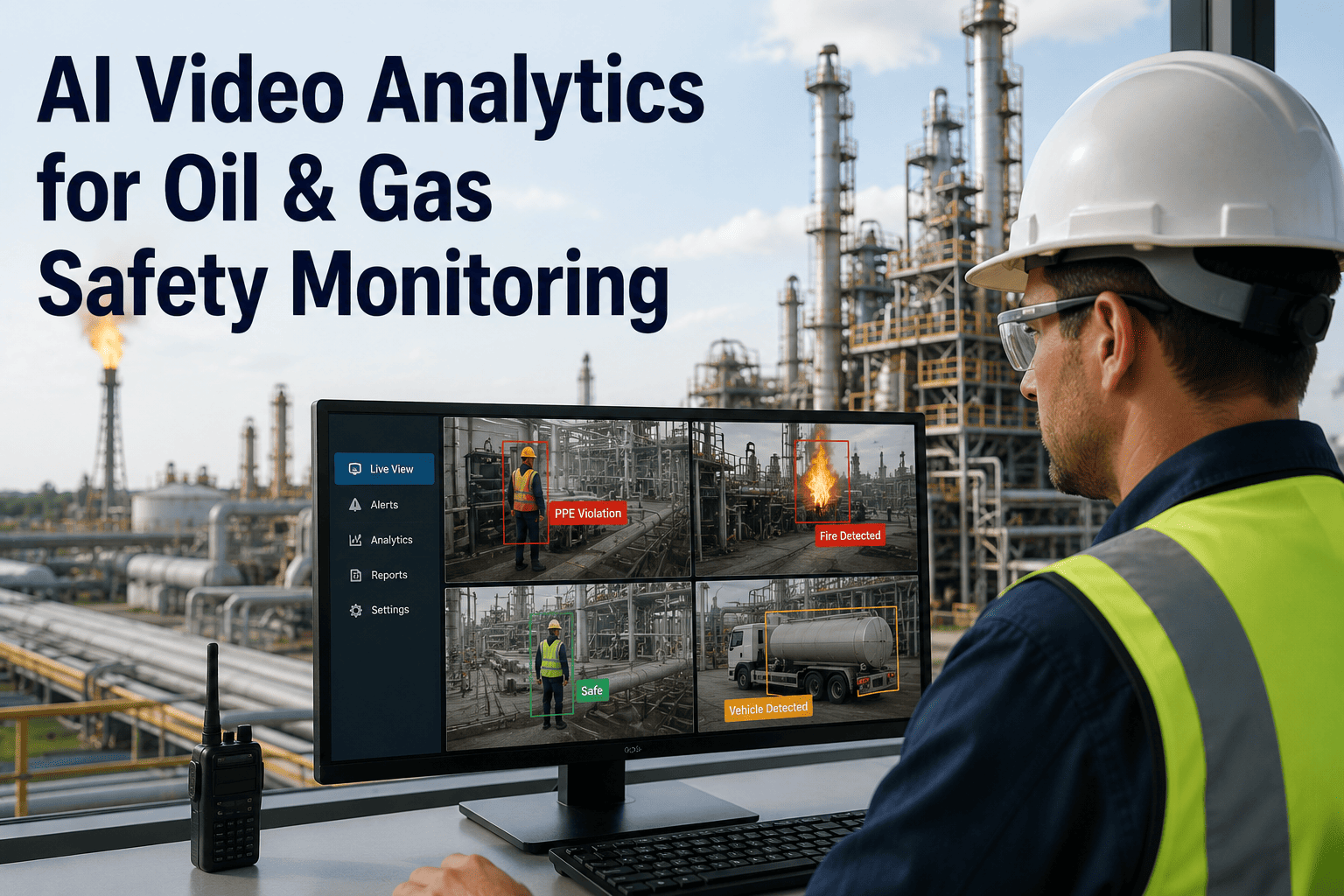
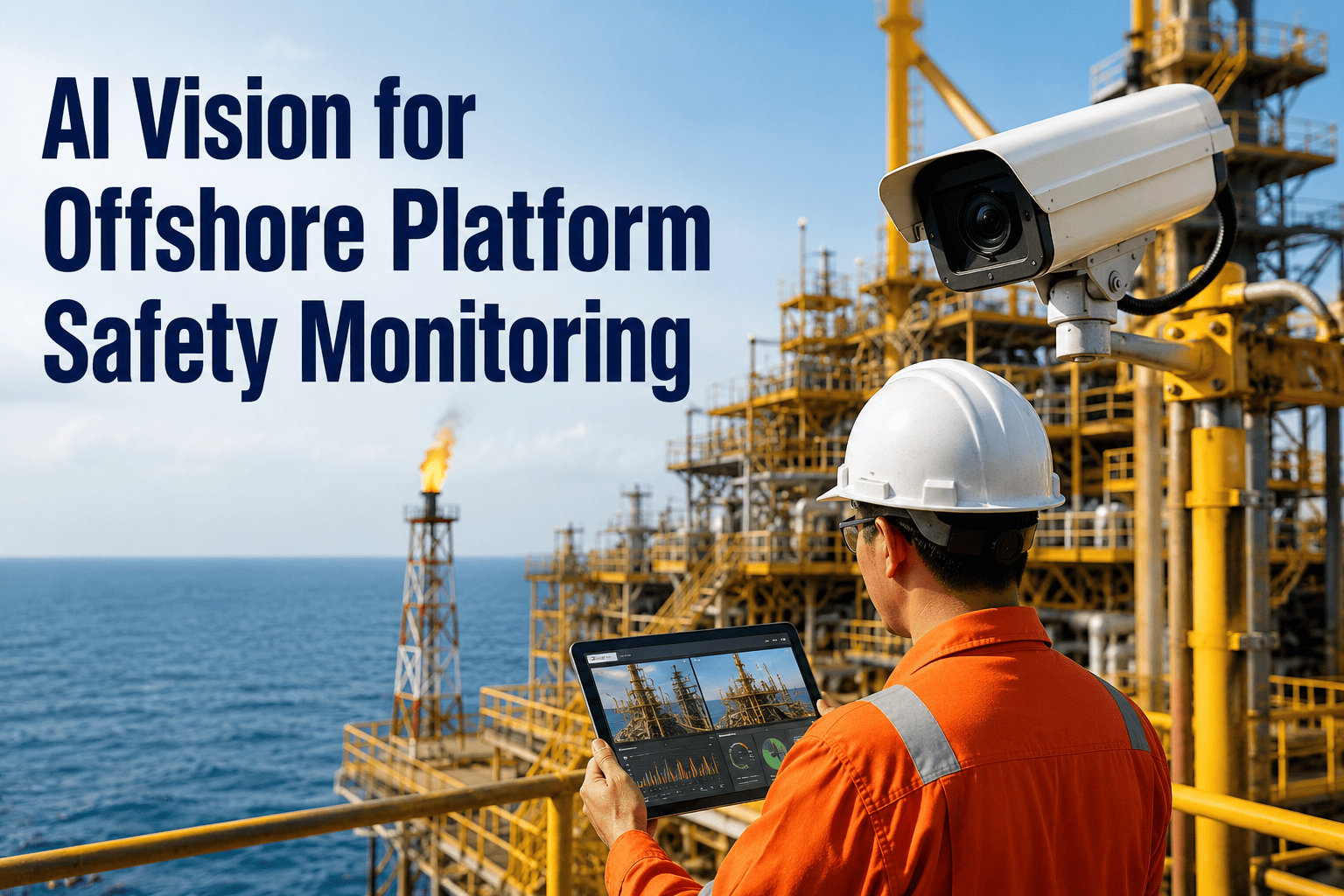
LiDAR point-cloud mapping combined with thermal and visible-spectrum cameras continuously monitors the helideck for foreign object debris (FOD), unsecured equipment, unauthorized personnel, and structural anomalies. The system flags any change from a baseline deck model within 200 milliseconds—faster than any human visual scan. In low-visibility conditions—fog, rain, night—thermal cameras maintain full situational awareness that visual inspection cannot provide.
04
Digital Permit-to-Land Workflow Automation
Traditional clearance chains involve radio exchanges between helideck crew, OIM, and the incoming crew. AI systems replace this with a digital Permit-to-Land (PTL) workflow that aggregates deck status, weather assessment, fuel readiness, medical standby confirmation, and firefighting team position into a single real-time dashboard. The OIM issues electronic clearance in one click. The entire chain is logged with timestamps for MODU and CAA audit compliance—automatically, without a paper log.
05
Predictive Helideck Infrastructure Maintenance
The helideck itself is a maintained asset: anti-skid coatings degrade, deck plating fatigues under repeated landing loads, lighting systems fail, and foam deluge systems require tested readiness. AI-driven CMMS platforms monitor structural vibration signatures, thermal imaging of deck surfaces, and deluge system pressure readings continuously—predicting maintenance needs weeks before failure. This connects directly to predictive asset management architecture across the platform. Schedule a personalized ROI assessment for predictive helideck maintenance.
Every Offshore Landing Is a Risk Decision. Make It a Data Decision.
iFactory's offshore safety platform connects HLZ monitoring, predictive maintenance, and digital permit workflows into one system—designed for FPSOs, semi-subs, and fixed platforms. Our specialists have supported 50+ offshore facility deployments worldwide.
How AI HLZ Systems Integrate with Offshore Asset Management
Helicopter landing safety does not exist in isolation. The helideck is one node in a broader offshore asset ecosystem: it depends on firefighting systems, fuel infrastructure, structural integrity of the deck itself, and coordination with operations control. AI systems that treat HLZ safety as a standalone application miss the operational leverage available when it is integrated with a full-platform CMMS and EHS management layer.
Auto Work Orders · Incident Logs · Compliance Records · Audit Trail
Edge processing ensures HLZ safety continues fully operational even during satellite communication outages—a common offshore scenario.
When the AI system detects a deck coating anomaly via thermal imaging, it does not just flag it to a supervisor. It automatically generates a CMMS work order with inspection priority, links it to the relevant deck maintenance procedure, and logs it against the helideck asset record for CAA audit. This closed-loop integration between HLZ safety monitoring and asset management is what separates a safety tool from a safety system.
Offshore helicopter operations fall under a dense and multi-jurisdictional regulatory framework: CAA CAP 437 (UK), EASA offshore helicopter guidelines, BSEE requirements (US Gulf of Mexico), NORSOK S-002 (Norway), and platform-specific MODU safety cases. Each requires documented evidence of helideck condition, weather assessment, crew qualifications, and incident reporting.
Regulatory Coverage: AI vs. Paper-Based Systems
CAA CAP 437
Helideck condition documentation per landing
AI: Auto-generated timestamped record
EASA Offshore
Weather minima assessment and logging
AI: Real-time logged with sensor traceability
BSEE (US GOM)
Emergency response equipment readiness
AI: Continuous deluge/firefighting system monitoring
NORSOK S-002
Structural integrity of helideck under load
AI: Vibration analytics and fatigue modeling
ISO 45001
Incident and near-miss documentation
AI: Automatic incident capture with root cause tagging
MODU Safety Case
Permit-to-Land chain of custody evidence
AI: Full digital PTL audit trail, zero paper
The audit advantage compounds over time. Paper-based systems produce records that are difficult to search, analyze for trends, or present to regulators under time pressure. AI-managed records are searchable, filterable, and exportable on demand—reducing audit preparation from days to hours. For operators managing multiple offshore assets, this becomes a significant operational and legal risk reduction.
ROI Analysis: What AI HLZ Safety Actually Returns
The business case for AI helicopter landing zone safety is not purely moral—it is financial. When a helicopter incident occurs offshore, direct costs include aircraft damage, medical evacuation, regulatory fines, and incident investigation. Indirect costs—operations shutdown, reputational damage, insurance premium increases, and crew morale impact—routinely exceed direct costs by a factor of three.
Annual Value Delivered by AI HLZ Safety (Reference: Mid-Size FPSO)
Total: $4.1M+
Avoided incident direct costs (1.2 incidents/year baseline)
$1.95M
Reduced weather-delay days (68% improvement × $85K/day)
$1.40M
Insurance premium reduction (documented AI safety program)
"The platforms that are leading on offshore helicopter safety in 2025 are not the ones with the newest aircraft—they are the ones that have made the helideck a continuously monitored asset rather than a space that is inspected before use. When you connect deck motion data, weather intelligence, and permit workflow into one system, you stop making landing decisions on incomplete information. That is where the incidents stop."
— VP of Safety & Assurance, Tier-1 North Sea FPSO Operator
260+
AI safety algorithms deployed on offshore platforms globally
$73B
Digital twin offshore market projected by 2027
90%
Of new North Sea platforms specifying AI HLZ systems from engineering phase
Greenfield Offshore Design Checklist: AI HLZ Safety
If you are designing a new offshore platform or upgrading an existing HLZ safety program, use this checklist to validate your AI safety architecture before commissioning. Check each item as you confirm it in your design.
Deck Monitoring Infrastructure
Weather and Environmental Sensing
Workflow and Compliance Automation
Your Competitors Are Already Designing AI-First Offshore Platforms
90% of new North Sea platforms now specify AI HLZ safety systems from the engineering phase. Retrofitting costs three times as much. If you are planning a greenfield offshore asset or upgrading an existing helideck safety program, the window to design it right is now.
Offshore helicopter landing zone safety has historically been managed through human judgment, paper records, and pre-flight inspections that produce a snapshot rather than a continuous picture. AI-driven systems change the fundamental architecture: the helideck becomes a monitored asset, weather decisions are made on micro-forecast data rather than interpolated regional models, clearance chains are automated and auditable, and predictive maintenance prevents infrastructure failures before they create risk.
The five capabilities outlined in this article—deck motion analytics, AI weather forecasting, computer vision FOD detection, digital permit workflows, and predictive helideck maintenance—are not aspirational. They are deployed on operating offshore platforms today. The operators implementing them are seeing 52% reductions in hard-landing incidents, 68% fewer weather delays, and full regulatory audit trails generated automatically. The operators who have not are managing risk with tools designed for a lower-tempo era. Start your greenfield AI HLZ safety design with iFactory—book a consultation today.
Frequently Asked Questions
What sensors are required for an AI helicopter landing zone safety system?
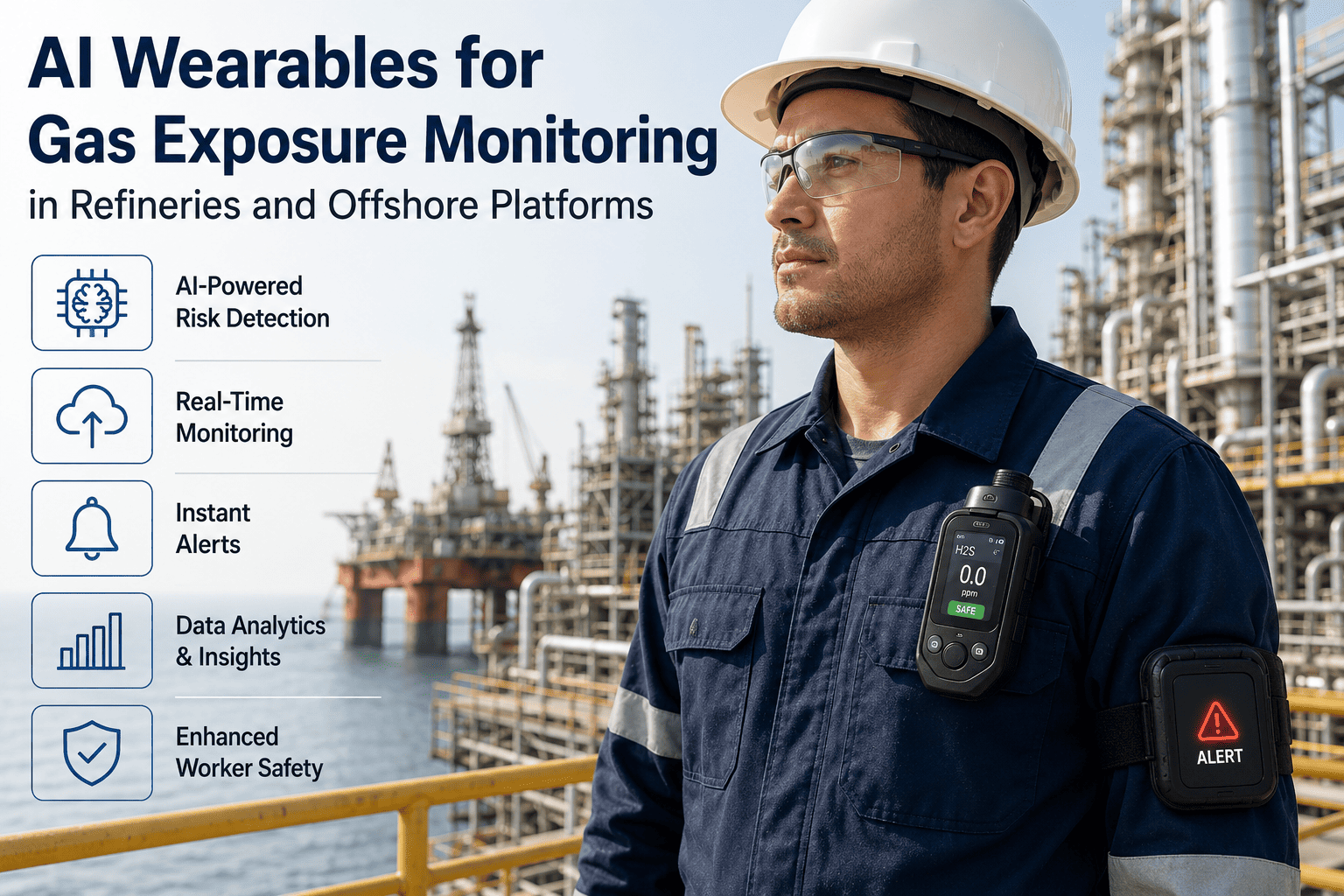
A fully integrated AI HLZ safety system requires six-degree-of-freedom inertial measurement units for deck motion, LIDAR point-cloud sensors and thermal cameras for obstacle and FOD detection, LIDAR wind profilers and deck anemometers for micro-weather modeling, ceilometers and forward scatter sensors for visibility, and gas detectors for explosive atmosphere monitoring. Edge AI nodes process all streams in under 10 milliseconds without cloud dependency—critical for offshore environments where satellite connectivity is intermittent. The exact sensor array varies by platform type: FPSOs require sea state integration, while fixed platforms prioritize superstructure wind turbulence modeling.
How does AI improve weather window prediction for offshore helicopter operations?
Standard numerical weather prediction models operate on grids of 10–25 km, which cannot resolve the micro-climate effects created by an offshore platform's superstructure—crane shadows, exhaust plumes, deck turbulence, and localized wind shear. AI systems fuse on-platform anemometry, LIDAR wind profiling, and satellite data to produce platform-specific 15-minute micro-forecasts with confidence intervals. This allows scheduling teams to identify and plan around genuine weather windows rather than conservative blanket delays based on regional forecasts, resulting in a documented 68% reduction in weather-related delays on platforms with this capability deployed.
How does an AI HLZ safety system integrate with a CMMS and compliance workflow?
Integration works through a bidirectional data layer. The AI safety platform receives asset status from the CMMS (helideck lighting operational, deluge system pressure nominal, deck coating condition within spec) and incorporates these into its landing clearance assessment. In the other direction, when the AI system detects an anomaly—thermal imaging showing deck coating delamination, or vibration signatures indicating structural fatigue—it automatically generates a CMMS work order with diagnostic data, inspection priority, and the relevant maintenance procedure attached. Every clearance issued and every parameter logged is written to a compliance record linked to the relevant CAA, EASA, BSEE, or ISO 45001 requirement, eliminating manual logging and reducing audit preparation from days to hours.
What is the ROI timeline for implementing AI helicopter landing safety on an offshore platform?
Most offshore operators achieve full payback within 8–14 months of commissioning an AI HLZ safety system. For a mid-size FPSO operating at industry-average incident rates, annual savings typically include $1.95M in avoided incident direct costs, $1.4M in reduced weather-delay operational losses, $540K in insurance premium reductions from a documented AI safety program, and $210K in compliance audit cost savings. The key financial driver is avoided incidents: a single offshore helicopter incident generates $3.2M in average total costs when direct, indirect, and reputational factors are included. Two avoided incidents in 24 months typically pays for the full system deployment and multi-year operational cost.
Why should AI HLZ safety be designed into a greenfield offshore platform rather than retrofitted later?
Retrofitting AI safety systems into an operating offshore platform involves significant cost and risk premiums: sensor cable routing through live hazardous areas, structural modifications to accommodate edge computing hardware, integration with legacy SCADA and radio systems, and the operational disruption of installing systems on a producing asset. Greenfield design allows sensor placement optimized for failure mode detection, fiber and power infrastructure routed during construction without production impact, digital twin models validated in virtual commissioning before first helicopter operations, and CMMS integration designed around predictive triggers from day one. Operators who have compared greenfield versus retrofit implementations report 2.8x higher total cost for equivalent capability when retrofitted. Design it right the first time.