Offshore oil and gas operators managing subsea assets across deepwater pipelines FPSO moorings and wellhead infrastructure rely on costly diver inspections ROV deployments and scheduled dry-dock maintenance intervals that create massive visibility gaps between inspection cycles. Autonomous Underwater Vehicles combined with AI-powered analysis are transforming subsea inspection from reactive scheduled programs into continuous real-time integrity monitoring across every critical asset. Book a demo to see how iFactory delivers AI-powered subsea inspection for offshore operators.
60% reduction
Subsea inspection costs through AUV AI automation
94% accuracy
AI anomaly detection from AUV sonar and visual data
3x faster
Pipeline survey coverage versus traditional ROV programs
Zero diver risk
Hazardous depth inspection eliminated for personnel
What Is an Autonomous Underwater Vehicle and How Does AI Transform Subsea Inspection
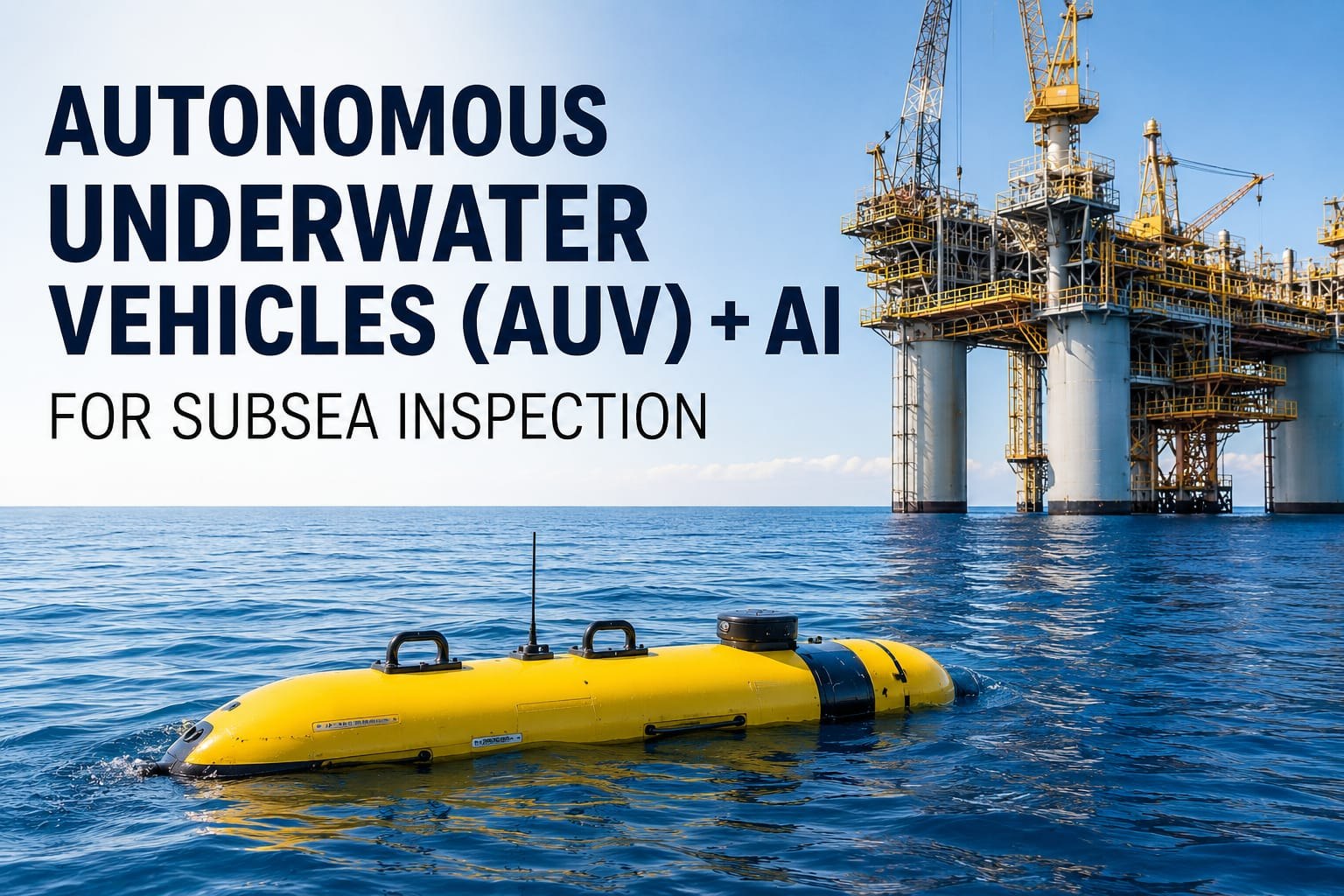
An Autonomous Underwater Vehicle is a self-propelled unmanned submersible capable of executing pre-programmed inspection missions across subsea infrastructure without continuous operator control. Modern AUVs carry multibeam sonar high-definition cameras acoustic positioning and environmental sensors enabling comprehensive data collection across pipeline corridors riser systems mooring chains and seabed infrastructure at depths unreachable by divers and far more cost-effectively than crewed ROV deployments.
AI transforms AUV inspection from data collection exercise into real-time integrity intelligence. Machine learning models trained on thousands of subsea anomaly images identify corrosion fatigue cracking marine growth accumulation anode depletion and structural deformation in real time as the AUV traverses inspection routes. What previously required weeks of analyst review is now completed during the mission itself enabling immediate intervention decisions rather than post-survey reporting cycles.
AUV AI Subsea Inspection Capability Overview
What AUVs Inspect
Subsea Pipelines
Corrosion wall loss span detection free-span monitoring
Riser Systems
Fatigue cracking VIV damage external coating integrity
Mooring Chains
Link degradation pitting corrosion elongation assessment
Wellhead Infrastructure
Christmas tree structural marine growth anode status
Seabed Structures
Manifold template spool piece jacket foundation
FPSO Hulls
Underwater hull corrosion coating void biofouling
What AI Detects From AUV Data
Corrosion Mapping
Wall loss quantification pitting density external corrosion rates
Crack Detection
Surface fatigue cracks weld defects hydrogen cracking
Seabed Movement
Pipeline spans scour erosion sediment migration
Anode Depletion
Sacrificial anode remaining life cathodic protection gaps
AUV AI Subsea Inspection Readiness Checklist
Use this checklist to evaluate whether your subsea inspection program is leveraging autonomous and AI capabilities to their full potential across offshore operations.
Data Collection and AUV Deployment
AUVs deployed for pipeline corridor surveys rather than full ROV crew mobilizations
Multibeam sonar and HD camera data collected simultaneously in single AUV pass
Inspection frequency increased to quarterly or continuous monitoring from annual surveys
AUV mission data integrated with SCADA DCS operational historian for correlation
Diver inspections eliminated at hazardous depths below 50m replacing with AUV
AI Analysis and Anomaly Detection
AI models classify corrosion severity automatically from sonar and visual imagery
Real-time anomaly alerts generated during mission rather than post-survey analysis
Pipeline free-span and seabed scour detected automatically from bathymetric data
Anode depletion rates calculated from successive AUV survey comparisons
Marine growth accumulation quantified and correlated with cathodic protection performance
Digital Twin and Predictive Integrity
AUV inspection data populates digital twin models of subsea assets automatically
Remaining life predictions generated from corrosion rate trends across survey history
Maintenance interventions scheduled based on predicted failure windows not fixed intervals
Risk-based inspection plans generated from AI analysis replacing blanket survey programs
Reporting and Regulatory Compliance
Inspection reports generated automatically from AUV mission data and AI classifications
BSEE NOPSEMA DNV regulatory compliance documentation produced from AI analysis
Inspection finding traceability maintained from raw AUV data through to action closure
Historical survey comparisons automated for trend reporting to regulators and insurers
Integration and Operational Systems
AUV inspection findings linked to CMMS work order generation automatically
Subsea inspection data accessible in unified dashboard alongside topsides SCADA data
Pipeline corrosion data correlated with internal corrosion monitoring and chemical injection records
Inspection cost per km tracked and optimized through AI mission planning automation
Why Traditional Subsea Inspection Programs Cannot Keep Pace With Modern Offshore Risk
Conventional subsea inspection programs built around annual ROV surveys diver inspections and scheduled maintenance intervals create inspection gaps measured in months across aging infrastructure where corrosion fatigue and seabed movement can develop failure conditions in weeks. The economic model of traditional inspection creates a perverse incentive where operators minimize inspection frequency to control costs precisely when aging assets require increased monitoring intensity.
Traditional vs AUV AI Inspection Comparison
| Dimension |
Traditional ROV/Diver |
AUV with AI Analysis |
| Inspection Frequency |
Annual or biennial |
Quarterly to continuous |
| Mobilization Cost |
$250K–$1M+ per campaign |
40–60% lower per km surveyed |
| Coverage Per Day |
5–15 km pipeline |
50–100 km pipeline |
| Analysis Time |
4–8 weeks post-survey |
Real-time during mission |
| Personnel Risk |
Saturation divers offshore crew |
Zero personnel at depth |
| Weather Dependency |
High. Operations suspended Hs >2.5m |
Low. Subsurface operations unaffected |
How iFactory Integrates AUV Inspection Data Into AI-Powered Offshore Operations
iFactory delivers The Complete AI Platform for Oil and Gas Operations connecting AUV inspection data with SCADA DCS topsides monitoring and predictive integrity systems creating unified offshore digital intelligence across every asset. Where AUV surveys provide detailed point-in-time subsea condition data iFactory AI continuously correlates this with operational parameters to predict deterioration trajectories and optimize intervention timing. See how iFactory integrates AUV data with offshore operations intelligence in a live demo.
01
AUV Data Ingestion
Multibeam sonar HD video and environmental sensor data from AUV missions ingested directly into iFactory AI analysis pipeline without manual data handling or format conversion.
02
AI Anomaly Classification
Computer vision models classify corrosion severity crack type marine growth coverage and structural deformation with 94% accuracy enabling immediate severity ranking and intervention prioritization.
03
Digital Twin Update
AUV inspection findings automatically update subsea digital twin models recalculating remaining life predictions and failure probability distributions across monitored asset inventory.
04
SCADA Correlation
Subsea anomaly findings correlated with topsides SCADA pressure temperature and flow data identifying operational patterns contributing to accelerated external corrosion or fatigue damage.
05
Risk-Based Scheduling
AI-generated risk rankings drive AUV mission planning focusing inspection resources on highest-probability failure zones rather than fixed route coverage eliminating redundant low-risk survey time.
06
Automated Compliance Reports
Regulatory inspection reports for BSEE NOPSEMA DNV GL and operator-specific integrity standards generated automatically from AUV mission data with complete audit traceability.
Use Cases: AUV AI Subsea Inspection Results From Offshore Operations
Use Case 01
Deepwater Pipeline Integrity — Gulf of Mexico
FPSO operator managing 180 km of deepwater export pipeline relied on biennial ROV survey program costing $4.2M per campaign with 6-week post-survey analysis before integrity decisions could be made. iFactory AUV AI program delivered quarterly survey coverage at 55% cost reduction with real-time anomaly detection identifying 14 developing corrosion zones requiring intervention before next planned survey window.
55%
Inspection cost reduction
14 zones
Early corrosion detected
4x
Inspection frequency increase
Use Case 02
FPSO Mooring and Riser Inspection — North Sea
North Sea FPSO operator managing 20-year-old mooring system required enhanced inspection regime following industry incidents but weather windows limited traditional diver access to 60 days annually. iFactory AUV AI program achieved 340 inspection days annually with surface-independent operations identifying mooring chain link degradation at 3 attachment points requiring urgent intervention avoiding potential total loss event.
5.7x
Inspection days increase
3 chains
Critical defects found early
$40M+
Potential loss avoided
OFFSHORE OPERATORS USING AUV AI ACHIEVE REAL-TIME SUBSEA INTELLIGENCE ACROSS EVERY ASSET
iFactory delivers Complete AI Platform for Oil and Gas Operations integrating AUV inspection data with SCADA topsides monitoring and predictive integrity analysis enabling offshore operators to move from scheduled inspection programs to continuous asset intelligence. Operators achieve 60% inspection cost reduction 94% AI detection accuracy and full regulatory compliance automation.
60%
Inspection cost reduction
Zero risk
Personnel at depth
Regional Regulatory Requirements for Subsea Inspection and AUV AI Compliance
| Region |
Regulator |
Inspection Requirements |
iFactory AUV Solution |
| US Gulf of Mexico |
BSEE |
Annual pipeline surveys. Documented integrity management. 30 CFR Part 250. |
Automated BSEE-compliant inspection records from AUV mission data. |
| North Sea UK/Norway |
NSTA / PSA |
Risk-based inspection programs. PFEER compliance. Pipeline safety cases. |
Risk-ranked inspection plans generated from AI analysis for PSA PFEER. |
| Australia |
NOPSEMA |
Titleholder inspection obligations. Pipeline management plans. OPEP compliance. |
NOPSEMA-compliant subsea inspection records with AI audit traceability. |
| Middle East |
ADNOC / Saudi Aramco |
Asset integrity programs. Pipeline inspection standards. Operator-specific requirements. |
Configurable reporting for ADNOC and Aramco inspection documentation standards. |
| Brazil |
ANP |
Pre-salt integrity programs. Deepwater inspection requirements. Environmental risk. |
Pre-salt deepwater AUV inspection with ANP-compliant reporting automation. |
Frequently Asked Questions About Autonomous Underwater Vehicle AUV AI Subsea Inspection
What is an autonomous underwater vehicle and how does it differ from an ROV for subsea inspection?
An autonomous underwater vehicle operates on pre-programmed missions without continuous operator control through a tether cable whereas ROVs require continuous tether connectivity and real-time pilot control from a surface vessel. AUVs complete longer survey ranges at lower mobilization cost and can operate in deepwater and hazardous environments where tether management creates operational risk. AI analysis converts AUV sensor data into actionable integrity intelligence that previously required weeks of post-survey expert review.
How accurate is AI anomaly detection from AUV subsea inspection data?
iFactory AI models trained on offshore subsea inspection datasets achieve 94% accuracy in classifying corrosion severity crack detection marine growth coverage and structural deformation from AUV sonar and visual data. Models continuously improve through operational feedback from verified inspection findings. Accuracy is validated against independent expert analyst review and third-party classification society assessment enabling confidence in automated reporting for regulatory compliance purposes.
Can AUV AI inspection replace traditional ROV and diver inspection programs entirely?
AUV AI inspection replaces the data collection and analysis functions of traditional inspection programs for pipeline surveys riser monitoring mooring inspection and seabed condition assessment. Intervention operations requiring physical manipulation such as cleaning anode replacement or repair work still require ROV capability. The optimal model combines frequent AUV AI survey programs identifying anomalies precisely with targeted ROV intervention deployments replacing blanket ROV survey coverage with intelligence-driven intervention missions.
How does iFactory integrate AUV data with existing SCADA and offshore operations systems?
iFactory connects AUV mission data through standardized APIs with existing SCADA DCS and OSI PI Historian systems without requiring modification to operational systems. Subsea anomaly data is correlated automatically with topsides operational parameters enabling identification of operational conditions contributing to accelerated deterioration. Integration with CMMS systems drives automatic work order generation from AUV-detected anomalies eliminating manual data transfer between inspection findings and maintenance planning workflows.
What ROI can offshore operators expect from implementing AUV AI subsea inspection programs?
Offshore operators implementing AUV AI inspection programs typically achieve 40–60% inspection cost reduction per kilometer surveyed through increased coverage efficiency and elimination of costly vessel mobilization for routine surveys. Early anomaly detection prevents unplanned shutdowns and emergency interventions that cost $500K–$5M+ per incident. Operators also capture regulatory compliance efficiency reducing post-survey reporting time by 80%+ through automated documentation generation from AI analysis.
Book a demo to see a detailed ROI model for your specific offshore assets.
Does iFactory work with existing AUV hardware or does it require specific equipment?
iFactory AI analysis platform ingests data from all major commercial AUV systems including Kongsberg Hugin Saab Seaeye Sabertooth Teledyne GAVIA and Bluefin Robotics platforms through standardized data formats. Operators do not need to replace existing AUV hardware. iFactory adds AI analysis intelligence to existing survey programs capturing value from data that previously required weeks of manual expert analysis.
Transform Your Subsea Inspection Program With AUV AI Intelligence. See It Live.
iFactory delivers Complete AI Platform for Oil and Gas Operations integrating AUV subsea inspection with topsides SCADA monitoring and predictive integrity management across every offshore asset.
60% inspection cost reduction
94% AI detection accuracy
Zero personnel depth risk
8-week deployment
-for-offshore-environmental-monitoring.png)

.png)