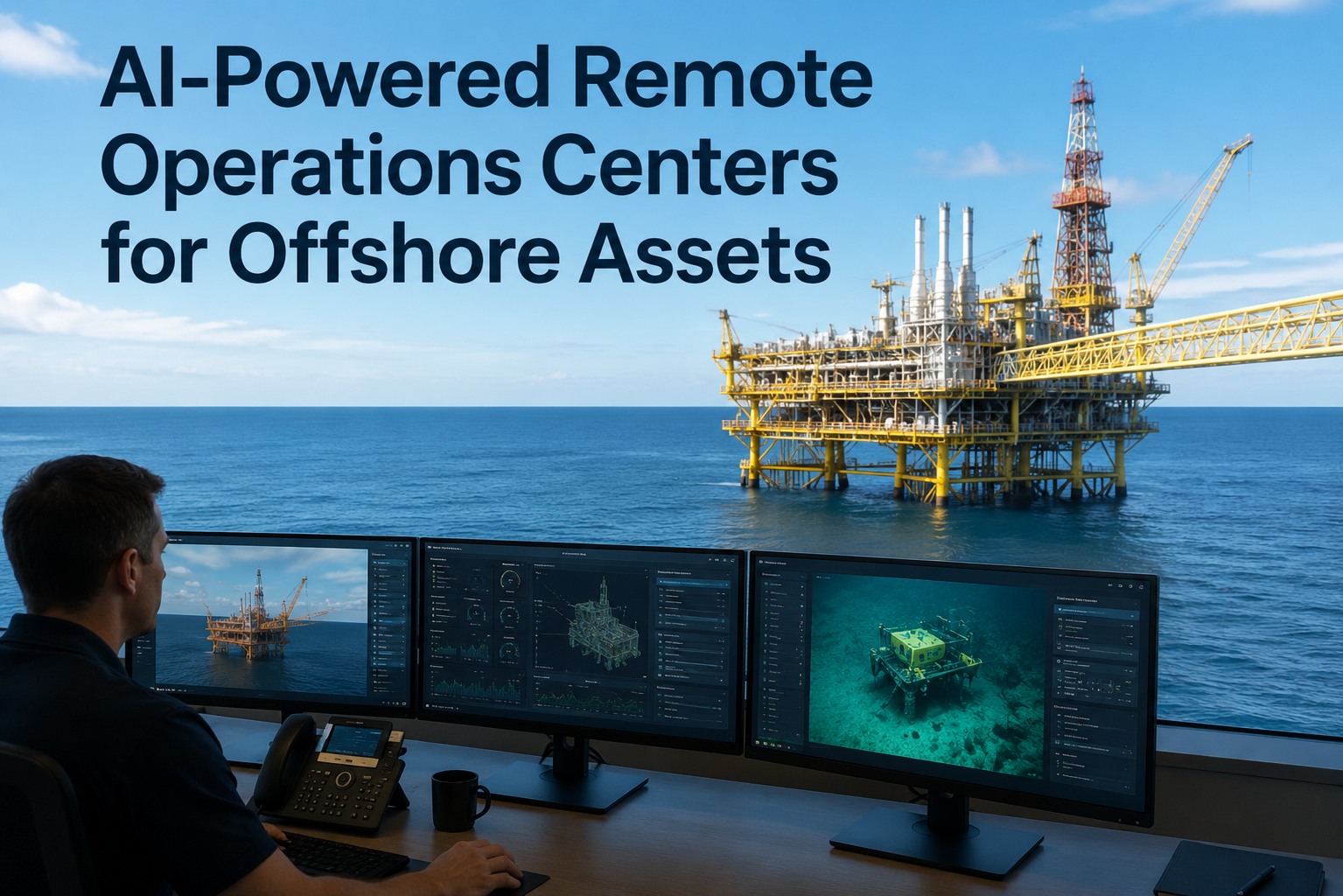
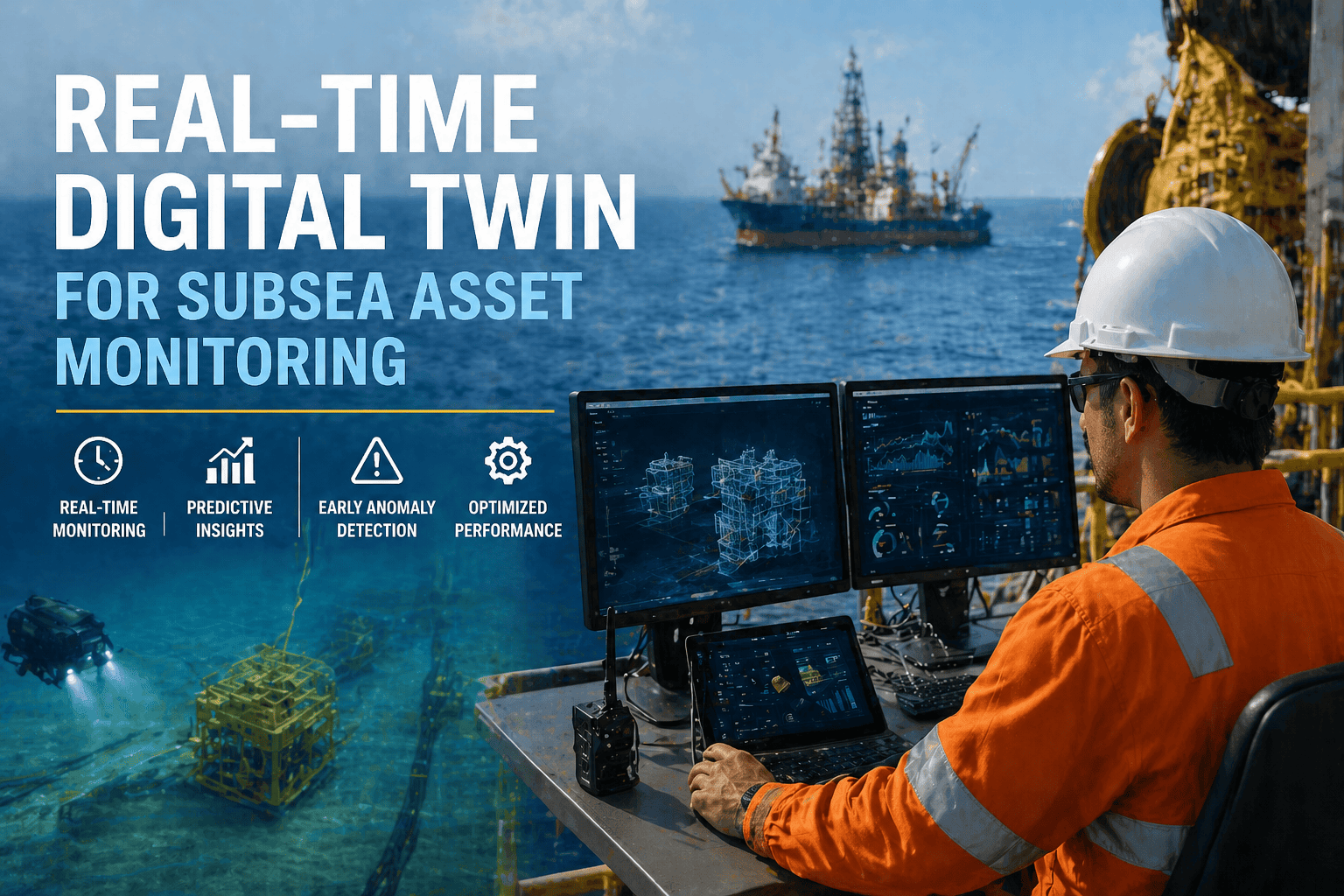
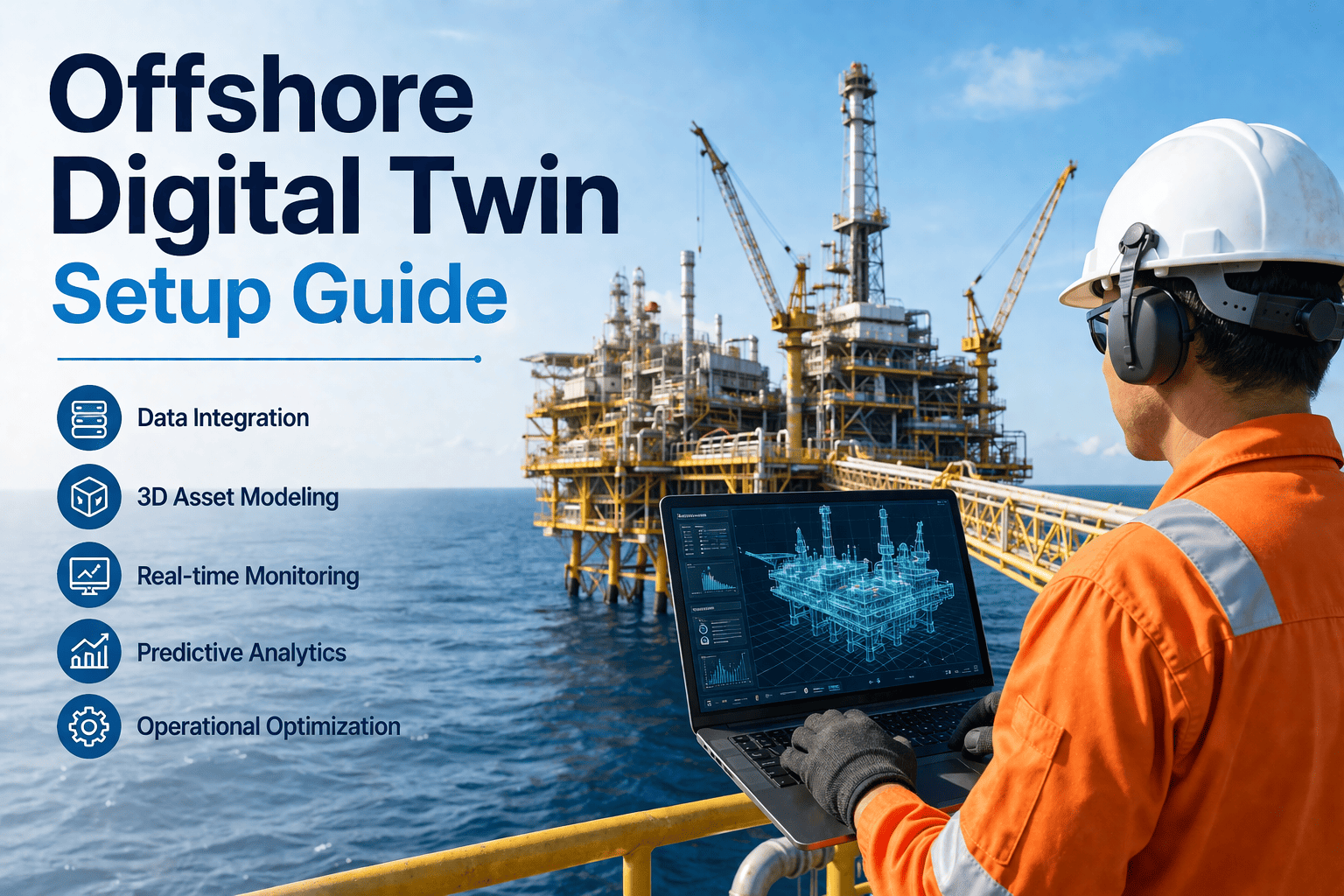
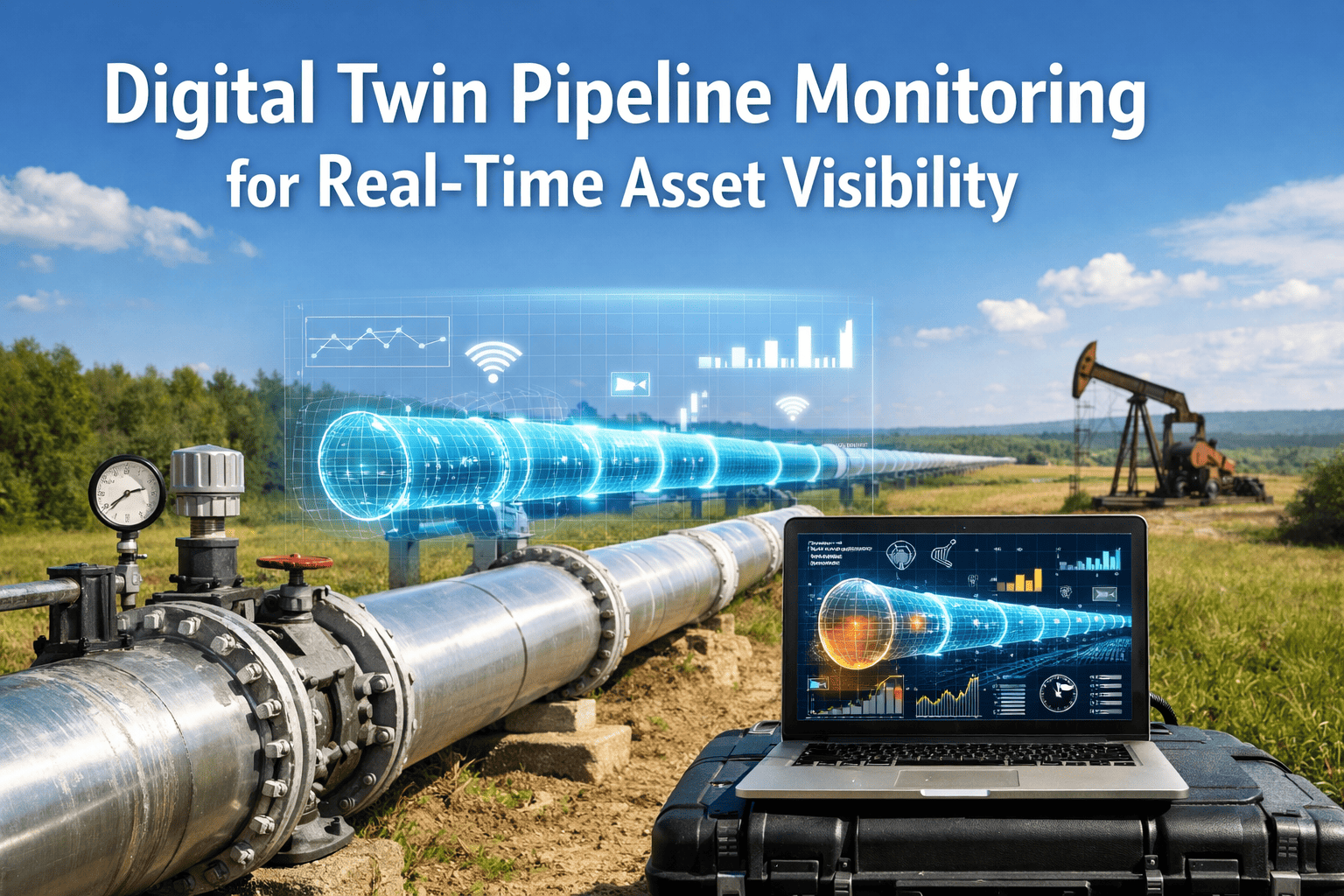
Offshore oil and gas platforms operate in some of the most hostile environments on earth—deepwater FPSO vessels, subsea wellhead systems, and remote Arctic installations where equipment failures cost millions per hour, manual inspections expose crews to life-threatening hazards, and legacy SCADA systems generate terabytes of operational data that never get analyzed. A compressor failure on a deepwater platform costs $800,000–$2M per incident before factoring in mobilization delays, helicopter crew transport, and regulatory reporting. Subsea pipeline corrosion develops undetected for months between ROV inspection cycles. Yet most offshore operators are still managing assets reactively—discovering problems when production stops, conducting inspections on fixed schedules regardless of actual equipment condition, and manually consolidating compliance data from disconnected control systems. Artificial intelligence is changing this equation fundamentally. AI-powered predictive maintenance, autonomous subsea inspection, digital twin simulation, and real-time FPSO monitoring are transforming offshore operations from crisis-driven to data-driven—predicting failures 3–4 weeks in advance, replacing hazardous manual inspection rounds with AUV and drone automation, and converting SCADA historian data into actionable production intelligence. iFactory connects your existing offshore SCADA, DCS, and historian infrastructure to AI models purpose-built for deepwater and shelf operations, delivering predictive failure detection, autonomous inspection workflows, and ESG compliance automation—deployed in 8 weeks, with ROI measurable from week 6. Want to predict offshore equipment failures before they halt production and reduce unplanned downtime by 35–50%? Book a demo today or explore implementation with our offshore specialists.
Why AI Is Now Essential for Offshore Oil & Gas Operations
Offshore operations generate extraordinary volumes of real-time data—SCADA systems stream pressure, temperature, and flow readings every second; IIoT sensors monitor compressor vibration, subsea tree valve positions, and riser integrity; DCS platforms log process parameters across FPSO topside processing, injection systems, and utility modules. Yet this data avalanche remains fragmented across disconnected systems with zero unified intelligence. Predictive failure signatures hide in SCADA historian logs. Subsea corrosion signals go unrecognized between ROV cycles. Gas compression degradation develops over weeks while maintenance crews operate on fixed PM schedules. The convergence of artificial intelligence and industrial IoT is rewriting operational economics in offshore oil and gas—transforming reactive maintenance into predictive, hazardous manual inspection into autonomous, and production optimization from guesswork into data-driven control. For offshore operators managing $500M+ platforms, the ROI is not incremental: it is transformational.
Subsea compressors, gas lift systems, and topside rotating equipment fail without warning on fixed PM schedules. A single compressor failure on a deepwater platform costs $800K–$2M per incident including mobilization, crew transport, and lost production. AI predictive models detect bearing wear, seal degradation, and pressure anomalies 3–4 weeks before failure, enabling planned maintenance during scheduled maintenance windows without production impact.
Subsea pipeline corrosion, fatigue cracks, and integrity anomalies develop over months between quarterly ROV inspection cycles. A deepwater pipeline rupture costs $5–15M per incident in containment, regulatory fines, environmental penalties, and production loss. AI vision on AUV-mounted cameras combined with IIoT pressure sensor correlation detects anomalies in real time, compressing detection-to-dispatch from weeks to hours.
FPSO vessels processing 100,000–300,000 barrels per day face continuous production throughput challenges from equipment degradation, process imbalances, and undetected bottlenecks. A 5% throughput improvement on a mid-size FPSO represents $15–25M annual production gain. AI analytics correlating topside separator performance, gas compression efficiency, and crude treatment parameters identify production constraints before they manifest as downtime.
Offshore platforms require regular inspection of confined spaces, high-temperature process equipment, and HAZLOC zones classified for explosive atmospheres. Manual inspections expose technicians to life-threatening risks and generate inconsistent, non-digital records. AI-enabled AUVs, ROVs, and drone systems conduct inspections in environments where human access is unsafe, syncing findings directly to asset condition scores and work order systems.
Offshore platforms run multiple independent control systems—wellhead SCADA, topside DCS, utility PLC networks, historian platforms—that never share data. Maintenance teams manually create work orders from alarm printouts. Production planners don't see maintenance schedules. No AI intelligence layer connects operational data to predictive insight. IIoT integration platforms unify all control system data, enabling AI models to deliver holistic operational intelligence.
Offshore operators face escalating regulatory pressure on methane emissions, flaring volumes, and produced water discharge from international environmental frameworks including IMO, OSPAR, and national energy regulators. Manual emissions consolidation from disconnected sensor systems creates compliance risk and reporting inaccuracy. IIoT sensor networks combined with AI analytics automatically quantify and report emissions with zero manual data aggregation.
See How AI Converts Your Offshore SCADA Data Into Predictive Intelligence
iFactory connects your offshore SCADA, DCS, and historian systems to AI models that predict equipment failures 3–4 weeks in advance. If your offshore platform is generating data but not generating predictions, you are leaving millions in preventable downtime on the table. Book a demo to see live predictive maintenance alerts for your operational environment—FPSO, fixed platform, or subsea.
Top AI Use Cases in Offshore Oil & Gas Operations
Gas compressors, pumps, turbines, and separators on offshore platforms degrade through predictable signature patterns detectable weeks before functional failure. iFactory AI models trained on SCADA historian data identify bearing wear, seal degradation, impeller fouling, and thermal stress patterns 3–4 weeks before failure threshold. IIoT vibration sensors, temperature transmitters, and current signature analyzers stream real-time condition data to AI models that calculate equipment health scores and remaining useful life continuously. When degradation crosses predictive thresholds, automated work orders generate with failure mode detail, recommended action, and optimal maintenance window—routed to offshore maintenance teams via mobile app. See how predictive maintenance eliminates your emergency offshore callouts — Book a Demo.
Subsea pipeline corrosion, riser fatigue, and wellhead integrity anomalies develop between quarterly ROV inspection cycles—invisible until they rupture. iFactory AI vision processes AUV and ROV camera feeds to detect corrosion hot spots, cathodic protection degradation, marine growth fouling, and structural fatigue cracks in real time. Integration with IIoT pressure sensors and flow meters enables pinpoint leak location identification within 50 meters. Detection findings auto-sync to asset condition scores and trigger work orders with crew dispatch coordination. Inspection frequency can increase 4× without additional human crew exposure. Eliminate subsea inspection blind spots — schedule a technical consultation.
FPSO vessels managing complex topside processing—crude separation, gas compression, water injection, and offloading—require continuous process optimization to maximize throughput and minimize energy consumption. iFactory creates a real-time digital twin of FPSO topside systems by integrating DCS process data, IIoT sensor streams, and production historian records into a unified AI analytics model. The digital twin continuously identifies which equipment degradation will become throughput constraint in the next 24–72 hours, enabling production engineers to adjust operating conditions proactively. Separator efficiency, gas compression ratios, and water cut handling parameters are optimized in real time against live process data rather than monthly performance reviews.
Offshore platforms classified under ATEX and IECEx explosive atmosphere standards require continuous monitoring of gas detection systems, fire suppression readiness, and safety system integrity. AI models continuously correlate gas detector readings, fire panel status, HVAC damper positions, and ESD system health to identify safety system degradation patterns before they create incident exposure. AI vision on fixed cameras monitors exclusion zones for unauthorized access, detects personnel positioning violations in HAZLOC areas, and identifies equipment anomalies such as valve position deviations and seal leaks. Safety incident precursor detection replaces reactive alarm response with proactive safety management. Strengthen your offshore safety management — Book a Demo to see HAZLOC AI monitoring.
Remote and normally unmanned offshore installations (NUIs) require continuous operational intelligence without permanent onsite crew. iFactory enables remote operations centers to monitor equipment health, process parameters, and safety system status across multiple unmanned platforms from a single unified dashboard. AI models detect anomalies requiring crew mobilization versus those manageable through remote control adjustments, reducing unnecessary offshore mobilizations by 40–60%. Integration with satellite communications enables real-time SCADA data transmission from remote Arctic, deepwater, and shelf installations to onshore operations centers, with AI intelligence filtering signal from noise and prioritizing only actionable alerts for operator attention.
Deepwater wellhead systems, subsea trees, flowlines, and umbilicals accumulate condition history across 20–30 year field lifespans with inspection intervals measured in months. iFactory maintains a complete digital asset registry for all subsea equipment, continuously updated with ROV inspection findings, IIoT sensor data, and operational parameter trends. AI models calculate remaining useful life for subsea trees, estimate corrosion progression rates from cathodic protection current data, and predict flowline hydrate risk from temperature and pressure correlations. Asset lifecycle decisions—workover scheduling, tree intervention, flowline replacement—are driven by data rather than conservative engineering estimates. Get a data-driven subsea asset management strategy — talk to an offshore AI specialist.
Why iFactory Is Different: Purpose-Built for Offshore Operations
Generic CMMS platforms store maintenance records after work is completed. Basic IIoT platforms collect sensor data but lack the intelligence to interpret degradation signatures across complex offshore systems. iFactory is fundamentally different: it combines real-time IIoT data ingestion with AI prediction models trained on offshore equipment failure patterns, delivering actionable maintenance intelligence weeks before failures occur—and connecting seamlessly to the SCADA, DCS, and historian systems already operating on your platform.
| Capability | iFactory | IBM Maximo | SAP EAM | Oracle EAM | Fiix / UpKeep |
|---|---|---|---|---|---|
| AI Predictive Maintenance | ✓ Native, 3–4 week offshore prediction | Limited third-party integration | No native AI | No native AI | No |
| AUV / ROV AI Vision | ✓ Subsea camera & drone integration | No | No | No | No |
| FPSO Digital Twin | ✓ Real-time DCS-fed process model | No native twin | No native twin | No | No |
| SCADA / DCS Integration | ✓ OPC-UA, MQTT, REST — no middleware | Middleware required | Middleware required | Limited | No |
| Subsea Asset Registry | ✓ Deepwater lifecycle tracking | Generic asset records | Generic asset records | Limited | No |
| Offshore Safety AI | ✓ HAZLOC zone monitoring | No | No | No | No |
| Deployment Speed | ✓ 8 weeks offshore to live predictions | 18–24 weeks | 20–30 weeks | 16–20 weeks | 6–8 weeks |
| Offshore / Deepwater Focus | ✓ Purpose-built for FPSO, fixed platform, subsea | Generic enterprise | Generic enterprise | Generic enterprise | Generic CMMS |
8-Week Offshore Deployment: ROI From Week 6
iFactory deploys via a structured 8-week offshore program designed around platform operational schedules, satellite connectivity constraints, and OT network security requirements. ROI realization begins at Week 5–6 as predictive maintenance alerts prevent first equipment failures and AI vision identifies inspection findings that prevent costly incidents. No production interruption. No DCS replacement. No hardware upgrades to existing control systems.
iFactory offshore specialists inventory platform equipment, document SCADA and DCS configuration, and establish secure API connections to control systems and historian platforms. IIoT sensor mapping configured for rotating equipment, process systems, and safety systems. Baseline operational data capture begins. Satellite communication bandwidth requirements assessed and configured.
Machine learning models trained on SCADA and DCS historian data to learn platform-specific equipment signatures and failure patterns. AI vision processing configured for AUV, ROV, and drone camera feeds. Digital twin model initialized with FPSO or platform process topology. All offshore and onshore operations teams trained on dashboards and mobile interfaces.
Predictive maintenance alerts go live across all monitored offshore assets. First alerts predict equipment failures 2–4 weeks out. AI vision begins processing inspection feeds and identifying subsea anomalies. Maintenance teams use predictions to schedule work proactively during platform maintenance windows. First downtime reduction measurable by end of Week 6. ROI begins accruing from prevented failures and emergency mobilization elimination.
Predictive model accuracy improves with additional operational data. Coverage expands to full platform asset inventory and additional facilities if multi-platform deployment. ESG compliance reporting activated for methane, flaring, and produced water. Multi-platform portfolio dashboard configured for onshore operations center. Teams transition to independent operation with iFactory continuous model refinement.
Every week of delayed AI deployment on an offshore platform represents an average of $180,000–$340,000 in preventable maintenance costs and production loss. The 8-week deployment timeline is fixed. The ROI timeline is predictable. The only variable is when you start. Book your offshore AI deployment assessment today.
Real-World Results: AI Impact Across Offshore Operations
Deepwater FPSO operator integrated iFactory with DCS historian from 6 gas compression trains. AI models trained on 18 months of pressure, temperature, and vibration data identified seal degradation and bearing wear patterns 3–5 weeks before failure threshold. Predictive alerts enabled bearing replacement during planned turnarounds. Emergency compression shutdowns reduced from 9 annually to 2. Annual impact: $3.8M savings from prevented failures plus recovered production throughput of 14,000 additional barrels per year.
North Sea pipeline operator deployed iFactory AI vision on AUV-mounted cameras for monthly integrity surveys across 340km of export pipeline infrastructure. AI detected corrosion hot spots and cathodic protection failures missed in prior manual ROV review. Integration with SCADA pressure data confirmed anomaly location within 80 meters. Average detection-to-dispatch time reduced from 19 days (quarterly ROV cycle) to 11 hours. One prevented integrity failure avoided an estimated $4.1M incident response cost.
Gulf of Mexico operator managing 4 normally unmanned installations deployed iFactory for remote operations center integration. AI models distinguished equipment anomalies manageable via remote adjustment from those requiring crew mobilization, reducing offshore trips from 38 annually to 18. Platform uptime improved from 88% to 96%. Annual helicopter and vessel cost reduction: $1.4M. Zero unplanned production stoppages in 6 months post-deployment across all 4 NUI platforms.
Ready to Turn Your Offshore SCADA Data Into Preventive Action?
Every deepwater platform and FPSO already generates the data needed for AI predictive maintenance. The difference between operators losing millions to unplanned failures and those preventing them is not data—it is intelligence. iFactory converts your existing SCADA, DCS, and IIoT data into failure predictions, inspection automation, and production optimization. Book a 30-minute offshore AI consultation to map specific AI opportunities for your platform type and operational segment.
Key AI Capabilities for Offshore Operations: 8 Core Modules
iFactory unifies eight core operational modules purpose-configured for offshore environments—FPSO, fixed platform, subsea, and remote installations: AI Predictive Maintenance, AUV/ROV AI Vision, Digital Twin Simulation, Work Order Automation, Subsea Asset Lifecycle Management, Pipeline Integrity Monitoring, SCADA/DCS Integration, and ESG Compliance Reporting. All modules operate on a single unified data model with IIoT sensor networks feeding real-time data to the AI intelligence layer.
Machine learning models detect offshore equipment degradation 3–4 weeks before failure. Rotating equipment, process systems, and utility assets covered. Early warning alerts trigger automated work orders with failure mode, spare part requirements, and optimal maintenance window aligned to platform schedule.
Computer vision models detect subsea corrosion, cathodic protection failure, riser fatigue, and pipeline integrity anomalies from AUV and ROV camera feeds. Integration with SCADA pressure data confirms leak location. Anomaly findings auto-populate asset condition scores and trigger crew dispatch coordination.
Real-time digital twin model fed by DCS process data and IIoT sensors continuously identifies which equipment degradation will become production throughput constraint in next 24–72 hours. Production engineers adjust operating parameters proactively. Separator, compression, and water treatment systems optimized against live production data.
AI correlates gas detector readings, fire panel status, ESD health, and HVAC system data to identify safety system degradation before incident exposure develops. AI vision on fixed cameras monitors HAZLOC zones, detects exclusion zone violations, and identifies equipment anomalies including valve position deviations and process seal leaks.
Onshore operations centers monitor equipment health and process parameters across multiple unmanned platforms from unified dashboard. AI distinguishes anomalies manageable remotely from those requiring crew mobilization, reducing unnecessary offshore trips by 40–60%. Satellite data transmission managed within bandwidth constraints.
Complete digital registry for subsea trees, flowlines, risers, and umbilicals continuously updated with ROV findings and sensor data. AI calculates remaining useful life, estimates corrosion progression, and predicts flowline hydrate risk. Capital workover and intervention decisions driven by data rather than conservative engineering assumptions.
Native support for Siemens, Honeywell, ABB, Emerson, and Rockwell via OPC-UA, MQTT, and REST API. Real-time and historian data ingestion with no DCS replacement. OT data stays within your security perimeter. Compatible with OSIsoft PI, Wonderware, and all major offshore historian platforms.
Automated aggregation of methane, flaring, VOC, and produced water discharge data from IIoT sensor networks across all offshore segments. Monthly and annual compliance reports auto-populate for IMO, OSPAR, EPA GHG, and national energy regulator requirements. Zero manual data consolidation or cross-system reconciliation.
Offshore AI Deployment by Region and Operational Environment
| Region | Core Offshore Challenges | Regulatory / Compliance | iFactory Solution Focus |
|---|---|---|---|
| North Sea (UK & Norway) | Aging platform life extension, deepwater safety, extreme weather operations, decommissioning planning | HSE Offshore Safety Directive, NORSOK standards, OSPAR environmental framework, IMCA guidelines | Asset lifecycle AI for aging equipment, HSE-compliant inspection documentation, subsea integrity monitoring, decommissioning data management |
| Gulf of Mexico (US) | Hurricane disruption, deepwater reliability, NUI remote operations, high crew mobilization costs | BSEE safety regulations, EPA offshore emissions, OSHA HAZLOC, API standards | Remote operations AI for NUI platforms, BSEE-compliant inspection records, hurricane preparedness monitoring, deepwater compressor predictive maintenance |
| Middle East & UAE Offshore | Extreme heat equipment degradation, 24/7 high-intensity production, water injection system reliability, export quality compliance | ADNOC maintenance standards, ZADCO operational requirements, OHS compliance, ADMA-OPCO procedures | Heat-adjusted AI prediction models, real-time IIoT for 24/7 FPSO operations, ADNOC compliance templates, water injection pump predictive monitoring |
| West Africa (Deepwater FPSO) | Remote deepwater locations, limited maintenance support infrastructure, high FPSO uptime requirements, power generation reliability | National oil company standards, international operator HSE frameworks, IOGP guidelines | FPSO digital twin for production optimization, satellite-connected remote monitoring, power generation AI predictive maintenance, limited-bandwidth data transmission |
| Southeast Asia (Shelf & Deepwater) | Seismic risk, corrosive tropical marine environment, aging infrastructure, multi-operator field management | National energy regulator standards, PSC operator requirements, IMO environmental compliance | Corrosion-accelerated AI monitoring models, multi-operator platform data management, seismic event impact monitoring, tropical environment sensor calibration |
What Offshore Operations Leaders Are Saying
"We had SCADA historian data going back six years that nobody was extracting real intelligence from. iFactory connected our platform DCS to AI predictive models in under 8 weeks—no DCS replacement, minimal IT involvement. The first prediction came in Week 6: a gas compressor seal degradation signature that every technician had missed. We replaced the seal during the next planned maintenance window instead of managing a $1.4M emergency shutdown. Emergency maintenance as a percentage of total work orders dropped from 38% to 9% in five months. For an FPSO processing 180,000 barrels per day, that reliability improvement is worth far more than the platform investment."
Operations Director, Deepwater FPSO — West Africa
"Our North Sea platform was conducting manual ROV inspections quarterly—which meant three months of blind spots between surveys. iFactory AI vision processing our monthly AUV footage identified a cathodic protection anomaly on a critical export riser that our manual ROV review had missed in two consecutive quarters. Corrective action was taken before integrity was compromised. The avoided incident cost alone justified three years of iFactory deployment. We now have continuous subsea intelligence rather than quarterly snapshots."
Subsea Integrity Manager, North Sea Operator
Frequently Asked Questions: AI for Offshore Oil & Gas
iFactory connects via OPC-UA, MQTT, or REST API—compatible with Siemens, Honeywell, ABB, Emerson, and Rockwell offshore control systems. Real-time and historian data ingestion runs passively without writing to control systems or affecting operational logic. OT data stays within your platform security perimeter. No DCS replacement or hardware modification required. Integration typically completes within 10 days of network access. Book a demo to confirm compatibility with your specific platform configuration.
Yes. iFactory deploys an edge computing layer on the platform that runs AI inference locally—predictions are generated on-platform without requiring continuous high-bandwidth uplink. Compressed alert data and dashboard updates transmit over available satellite bandwidth. Full historian sync occurs during bandwidth-available windows. The system is designed for remote offshore connectivity constraints including Ku-band, Ka-band, and 4G LTE maritime links. Talk to our offshore technical team about bandwidth requirements for your installation.
Offshore operators typically achieve 35–50% reduction in unplanned downtime within 6 months, translating to $4–12M annual savings for integrated FPSO and platform operations. A single prevented major compressor failure on a deepwater platform typically covers 6–12 months of platform deployment cost. Full payback averages 8–14 months. ROI from first prevented failure is measurable by Week 6. Book a consultation to model expected ROI for your specific platform production value and maintenance cost profile.
iFactory operates as a read-only edge computing layer within the platform OT network—it reads data from SCADA and DCS systems but never writes to control logic or modifies setpoints. OT data never leaves the platform security perimeter unless explicit cloud backup authorization is configured by your IT and OT teams. API connections are authenticated with certificate-based security and encrypted in transit. Complies with NIST Cybersecurity Framework, IEC 62443 industrial security standards, and BSEE cybersecurity guidance for offshore control systems.
Yes. iFactory supports multi-asset, multi-geography offshore portfolios—FPSO vessels, fixed platforms, subsea tiebacks, and NUIs all visible on a unified onshore operations dashboard. Each platform maintains independent operational systems and AI models calibrated to its equipment profile, while corporate and operations center leadership see consolidated KPIs, fleet-wide alert status, and cross-platform maintenance scheduling. Schedule a consultation to plan your multi-platform AI deployment roadmap.
iFactory aggregates methane venting, flaring volumes, and produced water discharge data from IIoT sensor networks across all offshore operational segments. Monthly and annual ESG compliance reports auto-generate to meet IMO, OSPAR, EPA GHG Reporting Rule, and national energy regulator requirements. Zero manual data consolidation across disconnected systems. Audit-ready emissions records are generated as a byproduct of normal operations rather than requiring separate manual reporting workflows. Book a demo to see offshore ESG reporting automation in action.
The Future of Offshore Operations: AI-Powered From Wellhead to FPSO
The integration of artificial intelligence and industrial IoT into offshore oil and gas operations is no longer an emerging technology experiment—it is the operational foundation that separates leading operators from those managing by crisis. Deepwater platforms and FPSO vessels generating terabytes of SCADA and DCS data every day already contain the predictive signals needed to prevent every major compressor failure, identify every subsea integrity anomaly before it ruptures, and optimize production throughput against real-time process constraints. The data exists. The AI models to interpret it exist. The integration technology to connect them exists. What changes with iFactory is that it all comes together in 8 weeks, on your platform, connecting to your existing control systems, delivering ROI from the first prevented failure. Offshore operators who deploy AI predictive maintenance achieve 35–50% downtime reduction. Those with AI vision detect subsea anomalies in hours, not months. Those with FPSO digital twins optimize production continuously rather than reviewing monthly performance reports. The operational intelligence your platform generates today contains the competitive advantage your operation needs tomorrow.
Transform Your Offshore Operations With AI Predictive Intelligence
Stop reacting to offshore equipment failures and start predicting them 3–4 weeks in advance. iFactory delivers AI predictive maintenance, AUV/ROV vision inspection, FPSO digital twin analytics, and IIoT-enabled asset optimization—deployed offshore in 8 weeks with ROI proven by Week 6. The Complete AI Platform for Offshore Oil & Gas Operations.

.png)