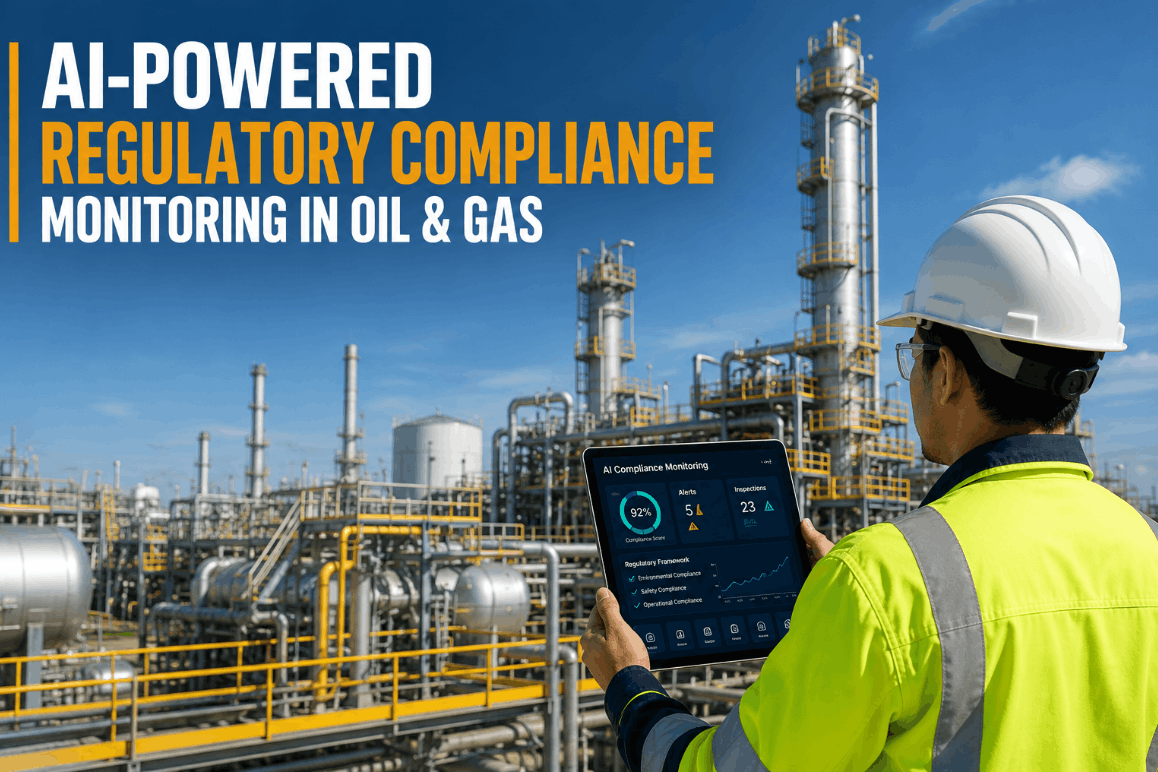
How AI Is Improving Contractor Safety Management in Oil & Gas
By Henry Green on May 30, 2026
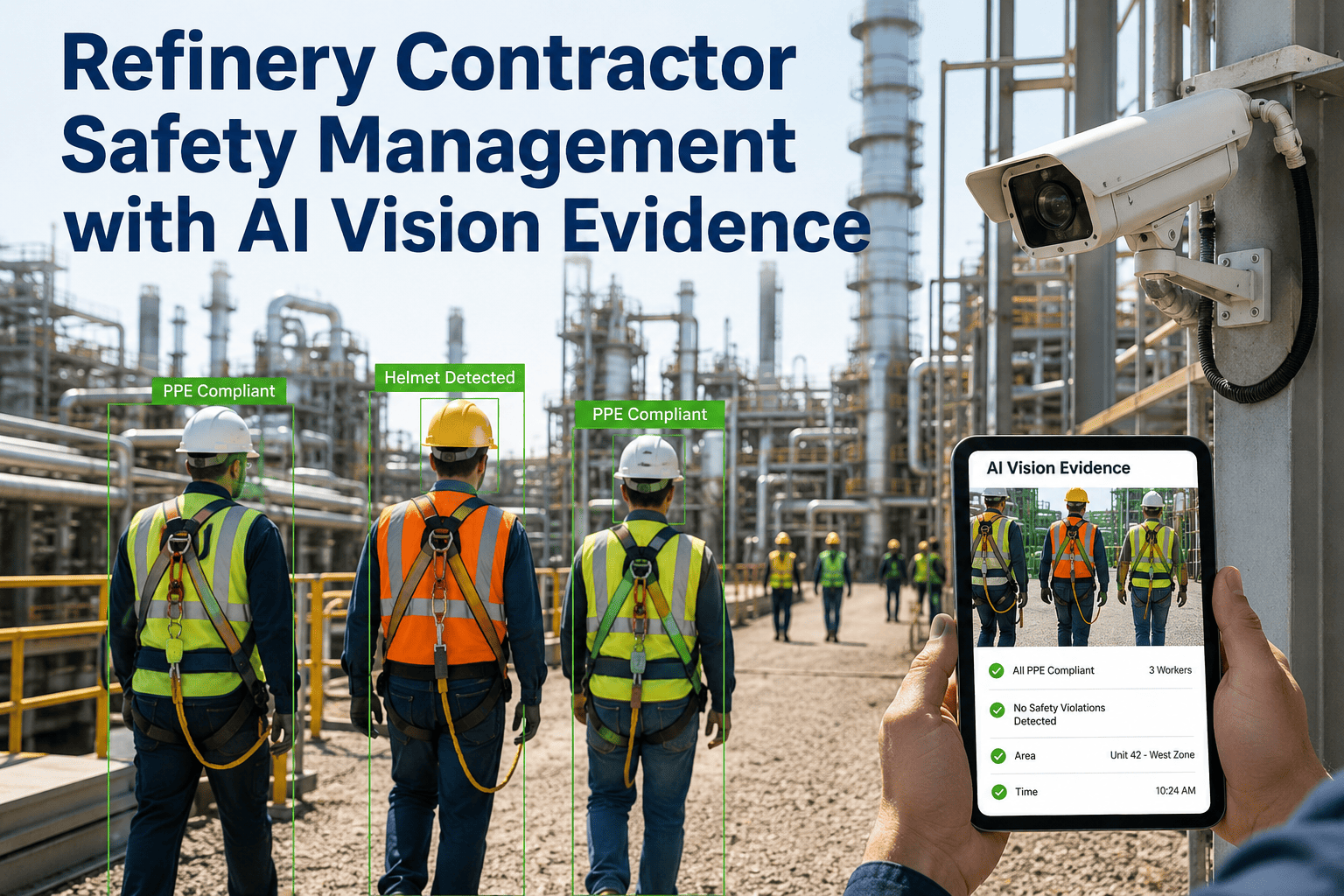
Contractor workforce management is one of the highest-risk, least-digitized aspects of oil and gas operations in the United States. At any major upstream or downstream facility, contractors can outnumber direct employees three to one — yet their onboarding records, safety certifications, permit authorizations, site access history, and incident data often live in disconnected spreadsheets, paper files, and third-party vendor portals that no one is monitoring in real time. The result is predictable: contractors arriving on site with expired certifications, permits issued without verified pre-job safety checks, near-miss events going unreported across the contractor chain, and HSE managers discovering compliance gaps only when an OSHA inspection or incident investigation forces the documentation review. AI-powered contractor safety platforms are closing this gap systematically — automating credential verification, enabling real-time site access control, digitizing permit-to-work workflows, and surfacing contractor safety performance data that was previously invisible to the operators responsible for it. Upstream, midstream, and downstream operators ready to see how AI contractor safety tools integrate with their existing CMMS and HSE systems can Book a Demo with iFactory AI for a facility-specific assessment before any deployment begins.
54%
of oil & gas fatalities involve contractor workers, not direct employees
3×
Contractors outnumber direct employees at most major U.S. oil & gas facilities
87%
Reduction in contractor onboarding time with AI-automated credential verification
$2.8M
Average cost of a single OSHA PSM contractor safety violation finding
AI Is Closing the Contractor Safety Gap That Manual Systems Cannot
iFactory AI's platform delivers real-time contractor credential monitoring, AI-assisted permit-to-work workflows, predictive safety analytics, and audit-ready HSE documentation — integrated with your existing CMMS and ERP stack without replacing the systems your operations team already relies on.
The Contractor Safety Problem No Spreadsheet Can Solve
OSHA 1910.119 Process Safety Management places explicit contractor safety obligations on the host employer — not just on the contractor company. Under PSM, the host operator must evaluate contractor safety performance before awarding work, inform contractors of known process hazards, ensure contractors understand emergency procedures, and maintain contractor injury and illness logs as part of the facility's safety record. These are not aspirational requirements — they are enforceable obligations that carry per-day penalties exceeding $156,000 for knowing violations.
The practical challenge is scale. A mid-size Gulf Coast refinery may manage 200–400 active contractors across a dozen specialties on any given day — each with their own set of required certifications, safety training completions, medical clearances, and work authorizations that expire on different schedules, issued by different bodies, and tracked in different systems. No spreadsheet-based contractor management program maintains real-time compliance across that population consistently. AI does.
Expired Credential Site Access
Without automated real-time credential monitoring, contractors with lapsed H2S training, confined space certifications, or medical fitness clearances routinely gain site access through manual badge processes that don't check expiration status against a live registry. AI access control eliminates this gap at the gate.
PTW Authorization Without Verification
Permit-to-work systems that rely on supervisor memory and paper sign-offs frequently issue authorizations before verifying that required isolation steps, gas testing, or equipment lockouts have been completed. AI-assisted PTW platforms enforce verification sequencing and create a documented record of every pre-job check before authorization is released.
Near-Miss and Incident Underreporting
Contractor workers routinely underreport near-miss events due to job security concerns, unfamiliarity with the operator's reporting system, or language barriers in multilingual contractor crews. AI-powered mobile reporting tools with multilingual interfaces and anonymous near-miss capture dramatically increase contractor incident data quality.
Contractor Safety Performance Invisibility
Most operators have no real-time view of contractor safety leading indicators — toolbox talk completion rates, pre-job inspection compliance, stop-work authority usage, or near-miss frequency by contractor company. This data exists in field records that never reach the HSE dashboard, making contractor safety performance evaluation reactive rather than predictive.
Facing any of these contractor safety gaps at your facility? Book a Demo with iFactory AI to see how AI-powered contractor safety management maps to your specific operational environment.
How AI Transforms Each Layer of Contractor Safety Management
AI contractor safety platforms don't replace the existing compliance framework — they execute it with a consistency and completeness that manual systems cannot sustain across large, dynamic contractor populations. The transformation happens across five distinct layers of the contractor safety lifecycle, from pre-mobilization through active site operations and post-job performance tracking.
Swipe to see full workflow
Phase 1
Pre-Qualification & Credential Verification
AI cross-checks contractor certifications, training completions, medical clearances, and safety performance history against a live credential registry before mobilization is approved. No human reviewer needed for routine verification — exceptions surface automatically.
Pre-mobilization
Phase 2
Site Access Control & Real-Time Monitoring
AI-integrated access systems check credential validity at every entry point in real time — flagging expired certifications, unauthorized zone access, and personnel location during active hot work or confined space permits.
Active site control
Phase 3
AI-Assisted Permit-to-Work
Structured digital PTW workflows enforce pre-job verification sequencing — isolation confirmation, atmospheric testing, PPE verification, and competent person sign-off — before permit authorization is released. AI flags any incomplete step automatically.
Work authorization
Phase 4
Incident & Near-Miss Capture
Mobile AI reporting tools with multilingual support and anonymous near-miss capture increase contractor safety event reporting rates. AI classifies reports, routes them to the right HSE contacts, and flags patterns across the contractor population before incidents occur.
Event reporting
Phase 5
Contractor Performance Analytics
AI aggregates leading and lagging safety indicators per contractor company — toolbox talk completion, stop-work authority usage, near-miss frequency, PTW compliance rate — feeding contractor safety scorecards that inform future pre-qualification and contract renewal decisions.
Performance tracking
AI and OSHA PSM Contractor Safety: Meeting Every Regulatory Obligation
OSHA 1910.119(h) defines specific contractor safety obligations for PSM-covered facilities — and each obligation maps directly to an AI compliance capability that replaces manual, error-prone tracking with automated, auditable records. The gap between what PSM requires and what manual contractor management delivers is exactly where AI adds compounding value.
OSHA PSM Requirement
Manual Management Gap
iFactory AI Capability
Evaluate contractor safety performance before award (1910.119(h)(1))
Safety performance reviews are periodic, document-heavy, and rely on contractor self-reporting with no real-time verification of OSHA 300 logs or incident history.
AI aggregates contractor safety KPIs — TRIR, LTIR, near-miss rate, PTW compliance — into a scored pre-qualification profile updated continuously from field data and third-party safety registries.
Inform contractors of known process hazards (1910.119(h)(2)(i))
Hazard communication relies on site orientation sessions and paper handouts. Verification that contractors received and acknowledged specific hazard information is often absent from the record.
Digital hazard briefing delivery with AI-tracked acknowledgment confirmation per contractor worker per task type — creating a timestamped, audit-ready record of every hazard communication event.
Ensure contractors understand emergency action plan (1910.119(h)(2)(iii))
Emergency procedure training is confirmed by paper sign-off at site orientation and rarely re-verified when procedures change or contractors return after extended absence.
AI tracks emergency procedure training currency per contractor worker, automatically flags retraining requirements when procedures change, and blocks site access until updated acknowledgment is recorded.
Maintain contractor injury and illness log (1910.119(h)(2)(v))
Contractor incident records are frequently maintained by the contractor company, not the host operator — creating gaps in the host facility's OSHA PSM contractor injury log that auditors consistently find.
AI consolidates contractor incident records into the host facility's PSM contractor injury log automatically, pulling data from digital incident reports, PTW closure records, and third-party safety management systems.
Advise contractor of applicable safety rules (1910.119(h)(2)(ii))
Site-specific safety rule communication is inconsistent — contractors receive different briefings depending on which supervisor is present at orientation, with no documented verification of content delivered.
Standardized digital safety rule delivery per work type and zone, with AI-confirmed receipt, comprehension check integration, and supervisor notification if a contractor worker has not completed required pre-work briefings.
Contractor Safety Analytics: The Leading Indicators That Predict Incidents Before They Happen
The most powerful shift AI enables in contractor safety management is the move from lagging indicators — incident rates and OSHA recordables that measure failures after they occur — to leading indicators that predict where contractor safety breakdowns are most likely before an event happens. iFactory AI's platform captures and analyzes the contractor safety signals that conventional HSE management systems never reach. Operators wanting to see how predictive contractor safety analytics work in their specific environment can Book a Demo with iFactory AI's safety team.
01
PTW Compliance Rate by Contractor
AI tracks the percentage of permit-to-work authorizations where all required pre-job checks were completed before work began — surfacing contractor companies or individual supervisors with systematic PTW compliance gaps before an incident forces the discovery.
Leading indicatorPer-contractor scoringTrend detection
02
Near-Miss Frequency and Classification
AI classifies near-miss reports by hazard type, work category, and location — identifying patterns in contractor near-miss data that predict specific incident types. A cluster of near-miss events in a particular work area or contractor crew is a statistically significant precursor to a recordable incident.
Daily toolbox talk completion rates per contractor crew are a strong predictor of safety culture quality at the working level. AI tracks completion, content relevance to the day's work scope, and crew attendance — flagging contractors who systematically skip or abbreviate required pre-work safety briefings.
Culture indicatorDaily trackingCrew-level data
04
Stop-Work Authority Usage Rate
Low stop-work authority usage in a contractor crew is frequently a symptom of production pressure overriding safety culture — not a sign that conditions are uniformly safe. AI benchmarks SWA usage rates against fleet averages and flags statistical outliers that suggest under-reporting of unsafe conditions.
AI identifies when a disproportionate number of credentials within a specific contractor company or crew cohort are approaching simultaneous expiration — a risk condition that, if unmanaged, results in workforce availability gaps or pressure to allow uncertified personnel onto high-hazard work scopes.
Safety observation frequency — how often supervisors and HSE personnel document field safety observations and intervene on at-risk behaviors — is a leading indicator of active safety management quality. AI tracks observation rates per supervisor, per contractor crew, and per work area, benchmarking against facility targets.
Expert Perspective: What AI-Driven Contractor Safety Looks Like in Practice
"The contractor safety problem in oil and gas isn't a knowledge problem — every HSE manager knows what OSHA requires and what good contractor management looks like. It's a data problem. You have 300 contractors on site today, and you have no real-time view of which ones have certifications that expired last week, which crews haven't completed a toolbox talk in four days, or which permit authorizations were issued before the required atmospheric tests were documented. That data exists — it's in field records, badge swipe logs, PTW paper files, and contractor company portals — but it never reaches the HSE dashboard in real time. AI is the first technology that actually connects those data sources and turns them into actionable safety intelligence before the incident happens, not after. The facilities that implement this correctly don't just reduce injury rates — they eliminate entire categories of OSHA PSM findings because the documentation gaps simply stop occurring."
PSM documentation gaps in post-deployment OSHA audits at iFactory-deployed facilities
5 wks
Full AI contractor safety platform deployment timeline
How iFactory AI Connects Contractor Safety to Your Existing Operations Stack
iFactory AI's contractor safety platform is not a standalone compliance portal — it is an AI layer that integrates with your existing CMMS, ERP, and HSE systems to deliver real-time contractor safety intelligence without requiring your operations team to adopt a new system of record. Operators ready to see the integration mapped to their specific CMMS and ERP environment can Book a Demo with iFactory AI's compliance engineering team.
01
AI Credential Management
Automated real-time verification of contractor certifications, training completions, medical clearances, and safety qualifications against a live credential registry — with automated expiry alerts, site access blocking, and audit-ready credential records maintained continuously.
Real-time verificationExpiry alertsAccess control integration
02
Digital Permit-to-Work
Structured AI-assisted PTW workflows that enforce pre-job verification sequencing, capture all required check completions before authorization release, and maintain a timestamped, immutable PTW record for OSHA PSM audit access — integrated with your existing work order and maintenance management systems.
AI-powered leading indicator dashboards aggregating PTW compliance rates, near-miss frequency, toolbox talk completion, stop-work authority usage, and safety observation data per contractor company — feeding real-time contractor safety scorecards used for pre-qualification and performance management decisions.
Leading indicatorsContractor scorecardsPredictive analytics
04
Incident & Near-Miss Management
Mobile AI incident and near-miss reporting with multilingual support, anonymous reporting capability, automatic classification and routing, and integration into the host facility's OSHA PSM contractor injury log — ensuring complete, accurate contractor incident records without manual data consolidation.
Automated generation of OSHA PSM contractor safety documentation packages — pre-qualification records, hazard communication logs, PTW records, emergency procedure training confirmations, and contractor injury logs — in audit-ready formats aligned to 1910.119(h) requirements.
OSHA PSM formatOn-demand packagesAudit-ready records
06
CMMS & ERP Integration
Bidirectional integration with SAP PM, IBM Maximo, Infor EAM, and Oracle EBS — connecting contractor safety records to work order histories, equipment maintenance schedules, and capital project documentation so contractor safety performance data flows through the same operational systems your team already manages.
SAP PM / MaximoBidirectional sync7-day integration
Conclusion: Contractor Safety in Oil & Gas Demands More Than Compliance — It Demands Visibility
Contractor workforce safety in U.S. oil and gas isn't a problem that better policy documents or more frequent safety meetings will solve. The gap is in real-time data visibility — knowing which contractors are on site, whether their credentials are current, whether the permits authorizing their work were properly verified, and whether the safety leading indicators across your contractor population are trending toward an incident before one occurs. AI contractor safety platforms deliver that visibility at a scale and consistency that manual HSE management cannot sustain across the dynamic, multilingual, multi-company contractor populations that characterize modern oil and gas operations. The regulatory obligation under OSHA PSM is clear. The technology to meet it reliably now exists. The only question is whether your facility installs that capability before an incident forces the conversation, or after. Compliance and HSE teams ready to close the contractor safety visibility gap are encouraged to Book a Demo with iFactory AI and receive a facility-specific contractor safety gap assessment before any deployment commitment is made.
Frequently Asked Questions
What does OSHA PSM require from oil and gas operators regarding contractor safety?
OSHA 1910.119(h) requires host operators to evaluate contractor safety performance before awarding work, inform contractors of process hazards, verify emergency procedure training, and maintain a contractor injury and illness log as part of the facility's PSM records.
How does AI verify contractor credentials faster than manual processes?
AI cross-references contractor certifications, training records, and medical clearances against a live digital registry in real time at site access points — flagging expired or missing credentials automatically without requiring manual document review by HSE staff.
Can AI permit-to-work systems replace paper PTW processes at PSM-covered facilities?
Yes — digital AI-assisted PTW systems satisfy OSHA PSM documentation requirements when they enforce pre-job verification sequencing, maintain timestamped authorization records, and produce audit-ready documentation packages aligned to 1910.119 requirements.
What leading safety indicators does AI track for contractor workforce management?
AI platforms track PTW compliance rates, near-miss frequency and classification, toolbox talk completion, stop-work authority usage, safety observation frequency, and credential expiry concentration — all per contractor company — feeding predictive safety scorecards updated in real time.
How long does it take to deploy iFactory AI's contractor safety platform at an oil and gas facility?
iFactory's AI contractor safety platform deploys in 5 weeks — with credential management and PTW workflows active by week 3 and full OSHA PSM compliance documentation coverage delivered in week 5, including CMMS and ERP integration completed within 7 days.
Close Your Contractor Safety Gaps With AI — Before the Next OSHA Inspection Does
iFactory AI delivers real-time contractor credential monitoring, AI-assisted PTW workflows, predictive safety analytics, and immutable OSHA PSM documentation — fully integrated with your existing CMMS and ERP stack, deployed in 5 weeks with zero documentation gaps from day one of live operation.