How AI Simplifies Permit-to-Work Systems in Oil & Gas
By Henry Green on May 30, 2026
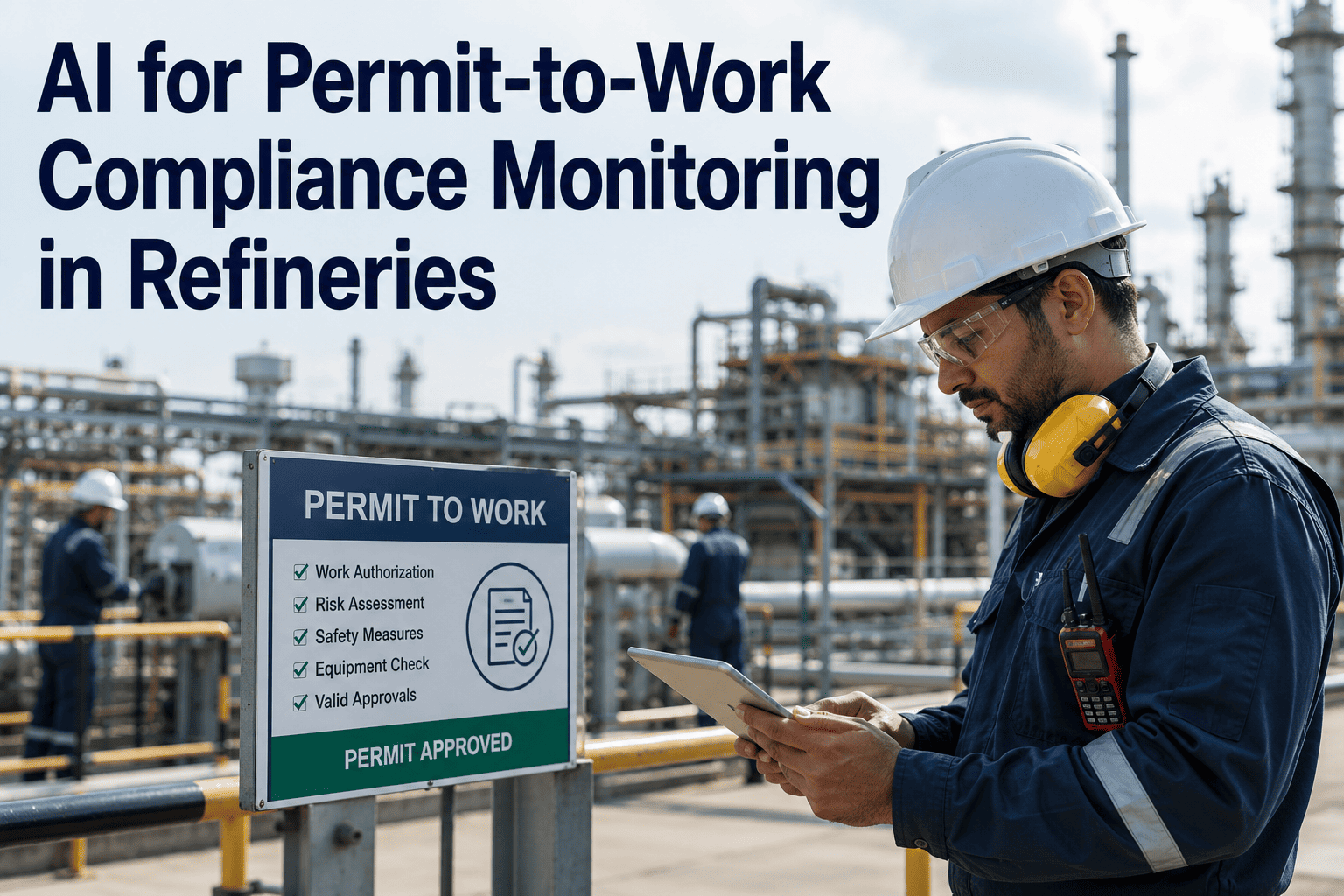
In high-hazard oil and gas environments, a single missed approval can cascade into a catastrophic incident. Permit-to-work (PTW) systems are the frontline control that authorizes every high-risk task — hot work, confined space entry, electrical isolation, and chemical handling. Yet across upstream, midstream, and downstream operations, most PTW processes still run on paper forms, email chains, and manual sign-offs. AI changes that equation entirely. Platforms like iFactory are embedding intelligence directly into permit workflows — automating conflict detection, real-time hazard assessment, and audit-ready recordkeeping — so safety officers spend less time chasing paperwork and more time managing actual risk. Book a Demo to see how iFactory brings AI permit to work capabilities to your oil and gas operation.
Compliance & Regulatory · 2025–2026
How AI Simplifies Permit-to-Work Systems in Oil & Gas
Automated conflict detection · Real-time hazard assessment · OSHA & SIMOPS compliance · Digital audit trails — all connected through iFactory's AI compliance platform.
AI flags overlapping permits and SIMOPS conflicts before work begins
Audit-Ready Records
Every permit, approval, and deviation captured as immutable digital evidence
Real-Time Alerts
HSE teams notified instantly on threshold breaches or expired permits
Why Traditional Permit-to-Work Is a Liability in Oil & Gas
Manual PTW processes were designed for a slower, more predictable worksite. Today's oil and gas facilities run concurrent operations — multiple contractors, simultaneous maintenance tasks, live process lines — where a single undetected permit conflict can trigger a major incident. Paper-based systems cannot flag a hot-work permit issued near an active gas purge. They cannot alert a supervisor when a confined-space permit expires mid-shift. And they cannot produce a structured digital audit trail when regulators come knocking.
The consequences are measurable. Permit delays and unclear documentation directly increase both risk exposure and operational downtime. When approval chains span email threads and printed forms, safety-critical decisions get made without full situational awareness. AI-driven permit platforms close this gap by enforcing logic, sequence, and compliance rules that humans consistently miss under operational pressure.
Slow Manual Approval Chains
Paper forms routed through multiple supervisors introduce delays of hours or days, stalling maintenance windows and increasing contractor idle time on live sites.
Undetected SIMOPS Conflicts
Simultaneous operations on adjacent equipment — welding near open-drain work, for instance — go undetected without automated cross-referencing of active permits.
Fragmented Audit Trails
When permits exist across binders, spreadsheets, and email inboxes, producing a clean OSHA or PSSR audit record requires weeks of manual compilation — with high risk of gaps.
Contractor Oversight Gaps
Third-party contractors performing welding, electrical isolation, and confined-space work are often the highest-risk workforce — yet hardest to monitor under manual PTW systems.
How AI Transforms the Permit-to-Work Workflow
AI does not simply digitize a paper form. It injects decision intelligence at every step of the permit lifecycle — from initial request through closure and archival. In oil and gas operations where a single permit may touch isolation management, gas testing, equipment lockout, and contractor authorization, that intelligence has compounding value.
01
Permit Request & Risk Pre-Screening
When a work request is submitted, AI cross-references job type, location, energy sources, and active site conditions. It auto-populates required controls, PPE requirements, and gas-test protocols — reducing permit preparation time by eliminating manual lookup against procedure libraries.
02
SIMOPS Conflict Detection
Before approval, AI scans all concurrently active permits within a defined geographic or equipment zone. Conflicting work types — hot work adjacent to venting, pressure testing near occupied modules — are flagged automatically and routed to the area authority for resolution before work begins.
03
Automated Approval Routing
Multi-level approval workflows are enforced digitally. Each signatory receives a structured task with context — equipment history, prior incidents, isolation status — rather than a blank form. Escalation rules ensure no permit stalls in an inbox beyond defined thresholds.
04
Real-Time Monitoring & Expiry Alerts
Once active, permits are monitored against time limits, shift changes, and environmental readings. Alerts fire when a permit approaches expiry, when gas readings trend toward threshold, or when conditions change on the worksite — ensuring field teams never operate under a lapsed authorization.
05
Closure, CAPA & Audit Record
On permit closure, AI captures a structured completion record — sign-offs, deviations, equipment reinstatement confirmation, and any CAPA actions triggered. Every record is timestamped, tamper-evident, and formatted for OSHA, PSM, and PSSR audit retrieval.
AI Permit-to-Work vs. Traditional PTW: A Direct Comparison
For operations managers evaluating digital transformation, the performance gap between AI-enabled and legacy PTW is stark across the metrics that matter most — approval speed, compliance coverage, and incident prevention. The table below illustrates where AI delivers concrete operational advantage.
Capability
Traditional PTW
AI-Powered PTW (iFactory)
Compliance Impact
SIMOPS Conflict Check
Manual board review
Automated pre-approval scan
Prevents concurrent hazard exposure
Permit Expiry Management
Physical clock-out / memory
Real-time alerts to field & supervisor
OSHA PSM & IEC 61511 alignment
Contractor Authorization
Paper induction log
Digital competency verification
Audit trail per contractor per task
Audit Record Retrieval
2–3 weeks manual search
Seconds via structured query
PSSR · PSM · OSHA 1910.119
CAPA Triggering
Post-incident, reactive
Auto-triggered on deviation
Closes loop before next work order
Gas Test Integration
Handwritten log, separate from permit
Sensor data linked directly to permit record
Eliminates documentation gap on hot work
Three High-Impact AI PTW Use Cases in Oil & Gas
01
Hot Work Permits on Live Process Units
Hot work near active hydrocarbon lines is one of the highest-consequence permit categories. AI PTW systems continuously cross-reference gas sensor readings from the work zone against the open permit. If LEL readings trend above safe thresholds, the system suspends the permit and triggers immediate supervisor notification — a control that no paper-based system can execute. iFactory captures every gas reading as part of the permit record with immutable timestamps. Book a Demo to see hot work permit intelligence in action.
Gas sensor integrationAuto-suspensionOSHA 1910.119
02
Confined Space Entry Authorization
Confined-space permits in refineries and offshore platforms require atmospheric testing, rescue team standby confirmation, and continuous monitoring. AI enforces a pre-entry checklist sequence that cannot be bypassed — gas test results must be logged before the digital permit activates. Shift handover triggers automatic re-authorization, and iFactory logs attendant sign-in and sign-out as part of the permit lifecycle, creating a full accountability chain for every entry event.
Lockout/tagout permit errors are a leading cause of severe injuries during maintenance. AI PTW validates isolation point sequencing against the approved isolation certificate before the permit can be issued. Any deviation from the approved isolation list blocks permit activation and routes a conflict alert to the area electrical authority. iFactory connects the LOTO permit directly to CMMS work orders, ensuring maintenance history and isolation records share a single audit thread. Book a Demo to explore LOTO permit automation.
What iFactory Delivers for AI Permit-to-Work Compliance
Zero
Undetected SIMOPS conflicts on approved permits
AI scans all active permits before approval
100%
Digital audit trail — every permit, approval & deviation
Immutable · OSHA PSM ready · tamper-evident
20%
Reduction in safety incidents reported by AI-enabled operations
BP 2025 sustainability data, AI-driven safety analytics
2 Days
Audit preparation vs. 3 weeks of binder searching
PSM · PSSR · OSHA 1910.119 pre-formatted
Ready to Modernize Your Permit-to-Work Process?
iFactory connects AI permit intelligence, sensor data, CMMS work orders, and HSE event logs into a single compliance platform — purpose-built for oil and gas operations.
The most dangerous permit is the one that looks complete on paper but is missing a single field decision — a gas test that was assumed rather than recorded, a contractor who signed in before atmospheric clearance. AI PTW systems close exactly those gaps because they enforce sequence, not just documentation. Every gate must be satisfied before the next action is enabled. For high-hazard oil and gas sites running concurrent contractor operations, that enforcement layer is the difference between a near-miss and an investigation.
HSE Systems Specialist — Upstream & Midstream OperationsReview based on AI PTW platform deployment across refinery and offshore environments, 2024–2025
Conclusion
Permit-to-work systems exist for one reason: to ensure no worker enters a hazardous situation without verified controls in place. In oil and gas, where the consequences of a missed control can be catastrophic, the limitations of manual PTW are no longer acceptable. AI-powered platforms like iFactory bring sequence enforcement, real-time conflict detection, sensor integration, and structured audit records to every permit lifecycle — transforming PTW from an administrative burden into a genuine risk-control system. Operations that Book a Demo today are not just solving a compliance problem — they are building a safer, more resilient operating culture for the regulatory demands of 2025 and beyond.
FAQ
AI permit to work uses machine intelligence to automate conflict detection, approval routing, expiry monitoring, and audit recordkeeping across every permit lifecycle — replacing manual, paper-based PTW processes with enforced digital workflows.
iFactory connects to PLCs, SCADA (Rockwell, Siemens, Wonderware), ERP (SAP, Oracle), and IoT sensors — linking permit data directly to live equipment readings and CMMS work orders without replacing existing infrastructure.
iFactory's AI PTW platform supports OSHA 1910.119 (PSM), PSSR, IEC 61511, IIAR mechanical integrity, and FDA 21 CFR Part 11 — with every record structured for rapid audit retrieval.
Yes — iFactory enforces digital competency verification and induction confirmation before any contractor permit activates, creating a full accountability chain for every third-party task on site.
Deployment timelines depend on site complexity and integration scope; iFactory's team works directly with your HSE and IT leads to map existing PTW workflows before configuring the platform — contact support for a site-specific assessment.
Deploy AI Permit-to-Work Intelligence in Your Oil & Gas Operation
iFactory connects AI PTW automation, gas sensor data, SIMOPS conflict detection, and immutable audit records into one platform — purpose-built for OSHA PSM, PSSR, and HSE compliance in oil and gas.