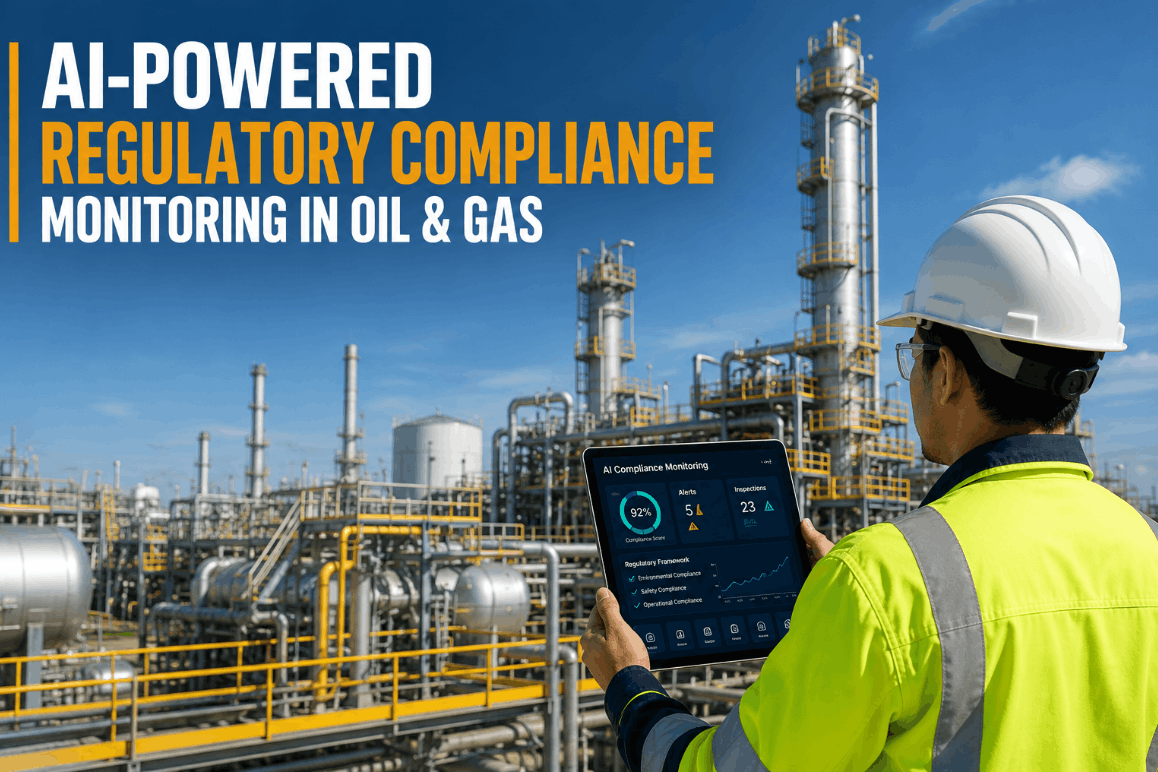
Oil and gas operations in the United States sit at the intersection of nine federal regulatory agencies — the EPA, OSHA, PHMSA, BSEE, and more — each with its own inspection cadence, documentation obligations, penalty structures, and enforcement posture. Layered on top of federal requirements are state-level environmental mandates, evolving ESG disclosure standards from institutional investors, and ISO 55001 asset management obligations that compound the compliance burden year over year. For operations teams managing these frameworks manually — through spreadsheets, paper-based inspection logs, and disconnected reporting systems — the risk exposure is not theoretical. OSHA willful violations carry fines up to $156,259 per instance, and EPA non-compliance can trigger stop-work orders, mandatory remediation, and reputational damage that threatens access to capital. iFactory's AI-powered compliance monitoring platform is built to close this gap — replacing manual data consolidation with continuous sensor-level monitoring, automated audit trail generation, and real-time regulatory reporting across every operational segment. Book a Demo to see how iFactory automates regulatory compliance for your specific facility and regulatory profile.
AI-Powered Regulatory Compliance Monitoring in Oil & Gas
Nine federal agencies. State mandates. ESG disclosures. iFactory automates audit-ready compliance documentation, real-time emissions monitoring, and HSE reporting — across every segment, without manual data consolidation.
The Compliance Burden That Manual Systems Cannot Sustain
The regulatory landscape for U.S. oil and gas operations has never been more complex, and it is accelerating. EPA methane regulations now include waste emission charges and Greenhouse Gas Reporting Program (GHGRP) obligations that require continuous emissions quantification — not periodic estimates. PHMSA pipeline integrity management rules mandate documented inspection histories, corrosion monitoring records, and incident notification within 30 days. OSHA PSM audits, required every three years, demand evidence of implementation across 14 program elements, with enforcement capable of triggering multi-facility inspections when a single finding indicates systemic gaps. Book a Demo to see how iFactory closes these compliance gaps automatically.
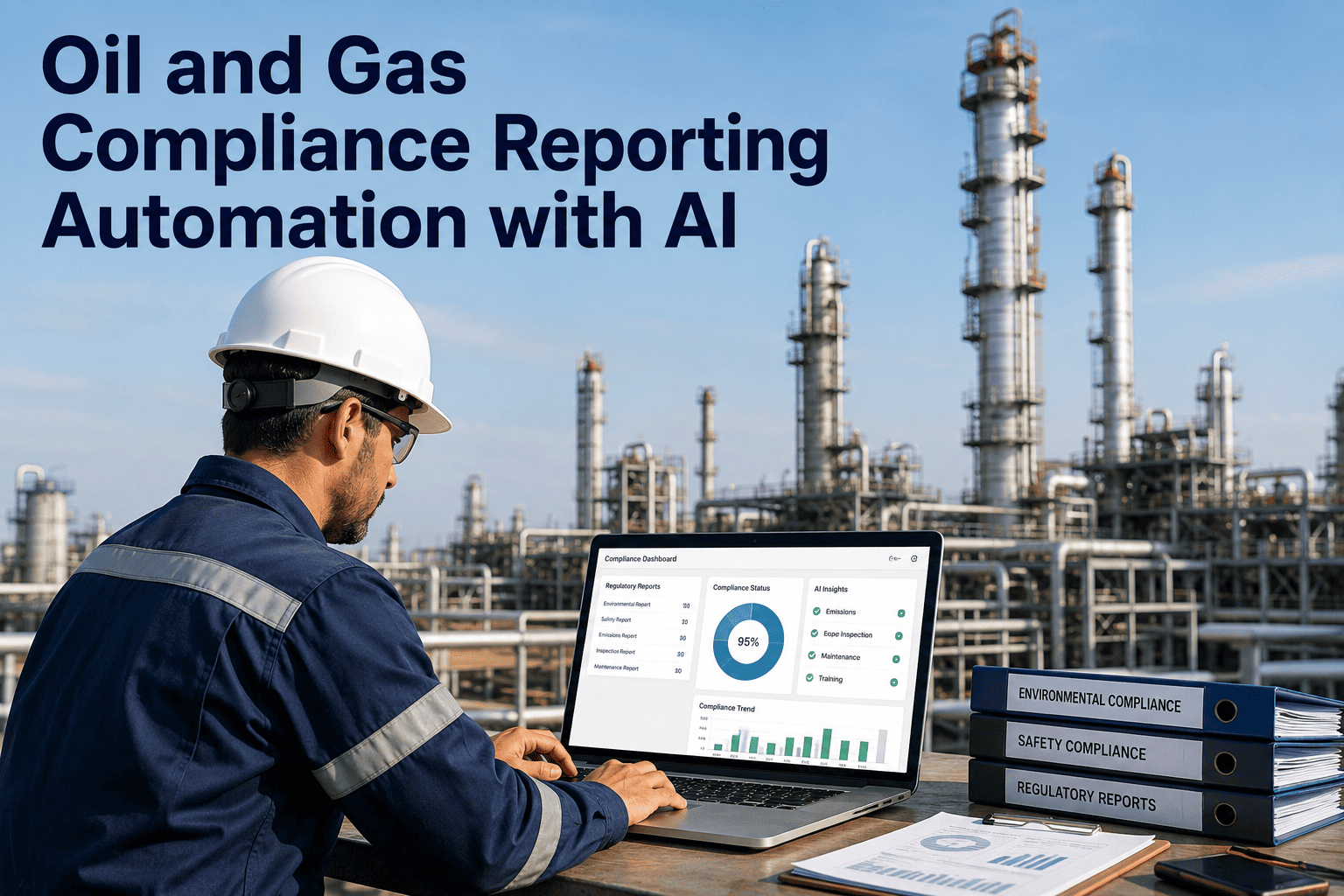
Manual compliance workflows break under this volume. Inspectors building audit packages from disconnected SCADA exports, spreadsheet maintenance logs, and paper inspection records create documentation gaps that survive until an enforcement visit — at which point the gap becomes a finding, a fine, or a stop-work order. iFactory eliminates the manual layer entirely by generating audit-ready compliance documentation as a direct byproduct of continuous operational monitoring.
Manual inspection logs and spreadsheet records create fragmented audit trails. When regulators request continuous monitoring evidence, operators scramble to reconstruct timelines from disconnected sources — and often cannot close the gaps.
EPA and PHMSA require timely incident notification — in some cases within hours. Without real-time sensor monitoring, methane releases, VOC events, and pipeline integrity anomalies go undetected until manual inspection confirms what sensors would have flagged instantly.
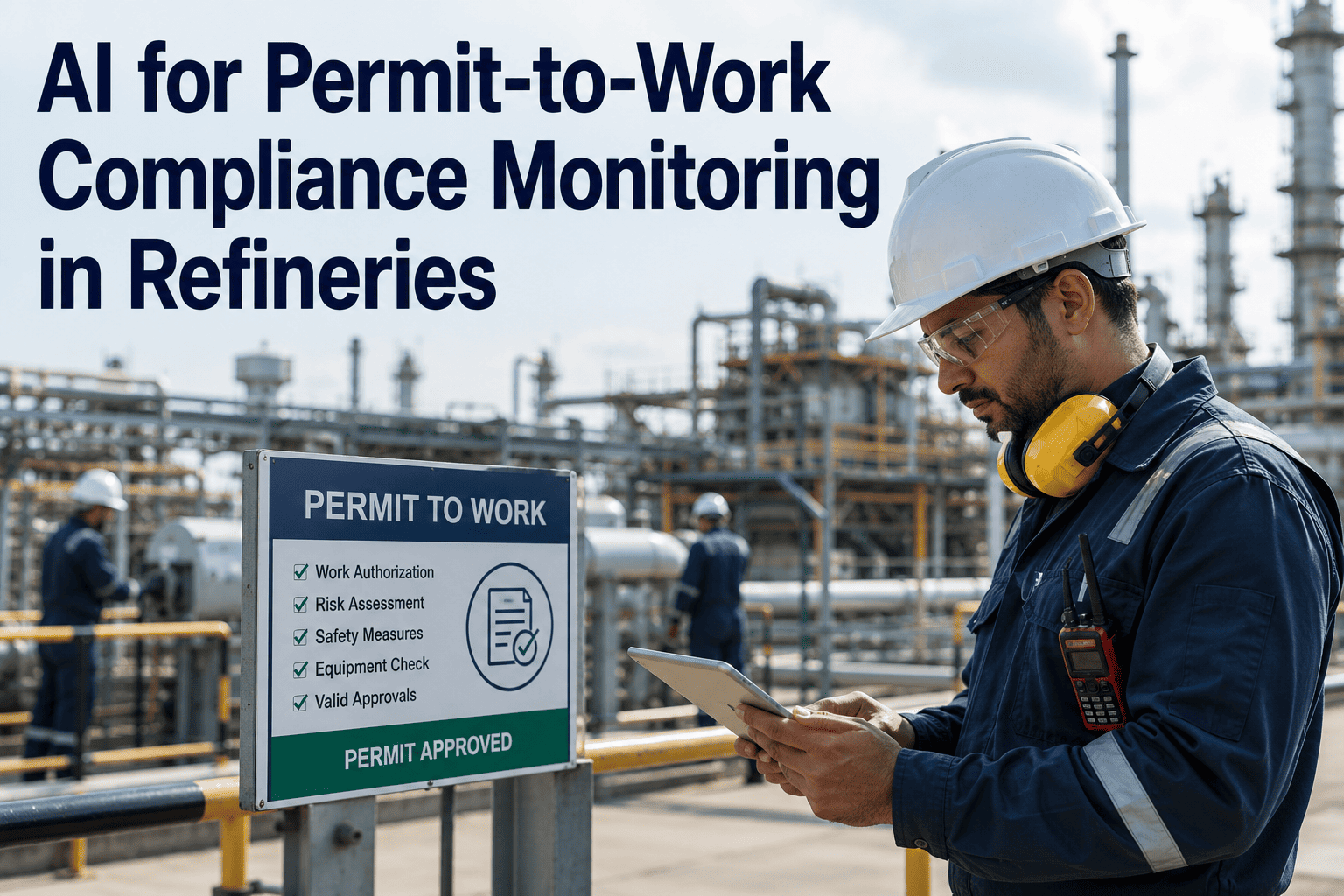
OSHA PSM and API RP 75 require documented permit-to-work authorization chains for hot work, confined space entry, and line-breaking operations. Paper-based PTW systems create authorization gaps and cannot demonstrate continuous compliance during tri-annual PSM audits.
Institutional investors and customers now require EPA GHGRP, SASB, GRI, and CDP disclosures grounded in sensor-verified data. Manual calculations from operational logs produce estimates — not verified measurements — that are increasingly challenged in ESG audits and investor due diligence.
How iFactory AI Automates Regulatory Compliance Across Every Segment
iFactory's compliance monitoring platform integrates directly with existing SCADA, DCS, and IIoT sensor infrastructure to build a continuous, audit-ready compliance data layer across upstream, midstream, and downstream operations. The platform covers four distinct compliance domains — each generating documented records without manual data entry.
| Compliance Domain | Regulatory Framework | What iFactory Automates | Output |
|---|---|---|---|
| Emissions & Environmental | EPA GHGRP, EPA Methane Rule, State VOC mandates | Continuous methane, VOC, and flaring data aggregation from IIoT sensor networks across all operational segments | Auto-generated EPA GHGRP, SASB, GRI, CDP reports — sensor-verified, audit-ready |
| Process Safety | OSHA PSM 1910.119, EPA RMP | Mechanical integrity monitoring, inspection history logging, PSM audit trail generation across 14 program elements | Continuous PSM documentation, tri-annual audit packages auto-assembled |
| Pipeline Integrity | PHMSA 49 CFR Parts 190–199 | Digital twin pipeline monitoring, corrosion detection, pressure anomaly logging, inspection record management | PHMSA-compliant inspection histories, 30-day incident notification triggered automatically |
| HSE & Permit to Work | OSHA 1910/1926, API RP 75, BSEE SEMS | Digital PTW authorization chains for hot work, confined space, and line-breaking; certification expiry tracking | Timestamped PTW records, HSE audit trails, contractor certification dashboards |
| Asset Management | ISO 55001, BSEE SEMS | Predictive maintenance records, condition monitoring logs, equipment lifecycle documentation | ISO 55001 asset management evidence packages, SEMS compliance documentation |
iFactory Compliance Deployment Timeline — From Integration to Audit-Ready
iFactory follows a structured six-stage deployment that delivers real-time emissions detection by week 4 and fully automated regulatory reporting by week 8. No manual data compilation is required at any stage after commissioning.
Full audit of existing SCADA, DCS, IIoT sensor networks, and emissions monitoring systems. Compliance obligations documented by segment and regulatory framework. Integration architecture finalized — no control system replacement required.
IIoT connections established to methane monitors, VOC sensors, flare meters, pipeline integrity systems, and process safety instrumentation. Real-time emissions detection and anomaly alerting go live. First audit-ready sensor logs generated automatically.
EPA GHGRP, OSHA PSM, PHMSA, and ESG reporting templates configured against facility-specific regulatory obligations. State-level mandates, site-specific permit conditions, and investor ESG reporting standards mapped into the automated reporting engine.
Automated ESG and regulatory reports go live. PSM audit trail generation begins. PTW digital authorization workflows activated. Compliance dashboard available to HSE managers across all locations. Zero manual data compilation from this point forward.
iFactory's AI monitors for new regulatory developments and generates automated alerts when standards change. Compliance models update automatically. Audit packages self-assemble for each reporting period. HSE teams shift from data gathering to exception management.
Four AI Compliance Capabilities That Separate iFactory from Manual Systems
The difference between iFactory and a conventional HSE management system is not interface design — it is where the data originates. iFactory's compliance records are generated directly from sensor telemetry, not from manual operator entries. That distinction determines whether compliance documentation survives regulatory scrutiny.
Sensor-Verified Methane, VOC & Flaring Records
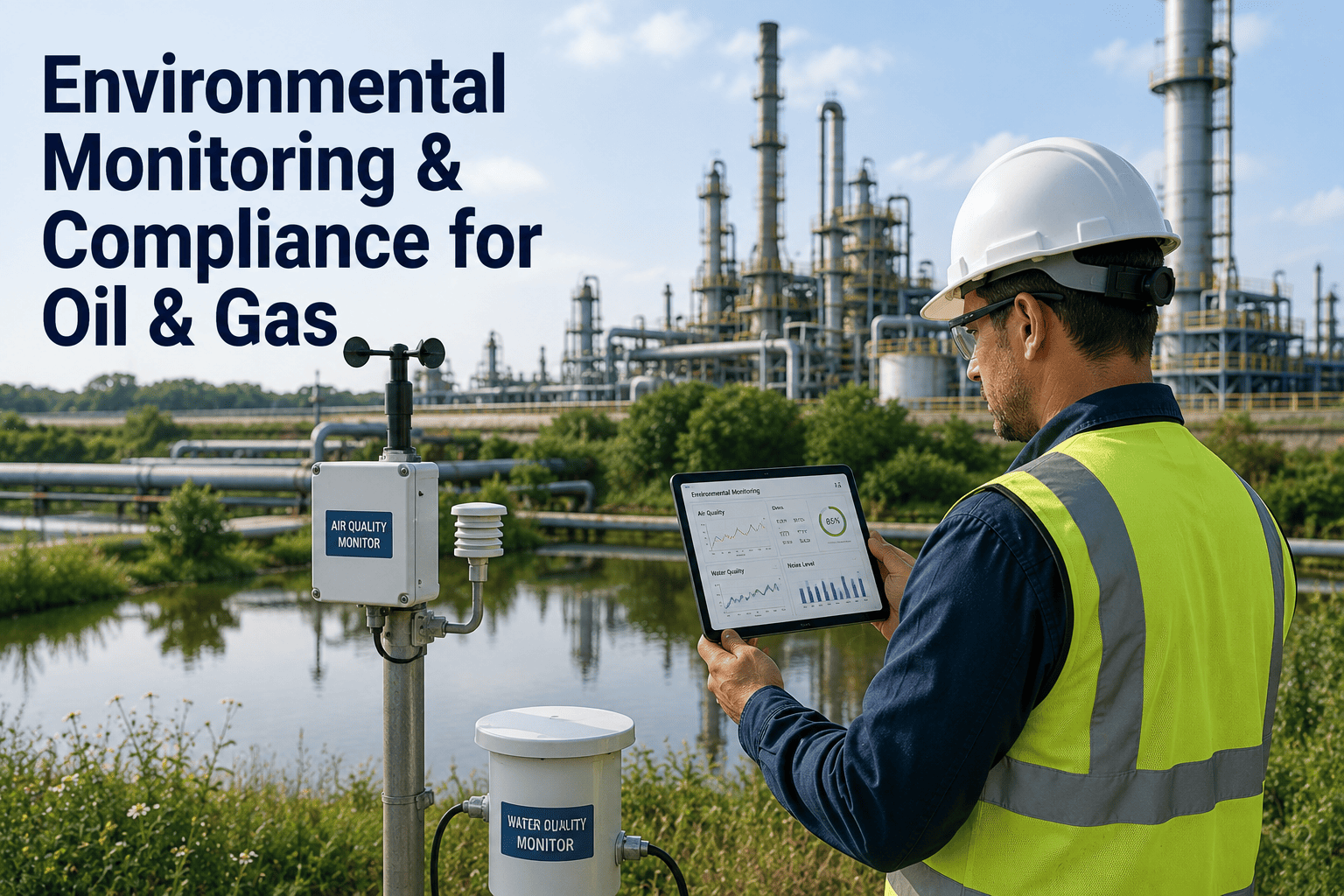
iFactory aggregates methane, VOC, and flaring data from IIoT sensor networks across all upstream, midstream, and downstream segments. EPA GHGRP, SASB, GRI, and CDP reports auto-generate from verified sensor measurements — not manual estimates — satisfying regulatory verification requirements and investor ESG audits.
Continuous OSHA PSM Documentation Across 14 Elements
iFactory's mechanical integrity monitoring and inspection logging generates continuous PSM audit evidence across all 14 program elements. Tri-annual OSHA audit packages self-assemble from accumulated operational records — eliminating the pre-audit documentation sprint that consumes weeks of HSE team capacity at most facilities.
Digital Twin Monitoring with Automated Incident Notification
iFactory's pipeline digital twin monitors corrosion, pressure anomalies, and structural integrity in real time, with automatic incident notification triggered when threshold conditions are met. PHMSA-compliant inspection histories are generated continuously — not reconstructed manually when an enforcement request arrives.
Timestamped PTW Authorization Chains & Certification Tracking
iFactory's digital PTW system manages authorization workflows for hot work, confined space entry, and line-breaking operations — generating timestamped, tamper-evident records that satisfy OSHA PSM, API RP 75, and BSEE SEMS requirements. Contractor certification expiry tracking surfaces compliance gaps at assignment time, not after an incident.
Expert Perspective: Why Sensor-Verified Compliance Data Is the New Regulatory Standard
HSE professionals and regulatory compliance directors at oil and gas operators are navigating a meaningful shift in what regulators and investors accept as evidence of compliance.
The move from manual inspection records to sensor-verified continuous monitoring data is not optional for operators subject to EPA GHGRP reporting. The agency's technical requirements increasingly demand that emissions quantification be traceable to measurement infrastructure, not engineer estimates. iFactory's architecture — generating compliance records directly from IIoT sensor telemetry at the SCADA and DCS level — is designed precisely for this verification standard. Operators who build sensor-verified compliance infrastructure now are also positioned for the next round of regulatory tightening, because the monitoring infrastructure is already in place. Book a Demo to assess how your current monitoring infrastructure maps to upcoming EPA verification requirements.
OSHA PSM audits have become more technically demanding following the agency's updated enforcement manual released in 2024. Auditors now apply greater scrutiny to mechanical integrity documentation, management of change records, and the integration between process hazard analyses and actual operational monitoring systems. iFactory's continuous PSM audit trail — generated from live sensor data rather than periodic inspector entries — addresses each of these scrutiny points directly. Facilities that arrive at a PSM audit with 36 months of sensor-verified mechanical integrity records are in a structurally different position than those assembling documentation the month before the audit.
ESG disclosure requirements have moved from voluntary best practice to a cost-of-capital issue for mid-size and large oil and gas operators. Institutional investors are now requiring EPA GHGRP, SASB, and GRI-aligned disclosures grounded in measured data — and the gap between measured and estimated emissions figures is becoming a diligence issue in asset transactions. iFactory's automated ESG reporting engine, which generates disclosures directly from sensor-aggregated emissions data with a complete audit trail from source to report, is the compliance infrastructure that makes those disclosures defensible. Book a Demo to see how iFactory generates investor-grade ESG disclosures from your existing sensor infrastructure.
Conclusion: Compliance Automation Is Now the Operational Baseline, Not a Competitive Edge
The regulatory environment governing U.S. oil and gas operations in 2025 and 2026 has crossed a threshold where manual compliance management is no longer a viable operating model. Nine federal agencies, escalating state environmental mandates, investor ESG requirements, and increasingly verification-focused enforcement mean that the documentation burden has outgrown what any team of HSE professionals can manage manually without systematic gaps. Those gaps are the exposure.
iFactory's AI-powered compliance monitoring platform converts this structural burden into a continuous operational output. When compliance documentation generates itself from sensor telemetry — when EPA reports, PSM audit packages, PHMSA inspection histories, and ESG disclosures are assembled automatically from real-time operational data — the compliance function shifts from reactive documentation to proactive risk management. That is the operational posture that regulators expect, investors require, and the complexity of modern oil and gas operations demands. Book a Demo to assess where iFactory's compliance automation delivers the fastest risk reduction for your specific regulatory profile.
Stop Building Audit Packages. Start Generating Them Automatically.
iFactory connects to your existing sensor infrastructure and produces continuous, sensor-verified compliance documentation across EPA, OSHA PSM, PHMSA, and ESG frameworks — without manual data entry.