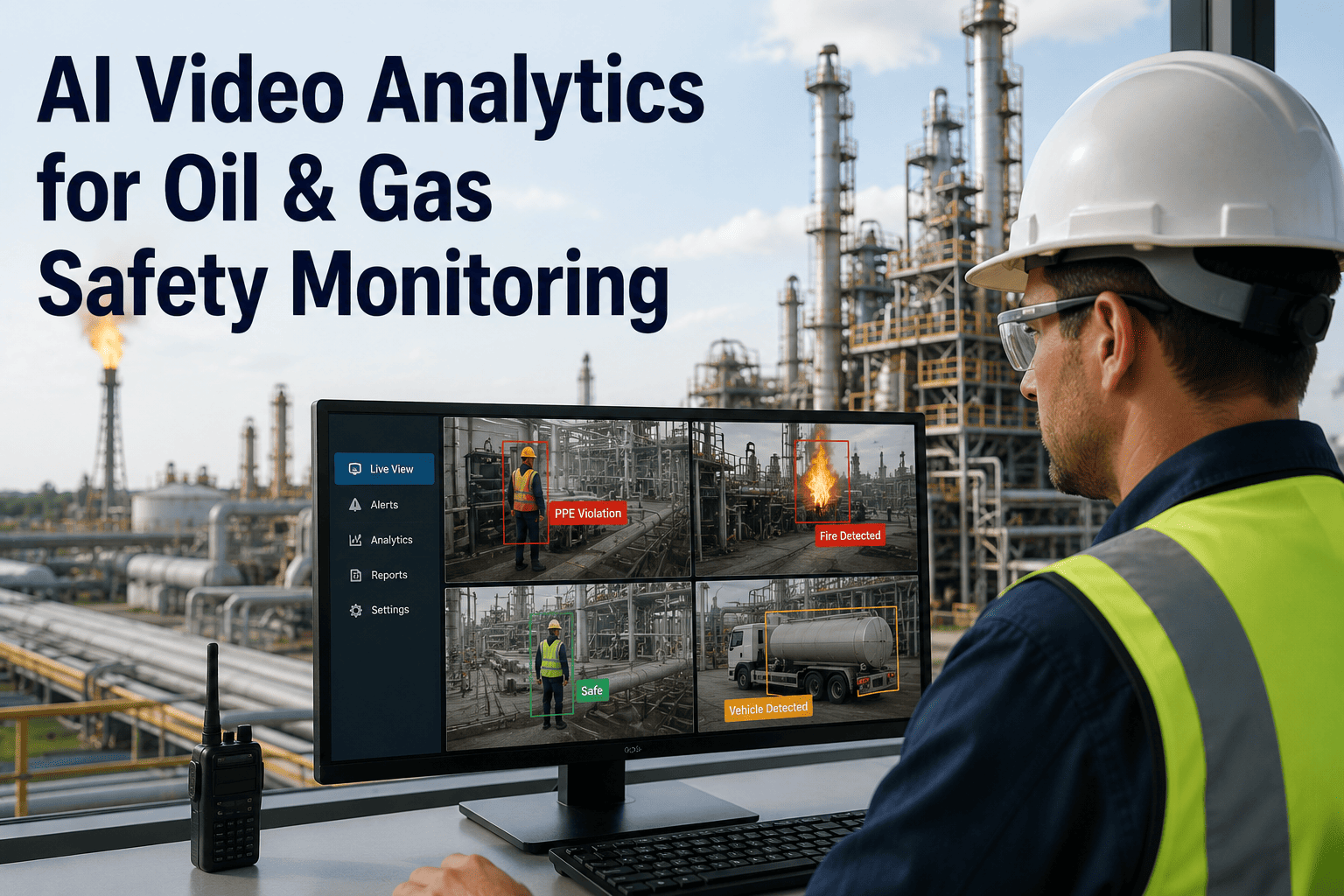
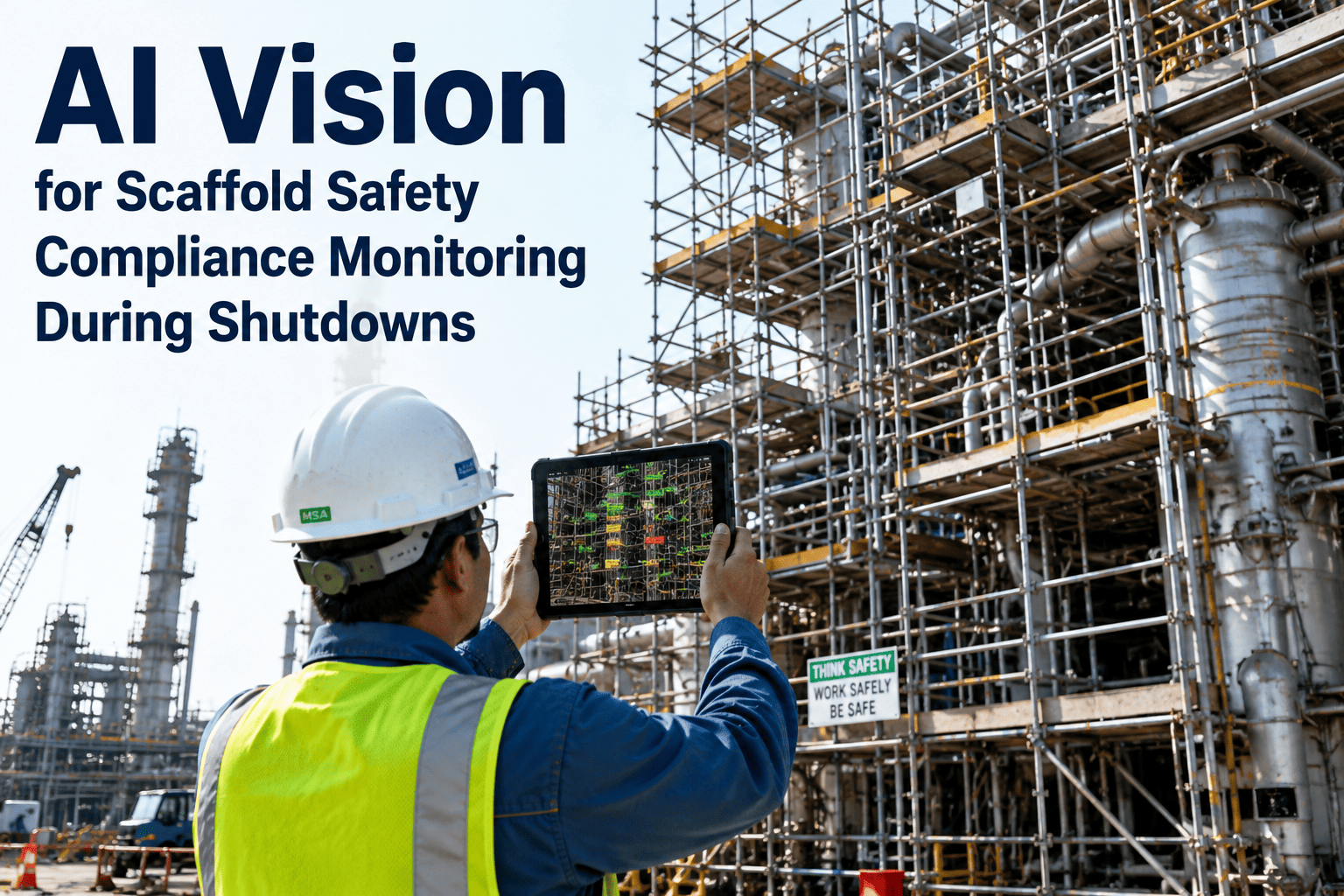
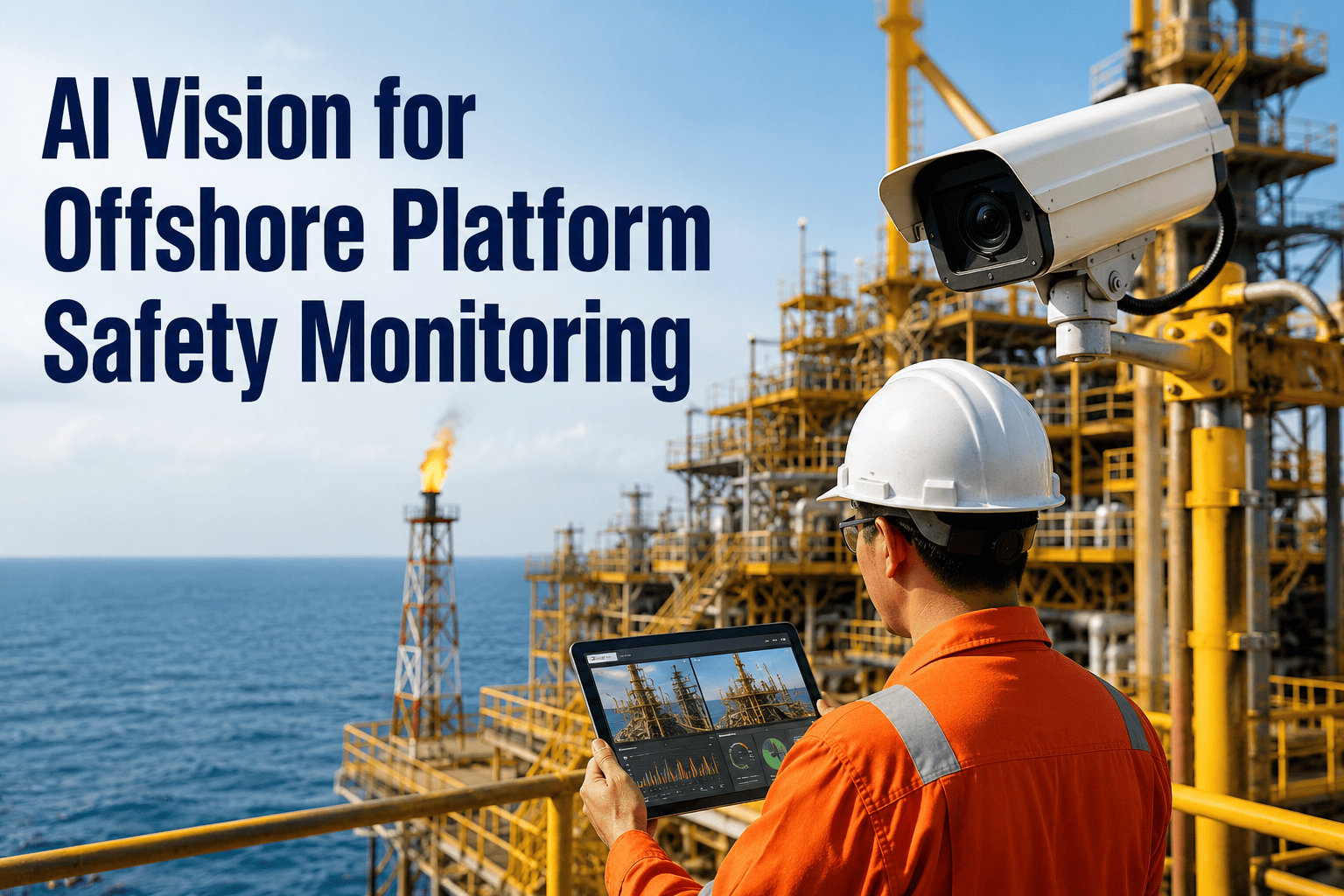
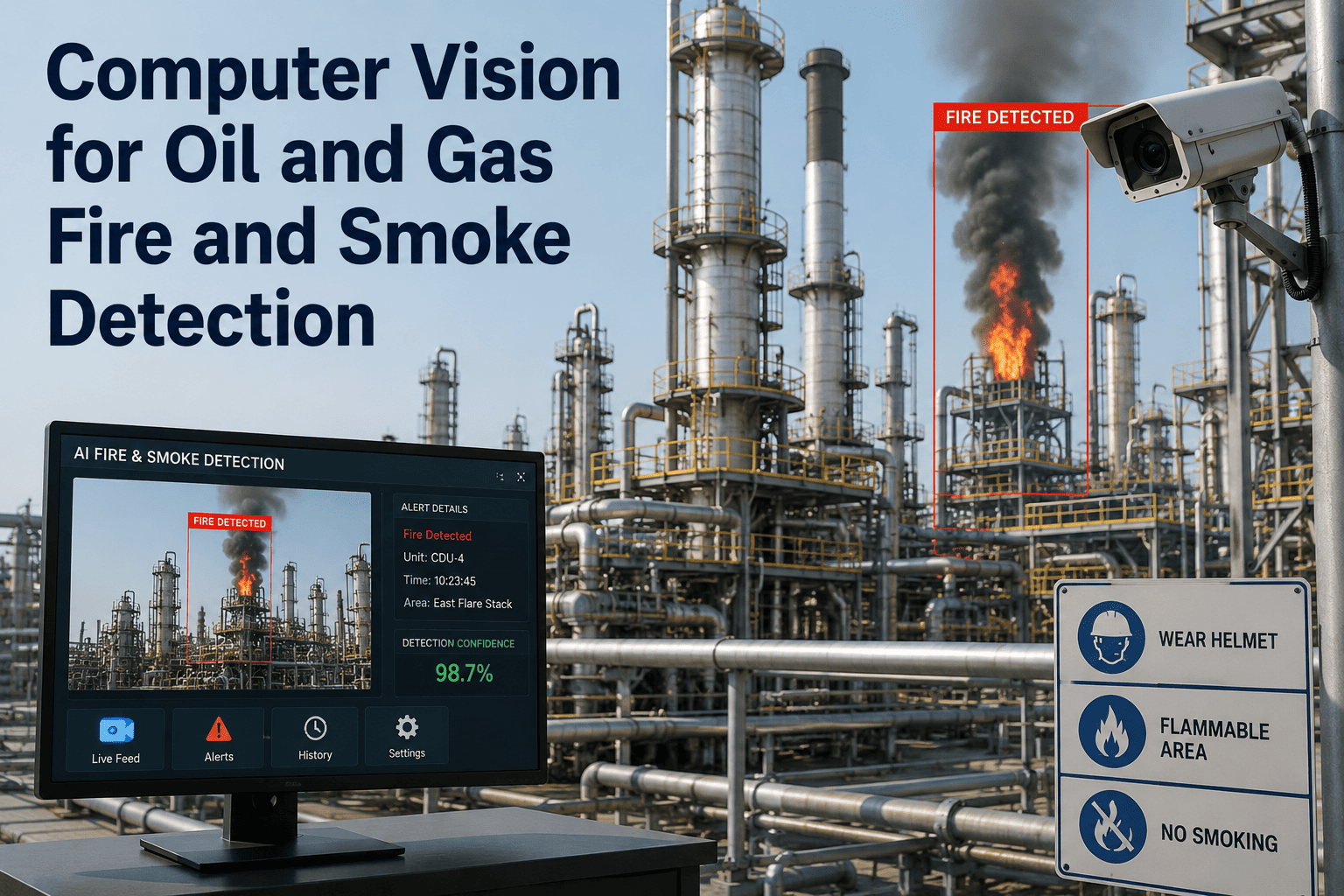
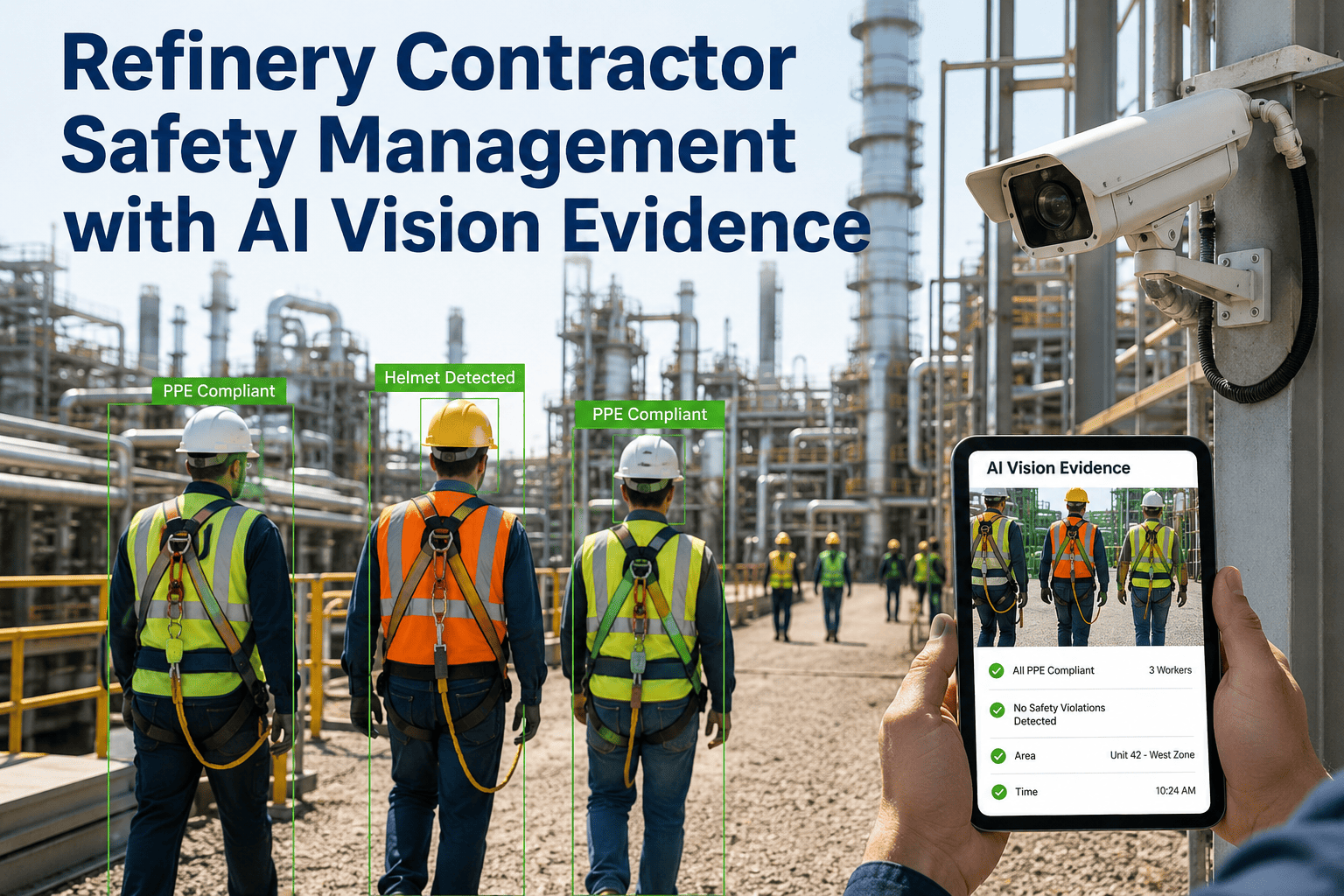
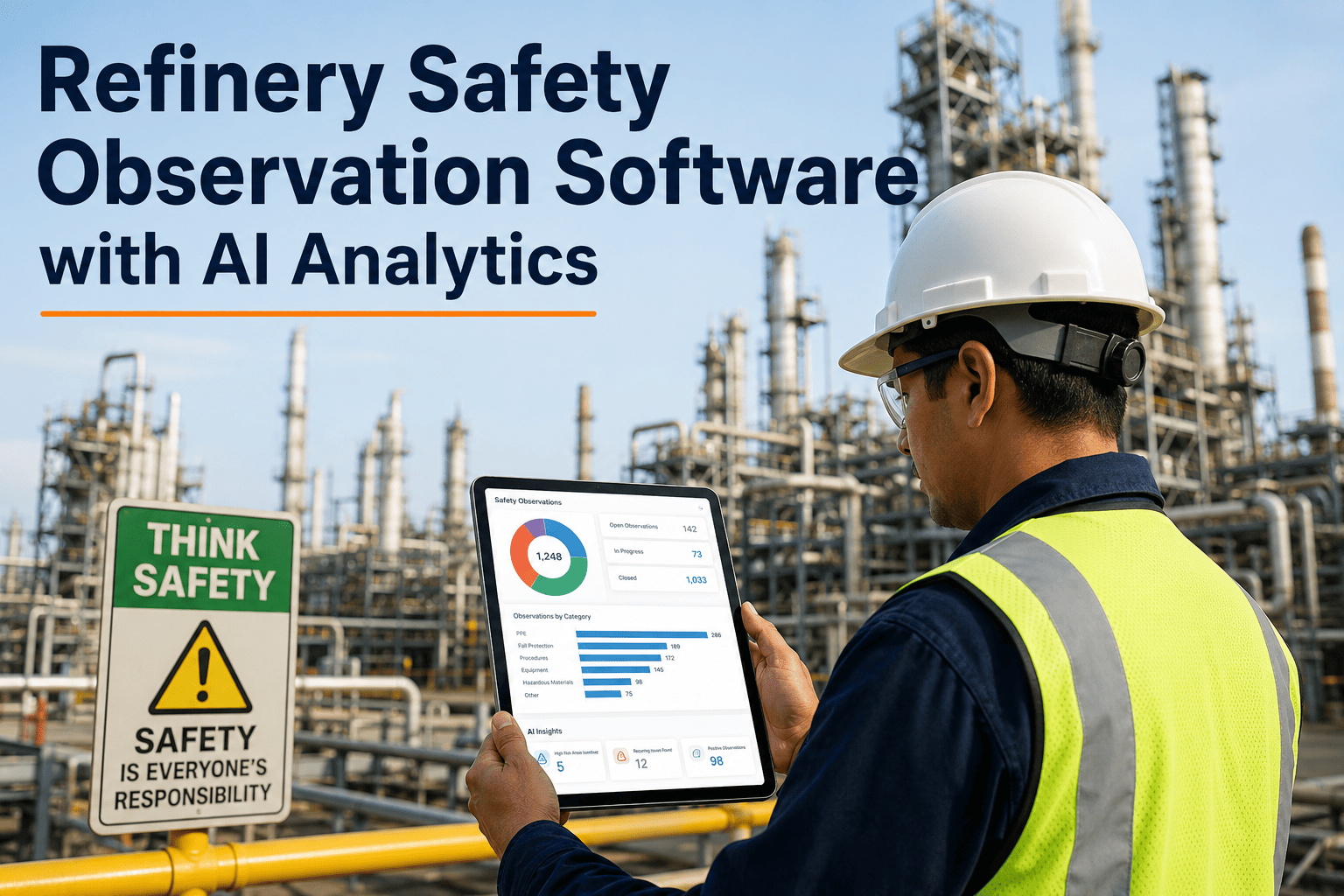
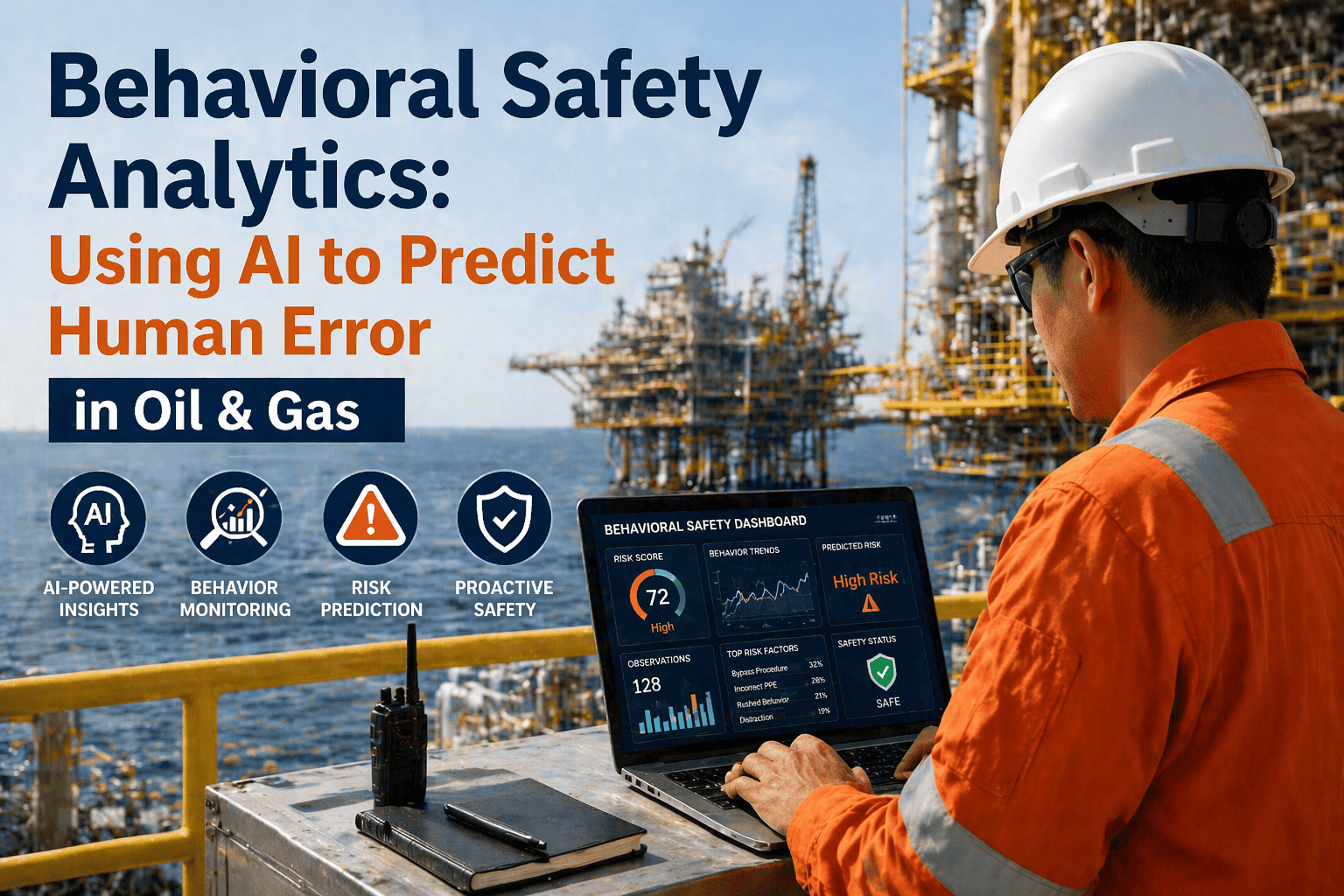
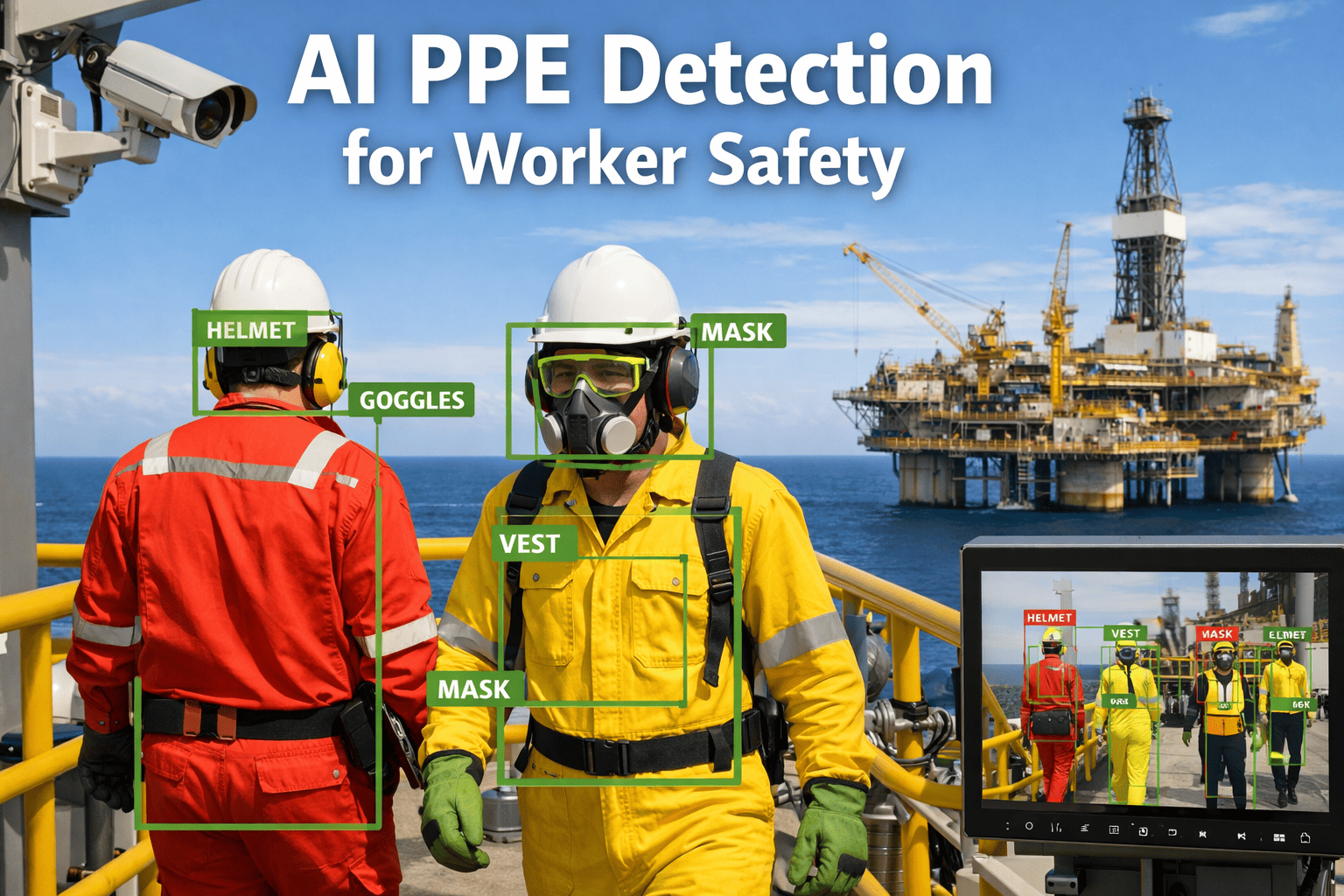
You already have the cameras. Most refineries and production sites run hundreds of them, feeding a control room screen that a handful of people are supposed to watch across every shift, every zone, every angle, all at once. No one actually can. AI video analytics watches every single feed, every single frame, and only interrupts a human when something genuinely needs attention — a missing hard hat, a body in a restricted zone, a worker down. Book a demo to see it running against your own camera feeds.
Safety Monitoring
AI Video Analytics for Oil & Gas Safety: Every Camera, Every Frame, Every Shift
One refinery deployed computer vision across 200 cameras and saw PPE compliance climb from 74% to 96% within three months — not because workers changed, but because every violation finally got caught and corrected instead of missed.
The Gap Between "We Have Cameras" and "We Have Coverage"
A control room operator watching a bank of camera tiles can realistically hold focused attention on a handful of feeds at once, and that attention naturally drifts after long stretches of uneventful footage — which describes most of any given shift. The violation that matters is exactly the moment nobody happened to be looking. AI video analytics doesn't get tired, distracted, or reassigned mid-shift; it applies the same trained attention to every camera, continuously, and escalates only the moments that actually warrant a person's judgment.
74% → 96%
PPE compliance improvement reported at a 200-camera refinery deployment within 3 months
20%
decline in safety-related incidents reported after AI-driven safety analytics rollout
100,000+
active cameras already running visual AI safety monitoring industry-wide
Four Detection Categories Running Simultaneously
Zone 1
PPE Compliance
Detects hard hats, safety glasses, gloves, and harnesses in designated zones, flagging gaps the moment a worker enters without required gear.
Zone 2
Restricted Zone Entry
Confirms whether a person detected in a high-hazard area is authorized and certified for that specific task before an incident occurs.
Zone 3
Slip, Trip & Fall Detection
Recognizes a person down or an unusual posture pattern in real time, cutting response time compared to waiting for a radio call.
Zone 4
Mustering Verification
Confirms headcount at designated assembly points during an emergency, replacing manual clipboard counts with an instant, accurate roster.
What Happens the Moment a Violation Is Detected
1
Frame Analyzed
Computer vision processes the live feed continuously, comparing detected objects and posture against defined safety rules per zone.
2
Context Checked
The system cross-references worker certification and authorization data before flagging a zone entry as a genuine violation.
3
Alert Routed
A supervisor receives the alert with a short clip and location, not a raw feed they have to search through themselves.
4
Action Logged
Every alert and its resolution is logged automatically, building the audit trail regulators and safety reviews require.
HSE Performance
Watch Every Camera, Every Second, Automatically
iFactory turns your existing camera infrastructure into a continuous, AI-monitored safety layer — no new hardware required in most deployments.
Beyond Compliance: What Consistent Monitoring Actually Changes
Manual Monitoring
Coverage limited to how many feeds one person can watch
Violations caught inconsistently, depending on attention
Incident review relies on manually searching hours of footage
Compliance reporting compiled manually after the fact
AI Video Analytics
Every camera monitored continuously, without fatigue
Violations flagged consistently the moment they occur
Every alert auto-clipped and indexed for instant review
Compliance data logged automatically in real time
Frequently Asked Questions
Do we need to replace our existing camera system?
In most cases, no. AI video analytics platforms are designed to work with existing CCTV infrastructure, whether fixed cameras, PTZ units, or drone-mounted feeds, and process the video stream you already have rather than requiring proprietary hardware. A site assessment during onboarding confirms whether your current camera resolution and placement are sufficient for the specific detection use cases you want to deploy.
Ask for a camera compatibility check in a demo.
Does this replace safety supervisors and control room staff?
No — it changes what they spend their time doing. Instead of scanning dozens of tiles hoping to catch a violation as it happens, supervisors receive a short, contextualized alert only when something needs their attention, freeing them to focus on response, coaching, and the judgment calls a camera can't make on its own.
How does the system avoid flagging authorized workers as violations?
Restricted zone alerts check detected personnel against certification and authorization data before an alert is raised, so a trained technician entering a permitted high-hazard area with proper PPE doesn't generate a false alarm. This context check is what separates a useful safety tool from a system that floods supervisors with noise they eventually learn to ignore.
Contact support for details on authorization integration.
What happens to the video and alert data over time?
Alert clips and their resolution status are retained according to your site's data retention policy, building a searchable audit trail that supports incident investigations, safety reviews, and regulatory reporting without anyone having to manually compile footage after the fact. Raw video handling follows the same access controls and retention rules your organization already applies to camera footage.
How long does it take to see a measurable compliance improvement?
Deployments with a defined set of zones and rules typically show a measurable PPE compliance improvement within the first two to three months, as the visibility itself changes behavior even before any disciplinary action is taken. A 200-camera refinery deployment following this pattern reported PPE compliance rising from 74% to 96% within three months of go-live.
Book a demo to scope a rollout for your site.